Best fly pattern box for a beginner
Walking into a fly shop or even browsing online for fly fishing gear can feel like stepping into a labyrinth, especially when it comes to fly pattern boxes. You're just starting out, eager to hit those beautiful New Hampshire streams and ponds, but suddenly you're faced with an endless array of box sizes, styles, and materials. It's easy to get overwhelmed and just grab the first thing that looks good, only to find later that it doesn't really suit your needs. This guide is here to cut through the confusion and help you confidently choose the best fly pattern box to start your fly fishing adventure in the Granite State.
Understanding the Beginner's Dilemma with Fly Boxes
It might seem like a small detail in the grand scheme of learning to fly fish, but your fly box is more than just a container. For new anglers, it can make or break a day on the water, impacting everything from your efficiency to the longevity of your precious flies.
Why a Beginner Needs a Thoughtful Fly Box
Imagine finally getting to a promising stretch of the Pemigewasset River, eager to try out those new flies you just bought. You open your box, and it's a tangled mess – hooks snagged on each other, delicate hackles crushed, and you can't find that one nymph you know should be perfect for the conditions. This kind of frustration is exactly what a well-chosen fly box can help you avoid.
For beginners, a good fly box simplifies the process. It helps you keep your initial, carefully selected patterns organized, protected, and easily accessible. When you're still getting the hang of casting, reading the water, and identifying hatches, the last thing you need is a poorly designed fly box adding to the learning curve. A thoughtfully chosen box encourages good habits from the start, like inspecting your flies, drying them out properly, and knowing exactly what you have on hand. It allows you to focus on the fishing, not on untangling a bird's nest of flies.
Common Mistakes New Anglers Make When Buying Flies and Boxes
It’s completely understandable why new anglers often stumble when it comes to fly boxes and their contents. One common mistake is buying too many different patterns right out of the gate, especially without understanding local conditions or what those flies are designed to imitate. You see a cool-looking fly, buy a dozen, and then realize you have nowhere to put them, or they don't work on the particular brook trout streams you frequent.
Another pitfall is choosing a fly box based purely on aesthetics or price without considering its practical features. A cheap box might seem like a good deal, but if it doesn't seal properly, your flies will get wet and rusty. If the foam is low quality, it won't hold hooks securely, leading to lost flies or damaged patterns. Similarly, some beginners make the mistake of buying an enormous box thinking "more space is better," only to find it too bulky to comfortably carry in a vest or backpack, especially when Wading Techniques for New Hampshire Trout Streams are involved. You want something that strikes a balance between capacity and portability, protecting your investment without becoming a hindrance.
Essential Features of a Beginner-Friendly Fly Box
When you're sifting through the options, certain features will stand out as particularly beneficial for someone just starting their journey into fly fishing. Thinking about how these features interact with New Hampshire's varied fishing environments, from the wild streams of the White Mountains to the peaceful ponds of the Seacoast, can guide your decision.
Materials and Durability: What to Look For
The material of your fly box is crucial for its longevity and how well it protects your flies. Most fly boxes are made from durable plastics or occasionally aluminum. For a beginner, a sturdy plastic box with a good seal is often the most practical choice. Look for high-impact polycarbonate or similar plastics that can withstand being dropped on rocky riverbanks or stepped on accidentally.
A critical feature to look for is a waterproof gasket seal around the lid. New Hampshire weather can be unpredictable, and streams are inherently wet environments. You will drop your box in the water, or it will get splashed. A waterproof seal protects your delicate dry flies from getting soaked and prevents your nymphs and streamers from rusting if they're stored wet. Nobody wants a box full of rusted hooks! Pay attention to the latch system as well; a secure, easy-to-operate latch ensures your box stays closed when it should and opens smoothly when you need quick access. Magnetic latches or robust, oversized plastic clips are generally good indicators of quality.
Organization Systems: Foam Inserts vs. Compartments
This is where personal preference starts to play a role, but for beginners, simplicity and protection are key. The two main types of internal organization are foam inserts and individual compartments.
- Slit Foam Inserts: These are very popular, featuring rows of high-density foam with slits cut into them. You simply slide the bend of your hook into a slit, and the foam holds it securely.
- Pros for Beginners: Excellent for securing flies of various sizes without tangling. It's easy to see all your flies at a glance, and patterns with delicate hackles (like dry flies) are generally well-protected from crushing. Foam boxes are very versatile.
- Cons: If the foam quality is poor, hooks can slip out. Wet flies might eventually corrode the foam or cause rust if left in there for too long without drying.
- Magnetic Boxes: Some boxes utilize a magnetic base to hold smaller flies, especially tiny nymphs or midges.
- Pros for Beginners: Great for very small flies, which can be notoriously hard to handle and store. Flies lie flat, protecting hackles.
- Cons: Not suitable for larger flies. Strong jolts can sometimes dislodge flies. Less common as a primary box for a general beginner.
- Compartmentalized Boxes: These boxes have individual, usually clear plastic, compartments with hinged lids.
- Pros for Beginners: Excellent for storing different types of flies separately, preventing tangles. Good for larger, bulkier flies or for separating specific patterns you use often. You can also use them for split shot, indicators, or leaders.
- Cons: Flies can rattle around within compartments, potentially damaging delicate patterns. Less efficient use of space than foam for a large quantity of flies. Not as good for quick changes.
For a beginner, a slit foam box is often the most versatile and forgiving option for a general collection of trout flies. You can fit a wide range of sizes and types, and the flies stay put. However, having a small compartmentalized box for bulkier items or even some spare indicators isn't a bad idea either.
Size and Portability for New Hampshire Waters
Think about how you plan to fish in New Hampshire. Are you mostly going to be wading smaller streams like the Swift River, where you want a minimalist setup, or hitting larger bodies of water like Lake Winnipesaukee for Landlocked Salmon Fishing in New Hampshire from a boat, where more gear is acceptable?
- Pocket-sized boxes: These are great for keeping a small selection of your most-used patterns right in your vest or wader pocket for quick access. Ideal for short trips or when you want to travel light.
- Vest/Pack-sized boxes: These are the workhorses for most fly anglers. They fit comfortably in a fly fishing vest pocket, sling pack, or backpack. They offer a good balance of capacity for a day's worth of fishing without being overly bulky. This is often the best starting point for a beginner.
- Large storage boxes: These are generally for organizing your entire fly collection at home or in your vehicle, not for carrying on the water. They're useful for restocking your smaller on-the-water boxes.
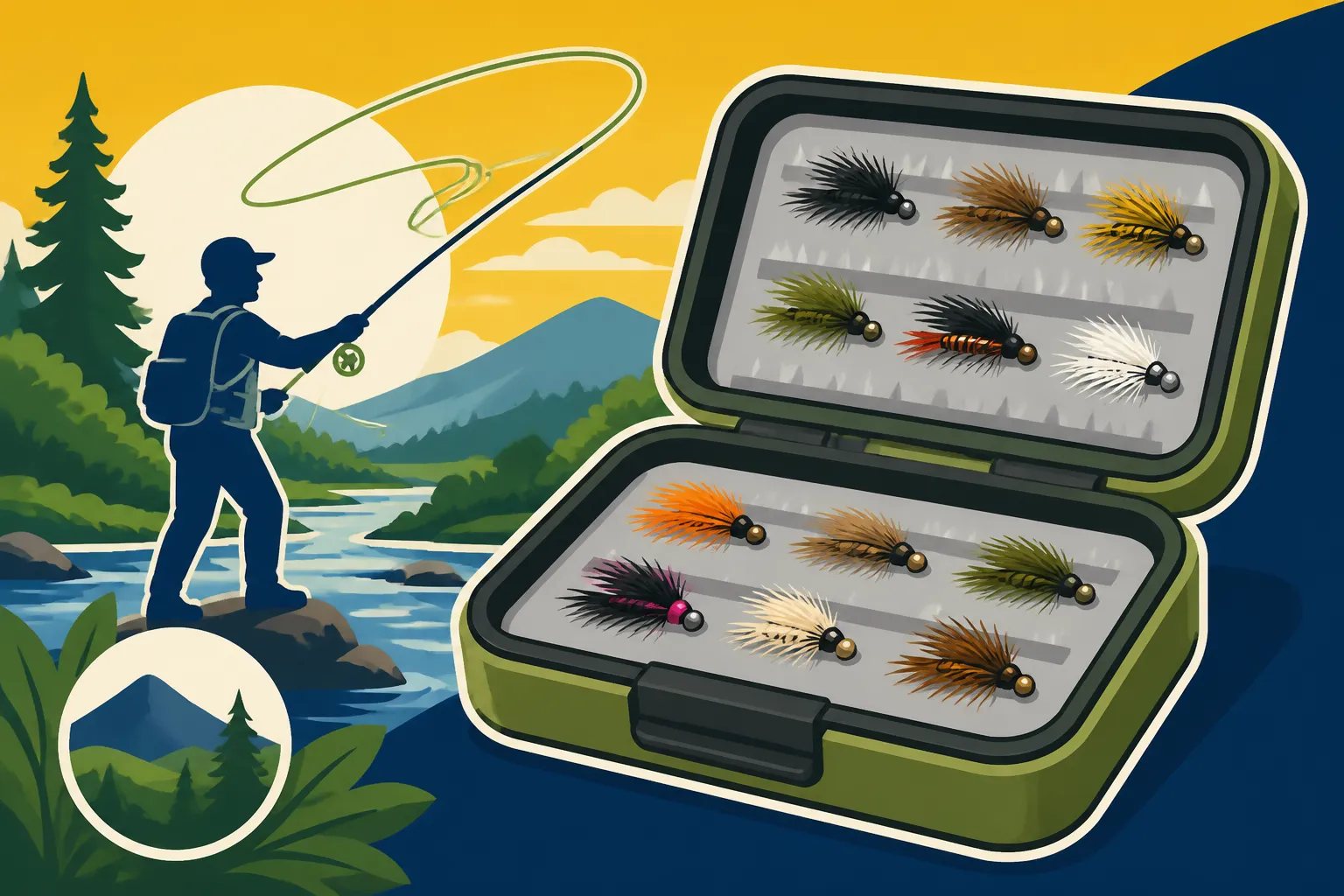
For most new anglers in New Hampshire, a couple of medium-sized, durable, waterproof slit foam boxes will serve you very well. One could be for nymphs and streamers, and the other for dry flies, keeping them separate and protected. This allows you to carry a good variety without being weighed down or fumbling around.
Recommended Fly Patterns for a Beginner's New Hampshire Box
Now that you know what kind of box to look for, what flies should you actually put in it? Don't worry about filling it to the brim right away. A modest selection of versatile patterns will cover most situations you'll encounter while Trout Fishing in New Hampshire. The goal is to learn how to fish a few patterns well, rather than having hundreds you don't understand.
Go-To Nymphs for Year-Round Success
Nymphs imitate the aquatic insect larvae and pupae that make up a huge portion of a trout's diet. They are often fished subsurface and are incredibly effective, especially in New Hampshire's cooler waters.
- Pheasant Tail Nymph: This is a classic for a reason. It's a general imitator of many mayfly nymphs and works practically everywhere. Get a few in sizes 14-18. It's subtle, natural, and incredibly consistent. You'll find yourself reaching for these year-round, especially when you're fishing in streams with a decent current.
- Hare's Ear Nymph: Another fantastic generalist, the Hare's Ear imitates various mayfly and caddisfly nymphs. Its buggy, textured appearance makes it irresistible to trout. Sizes 12-16 are a good starting point. This fly has a bit more bulk and often a touch of flash, making it visible and attractive even in slightly murkier water or faster currents.
- Squirmy Wormy: While some purists might scoff, the Squirmy Wormy is an undeniable trout magnet, especially for recently stocked fish in ponds and slower sections of rivers. These vibrant, flexible flies mimic segmented worms. Get a few in red or pink, sizes 10-14. They're easy to cast and often elicit aggressive strikes. They can be particularly effective in newly stocked waters during spring, or after a rain event that washes worms into the water.
These three patterns give you a solid foundation for subsurface fishing and are excellent for beginners because they are relatively easy to present and are generally effective across a wide range of conditions in New Hampshire.
Versatile Dry Flies for Surface Action
There's nothing quite like the thrill of seeing a trout rise to take a dry fly off the surface. While nymphs are often more consistent, having a few reliable dry flies will allow you to capitalize on those moments when fish are looking up.
- Elk Hair Caddis: Caddisflies are abundant in New Hampshire, and this pattern is a perfect imitation. It floats well, is highly visible, and often triggers aggressive strikes. Have some in sizes 12-16. This is a durable pattern that can handle some abuse and still float, making it great for beginners who might not always have the gentlest presentation. It's a go-to when you see caddis flying around or when fishing riffles and faster water.
- Adams: The Adams is arguably the most famous general-purpose dry fly. It can imitate a wide variety of mayflies and even some midges. Its mixed coloration and upright wings make it a natural choice for many situations. Sizes 14-18 are essential. It's a fantastic "searcher" pattern when you're not sure what specific insect is hatching, and it generally fishes well in both slower pools and faster runs.
- Parachute Adams: This variation of the Adams is even easier for beginners to see on the water, thanks to its white parachute post. It also sits lower in the water, often making it more realistic to finicky trout. Again, sizes 14-18. The Parachute Adams is particularly effective in clear, calm water where fish have more time to inspect your fly.
These three dry flies will give you patterns to fish when trout are keying on surface insects, which is a magical experience that every fly angler should get to enjoy. For more specific patterns, you might look into Fly Patterns for New Hampshire Trout Streams as you gain experience.
Streamers and Wet Flies for Aggressive Fish
Sometimes, trout aren't looking for tiny insects. They're looking for a bigger meal—a baitfish, a leech, or a sculpin. That's when streamers and wet flies come into play.
- Woolly Bugger: If there's one streamer every beginner should have, it's the Woolly Bugger. This incredibly versatile fly can imitate just about anything: baitfish, leeches, crawfish, even large aquatic insects. Get a few in black, olive, and brown, sizes 8-12. Fish it slowly, strip it, or swing it; it just works. It's fantastic for targeting larger trout in deeper pools or along undercut banks, and it's also a secret weapon for bass and panfish in New Hampshire ponds.
- Soft Hackle: These classic wet flies are excellent for imitating emerging insects or drowned terrestrials. Fished on a swing across the current, they are deadly and often trigger subtle takes. Get some in partridge and orange, or partridge and green, sizes 14-18. They are incredibly effective in slower currents, especially when trout are feeding just below the surface during an emergence. These are also excellent choices for New Hampshire Catch and Release Fly Fishing Only Waters where presentation can be key.
With these few patterns, you'll be well-equipped to tackle a good portion of the fishing opportunities New Hampshire has to offer. Remember, you don't need a huge variety, just a well-chosen selection that gives you confidence.
Building Your First Fly Box: Practical Steps and Brand Considerations
So you've got a grasp of what kind of box you need and what flies to put in it. Now, let's talk about actually getting it all together and making it functional for your upcoming adventures on the water.
Starting with a Core Selection (and Where to Find It)
The best way to start is not to buy a hundred flies at once. Instead, focus on acquiring 3-5 of each of the recommended patterns above, in a couple of different sizes. This gives you enough duplicates in case you lose a few (which you will!), and enough variety to experiment. For example, grab a few size 14 and 16 Pheasant Tail Nymphs, a couple of black and olive Woolly Buggers, and some size 14 Parachute Adams. This will create a robust core selection without overwhelming your initial investment or your fly box.
When it comes to actually buying these items, you have a few good options. Your local fly shop is always an excellent resource. The staff there can give you hyper-local advice on what flies are working right now on specific New Hampshire waters, and they often have beginner-friendly fly box kits. They're also great for advice on Best Gear for New Hampshire Trout Fishing in general. If you prefer shopping online, reputable retailers like Bass Pro Shops and Amazon offer a wide selection of fly boxes and individual patterns. You can often find great value packs of beginner-friendly flies on these platforms, which can be a cost-effective way to get your initial assortment. Just be sure to read reviews to ensure quality.
Organizing for Efficiency on the Water
Once you have your box and your flies, the next step is to organize them. This might seem trivial, but a well-organized box saves you precious fishing time and prevents frustration. Consider grouping your flies by type (nymphs, dry flies, streamers) or by size within your foam inserts. For example, dedicate one side of your box to nymphs and the other to dry flies. Within those sections, you can group by size, with smaller flies at one end and larger ones at the other.
Some anglers even color-code their flies or use small labels within the box to quickly identify patterns, though this might be overkill for a beginner with a small collection. The key is to create a system that makes sense to you. When you're standing knee-deep in a cold New Hampshire stream, with the wind blowing and a hatch coming off, you want to be able to find the right fly quickly, tie it on, and get back to fishing. Don't forget a small compartment for split shot and strike indicators if your box has one, or consider a separate small accessory box.
Expanding Your Collection as You Grow
Your first fly box is just that: a start. As you spend more time on New Hampshire's waters, you'll naturally learn what patterns work best in different conditions and for different species. You'll start identifying specific hatches on the Merrimack River Fishing Spots or notice that Spring Trout Fishing Techniques for New Hampshire Ponds often call for brighter patterns. This is when you can begin to thoughtfully expand your collection.
Don't feel pressured to buy every new fly you see. Instead, keep a small notepad or use a fishing app to log what you fished, where, and what worked (or didn't work). This journal will be invaluable for guiding your future purchases. You might find you need more specialized patterns for different seasons, like specific stonefly nymphs for early spring or tiny midges for winter. As you become more confident, you might explore different types of boxes as well, perhaps a dedicated box for your Best Streamer Patterns for New Hampshire Brown Trout or a slimmer box for Best Fly Line for Small Mountain Streams. Take your time, learn from your experiences, and let your growing knowledge of New Hampshire fishing guide your collection.
| Organization Style | Pros for Beginners | Cons for Beginners | Best Use for Beginners (NH) |
|---|---|---|---|
| Slit Foam Inserts | Excellent organization, prevents tangles, easy visibility, protects delicate dry flies. | Hooks can sometimes slip if foam is low quality; wet flies can lead to rust. | General trout fishing (nymphs, dry flies, streamers) on streams and ponds. |
| Magnetic Base | Ideal for very small flies (midges); flies lie flat. | Not suitable for larger flies; less secure in jolts. | Supplementary box for micro-nymphs or tiny dries. |
| Compartmentalized | Good for separating different fly types; great for bulkier flies or accessories. | Flies can move around; less space efficient for many small flies. | For larger streamers, or holding split shot, indicators, leaders. |
Disclaimer
This article is for general informational purposes only and does not constitute professional advice. Laws, prices and regulations vary by location and change over time. Consult a qualified professional for guidance on your specific situation.