Best jig color for winter perch
There's nothing quite like the crisp air and peaceful solitude of ice fishing in New Hampshire, is there? But let's be honest, staring down a hole, hoping for a bite, can sometimes feel like a guessing game. One of the biggest head-scratchers for us anglers, especially when targeting those delicious winter perch, is figuring out the "right" jig color. You've probably got a tackle box full of options, but how do you know which one will actually get those finicky perch to strike when the water's cold and light is scarce? This guide is here to take the guesswork out of it, diving deep into how perch see, what colors tend to work best in different New Hampshire winter conditions, and how to put together a jig strategy that will lead to more fish on the ice.
Understanding Perch Vision and Winter Conditions
Before we even talk about specific colors, it’s crucial to understand how a perch’s world looks underwater, especially during the winter months. It’s not the same as our brightly lit, above-ice perspective, and recognizing this is the first step toward choosing effective jig colors.
How Perch See Color in Low Light
Perch, like many fish, have eyes adapted to their underwater environment. They possess both rods and cones in their retinas, allowing them to detect both light intensity (rods) and color (cones). However, the specific wavelengths of light—and therefore, colors—that penetrate water vary significantly, especially under ice and snow. Imagine a thick blanket of snow covering the ice on Lake Winnipesaukee, or a cloudy day over Squam Lake. This drastically reduces the amount of sunlight reaching the water column.
As light passes through ice and water, some colors are absorbed more quickly than others. Red, for instance, is typically the first color to disappear, often becoming indistinguishable at relatively shallow depths. Orange and yellow follow, with blues and greens penetrating much deeper. What appears as a vibrant red jig to us on the ice might look like a muted brown or gray to a perch just a few feet below in lower light conditions. This color shift is why simply picking a "bright" color isn't always the answer; sometimes, a color that appears dull to us is actually more visible or natural-looking to the fish. Understanding this fundamental principle is key to unlocking more bites.
Impact of Water Clarity and Depth
Beyond just the amount of light, the clarity of the water and the depth you're fishing play enormous roles in how colors are perceived by perch. New Hampshire offers a fantastic variety of fishing environments, from crystal-clear mountain lakes to more tannin-stained ponds, and each demands a different approach.
In exceptionally clear waters, such as many of the pristine smaller ponds we have, fish tend to be more wary. Here, natural colors that blend in or mimic actual forage are often more effective. A perch in clear water has plenty of light and visibility to scrutinize your offering, so something that looks too unnatural can quickly send them swimming away. Think of a sunny day on a clear pond, where fish can see for many feet around them; a subtle presentation is often preferred. Conversely, in stained or turbid waters, perhaps after some snowmelt or in ponds with higher organic content, light penetration is even further reduced, and visibility is low. In these conditions, a jig needs to create contrast and stand out to be noticed. This is where those bolder, more vibrant colors can shine, as they provide a stronger silhouette or glow against the murkier backdrop, essentially yelling "Hey, look at me!" to a curious perch.
As you fish deeper, even in clear water, the available light diminishes significantly. A jig that looked chartreuse in three feet of water might appear as a faint green or even gray at 20 feet. It's a progressive absorption of the color spectrum. This means that a color choice for shallow-water perch might be completely ineffective for fish holding in deeper basins. Many New Hampshire anglers targeting deeper basins for Lake Trout Fishing in New Hampshire or even large perch might find that glow-in-the-dark or UV-enhanced jigs become incredibly important, as they emit light rather than just reflecting it, making them visible when ambient light is almost nonexistent.
Top Jig Colors for Winter Perch in New Hampshire
Now that we've peeled back the layers of how perch see underwater, let's dive into the most effective jig colors for New Hampshire's winter perch, categorizing them by when they tend to perform their best.
The Proven Power of Natural and Subtle Hues
Sometimes, the best approach isn't to scream for attention, but to whisper. Natural and subtle colors are incredibly effective when perch are cautious, the water is clear, or light conditions are moderate. These colors aim to imitate what perch naturally feed on: tiny baitfish, insect larvae, or even bottom-dwelling invertebrates.
- Gold, Silver, and Bronze: These metallic colors are fantastic because they perfectly mimic the flash of baitfish scales. In clear water, or when fishing on a bright, sunny day with good light penetration through the ice, the subtle glint of a gold or silver jig can be incredibly enticing. Imagine a small school of minnows darting around—that's the effect these colors create. A small gold teardrop jig, perhaps tipped with a single spike or a piece of Berkley PowerBait, can be absolutely deadly. You can find a huge variety of these subtle, metallic jigs, often in multi-packs, when you browse online at places like Amazon or Bass Pro Shops, making it easy to stock up.
- Black, Brown, and Olive: These darker, earthy tones are often overlooked in favor of brighter options, but they are absolutely essential, especially when targeting perch that are feeding on the bottom. Black, brown, and olive jigs excel at imitating insect larvae, leeches, or other small aquatic creatures that perch root around for. In moderately stained water, or on cloudy days, these colors create a strong silhouette against the lighter sky above, making them highly visible without being garish. They’re also fantastic for mimicking distressed or dying baitfish that have settled to the bottom. Don't underestimate a small, dark jig. It might just be the most natural meal a cautious perch sees all day.
These subtle colors are your go-to when fish are heavily pressured, when you’re fishing incredibly clear lakes where fish have keen eyesight, or when you suspect the perch are being particularly picky. They offer a more "realistic" presentation, appealing to a perch's instinct to feed on what's naturally available.
Bright and Bold: When to Grab Attention
While subtlety has its place, there are definitely times when you need your jig to be a beacon in the depths. Bright and bold colors are designed to stand out, create contrast, and trigger an aggressive reaction, especially when visibility is poor.
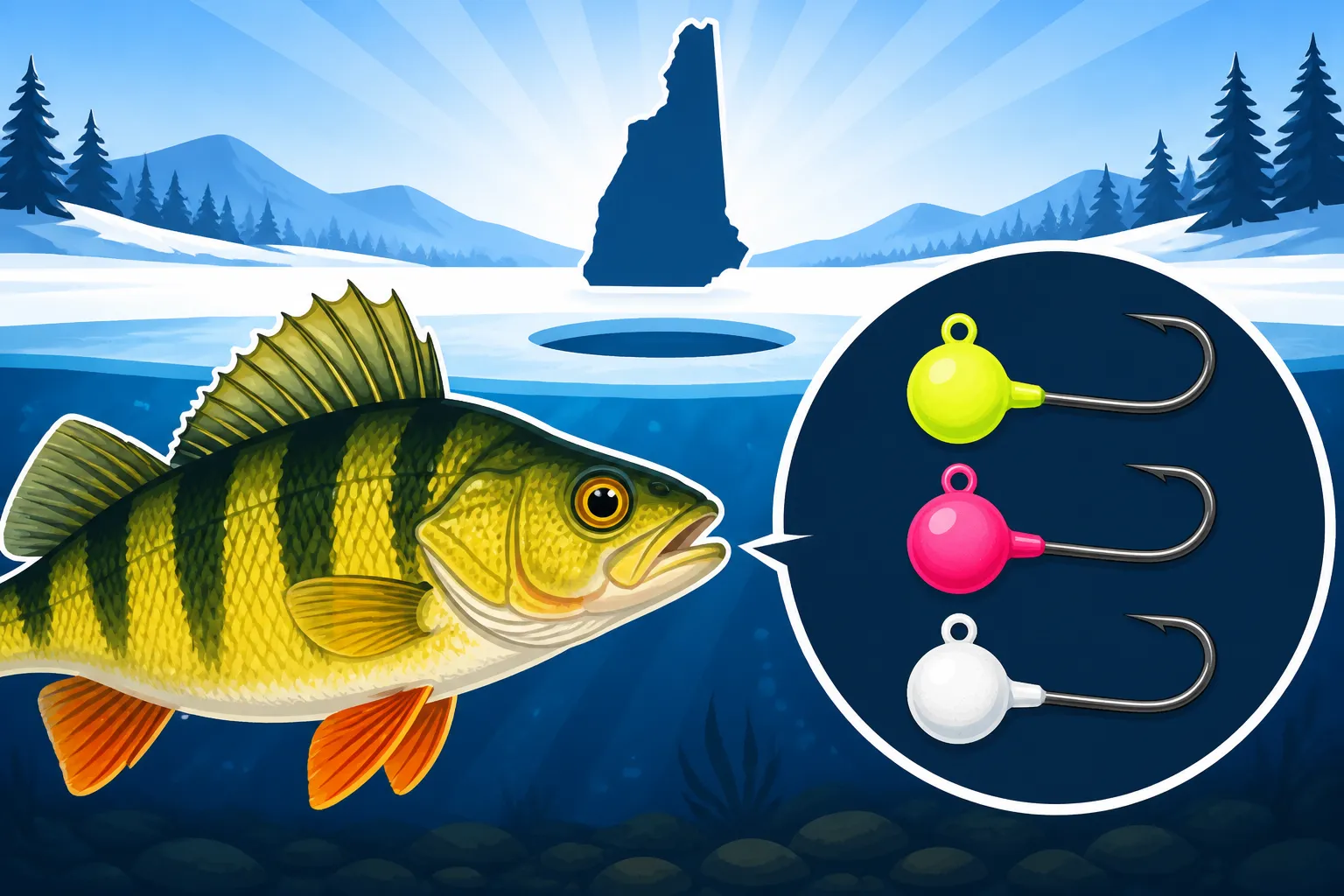
- Chartreuse, Orange, and Pink: These are the superstars of low-visibility situations. When the ice is thick with snow, the day is heavily overcast, or you’re fishing in stained water, these colors cut through the gloom. They absorb and reflect light in a way that makes them highly visible to fish, even when other colors appear dull. Chartreuse is almost universally effective for perch, often working when nothing else will. Orange and pink, especially in variations that border on "fluorescent," can also be incredibly potent. These colors are fantastic for triggering a perch’s aggressive side, making them strike out of curiosity or irritation. If you're ice fishing on a lake known for its healthy population of Yellow Perch in New Hampshire Lakes, like Lake Winnisquam, and the bites are slow, swapping to a bright chartreuse jig is often the first move.
- Glow-in-the-Dark (Luminescent) Jigs: These are truly a game-changer for deep water or extremely dark conditions. Glow jigs absorb light and then slowly emit it, creating their own visible source of attraction. This is especially effective when fishing deeper than 15-20 feet, where natural light struggles to penetrate, or during twilight hours and early mornings. Many anglers will "charge" their glow jigs with a small flashlight or UV light before dropping them down the hole. The pulsating or steady glow can draw perch in from a distance, making them an irresistible target. Look for small glow jigs in chartreuse, orange, or white, as these are often the most effective. They're a staple for any serious ice angler, particularly when chasing deeper schools of fish.
These vibrant options are your best bet when you need to grab a perch's attention quickly. They work well on active fish, in turbid conditions, or simply when you want to see if a bold offering can wake up a sleepy school of fish.
The "Wildcard" Colors and Their Situational Use
Beyond the mainstays, there are a few wildcard colors that, while not always the first choice, can be surprisingly effective in specific situations, proving that sometimes thinking outside the box pays off.
- Purple and Blue: While not as common for perch as chartreuse or gold, purple and blue can be highly effective, particularly in very clear water or when perch are feeding on specific types of forage. Purple, in certain light conditions, can mimic crayfish or specific insect patterns. Blue, especially a subtle light blue or silver-blue, can imitate the shimmer of certain baitfish species that perch prey on. These colors often perform best on sunny days in clear water where fish have the opportunity to really see the subtle nuances of your jig. They're excellent "confidence" colors for some anglers who have found success with them when other, more traditional colors have failed.
- White: Simple, clean white can be a surprisingly good perch color. It's highly visible in many conditions, creating a strong contrast against a darker bottom or background. It can also imitate small pieces of ice or snow that might fall into the water, or certain types of aquatic insects. White jigs, especially those with a bit of flash, can be very productive in moderately clear to slightly stained water, and they offer a clean, crisp presentation that can attract curious perch.
The key with these wildcard colors is experimentation. Don't be afraid to tie on something different if the usual suspects aren't producing. Perch can be finicky, and sometimes, a unique color is exactly what they're looking for on a given day. Always keep a few different options in your Best Tackle Box Setup for New Hampshire Anglers.
Factors Beyond Color: Presentation is Key
Choosing the right color is certainly important, but it's only one piece of the puzzle. Even the perfect color won't catch fish if your presentation isn't on point. When ice fishing for perch in New Hampshire, paying attention to the details of how you present your jig can make all the difference.
Jig Size and Profile Matters
Perch have relatively small mouths compared to a bass or a trout, and they're often feeding on tiny organisms. This means jig size and profile are absolutely critical. Most successful perch anglers lean towards smaller jigs, typically ranging from 1/32 to 1/16 ounce, and sometimes even smaller.
- Matching the Hatch: Think about what a perch naturally eats. In the winter, this often includes tiny insect larvae, zooplankton, or very small baitfish. Your jig should aim to mimic these prey items in size and shape. A tiny teardrop jig, a small horizontal jig, or a micro tungsten jig can be incredibly effective. Tungsten jigs, while often a bit more expensive, are fantastic because their density allows them to be very small yet heavy, getting down to the fish quickly without spooking them with a large profile. Bass Pro Shops and other retailers offer a great selection of these specialized small jigs, making it easy to find what you need.
- Profile: The shape of your jig also matters. Some jigs are designed to hang horizontally, mimicking a minnow, while others are vertical teardrops that resemble an insect larva. Experiment with both. On days when perch are lethargic, a horizontal jig that barely moves might be more appealing than a rapidly dropping vertical one. Observe what the fish finder tells you: are fish reacting to the drop, or only after the jig has settled? This can inform your choice of jig profile.
Tipping Your Jig: The Scent and Texture Boost
Even the most perfectly colored and sized jig can be improved with a little something extra. Tipping your jig with bait or adding a scent attractant can be a game-changer, especially for finicky perch.
- Natural Baits: Live bait, even just a small piece, adds scent, taste, and natural movement that no artificial lure can fully replicate. Popular choices for perch include:
- Mealworms and Spikes (Maggots): These are perhaps the most popular and effective. A single spike hooked through the head, wriggling on a tiny jig, is often irresistible. They're hardy and easy to keep alive in cold conditions.
- Minnow Heads: A small piece of a minnow head offers potent scent and a bit of meat that perch can zero in on. Be mindful of local regulations on using live bait.
- Waxworms: Another excellent choice, similar to mealworms, providing good scent and movement.
- Scent Attractants: If live bait isn't an option, or you just want to enhance your artificial presentation, scent attractants are a great alternative. These come in gels, sprays, or pastes that you apply directly to your jig. Brands like Berkley PowerBait (in the form of small "maki" or "crappie nibbles") are specifically designed to be added to jigs, offering both scent and a bit of visual appeal. The added scent can draw perch in from a greater distance and encourage them to hold onto the jig longer, giving you more time to set the hook.
Combining an appealing jig color with a tasty, smelly morsel can often be the secret sauce to a successful perch outing, turning cautious nibbles into confident strikes.
The Art of Jigging Action
You've got the right color and the perfect tip; now it's about how you dance that jig. The way you work your jig through the water is just as important as the gear itself. Perch are curious but can also be incredibly sensitive to overly aggressive movements.
- Subtle Twitches and Pauses: Often, less is more when it comes to perch. Start with very small, subtle twitches of your rod tip, just enough to make the jig "dance" a little. After a few twitches, hold the jig perfectly still for a few seconds. Many times, perch will strike when the bait is completely motionless. This pause allows them to get a good look, and the lack of movement often triggers an instinctual grab.
- Aggressive Lifts and Drops: While subtlety is often key, there are days when perch are more active and respond to a more aggressive presentation. Try lifting your rod tip six inches to a foot, then letting the jig fall back on a semi-slack line. This creates a fluttering action that can mimic a fleeing baitfish. Watch your line closely for any hesitation or quick movement on the drop – that's often a bite.
- Reading the Fish Finder: Your electronics are your best friend here. Pay close attention to how perch react to different jigging actions. If you see them approach your jig but not commit, try slowing down, speeding up, or changing your jigging cadence. Sometimes, a series of quick twitches followed by a long pause is the magic ticket. Other times, a slow, steady lift will get them to bite. The fish finder provides real-time feedback, allowing you to adapt your technique until you find what the fish want. Learning to read your fish finder effectively for Jigging for Perch Through the Ice is a skill that will dramatically increase your success.
Putting it All Together: Practical Tips for New Hampshire Ice Anglers
You’ve learned about perch vision, effective colors, and the importance of presentation. Now, let’s talk about how to apply this knowledge practically on the ice in New Hampshire.
Building a Diverse Jig Box
One of the biggest mistakes anglers make is relying on just one or two "lucky" jig colors. Perch preferences can change not just by the day, but by the hour, and even by the hole you’re fishing. A truly effective ice angler carries a wide array of options.
- Variety is Key: Your jig box should be a rainbow of possibilities. Include multiple shades of gold, silver, black, brown, olive, chartreuse, orange, pink, white, and even some blues and purples. Don't forget glow-in-the-dark options in several of these colors. Ensure you have a range of sizes too, from tiny 1/32 oz for finicky fish to slightly larger 1/8 oz for more aggressive situations or deeper water. Think of it like a chef's spice rack – you need options for every flavor profile.
- Organization Makes it Easier: Keep your jigs organized by color, size, or type. This saves valuable time when you're out on the ice, hands freezing, and you need to make a quick change. Small tackle boxes with adjustable dividers are perfect for this. When you’re at home, consider looking at some of the pre-made ice fishing jig kits available on Amazon or Bass Pro Shops; these often provide a good starting assortment of colors and sizes that are popular for panfish. Having a well-stocked and organized kit means you spend more time fishing and less time fumbling.
Experimentation on the Ice
The theoretical knowledge is great, but the real learning happens through hands-on experimentation. Don't be afraid to try new things when you're actually out there.
- Systematic Testing: When you hit a new spot or the bite slows down, don't just keep dropping the same jig. If you're not getting bites after 10-15 minutes, change something. Start by changing colors within the same jig type. If that doesn't work, change the size. If still nothing, try a different profile. It's often helpful to drill several holes in an area and cycle through different jig-color combinations until you find what works. Make a mental note (or even a physical note if you’re a serious planner) of what worked in which conditions, so you can apply that knowledge on future trips.
- Observe Your Fellow Anglers (Respectfully): While it's great to figure things out on your own, sometimes a quick glance around can offer clues. If another angler is consistently pulling in perch, observe if they're using a specific color (if you can tell), or if they seem to be jigging in a particular rhythm. Don't crowd them, but use the collective knowledge of the ice fishing community to your advantage. And if you’re lucky enough to make a new friend, don’t hesitate to ask for tips—most New Hampshire anglers are happy to share their knowledge!
Reading the Conditions and Adapting
The New Hampshire winter landscape is dynamic, and so are the fish. What worked yesterday might not work today, and what works in the morning might not work in the afternoon.
- Environmental Cues: Always pay attention to environmental factors. Is the sky clear and sunny, or is it heavily overcast? Is there a fresh layer of snow on the ice, blocking sunlight, or is the ice clear? What's the water clarity like? Are you fishing deep or shallow? Each of these factors influences light penetration and, therefore, which colors are most visible and appealing. For instance, on a bright, sunny day over clear ice, a subtle gold or silver might be perfect. But if a snow squall rolls in and the light dims dramatically, a switch to a vibrant chartreuse or a glow jig could be the key.
- Perch Mood Swings: Perch have moods, just like us! Sometimes they’re aggressively feeding, and sometimes they're sluggish and lethargic. An aggressive perch might strike at a bold, flashy jig, while a finicky one might only respond to a tiny, natural-colored jig with a delicate twitch. Adapt your color and presentation based on their apparent activity level. If they're just "looking" at your jig on the fish finder without committing, that's your cue to slow down, lighten up your jig, or switch to a more natural color. Knowing How thick ice needs to be before New Hampshire anglers fish it is important for safety, but understanding these subtle changes in conditions and fish behavior is critical for success.
By thoughtfully considering perch vision, building a diverse jig arsenal, consistently experimenting, and adapting to ever-changing conditions, you’ll be well on your way to becoming a more successful winter perch angler on New Hampshire’s frozen waters. You'll be ready for New Hampshire ice fishing season for pickerel and perch as soon as the ice is safe!
Recommended Jig Colors for New Hampshire Winter Perch
Here’s a quick overview to help you pick the right jig color based on common winter conditions you'll encounter on New Hampshire lakes and ponds.
| Condition | Water Clarity | Light Conditions | Recommended Colors | Notes |
|---|---|---|---|---|
| Bright, Sunny Day | Clear | High | Gold, Silver, Natural (Brown, Olive) | Mimics natural baitfish flash; subtle. |
| Overcast, Snowy Day | Clear | Low | Chartreuse, Orange, Pink, White | High visibility, creates contrast. |
| Stained/Turbid Water | Stained/Murky | Low to Moderate | Chartreuse, Orange, Glow-in-the-Dark, Black | Strong silhouette, stands out against murk. |
| Deep Water (>15 ft) | Clear or Stained | Very Low | Glow-in-the-Dark (any color), White, Chartreuse | Emits light, highly visible when ambient light is gone. |
| Finicky/Pressured Perch | Clear | Moderate to High | Black, Brown, Olive, Subtle Metallics | Natural imitation, less aggressive presentation. |
| Aggressive/Active Perch | Any | Any | Chartreuse, Orange, Bright Pink, Flashy Metallics | Triggers reaction strikes, grabs attention. |
| Twilight/Early Morning | Any | Very Low | Glow-in-the-Dark (all colors) | Maximize visibility in low light, charge frequently. |
Disclaimer
This article is for general informational purposes only and does not constitute professional advice. Laws, prices and regulations vary by location and change over time. Consult a qualified professional for guidance on your specific situation.