Best fly line for small mountain streams
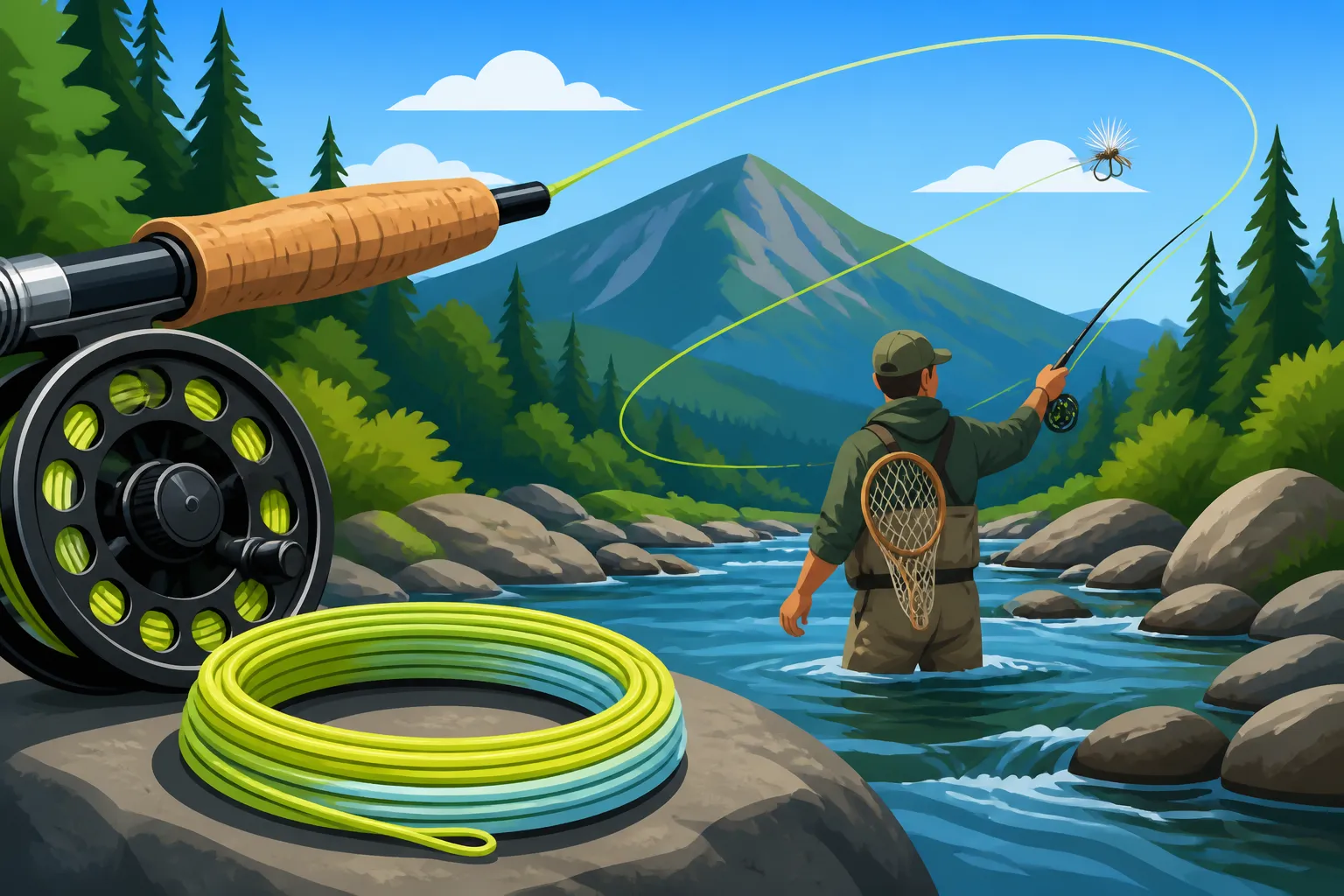
One of the biggest frustrations when you're standing on the bank of a charming New Hampshire mountain stream, rod in hand, is feeling like your cast is just too clumsy, too heavy for those spooky wild brook trout. Trying to deliver a delicate dry fly into a tight pocket of water with an ill-suited line can feel like trying to thread a needle with a rope. This guide will walk you through exactly what to look for in a fly line specifically designed for the unique challenges of small mountain streams, ensuring your presentations are as subtle and effective as possible.
The Unique Demands of New Hampshire's Small Mountain Streams
Fishing the quaint, often overgrown, mountain streams scattered across New Hampshire, from the White Mountains down to the smaller brooks in the Monadnock Region, presents a distinct set of challenges. These aren't your wide-open rivers where long casts reign supreme. Here, precision, stealth, and a light touch are paramount.
Understanding Water Flow and Current Dynamics
Small mountain streams are characterized by their dynamic and often turbulent water flow. You'll encounter a constant succession of pocket water, small riffles, plunge pools, and short, intricate runs. The fish, typically native brook trout, are accustomed to quick feeding opportunities in these varied currents and are incredibly wary of anything that looks unnatural. Your fly line needs to facilitate quick, accurate casts into these small holding lies, often requiring instant mends to keep your fly drifting naturally for mere seconds. A heavy, clunky line makes this incredibly difficult, often causing drag before your fly even has a chance to settle. The sheer number of micro-currents means constant line management, and a line designed for long-distance casting might fight you every step of the way, making those crucial short drifts nearly impossible.
The Importance of Delicate Presentations and Short Casts
In these intimate environments, you're usually casting at relatively short distances, often within 10 to 30 feet. The fish are close, and any disturbance – a heavy line slapping the water, or a fly line shadow passing overhead – can send them darting for cover. Therefore, the ability to make incredibly delicate presentations is critical. You need a fly line that unrolls softly, placing your fly on the water with the grace of a falling leaf, rather than a thud. This often means shorter leaders and tippets too, which then puts more emphasis on the front taper of your fly line to absorb and transfer energy smoothly. Forget trying to cast across a wide river; here, it's all about pinpoint accuracy and a gentle touch, usually to a specific seam or eddy no larger than a dinner plate. This is particularly true when targeting the famously skittish brook trout in their native habitats, such as those found in some of the pristine high-elevation streams. You might find more insight on this in Brook Trout: New Hampshire's Native Trout.
Navigating Tight Quarters and Overhanging Vegetation
If you've spent any time on a smaller New Hampshire stream, like a tributary of the Saco River or a secluded section of the Swift River, you know the struggle: dense brush, overhanging branches, and thick streamside vegetation. These obstacles severely limit your backcasting room. You're often forced to make roll casts, bow-and-arrow casts, or other specialty casts that require minimal room behind you. A fly line that loads your rod quickly and efficiently at short distances, without needing a lot of line in the air, becomes invaluable. A long, aggressive front taper, while great for punching through wind, can be a liability here, causing tangles or catching on every stray branch. The line needs to be supple enough to handle these unorthodox casts and land softly, without generating too much inertia that could spook fish in such confined spaces. When navigating these conditions, proper wading techniques are also essential, which you can learn more about in Wading Techniques for New Hampshire Trout Streams.
Decoding Fly Line Types for Mountain Stream Success
Understanding the different types of fly lines is your first step to making an informed choice. While many lines exist, a few stand out for their suitability (or unsuitability) for small mountain streams.
Weight Forward (WF) Lines
Weight Forward lines are the most common type of fly line sold today, and for good reason: they are versatile and excellent at generating casting distance. The "weight forward" refers to the fact that the bulk of the line's weight is concentrated in the front 30 to 40 feet, allowing the caster to more easily load the rod and shoot line. This design is fantastic for reaching distant targets on larger rivers or lakes, and for turning over heavier flies or indicators.
However, for small mountain streams, WF lines can sometimes be a bit of overkill. Their inherent design emphasizes power and distance over delicacy and short-range finesse. While many modern WF lines feature specialized tapers (like "trout tapers" that attempt to mimic the delicacy of a Double Taper), the fundamental weight distribution still makes them less ideal for consistently soft presentations at very short ranges. If you're using a WF line on a small stream, you might find that it slaps the water a bit harder than you'd like, especially if you're not an expert caster. Furthermore, the specialized head on a WF line is designed to load the rod at a specific distance, and when you're consistently making casts of only 10-15 feet, you might not be properly engaging that weight, leading to less efficient casting and poor presentations.
Double Taper (DT) Lines
Ah, the classic Double Taper line – a true friend to the small stream angler. Before the advent of specialized WF tapers, DT lines were the gold standard for trout fishing, and they remain exceptionally effective for this specific application. A DT line is tapered down at both ends, with a long, level belly section in the middle. Imagine two WF lines spliced together at their thin, running line ends.
The beauty of a DT line for mountain streams lies in its incredibly delicate presentation. The long, fine front taper of a DT line allows for the softest possible landings, making it perfect for wary fish in clear, shallow water. Because the line is tapered at both ends, it also offers superior line control for mending. You can pick up and reposition sections of the line with minimal disturbance, crucial for extending drag-free drifts in complex currents. And here's a neat trick: if one end of your DT line starts to show wear, you can simply reverse it on your reel and use the other end, essentially getting two lines in one! This makes them a more economical choice in the long run. The evenly distributed weight across the tapered section loads the rod beautifully for short-to-medium casts, making roll casts and other tight-quarters techniques feel incredibly smooth and efficient. For anyone serious about Fly Fishing for Trout in New Hampshire, a DT line is often a top recommendation.
Level (L) Lines
Level lines are exactly what they sound like: a uniform diameter from end to end. They lack any taper whatsoever. While they are the simplest and generally the least expensive type of fly line, they come with significant trade-offs, especially for trout fishing on small streams.
Because there's no taper, a level line doesn't transfer energy efficiently through the cast, making delicate presentations incredibly difficult. They tend to land with a splash, and precise fly placement is a constant battle. Mending is also more challenging, as the uniform diameter offers less fine-tuning capability compared to tapered lines. While they might be suitable for very basic panfish setups or specific niche applications, they are generally not recommended for the nuanced and delicate fishing required on New Hampshire's small mountain streams. You'd be working against your equipment rather than with it.
Specialty Lines
Beyond the main categories, there are specialty lines designed for very specific purposes. For small mountain streams, you might encounter "trout taper" WF lines that attempt to combine the casting power of a WF with the delicacy of a DT, or lines specifically designed for nymphing or dry fly fishing.
- Trout Taper WF Lines: Many manufacturers, including leading brands available through Bass Pro Shops or Amazon, offer WF lines specifically marketed as "trout tapers." These lines feature a longer, finer front taper than a standard WF line, aiming for softer presentations. While they won't quite match the delicacy of a true DT line, they are a significant improvement over aggressive WF lines and can be a good compromise for anglers who want a single line for a broader range of trout fishing scenarios, including occasionally venturing to slightly larger waters.
- Small Stream Specific Lines: Some niche manufacturers produce lines explicitly named "small stream" or "brook trout" lines. These are typically WF lines with an extremely short, aggressive head to load the rod quickly in tight quarters, combined with a very delicate front taper for soft landings. They often excel at roll casting and overhead casting in constricted spaces, making them strong contenders.
Key Characteristics of an Ideal Mountain Stream Fly Line
When choosing the perfect fly line for those pristine New Hampshire mountain streams, it's not just about the type of line, but also about the specific characteristics that enhance performance in such unique environments.
Line Weight Matching Your Rod
The first rule of fly fishing is to match your fly line weight to your rod's recommended line weight. If you have a 3-weight rod, you should generally use a 3-weight line. For small mountain streams, lighter rods (2-weight, 3-weight, or even 4-weight) are typically preferred because they offer more finesse and protection for light tippets. Therefore, your fly line will likely be in these lighter weights as well.
However, for very short casts in extremely tight quarters, some experienced anglers will even downsize their line by one weight (e.g., a 2-weight line on a 3-weight rod) to maximize delicacy, though this can make casting more challenging for beginners. Conversely, if you frequently fish very small, bushy streams where roll casts are 90% of your technique, you might consider upsizing by one weight (e.g., a 4-weight line on a 3-weight rod). This can help load the rod faster for those short-range power casts. For most anglers, though, simply matching the line weight to the rod is the best starting point, especially when you're first getting into Best Fly Rods for New Hampshire Trout Streams.
Taper Design for Delicate Delivery
This is perhaps the single most crucial factor for small mountain stream lines. The taper of the fly line dictates how smoothly and delicately it unrolls and lands on the water.
- Front Taper: For small streams, look for lines with a long, fine front taper. This gradually decreasing diameter at the very front of the line allows the energy of the cast to dissipate slowly, resulting in a soft, quiet presentation. A short, aggressive front taper, while excellent for turning over heavy flies or punching through wind, will cause your fly to land with a splash, alerting those wary fish.
- Belly: The belly of the line is the thickest part. In a DT line, this is the long, level section that provides mass for mending and holding loops. In a WF line, the belly is part of the concentrated head. For mountain streams, a relatively long and consistent belly (as found in DT lines) or a smooth transition from the front taper into the belly (in WF lines) helps maintain a stable loop at short distances and facilitates delicate turnover.
- Running Line: On a WF line, this is the thinner, longer section behind the head, designed to shoot through the rod guides. For small stream fishing, you'll rarely need to "shoot" much running line, so its characteristics are less critical than the head and taper.
Line Color and Stealth
While not as critical as taper, line color can play a role in stealth, particularly on clear, shallow streams. Brightly colored lines (e.g., fluorescent yellow or orange) are highly visible to the angler, which is great for tracking your line and detecting subtle strikes. However, they can also be more visible to the fish, especially if they cast a strong shadow or lie directly over a fish's holding spot.
For small mountain streams, many anglers prefer more subdued line colors like olive, grey, moss green, or even clear/translucent lines. The idea is to minimize the visual impact on the fish. While fish are generally looking up at the sky and might only see a silhouette, any perceived threat can send them packing. A less conspicuous line can contribute to the overall stealth of your presentation. Of course, a well-placed, delicate cast with a bright line is always better than a clumsy cast with a stealthy line, so prioritize taper and casting technique first.
Suppleness and Memory
A fly line's suppleness refers to how flexible and limp it is, while memory refers to its tendency to retain coils from being stored on a reel. Both are important for small stream fishing.
- Suppleness: A supple line will lie flatter on the water, reducing drag. It will also coil less and cast more smoothly, especially when making delicate presentations or unconventional casts in tight spaces. Stiff, rigid lines tend to retain "memory" and can spring off the reel in coils, making casting erratic and leader turnover inconsistent.
- Memory: Lines with low memory are a blessing. They lay straight on the water, without kinks or coils, leading to better drifts and easier mending. When you're making short, precise casts, you don't want your line fighting you by trying to retain its coiled shape. Modern fly lines often feature advanced coatings that minimize memory while maximizing durability. A good example of where a supple line truly shines is when you're trying Dry Fly Fishing New Hampshire Mountain Streams where the smallest imperfection can ruin a drift.
Top Recommendations for Small Mountain Stream Fly Lines in New Hampshire
Given the distinct challenges and desired characteristics for fishing New Hampshire's small mountain streams, certain types and specific features of fly lines truly shine.
For General Purpose and Delicate Presentations
When it comes to the optimal choice for general small stream fishing where delicate presentations are key, Double Taper (DT) lines often stand head and shoulders above the rest. Their symmetrical taper on both ends allows for exceptionally gentle fly delivery and superior line control for mending.
Imagine you're fishing a tight pocket on the Ellis River, where a wild brook trout is holding just behind a submerged rock. You need to drop a size 16 dry fly precisely, and then mend your line immediately to prevent drag in the swirling current. A DT line, particularly in a 2-weight or 3-weight, excels at this. The fine front taper ensures the fly settles softly, and the long belly allows for quick, precise mends without disturbing the water or the fish. You can easily pick up a section of line upstream, reposition it, and let the fly continue its natural drift. Furthermore, many DT lines have a very supple core and coating, which reduces line memory and ensures it lies flat on the water, enhancing stealth and presentation quality. You can often find a good selection of these lines by brands like Scientific Anglers or Rio at outdoor retailers like Bass Pro Shops, or readily available on Amazon.
Some Weight Forward (WF) lines, particularly those specifically designed as "Trout Tapers" or "Presentation Tapers" with extended, fine front tapers, can also be excellent. While they might not offer the same inherent mending advantages of a true DT, they can still provide very delicate presentations and load a rod efficiently for those slightly longer (but still short) casts you might encounter. Look for WF lines with a designation like "DT-like" or "presentation taper" to ensure they prioritize delicacy over distance.
For Beginners and Budget-Conscious Anglers
Starting out in fly fishing, especially for the unique demands of small streams, doesn't mean you need to break the bank on a top-tier line. There are excellent, affordable options that will perform admirably.
For beginners, a well-designed Weight Forward "Trout Taper" line can be a great starting point. It's often easier for new casters to feel the rod load with the concentrated weight of a WF head, which can help in learning basic casting mechanics, even at short distances. Look for lines that emphasize a smooth, delicate turnover in their description. Brands like Cortland or Orvis often offer solid, entry-level lines that focus on these characteristics. While they might not have the absolute pinnacle of delicacy or the advanced coatings of premium lines, they are perfectly capable of delivering a fly gently and allowing a beginner to develop essential skills like roll casting and basic mending on waters like those found in Best Family-Friendly Fishing Spots in New Hampshire.
For the budget-conscious, considering a Double Taper line is a smart move not just for its performance, but also for its longevity. As mentioned, when one end shows wear, you can simply flip it around on your reel and use the other end, effectively doubling the lifespan of your line. This makes a DT line a fantastic value proposition, giving you premium performance for small stream applications without needing frequent replacements. You might find a great selection of double taper lines at your local Bass Pro Shops, or perhaps browse options on Amazon for specific brands known for delicate tapers.
Considering Durability and Longevity
Fly lines, despite their seemingly simple appearance, are complex pieces of engineering, and their durability varies. Investing in a line that lasts will save you money and frustration in the long run.
Modern fly lines are built with sophisticated coatings and core materials that resist cracking, abrasion, and UV damage. When fishing small mountain streams, your line is constantly coming into contact with rocks, submerged branches, and streamside vegetation. A durable line will stand up to this abuse better. Look for lines that advertise high-quality PVC or polyurethane coatings, which provide both suppleness and resilience. Lines with a "slick" finish also help the line shoot through guides smoothly, reducing friction and wear over time.
While premium lines often boast the most advanced coatings and lowest memory, even mid-range lines from reputable brands offer excellent durability. Regular cleaning and proper storage (avoiding extreme heat or kinks) will also significantly extend the life of any fly line. A line that performs well for multiple seasons is a far better investment than a cheap line that quickly cracks or develops excessive memory, hindering your casting and costing you fish. Many companies offer "all-around" trout lines that balance delicacy with a ruggedness suitable for varied conditions. For information on specific fishing regulations that might impact your gear choices, consult New Hampshire Fishing Regulations Explained.
Fly Line Comparison for Small Mountain Streams
Here's a quick comparison of general fly line types and how they stack up for small mountain stream fishing:
| Fly Line Type | Delicacy of Presentation | Short-Range Casting | Mending Ability | Line Management in Tight Spaces | Durability (General) | Cost (General) | Notes |
|---|---|---|---|---|---|---|---|
| Double Taper (DT) | Excellent | Excellent | Excellent | Excellent | Good | Medium | Ideal for finesse, roll casts, and long drag-free drifts. Can be reversed. |
| Weight Forward (WF) Standard | Fair to Good | Good | Fair | Good | Good | Medium | Versatile, but often too powerful for ultimate delicacy on small streams. |
| Weight Forward (WF) Trout Taper | Good to Excellent | Very Good | Good | Very Good | Good | Medium to High | A great compromise, designed for softer presentations than standard WF. |
| Level (L) | Poor | Poor | Poor | Poor | Good | Low | Not recommended for most trout fishing due to lack of taper and poor presentation. |
Conclusion
Choosing the best fly line for New Hampshire's small mountain streams really boils down to prioritizing delicacy, precise short-range casting, and excellent line control. While Weight Forward lines are incredibly popular, a Double Taper line, or a WF line specifically engineered with a long, delicate trout taper, will undoubtedly enhance your experience on these intimate waters. You'll find yourself making softer presentations, managing currents with greater ease, and ultimately, fooling more of those elusive brook trout. Don't let an ill-suited fly line be the barrier between you and a memorable day on the water; select a line that truly complements the unique demands of these special places. By carefully considering the taper, suppleness, and weight of your line, you’ll be well on your way to mastering the art of small stream fly fishing and connecting with New Hampshire’s native treasures.
Disclaimer
This article is for general informational purposes only and does not constitute professional advice. Laws, prices and regulations vary by location and change over time. Consult a qualified professional for guidance on your specific situation.