Dry Fly Fishing New Hampshire Mountain Streams
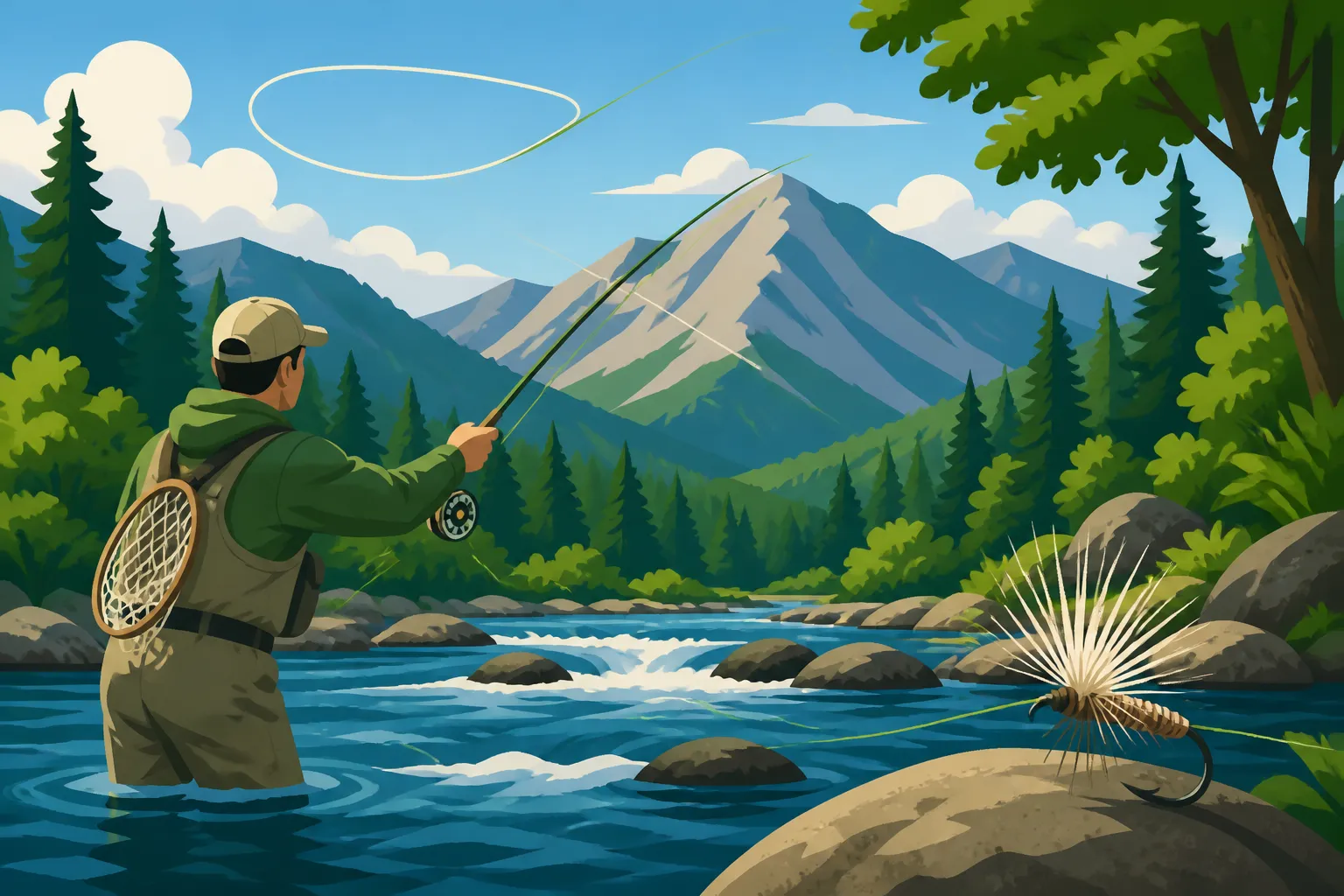
There’s nothing quite like the dream of casting a delicate dry fly onto a pristine New Hampshire mountain stream, watching a wild brook trout rise to meet it, only to be met with the harsh reality of tangled lines, spooked fish, and frustration in tight, overgrown spaces. This guide is here to demystify the art and science of dry fly fishing in the Granite State's stunning, yet often challenging, mountain waters, equipping you with the knowledge to turn those challenging moments into truly rewarding experiences.
The Allure of Dry Fly Fishing in New Hampshire's Mountains
For many anglers, dry fly fishing represents the pinnacle of the sport—a direct, visual connection between insect, fish, and angler. It's an experience that transcends merely catching fish; it's about the dance, the observation, and the profound immersion in nature. New Hampshire's mountain streams offer this experience in spades, albeit with their own unique set of demands and rewards.
Why Mountain Streams are Prime Dry Fly Territory
New Hampshire's mountain streams, particularly those tucked away in the White Mountains and other less-traveled ranges, are a dry fly angler's paradise for several compelling reasons. First and foremost, these waters are often the stronghold of our beloved native brook trout. These vibrant, colorful fish are less wary than their larger lake-dwelling cousins, and they possess an inherent eagerness to rise to a well-presented dry fly, especially when natural insects are abundant. Unlike heavily stocked ponds, the fish in these streams are often wild, making each successful catch feel like a genuine accomplishment.
Moreover, the environment itself is a huge part of the draw. You're typically surrounded by breathtaking scenery—towering pines, granite outcroppings, and the crisp, clean air that only comes from higher elevations. These streams are usually smaller, shallower, and clearer than larger rivers, making them ideal for precise dry fly presentations where you can often spot the fish before you even cast. The intimate nature of these waters means you're not battling crowds or massive currents, allowing for a more focused and peaceful angling experience. The absence of heavy fishing pressure in many of the more remote tributaries means that when you do find a stretch of water, it often feels like your own private sanctuary.
The Unique Challenges and Rewards
While the allure is undeniable, dry fly fishing in New Hampshire's mountain streams isn't without its challenges. These waters are often characterized by dense streamside vegetation, making traditional long, graceful casts difficult, if not impossible. Overhanging branches and tight pockets demand creativity with casting angles and specialized techniques. The currents can be complex, with numerous eddies, riffles, and seams that can induce drag on your fly almost immediately, making a natural, uninhibited drift a constant battle. Furthermore, the fish, while eager, are often smaller than those found in larger rivers or lakes, and their delicate takes require keen attention and quick reflexes.
However, these very challenges are precisely what make the rewards so much sweeter. Successfully navigating a brushy bank to deliver a perfect cast into a tight pocket, watching a wild brook trout confidently sip your imitation from the surface film, and feeling the tug of a fish that has rarely seen an artificial fly—these moments are incredibly gratifying. It teaches you patience, precision, and a deep understanding of stream dynamics and trout behavior. It forces you to slow down, observe, and truly engage with the environment. The satisfaction of outsmarting a truly wild fish in its natural, undisturbed habitat is an experience that keeps anglers coming back, season after season. It's a testament to your skill and connection to the wild.
Essential Gear for Your Dry Fly Mountain Adventure
Before you even think about stepping into a New Hampshire mountain stream, having the right gear is paramount. The dense vegetation, slippery rocks, and often remote nature of these waters demand specific equipment choices that prioritize precision, durability, and safety. You don't want to be halfway up a stream only to realize your rod is too long or your boots don't offer enough grip.
Rod, Reel, and Line Selection
When it comes to dry fly fishing in tight mountain streams, shorter, lighter rods are typically your best friend. A rod in the 6 to 7.5-foot range, with a 2 to 4-weight rating, is ideal. This shorter length makes it far easier to maneuver casts around overhanging branches and into tight pockets. The lighter line weight protects the delicate tippets you’ll be using for small flies and smaller fish, and it makes fighting those feisty brook trout a pure joy without overpowering them. For instance, a 7-foot, 3-weight rod provides enough backbone to cast accurately while still offering exceptional feel when a trout takes your fly. Many anglers find the shorter, softer action of these rods to be incredibly responsive for the quick, accurate presentations needed in these environments. You can often find a good selection of these specialized rods on platforms like Amazon, offering a variety of brands and price points. For more detailed insights on specific models, check out our guide on the Best Fly Rods for New Hampshire Trout Streams.
Your reel for this setup doesn't need to be a high-tech, expensive drag system marvel. A simple, lightweight click-and-pawl reel or a basic disc-drag reel that balances your rod perfectly is all you need. Its primary function is to hold your line, as you'll mostly be fighting fish on the reel's retrieve rather than its drag. As for the fly line, a weight-forward (WF) line is generally versatile, but some anglers prefer a double-taper (DT) line for its delicate presentation and ease of roll casting in tight spots. Make sure your line color isn't too bright, as you'll want to remain stealthy in these clear waters.
Tippet, Leaders, and Essential Accessories
The leader and tippet setup is crucial for achieving a natural, drag-free drift. A tapered leader, typically 7.5 to 9 feet long, ending in a fine tip (4X to 6X) is a good starting point. To this, you'll add tippet material to match the size of your fly and the wariness of the fish. For small dry flies (#16-20) and delicate presentations, 5X, 6X, or even 7X fluorocarbon or monofilament tippet is often necessary. Fluorocarbon is less visible in water and sinks slightly, which can be an advantage when you want your tippet to disappear below the surface film, but monofilament is often favored for dry flies as it floats better and can be easier to mend. Remember to carry spools of various tippet sizes in a small chest pack or vest so you can adapt to changing conditions and fly choices.
Beyond the core tackle, a few essential accessories will greatly enhance your dry fly experience. Floatant, either liquid or gel, is non-negotiable for keeping your dry flies riding high on the water. Nippers for trimming line, forceps or hemostats for hook removal, and a small landing net with a fine mesh (rubberized if possible for fish safety) are also critical. A good pair of polarized sunglasses will help you spot fish and submerged obstacles, and a wide-brimmed hat provides sun protection and helps cut glare. Don't forget a small fly box stocked with a variety of patterns specific to mountain stream hatches. These small but mighty items are easily overlooked, but their absence can quickly ruin a day on the water. Many of these critical items can be found conveniently on Amazon, often in value packs.
| Gear Category | Recommended Specification | Why It's Important in Mountain Streams |
|---|---|---|
| Rod | 6' – 7.5', 2-4 weight | Shorter for tight casting, lighter for delicate presentation & small fish. |
| Reel | Lightweight, click-and-pawl | Balances rod, holds line; drag less critical than line capacity. |
| Fly Line | WF or DT, matching rod weight | WF for general casting, DT for delicate roll casts; stealthy color. |
| Leader | 7.5' – 9', 4X-6X taper | Provides a smooth turnover, allows for subtle presentations. |
| Tippet | 5X – 7X (mono or fluoro) | Fine for small flies and wary fish; mono floats better for dries. |
| Floatant | Gel or Liquid | Keeps dry flies buoyant for a natural drift. |
| Nippers | Small, sharp | Quick and easy line trimming in the field. |
| Forceps | Small hemostats | Safely remove hooks from small fish. |
| Net | Small, fine mesh (rubber) | Protects fish, easier release; avoids tangling flies. |
| Sunglasses | Polarized | Reduces glare, helps spot fish and structure. |
Wading Gear for Safety and Comfort
Safety should always be your top priority, especially when navigating slippery, rocky mountain streams. A good pair of breathable chest waders is essential, even in summer, as mountain water can be surprisingly cold and deep in places. Choose waders that fit well, allowing for comfortable movement and layering during colder months. Look for durable materials that can withstand scrapes from brush and rocks.
Complementing your waders are your wading boots. This is one area where you absolutely shouldn't skimp. Felt soles provide superior grip on mossy, slick rocks, which are abundant in New Hampshire's freestone streams. However, some areas have regulations against felt soles due to invasive species concerns, so always check local rules. Rubber soles with studs or aggressive Vibram patterns are excellent alternatives, offering good traction and versatility. A sturdy wading staff is also a highly recommended safety item, providing an extra point of contact and stability, especially when crossing swift currents or navigating unseen drop-offs. Given the potential for remote locations, having reliable gear, like high-quality wading boots, available through online retailers like Amazon can be a real game-changer for preparation. You might also want to look at our guide on Best Wading Boots for Rocky Streams for more specific recommendations. Don't forget to pack a small first-aid kit in your pack, especially when venturing into more secluded areas.
Understanding New Hampshire's Mountain Trout and Their Diet
To consistently fool a wild trout with a dry fly, you need to think like one. This means understanding not only the species you're targeting but also what they're eating, and when. New Hampshire's mountain streams are primarily home to one very special fish, and a few key insect groups make up the bulk of their diet.
Identifying Native Brook Trout
The undisputed king of New Hampshire's mountain streams is the native brook trout (Salvelinus fontinalis). These beautiful fish are often smaller than the rainbow or brown trout found in larger rivers and lakes, but they make up for it in vibrant coloration and spirited fights. They are characterized by their worm-like markings (vermiform patterns) on a dark olive to black background on their backs, often with blue halos around reddish spots on their flanks. Their lower fins are typically orange with a distinctive white leading edge, often bordered by a black line—a feature that helps distinguish them from other trout species.
Brook trout thrive in the cold, oxygen-rich waters of mountain streams, preferring temperatures below 68°F (20°C). They are ambush predators, often holding in pockets behind rocks, under undercut banks, or at the tail ends of pools, waiting for insects to drift by. Because these fish are often wild and haven't seen a parade of artificial flies, they can be surprisingly aggressive towards a properly presented dry fly. However, their sensitivity to environmental changes means you need to be stealthy; a heavy step or a poorly placed cast can send them darting for cover. Understanding their habitat preferences and wary nature is crucial for a successful dry fly outing. For a deeper dive into their unique characteristics, be sure to read our post on Brook Trout: New Hampshire's Native Trout.
Key Insect Hatches and Imitations
Matching the hatch is the cornerstone of successful dry fly fishing, and in New Hampshire's mountain streams, you'll encounter a predictable rotation of insect life. Mayflies, caddisflies, and stoneflies are the primary aquatic insects, but terrestrials (land-based insects) also play a significant role, especially in summer.
- Mayflies (Ephemeroptera): These delicate insects have distinct upright wings and two or three tails. Key hatches in New Hampshire include Hendrickson's (early spring, size 12-14, reddish-brown body), Sulphurs (late spring/early summer, size 14-18, pale yellow body), and the tiny Tricos (late summer/early fall, size 20-24, black body). Having imitations like Parachute Adams, Light Cahills, and tiny Trico spinners in your fly box is a must.
- Caddisflies (Trichoptera): Caddisflies are often seen skittering across the surface, especially in the evenings. They have tent-shaped wings and are important throughout the season. Popular imitations include Elk Hair Caddis and Goddard Caddis in various sizes (12-18) and colors (olive, tan, grey). Their erratic behavior on the surface can sometimes trigger aggressive strikes from trout that might ignore a perfectly drifting mayfly.
- Stoneflies (Plecoptera): While typically associated with nymphing, larger stonefly adults can emerge and provide a substantial meal for trout, especially in larger mountain rivers or after heavy rains. Imitations like Stimulators or a large Royal Wulff (size 8-12) can be effective, particularly in faster, more turbulent water.
- Terrestrials: From late spring through early fall, land-based insects like ants, beetles, and grasshoppers become critically important food sources. These often fall into the water from overhanging vegetation, making trout look up for an easy meal. Carry a variety of ant patterns (black and cinnamon, size 16-20), foam beetles (size 12-16), and small grasshopper patterns (size 10-14). These flies are often overlooked but can be incredibly productive, especially on sunny summer afternoons when aquatic hatches are sparse. Learning to identify these insects on the water will greatly improve your chances, and having a good selection of Fly Patterns for New Hampshire Trout Streams is key.
Mastering Dry Fly Presentation Techniques
The secret to success in dry fly fishing, especially in the technical waters of New Hampshire's mountain streams, lies in presentation. It's not just about what fly you're using, but how you deliver it. A perfectly tied fly presented poorly will rarely catch fish, whereas a simpler fly delivered flawlessly can be deadly.
Reading the Water and Approaching the Stream
Before you even make a cast, take a moment to read the water. Look for pockets of calmer water behind large rocks, the seams where faster current meets slower water, and the tailouts of pools. These are prime holding lies for trout. Also, keep an eye out for any rises—trout feeding on the surface will create rings, giving away their position. In these clear streams, stealth is paramount. Trout have excellent eyesight and are easily spooked. Approach the stream cautiously, walking softly, and keeping a low profile. Stay away from the bank where your shadow might fall on the water.
When you identify a likely spot, plan your approach to maximize your chances for a drag-free drift. Often, this means casting upstream or slightly across-stream, allowing your fly to drift naturally back towards you. Avoid wading directly into the middle of the stream unless absolutely necessary, as this can disturb fish and precious insect life. Instead, utilize the banks and any available cover. Remember, the fish are almost always facing upstream, so approaching from downstream gives you the element of surprise. Understanding where trout hold is key; they're looking for food delivery points with minimal energy expenditure.
Casting for Success in Tight Quarters
Traditional overhead casting can be nearly impossible in New Hampshire's brushy mountain streams. This is where you'll need to employ a variety of specialized casts.
- Roll Cast: This is your bread and butter for tight quarters. With minimal backcasting room, a roll cast uses the surface tension of the water to load your rod, sending your line and fly forward. It's fantastic for delicate presentations in front of you.
- Bow-and-Arrow Cast: For truly impossible spots where there's no room to cast at all, the bow-and-arrow cast is a lifesaver. Grab your fly by the bend of the hook, load your rod by pulling it back like a bowstring, and release your fly. It's a short-range, accurate delivery method for precise placement.
- Slack Line Casts: Incorporating slack into your cast, such as a pile cast or an S-cast, helps to delay drag, giving your fly a more natural drift. By throwing curves and wiggles into your line, you extend the amount of time your fly floats freely before the current pulls on your line.
- Dapping: Sometimes, the densest canopy overhead makes even a bow-and-arrow cast impossible. In such cases, carefully lowering your fly directly onto the water from an overhead rod position, allowing it to "dap" on the surface, can be incredibly effective, especially for wary trout tucked under cover.
Practice these casts in your yard before hitting the stream. The muscle memory will pay off immensely when you're faced with challenging real-world scenarios. The more tools you have in your casting arsenal, the more water you'll be able to effectively fish.
Achieving a Drag-Free Drift
This is perhaps the single most important aspect of dry fly fishing. Drag occurs when your fly line and leader are pulled by different currents than your fly, causing the fly to move unnaturally, as if it were tethered or skating across the surface. Trout will almost always refuse a fly that's dragging.
The goal is a "drag-free drift," where your fly floats on the surface as if it were a natural insect, completely at the mercy of the current. To achieve this, you'll employ several techniques:
- Upstream Casts: Casting upstream often gives you more time to manage your line and perform mends before the fly reaches a potential fish.
- Mending: Mending is the act of repositioning your fly line on the water without moving your fly. If you see your line starting to tighten and pull your fly, lift your rod tip and "throw" a loop of slack line upstream or downstream, depending on the current, to allow your fly to continue its natural drift. This is a constant, subtle adjustment throughout the drift.
- Reach Casts: A reach cast involves extending your rod arm either upstream or downstream at the end of your forward cast, placing a curve in your line that buys you more time before drag sets in.
- High Sticking: In very tight quarters or turbulent water, sometimes the best approach is to keep as much of your line off the water as possible, using a very high rod tip. This reduces the amount of line susceptible to conflicting currents, allowing for a shorter, but often more accurate, drag-free drift.
Mastering the drag-free drift takes practice, but it's the ultimate key to consistently hooking trout on a dry fly. It's a continuous process of observation, casting, mending, and reacting to the ever-changing currents. For additional tips on navigating tricky currents and stream structures, our article on Wading Techniques for New Hampshire Trout Streams offers excellent advice.
Top New Hampshire Mountain Streams for Dry Fly Enthusiasts
New Hampshire is blessed with an abundance of beautiful mountain streams, many of which hold thriving populations of wild brook trout. While exploring and discovering your own hidden gems is part of the adventure, certain areas consistently provide excellent dry fly opportunities.
Classic White Mountain Streams
The White Mountains region, with its vast tracts of public land and numerous high-gradient streams, is a mecca for dry fly anglers.
- Ellis River (Jackson, NH): Flowing through the scenic Pinkham Notch area, the Ellis River is a beloved classic. It offers a mix of pocket water, riffles, and small pools, all easily accessible from Route 16. The river is heavily stocked in its lower sections but holds a good population of wild brook trout in its upper reaches and tributaries. The brushy banks in spots challenge your casting, but the rewards are there. Early morning and late evening often provide excellent dry fly action, especially during caddis and mayfly hatches.
- Swift River (Conway, NH): Accessible from the Kancamagus Highway, the Swift River is another favorite. Its upper sections, particularly above the popular swimming holes, are more remote and offer excellent habitat for wild brook trout. This river requires some hiking and bushwhacking to reach the best spots, making it ideal for anglers seeking solitude. Its crystal-clear waters demand stealth and precise presentations. Look for fish holding in the seams and pockets created by its numerous boulders. You can find more information about accessing this river in our article on Swift River Trout Fishing.
- Israel River (Jefferson, NH): Situated in the northern White Mountains, the Israel River provides another fantastic dry fly opportunity. This river is known for its gorgeous scenery and healthy wild trout populations. It's a slightly larger freestone stream than the Ellis or Swift, offering a bit more room for casting in some sections, but still maintains that intimate mountain stream feel. Access can be found off Route 2 and various forest service roads.
- Wildcat River (Jackson, NH): A smaller, steeper tributary of the Ellis, the Wildcat is often overlooked but can hold some beautiful brook trout. It’s tight, overgrown, and challenging, but for those who embrace the bushwhack, it can offer a truly wild experience.
These rivers often run alongside scenic byways, providing relatively easy access, but don't be afraid to venture off the beaten path on foot; the more effort you put in, the greater the potential for untouched water. Always check the current New Hampshire Fishing Regulations Explained before heading out, as special regulations may apply to certain sections or species.
Hidden Gems and Lesser-Known Waters
Beyond the well-known rivers, New Hampshire's mountains are dotted with countless smaller brooks, unnamed tributaries, and high-elevation ponds that offer incredible, secluded dry fly fishing. These are the places where you truly feel like you've stepped back in time, often having the entire waterway to yourself.
- Remote Headwater Streams: Look at a detailed map of the White Mountain National Forest or other state forests. Identify streams that flow out of high elevations, especially those without road access for several miles. These are often cold, pristine waters that harbor pure strains of native brook trout. Access typically requires hiking, sometimes several miles, but the solitude and opportunity to catch truly wild fish are unmatched. Examples include countless small brooks feeding into larger rivers like the Pemigewasset or Ammonoosuc.
- High-Elevation Ponds: While not streams, many high-elevation ponds, accessible only by trail, hold populations of brook trout that readily take dry flies, especially during summer hatches of aquatic insects or when terrestrials are abundant. Fishing these ponds can be a magical experience, often surrounded by alpine vegetation and stunning views. Our guide to Best High-Elevation Trout Streams in the White Mountains can offer some clues to finding these secluded spots.
- Upper Reaches of Larger Rivers: Even major rivers like the Saco or Pemigewasset have wilder, more remote headwater sections high in the mountains. These sections often transform from large rivers into smaller, more intimate streams, perfectly suited for dry fly tactics. While these spots might require more effort to reach, they often yield a higher number of undisturbed fish.
The beauty of these hidden gems is their untouched nature. You're unlikely to encounter other anglers, and the fish, while not necessarily large, are often vibrant and eager. The key to finding them is exploration, a good map, a sense of adventure, and respecting the delicate ecosystems you encounter. Many of these waters also fall under New Hampshire Catch and Release Fly Fishing Only Waters regulations, which helps protect these precious resources.
Seasonal Strategies for Dry Fly Fishing in the Mountains
Dry fly fishing in New Hampshire's mountain streams is a year-round pursuit for some, but the most productive periods align with specific seasonal changes in insect activity and water conditions. Understanding these patterns will significantly increase your success rates.
Spring Hatches and Runoff Challenges
Spring in New Hampshire's mountains is a time of awakening, but it also presents unique challenges for dry fly anglers. As snow melts, stream levels rise, and water temperatures are often frigid. Early spring can mean heavy runoff, making streams high, fast, and often murky—conditions generally not conducive to dry fly fishing. However, as the water begins to drop and clear, usually by late April or early May, the first significant insect hatches begin.
The most anticipated spring hatch is typically the Hendrickson mayfly (Ephemerella subvaria), often occurring when water temperatures reach the mid-40s to low-50s Fahrenheit. Following closely are early season caddisflies. These hatches can be intense and provide excellent dry fly action, as trout, after a long winter, are eager to feed on the surface. For these conditions, focus on the slower seams, eddies, and protected pockets where trout can hold without expending too much energy in the swift currents. Use slightly larger, more visible dry flies (size 12-14) that can be easily seen by fish in slightly stained water. Be prepared for colder weather and potential afternoon showers, and always carry extra layers. A good rule of thumb is to wait until the water clarity is at least a foot or two before focusing heavily on dry flies.
Summer Dries and Terrestrial Action
Summer is arguably the prime dry fly season for New Hampshire's mountain streams. Water levels stabilize, and temperatures warm up, leading to a profusion of insect life. Mayflies like Sulphurs, Light Cahills, and tiny Tricos become active, alongside a variety of caddis hatches, especially in the mornings and evenings. Trout are active and looking up.
However, the real game-changer in summer is often the prevalence of terrestrials. As mentioned earlier, ants, beetles, and grasshoppers falling into the water from streamside vegetation can be irresistible to brook trout. On bright, sunny days when aquatic hatches are sparse, a well-placed terrestrial pattern can be incredibly effective. Focus on casting near undercut banks, overhanging branches, and around logjams—places where these land-based insects are likely to tumble into the water. Midday fishing, which can be slow during peak aquatic hatches, often shines when using terrestrial patterns. When the sun is high and bright, trout might retreat to deeper, shadier holding lies, but a juicy grasshopper imitation can still coax them out. Don't overlook small, bushy attractor patterns like a Royal Wulff (size 12-16) which imitate a general large insect and are highly visible.
Fall Fishing for Aggressive Trout
As summer gives way to autumn, New Hampshire's mountain streams take on a new kind of beauty, with vibrant foliage reflecting in the water. Fall dry fly fishing can be exceptionally rewarding, as trout become more aggressive, feeding heavily in preparation for winter. Water temperatures begin to cool, and oxygen levels increase, energizing the fish.
While major hatches are less frequent than in spring or summer, blue-winged olives (BWOs) can provide sporadic but intense activity, especially on cloudy or rainy days. Terrestrials, particularly ants and beetles, remain important, as do smaller caddisflies. The fish are often less spooky than in summer, allowing for a slightly more forgiving approach. Focus on the deeper pools and runs, as trout will start to seek out winter holding lies. Fall is also a time when you might encounter some of the largest brook trout of the year, as they bulk up before their spawning season. The cooler temperatures mean less insect activity, but the fish are often willing to travel a bit further for a meal. This can be a fantastic time for a memorable dry fly experience, often in solitude amidst the stunning fall colors.
Disclaimer
The information provided in this guide is for general informational purposes only. Fishing regulations, conditions, and best practices can change. Always consult the latest New Hampshire Fish and Game Department regulations before fishing. Exercise caution and prioritize safety when on and near the water.