Best circle hook size for bait fishing
There's nothing quite as frustrating as feeling a bite, waiting for just the right moment, and then coming up empty-handed – or worse, pulling in a fish that's clearly swallowed the hook. We've all been there, agonizing over whether our hook was too big, too small, or just plain wrong for the job. This guide is all about taking the guesswork out of choosing the best circle hook size for your bait fishing adventures here in New Hampshire, helping you hook more fish cleanly and keep our precious aquatic friends healthy.
Why Circle Hooks Are a Game-Changer for Bait Fishing in New Hampshire
For years, many of us relied on traditional J-hooks for bait fishing. They worked, sure, but often at the expense of the fish's well-being, especially when you weren't quick enough on the draw. Circle hooks, however, have revolutionized bait fishing for a very good reason: they're designed with conservation in mind, making them a fantastic choice for the diverse waters of the Granite State.
Understanding the Mechanism of a Circle Hook
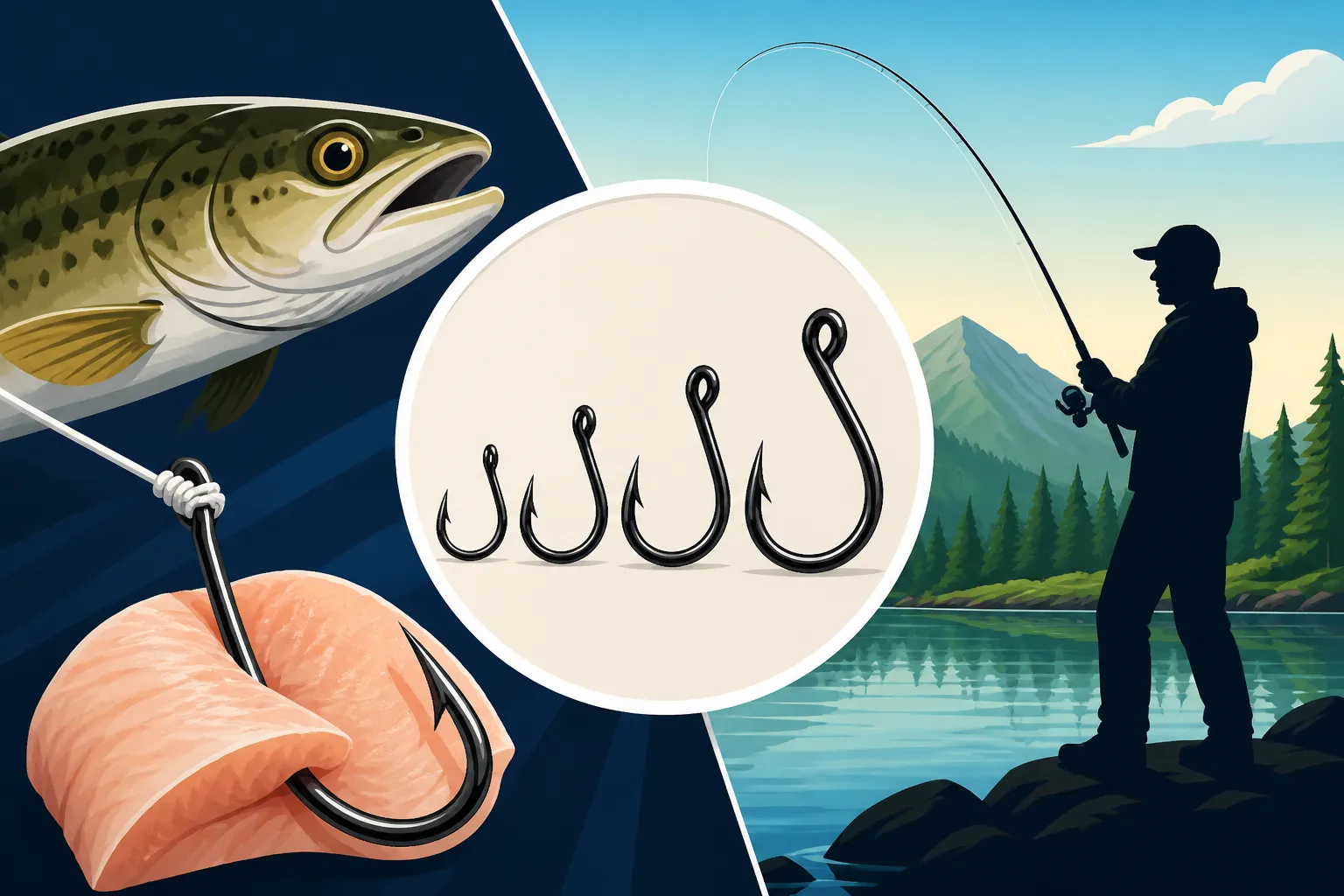
Imagine a hook that almost sets itself, gently turning and catching in the corner of a fish's mouth as they swim away with the bait. That's the magic of a circle hook. Unlike a J-hook, which has a straight shank and a point that's eager to snag anywhere, a circle hook's point is angled inward, creating a 'C' shape. When a fish takes the bait and moves off, the hook typically slides out of the gullet or stomach until it reaches the mouth. At that point, the unique design causes the hook to rotate and catch securely in the corner of the jaw, almost like a tiny grappling hook finding its anchor point.
This distinct mechanism is a game-changer because it drastically reduces the chances of gut-hooking a fish. With a J-hook, if a fish swallows the bait before you set the hook, that sharp point often ends up deep inside its digestive system, making a successful release incredibly difficult, if not impossible. A gut-hooked fish, even if released, has a much lower chance of survival. The circle hook mitigates this risk by design, encouraging a lip-hooked fish that's much easier to unhook and send back into the water unharmed.
Conservation Benefits and Regulatory Considerations
In a state like New Hampshire, where we pride ourselves on healthy fish populations and beautiful natural resources, conservation is paramount. Many of our favorite species, from smallmouth bass to landlocked salmon, have strict catch-and-release seasons, slot limits, or minimum size requirements. If you're out chasing these fish, the ability to release them with minimal harm is not just good practice, it's often a legal requirement and a moral imperative for responsible angling.
The use of circle hooks directly supports these conservation efforts. By minimizing gut hooking, you're giving released fish a much better chance of survival, ensuring that they can continue to grow, spawn, and contribute to the fishery for future generations. This is particularly important for trophy-sized fish, or during sensitive periods like the New Hampshire Bass Catch-and-Release Season, Explained. Imagine catching a beautiful lunker bass on Lake Winnipesaukee during its closed harvest season. With a circle hook, you can unhook it quickly and safely, snap a photo, and watch it swim strongly away, ready to fight another day. Some specific regulations, especially in saltwater fisheries (though New Hampshire's saltwater footprint is small, we do have Great Bay Striped Bass Fishing Rules), may even mandate the use of circle hooks for certain species when using natural bait. Always check the current New Hampshire Fishing Regulations Explained before heading out.
Matching Circle Hook Size to New Hampshire Fish Species and Bait
Choosing the right circle hook size is a bit like Goldilocks finding her perfect porridge – it has to be just right. Too big, and smaller fish won't be able to get the hook in their mouth; too small, and larger fish might swallow it entirely without the hook finding purchase. The key is to consider both the size of the fish you're targeting and the bait you're using.
Panfish and Smaller Stream Trout (e.g., Yellow Perch, Brook Trout, Stocked Rainbows)
When you're out enjoying a relaxed day targeting panfish or the eager stocked trout of New Hampshire's ponds and streams, you'll want to scale down your hooks significantly. For species like yellow perch, bluegill, crappie, or even the smaller brook trout and rainbow trout that are so prevalent after New Hampshire Trout Stocking and Fishing Rules, very small circle hooks are ideal.
Think sizes 10, 8, or 6. These hooks are tiny, designed for fish with smaller mouths and delicate bites.
- Baits: Your go-to baits here will be things like small pieces of nightcrawler or garden worms, corn kernels, small power bait nuggets, or even tiny chunks of hot dog. When fishing for Panfish Fishing in New Hampshire, a single mealworm or a small piece of worm threaded onto a size 10 hook can be incredibly effective.
- Scenarios: This is perfect for a family outing to a local stocked pond where kids are learning to fish, or for light tackle fishing in streams for native brook trout. If you're fishing for perch in a place like Pawtuckaway Lake with a bobber and a worm, a size 8 circle hook will ensure good hookups while minimizing any harm to the smaller fish. You can find a good selection of these smaller hooks at stores like Bass Pro Shops or even conveniently through online retailers like Amazon.
Medium-Sized Freshwater Species (e.g., Largemouth/Smallmouth Bass, Chain Pickerel, Lake Trout, Landlocked Salmon)
Now we're moving up to the bread-and-butter species that draw so many anglers to New Hampshire's diverse waters. For the formidable smallmouth and largemouth bass, the powerful lake trout, and the acrobatic landlocked salmon, you'll need medium-sized circle hooks that can handle a larger bite and stronger fight.
Look for hooks in sizes 4, 2, 1, 1/0, and 2/0. The "aught" sizes (1/0, 2/0) indicate a larger hook than the numbered sizes (4, 2, 1).
- Baits: These hooks are perfectly suited for larger live baits like shiners, small suckers, or smelt, as well as chunk baits or whole nightcrawlers. If you're targeting Smallmouth Bass Fishing in New Hampshire on Lake Winnipesaukee with live shiners, a 1/0 or 2/0 circle hook, nose-hooked, is an excellent choice. For How to Catch Lake Trout in New Hampshire or How to Catch Landlocked Salmon in New Hampshire while trolling with whole smelt or shiners, a size 1 or 1/0 circle hook ensures the bait swims naturally and hooks the fish cleanly.
- Scenarios: Imagine you're out on Squam Lake targeting Largemouth Bass Fishing in New Hampshire near some lily pads with a fat nightcrawler. A size 2 or 1 circle hook will give that bass plenty of bait to mouth before the hook slides into the corner of its jaw. For the toothy chain pickerel that can be a nuisance while bass fishing but are still fun to catch, these medium-sized hooks can also work well, especially if using a wire leader to prevent bite-offs.
Larger Freshwater and Saltwater Species (e.g., Trophy Bass, Lake Trout, Striped Bass in Great Bay)
When you're dreaming of a true trophy, whether it's a monster lake trout from Winnipesaukee or a hard-fighting striped bass from the coast, you'll need to step up to even larger circle hooks. These hooks are designed to handle significant force and the mouth size of substantial fish.
Consider hooks ranging from 3/0, 4/0, 5/0, and sometimes even larger, up to 7/0 or 8/0 for truly big saltwater specimens.
- Baits: For these hooks, you're talking about substantial baits: large live shiners, whole dead smelt or herring for lake trout, or whole mackerel, pogies, and big chunks of bunker for striped bass. If you're using large smelt for deep-water Lake Trout Fishing in New Hampshire during the New Hampshire Lake Trout Ice Fishing Season Dates, a 3/0 or 4/0 circle hook might be your best bet.
- Scenarios: For How to Catch Striped Bass in Great Bay, especially if you're targeting those larger keepers with chunks of fresh mackerel, a 5/0 or 6/0 circle hook is often the standard. These larger hooks ensure a solid connection with a powerful fish and the ability to fight it effectively. Always make sure the gap of the hook is wide enough for the fish's jaw, but not so big that it impedes the bait's action or makes it difficult for the fish to take.
Here's a handy table to summarize some common New Hampshire fish and recommended circle hook sizes:
| Species | Target Size | Recommended Circle Hook Sizes | Common Baits | Notes |
|---|---|---|---|---|
| Yellow Perch, Bluegill | Small | #10, #8, #6 | Worms, corn, PowerBait, mealworms | Great for kids, light tackle. |
| Brook Trout, Rainbow Trout | Small-Medium | #8, #6, #4 | Worms, PowerBait, salmon eggs, small shiners | Ideal for stocked ponds and small streams. |
| Smallmouth Bass | Medium-Large | #2, #1, 1/0, 2/0 | Live shiners, crayfish, nightcrawlers, cut bait | Effective for Best Baits for Smallmouth Bass on Winnipesaukee. |
| Largemouth Bass | Medium-Large | #2, #1, 1/0, 2/0 | Live shiners, nightcrawlers, frogs, cut bait | Good for fishing around cover with live bait. |
| Chain Pickerel | Medium | #1, 1/0, 2/0 | Live shiners, cut bait | Use a wire leader to prevent bite-offs. |
| Lake Trout | Large | 1/0, 2/0, 3/0, 4/0 | Whole smelt, shiners, suckers, cut bait | Essential for deep-water trolling or ice fishing. |
| Landlocked Salmon | Medium-Large | #1, 1/0, 2/0, 3/0 | Whole smelt, shiners, worms | Excellent for trolling or still fishing with live bait. |
| Striped Bass (Great Bay) | Large | 4/0, 5/0, 6/0 | Mackerel, pogies, chunk bait, live eels | Often mandated for natural bait in saltwater. |
Practical Tips for Using Circle Hooks Effectively
Just because circle hooks are "self-setting" doesn't mean you can just throw them in the water and expect magic. There's a particular technique that, once mastered, will drastically improve your catch rate and ensure those clean, corner-of-the-mouth hookups every time.
The "Don't Set" Rule and Proper Engagement
This is the golden rule of circle hooks, and it's counter-intuitive for many experienced anglers who are used to the aggressive "hook set" of J-hooks. With a circle hook, you do not set the hook. Seriously, resist the urge!
Here’s how it works:
- Detect the bite: Watch your rod tip or bobber for the characteristic signs of a fish taking the bait.
- Wait for the fish to commit: Let the fish take the bait and start to move away. This is crucial. The fish needs to fully mouth the bait and begin to swim off, pulling the line taut.
- Reel, don't jerk: Once the line starts to tighten and the fish is moving away, slowly and steadily begin to reel your rod tip down towards the water, engaging the reel. The resistance from the line tightening and the fish swimming away will cause the circle hook to rotate and find purchase in the corner of its mouth.
- Lift and fight: Once you feel steady pressure and the hook is engaged, you can then lift the rod and begin fighting the fish as normal.
Many anglers make the mistake of jerking the rod as soon as they feel a bite. With a circle hook, this almost always pulls the hook right out of the fish's mouth without it having a chance to rotate and embed properly. The beauty of the circle hook is its efficiency, but it requires a change in mindset from the angler. Practice this "don't set" approach, and you'll be amazed at the clean hookups.
Rigging Your Bait for Optimal Circle Hook Performance
Proper bait presentation is always important, but with circle hooks, it takes on an even greater significance. The key is to ensure the hook point and gap remain relatively unobstructed so the hook can do its job and rotate.
- Live Bait: When using live bait like shiners or smelt for How to Catch Lake Trout in New Hampshire or How to Catch Smallmouth Bass in New Hampshire Lakes, avoid burying the hook deep into the bait. Instead, gently hook the bait through the nose, or just behind the dorsal fin if you want it to swim deeper. The goal is to leave the entire bend and point of the hook exposed. This allows the fish to swallow the bait easily, and then as it pulls away, the exposed hook can slide out and catch. Bass Pro Shops or Amazon offer a variety of live bait hooks, including circle hook options, designed for easy rigging.
- Cut Bait: For chunk or cut bait, whether for lake trout, pickerel, or even carp, again, ensure the hook point is clear. Thread the bait onto the hook so that the point emerges cleanly from the bait. You might even want to "skin hook" larger chunks, where just the very tip of the hook passes through the edge of the bait.
- No "Ball" of Bait: Resist the urge to create a huge ball of worms or PowerBait that completely envelops the hook. While this might work on J-hooks for some species, it will likely hinder the circle hook's ability to rotate and catch. A single, well-placed worm or a modest blob of PowerBait is often more effective.
Terminal Tackle and Rod Setup Considerations
While circle hooks are versatile, certain gear choices can enhance their effectiveness and your overall fishing experience.
- Rod Action: A rod with a more moderate or slower action can actually be more forgiving when using circle hooks. The softer tip allows the fish to take the bait without feeling immediate resistance and gives the hook more time to properly engage before the rod loads up. A fast-action rod, which is very stiff at the tip, might pull the bait away too quickly or create too much resistance for the fish to fully commit.
- Line Choice: Monofilament line, with its inherent stretch, can be beneficial, providing a little extra give that prevents you from inadvertently "setting" the hook too early. Fluorocarbon, known for its low visibility and abrasion resistance, is excellent for leaders, especially when targeting wary fish in clear New Hampshire waters. The choice often comes down to the species and conditions.
- Leaders: If you're targeting toothy fish like chain pickerel (which are common in many New Hampshire lakes and ponds) or if you're fishing around abrasive structure, using a fluorocarbon or even a light wire leader can be a lifesaver. This prevents the fish from biting through your main line before the circle hook has a chance to fully engage. Make sure your leader knot is strong and clean.
Common Mistakes and Troubleshooting
Even with the best intentions, using circle hooks can present a learning curve. Understanding common pitfalls and how to troubleshoot them will help you quickly become a more proficient circle hook angler.
Too Large or Too Small: The Goldilocks Principle
We've touched on this, but it bears repeating: hook size matters immensely.
- Too large: If your circle hook is too large for the target fish, they simply won't be able to get it far enough into their mouth to properly engage. You'll feel bites, but the hook won't set, leading to frustration and missed fish. For example, trying to catch yellow perch with a 3/0 hook designed for striped bass will likely result in a lot of nibbles but no fish.
- Too small: Conversely, a hook that's too small might be swallowed completely by a larger fish, defeating the conservation purpose of the circle hook. It also might not be strong enough to withstand the fight of a larger fish, leading to bent hooks or lost fish. Using a tiny size 10 hook when targeting Best Lures for Lake Trout Trolling with a big smelt is a recipe for disaster.
The best approach is to err on the side of slightly larger for live bait, ensuring the hook point and gap are clear, but always within reason for the size of the fish you expect to catch. If you're consistently getting bites but no hookups, consider dropping down one or two hook sizes. If you're deep-hooking fish, your hook might be too small, or your technique is off.
Gut Hooking with Circle Hooks: What Went Wrong?
While circle hooks significantly reduce gut hooking, it's not impossible for it to happen. If you find yourself gut-hooking fish with a circle hook, it's almost always due to one of two reasons:
- Setting the hook: The most common culprit is instinctively setting the hook with a sharp jerk. As discussed, this motion can pull the hook from the corner of the mouth, causing it to snag in the gullet as it comes out. Remember, the "don't set" rule is critical.
- Obstructed hook point: If your bait is rigged in such a way that it's completely covering the hook point or filling the gap of the circle, it can prevent the hook from rotating and catching properly. The fish might swallow the entire setup, and with no clear path for the hook to re-orient, it can end up lodged internally. Always check that the hook point is exposed and the gap is clear.
If you do accidentally gut-hook a fish with a circle hook (or any hook), the best course of action is often to cut the line as close to the hook as possible. Attempting to remove a deeply embedded hook can cause more trauma to the fish. By cutting the line, you give the fish a chance for the hook to rust out or pass naturally, which is often preferable to a forceful extraction.
When a Circle Hook Might Not Be the Best Choice
While circle hooks are fantastic for bait fishing, they aren't the universal answer for every fishing scenario. It's important to know their limitations.
- Artificial Lures: Circle hooks are generally not used with artificial lures like crankbaits, jigs, or spinnerbaits. These lures are designed to be actively worked and require a traditional J-hook to effectively hook fish on the strike. The action of a lure and the way a fish attacks it is very different from how it takes a passive bait.
- Active Jigging or Trolling with Hardware: When you're actively jigging for fish, or trolling with spoons and plugs (Best Lures for Lake Trout Trolling for example), a traditional treble hook or single J-hook is typically more effective. These techniques rely on immediate hook penetration when a fish strikes, something a circle hook isn't designed for.
- Very Fast Bites / Panfish "Nipping": While circle hooks work for panfish, if you're dealing with extremely light, finicky bites where fish are just nipping at the bait, a very fine wire, small J-hook might offer a slightly better hookup ratio for those almost imperceptible takes. However, for most panfish scenarios, the conservation benefits of a circle hook still outweigh this slight disadvantage.
Ultimately, circle hooks are a powerful tool for responsible anglers who primarily use natural bait. By understanding their mechanism, matching them to the right species and bait, and mastering the "don't set" technique, you'll find yourself landing more fish cleanly and doing your part to preserve New Hampshire's incredible fisheries.
Disclaimer
This article is for general informational purposes only and does not constitute professional advice. Laws, prices and regulations vary by location and change over time. Consult a qualified professional for guidance on your specific situation.