Best pedal kayak for hands-free fishing
There's nothing quite like the freedom of being out on the water, but many anglers know the frustration of constantly juggling a paddle, a rod, and a fish, often feeling like you need three hands. The dream of truly hands-free fishing, where you can maintain your position, fight a fish, and even grab a snack without missing a beat, is incredibly appealing. This guide is all about diving deep into the world of pedal kayaks, exploring how they deliver that hands-free experience and helping you understand what to look for to make your fishing trips around New Hampshire more productive and enjoyable.
The Game-Changer: Why Hands-Free Fishing is a Must for New Hampshire Anglers
For years, kayaks were propelled by paddles, and while that's a perfectly valid and often peaceful way to travel, it presents a unique set of challenges for dedicated anglers. Imagine you're drifting perfectly along a weed line on Lake Winnipesaukee, casting for smallmouth bass. Suddenly, a fish hits! You drop your paddle, grab the rod, set the hook, and begin the fight. But now, the wind is pushing you off your spot, or the current in the Merrimack River is pulling you away from that prime eddy. You're constantly fighting the elements, trying to land a fish, and wishing you had a third arm to paddle back into position. This constant struggle takes away from the pure joy of the catch.
The Freedom of Movement and Positioning
This is where the pedal kayak truly shines. By using your legs to propel the kayak, your hands remain completely free to manage your fishing rods, adjust your tackle, consult your fish finder, or even take a sip of coffee. This isn't just a minor convenience; it's a revolutionary shift in how you can fish. Instead of drifting helplessly, you can subtly adjust your position with minimal effort, keeping your lure in the strike zone longer. Think about those tricky spots along the Contoocook River where the current can be unforgiving. With a pedal kayak, you can maintain your exact position, focusing entirely on your presentation and the eventual strike. It allows for precise boat control that paddle kayaks simply can't match, especially when fighting a fish or navigating tight cover.
Enhanced Fish Fighting and Landing Capabilities
When a fish hits, whether it's a feisty brook trout in a mountain pond or a hard-pulling lake trout in Sunapee, the ability to focus solely on the fight is invaluable. With a pedal kayak, you don't have to worry about dropping your paddle or getting blown into shore while battling a big one. You can subtly pedal to adjust your angle, keep the fish from wrapping around submerged structure, or even chase down a fast-moving salmon. This control translates directly into more landed fish and fewer heartbreaking break-offs. Plus, when it comes time to net the fish, your hands are free to grab the net with confidence, leading to smoother, less stressful landings. This is especially true for those larger fish you might encounter in New Hampshire's waters, where every bit of control counts.
Reduced Fatigue and Increased Range
Paddling, especially against wind or current, can be physically demanding. Your arms and shoulders bear the brunt of the effort, leading to fatigue that can cut a fishing trip short. Pedal kayaks, by contrast, harness the power of your legs, which are generally stronger and have more endurance than your arms. This means you can cover more water with less effort, allowing you to explore more distant coves on Squam Lake or venture further up the Androscoggin River. For anglers who love to spend long days on the water, the reduced upper body strain is a huge advantage. It can even open up new fishing spots that might have been too strenuous to reach with a paddle kayak, ultimately expanding your fishing horizons. This extended range means you can chase those elusive trophy fish without feeling completely drained at the end of the day.
Decoding Pedal Kayak Systems: Drives, Features, and What Matters
Not all pedal kayaks are created equal, and understanding the different drive systems and features is key to making an informed decision. The heart of any pedal kayak is its propulsion system, and there are two main types you'll encounter. Beyond the drive, specific design elements contribute significantly to the kayak's performance and suitability for fishing.
Propeller-Driven Systems
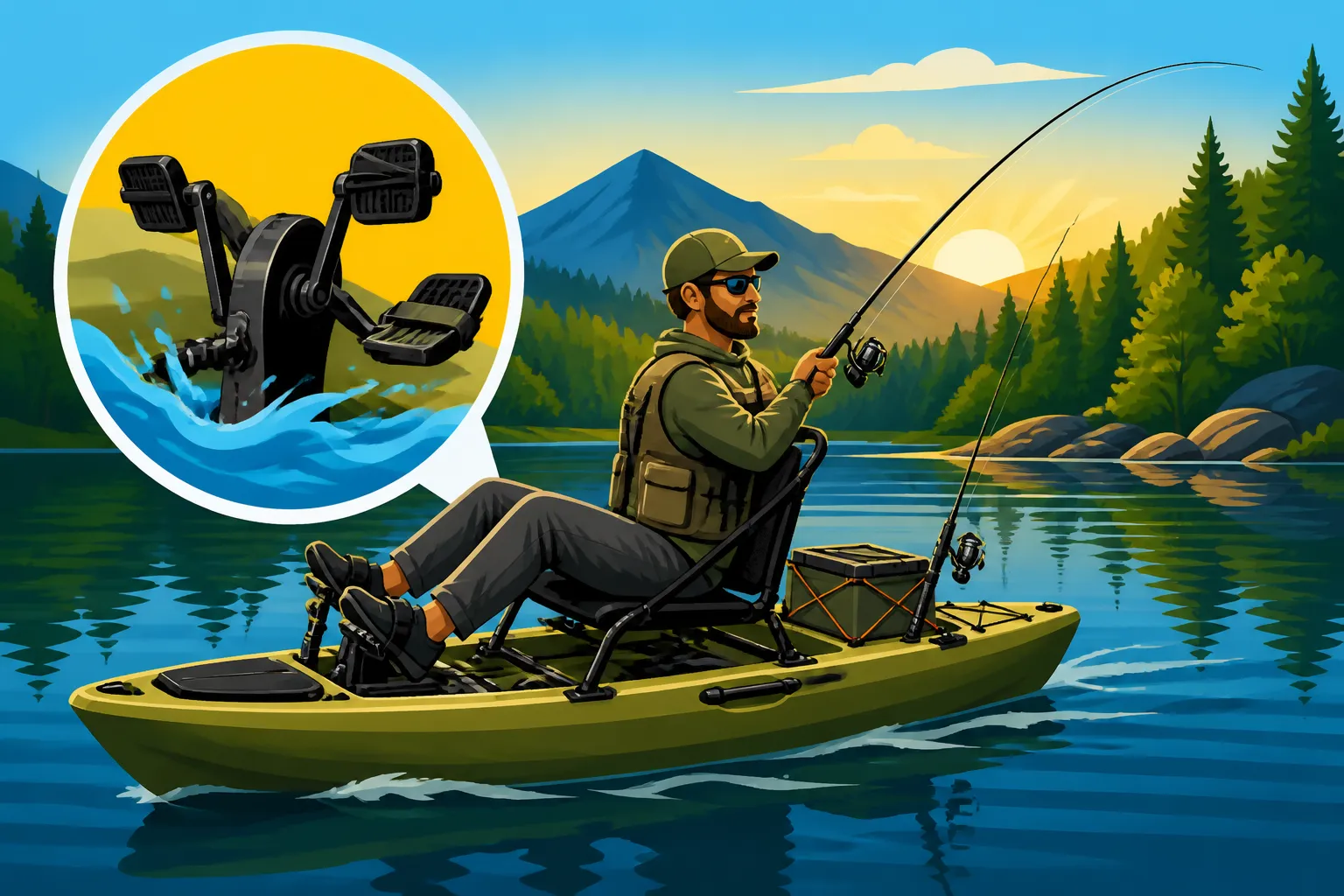
Propeller-driven systems are often what people first envision when they think of a pedal kayak. These systems typically use a crank and chain mechanism, similar to a bicycle, to spin a propeller located beneath the kayak.
- How they work: You pedal forward, and the propeller spins, pushing water backward to propel the kayak forward. Some systems also allow for reverse by pedaling backward or by simply rotating the drive unit. Brands like Hobie are famous for their MirageDrive system, which uses fins that flap like a penguin's wings rather than a traditional propeller, offering a unique and efficient motion.
- Pros: Generally very efficient, allowing for good speed and covering long distances with less effort. They are often quiet, which is crucial for stealthy fishing. Many offer easy-to-use reverse capabilities.
- Cons: The propeller or fins can get tangled in weeds or hit submerged obstacles, which can be frustrating in shallow, vegetated areas common in some New Hampshire ponds. While many newer designs allow for easy retraction of the drive, it's still a consideration.
- Best for: Open water, deeper lakes like Winnipesaukee or Newfound Lake, and situations where speed and long-distance cruising are important. If you're consistently fishing areas with minimal weed growth, a propeller drive is a fantastic choice.
Fin-Driven Systems
While technically a subset of propeller-driven systems, the fin-driven designs, most notably Hobie's MirageDrive, deserve their own mention due to their distinct mechanism.
- How they work: Instead of a rotating propeller, these systems use two fins that move back and forth like a fish's tail. You pedal a set of foot pedals, which translates the linear motion into the flapping of the fins.
- Pros: Incredibly efficient and quiet, making for stealthy approaches to wary fish. Many models allow the fins to fold flat against the hull when encountering shallow water or obstacles, making them highly versatile in varied environments. The ability to "kick up" the fins is a significant advantage in weed beds or over submerged rocks.
- Cons: Can be more expensive than some propeller drives. Learning the motion can take a little getting used to for some, though it's generally intuitive.
- Best for: Anglers who fish a mix of deep and shallow water, including many of New Hampshire's diverse lakes and rivers. Their weedless capabilities make them excellent for targeting bass in cover or navigating shallower sections of rivers. The famous Hobie MirageDrive is an excellent example of this technology.
Stability and Seating
Stability is paramount in a fishing kayak. You want to be able to stand up to cast, stretch your legs, or have a better vantage point without feeling like you're going to capsize. Pedal kayaks are often wider and feature a more robust hull design than traditional paddle kayaks, providing excellent stability. Look for kayaks with a wide beam and a flat, stable standing platform.
- Seating: Comfortable seating is another critical feature, especially for long days on the water. Many pedal kayaks come with elevated, adjustable, frame-style seats that offer excellent back support and keep you drier. This elevated position also gives you a better view of the water, aiding in sight fishing. A comfortable seat makes a huge difference in your endurance and enjoyment, and it's worth investing in a kayak with a quality seating system.
Storage and Rigging Options
Fishing gear adds up quickly, and a good pedal kayak will offer ample storage and thoughtful rigging options.
- Storage: Look for large bow and stern storage areas, often with bungee cords or hatches, for coolers, dry bags, and tackle boxes. Many kayaks also feature internal storage for smaller items. Rod holders are a given, but consider the number and placement. Vertical rod holders behind the seat and horizontal rod stagers along the gunwales are common.
- Rigging: Integrated gear tracks, often called "accessory rails," are incredibly useful. These allow you to mount various accessories like fish finders, GPS units, rod holders, camera mounts, and even cup holders, without drilling into your kayak. This modularity means you can customize your setup perfectly for your fishing style. For instance, being able to easily mount a Best Portable Fish Finder for Kayak Fishing can dramatically improve your success rate.
- Hull Access: Consider kayaks with easy access to the hull for running wiring for electronics or storing longer items.
Understanding Pedal Drive System Differences
Here's a quick comparison of the two main types of pedal drive systems:
| Feature | Propeller-Driven System | Fin-Driven System (e.g., Hobie MirageDrive) |
|---|---|---|
| Mechanism | Rotary propeller, usually chain or belt driven | Flapping fins, linear foot pedal motion |
| Reverse | Often by pedaling backward or rotating drive unit | Most advanced versions allow reverse by pedaling backward |
| Shallow Water | Propeller can snag, requires careful maneuvering/retraction | Fins typically fold flat, excellent for shallow/weedy areas |
| Efficiency | Very efficient, good speed | Highly efficient, very quiet, good speed |
| Obstacles | Can hit submerged objects, may require full retraction | Fins can "kick up" over obstacles, less prone to snagging |
| Common Use | Open water, deep lakes, less weeded areas | Versatile, mixed waters, excellent in weeds/shallows |
| Maintenance | Propeller shaft, gears, chain (if applicable) | Fin pivot points, cables, spring mechanisms |
Choosing Your Perfect Pedal Kayak for New Hampshire's Diverse Waters
New Hampshire offers an incredible variety of fishing environments, from vast, deep lakes to meandering rivers and even coastal saltwater zones. The "best" pedal kayak for hands-free fishing isn't a one-size-fits-all answer; it depends heavily on where and how you plan to fish.
Considerations for Lake Fishing
New Hampshire's lakes, like Winnipesaukee, Squam, and Newfound, can be expansive, deep, and sometimes windy.
- Size and Stability: For these larger, deeper lakes, a longer, wider pedal kayak (12-14+ feet) will offer better tracking, speed, and stability. When you're dealing with boat wakes or choppy conditions, that extra stability is invaluable. You'll want to be able to stand and cast confidently for smallmouth bass around rocky points or troll effectively for lake trout.
- Propulsion System: Both propeller and fin-driven systems work well on lakes. If you're primarily trolling or covering long distances in open water, the efficiency of either system will be a huge benefit. If you anticipate fishing a lot of shallow coves with lily pads or submerged brush for largemouth bass, a fin-driven system with "kick-up" capabilities might save you a lot of hassle.
- Storage: Ample storage is key for lake fishing, as you might be out for a full day. You'll need space for a cooler, multiple tackle boxes, and extra clothing. Look for models that offer generous bow and stern storage, potentially with dry hatches. For general research and finding models suitable for lake fishing, checking out a specialty retailer like Bass Pro Shops or browsing a wide selection online via Amazon can give you a good idea of what's available and what features are popular.
Navigating Rivers and Streams
Fishing New Hampshire's rivers, such as the Connecticut River or the Pemigewasset, presents a different set of challenges, primarily currents and shallower, rockier sections.
- Maneuverability: For river fishing, a kayak that is agile and can turn quickly is often more desirable than sheer speed. Shorter pedal kayaks (under 12 feet) or those designed with a more pronounced rocker (curve in the hull) can offer better maneuverability.
- Durability and Shallow Water Capability: Rivers often have rocks, logs, and fluctuating water levels. A durable hull material is essential. A fin-driven system that allows the fins to tuck up or a propeller drive that retracts easily will be a lifesaver in shallow rapids or over submerged obstacles. The ability to quickly shift into reverse using your pedals is also incredibly helpful for holding position against a current or backing out of a tricky spot. Consider the Best Kayak for River Fishing in New Hampshire for more specific advice.
- Anchor Systems: For river fishing, a good anchor system is paramount for hands-free angling. Being able to drop a small anchor to hold your position in a current while you fish an eddy or seam is a game-changer. Look for a kayak that can easily accommodate an anchor trolley system.
Saltwater and Estuary Fishing
While New Hampshire has a relatively small coastline, Great Bay offers excellent striped bass fishing in an estuary environment, and coastal fishing can be rewarding.
- Stability and Wind Resistance: Saltwater environments, especially estuaries, can be prone to strong winds and tidal currents. A stable, well-tracking kayak is important.
- Corrosion Resistance: Saltwater is tough on gear. Look for kayaks with high-quality, corrosion-resistant components in their pedal drive and hardware. Rinsing your kayak thoroughly with fresh water after every saltwater outing is absolutely essential to prolong its life.
- Visibility: For safety in busy coastal waters, consider kayaks in brighter colors and add a safety flag.
- Fish Finder Integration: For targeting striped bass in deeper channels, a robust fish finder setup is crucial. Ensure your chosen kayak has ample space and easy wiring access for your electronics. You might also want to look into Great Bay Striped Bass Fishing Rules before heading out.
Beyond the Kayak: Essential Gear and Care for Your Pedal Fishing Adventure
Acquiring the right pedal kayak is just the first step. To truly maximize your hands-free fishing experience in New Hampshire, you'll need a few key accessories and a good understanding of maintenance.
Essential Accessories for Hands-Free Fishing
Even with the best pedal kayak, a few crucial items will enhance your safety, comfort, and fishing efficiency.
- Personal Flotation Device (PFD): This is non-negotiable. Always wear a PFD. There are specialized fishing PFDs that offer extra pockets for tackle, pliers, and other small essentials, keeping them within easy reach without requiring you to dig through your main tackle storage. Finding a comfortable, well-fitting PFD is crucial, as you'll be wearing it all day. Life Jacket Requirements for New Hampshire Boaters are strict, and for good reason.
- Fish Finder and GPS: While not strictly "hands-free" propulsion, modern fish finders and GPS units are critical for hands-free fishing. With a quality unit mounted on your gear track, you can see structure, fish, and navigate without holding a map or diving into your phone. This information, combined with your pedal power, allows for incredibly precise targeting. Don't forget a Best Portable Fish Finder for Kayak Fishing that can withstand the elements.
- Rod Holders: Most fishing kayaks come with some flush-mount rod holders, but adding adjustable, rail-mounted rod holders can be a game-changer. These allow you to troll multiple lines, stage rods while you're fighting a fish, or simply keep your rods secure and out of the way until needed.
- Anchor System with Trolley: Even with pedal power, sometimes you need to stay absolutely still. A small drag anchor or a grapple anchor, combined with an anchor trolley system, allows you to deploy and retrieve your anchor from any point along the kayak's side, keeping your hands free for fishing. This is particularly useful in currents or windy conditions. Check out the Best Anchor System for River Fishing for more insights.
- Dry Bag: Protect your phone, keys, wallet, and any other electronics from water. A good dry bag is essential for peace of mind, especially if you're venturing out on larger lakes. You can often find a variety of sizes and styles on Amazon or at outdoor retailers.
- Rod Leashes: The last thing you want to do while hands-free fishing is drop a rod overboard. Simple rod leashes or tethers can prevent costly losses and keep your focus on the fish, not on retrieving gear. A Best Rod Leash for Kayak Fishing is a small investment for huge peace of mind.
Maintenance and Care Tips
Taking good care of your pedal kayak will ensure it lasts for many seasons of hands-free fishing.
- Rinse After Every Use: Especially after saltwater excursions, but even after freshwater trips, rinse your kayak and its pedal drive thoroughly with fresh water. This removes dirt, sand, and corrosive salts. Pay special attention to the moving parts of the pedal drive.
- Lubrication: Consult your kayak's manual for specific lubrication points on the pedal drive system. Regular lubrication of gears, chains, or pivot points will ensure smooth operation and prevent wear.
- Inspection: Periodically inspect your kayak for cracks, wear on the hull, and any signs of damage to the pedal drive unit, rudder, or steering cables. Addressing small issues early can prevent bigger, more expensive repairs down the line.
- Storage: When not in use, store your kayak out of direct sunlight to prevent UV damage to the plastic. If possible, store it indoors or under a cover. Support the hull properly to prevent warping. Remove the pedal drive unit during long-term storage to relieve tension and prevent unnecessary wear.
- Pedal Drive Specifics: Each pedal drive system will have its own quirks. For example, some propeller drives may require occasional cleaning of seaweed from the propeller, while fin drives might benefit from inspecting the fins for tears or damage. Familiarize yourself with your specific model's recommendations.
Embracing the world of pedal kayaks can truly revolutionize your fishing experience in New Hampshire. The ability to keep your hands on your rod and your eyes on the prize, while subtly and efficiently maneuvering across the water, is a game-changer that every angler should consider. With the right research, proper gear, and diligent maintenance, your pedal kayak will become an invaluable tool for countless memorable days on the water.
Disclaimer
This article is for general informational purposes only and does not constitute professional advice. Laws, prices and regulations vary by location and change over time. Consult a qualified professional for guidance on your specific situation.