Best Anchor System for River Fishing
There's nothing quite like the rush of casting into a prime stretch of a New Hampshire river, watching your lure drift perfectly into a current seam, only to have your boat constantly dragged downstream by the relentless flow. It's frustrating, right? You spend more time fighting the current or repositioning than actually fishing. This guide is all about cutting through that frustration, helping you understand the best anchor systems for river fishing in our beautiful state, from the gentle meanders of the Saco to the stronger flows of the Merrimack. We'll cover everything you need to confidently hold your position and focus on what really matters: catching fish.
Understanding River Dynamics and Your Anchoring Needs
Before you even think about buying an anchor, it’s crucial to understand the environment you’ll be fishing in. Rivers aren’t like lakes; they’re constantly moving, and that movement, combined with the riverbed's unique characteristics, dictates what kind of anchor system will work best for you. Ignoring these factors is like trying to use a canoe paddle to row a battleship – it simply won't work effectively.
Current Strength and Water Depth
New Hampshire rivers vary wildly in their current strength. You might encounter slow, meandering sections on the Contoocook, perfect for a relaxed float, or roaring whitewater on parts of the Androscoggin after heavy rains, where anchoring might be downright dangerous. The speed of the current directly impacts the holding power an anchor needs. A lightweight anchor that works fine in a gentle riffle will be utterly useless in a strong current. Similarly, water depth plays a huge role. Fishing a shallow stretch of the Swift River requires a different approach than trying to hold your boat in a deep pool on the Connecticut River. The deeper the water, the more anchor line you'll need to achieve the proper scope, which is the ratio of anchor line out to water depth. If you don't have enough scope, your anchor will simply drag along the bottom rather than dig in and hold.
Think about a typical spring day on the Pemigewasset River. The snowmelt makes the current significantly stronger than in late summer. If you usually fish with a small folding grapnel anchor, you'll quickly find yourself getting pulled downstream, constantly having to re-drift or paddle back upstream. This isn't just annoying; it eats into your fishing time and can even be dangerous if you're swept into hazards. Always consider the seasonal variations and recent weather events that can dramatically alter river flow. Having a system that can adapt to these changes, or at least understanding the limits of your current setup, is paramount for a safe and productive day on the water.
Bottom Composition and Structure
Just like our diverse New Hampshire landscape, river bottoms are far from uniform. You might find soft mud in some slow-moving sections, loose gravel in others, or stretches dominated by solid rock or submerged timber. Each of these bottom types interacts differently with an anchor. A fluke-style anchor, designed to dig into sand or mud, will struggle to find purchase on a rocky bottom, simply skittering across the stones. Conversely, a grapple anchor that snags beautifully on rocks and logs might get completely buried and stuck in soft silt.
Imagine fishing for smallmouth bass on the Merrimack River where it passes through towns like Concord or Manchester. In some spots, you might be over a sandy or silty bottom, perfect for a digger-style anchor. Just a hundred yards upstream, however, you could encounter a rocky section with ledges and boulders. An anchor that works in one spot might be a headache in the next, either dragging continuously or getting irrevocably snagged. Understanding the general bottom type of your target fishing spots, and perhaps carrying a versatile anchor or a couple of different options, can make all the difference. Knowing what's beneath you means you can choose an anchor that's designed to bite into that specific terrain, providing a secure hold without constant adjustment.
Your Boat Type and Size
The vessel you're fishing from is another critical factor in determining your ideal anchor system. A small fishing kayak or canoe obviously requires a much different setup than a 16-foot Jon boat or a larger bass boat. The weight, windage (how much the wind catches your boat), and maneuverability of your craft all play into how much holding power you need and how you'll deploy and retrieve your anchor.
For example, if you're in a lightweight Best Kayaks for New Hampshire Fishing on the Contoocook River, a smaller anchor with a simple rope and cleat setup might be perfectly adequate. The kayak itself doesn't have much inertia to overcome, and you can easily paddle to reposition. However, if you're in a larger Best Boats for New Hampshire Lakes and Rivers on a wider river like the Connecticut, a heavier anchor and a more robust retrieval system, perhaps with an anchor lock or winch, will be necessary to keep you from drifting. A boat with high sides will be more affected by wind than a low-profile craft, adding another layer of complexity to maintaining position. It’s about matching the anchor's capacity to the demands of your specific boat and the river conditions. A system that works well for a solitary angler in a compact vessel may prove frustratingly inadequate for two anglers in a larger, heavier boat.
Types of Anchors for River Fishing
Now that we've covered the basics of river dynamics and how your boat fits into the picture, let's dive into the actual anchors themselves. Each type has its strengths and weaknesses, making some more suitable for specific river conditions than others. Choosing the right one can transform your river fishing experience from a constant battle against the current into a calm, focused pursuit.
Grapple Anchors
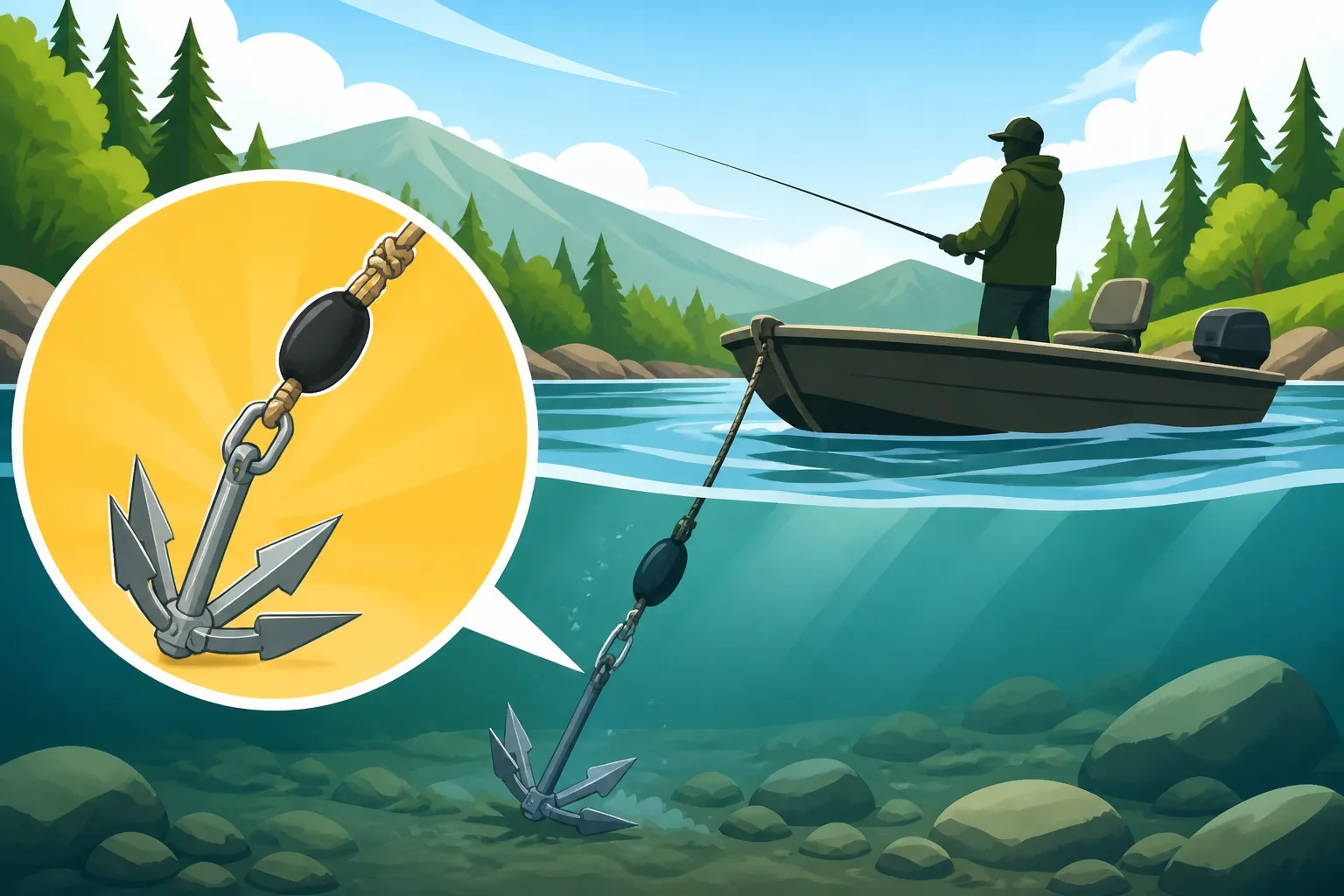
Grapple anchors, often called folding anchors, are characterized by their four or more flukes that fold in for compact storage and fan out to grab onto submerged structure. These are particularly popular with kayak and canoe anglers in New Hampshire, especially in rocky or snag-filled rivers. Their design is specifically intended to "grapple" onto rocks, logs, and other irregularities on the riverbed.
The beauty of a grapple anchor lies in its ability to find purchase where other anchors might simply slide. When you're fishing a boulder-strewn section of the Pemigewasset River for trout, a grapple anchor can hook into crevices and hold your lightweight craft remarkably well. However, this strength can also be its weakness. It's very easy for a grapple anchor to get truly stuck in a rock pile or a submerged log. Many experienced river anglers will modify their grapple anchors by attaching the anchor line to the bottom of the anchor and using a zip tie or light cord to secure it at the top. This "breakaway" system allows you to break the zip tie if the anchor gets snagged, pulling it free from the opposite end and usually retrieving it successfully. You can find a good selection of these and other anchor types at stores like Bass Pro Shops or online retailers like Amazon, often with different weight options to suit various current strengths.
River Anchors (Box, Claw, Fluke)
This category encompasses a range of anchors designed with more specialized river applications in mind.
- Box Anchors: These are often square or rectangular and rely on their flat surfaces and weight to dig into softer bottoms or create drag. They are less prone to snagging than grapple anchors and can be very effective in moderate currents over sand or silt. Their broad surface area provides excellent holding power once they settle.
- Claw Anchors (or Bruce Anchors): While often seen in marine environments, smaller versions can be effective in rivers with mixed bottoms of mud, sand, and some rock. Their design allows them to dig in effectively and reset quickly if they get dislodged. They excel at providing a consistent hold without too many sharp points to snag.
- Fluke Anchors (or Danforth Anchors): These anchors feature two large, flat flukes designed to dig deep into soft bottoms like mud and sand. They offer exceptional holding power for their weight in these specific conditions. However, on rocky or weedy riverbeds, they can be largely ineffective, simply sliding across the surface without biting in.
For anglers targeting specific stretches of Best Fishing Rivers in New Hampshire known for their sandy flats or silty pools, a fluke or box anchor might be the ideal choice. They provide a secure, reliable hold, allowing you to focus on presenting your bait or lure without worrying about drifting. Always remember to check the manufacturer's recommended boat size and conditions for optimal performance, as an undersized anchor won't do you any favors against a strong New Hampshire current.
Weighted Bag/Drag Chain Anchors
Sometimes, simplicity and adaptability are key. Weighted bags, often filled with sand, gravel, or even concrete, offer a less aggressive but highly effective alternative, especially for smaller boats or when drift fishing. Similarly, a heavy chain, perhaps a few feet long, can be used as a drag anchor.
- Weighted Bags: These are incredibly versatile. They conform to the river bottom, settling into contours and providing consistent drag. They are far less likely to snag than metal anchors and are very easy to retrieve. You can adjust their weight by adding or removing fill, making them adaptable to different current strengths. For a solo angler in a kayak working smaller streams, a 5-10 pound weighted bag might be all you need. They also offer a gentle hold, meaning you can often move your boat slowly by simply pulling on the rope without fully retrieving the anchor.
- Drag Chains: A heavy chain, 3-6 feet long, can be surprisingly effective for slowing your drift rather than coming to a complete stop. This is perfect for Best Anchor for Fishing Moving River Current strategies where you want to cover a lot of water slowly and systematically. The chain bounces and drags along the bottom, creating resistance without aggressively digging in. This minimizes snags and allows for easy repositioning. Some anglers even combine a short length of heavy chain with a small grapple or box anchor to provide extra drag and ensure the anchor's flukes are oriented correctly to bite into the bottom. This combination offers both snag resistance and reliable holding power across varying riverbeds.
Table: River Anchor Types Comparison
| Anchor Type | Primary Holding Mechanism | Best River Bottoms | Pros | Cons | Best Use Cases |
|---|---|---|---|---|---|
| Grapple | Snagging on structure (rocks, logs) | Rocky, snag-filled | Excellent hold in rocky areas; compact | Prone to severe snags; less hold on soft bottom | Kayaks/canoes in rocky trout streams |
| Box/River | Weight, broad surface, digging into soft | Sand, silt, mixed gravel | Good all-around hold; less snag-prone | Heavier for transport; can drag on hard rock | Jon boats, larger kayaks in moderate current |
| Fluke/Danforth | Digging deep into soft bottom | Soft mud, sand | Superior hold in soft conditions | Ineffective on hard/rocky bottoms; can get buried | Stillwater sections of rivers with soft bottoms |
| Weighted Bag | Conformity, friction, weight | All (esp. mixed, soft) | Highly snag-resistant; adjustable weight | Less aggressive hold; can be bulky if heavy | Kayaks/canoes, gentle currents, drift slowing |
| Drag Chain | Friction, weight (for slowing) | All (especially for slowing) | Excellent for slowing drift; very snag-resistant | Doesn't provide a stationary hold | Controlled drift fishing, slowing descent through rapids |
Essential Components of a River Anchor System
An anchor is only as good as the system it's part of. Having the right anchor is one thing, but pairing it with the appropriate line, cleats, and safety mechanisms is what truly creates an effective and hassle-free anchoring experience on New Hampshire's waterways. Skimping on these components can lead to lost anchors, dangerous situations, or simply a miserable day of fishing.
Anchor Line and Rode Length
The anchor line, also known as the rode, is the crucial link between your boat and the anchor itself. The material and length of this line are incredibly important for effective river anchoring. Most anglers opt for durable nylon rope, as it has a bit of stretch to absorb shock from current surges or boat movement, reducing strain on your boat and anchor. Polypropylene rope, while floating, is generally less durable and can be more abrasive, making it a less ideal choice for heavy-duty anchoring.
When it comes to length, the golden rule for most conditions is to have a scope of at least 7:1, meaning seven feet of rope for every one foot of water depth. In rivers with strong currents or if you need a very secure hold, you might even aim for 10:1 or more. If you're fishing in 10 feet of water, you'd ideally want 70-100 feet of line out. This long scope allows the anchor to lie at a shallow angle, digging horizontally into the bottom rather than pulling straight up. Without enough scope, your anchor will skip and drag, no matter how heavy or well-designed it is. For variable New Hampshire rivers, carrying at least 50-75 feet of line for smaller boats, and 100-150 feet for larger crafts, is a good starting point. Having a few feet of chain between your anchor and rope can also help the anchor lie flat and dig in better, especially in stronger currents.
Cleats, Pulleys, and Anchor Locks
How you manage your anchor line on your boat is just as important as the line itself.
- Cleats: These are the most common way to secure an anchor line. They need to be robustly mounted and positioned in a way that allows you to easily tie off the line without obstructing your fishing or movement. For river fishing, often you want to anchor from the bow (front) or stern (back) to prevent your boat from swinging sideways in the current, which can be dangerous.
- Pulleys and Trolley Systems: For kayaks and smaller boats, an anchor trolley system is an absolute game-changer. This simple rope and pulley system runs along the side of your boat, allowing you to easily move your anchor attachment point from the bow to the stern (or anywhere in between) without having to un-tie and re-tie the anchor. This means you can adjust your boat's orientation to the current and wind with minimal effort, keeping you perfectly positioned over your fishing spot. Many kayak fishing setups come with these systems pre-installed or they are readily available for DIY installation from retailers found on Amazon.
- Anchor Locks/Holders: For larger boats, especially Jon boats or small aluminum fishing boats, an anchor lock or anchor holder can make deployment and retrieval much smoother. These devices typically hold the anchor securely when not in use and have a mechanism to easily drop and raise it without fuss. Some even feature a controlled-release mechanism, allowing you to pay out line gradually. These systems reduce effort and keep your anchor and line neatly organized when not in use.
Quick-Release Systems and Safety
Safety should always be your number one priority, especially when anchoring in moving water. A quick-release system is not just a convenience; it can be a lifesaver. If your anchor gets irretrievably snagged, or if a sudden increase in current (perhaps due to a dam release upstream or a flash flood) puts your boat in danger, you need to be able to release your anchor instantly.
For kayaks and canoes, this often means tying your anchor line to a carabiner that clips onto your anchor trolley, or a quick-release knot on a cleat. For larger boats, a designated quick-release mechanism or simply ensuring your anchor line is tied with a knot that can be rapidly undone in an emergency is essential. Never tie your anchor line permanently to a part of your boat without a way to release it under tension. Imagine fishing on the Connecticut River Fishing Access in New Hampshire and suddenly a large log comes floating down, threatening to hit your boat while you're anchored. Being able to quickly release your anchor and maneuver out of the way is paramount. Always have a sharp knife readily accessible, but a dedicated quick-release system is even better. Also, remember that having and wearing a personal flotation device is not just a good idea, it's often a legal New Hampshire Boating Laws for Anglers requirement, especially for smaller crafts.
Tailoring Your Anchor System to New Hampshire Rivers
New Hampshire's rivers are incredibly diverse, from the wide, slow-moving stretches to the rapid, boulder-strewn mountain streams. A "one-size-fits-all" approach to anchoring simply won't cut it. Customizing your anchor system to the specific conditions you'll encounter is key to a successful and enjoyable day on the water.
Strategies for Varying River Conditions
The conditions on a New Hampshire river can change dramatically, not just from river to river, but within different sections of the same waterway, and even hour-by-hour depending on recent rainfall or dam operations. This means your anchoring strategy needs to be flexible.
For example, if you're fishing a relatively calm stretch of the Merrimack River Fishing Spots near Concord, where the bottom is mostly sand and silt, a box or fluke anchor might be perfect. You can drop it, get a solid hold, and fish your spot thoroughly. However, if you then move upstream to a section with more current and a rocky bottom, that same anchor might just drag or get stuck. In such situations, having a secondary grapple anchor or a weighted bag can be a lifesaver. Many seasoned river anglers carry two types of anchors to adapt. One might be a heavier, more aggressive anchor for strong currents and deep water, while the other is lighter and designed for shallower, snaggy areas or for subtly slowing a drift. Always observe the current and water clarity before deploying your anchor. If the current is too strong for safe anchoring, or if visibility is very low, it might be safer to opt for a controlled drift or move to a calmer section.
Specific Considerations for Kayaks and Smaller Crafts
Kayaks, canoes, and stand-up paddleboards have become incredibly popular for river fishing in New Hampshire, offering unparalleled access to tight spots and shallow water. However, their light weight and susceptibility to wind require specific anchoring considerations.
As mentioned earlier, an anchor trolley system is almost non-negotiable for serious kayak river fishing. It allows you to quickly adjust your position relative to the current and wind, keeping your bow or stern facing upstream or downstream as needed. This prevents you from being broadsided by the current, which can be unstable and even dangerous. For anchors, many kayak anglers prefer smaller grapple anchors (often 1.5-3 lbs) for snagging rocks, or 5-10 lb weighted bags for softer bottoms and reduced snagging. The key is to match the anchor's weight to the boat and current. Too heavy, and it's a pain to retrieve; too light, and it won't hold. Consider using a float on your anchor line, like a small crab pot float, that you can attach to the line before dropping. This serves two purposes: it marks your anchor if you need to release it quickly and paddle away, and it can help retrieve a snagged anchor by pulling from a different angle after you've broken a breakaway tie. Don't forget to review New Hampshire required boat safety equipment checklist before heading out, especially on a kayak or canoe.
Combining Anchor Types for Versatility
The ultimate river anchor system often isn't just one anchor, but a combination of techniques and gear that offers maximum versatility. Think about the variety of fishing scenarios on a river like the Pemigewasset River Fishing Guide. You might want to hold steady in a deep pool, slowly drift a long run, or gently ease down a productive riffle.
One effective strategy is to use a primary anchor for holding your position and a secondary "drift sock" or "drag anchor" for slowing down a controlled drift. A drift sock, which is essentially a parachute-like device, opens in the water to create drag, significantly slowing your boat's movement without actually anchoring it to the bottom. This is fantastic for covering long stretches of river systematically. Another combination is using a small, lightweight grapple anchor or a weighted bag on your anchor trolley for subtle positioning, coupled with a heavier box or fluke anchor tied off separately to hold steady in a stronger current. This allows you to fine-tune your position, either holding firmly or making small adjustments without completely resetting. By carrying a range of options, you're prepared for whatever New Hampshire's dynamic river environments throw your way, ensuring you can fish effectively no matter the current, depth, or bottom type.
Maintenance and Best Practices for River Anchoring
Even the best anchor system can fail if it's not properly maintained or used incorrectly. Taking care of your gear and understanding proper anchoring techniques will not only prolong the life of your equipment but also significantly enhance your safety and enjoyment on the water. A little effort goes a long way in ensuring your anchor system is always ready when you need it most.
Regular Inspection and Care
Just like you wouldn't drive a car without checking the oil, you shouldn't rely on an anchor system without regular inspection. River environments are tough on gear, with abrasive bottoms, strong currents, and constant friction.
After every trip, take the time to rinse your anchor and anchor line thoroughly with fresh water. This removes mud, sand, grit, and any aquatic vegetation that could degrade the rope or cause corrosion on metal parts. Pay close attention to any swivels, shackles, or chain links for signs of rust, bending, or wear. For your rope, look for frayed sections, cuts, or areas where the fibers appear stressed or discolored. These are weak points that could lead to a catastrophic failure under pressure. If you're using an anchor trolley, check the pulleys and rope for smooth operation and signs of wear. Replace any components that show significant damage. Storing your anchor system clean, dry, and neatly coiled will prevent tangles and extend its lifespan. A good quality anchor system can be an investment, and proper care ensures it pays dividends for many seasons of Best Anchor for Fishing Moving River Current in New Hampshire.
Safe Deployment and Retrieval Techniques
Proper technique is paramount for both effectiveness and safety. Don't just heave your anchor overboard and hope for the best.
- Deployment: When dropping anchor, always motor or paddle slowly upstream beyond your desired fishing spot. Then, gently lower the anchor, paying out line gradually as your boat drifts back downstream. This allows the anchor to settle onto the bottom and dig in properly. If you simply toss it, it might foul itself or land in a poor position. As you feel the anchor set, continue to pay out enough scope (remember that 7:1 ratio!) to ensure a secure hold. Once anchored, observe your boat's position for a few moments to confirm it's holding steady before you start fishing. Never drop anchor directly in strong current or where you can't see obstructions.
- Retrieval: To retrieve, motor or paddle slowly towards your anchor while pulling in slack line. This reduces the angle of the pull, allowing the anchor to release more easily. Once you are directly over the anchor, pull straight up to free it. If it's stuck, try pulling from different angles or giving a few sharp jerks. For snagged grapple anchors with a breakaway system, pull hard to break the zip tie, then retrieve from the opposite end. Never try to retrieve a stuck anchor by putting your boat in gear and pulling against it with brute force; this can damage your boat, engine, or equipment, and potentially flip a smaller craft. Patience and technique are your friends.
Respecting the River Environment
As anglers, we're privileged to enjoy New Hampshire's incredible natural resources. Part of that privilege comes with a responsibility to protect these environments. Your anchoring practices should reflect this respect.
Avoid anchoring directly over sensitive habitats like spawning beds or areas dense with aquatic vegetation, which can be damaged by dragging anchors or anchor chains. Be mindful of other river users, giving plenty of space to paddlers, other anglers, and swimmers. When retrieving your anchor, ensure you're not pulling up large amounts of vegetation or disturbing the riverbed unnecessarily. If you accidentally snag and retrieve discarded fishing line, plastic, or other trash, do your part by bringing it ashore for proper disposal. Using non-toxic weighted bags instead of lead anchors can also be a more environmentally conscious choice. By practicing good stewardship, we help ensure that New Hampshire's rivers remain healthy and productive for generations of anglers to come.
Disclaimer
This article is for general informational purposes only and does not constitute professional advice. Laws, prices and regulations vary by location and change over time. Consult a qualified professional for guidance on your specific situation.