Best rod leash for kayak fishing
There's nothing quite like the freedom and intimacy of kayak fishing, paddling silently through the early morning mist on a New Hampshire lake, or navigating a quiet river, feeling truly connected to the water. But that peaceful scene can turn into a heart-dropping nightmare in an instant when a rod, perhaps your favorite, slips from your grasp or gets yanked overboard by an unexpected strike. This guide is here to help you prevent that dreaded moment by exploring the best rod leashes for kayak fishing, ensuring your valuable gear stays right where it belongs: with you.
Why a Rod Leash Isn't Just an Accessory, It's a Kayak Fishing Necessity
Let's be honest, we've all had that fleeting thought: "Do I really need a rod leash? I'm careful." And then, just like that, a rogue wave from a passing boat, an unexpected lean while reaching for something in your crate, or the sheer excitement of a big fish striking your line sends your prized fishing rod spiraling into the depths. For kayak anglers, the risk of losing gear isn is magnified because you're sitting so low to the water, often in tight spaces, and constantly moving with the elements. It’s not just an inconvenience; it can ruin a perfectly good day on the water and represent a significant financial loss.
The Unfortunate Reality of Losing Gear Overboard
Imagine you're casting near some submerged timber on Lake Winnipesaukee, fully focused on the retrieve. A chunky smallmouth absolutely hammers your crankbait, and in the chaos of the hookset and the fish running, your rod slips right out of your hand. In a traditional boat, you might have a second to grab it, but from a kayak, often within inches of the water, that rod is likely gone before you can even react. It sinks, perhaps to never be seen again, or floats just out of reach in a strong current. This isn't just about losing a rod; it's about losing a piece of equipment you've invested in, perhaps customized, and grown attached to. It's frustrating, heartbreaking, and completely avoidable.
Protecting Your Investment
Fishing gear, especially specialized rods and reels suitable for the varied conditions of New Hampshire fishing, isn't cheap. A quality setup can represent a significant investment, whether it's a dedicated salmon rod for Sunapee Lake or a sensitive bass setup for those finicky largemouth. Losing even one piece of that gear means not only the cost of replacement but also the disruption to your fishing plans. A rod leash acts as an affordable insurance policy, a simple, yet incredibly effective, safeguard against accidental loss. It gives you peace of mind, allowing you to concentrate on the thrill of the catch rather than worrying about the security of your equipment.
Staying Focused on the Fish, Not Your Rod
One of the greatest benefits of a rod leash, often overlooked, is how it improves your overall fishing experience. When you're out there, battling a feisty trout on the Swift River or trying to land a heavy lake trout in deep water, the last thing you want to be thinking about is whether your rod is secure. A leash allows you to fish with confidence and abandon, knowing that even if you momentarily lose your grip, your rod isn't going anywhere. This increased focus can lead to better hooksets, more controlled fights, and ultimately, more fish landed. It liberates you to fully immerse yourself in the moment, which is, after all, why we go fishing. If you're looking to optimize your setup for specific New Hampshire waters, check out our guide on Best Kayaks for New Hampshire Fishing.
Decoding the Different Types of Rod Leashes Available
When you start looking into rod leashes, you'll quickly discover there's more than one flavor. Each type offers different benefits and drawbacks, and understanding these can help you choose the best fit for your specific kayak fishing style and the types of water you typically fish in New Hampshire, whether it's a calm pond or a flowing river. The goal is always the same: keep your rod attached, but how they achieve that varies quite a bit.
Coiled vs. Straight Leashes
The most common types you'll encounter are coiled and straight leashes, each with its own fan base.
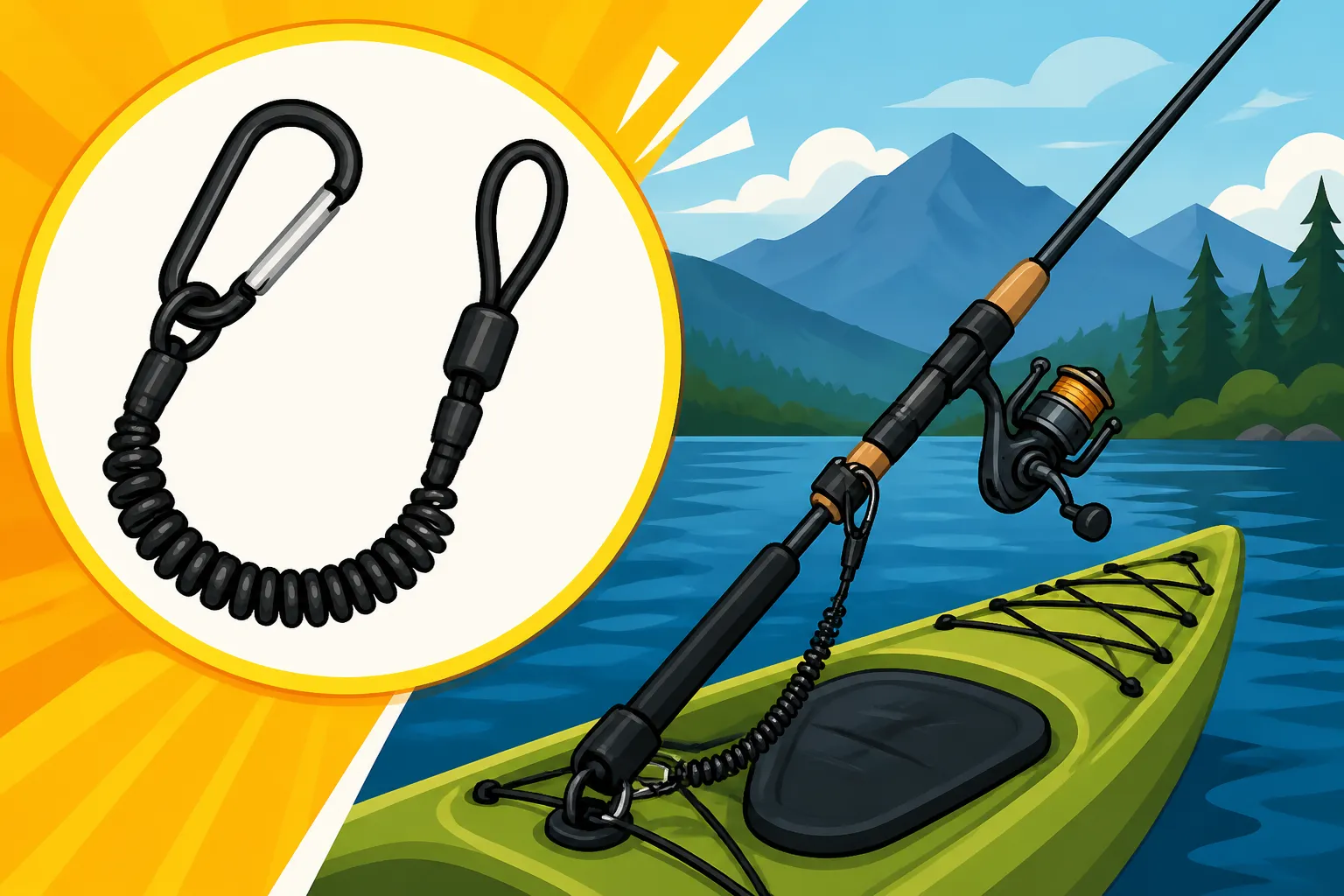
Coiled Leashes: These are probably what most people picture when they think of a rod leash. They look like a telephone cord, coiling up neatly when not extended and stretching out when needed.
- Pros: Their primary advantage is their compact nature. They stay out of the way when you're actively fishing, reducing tangles around your legs, paddle, or other gear in the sometimes-cramped cockpit of a kayak. When a rod is picked up, the coil extends, providing enough slack for casting and maneuvering, then retracts to keep things tidy. Many coiled leashes are designed to handle significant stretching, often several feet, without losing their coiling ability. You can find many options from brands like Hobie or YakAttack at retailers such as Bass Pro Shops, which are excellent for keeping things organized in a compact fishing space.
- Cons: Over time, the coil can lose some of its elasticity, especially with heavy use or prolonged sun exposure, leading to a saggy leash. They can also create a slight "pull" on your rod if you're not careful with your movements, and sometimes the coils themselves can get tangled if not managed well, especially if you have multiple leashes in use. A small amount of tension is inherent to the coiled design, which might be noticeable if you're ultra-sensitive to rod feel, though for most anglers, it's a minor trade-off for the convenience.
Straight Leashes: These are essentially a length of webbing, cord, or cable, sometimes with elastic sections, that don't retract into a coil.
- Pros: Straight leashes offer consistent length and don't exert any constant tension on your rod, which some anglers prefer for a completely "free" feel. They are often simpler in design and can be more durable in terms of not losing their shape over time. If made from strong webbing, they can also be less prone to tangling than a fatigued coiled leash. They are excellent for those who want a simple, robust connection without any elastic tension.
- Cons: Their main drawback is that the excess length needs to be managed. If you have too much slack, it can get in the way of casting, paddling, or even become a tripping hazard in the kayak. You might need to adjust the length manually or coil it yourself when not in active use, which can interrupt your fishing flow. This type requires a bit more intentional organization in the kayak cockpit to prevent it from becoming a nuisance.
Clip-On vs. Permanent Attachments
How the leash connects to your rod and kayak is another crucial consideration.
Clip-On Attachments: These typically involve carabiners, plastic clips, or quick-release buckles on one or both ends of the leash.
- Pros: The biggest advantage here is versatility and ease of use. You can quickly attach and detach your rod from the leash, making it easy to swap rods, untangle lines, or prepare your gear off the water. This is incredibly handy when you're moving between different fishing spots or switching techniques. Many clip-on designs are robust, using marine-grade stainless steel carabiners or heavy-duty plastic, which are widely available on platforms like Amazon.
- Cons: Clips can sometimes come undone if not properly secured, especially cheaper plastic ones or if they get snagged on something. There's also the potential for metal clips to scratch your rod blank or reel if they bang against it repeatedly. It’s vital to ensure any clip-on attachment is secure before you push off, as a faulty clip defeats the entire purpose of the leash. Always check the spring tension and gate closure on carabiners to ensure they won't accidentally open.
Permanent or Semi-Permanent Attachments: These involve more secure methods, such as lanyards that loop around the rod butt, Velcro straps, or even shrink-wrap tubing that creates a fixed loop. On the kayak end, it might be a fixed mount or a strong knot to a D-ring.
- Pros: These offer the highest level of security. Once attached, your rod is unlikely to separate from the leash accidentally. This is particularly reassuring for anglers fishing in rougher conditions or those who tend to be less mindful of their gear during intense fishing moments. A looped connection around the rod butt, for example, is incredibly secure and difficult to accidentally dislodge.
- Cons: They sacrifice convenience for security. Swapping rods or detaching the leash can be a hassle, often requiring untying knots or un-Velcroing straps, which isn't ideal if you're rapidly changing techniques or fishing multiple rods. If your leash is permanently attached to a single rod, that rod is then "married" to that leash setup. This setup might not be ideal if you use a variety of rods or frequently switch between them, such as when targeting different species like bass, perch, or pickerel in the same outing.
Key Features to Look For in a Kayak Rod Leash
Choosing the best rod leash isn't just about picking between coiled or straight, or clip-on or permanent. There are several nuanced features that can significantly impact the leash's performance, durability, and your overall satisfaction. Thinking about these details can save you headaches and potentially lost gear down the line. It's about finding that sweet spot between security, usability, and longevity for your specific fishing adventures in the Granite State.
Length and Extension: The Goldilocks Zone
The length of your rod leash is paramount. Too short, and it'll constantly pull at your rod, restricting your casting or reaching for a net. Too long, and it becomes a tangled mess, getting caught on your paddle, your PFD, or even floating into the water.
- Optimal Length: For coiled leashes, you want one that extends far enough to allow a full casting motion and comfortable handling of your rod, typically 4-6 feet of effective stretch. This ensures you can cast overhead, pitch under low branches, and bring fish to the boat for unhooking or netting without feeling tethered. However, when retracted, it should be short enough to keep the rod close to your kayak and out of the way. Look for specifications that detail both relaxed and extended lengths.
- Managing Slack with Straight Leashes: If you opt for a straight leash, consider an adjustable length or one designed to be just long enough to reach your paddle holder or another secure point on your kayak without excessive slack. Some straight leashes integrate a small bungee section that offers a little give, preventing hard jerks while still maintaining a generally fixed length. Test the length by sitting in your kayak, simulating casting, and reaching for your net to ensure it's "just right" – not too long, not too short. Remember, when you're reeling in a big one, you need enough play to maneuver the rod without fighting the leash itself.
Attachment Points and Hardware
The quality and design of the attachment hardware are critical, as these are the points that bear the stress during a mishap.
- Robust Clips and Loops: Look for marine-grade stainless steel clips or heavy-duty, corrosion-resistant plastic. Zinc-plated steel or flimsy plastic clips can fail quickly, especially in saltwater environments like Great Bay, or simply break under the strain of a lost rod. Swivel clips are a bonus, as they help prevent the leash from twisting and kinking. For the rod end, a loop that cinches securely around the rod butt (above the reel seat) is generally preferred over clipping to a rod guide, which can damage the guide or simply slip off. Some leashes come with a secure Velcro strap or a small lanyard loop that you can girth hitch to your rod.
- Secure Kayak Connection: The leash needs to connect equally securely to your kayak. Common attachment points include D-rings, grab handles, seat hardware, or specialized padeyes. Ensure the connection point on your kayak is robust enough to handle the stress of a rod being yanked. A strong carabiner or a sturdy knot (like a bowline or a figure-eight follow-through) is essential for the kayak end. Remember, the weakest link in the system is where failure will occur, so invest in quality hardware on both ends. You can find robust hardware options on Amazon or at your local tackle shop.
Durability and Corrosion Resistance
New Hampshire's fishing environments, from freshwater lakes to brackish estuaries, can be tough on gear. Exposure to sun, water, and varying temperatures demands durable materials.
- Material Choice: The leash material itself should be strong and resilient. Nylon webbing, high-density polyethylene (HDPE) cords, or robust polyurethane coils are common and effective. Avoid thin, cheap elastic cords that are prone to snapping or losing elasticity quickly. The material should be UV-resistant to prevent degradation from sun exposure, which is a common issue with gear left out in the elements.
- Hardware Longevity: All metal components—clips, swivels, rings—should be made of stainless steel to resist rust and corrosion, especially if you're fishing saltwater or frequently leaving your gear wet. Even in freshwater, cheap metal can corrode and seize up, rendering your leash useless or unreliable. Regularly inspect all hardware for signs of wear, rust, or deformation. If you plan to explore the coastal fishing opportunities, like those in our Great Bay Striped Bass Fishing Rules guide, saltwater resistance is a non-negotiable feature.
Making the Most of Your Rod Leash: Usage and Maintenance
Having the best rod leash means nothing if you don't use it correctly or take care of it. A little proactive effort goes a long way in ensuring your gear stays safe and performs reliably trip after trip. Just like you wouldn't neglect your reels, your rod leashes deserve attention to keep them functioning as your ultimate safeguard.
Proper Attachment Techniques
The way you attach your rod leash is just as important as the leash itself. A poorly attached leash is only slightly better than no leash at all.
- To the Rod:
- Above the Reel Seat: This is generally the safest and most recommended attachment point. Loop the leash around the rod blank just above the reel seat. This ensures the leash is attached to the strongest part of the rod (the butt section) and won't interfere with the reel's function or get caught in its moving parts. Many leashes come with a small, adjustable loop or a Velcro strap specifically for this purpose. Avoid clipping to a rod guide or wrapping it around the handle, as these can cause damage or easily slip off.
- Secure the Connection: Whether using a clip or a loop, double-check that it's fully closed and secure. Give it a gentle tug to ensure it won't come undone unexpectedly. If you're using a carabiner, ensure the gate is fully closed and locked if it has that feature.
- To the Kayak:
- Fixed Points are Best: Always attach the other end of the leash to a fixed, strong point on your kayak. D-rings, padeyes, sturdy seat attachments, or grab handles are ideal. Avoid attaching to flimsy bungee cords or temporary attachments that could easily break or detach.
- Placement Matters: Consider where you attach the leash on your kayak. You want it close enough to allow a full range of motion for casting and fighting a fish, but not so close that it pulls too tightly. Experiment with different D-rings or attachment points to find the sweet spot for your preferred fishing style and rod length. If you're using multiple rods, each should have its own leash, and their attachment points should be chosen to minimize tangles between them. For more on optimizing your kayak setup, check out Best Kayak Fishing Techniques for New Hampshire Lakes.
Regular Inspection and Care
Even the most durable leash will eventually wear out. Regular inspection is key to catching potential failures before they happen.
- Pre-Trip Check: Before every fishing trip, quickly inspect your leashes. Look for frayed webbing, cracked plastic, rusted metal, or signs of stretching and fatigue in coiled sections. Check that all clips and swivels operate smoothly. Any visible damage, no matter how small, is a red flag and indicates it might be time for a replacement. A broken clip or a frayed leash can lead to a lost rod just as easily as no leash at all.
- Post-Trip Rinse and Dry: After each outing, especially if you've been in brackish or saltwater, give your leashes a quick rinse with fresh water. This helps remove salt, dirt, and grime that can accelerate corrosion and material breakdown. Allow them to air dry completely before storing them. Don't leave them coiled up wet, as this can trap moisture and promote mildew or rust.
- Proper Storage: Store your leashes out of direct sunlight when not in use. UV rays are a major culprit in breaking down plastics and synthetic fibers. Hang them loosely or store them in a tackle box, such as those you can find from Bass Pro Shops, to prevent kinks or excessive stretching in coiled leashes. A little care here will significantly extend the lifespan of your gear.
Integrating Leashes into Your Kayak Setup
Think of rod leashes as an integral part of your kayak fishing system, not just an afterthought.
- Dedicated Leashes per Rod: If you fish with multiple rods, assign a dedicated leash to each one. This prevents the hassle of swapping leashes and ensures every valuable rod is secured. Many anglers have a specific setup for their Best Tackle for New Hampshire Smallmouth Bass rod, and another for their general-purpose spin rod.
- Accessibility: Ensure your leashes are easily accessible. You don't want to be fumbling around in a panic when a rod is about to go overboard. Keep them attached or in an easy-to-grab location.
- Consider a Paddle Leash Too: While we're focusing on rod leashes, remember your paddle is another critical (and expensive) piece of gear often lost in kayak fishing. A paddle leash operates on similar principles and is just as important for maintaining control and preventing loss. Having a system for securing all your essential items means you can focus entirely on the fishing experience. You can even find combination packages that offer both rod and paddle leashes, making it simple to secure your essential gear.
Table: Comparison of Common Rod Leash Types
To help you visualize the differences and make an informed decision, here's a quick comparison of the two main types of rod leashes we've discussed.
| Feature | Coiled Rod Leash | Straight Rod Leash |
|---|---|---|
| Appearance | Resembles a telephone cord, retracts neatly | Fixed length of webbing/cord, may have elastic sections |
| Primary Benefit | Stays out of the way, compact, reduces tangles | No constant tension on rod, consistent length |
| Slack Management | Self-retracting, extends when needed | Requires manual management (e.g., wrap excess, adjust length) |
| Tension | Minimal constant tension when relaxed | No constant tension (unless elastic section is stretched) |
| Durability Concern | Can lose elasticity over time, UV degradation | Less prone to losing shape, but material can fray/degrade |
| Ideal For | Anglers valuing tidiness and minimal interference | Anglers preferring a "free" rod feel, less retraction force |
| Typical Use Case | General kayak fishing, tight cockpits, active casting | Trolling, specific fixed rod setups, open kayaks |
Disclaimer
This article is for general informational purposes only and does not constitute professional advice. Laws, prices and regulations vary by location and change over time. Consult a qualified professional for guidance on your specific situation.