Best crate setup for kayak fishing storage
There’s nothing quite like the freedom of kayak fishing, paddling silently across a glassy New Hampshire lake or navigating a winding river. But let's be real, managing all your essential gear in a compact kayak can quickly turn into a tangled mess of rods, lures, and forgotten pliers, often leading to frustration and missed opportunities on the water. This guide is all about helping you create the ultimate, organized, and accessible storage solution right behind your seat: the kayak fishing crate setup.
Why a Kayak Fishing Crate is Your Best Friend on the Water
When you're out on the water in your kayak, every inch of space matters, and having your gear within easy reach can make all the difference between a successful outing and a day of fumbling. A dedicated crate setup isn't just about holding stuff; it's about optimizing your fishing experience, keeping your hands free for paddling or fishing, and protecting your precious tackle.
The Problem with Disorganized Gear
Imagine this: you've just spotted a school of smallmouth bass breaking the surface on Lake Winnipesaukee, frantically feeding. You need to grab your topwater lure, but your tackle box is buried under a dry bag, your rod is sliding around, and your pliers are nowhere to be found. By the time you untangle everything, the school has vanished. Sound familiar? It's a common struggle for kayak anglers. Loose items can be lost overboard with a single tip or splash, and even if they stay in the boat, they can become a dangerous tripping hazard or simply a huge time-waster. Your kayak, especially if it’s a smaller model, doesn’t offer built-in storage compartments for every single item, and even if it does, accessing them can be awkward. This is where the crate steps in as a game-changer.
The Benefits of a Centralized Storage Solution
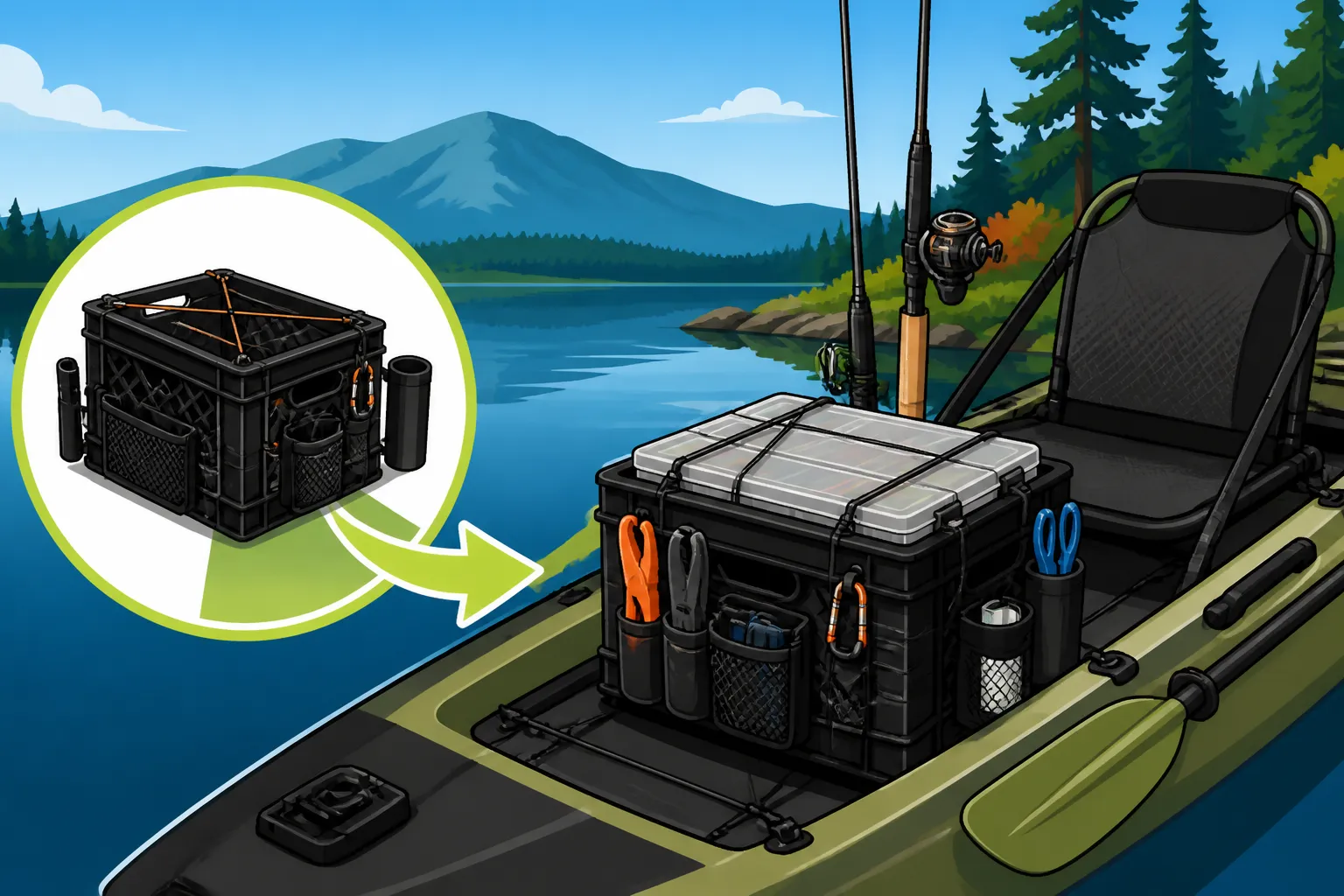
A well-designed kayak crate brings order to the chaos. By centralizing your most frequently used items in one easily accessible spot, usually right behind your seat, you gain incredible efficiency. Think of it as your mobile command center. Rods are secured upright, tackle is organized in bins, and essential tools like pliers or a net are always within arm's reach. This means less bending, less rummaging, and more actual fishing. Plus, many crates offer customization options that allow you to tailor the setup to your specific needs, whether you're targeting brook trout in a mountain stream or chasing largemouth bass in a big pond. It helps keep your kayak's deck clear, reducing clutter and providing a safer, more stable platform for casting and maneuvering. For those who frequently fish different species or locations, a modular crate system allows for quick changes to your tackle loadout without completely reorganizing your entire kayak.
Choosing the Right Crate for Your Kayak
Not all crates are created equal, especially when it comes to the specific demands of kayak fishing. From simple, repurposed options to highly specialized gear, understanding the pros and cons of each will help you select the perfect foundation for your on-the-water storage system.
Standard Milk Crates: The Budget-Friendly Workhorse
The classic plastic milk crate is often the first choice for many kayak anglers, and for good reason. They are incredibly affordable, readily available, and surprisingly durable. Their open-grid design makes them lightweight and easy to modify, allowing water to drain quickly, which is crucial in a wet environment like a kayak. You can pick one up from a hardware store, or often find them online through retailers like Amazon.
The beauty of a milk crate lies in its simplicity. Many anglers start with one of these and then gradually add PVC pipe rod holders, bungee cords, or small waterproof boxes inside. While they lack the dedicated features of purpose-built fishing crates, their adaptability is unmatched. You can easily cut sections out for custom fits, drill holes for additional attachments, or stack them for vertical storage if your kayak allows. However, they do have their limitations; the open design means your gear isn't protected from spray or rain, and without modifications, items can shift around or even fall out.
Specialized Kayak Fishing Crates: Designed for Anglers
For those looking for a more refined and feature-rich solution, there's a wide array of specialized kayak fishing crates on the market. Brands like Old Town, Wilderness Systems, and Hobie offer purpose-built systems that integrate seamlessly with their kayaks or provide universal compatibility. These crates often come with integrated rod holders, dedicated compartments for tackle boxes, tool holders, and even cutting boards or drink holders. You'll find a great selection of these at dedicated outdoor retailers like Bass Pro Shops.
These specialized crates are typically made from marine-grade plastics, designed to withstand UV exposure and saltwater environments, ensuring longevity. They often have solid sides to protect contents from splashes, or even hinged lids for added security and weather resistance. While they come with a higher price tag than a basic milk crate, the convenience, durability, and thoughtful design features can be a significant upgrade for serious kayak anglers. They are engineered to maximize space and functionality, often including slots for standard 3600 or 3700 series tackle trays, making tackle organization effortless.
Material and Size Considerations
When choosing any crate, consider the material. Most are plastic, but the grade and flexibility can vary. Look for robust, UV-resistant plastic that won't become brittle in the sun or crack under stress. For saltwater anglers, corrosion-resistant hardware is a must if the crate includes metal components.
Size is another critical factor. Measure the stern well (the tankwell) of your kayak to ensure the crate fits snugly without impeding your paddling stroke or access to other areas. A crate that's too tall might interfere with casting, while one that's too wide might rub against the sides of your kayak, making it harder to maneuver or get in and out of. Most kayaks are designed to accommodate a standard-sized crate, roughly 13x13x13 inches, but always double-check. A snug fit helps prevent the crate from shifting, which is important for stability and safety, especially in choppy water. Think about the volume of gear you typically carry—do you need a large, multi-compartment crate for long trips, or a more minimalist setup for quick outings? Best Kayaks for New Hampshire Fishing can help you assess your kayak's capacity.
Essential Accessories for Your Crate Setup
Once you've got your base crate, it's time to trick it out. The right accessories can transform a simple box into a highly efficient and personalized fishing station, making every moment on the water more productive and enjoyable.
Rod Holders: Keeping Your Sticks Secure
Perhaps the most crucial accessory for any kayak fishing crate is a set of reliable rod holders. Having multiple rods rigged and ready for different techniques or species means you can switch tactics instantly when the bite changes. Most anglers opt for PVC pipe sections attached to the outside of the crate with zip ties or screws. These can be angled to keep your rods out of the way of your casting arm or parallel to the water to clear low-hanging branches when paddling.
Specialized crates often come with integrated rod holders, sometimes four or more, molded directly into the design. If you're going the DIY route with a milk crate, consider the diameter of your rod handles and reels to ensure a snug, but not too tight, fit. Some anglers even add rod leashes to their rods, securing them to the kayak or crate, which is an invaluable safeguard against losing an expensive rod and reel overboard. Best Rod Leash for Kayak Fishing explores this further.
Tackle Management and Organization
Keeping your lures, weights, and tools organized within the crate is paramount. Simply tossing everything into the bottom of the crate is a recipe for disaster. This is where smaller, waterproof tackle boxes or utility trays come into play. Standard 3600 or 3700 series tackle trays often fit perfectly inside specialized fishing crates, or you can stack a few smaller ones inside a milk crate. These allow you to categorize your tackle by species, lure type, or fishing technique. For example, one box could be dedicated to bass jigs, another to trout spinners, and a third to general terminal tackle.
Beyond tackle boxes, consider small mesh bags for soft plastics, tool holders for your pliers and line cutters, and perhaps a small dry box for your phone, keys, and wallet. Some anglers even attach small carabiners to the crate to hang scissors or a fishing towel. The goal is to make every item easily identifiable and accessible with minimal effort. Look for affordable organizational bins on Amazon or specialized kayak gear at Bass Pro Shops.
Tools and Additional Attachments
Think about the tools you consistently reach for. Pliers, a fishing knife, a measuring tape, and a small first-aid kit are absolute essentials. Many specialized crates have dedicated slots or mounts for these, or you can add elastic loops or tool clips to a basic crate. A sturdy net or a fish gripper, especially when targeting larger species, can also be mounted to the side of your crate, making it quick to deploy for landing a fish.
For safety and convenience, consider adding a small dry bag for spare layers or snacks (see Best Dry Bag for Kayak Fishing), a small cooler or insulated bag that fits inside or on top of the crate for drinks and bait, and maybe even a small LED light for early morning or late evening trips. Some anglers even mount a small camera or a portable fish finder to their crate, creating an all-in-one fishing station. The modular nature of these setups means you can continually refine and adapt your crate to perfectly suit your evolving needs and fishing styles.
Here's a quick comparison of common crate accessories:
| Accessory Type | Description | Best For | DIY / Budget Option | Specialized / Premium Option |
|---|---|---|---|---|
| Rod Holders | Securely holds fishing rods upright and out of the way. | Carrying multiple rigged rods, quick changes. | PVC pipe sections attached with zip ties or screws. | Integrated molded rod holders in specialized crates. |
| Tackle Trays | Organized storage for lures, weights, hooks, etc. | Keeping tackle neat, quick access to specific setups. | Small plastic containers, repurposed food storage bins. | Waterproof tackle boxes (e.g., Plano, Flambeau), specifically sized trays. |
| Tool Holders | Keeps pliers, line cutters, and other tools handy. | Instant access to essential tools. | Elastic loops, small utility pouches, carabiners. | Dedicated tool slots, magnetic strips, integrated holsters. |
| Dry Bags/Boxes | Waterproof protection for electronics, keys, wallet, first aid. | Protecting valuables from splashes and submersion. | Sealable plastic food containers. | Purpose-built marine dry bags, Pelican-style cases. |
| Cooler/Bait Well | Keeps drinks cold, bait fresh, or fish chilled. | Longer trips, live bait fishing, keeping the catch fresh. | Insulated soft cooler that fits inside, repurposed foam cooler. | Integrated cooler compartments, aerated bait wells (often separate). |
| Net/Gripper Holder | Secures landing net or fish gripper for quick deployment. | Efficient fish landing, reducing clutter. | Bungee cords or clips attached to crate. | Dedicated net slots, magnetic net releases. |
Customizing and Securing Your Kayak Crate
A kayak crate setup is most effective when it's tailored to your individual fishing style and securely integrated with your kayak. Customization allows you to create a system that truly works for you, while proper securing methods prevent loss and ensure safety on the water.
DIY Modifications and Personal Touches
The beauty of a kayak crate, especially a basic milk crate, is its potential for endless customization. Many anglers enjoy the process of making their crate truly their own. Beyond adding PVC rod holders, you can incorporate elastic shock cord for securing items on top of the crate, creating a bungee-web system. Some clever DIYers install small cutting boards to the top or side, perfect for bait preparation or processing a small catch. You could even add a small marine battery inside a waterproof container within your crate to power a fish finder or charge your phone, keeping the wires neatly organized.
For specific tackle, consider using small, clear plastic containers that fit snugly into the crate, allowing you to see their contents at a glance. Labeling these containers can further enhance efficiency. You might dedicate one small container to soft plastics, another to terminal tackle for bass fishing, and a third to panfish jigs. This level of organization reduces wasted time searching for gear. Remember, anything you add should be lightweight, waterproof (or in a waterproof container), and securely attached.
Securing the Crate to Your Kayak
This step is non-negotiable. An unsecured crate is a liability. In rough water, a sudden wave or boat wake can easily send your entire setup overboard, resulting in lost gear and a frustrating end to your fishing trip. Most kayaks have bungee cord rigging in the stern well (tankwell) specifically designed for securing crates or other gear. Use these bungees, threading them through the crate's handles or open grid, and ensure they are pulled taut.
If your kayak doesn't have adequate rigging, or if you want extra security, you can purchase additional deck loops and bungee cord from marine supply stores or online retailers like Amazon. Screw-in deck loops can be installed carefully (make sure you know what's on the other side of your hull before drilling!) to provide secure attachment points. Another popular method is using cam straps or webbing straps, which offer a very tight and secure hold. Always test the security of your crate before heading out. Give it a good tug and shake to ensure it won't budge. For long paddles or in potentially rough conditions, over-securing is always better than under-securing. Consider adding a small float to your crate as a last resort in case it does somehow detach and go overboard, making retrieval easier.
Packing and Organization Tips for Maximum Efficiency
Having the perfect crate setup is only half the battle; knowing how to pack it efficiently and maintain that organization on the water is key to a truly enjoyable and productive fishing experience.
Prioritizing Access and Weight Distribution
Think about what you'll need most frequently. Your primary rod should be in an easily accessible holder. Your go-to lure box should be on top or in a designated slot that's simple to reach without fumbling. Less frequently used items, like a first aid kit or extra rain gear, can be tucked away at the bottom or in a dedicated dry bag.
Weight distribution is also crucial for kayak stability. While a crate typically sits in the stern well, try to keep the heaviest items low and centered within the crate itself. Avoid loading one side of the crate with heavy weights while the other is empty, as this can create an imbalance. A balanced kayak is a safer and more enjoyable kayak. If you're carrying a cooler for your catch, ensure it's not so heavy that it significantly alters your kayak's trim. For larger lakes like Winnipesaukee, where conditions can change quickly, a stable kayak is paramount. For general stability tips, check out Kayak Fishing Techniques for New Hampshire Lakes.
Keeping It Neat on the Water
Even the best-organized crate can become messy during a day of active fishing. Develop habits that help you maintain order. For instance, after catching a fish, immediately put your pliers and measuring tape back in their designated spots. Change lures over a small tray or container to prevent dropped hooks and weights from scattering across your deck or falling into the water. If you're using live bait, ensure your bait container is secure and can be easily closed.
Before you even launch, give your crate a quick once-over. Is everything in its place? Are all tackle boxes closed and latched? Is your net readily deployable? A few seconds of pre-launch organization can save minutes of frustration later. And when your fishing day is done, take a moment to rinse your crate and its contents, especially if you've been in saltwater or muddy conditions, to prolong the life of your gear. Proper cleaning and maintenance are just as important as the initial setup.
Planning for Different Fishing Scenarios
One of the great advantages of a modular crate system is its adaptability. Instead of one universal setup, you can have different crate configurations for various fishing trips. For example:
- Trout Stream Crate: A smaller crate with minimal rod holders (maybe just one or two), focused on fly boxes or small spinner/spoon tackle, a small net, and maybe a water bottle.
- Bass Lake Crate: A larger crate with multiple rod holders for baitcasting and spinning rods, several tackle trays for different bass lures (crankbaits, jigs, soft plastics), a fish gripper, and maybe a small cooler for drinks.
- Ice Fishing Support Crate (on a sled): While not directly kayak fishing, the crate concept translates well to ice fishing for things like New Hampshire Lake Trout Ice Fishing Season Dates. You might have a crate with a small heater, extra gloves, bait, and a thermos, pulled behind you on a sled.
By having these specialized loadouts, you can grab the right crate for the right adventure, ensuring you have exactly what you need without carrying unnecessary weight or clutter. This kind of thoughtful preparation elevates your entire New Hampshire fishing experience, allowing you to focus on the joy of the catch.
Disclaimer
This article is for general informational purposes only and does not constitute professional advice. Laws, prices and regulations vary by location and change over time. Consult a qualified professional for guidance on your specific situation.