Best PowerBait color for early season trout
Early season trout fishing in New Hampshire can be an exhilarating experience, a true sign that spring has arrived and the landscape is waking up. But let's be honest, it can also be incredibly frustrating when you're standing by a chilly pond or stream, casting repeatedly, and getting absolutely no bites. A common challenge anglers face is figuring out what bait will entice those often-sluggish, recently stocked, or still-wary trout. This guide is here to help you cut through the confusion and pinpoint the best PowerBait colors to use for early season trout in New Hampshire, helping you increase your chances of a successful and enjoyable outing.
Early Season Trout Behavior and Water Conditions in New Hampshire
Before we even talk about colors, it's crucial to understand what's happening beneath the surface in those early spring weeks. New Hampshire's waters are still shaking off winter's chill, and this significantly impacts trout behavior and how they perceive their environment. If you want to trick a trout into biting, you first need to think like a trout!
The Chill of Spring: Understanding Cold Water Trout Metabolism
When the ice has just melted, or even if it's been gone for a few weeks, New Hampshire's lakes, ponds, and rivers are still pretty darn cold. We're often talking water temperatures in the 30s and 40s (Fahrenheit). What does this mean for a trout? Well, just like us, they get a bit sluggish in the cold. Their metabolism slows way down. They're not as actively chasing down fast-moving prey, and their energy levels are lower. This means they're looking for an easy meal, something that doesn't require a lot of effort to catch.
This reduced activity also affects their visual acuity and how they react to stimuli. A vibrant, easily spotted bait becomes much more critical than in warmer months when trout might be more aggressive and willing to strike at a wider variety of presentations. Think about it: if you're feeling sluggish, are you more likely to notice a subtle hint of color or a bright, in-your-face beacon? The answer is usually the latter. So, our bait choices need to account for this lethargic, energy-conserving mindset.
Furthermore, cold water can sometimes mean clearer water, as algal blooms haven't really taken off yet. However, spring thaws can also lead to significant runoff, which introduces sediment and can make some waters quite turbid. Knowing the general clarity of the water you're fishing is just as important as knowing the temperature when it comes to picking that perfect PowerBait color. You'll find that New Hampshire Fishing Season Dates and Closures can vary, and understanding these early season nuances is key.
Post-Stocking Frenzy vs. Wild Trout Habits
New Hampshire Fish and Game does an incredible job stocking many of our favorite waters with trout in the spring. These recently stocked fish can behave quite differently from their wild, native counterparts, or even from holdover trout that survived the winter. Newly stocked trout are often a little disoriented and, initially, can be quite aggressive, especially if they haven't eaten much during transport. This can lead to what many anglers call a "frenzy" where they'll hit almost anything.
However, this frenzy doesn't last forever. After a few days, or even hours, these fish start to acclimate, and their behavior becomes a bit more nuanced. They might remember what they were fed in the hatchery (often pellet food, which can be tan, brown, or green), or they might key into natural food sources. Wild trout, on the other hand, are inherently more cautious. They've learned to avoid predators and suspicious-looking objects, making them harder to fool.
The majority of early season trout anglers in New Hampshire are targeting stocked fish in ponds and slower-moving rivers. For these fish, novelty and visibility are often key, especially in the first few days after stocking. Over time, baits that mimic natural food sources or provide strong scent trails might become more effective as they become more discerning. Considering New Hampshire Trout Stocking and Fishing Rules can give you insights into where and when these fish are released.
Clarity and Light: How Water Conditions Influence Color Choice
Water clarity and the amount of sunlight penetrating the water column are huge factors in how a PowerBait color appears to a trout. Imagine holding a red apple underwater in clear, sunny conditions versus in murky, cloudy water. The difference is stark. In clear water with bright sunlight, trout can see a wider spectrum of colors, and bright, reflective baits can really pop.
Conversely, in stained, murky, or turbid water – which is common in spring after heavy rains or snowmelt – light penetration is poor. In these conditions, some colors simply disappear or turn to shades of gray much faster. Here, you'll want colors that either stand out sharply against the dim background or have properties that allow them to be seen better in low light, like fluorescent or glow-in-the-dark options. Also, strong contrasts can be key. A white PowerBait with flecks of another color might be more visible than a solid, uniform shade.
Even on overcast days, or during dawn and dusk, light levels are lower, and brighter, more attention-grabbing colors might be your best bet. Always take a moment to observe the water before you cast. Is it gin-clear or like chocolate milk? Is the sun high, or is it hidden behind clouds? These observations should directly inform your PowerBait color selection for optimal success.
Decoding PowerBait Colors: What Works and Why
Choosing a PowerBait color isn't just about picking what looks pretty in the jar. There's a method to the madness, driven by how trout perceive colors and react to different stimuli in varying conditions. Understanding the "why" behind color choice can transform your early season fishing experience.
The Bright & Bold: Chartreuse, Fluorescent Orange, and Yellow
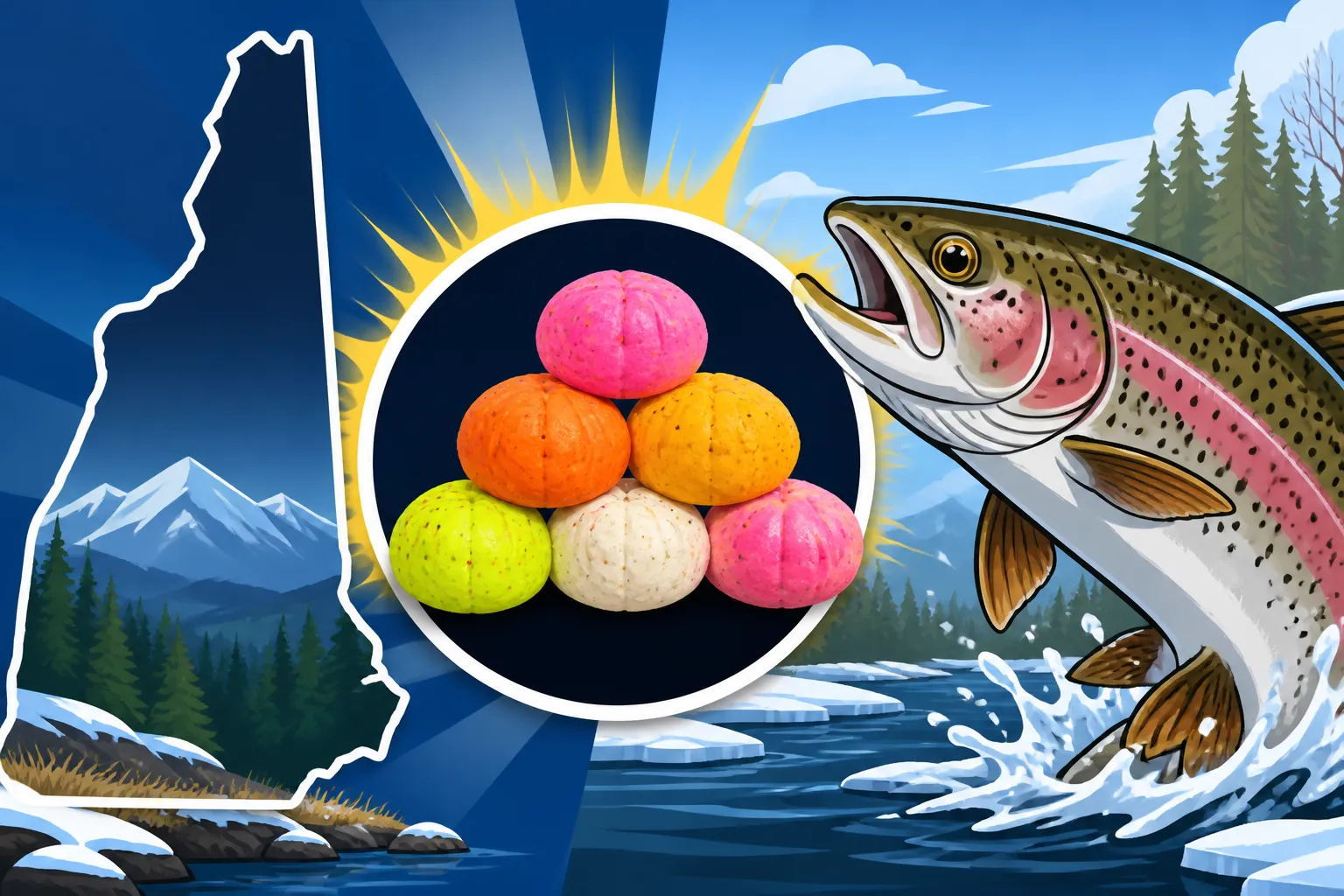
These are often the go-to colors for early season trout anglers in New Hampshire, and for good reason. They are highly visible, even in less-than-ideal conditions. Chartreuse, that vibrant yellowish-green, is a fantastic low-light and murky water performer. It carries well through stained water and presents a strong silhouette, making it easier for sluggish trout to detect. It's often associated with irritation or alarm, prompting an inquisitive or defensive strike from a trout that might not be actively feeding.
Fluorescent orange, another powerhouse, offers excellent contrast against dark bottom structures and murky water. It's a very "loud" color in the water, demanding attention. Many anglers swear by it right after stocking, when trout are still disoriented and looking for anything that stands out. Yellow, while slightly less intense than fluorescent orange, still provides great visibility, particularly in slightly clearer, but still cold, water. It can mimic certain natural food sources or simply act as a strong attractant. Think of these colors as your neon signs underwater – they are designed to be seen.
When the water has a bit of a stain from runoff, or if it's an overcast, dreary spring day, reaching for these bright colors from your tackle box is often your best bet. They act as a strong visual trigger, drawing attention from a distance and giving the trout something easy to target, even if their vision isn't at its sharpest. Many anglers find these colors especially effective when they're fishing for freshly stocked trout, which may not be as wary as their wild counterparts. You might find a great selection of these vibrant options at your local Bass Pro Shops or through online retailers like Amazon.
Natural & Subtle: White, Rainbow, and Green
While the bright colors grab attention, sometimes a more natural or subtle approach is needed, especially as the season progresses a bit or when fishing for more wary fish. White PowerBait can be incredibly versatile. In murky water, it provides a stark contrast, almost glowing. In clear water, it can imitate various natural food items, like insect larvae, tiny baitfish, or even bits of floating organic matter. It's less aggressive than chartreuse but still highly visible.
Rainbow PowerBait, with its multi-color flecks, aims to mimic the appearance of a trout food pellet or even a small, iridescent baitfish. This can be particularly effective for recently stocked trout that were fed pellets in the hatchery. The subtle blend of colors often appears very natural and appealing. When you're fishing waters that have been stocked for a few days, or if you're targeting holdover trout, a rainbow-colored PowerBait can often outperform the brighter, more aggressive options.
Green, particularly shades like "Spring Green" or "Sherbet," offers a more muted yet still visible option. It blends well with aquatic vegetation and can mimic small insects or vegetation that trout might forage on. It's a great choice for slightly clearer waters, or when the sun is higher and you want something that looks more natural but still has a bit of pop. These natural colors often carry a strong scent as well, which is another crucial factor in tempting trout.
The "Glow" Factor: Leveraging UV and Scent
PowerBait isn't just about color; it's also about scent and, increasingly, UV reflectivity. Many PowerBait formulas are designed to release a potent scent into the water, creating an invisible "scent trail" that can draw in trout from a distance. This is absolutely critical in cold water, where a trout's sense of smell might be even more important than sight, especially if they are sluggish or the water is murky.
Beyond scent, some PowerBait colors incorporate UV (ultraviolet) enhancers. While humans can't see UV light, many fish species, including trout, can. UV-reflective baits literally "glow" under certain light conditions, making them more visible to trout, especially in deeper water or on overcast days where UV light can penetrate better than visible light. This is a game-changer for visibility, essentially making the bait stand out more effectively even when ambient light is low.
When you're choosing PowerBait, consider both the visible color and its potential UV properties, particularly for early season success. Pairing a bright, UV-enhanced color with a strong scent can create an irresistible combination for those finicky early season trout. Many brands now highlight whether their baits have UV enhancement, which is a great feature to look for in your tackle shop. Learn more about Best Baits for Early Season Trout to broaden your options.
Top PowerBait Color Recommendations for New Hampshire Anglers
Okay, enough with the science, let's get down to brass tacks: what specific colors should you be reaching for when you hit New Hampshire's trout waters in early spring? The answer often depends on the specific conditions you're facing that day.
Best Colors for Stained or Murky Waters
When the water has that characteristic spring tint from snowmelt or recent rain, visibility is low. This is where you want to go bold.
- Chartreuse: This is almost universally loved by trout anglers in murky conditions. Its bright, almost neon green-yellow stands out like a beacon. It's a fantastic choice for freshly stocked ponds or rivers that are running a bit high and cloudy. Don't be shy with it; it's designed to be seen.
- Fluorescent Orange: Another high-visibility winner. The intense orange cuts through cloudy water effectively and provides a stark contrast against darker backgrounds. It's particularly good on those overcast, low-light days. Think of it as a target for the trout to zero in on.
- Fluorescent Red/Pink: Similar to orange, these colors can also be very effective in stained water, especially if there's any natural red or pink food source present (though often it's just the sheer visibility that draws the strike). They offer a different but equally bright visual trigger.
For these conditions, the key is maximum visual appeal. You're trying to compensate for the limited light penetration and reduced water clarity. Often, these bright colors will be among the first to get hit when trout are actively seeking something to eat in less-than-ideal water conditions.
Ideal Hues for Clear, Sunny Days
If you're lucky enough to have a beautiful, sunny spring day with clear water, you might need to tone it down just a touch. Trout have excellent eyesight in good conditions, and overly aggressive colors can sometimes spook them.
- White: Surprisingly effective in clear water. It can imitate a wide range of natural food items, from aquatic insects to small pieces of organic matter. It's subtle enough not to spook wary trout but still visible enough to grab their attention. It often has a very natural, almost translucent appearance in clear water.
- Rainbow or Natural Pellet: When fishing stocked ponds on clear days, baits that mimic the hatchery pellets are often a secret weapon. Rainbow PowerBait, with its mix of muted natural colors, does a fantastic job of this. It's what these fish were raised on, so it's a familiar and reassuring sight.
- Light Green (e.g., Spring Green, Sherbet): These lighter, more natural shades of green can be excellent in clear water, especially if there's any aquatic vegetation present. They offer good visibility without being overly "loud," providing a subtle invitation for a strike.
On clear, sunny days, trout have more time to inspect your bait. While scent remains important, visual realism or familiarity can make a huge difference. These more natural tones are less likely to send up red flags for discerning fish. When you're fishing in pristine conditions, these options give you a natural edge.
Versatile Choices for Mixed Conditions
What if the conditions are somewhere in between, or you're just not sure what you'll encounter? Having a few versatile options in your early season arsenal is a smart move.
- Orange/Yellow Combo (e.g., "Fluorescent Orange/Yellow Swirl"): Many PowerBait varieties offer multi-color swirls. An orange and yellow combination gives you the best of both worlds – high visibility with a slight variation in tone that can appeal in a wider range of clarities and light conditions. It's often perceived as dynamic and enticing.
- Chartreuse/White Swirl: Similar to the orange/yellow, a chartreuse and white swirl combines the ultimate low-light visibility of chartreuse with the natural appeal and contrast of white. This can be a killer combination in waters that are a little stained but still have some clarity.
- Garlic or Anise Scented PowerBait: While not a color, choosing PowerBait that is heavily scented (most PowerBait is, but some are extra pungent) is a universal winner. In any condition, adding a strong scent trail increases your chances. Even if a trout doesn't see your bait perfectly, it can smell it and track it down. This is especially true in cold water where fish may be less active but still responsive to a powerful scent.
Having a few jars of these versatile colors on hand means you're prepared for whatever New Hampshire's unpredictable early spring weather throws at you. You can quickly adapt your approach without having to completely re-think your strategy. Don't forget, sometimes the best approach is to try a few different colors until you find what the fish are keying into that day!
Here’s a quick summary table for your early season PowerBait choices:
| Water Conditions | Recommended PowerBait Colors | Why it Works |
|---|---|---|
| Stained/Murky Water | Chartreuse, Fluorescent Orange, Fluorescent Red/Pink | High visibility cuts through low light and turbidity; strong visual trigger. |
| Clear/Sunny Water | White, Rainbow (Pellet Imitation), Light Green (Spring Green) | Subtle, natural appearance; good visibility without spooking wary fish; mimics food. |
| Mixed/Uncertain Conditions | Orange/Yellow Swirl, Chartreuse/White Swirl, Heavy Scented | Combines high visibility with natural contrast; strong scent attracts from afar. |
PowerBait Presentation and Tactics for Early Season Success
Having the right PowerBait color is only half the battle. How you present it, where you cast it, and your overall approach can make all the difference in turning a slow day into a successful one. Early season trout require a bit of finesse and understanding of their environment.
Rigging PowerBait for Optimal Drift and Appeal
The most common and effective way to rig PowerBait for trout is a simple bottom rig. This typically involves a small hook (size 10 or 12 is usually good for stocked trout), a swivel to prevent line twist, and a small split shot or an egg sinker placed above the swivel. The key is to allow the PowerBait to float just off the bottom, right in the strike zone where trout are often cruising. You want enough weight to get your bait down, but not so much that it pins the bait to the bottom.
When you mold the PowerBait onto your hook, try to make it into a small, compact ball, completely covering the hook point. This helps with buoyancy and creates a more natural presentation. Some anglers like to use a treble hook, but a single hook is usually sufficient and less damaging to fish you plan to release. Remember that these fish are often lethargic, so a natural, unencumbered drift is crucial. You don't want your bait dragging unnaturally.
For deeper waters, or if you want to cover more ground, a slip sinker rig can be effective. This allows the line to run freely through the sinker, so when a trout picks up the bait, it doesn't feel the resistance of the weight immediately, giving it more time to mouth the bait before feeling tension. Don't be afraid to experiment with how far the PowerBait floats off the bottom; sometimes an inch or two makes all the difference. For more rigging ideas, check out Best Gear for New Hampshire Trout Fishing.
Scouting Locations and Patience: Key to Early Season Trout
Even with the perfect PowerBait color, if you're not putting it where the fish are, you won't catch anything. In early spring, trout will often congregate in certain areas. Look for slightly warmer water, which can be found in shallower coves, near sun-drenched banks, or where small feeder streams flow in. These areas often warm up first and can hold more active fish. Best Trout Ponds in New Hampshire are often prime locations to target.
Trout also tend to hold near structure in early season, such as submerged logs, rock piles, or weed beds (if they've started growing). These provide cover and ambush points. Cast your PowerBait near these structures, but give it time. Remember, trout are often sluggish, so they might not dart out to grab your bait immediately. Leave your bait soaking for a good 10-15 minutes before reeling in and recasting. Patience is truly a virtue in cold water fishing.
Pay attention to subtle bites. Sometimes an early season trout will just "mouth" the bait rather than aggressively strike it. You might see a slight twitch in your line, or your rod tip might slowly bend. Don't set the hook too hard right away; sometimes a gentle, steady pull is all that's needed to engage the hook. The goal is to present an easy, irresistible meal right in front of them, then give them the time they need to take it.
Pairing PowerBait with Other Techniques
While PowerBait is incredibly effective on its own, don't be afraid to combine it with other techniques or baits for maximum early season success. For example, many anglers will fish one rod with PowerBait on a static bottom rig, and another rod with a small spinner or spoon that they actively retrieve. This allows them to cover different water columns and test different presentations simultaneously. Spring Trout Fishing Techniques for New Hampshire Ponds delves deeper into these strategies.
You can also use PowerBait as an added attractant to a worm or a mealworm. Thread a small piece of PowerBait onto the hook with a live bait to combine the strong scent and visual appeal of PowerBait with the natural movement of a live offering. This can be especially effective on days when trout are being particularly finicky. Sometimes, they need that extra incentive to commit to a bite.
Ultimately, early season trout fishing in New Hampshire is about experimentation and observation. Start with the recommended colors, pay attention to the water conditions, and be willing to switch things up if one color isn't working. The trout will tell you what they prefer that day, you just have to be observant enough to listen. Have fun out there, and tight lines!
Disclaimer
This article is for general informational purposes only and does not constitute professional advice. Laws, prices and regulations vary by location and change over time. Consult a qualified professional for guidance on your specific situation.