Best scent bait for stocked trout
It can be incredibly frustrating to head out to your favorite New Hampshire pond or river, knowing it's just been freshly stocked with trout, only to have them ignore every lure you throw. You've got the fancy spinners, the shiny spoons, even some meticulously tied flies, but those hatchery-raised beauties just aren't biting like you'd hoped. Many anglers find themselves in this exact boat, wondering what secret ingredient they're missing. The truth is, often, those newly stocked trout are still adjusting, and what they're really looking for is something that appeals to their most basic instinct: a strong, appealing scent. This guide will walk you through the best scent baits to use for stocked trout in New Hampshire, explaining why they work and how to present them for the best results, helping you turn those frustrating outings into successful fishing trips.
Why Scent Is a Game Changer for Stocked Trout
When we talk about stocked trout, we're often talking about fish that have spent their lives in a controlled environment, being fed a very specific diet. Their world is suddenly turned upside down when they're released into a new, wild water body. They're disoriented, sometimes stressed, and their natural foraging instincts, which might be finely tuned in wild fish, aren't always immediately switched on. This is precisely where scent baits shine, providing an irresistible attractant that taps into their biological urges.
The Hatchery Diet vs. Wild Instincts
Think about it: most trout raised in hatcheries are accustomed to pelleted food. It's consistent, easily digestible, and comes without the need for hunting. When these fish are introduced to a natural environment, they don't instinctively know how to chase down live minnows or peck at aquatic insects with the same efficiency as their wild counterparts. Their initial response to a shiny lure might be curiosity, but it's often not the strong feeding response we see from wild fish. Their primary driver is often taste and smell, which are heavily influenced by their upbringing.
A highly scented bait offers a familiar, appealing aroma that triggers a feeding response, even if the fish isn't actively hunting. It's like comfort food for a confused trout. This is especially true right after stocking, when the fish are still getting their bearings. Many anglers notice a significant drop in catch rates using traditional lures in the days immediately following a stocking event, which then improves as the trout acclimate and begin to behave more like wild fish. But if you want to catch them while they're still in that "hatchery haze," scent is your secret weapon. You can learn more about how the fish adjust in our guide to How to Catch Trout Right After Stocking in New Hampshire.
How Scent Baits Work Their Magic
Trout, like many fish, have an incredibly keen sense of smell. They use chemoreception to detect dissolved chemicals in the water, which helps them find food, avoid predators, and even navigate. Scent baits release a plume of attractive odors that travel through the water, effectively creating a "scent trail" that fish can follow directly to your hook. This is particularly effective in murky waters or at dawn and dusk when visibility is low, as the scent can guide fish to your offering even if they can't see it clearly.
The key ingredients in many commercial scent baits are designed to mimic natural food sources or compounds that trigger a feeding frenzy. These can include fish oils, amino acids, and other proprietary attractants that trout find irresistible. When a trout detects these scents, it stimulates their feeding receptors, making them more likely to investigate and, ultimately, bite your bait. It’s not just about getting them to strike; it’s about convincing them that what’s on your hook is genuinely worth eating, even if it looks a little strange compared to their hatchery pellets.
Top Scent Baits That Consistently Deliver
Navigating the world of scent baits can feel a bit overwhelming with so many options out there. However, a few types have consistently proven their worth for stocked trout in New Hampshire, becoming staples in many anglers' tackle boxes.
PowerBait: The Ubiquitous Favorite
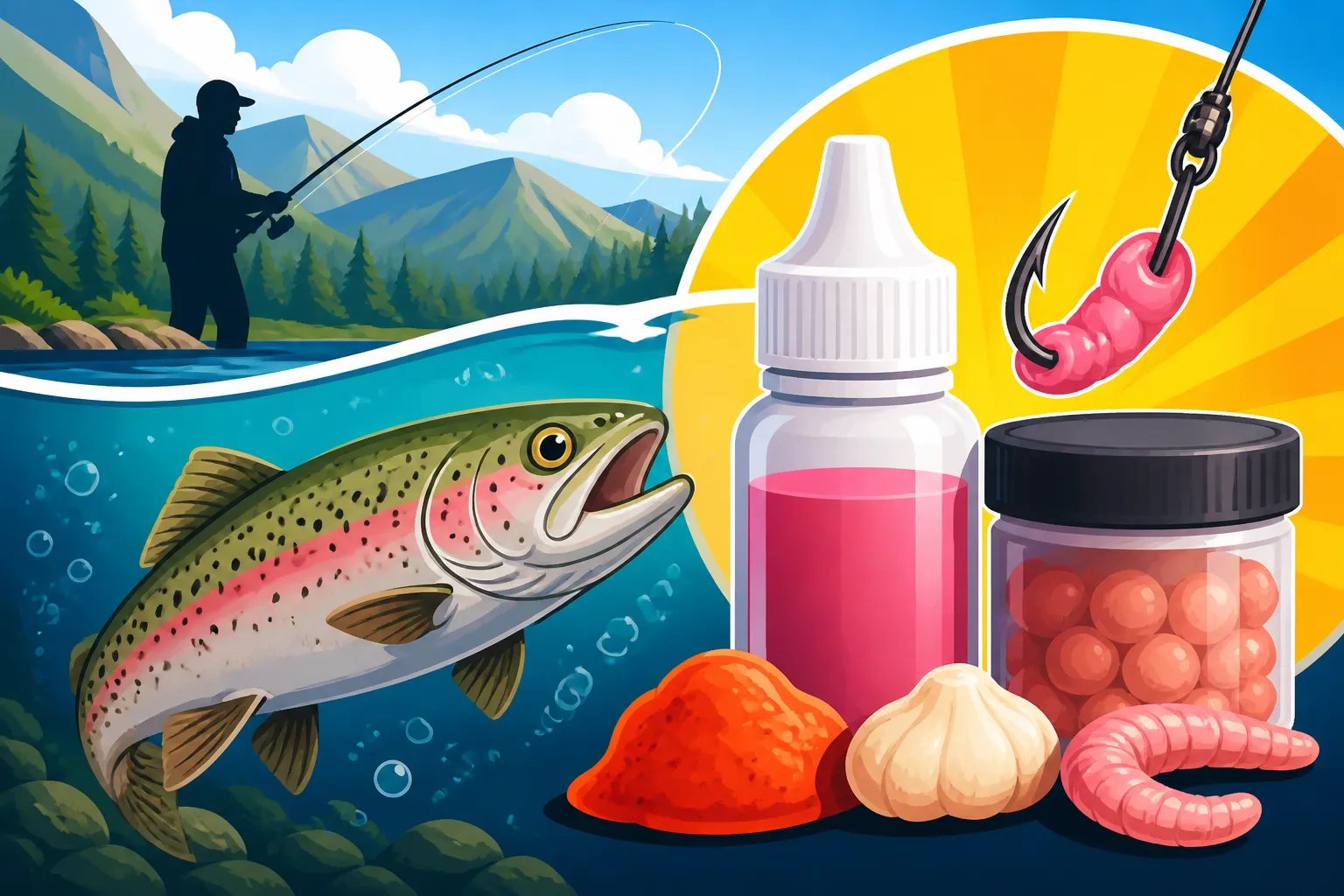
When you talk about scent baits for trout, PowerBait is often the first thing that comes to mind, and for good reason. It's specifically designed to appeal to hatchery-raised trout, mimicking the texture and smell of their processed food while offering a wide range of colors and forms.
- PowerBait Dough: This is arguably the most iconic form. It's soft, pliable, and easy to mold onto a hook. The beauty of the dough is that you can form it into various shapes, though a small ball that just covers your hook is usually best. It comes in a dizzying array of colors – chartreuse, rainbow, pink, orange, and white are all popular choices in New Hampshire. The key with PowerBait dough is its buoyancy. When rigged correctly on a light leader with a sinker, it floats just off the bottom, presenting a very natural, tantalizing target to cruising trout. This makes it incredibly effective in still waters like many of our smaller stocked ponds.
- PowerBait Nuggets: These are pre-formed, small, soft nuggets that offer the same scent and buoyancy as the dough but with less mess and fuss. They're fantastic for quick rigging, especially for kids or when you just want to get a line in the water quickly. They share the same color spectrum as the dough, so you can still experiment to see what the trout prefer on any given day. Many anglers keep a jar of these handy in their vest from places like Bass Pro Shops for when they want a quick, convenient option.
Scented Soft Plastics and Worms
While PowerBait dominates, a new generation of scented soft plastics and artificial worms has carved out a significant niche. These baits combine strong scent with lifelike action, making them incredibly versatile.
- Berkley Gulp! Trout Baits: This line of products from Berkley offers a biodegradable alternative that often outperforms traditional soft plastics due to its potent scent dispersion. Gulp! comes in various forms, from tiny "maggots" and "worms" to imitation "minnows" and "trout nuggets." What sets Gulp! apart is its water-based formula, which allows it to release scent much more effectively than oil-based plastics. They are often incredibly effective when drifted naturally in rivers or slowly retrieved in ponds. The downside is they can dry out if left exposed to air, so keeping them sealed is crucial. Many anglers find great deals on these through retailers like Amazon.
- Scented Artificial Worms: Beyond specific trout-oriented products, classic artificial worms infused with scent can also be surprisingly effective. These often come in brighter colors or natural earth tones and can be fished on a small jig head or under a bobber. The scent helps mask any artificial smell, making them more appealing to cautious trout. Their lifelike movement, combined with a good scent, can be deadly, especially when trout are a bit more active.
Natural Baits with an Extra Kick
Sometimes, the simplest baits are the best, but even they can benefit from an added scent boost. Many traditional natural baits can be made even more effective with a little "doctoring."
- Worms (Nightcrawlers, Mealworms, Waxworms) with Scent Added: A classic nightcrawler is hard to beat, but dousing it in a liquid trout attractant can make it even more irresistible. These liquid scents, often made from concentrated fish oils or proprietary formulas, can be applied directly to your bait. The worm itself provides natural movement and texture, while the added scent draws fish in from further away. This is particularly good for Spring Trout Fishing Techniques for New Hampshire Ponds, where a robust scent trail can make all the difference.
- Corn with Added Attractants: Yes, corn! While often dismissed as simply a chumming agent, a kernel or two of corn on a small hook can be highly effective, especially for freshly stocked trout that might mistake it for their pellets. To elevate its game, soak your corn in a fish attractant or a bit of vanilla extract (a surprisingly effective, old-school trout trick). The bright yellow color combined with an appealing scent can be a powerful combination.
- Cheese Baits: Processed cheese, particularly Velveeta or similar soft, pungent varieties, can also be cut into small cubes and used as bait. Like PowerBait, it has a strong odor and a soft texture that appeals to hatchery trout. Some anglers even mix their cheese bait with garlic powder or other attractants to amplify its allure.
| Scent Bait Type | Pros | Cons | Best Uses |
|---|---|---|---|
| PowerBait Dough | High buoyancy, strong scent, wide color range, pliable | Can be messy, requires molding, may attract smaller fish | Still ponds, slow rivers, bottom fishing, right after stocking |
| PowerBait Nuggets | Convenient, less messy, buoyant, strong scent | Limited shape options, still may attract smaller fish | Quick rigging, kids fishing, similar to dough uses |
| Berkley Gulp! Baits | Potent scent release, biodegradable, lifelike action | Can dry out easily, usually more expensive per piece | Drifting in rivers, slow retrieves, when fish are finicky |
| Scented Artificial Worms | Lifelike action, durable, reusable, good scent | Scent may fade over time, less natural texture than live | Jigging, under a bobber, when live bait isn't practical |
| Live Worms + Attractant | Natural action & appeal, highly effective | Can be messy, keeping worms alive, short scent lifespan | All conditions, especially when trout are cautious |
| Corn + Attractant | Cheap, familiar to hatchery trout, good visibility | Less durable on hook, less action, may attract panfish | Early season, freshly stocked, clear water (visual appeal) |
| Cheese Baits | Strong scent, soft texture, appeals to hatchery trout | Can be messy, not always legal in all waters (check regs) | Still waters, bottom fishing, when other baits fail |
Applying Scent Bait for Maximum Effectiveness
Having the right scent bait is only half the battle; knowing how to present it is equally crucial. Stocked trout, while less wary than wild fish, can still be particular about how your bait is offered.
Rigging for Success
Proper rigging ensures your scent bait presents naturally and maximizes its attractant power.
- The Carolina Rig (or Slip Sinker Rig): This is a go-to for PowerBait dough and nuggets. You'll need a small egg sinker (1/8 to 1/4 ounce is often sufficient for New Hampshire ponds and slow rivers), a small barrel swivel, and a 12-24 inch leader of light fluorocarbon line (2-4 lb test is ideal). Thread the sinker onto your main line, tie on the swivel, then attach your leader to the other side of the swivel. Finally, tie a small, sharp hook (size 10-14, often a "treble hook" for dough) to the end of the leader. Mold your PowerBait around the hook, ensuring it's completely covered and can float. The sinker holds your bait in place on the bottom, while the buoyant PowerBait floats just above it, swaying tantalizingly in the current or with slight water movement. This separation prevents the bait from sinking into weeds or mud, making it more visible and accessible.
- Under a Bobber (Float): For scented soft plastics or even a small piece of PowerBait, fishing under a bobber can be incredibly effective, especially when trout are suspended higher in the water column or near cover. Use a small slip bobber or a fixed float, adjust the depth so your bait is a foot or two off the bottom, or at the depth you're marking fish on your Best Fish Finders for New Hampshire Lakes. The bobber provides visual strike detection and keeps your bait suspended in the feeding zone, allowing the scent to disperse effectively around a specific depth. This method is fantastic for new anglers or kids, as strikes are often unmistakable.
- Small Jig Heads: Scented artificial worms or maggots are perfectly paired with tiny jig heads (1/32 to 1/16 ounce). Cast it out and retrieve it slowly, imparting a gentle jigging motion. The scent trail combined with the subtle action of the plastic can be irresistible. This technique is particularly useful in rivers where you want a more active presentation or when targeting specific holes and eddies. For river fishing, a longer, sensitive rod can help you feel those subtle takes.
Presentation is Key
Once your bait is rigged, how you present it makes all the difference. Remember, these are often less aggressive fish.
- Let the Scent Disperse: Don't just cast and retrieve immediately. With scent baits, especially PowerBait on a bottom rig, cast it out and let it sit. Give the scent time to spread through the water column and attract nearby trout. Sometimes, the fish will find it after a few minutes, even if they weren't right next to it. Patience is a virtue when waiting for that tell-tale twitch.
- Slow and Steady Wins the Race: If you're using scented soft plastics or artificial worms on a jig head, a very slow, methodical retrieve is usually best. Think subtle twitches and pauses rather than fast, erratic movements. You want the bait to appear as an easy, high-value meal, not something they have to chase vigorously.
- Fish at the Right Depth: Stocked trout will often congregate in certain areas, whether it's the deeper sections of a pond, near current breaks in a river, or even surprisingly shallow right after stocking. Use your knowledge of the water body, or even a simple fish finder, to target the depth where the fish are holding. If you're not getting bites at one depth, adjust your presentation – change your bobber depth, or let your bottom rig sit longer. New Hampshire's trout stocking reports can often give you clues as to where the fish have been released, guiding your initial casting points. Check out New Hampshire Trout Stocking Report and Map for helpful information.
When and Where to Use Them
Scent baits truly shine in specific scenarios.
- Freshly Stocked Waters: This is their prime time. As mentioned, new trout are often disoriented and less likely to chase. A strong scent is exactly what they need to entice a bite. Many New Hampshire ponds and sections of rivers receive regular trout stockings, making these prime locations for scent bait success. For specifics on rules, refer to New Hampshire Fishing Regulations Explained.
- Cold Water Conditions: In colder water, fish metabolisms slow down, and they're less likely to expend energy chasing fast-moving lures. Scent baits, presented slowly or statically, offer an easy meal that doesn't require much effort from the fish, making them effective during early spring and late fall.
- Smaller Ponds and Lakes: Many of the smaller, easily accessible ponds in New Hampshire that are regularly stocked are ideal for scent bait fishing. Their confined nature means the scent can spread more effectively, and the trout often don't have as many natural food sources to distract them. Knowing Best Trout Ponds in New Hampshire will give you a great starting point.
- Slow-Moving River Sections: While not as common as in ponds, sections of rivers with slower currents, eddies, or deep pools can also be excellent places to deploy scent baits, especially when drifting natural worms or Gulp! products. The current helps spread the scent, drawing trout out from cover.
Beyond Scent: Complementary Strategies for Stocked Trout
While scent is a powerful tool, it's rarely the only factor in a successful fishing trip. Combining scent with other good angling practices will significantly boost your chances of success for New Hampshire's stocked trout.
Visual Appeal and Action Still Matter
Even with a potent scent, what your bait looks like and how it moves can make a huge difference, especially as stocked trout begin to acclimate to their new environment.
- Color Choices: Experiment with colors. On bright, sunny days, natural colors like brown, green, or white might be more effective. In darker, overcast conditions, or in stained water, brighter colors like chartreuse, orange, or hot pink can provide the contrast needed to get noticed. The "rainbow" PowerBait, which often blends several vibrant colors, is a popular choice for this reason. Don't be afraid to try a few different options if your first choice isn't getting any attention. Sometimes, what works one day might not work the next, which keeps us anglers on our toes!
- Subtle Action: While you're not trying to mimic a frantic baitfish with scent baits, a little subtle action can go a long way. This might mean gently twitching your rod tip to make a PowerBait nugget dance slightly, or allowing a scented artificial worm to drift naturally with the current in a river. The goal is to make the bait look alive and vulnerable without being overly aggressive. It’s about adding just enough movement to seal the deal after the scent has done its job of drawing the trout in.
Reading the Water for Stocked Trout
Understanding where stocked trout are likely to hold will put your perfectly scented bait right in their strike zone. These fish, while initially disoriented, will quickly seek out comfortable and safe areas.
- Structure and Cover: Look for submerged logs, rock piles, weed lines, or even small drop-offs. These areas provide trout with cover from predators and current, as well as potential ambush points for food. Even if they aren't actively hunting, they'll often rest in these spots. Getting your scent bait near this type of structure is crucial.
- Current Seams in Rivers: In rivers, focus on the edges of faster currents, behind large rocks, or in eddies. These are spots where trout can rest without expending too much energy, while still having easy access to food that drifts by. The current will also help carry your scent downstream, attracting fish from further away.
- Depth Changes: Pay attention to where the bottom drops off. Trout often feel safer in deeper water, especially in clear lakes and ponds. If you're fishing from shore, try casting to the edge of a drop-off or out into the deeper basin. When you're using a boat, a basic fish finder can highlight these depth changes and even show you where schools of fish might be holding. Learning how to read the water can truly transform your New Hampshire fishing trips.
Remember, fishing for stocked trout, especially with scent baits, isn't about outsmarting a highly intelligent fish; it's about providing an appealing, easy meal that triggers their most basic feeding instincts. With the right bait, proper rigging, and a bit of patience, you'll be well on your way to a successful day on the water, no matter how finicky those freshly stocked fish might be. Don't forget to check the New Hampshire Bag and Possession Limits by Species before you go!
Disclaimer
This article is for general informational purposes only and does not constitute professional advice. Laws, prices and regulations vary by location and change over time. Consult a qualified professional for guidance on your specific situation.