New Hampshire Saltwater Fishing License, Explained
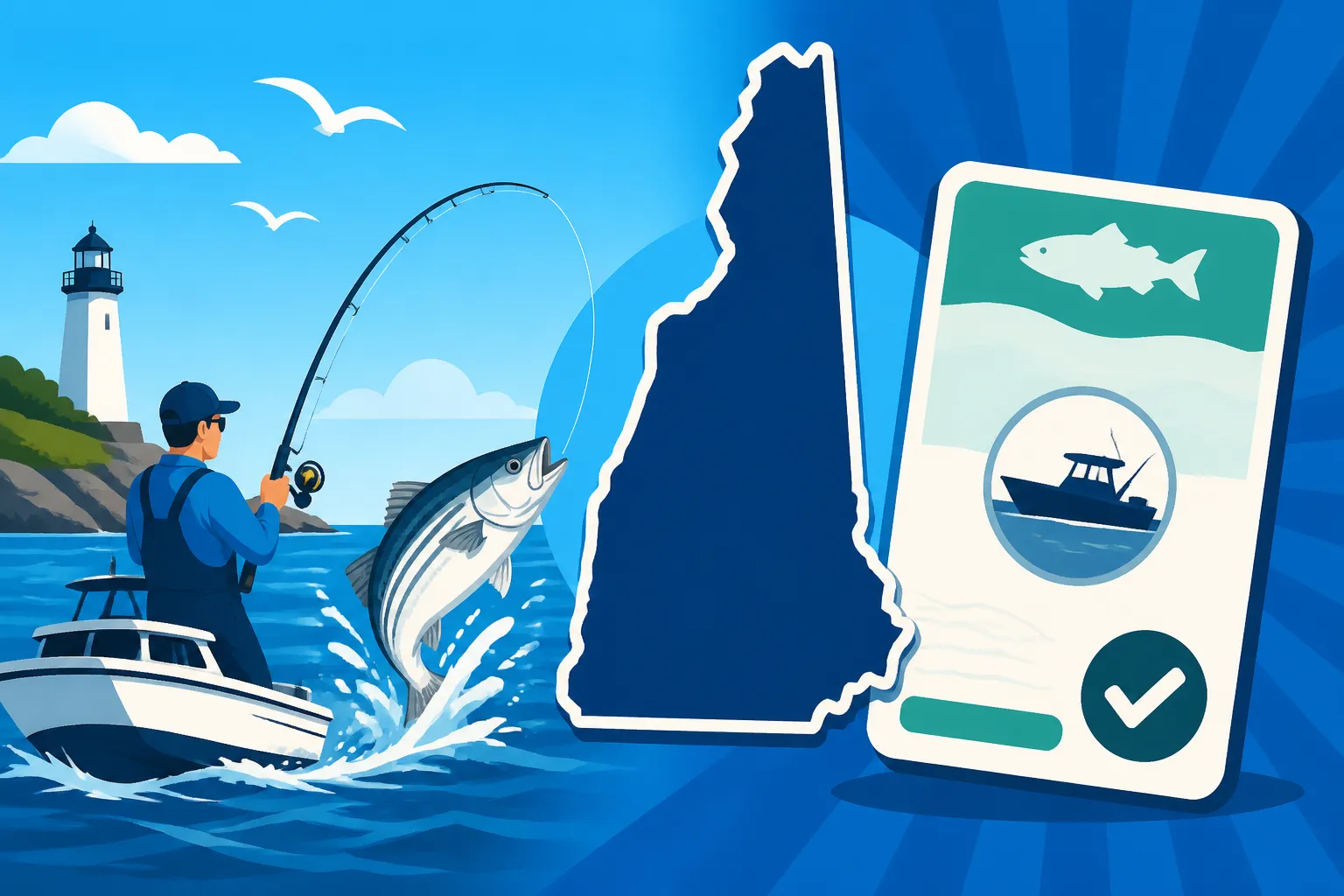
Navigating the world of fishing licenses can feel like trying to untangle a particularly stubborn fishing knot, and when it comes to saltwater angling in New Hampshire, it often feels even more complicated. Many folks assume a "saltwater license" is a straightforward requirement, only to find themselves scratching their heads when New Hampshire’s rules seem a bit different from neighboring states. This guide aims to clear up all that confusion, giving you the definitive scoop on what you truly need to fish New Hampshire's beautiful coastal waters, whether you're a local or just visiting.
Understanding New Hampshire's Saltwater Fishing License Requirements
Let's cut right to the chase because this is where most of the confusion lies. Unlike some of its coastal neighbors, New Hampshire has a rather unique approach to saltwater fishing licenses. It’s not quite what you might expect, and it largely hinges on whether you're a resident or a non-resident, and even what you intend to fish for.
The Resident Reality: No State Saltwater License (Yet!)
If you're a proud resident of the Granite State, here's some good news that often surprises people: New Hampshire does not currently require its residents to purchase a specific state saltwater fishing license for recreational purposes. You read that right! You won't find a "New Hampshire Resident Saltwater Fishing License" for sale at your local tackle shop or online. This is a common point of relief and, sometimes, bewilderment for those who are used to separate freshwater and saltwater permits.
However, and this is a critical caveat, while New Hampshire doesn't issue its own state saltwater license for residents, anglers still have obligations, especially concerning federally managed species. If you're planning to target species like striped bass, bluefish, cod, or tuna – which are under federal management – you must ensure you are registered with the National Saltwater Angler Registry (NSAR). The good news here is that if you already possess a valid New Hampshire freshwater fishing license, that license effectively fulfills your NSAR requirement. It acts as your federal registration, so you don't need to take any additional steps. It’s a pretty neat system that simplifies things for many long-time anglers who already have their freshwater permit in hand. This arrangement saves you an extra step and ensures that important federal data on recreational fishing is still collected without imposing an additional state fee on residents.
Non-Resident Necessities: What Out-of-Staters Need to Know
Now, if you're visiting New Hampshire from another state and dreaming of casting a line into our tidal waters, the rules are a bit different, and admittedly, a touch more complex. Non-residents do have requirements to fulfill.
As a non-resident, you have two primary options to legally fish in New Hampshire's tidal or marine waters:
-
Purchase a New Hampshire Non-Resident Freshwater Fishing License: This is often the simplest route. Even if you're only planning to fish in saltwater, a valid non-resident freshwater license issued by New Hampshire will satisfy both your state and federal (NSAR) requirements for saltwater fishing here. It’s essentially a "two-for-one" deal that covers your bases for both types of water, though you might not even use it for freshwater. This option is particularly convenient if you plan to do any freshwater fishing during your visit anyway, or if your home state doesn't offer a reciprocal free saltwater fishing permit. You can usually pick these up at a local license agent or even through the New Hampshire Fish and Game Department's online portal, which is a convenient way to get set up before you even arrive.
-
National Saltwater Angler Registry (NSAR) + Reciprocal State Permit: This option requires a bit more navigation. You must register with the National Saltwater Angler Registry. On top of that, you need to be fishing in New Hampshire with a valid free or no-cost saltwater license from a state that has a reciprocal agreement with New Hampshire. For example, if you're a Massachusetts resident, you can register for the NSAR and obtain a free Massachusetts recreational saltwater fishing permit. New Hampshire generally accepts this permit under reciprocity rules, meaning you don't need to buy a separate NH license. However, the onus is on you to confirm if your home state's free saltwater permit is indeed recognized by New Hampshire. Always double-check the latest regulations on the New Hampshire Fish and Game website or by calling them directly before you hit the water. It’s always better to be safe than sorry when it comes to compliance.
| Angler Type | NH State Saltwater License Required? | NSAR Registration Required? | How to Comply (NH Tidal Waters) |
|---|---|---|---|
| NH Resident | No (not issued by NH) | Yes (for federally managed species) | NH Freshwater License OR separate NSAR registration |
| Non-Resident | No (not issued by NH) | Yes (for federally managed species) | NH Non-Resident Freshwater License OR NSAR + valid reciprocal free state permit |
Delving into the National Saltwater Angler Registry (NSAR)
The National Saltwater Angler Registry (NSAR) is a federal program that sometimes gets confused with a state-level license. It's actually a vital data collection tool managed by the National Oceanic and Atmospheric Administration (NOAA) Fisheries, aimed at better understanding and managing recreational saltwater fisheries across the nation.
Who Needs to Register Federally (and Why)
The primary purpose of NSAR is to gather comprehensive data on recreational saltwater fishing effort and harvest. This information is crucial for federal fisheries management councils to make informed decisions about catch limits, seasons, and other regulations for species that migrate across state lines or are managed federally. Without accurate data, it's incredibly difficult to ensure sustainable fishing practices for popular species like striped bass, bluefish, and cod.
As discussed, if you're a New Hampshire resident planning to fish for federally managed species in our tidal waters, you need to comply with NSAR. This is automatically handled if you have a valid New Hampshire freshwater fishing license. If you don't have a freshwater license and only plan to fish saltwater, then you would need to register directly with NSAR. This registration is generally free and can be done through the NOAA Fisheries website. It's an important step for those who enjoy angling along our beautiful coastline, contributing to the health of the very fisheries we cherish.
For non-residents, NSAR compliance is also necessary when targeting federally managed species in NH's marine waters. Again, holding a New Hampshire non-resident freshwater fishing license covers this. Alternatively, if you're relying on a reciprocal state's free saltwater permit, you'll need to ensure you've properly registered with NSAR either through that state's system or directly with NOAA. This system ensures that all anglers, regardless of their state of residence, contribute to the critical data collection efforts that keep our fisheries vibrant.
How the Federal Registry Works
The process for federal registration, particularly if you're an NH resident without a freshwater license or a non-resident from a non-reciprocal state, is straightforward. You typically visit the NOAA Fisheries website and complete an online form. It usually asks for basic identifying information. Once registered, you’re usually provided with a registration number or confirmation, which you should keep handy while fishing, just like you would a state license.
The NSAR is designed to be a data collection mechanism, not primarily a revenue generator. The data helps scientists and managers track recreational fishing trends, estimate total catch, and assess fish populations. This is incredibly important for long-term sustainability. Without this information, federal agencies would be flying blind, making it much harder to balance the needs of anglers with the health of the fish stocks. For more details on the big picture of regulations, you might want to read our comprehensive guide on New Hampshire Fishing Regulations Explained.
Tidal Waters and Target Species: What This Means for Anglers
Understanding where New Hampshire's saltwater rules apply and what species are typically covered is key to staying compliant and having a successful fishing trip. New Hampshire's coastline might be famously short, but it's incredibly productive, offering diverse opportunities for anglers.
Defining New Hampshire's Marine Waters
When we talk about "New Hampshire's tidal or marine waters," we're generally referring to the coastal areas influenced by tides, including the Atlantic Ocean directly off the coast, the expansive Great Bay Estuary, and the Piscataqua River system. These waters are often brackish, meaning they're a mix of fresh and saltwater, creating unique habitats for a variety of species.
Fishing from shore in places like Hampton Beach, Rye, or Portsmouth, or from a boat in the open ocean, the mouth of the Piscataqua, or anywhere within Great Bay, falls under these marine water regulations. Even upstream sections of rivers that are tidally influenced, such as parts of the Lamprey River or Squamscott River, can sometimes be considered marine waters for certain species. It's always a good idea to consult a local tide chart if you're unsure if you're in a tidal zone. The line between freshwater and saltwater isn't always obvious to the casual observer, so understanding the influence of the ocean is important. If you're going to be launching a boat into these waters, you'll also want to make sure you're up to speed on New Hampshire Boating Laws for Anglers.
Popular Saltwater Species Requiring Attention
New Hampshire's marine waters are teeming with popular game fish, many of which are federally managed and thus fall under the NSAR requirements. By far the most sought-after species is the striped bass. These powerful fish migrate along the Atlantic coast and spend significant time in New Hampshire's estuaries, particularly Great Bay and the Piscataqua River, offering fantastic angling opportunities from spring through fall. If you're specifically targeting these beauties, our guide on Great Bay Striped Bass Fishing Rules will be an invaluable resource.
Other commonly targeted saltwater species include:
- Bluefish: Known for their aggressive strikes and strong fights, bluefish are another migratory species that frequent New Hampshire's coast.
- Mackerel: Often found in large schools, mackerel are excellent baitfish and can also provide fast-paced action on light tackle.
- Cod and Haddock: These groundfish are typically sought offshore, requiring deeper water fishing techniques.
- Flounder and Hake: Bottom dwellers that offer a different kind of angling challenge.
For all these species, understanding the licensing or registration requirements is just the first step. You'll also need to be aware of species-specific regulations, which often include minimum size limits, daily bag limits, and specific seasons. Ignoring these can lead to fines, even if your license is in order.
Important Exemptions and Reciprocity Agreements
While the general rules for saltwater fishing in New Hampshire can seem a bit convoluted, there are specific scenarios and agreements that can provide exemptions or simplify the process for certain individuals. It's always worth understanding these details to ensure you're fishing legally.
Age and Disability Exemptions
One of the most common questions revolves around age. In New Hampshire, children under the age of 16 are generally exempt from requiring a fishing license, whether for freshwater or saltwater fishing. This is a wonderful initiative designed to encourage youth participation in fishing and make it easier for families to enjoy the outdoors together. So, if you've got little ones eager to cast a line in Great Bay, they typically won't need their own permit. This aligns with many state programs that recognize the importance of introducing the next generation to the joys of angling. You can find more information about this in our article Do Kids Need a Fishing License in New Hampshire?.
Additionally, New Hampshire offers certain fishing license exemptions or discounted options for disabled residents and veterans. These programs are designed to make fishing more accessible to those who have served our country or face physical challenges. Eligibility criteria for these exemptions can be specific, often requiring proof of residency and disability status. It's always best to check with the New Hampshire Fish and Game Department directly or consult their official digest for the most up-to-date information on these valuable programs. These provisions are an important way of acknowledging and supporting members of our community.
Reciprocity with Neighboring States
Reciprocity agreements are a real lifesaver for anglers who live near state borders or frequently fish across them. As mentioned earlier for non-residents, New Hampshire has reciprocity agreements with certain neighboring states concerning saltwater fishing. This means if you are properly registered with the NSAR and hold a valid free or no-cost saltwater license from a reciprocal state (like Massachusetts' free saltwater fishing permit), you may be able to fish in New Hampshire's tidal waters without needing to purchase a New Hampshire non-resident freshwater license.
However, this is not a blanket rule for all states or all types of licenses. It specifically applies to those states that offer a free or no-cost saltwater fishing permit and have a formal agreement with New Hampshire. For example, if you're a Maine resident and Maine requires you to purchase a saltwater license, that purchased license likely would not serve as a reciprocal permit in New Hampshire unless it’s explicitly a free permit recognized by NOAA and NHF&G.
The key takeaway here is to always verify reciprocity directly with the New Hampshire Fish and Game Department. Regulations can change, and what was valid last year might not be this year. Checking their official website or making a quick phone call can save you a lot of hassle and potential fines. This is especially true given the unique setup of New Hampshire's saltwater regulations, which often differs from states like Maine or Massachusetts, where dedicated state saltwater licenses are the norm.
Navigating Regulations Beyond the License
While understanding the license and registration requirements is paramount, it's just one piece of the puzzle for responsible and legal saltwater fishing in New Hampshire. Anglers must also adhere to specific regulations concerning the fish they catch, how they catch them, and even what equipment they use.
Catch Limits, Seasons, and Size Restrictions
Once you've got your license situation sorted, the next crucial step is to familiarize yourself with the species-specific regulations. These are put in place to ensure sustainable fish populations and often vary by species, time of year, and sometimes even by specific water body.
For popular species like striped bass, you'll encounter slot limits, which means you can only keep fish within a certain length range, and often only one per person per day. For example, the current striped bass slot limit generally aims to protect both the very small, immature fish and the very large, prime breeding stock. This is a common conservation strategy designed to allow fish to reproduce before they are harvested and to protect the most prolific spawners. You can find up-to-date details on the New Hampshire Striped Bass Slot Limit.
Other species like bluefish, mackerel, or cod will have different daily bag limits (the maximum number of fish you can keep in a day) and minimum size limits. Seasons are also important; some fish may only be open for harvest during specific months, or certain areas might have closures. For example, while striped bass season is generally long, there might be specific regulations for different parts of the year, or for particular gear types. All these regulations are usually compiled in the New Hampshire Freshwater Fishing Digest, which despite its name, often contains marine regulations as well. It's a great resource to have on hand, even the PDF version that's usually available online.
Additional Boating and Gear Considerations
Beyond the fish themselves, your equipment and how you use it also fall under regulations, especially when boating.
- Boating Laws: If you're fishing from a boat, you must adhere to all New Hampshire boating laws, including registration requirements, safety equipment (like life jackets for everyone on board), and operating rules. This includes rules regarding speed, navigation, and even sound signals. For instance, Life Jacket Requirements for New Hampshire Boaters are strict, especially for younger passengers. If your vessel is motorized, even a small one, you'll need to know about New Hampshire Boat Registration Requirements.
- Gear Restrictions: Certain types of gear might be prohibited or restricted for specific species or in specific areas. For example, using live bait for striped bass might have specific rules, or certain types of nets might be illegal for recreational use. Always confirm what gear is permissible for the species you're targeting. For example, if you're looking for specialized lures or tackle for Great Bay stripers, you might find a good selection on online retailers like Amazon, but always ensure they comply with local regulations.
- Environmental Stewardship: Beyond the law, responsible angling also means practicing good environmental stewardship. This includes proper disposal of trash and fishing line, minimizing your impact on fragile habitats, and practicing careful catch-and-release, especially for fish outside the legal slot or those you choose not to keep. Using appropriate landing nets, like those with knotless rubberized mesh often found on Amazon, can significantly improve a fish's survival chances if you intend to release it.
By taking the time to understand all these aspects – from your personal licensing needs to the intricate rules governing specific species and your gear – you ensure a compliant, enjoyable, and sustainable fishing experience in New Hampshire’s fantastic saltwater fisheries. It might seem like a lot to take in at first, but with a little homework, you'll be ready to hit the water with confidence.
Disclaimer
The information provided in this guide is intended for general informational purposes only and is subject to change. Fishing regulations, license requirements, and reciprocal agreements are periodically updated by the New Hampshire Fish and Game Department and NOAA Fisheries. It is the angler's responsibility to consult the most current official regulations and laws before engaging in any fishing activity. Always refer to the official New Hampshire Fish and Game Department website or publications for the definitive and most up-to-date information.