New Hampshire trout stocking report map
It can be incredibly frustrating to head out for a day of trout fishing in New Hampshire, only to find the waters you chose haven't been stocked in weeks, or worse, were just stocked and are now swarming with other anglers. Knowing when and where New Hampshire Fish and Game releases trout is paramount to a successful and enjoyable trip, saving you wasted time and ensuring you hit the water at the prime moment. This guide will walk you through exactly how to access and effectively use the official New Hampshire trout stocking report and map, transforming your guesswork into informed fishing adventures.
Understanding the New Hampshire Fish and Game Trout Stocking Program
New Hampshire's trout stocking program is a cornerstone of freshwater fishing in the state, designed to enhance angling opportunities across a wide array of waters. It’s not just about throwing fish into a pond; it's a carefully managed operation that supports both recreational fishing and, in some cases, helps maintain a healthy ecosystem balance. For many anglers, especially those new to the state or looking for reliable action, these stocked fish provide consistent opportunities that might not otherwise exist in heavily fished or naturally less productive waters.
The Purpose and Benefits of Stocking
The primary goal of the New Hampshire Fish and Game Department's stocking program is to provide readily accessible fishing opportunities for residents and visitors alike. New Hampshire is known for its stunning natural beauty, but many of its smaller ponds and streams, particularly in more populated areas, simply don't have the natural capacity to support robust, self-sustaining trout populations that can withstand heavy angling pressure. This is where stocking comes in. By introducing hatchery-raised brook trout, rainbow trout, and brown trout, the department ensures that there's a fresh supply of fish for anglers to pursue, particularly during the popular spring and fall seasons. This not only boosts catch rates but also encourages outdoor recreation, introducing new generations to the joys of fishing.
Beyond just putting fish in the water, the program serves several other critical functions. It helps distribute angling pressure away from wild trout populations, which are far more sensitive to overfishing. It also provides a diverse fishing experience, allowing anglers to target different species in various environments. For instance, some ponds might be stocked heavily with brook trout, while larger lakes could receive rainbow trout or brown trout, offering distinct challenges and rewards. The transparency of the stocking report allows anglers to plan their trips effectively, knowing what to expect from a particular body of water.
Species and Waters Involved in Stocking
New Hampshire Fish and Game stocks three primary species of trout:
- Brook Trout: Often referred to as "brookies," these are New Hampshire's native trout species and are highly prized for their vibrant colors and feisty fight. They are commonly stocked in smaller ponds, mountain streams, and remote backcountry waters that offer colder, cleaner conditions.
- Rainbow Trout: Known for their distinctive pink stripe, rainbow trout are popular among anglers due to their strong fighting capabilities and willingness to strike a variety of baits and lures. They are often stocked in a wider range of waters, including larger lakes and rivers, and are very popular for the spring "put-and-take" fisheries.
- Brown Trout: Valued for their elusive nature and potential to grow to larger sizes, brown trout are typically stocked in waters that can support larger fish and offer more complex habitats. You'll often find them in larger rivers and lakes where they can become holdovers, surviving multiple seasons to reach impressive dimensions.
In addition to these, some waters may occasionally receive splake (a brook trout/lake trout hybrid) or tiger trout (a brook trout/brown trout hybrid), especially in specific management areas.
The types of waters stocked are incredibly diverse. You'll find trout released into everything from tiny, easily accessible community ponds to sprawling lakes like Lake Winnipesaukee, and numerous rivers and streams throughout the state. Each type of water presents its own unique fishing challenge and opportunity. For instance, a small, recently stocked pond might be a perfect spot for beginners or families, while a large river might offer a more technical challenge for experienced fly anglers looking for holdover brown trout. For a complete overview of what's allowed, it's always wise to consult the New Hampshire Freshwater Fishing Digest, which details all the rules and regulations, including bag limits and possession limits.
How to Access and Interpret the New Hampshire Trout Stocking Report and Map
Trying to find the New Hampshire trout stocking report can feel like searching for a needle in a haystack if you don't know where to look. Many anglers get frustrated sifting through outdated forum posts or relying on word-of-mouth. The good news is, the New Hampshire Fish and Game Department makes this information readily available online, and once you know how to navigate it, it becomes an invaluable tool for planning your next fishing adventure.
Locating the Official Online Resources
The single most reliable source for New Hampshire trout stocking information is the official New Hampshire Fish and Game Department website. You'll want to navigate to their freshwater fishing section. They typically have a dedicated page or link specifically for "Trout Stocking" or "Stocking Reports." Don't bother with third-party sites; they are often delayed or contain incomplete information. The Fish and Game site is updated regularly, especially during the peak stocking seasons in spring and fall.
When you access the page, you'll usually find two main components:
- The Stocking Report (often a searchable table or PDF): This is a detailed list of all waters stocked, including the date, species, and number of fish released.
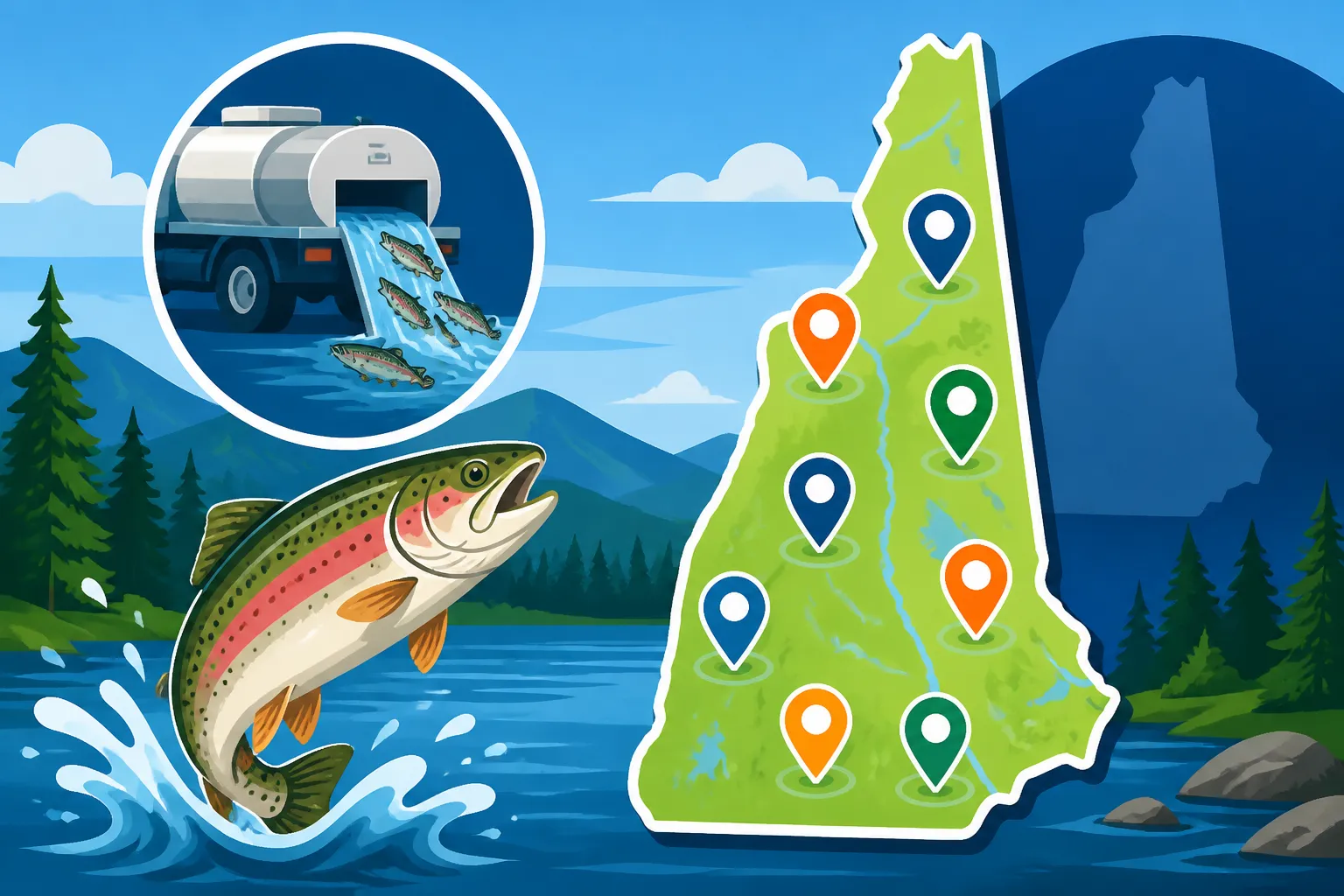
- The Interactive Stocking Map: This visual tool overlays stocking locations onto a map of New Hampshire, allowing you to zoom in and see specific spots.
Bookmark these pages on your browser or phone! This makes quick checks much easier. While you're there, it’s a good idea to familiarize yourself with the overall New Hampshire Fishing License Guide for 2026 and ensure your license is up to date before you head out. A valid fishing license is required for most anglers over the age of 15, unless it's one of the state's designated New Hampshire Free Fishing Days, Explained.
Deciphering the Data: What to Look For
Once you've found the stocking report, whether it's an interactive table or a downloadable PDF, you'll see a wealth of information. It can look a bit overwhelming at first, but each piece of data is important:
| Column Header | What It Means | Why It's Important for Anglers |
|---|---|---|
| Waterbody Name | The specific name of the pond, lake, or river section that was stocked. | Identifies your target location. Always double-check spelling to avoid confusion with similarly named waters. |
| Town | The town or municipality where the waterbody is located. | Helps narrow down your search and is crucial for navigation and confirming the correct waterbody. |
| Species Stocked | The type of trout released (e.g., Brook Trout, Rainbow Trout, Brown Trout). | Dictates your gear and technique choices. Different species often respond better to different baits and lures. |
| Number Stocked | The total count of fish released into that specific waterbody on that date. | Indicates the density of fish. Higher numbers usually mean better chances of catching. |
| Average Length | The approximate average length of the stocked fish, usually in inches. | Gives you an idea of the size of fish you can expect. This influences hook size and leader strength. |
| Stocking Date | The exact date the fish were introduced into the water. | Crucial for timing. Recent stocking dates mean fresh fish and higher catch potential. |
| Water Status | Sometimes this column is present, indicating if the water is a pond, stream, lake, or if it has special regulations (e.g., "Catch and Release Only"). | Helps confirm the type of water you're targeting and reminds you to check for any New Hampshire Fishing Regulations Explained specific to that location. |
When looking at the report, pay very close attention to the "Stocking Date." Freshly stocked waters are often the most productive, especially in the days immediately following the release. However, this also means they can be the busiest. You might want to compare the numbers and dates to a few different spots to find a balance between good fishing and less crowded conditions. Also, keep an eye on the "Average Length" column; sometimes, Fish and Game will stock larger "brood stock" trout, which can be a real treat to catch.
Utilizing the Interactive Map for Pinpoint Locations
The interactive map is a game-changer, especially if you're exploring new areas or trying to find public access points. Instead of just seeing a waterbody name, you can visualize exactly where it is and often even see access roads, parking areas, and sometimes even the specific points where fish are released.
Here’s how to make the most of it:
- Zoom and Pan: Start by zooming into the general area you're interested in. You can click and drag to pan across the state.
- Identify Markers: Stocked locations are usually marked with icons, often color-coded by species or date. Click on these markers.
- Reveal Details: Clicking on a marker will typically bring up a pop-up window with the same detailed information you'd find in the report: waterbody name, date, species, and quantity. This is a quick way to get context without jumping back and forth.
- Layer Options: Some maps offer different layers, such as satellite imagery, topographic maps, or even public land boundaries. Using satellite view can help you identify shorelines, docks, bridges, or other structures that might hold fish, or even potential access points like parking lots or trails.
- Route Planning: While not a dedicated navigation tool, seeing the location on a map helps immensely with planning your driving route. You can often cross-reference these locations with apps like Google Maps for precise directions.
Remember that while the map shows where fish are stocked, it doesn't guarantee a catch. Fish move, and conditions change. But knowing where they started gives you a significant advantage. This visual tool, combined with the detailed report, provides an unparalleled resource for any angler looking to fish New Hampshire's productive trout waters.
Strategic Fishing Approaches Based on Stocking Information
Having access to the New Hampshire trout stocking report and map is one thing; translating that information into actual fish in your net is another. The secret lies in understanding how stocked trout behave and adjusting your strategy accordingly. These fish are different from wild trout, and a tailored approach will significantly increase your success rate.
Timing Your Visits for Optimal Success
The "Stocking Date" on the report is your golden ticket. Generally, the best fishing for freshly stocked trout occurs within the first few days, sometimes even hours, of their release. Here’s why and how to plan:
- Immediate Post-Stocking Window: When trout are first released from a hatchery truck, they are often disoriented and hungry. They haven't had to hunt for food, so they are eager to take readily available offerings. This is when they are most vulnerable and aggressive, making for excellent "easy" fishing. If you can, target waters within 24-48 hours of a stocking event. Weekends following a midweek stocking are almost guaranteed to be productive, though also potentially crowded.
- Beyond the Initial Rush: After the first few days, the easily caught fish are gone, and the remaining trout become more wary. They start to spread out, find cover, and adapt to their new environment. This doesn't mean the fishing stops, but it becomes more challenging. You might need to adjust your tactics, using more subtle presentations or moving to less pressured areas of the waterbody.
- Seasonal Considerations: New Hampshire typically stocks heavily in the spring (April-May) and again in the fall (September-October). Spring stockings coincide with ice-out and warmer weather, prompting active feeding. Fall stockings provide a second wave of action as waters cool, often offering a more serene fishing experience after the summer crowds have dispersed. Knowing the overall New Hampshire Trout Stocking and Fishing Rules can help you understand these seasonal patterns.
Planning your trip involves a bit of strategic thinking. If you prefer solitude, consider fishing a day or two after a weekday stocking, or exploring a less heavily stocked waterbody. If you’re introducing kids to fishing, aiming for the day of or day after a major stocking in an accessible pond can provide the quick action that keeps young anglers engaged.
Matching Your Gear and Techniques to Stocked Trout
Stocked trout are generally not as selective as their wild counterparts, especially when newly released. They are accustomed to pellet food from the hatchery, so strong scents and easy meals are often very appealing.
- Bait Fishing: This is arguably the most effective method for freshly stocked trout.
- PowerBait or Berkley Gulp! Trout Bait: These artificial baits are dough-like, brightly colored, and infused with powerful scents designed to mimic hatchery food. Mold them onto a small hook (size 10 or 12), use a light sinker, and suspend them off the bottom with a bobber or let them drift slowly. Bright colors like chartreuse, orange, or rainbow are often killer. For more specific advice, check out Best bait for opening day trout in New Hampshire. You can easily find these effective baits and small tackle kits on platforms like Amazon.
- Worms or Nightcrawlers: A classic for a reason. Worms offer natural scent and action. Hook a small piece or a whole worm (depending on size) and fish it similarly to PowerBait.
- Corn or Marshmallows: Believe it or not, these can work due to their buoyancy, visibility, and familiar scent (to fish raised on pellets).
- Lure Fishing: Spinners and spoons are excellent choices, especially as trout become a bit more acclimated.
- Inline Spinners (e.g., Rooster Tail, Mepps, Panther Martin): Small (1/16 oz to 1/8 oz) spinners in bright colors (chartreuse, orange, silver, gold) are very effective. Cast them out and retrieve slowly, allowing the blade to spin and flash.
- Spoons (e.g., Kastmaster, Little Cleo): These imitate baitfish and flash erratically. Again, smaller sizes and bright colors work well.
- Fly Fishing: While less common for freshly stocked trout, fly fishing can be very productive as the fish transition to natural forage.
- Wooly Buggers and Streamers: These flies imitate baitfish and aquatic insects, making them good choices for active, predatory trout. Black, olive, or white are good colors.
- Nymphs: As trout settle in, they'll start feeding on nymphs. Patterns like Prince Nymphs, Hare's Ears, and Pheasant Tails in sizes 12-18 can be very effective, particularly when dead-drifted. For specific techniques, consider resources like Spring Trout Fishing Techniques for New Hampshire Ponds. You can find a vast array of fly patterns and gear on Amazon.
Remember, light tackle is key. A light to ultra-light spinning rod with 4-6 lb test line will allow you to cast small baits and lures effectively and feel the subtle bites of trout. Fluorocarbon leaders can also be beneficial in clear waters, as they are less visible to the fish. If you want to dive deeper into specific tactics for these trout, looking into How to Catch Trout Right After Stocking in New Hampshire will provide additional valuable insights.
Common Questions and Troubleshooting
Even with the best information, fishing can throw curveballs. It's natural to have questions, especially when certain waters aren't showing up on the stocking report or when the fish seem to vanish days after a massive release. Understanding some of the nuances behind the stocking program and trout behavior can help you troubleshoot and still find success.
Why Certain Waters Aren't Stocked or Reported
You might occasionally find a favorite pond or stream missing from the current year's stocking report, or notice that some waters never seem to get stocked. There are several valid reasons for this, and it doesn't necessarily mean the Fish and Game Department has forgotten about it.
- Natural Reproduction: Some waters, particularly in the more remote areas of the White Mountains or specific designated wild trout streams, have robust, self-sustaining wild trout populations. These waters are typically not stocked because stocking could introduce disease, genetic dilution, or competition for resources, which could harm the native fish. In these cases, Fish and Game prioritizes protecting the wild populations.
- Ecological Suitability: Not all waters are suitable for trout. Trout require cold, oxygen-rich water. Ponds and streams that get too warm in the summer, have low oxygen levels, or are heavily polluted simply won't sustain trout. Stocking these waters would be a waste of resources, as the fish would quickly perish.
- Management Priorities: Fish and Game operates on a budget and allocates resources strategically. Some waters might be managed for other species (like bass or panfish) or might be part of a rotating stocking schedule. They may also decide to focus stocking efforts on waters with good public access or high angler demand.
- Special Regulations: Certain waters might have specific regulations, such as "Catch and Release Only" or "Fly Fishing Only" areas, designed to create unique fishing experiences or protect particular fish. While these waters might still receive stocked trout, the management objectives are different, and the stocking frequency or species might vary. Always consult the New Hampshire Trout Stocking and Fishing Rules for any water you plan to fish.
- Reporting Schedule: Sometimes, a stocking event might have just occurred, and the report hasn't been updated yet. While Fish and Game strives for timely updates, there can be a slight delay. If you suspect a stocking occurred but don't see it, check back in a day or two.
If you have questions about a specific waterbody, the best course of action is to contact the New Hampshire Fish and Game Department directly. They can provide specific details about their management plans for any given lake, pond, or stream.
Tips for Fishing Stocked Waters Beyond Opening Day
As mentioned earlier, the first few days after stocking are often the easiest. But what about fishing a stocked water a week or two later, or even months later? The fish are still there, but they've gotten smarter and dispersed.
- Seek Out Cover: Newly stocked trout often gravitate towards cover as they adapt to their environment and seek refuge from predators. Look for submerged logs, rock piles, weed beds, overhanging branches, or drop-offs. These spots provide both security and potential feeding opportunities.
- Fish Deeper: As pressure mounts, trout often move to deeper, cooler water. If you're fishing a pond or lake, try to locate the deepest sections or areas where the bottom drops off sharply. Using a depth finder, if you have access to one (even a portable one you can find on Amazon), can be incredibly helpful here.
- Downsize and Refine: Forget the bright, aggressive baits from opening day. As trout become more wary, finesse tactics often pay off. Use smaller hooks, lighter line (2-4 lb test), and smaller, more natural-looking baits and lures. Small nymphs, tiny jigs, or even micro-spinners can entice a bite.
- Vary Your Presentation: Experiment with different retrieve speeds, pauses, and twitches. Sometimes a subtle jigging motion or a dead-drift presentation is what it takes to trigger a strike from a cautious trout.
- Fish During Off-Peak Hours: Early mornings, late evenings, or even mid-day during the week will generally be less crowded than weekend afternoons. Less pressure often means more relaxed and cooperative fish.
- Target Holdovers: In larger lakes and rivers, some stocked trout, particularly brown trout and larger rainbows, will survive through the season and become "holdovers." These fish are much more like wild trout in their behavior and require more skilled angling, often responding to sophisticated fly patterns or realistic baitfish imitations. They can grow to impressive sizes and are a real trophy.
- Explore List of New Hampshire stocked trout waters: The Fish and Game website offers a comprehensive list, which can help you identify other potential spots if your primary location isn't producing. Spreading your efforts can often lead to better overall success.
By understanding the dynamics of stocked fisheries and adapting your approach, you can continue to enjoy productive trout fishing in New Hampshire long after the initial stocking frenzy has subsided.
Disclaimer
The information provided in this guide is for general informational purposes only and is based on publicly available data from the New Hampshire Fish and Game Department. Regulations, stocking schedules, and accessibility can change. Always consult the most current official New Hampshire Fish and Game Department regulations and reports before planning any fishing trip. Adherence to all state and local fishing laws is the responsibility of the angler.