Best boat for shallow rocky rivers
Oh, the sheer joy, and sometimes the absolute headache, of trying to navigate New Hampshire's beautiful, yet often temperamental, rivers! If you've ever tried to take your average lake boat onto a river like the Pemigewasset or a less-traveled stretch of the Connecticut, you know the frustration: scraping bottom, getting stuck on rocks, and constantly worrying about damaging your hull. It can truly take the fun out of a fishing trip. This guide is all about helping you find the perfect watercraft that can handle those tricky, shallow, and undeniably rocky river environments, ensuring your focus stays on the fish, not on your boat's next battle scar.
Understanding the Unique Challenges of New Hampshire's Rivers
Fishing New Hampshire's rivers offers some of the most rewarding experiences, from chasing smallmouth bass in the Merrimack to fly fishing for trout in the Swift River. But these aren't your typical placid lakes. Our rivers present a distinct set of challenges that demand a specific type of boat, one built for resilience and maneuverability. Ignoring these realities can lead to costly repairs, endless frustration, or even safety issues.
The Problem with Shallow Drafts
Many of New Hampshire's prime fishing rivers, especially outside of their deepest sections or during drier seasons, can become incredibly shallow. You might be cruising along in a foot or two of water, then suddenly hit a stretch that's only six inches deep. A boat with a deep V-hull, common on lakes, will simply bottom out. This isn't just an inconvenience; repeatedly scraping the bottom can weaken your hull, damage your propeller or lower unit, and leave you stranded far from a launch point.
Think about trying to navigate the Saco River in late summer, when water levels drop significantly. A traditional bass boat would be completely out of its element, forced to stay in the deepest channels, missing out on prime fishing spots in shallower bends and eddies. The ideal river boat needs to skim over these shallow areas, allowing you to access water that other anglers simply can't reach. It's about opening up new possibilities, not just avoiding problems.
The Menace of Rocky Bottoms and Rapids
Beyond just being shallow, New Hampshire's rivers are often incredibly rocky. Whether it's the granite bedrock of a mountain stream or the ancient glacial deposits in a larger river, submerged rocks are a constant threat. A fiberglass hull, while beautiful and often faster on open water, is highly susceptible to cracking or gouging when it collides with a rock. Even a glancing blow can lead to structural damage, requiring expensive repairs.
Imagine floating down a section of the Androscoggin River, admiring the scenery, when suddenly your boat grinds to a halt on a hidden boulder. If you're in a boat not designed for this, that heart-stopping impact could mean a punctured hull and a rapid trip back to shore, if you're lucky enough to make it. The right river boat isn't just about getting over rocks; it's about shrugging off impacts with minimal damage, allowing you to focus on the fish, not the riverbed. This resilience is paramount for peace of mind.
Top Boat Types for Shallow, Rocky Waters
When it comes to tackling New Hampshire's shallow, rocky rivers, you're looking for toughness, shallow draft, and maneuverability. Forget the fancy bass boats and deep-V cruisers; we need workhorses. The good news is, there are several excellent options that fit the bill, each with its own set of advantages for specific fishing styles and river conditions.
Jon Boats: The Indestructible Workhorse
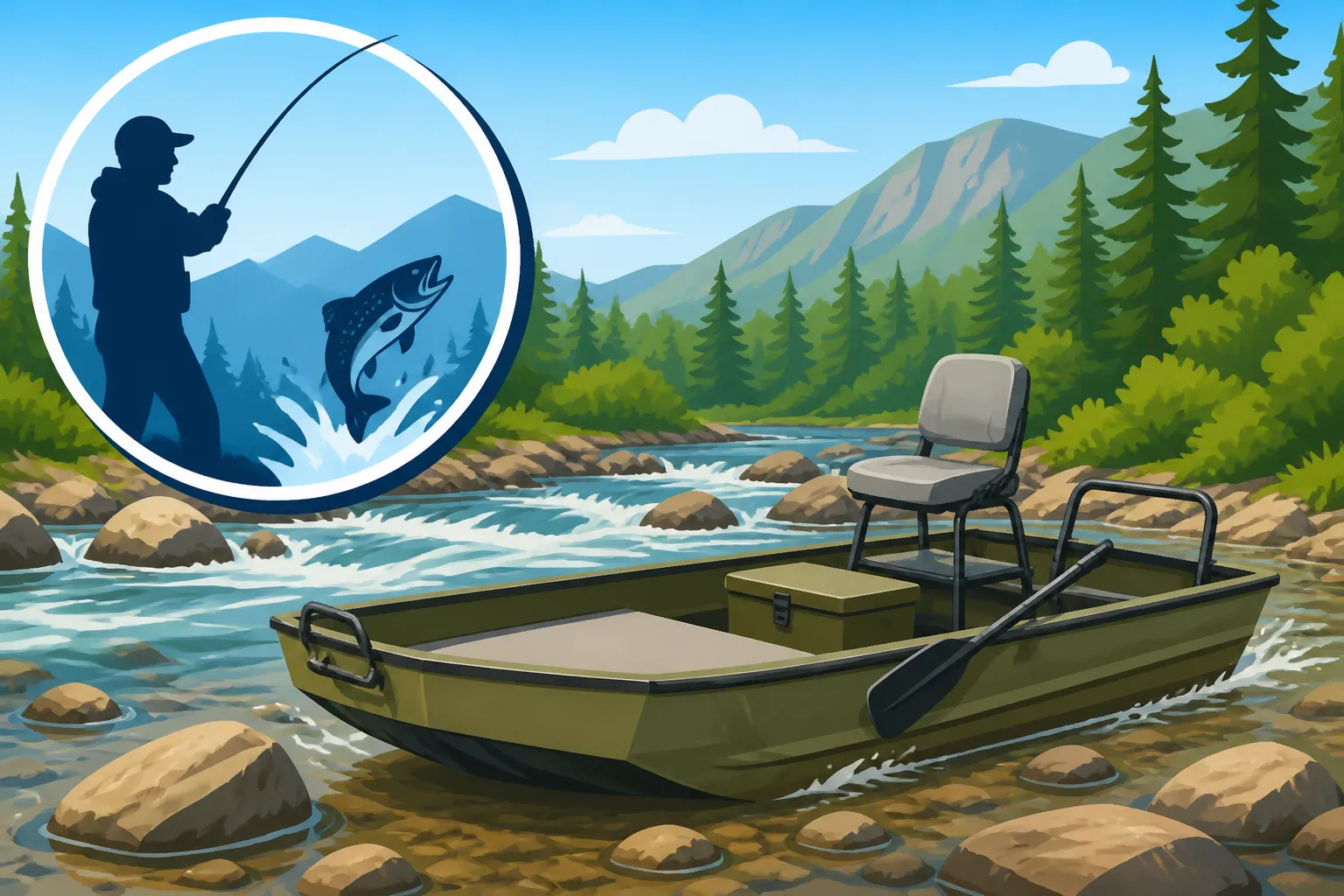
If you picture a river fishing boat, chances are a jon boat comes to mind. And for good reason! These flat-bottomed, often aluminum, vessels are arguably the quintessential shallow-water craft. Their design is inherently suited to rivers: a wide, flat bottom allows them to float in minimal water, and their aluminum construction can take a beating from rocks and debris without puncturing.
Consider the classic scenario: you're working a stretch of the Merrimack River that's got exposed ledges and swift, shallow runs. A jon boat, especially one made from thicker gauge aluminum, can bounce off those rocks with surprising resilience. They aren't going to win any speed races, and they can be a bit bumpy in choppy water (which you mostly won't find on a river anyway), but their durability and stability in shallow water are unmatched. They're also incredibly versatile, serving as a stable casting platform for fly anglers or accommodating a small outboard for covering more ground. Many anglers start their river fishing journey with a jon boat purchased from a big retailer like Bass Pro Shops, or even a used one found online, precisely because of their robust nature.
Canoes and Kayaks: Human-Powered River Explorers
For those who prefer a more intimate, quiet approach to river fishing, or who want to access truly remote, skinny water, canoes and kayaks are outstanding choices. They offer unparalleled shallow-water access and can be easily maneuvered through tight spots and around obstacles that would stop a motorboat. The downside, of course, is that you're providing the power!
A sturdy fishing kayak or a durable canoe (often made of rotomolded plastic or aluminum) can get you into pockets of water that hold untouched fish. Imagine paddling a long canoe up a small tributary, portaging over a fallen log, and reaching a secluded pool teeming with brook trout. This isn't just fishing; it's an adventure. While they require more physical effort, their stealth and ability to navigate extremely shallow water, often just a few inches, make them indispensable for certain types of river fishing. They're also much easier to launch and retrieve in undeveloped access points. Check out resources on Best Kayaks for New Hampshire Fishing for more specific guidance on selecting one.
Specialized River Skiffs and Jet Boats: Performance in Shallow Water
For anglers who need the speed and power of a motorboat but still demand shallow-water capability, specialized river skiffs and jet boats are the answer. These are often custom-built or highly specialized craft designed specifically for challenging river environments. A true jet boat replaces a traditional propeller with an internal impeller, sucking water in and pushing it out, allowing the boat to run in incredibly shallow water without fear of prop damage.
While a significant investment, a jet boat can open up vast stretches of river that would otherwise be inaccessible to motorboats. Think about the upper reaches of the Connecticut River, where rapids and rocky sections make prop boats a no-go. A jet boat can skim over these areas, allowing you to fish large expanses quickly. River skiffs, often with modified V-hulls or tunnel hulls, offer a compromise, protecting the prop while still drawing less water than a conventional boat. These options are usually for the serious river angler who spends a lot of time on these specific types of water.
Here's a quick comparison of these boat types:
| Boat Type | Typical Hull Material | Shallow Draft Capability | Durability on Rocks | Maneuverability | Capacity (Anglers) | Notes |
|---|---|---|---|---|---|---|
| Jon Boat | Aluminum | Excellent | High | Good | 1-4 | Flat bottom, very stable, takes a beating. |
| Canoe | Aluminum/Polyethylene | Excellent | Medium-High | Excellent | 1-3 | Quiet, portable, requires paddling, great for remote access. |
| Kayak | Polyethylene | Excellent | High | Excellent | 1-2 | Stealthy, hands-free fishing possible, very shallow access. |
| River Skiff | Aluminum/Fiberglass | Very Good | High (Aluminum) | Very Good | 2-4 | Often specialized, can use outboards with prop protection. |
| Jet Boat | Aluminum | Superior | High | Excellent | 2-5 | Best for motorized shallow access, no prop to hit, but noisy. |
Key Features to Look for in a River Fishing Boat
Choosing the right boat isn't just about the type; it's about the specific features that make it suitable for New Hampshire's shallow, rocky rivers. Every detail, from the material of the hull to the type of motor, plays a crucial role in your boat's performance and longevity in these challenging environments.
Hull Material and Design: Toughness is Non-Negotiable
For river fishing, aluminum is king. Period. Fiberglass, while aesthetically pleasing and often providing a smoother ride on open water, is simply too fragile for the constant threat of submerged rocks and debris. An impact that would crack or spiderweb a fiberglass hull might only dent an aluminum one. Look for boats with thicker gauge aluminum, especially in the hull, as this indicates a higher level of durability. A 0.100" or thicker hull is generally preferred for serious river use.
Beyond material, the hull design is critical. A flat-bottomed or modified V-hull is essential for shallow draft. Flat-bottom jon boats can literally float in mere inches of water, allowing you to access sections of river where others can't go. A modified V offers a slightly smoother ride and better tracking, but still keeps the draft minimal. Some specialized river boats feature a "tunnel hull" design, which allows an outboard propeller to sit higher, reducing the risk of striking the bottom without requiring a full jet drive. When you're constantly scraping or bumping, that extra bit of protection can save your entire fishing trip – and your wallet.
Propulsion Systems for Shallow Water
When it comes to motors on a river boat, you have a few distinct choices, each with pros and cons for shallow, rocky conditions. Traditional outboards with propellers are common, but they come with a significant risk of prop and lower unit damage. To mitigate this, many river anglers opt for specialized prop protection (like a cavitation plate or skeg guard) or choose a power trim and tilt system that allows them to lift the motor quickly in shallow sections.
However, the ultimate solution for shallow, rocky rivers is often a jet drive outboard. Instead of a spinning propeller, a jet drive uses an impeller to suck water in and force it out a nozzle, creating thrust. This means there's no prop extending below the hull, allowing the boat to run in extremely shallow water – often just a few inches – without any danger of damaging the propulsion system. This is a game-changer for accessing areas where prop boats simply cannot go. Another increasingly popular option for smaller boats, especially canoes and kayaks, is an electric trolling motor. These are quiet, efficient, and with a good lithium battery, can provide enough power for navigating many river systems, particularly on calmer days. Best Trolling Motor for a Fishing Kayak could be a useful read here.
Maneuverability and Control
Rivers are dynamic environments with currents, eddies, and obstacles. Your boat needs to be nimble. Look for designs that allow for quick turns and precise control. Shorter boats with flatter bottoms are generally more agile in tight quarters. For canoes and kayaks, the paddle design and rudder systems can greatly impact maneuverability.
When considering a motorized boat, a responsive steering system is key. Jet boats, in particular, excel at this due to their direct thrust vectoring. However, it's worth noting that jet boats can be harder to steer at very low speeds, as they require water flowing through the jet to steer effectively. Another crucial aspect of control, often overlooked, is the anchoring system. Best Anchor System for River Fishing can make a huge difference in holding your position in current. Instead of a traditional mushroom anchor, a sturdy river anchor designed to dig into rocky or sandy bottoms, or even a spud pole system, can be invaluable for staying put in productive spots.
Navigating and Maintaining Your River Boat
Getting the right boat is only half the battle; knowing how to navigate it safely and keep it in top condition on New Hampshire's challenging rivers is equally important. These waters demand a different approach than the open expanses of our larger lakes.
Reading the Water: A River Angler's Essential Skill
Unlike lakes, where depth can be relatively uniform or slowly changing, rivers present constant variations. The ability to "read the water" is perhaps the most crucial skill for any river boater. This means understanding where the deepest channels are, identifying submerged rocks and riffles, and anticipating changes in current. Darker, smoother water often indicates deeper areas, while rippled or turbulent water can signal shallow rocks or strong currents.
Learning to spot "V" shapes in the water that point upstream can indicate a submerged obstacle, while a "V" pointing downstream often marks a clear path through a riffle. Pay close attention to current seams, eddies, and backflows, not only for fish holding spots but also for understanding how the river will push and pull your boat. Even with a shallow-draft boat, running aground can happen, but by honing your observational skills, you can dramatically reduce the frequency and severity of such incidents. Practice makes perfect, and spending time observing the river without a rod in hand can be incredibly educational.
River Boating Safety and Etiquette
Safety on the river is paramount, especially given the unique hazards. Always wear a life jacket, regardless of how calm the water appears. Currents can be deceptive, and if you unexpectedly end up in the water in a rocky section, a life jacket can be a lifesaver. Ensure your boat is equipped with all necessary safety gear, including a whistle, bailer, and a strong painter line (rope) for tying off or pulling your boat. Familiarize yourself with New Hampshire Boating Laws for Anglers before heading out.
When encountering other river users, whether they're other anglers, kayakers, or swimmers, practice courtesy. Slow down, give them a wide berth, and be mindful of your wake, particularly near smaller craft or shorelines. If you're using a motorized boat, be especially aware of fly anglers or canoeists who value quiet and minimal disturbance. Remember that many New Hampshire rivers are shared resources, and respectful behavior ensures everyone can enjoy them.
Essential Maintenance for River Boats
River boats, particularly aluminum ones, are built tough, but they still require diligent maintenance to ensure their longevity. After every trip, thoroughly rinse your boat, motor, and trailer to remove any mud, sand, or debris that could cause corrosion or wear. Pay special attention to the bilge area and any moving parts of your motor. Check for new dents, scrapes, or loose rivets regularly, and address them promptly. Small repairs, like sealing a leak around a rivet, are much easier and cheaper than fixing a major problem down the line.
If you have an outboard, especially a jet drive, inspect the impeller and intake grate regularly for any blockages from weeds or small rocks. Even a tiny pebble can reduce performance or damage the impeller over time. If you use a prop-driven outboard, check the propeller for dings and nicks, as a damaged prop can significantly reduce efficiency and cause vibrations that harm your motor. Keeping spare parts on hand, such as shear pins for prop-driven outboards, can save a trip if you have a minor mishap. You can often find essential maintenance supplies and even replacement parts through online retailers like Amazon, or specialty marine shops.
Equipping Your River Boat for Success
Once you have the right boat, outfitting it correctly for New Hampshire's river environments will significantly enhance your fishing experience. From sturdy anchors to reliable electronics, the right gear makes a difference.
Anchoring and Positioning in Current
Holding your position in a river's current is often more challenging than on a lake. Traditional anchors might drag or get snagged. Look for specifically designed river anchors, often with grappling hooks or flukes that can bite into rocky or sandy bottoms more effectively. A good anchor trolley system on a kayak or canoe allows you to deploy and retrieve your anchor from either the bow or stern, helping you pivot and hold your position precisely without having to move.
For smaller boats or in shallower, slower currents, a spud pole or push pole can be invaluable. This is essentially a long, sturdy pole that you can push into the riverbed to temporarily hold your position, or to gently propel your boat in extremely shallow water. It's a quiet and effective way to approach wary fish without disturbing the water with a motor or anchor splash. Having multiple anchoring options provides flexibility for different river conditions.
Essential Accessories for River Anglers
Beyond the boat itself, a few key accessories can make your river fishing trips safer and more enjoyable. A quality fish finder, even a portable one, can help you identify deeper channels, submerged structure, and fish schools. Many modern units offer side-imaging or down-imaging that can be incredibly useful for mapping the riverbed in unfamiliar territory. Make sure it's mounted in a way that doesn't create excessive draft.
Waterproof dry bags are essential for protecting your electronics, extra clothing, and snacks from splashes or unexpected submersions. Given the risk of bumping rocks, a sturdy pair of wading boots for when you need to get out and wade, or to push your boat off a sandbar, is also highly recommended. Best Wading Boots for Rocky Streams would be an excellent resource for this. Finally, always carry a small emergency repair kit, including marine-grade epoxy or duct tape, just in case you need to patch a small leak in a pinch. Being prepared for minor issues on the river is part of the adventure.
Disclaimer
This article is for general informational purposes only and does not constitute professional advice. Laws, prices and regulations vary by location and change over time. Consult a qualified professional for guidance on your specific situation.