Landlocked salmon catch and release survival tips
The thrill of hooking into a powerful New Hampshire landlocked salmon is truly unforgettable, but as responsible anglers, we carry a huge responsibility beyond just the catch. These magnificent fish, while strong fighters, are also quite delicate, and a poorly handled catch-and-release can mean the difference between a successful release and a delayed mortality. It's tough to know you might have inadvertently harmed a fish you cherish, and this guide is dedicated to providing you with practical, empathetic, and effective strategies to ensure every landlocked salmon you release swims away strong, contributing to the health of New Hampshire's incredible fisheries.
Understanding Why Landlocked Salmon are Vulnerable After the Catch
When you hook a landlocked salmon, you're engaging with a creature perfectly adapted to cold, oxygen-rich environments. Their very physiology, combined with the stress of being caught, makes them particularly susceptible to complications if not handled with extreme care. It’s not just about getting the hook out; it’s about understanding what makes them tick and how to minimize every potential stressor.
Their Physiology and Habitat
Landlocked salmon, like their anadromous relatives, are coldwater fish, meaning they thrive in cool, well-oxygenated lakes and rivers. In New Hampshire, you'll find them in deep, clear waters like Lake Winnipesaukee, Sunapee Lake, or Newfound Lake, where water temperatures remain suitable for them throughout the year. Their gills are highly efficient at extracting oxygen from these cold waters, but this efficiency can also be their downfall in warmer, less oxygenated conditions or when stressed. When a salmon fights, it's essentially running a marathon. Its muscles build up lactic acid, just like ours do, and it needs a lot of oxygen to recover. If the water temperature is already on the higher side, or if the fight is prolonged, their ability to recover diminishes significantly. This is why knowing the water temperature is crucial, especially in late spring or summer. You might be targeting them in 60 feet of water, but if the surface temperature is 70 degrees and you bring them up too quickly or handle them in that warmer air, it’s a huge shock to their system.
They also have a protective slime coat that acts as their first line of defense against bacteria and parasites. Rough handling, especially with dry hands or on abrasive surfaces, can strip this vital layer, leaving the fish vulnerable to infection once it's back in the water. We all want a quick photo, but that quick moment out of the water, especially if the fish is thrashing, can cause irreparable damage to its scales and slime. This is why the best approach is to minimize any contact that would compromise this natural armor.
Common Stressors During the Fight
The fight itself is the initial and often most significant stressor. Imagine being yanked from your comfortable home, struggling for your life, and then being held against your will. That's essentially what a salmon experiences. Prolonged fights, especially on light tackle, exhaust the fish beyond its natural recovery capacity. While a long, drawn-out battle might feel like an epic angling achievement, it can be a death sentence for the salmon. When a salmon is fighting hard, it’s using every ounce of energy. This energy expenditure leads to a rapid buildup of lactic acid in its muscles, a condition known as acidosis. This can cause muscle cramps, disorientation, and even organ damage.
Another major stressor is how the fish is hooked. A deeply swallowed hook, especially one that impacts the gills or vital organs, severely reduces the chances of survival. This is particularly true with natural baits that salmon tend to engulf. Using circle hooks when bait fishing can significantly reduce deep hooking, as they are designed to slide into the corner of the fish's mouth. Knowing What landlocked salmon eat in New Hampshire lakes can also help you choose baits and lures that are more likely to result in lip hooks, which are far easier to remove. Additionally, barbs on hooks, while good at keeping fish on the line, can cause more tissue damage during removal. Pinching down barbs is a simple, effective step to make hook removal quicker and less traumatic for the fish. It’s a small adjustment that makes a massive difference in the salmon’s ability to survive.
Pre-Fishing Preparation for a Successful Release
Responsible catch-and-release isn't something you decide to do after you've hooked a fish. It starts long before you even cast your line. Having the right mindset and the right gear ready to go are paramount. Think of it as preparing for a delicate surgical procedure; you wouldn't start without the proper tools laid out.
Essential Gear for Responsible Anglers
Before you even launch your boat or walk to the shoreline, make sure you have a few key pieces of equipment specifically for catch and release. These tools are designed to minimize handling time and harm to the fish.
- Net: A large, knotless, rubberized landing net is your absolute best friend. Forget those old string nets that tangle fins and strip slime. A soft, rubberized net protects the fish's delicate scales and slime coat, and hooks rarely get snarled in the mesh, speeding up the entire process. Look for nets with a wide hoop and a deep basket so the entire fish, especially a large salmon, can be cradled safely in the water. You can find excellent options on Amazon that are specifically designed for catch and release. For tips on choosing the right net, you might find guidance in Best Landing Net for Lake Trout, as many of the principles apply to salmon as well.
- Hook Removal Tools: Long-nosed pliers or hemostats are non-negotiable. These allow you to quickly and efficiently remove hooks without having to put your hands inside the fish's mouth or gill plate. The longer the tool, the less you have to manipulate the fish. Keep them easily accessible, not buried at the bottom of your tackle box.
- De-barbed Hooks: This is a simple but incredibly effective modification. By using a pair of pliers to gently flatten the barb on your hooks, you make removal almost instantaneous. The fish won't be able to shake the hook during the fight, but once the tension is off, the hook slides right out with minimal damage.
- Cutting Shears: In the unfortunate event of a deeply swallowed hook, sometimes the best option is to cut the line as close to the hook as possible rather than attempting a traumatic removal. Good quality line cutters or small fishing shears should be part of your kit. The hook will eventually corrode and fall out, or the fish's body will encapsulate it.
- Water Temperature Gauge: Knowing the water temperature, especially the surface temperature, can help you make informed decisions. If the water is unusually warm (e.g., above 65°F), you might consider scaling back your fishing, targeting different species, or being extra vigilant with your release techniques.
- Fishing Gloves: While not for handling the fish directly, gloves can protect your hands from sharp fins or hooks, allowing you to work more confidently and quickly with your tools.
Understanding Regulations and Planning Your Approach
Before you head out, always refresh your memory on the current New Hampshire fishing regulations. This includes New Hampshire Landlocked Salmon Regulations as well as general New Hampshire Fishing Regulations Explained. These regulations often have specific rules for certain species, seasons, or water bodies, including possession limits, length limits, and catch-and-release only periods. Knowing these rules ensures you're compliant and ready for any scenario.
Beyond regulations, plan your fishing approach with catch and release in mind. If you're targeting landlocked salmon, especially during warmer months, consider what methods will minimize stress. Trolling often results in less aggressive strikes and often hooks the fish in the mouth. When choosing your tackle, think about line strength. While fighting a fish on ultralight gear can be a blast, it often leads to longer fight times. Best Line Weight for Lake Trout Trolling can offer insights applicable to salmon, emphasizing the balance between sport and quickly subduing a fish. Using a slightly heavier line that matches your target species, especially strong fighters like salmon, can shorten the battle significantly, conserving the fish’s energy.
It's also a good idea to scout your fishing spot for easy landing access. Whether you're on a boat or fishing from shore, know where you can safely bring the fish close to you for efficient handling. Don't be caught off guard struggling to net a fish in heavy cover or over sharp rocks.
Best Practices During the Fight and Landing
This is the critical phase where your preparation meets the reality of an active fish. Your actions during the fight and immediately after landing will largely determine the salmon's survival prospects. Every second counts, and minimizing stress is the golden rule.
Minimizing Fight Time and Handling Stress
The moment you feel that exhilarating tug, the clock starts ticking. Your primary goal should be to land the fish as quickly and efficiently as possible without horsing it in.
- Proper Drag Setting: Set your drag appropriately before you even start fishing. It should be tight enough to put pressure on the fish and prevent it from running endlessly, but loose enough to allow line to peel off when the fish makes powerful runs, preventing line breaks or tearing the hook out. A properly set drag helps you gain line when the fish isn't pulling and gives way when it surges. This controlled tension reduces the overall fight time.
- Maintain Pressure: Keep consistent pressure on the fish throughout the fight. Don't let the line go slack, as this can allow the fish to shake the hook or recover too much energy. Use your rod to "pump" the fish towards you, lifting the rod tip and then reeling down to gain line.
- Fight the Fish, Not the Gear: Let your rod and reel do the work. Don't try to pull the fish in with your arms; let the rod's flex absorb the shocks and tire the fish. This also protects your gear and reduces the chance of breaking a rod.
- Avoid Over-Exertion in Warm Water: If you're fishing during a warmer period, and you hook a large salmon, be extra mindful of the fight duration. If the fight is going on for a very long time, and the fish is clearly exhausted, sometimes the best decision, if permitted, is to try and bring it in and revive it thoroughly, or if it's too far gone, keep it. However, with proper technique and gear, this scenario should be minimized.
- Keep the Fish in the Water: As much as possible, keep the fish submerged. If you're in a boat, try to bring the fish alongside and net it right next to the boat, keeping it in the water within the net while you prepare for hook removal. This significantly reduces air exposure stress and keeps its gills functioning. This is especially true for delicate fish like salmon that are prone to oxygen deprivation.
Proper Landing and Hook Removal Techniques
Once the fish is tiring and close, it's time for the landing. This is where your pre-rigged net and tools come into play.
- Netting Technique: Don't scoop at the fish wildly. Guide the fish headfirst into your waiting rubberized net, allowing it to swim into the mesh. Once it's in, lift the net quickly and efficiently, but keep the fish partially submerged if possible. For large fish, the entire net should go into the water to scoop the fish. Avoid chasing the fish with the net, as this can prolong the fight and stress the fish further.
- Hands Off the Gills: Never, ever, handle a landlocked salmon by the gills or gill plate, especially if you intend to release it. This is a common mistake that can cause severe internal damage, rupture blood vessels, and lead to certain death. Their gills are incredibly delicate and crucial for their survival.
- Minimize Handling Time: The goal is to get the hook out and the fish back in the water in seconds, not minutes. Have your pliers ready. If the hook is visible and in the lip, use your pliers to quickly grasp the hook bend and twist it out.
- Wet Hands Only: If you absolutely must touch the fish (for instance, to steady it while removing a stubborn hook), wet your hands thoroughly first. Dry hands will strip off that vital protective slime coat. Even better, avoid direct hand contact altogether if possible by using the net to cradle the fish.
- Support the Fish Horizontally: If you do briefly lift the fish for a quick photo, support its body horizontally with both hands—one under the head/pectoral fins and another under the tail or belly. Never hold a fish vertically by the jaw or tail only, as this can dislocate its spine or damage internal organs, especially with larger, heavier salmon. The best practice is to take the photo with the fish still in the net, partially submerged.
The Release: Ensuring a Strong Swim-Away
The final act of catch and release is arguably the most important. Getting the fish back into its environment quickly and ensuring it has the best chance of survival is what defines responsible angling. It's about more than just tossing it back; it's about giving it a fighting chance to recover.
Releasing the Fish Safely
Once the hook is out, the fish isn't automatically ready to swim off. It needs a moment to regain its bearings and its strength.
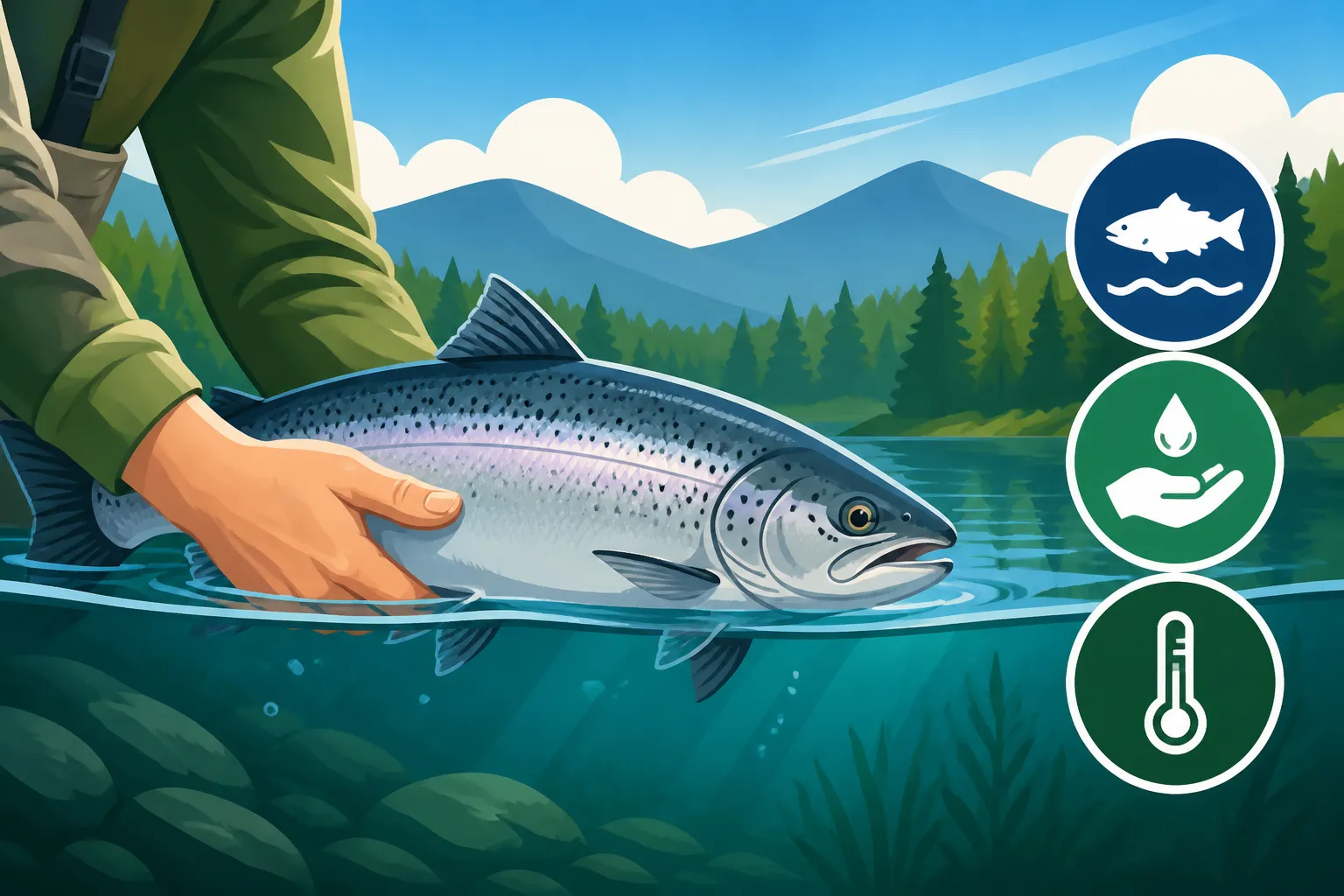
- Submerge Immediately: After hook removal, gently place the fish back into the water, headfirst, ensuring its gills are fully submerged. Keep it in your net or gently hold it upright by its tail and under its belly.
- Allow for Natural Recovery: Don't just let go. Hold the fish gently in the water, facing into any slight current, allowing water to flow over its gills. This helps to re-oxygenate its blood and flush out lactic acid. You'll feel it start to gain strength and push against your hand.
- Revitalization Technique: If the fish seems sluggish, gently move it back and forth in the water (just a few inches, not violently), pushing water through its gills. Think of it like CPR for the fish. Only do this if it's truly struggling; if it's active, just hold it steady. This process is crucial after a long fight or in warmer water conditions.
- Be Patient: A salmon may take a few minutes to fully recover. Don't rush it. The goal is for it to swim away under its own power, not just float off. When it actively tries to swim from your grasp, release it. Sometimes they will swim off quickly, but other times, they need a good minute or two to get their strength back.
- Consider Water Depth and Temperature: If you're fishing in very deep water, bringing a fish up too quickly can cause barotrauma—damage from the rapid change in pressure. While salmon are often caught shallower than deepwater lake trout, it's still a consideration. If a fish is showing signs of severe barotrauma (e.g., bulging eyes, stomach protruding from its mouth), it is unlikely to survive. In New Hampshire, special regulations apply for New Hampshire Lake Trout Ice Fishing Season Dates or even New Hampshire Bass Catch-and-Release Season, Explained that dictate specific release procedures or considerations.
Post-Release Observation and Revitalization
Your responsibility doesn't necessarily end the moment the fish swims away. A quick observation can give you peace of mind and confirm a successful release.
- Watch for a Strong Swim-Away: Observe the fish as it swims off. You want to see it swim away purposefully, deep into the water, rather than floating on its side or aimlessly. If it looks disoriented, gently scoop it back up in your net and continue the revitalization process.
- Avoid Harassment: Once released, do not try to re-catch the same fish, and avoid anything that would startle it again. Give it space to recover fully.
- Learn from Each Release: Every catch and release is an opportunity to learn. What worked well? What could have been faster or less stressful? Did you have the right tools easily accessible? Perhaps you need a better net, which you can easily find on Amazon, or a more efficient set of pliers. Reflecting on your process makes you a better, more responsible angler in the long run.
Ultimately, practicing proper catch and release for landlocked salmon is a testament to our respect for these incredible fish and the ecosystems they inhabit. By taking a few extra moments to prepare and execute a thoughtful release, you're not just ensuring the survival of a single fish; you're contributing to the health and sustainability of New Hampshire's cherished fisheries for future generations of anglers. Keep learning, keep practicing, and enjoy the beauty of fishing responsibly.
| Best Practice Category | Key Actions for Salmon Survival | Essential Gear (check on Amazon) | Why It Matters |
|---|---|---|---|
| Pre-Fishing Prep | Check water temps, de-barb hooks, organize tools. | Rubberized landing net, long-nosed pliers, line cutters, water thermometer. | Reduces fight time, minimizes injury, prevents slime coat damage. |
| During the Fight | Keep fight short, maintain steady pressure, use appropriate drag. | Properly spooled reel, matching rod power to fish size. | Minimizes lactic acid buildup (acidosis) and exhaustion. |
| Landing & Handling | Keep fish in water, wet hands (if necessary), avoid gills, support horizontally. | Knotless rubber net, hook removal tools easily accessible. | Protects slime coat, scales, gills, and internal organs from damage. |
| The Release | Submerge immediately, allow for natural recovery, gently revive if sluggish. | No specific gear, just patience and gentle technique. | Ensures re-oxygenation, full recovery, and a strong swim-away. |
| Post-Release | Observe for strong swim-away, give fish space. | Your observational skills. | Confirms successful recovery and prevents re-stressing the fish. |
Disclaimer
This article is for general informational purposes only and does not constitute professional advice. Laws, prices and regulations vary by location and change over time. Consult a qualified professional for guidance on your specific situation.