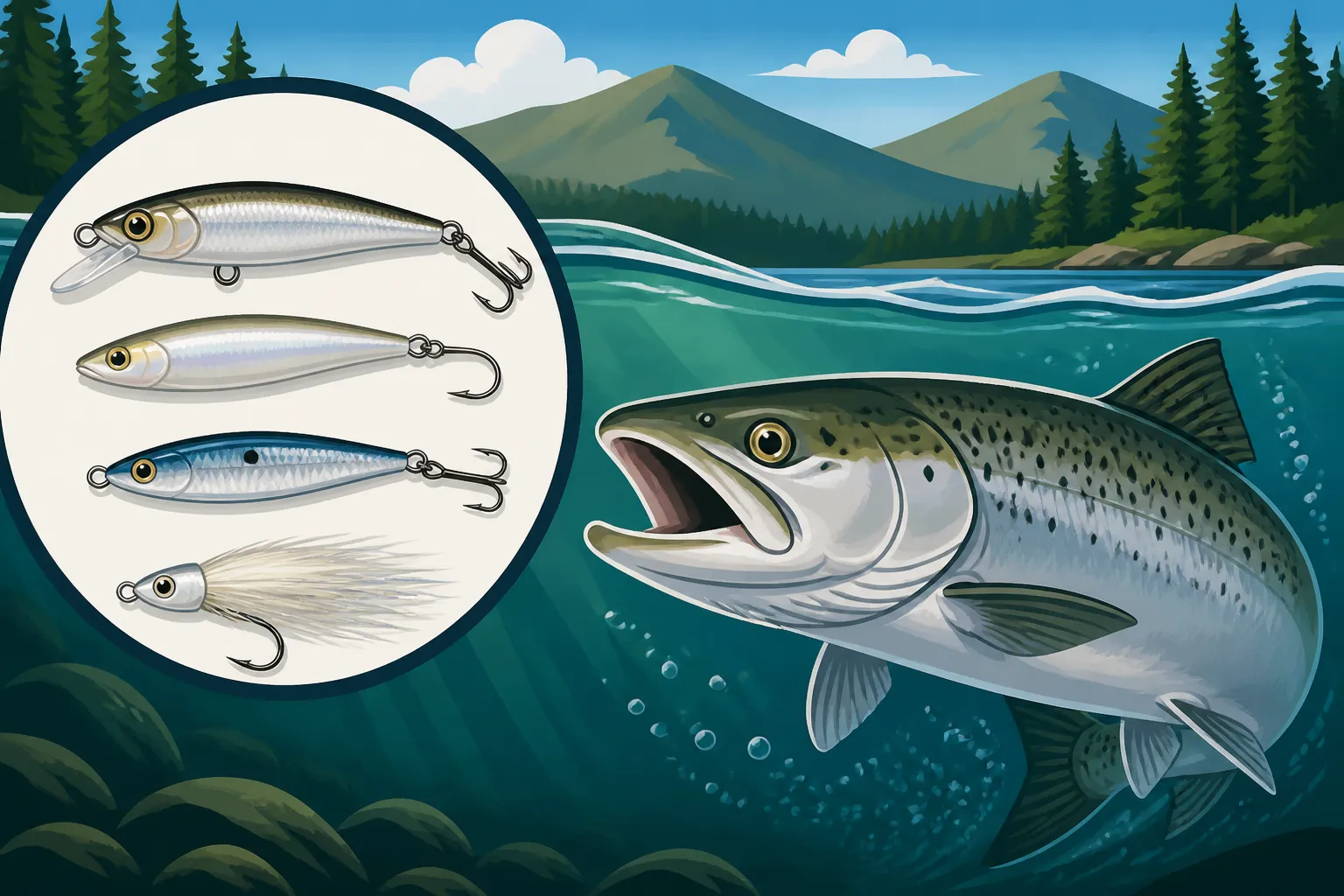
What lures imitate the smelt landlocked salmon eat
Catching landlocked salmon in New Hampshire can feel like a riddle wrapped in an enigma, especially when you're trying to figure out what they're actually eating down there. The truth is, these magnificent fish are often laser-focused on one primary food source: rainbow smelt. If you're struggling to entice a bite, it's probably because your lures aren't doing a convincing enough job of mimicking these silvery, irresistible snacks. This guide is all about cracking that code, helping you choose and present lures that perfectly imitate the smelt landlocked salmon crave.
Why Rainbow Smelt are So Crucial to Landlocked Salmon
When you think about landlocked salmon, you have to think about rainbow smelt. These small, slender baitfish are the cornerstone of the salmon's diet in many of New Hampshire's premier lakes, especially places like Lake Winnipesaukee, Sunapee, or Squam. Salmon are sight predators, and they've evolved to zero in on the specific look, flash, and movement of smelt. If your presentation doesn't scream "smelt," you're likely to get passed over.
The Life and Times of a Smelt
To effectively imitate smelt, you need to understand them. Rainbow smelt are typically silver-sided, with a somewhat elongated body and a slightly iridescent sheen. They tend to school in open water, often suspending at various depths depending on water temperature, light conditions, and predator pressure. They are incredibly fast, darting and flickering through the water column, but also prone to moments of stillness when they feel secure or are feeding on smaller plankton. They often seek cooler water, which means in the summer months, they'll be deeper, and salmon will follow them there. Understanding this behavior is critical, as it informs how you should fish your lures. When the smelt are active and schooling high, salmon will be up there feeding. When they drop down, so do the salmon.
The Salmon's Obsession with Smelt
Landlocked salmon are highly opportunistic feeders, but they develop a strong preference for smelt where these baitfish are abundant. This isn't just a casual snack; it's a deep-seated dietary habit. When you examine the stomach contents of a caught salmon, more often than not, you'll find smelt. This means that if you're not offering something that looks, moves, and even feels like a smelt, you're at a significant disadvantage. It's a game of mimicry, and the better your imitation, the higher your chances of success. They key into specific sizes too; a young salmon might go for a two-inch smelt, while a true trophy will target a five or six-inch meal.
Top Lure Categories for Smelt Imitation
Given the salmon's preference, anglers have developed a range of lures designed specifically to fool these cunning predators. These aren't just any old lures; they are chosen for their ability to replicate the size, shape, color, and action of a struggling or fleeing smelt.
Slender Spoons and Flutter Spoons
Spoons are arguably one of the most classic and effective lure types for imitating smelt, especially when trolling or jigging. Their erratic, wobbling action perfectly mimics a distressed or darting baitfish.
Trolling Spoons
For trolling, slender spoons are king. Think about spoons like the tried-and-true Mooselook Wobbler, Sutton, or a variety of others you can find on Amazon. These spoons are typically elongated and thin, designed to have a pronounced wobble and flash as they're pulled through the water. Colors are crucial here: silver, silver with a blue back, or silver with a black back are perennial favorites because they so closely match the natural coloration of a smelt. Some spoons also come with subtle flecks of glitter or a pearl finish, adding to that irresistible flash. The idea is to match the hatch not just in size, but also in speed. Trolling too fast will make the spoon look unnatural, while too slow might not give it enough action. Best Trolling Gear for New Hampshire Lake Trout often applies to salmon too, as many of the same principles are involved.
Jigging Spoons
When salmon are holding deep, often marked on your fish finder, jigging spoons become incredibly effective. These are typically heavier and shorter than trolling spoons, designed to drop quickly and have a lively, fluttering action on the retrieve. Silver, blue/silver, or even white are excellent choices. The key is to impart a quick lift and fall, letting the spoon flutter down like a dying smelt. This presentation can be deadly, especially during the colder months or when salmon are concentrated in specific areas like deep humps or drop-offs. Imagine a school of smelt getting ambushed and one of them spiraling downwards; that's the illusion you're trying to create.
Suspending and Sinking Stickbaits
Stickbaits are another powerhouse for smelt imitation, particularly for casting and retrieving or subtle trolling. Their long, slender profile is a dead ringer for a smelt.
Suspending Jerkbaits
These lures are invaluable, especially in cooler water when salmon can be a bit more lethargic. Suspending jerkbaits, like the Rapala X-Rap or the Lucky Craft Pointer series, are designed to suspend at a certain depth when you pause your retrieve. This "hang time" can be irresistible to a salmon, as it perfectly mimics a stunned or injured smelt that's just hanging motionless in the water. Colors again lean heavily towards silver, blue/silver, or even translucent finishes that catch the light just right. The retrieve is usually a series of jerks or twitches, followed by a pause. The longer the pause, the more tempting it can be, especially if you're fishing near known salmon haunts like rocky points or submerged structure.
Sinking Minnows
Sinking minnow lures offer versatility. They can be cast and allowed to sink to a desired depth before retrieving, or trolled. Their tighter wobble and ability to quickly get down make them excellent for covering different depths. Brands widely available on Amazon offer various sinking minnows in realistic baitfish patterns. These are particularly useful when salmon are feeding on smelt that are actively diving away from predators. The quick descent and tight shimmy on the retrieve are often just what it takes to trigger a chase.
Soft Plastic Swimbaits and Flukes
For a more natural, subtle presentation, soft plastics can't be beaten. They offer incredible realism and a life-like movement that hard baits sometimes struggle to achieve.
Realistic Swimbaits
Soft plastic swimbaits, often with a paddle tail, are phenomenal for mimicking smelt. These lures come in various sizes and incredibly realistic color patterns, from clear with silver flecks to solid silver-blue. They are typically rigged on a jig head, which allows for precise depth control and a natural swimming action. The paddle tail kicks and wiggles, sending out vibrations that attract salmon. You can slow-roll them, twitch them, or even vertical jig them. The supple plastic allows for a very natural look and feel in the water, which can be key on tough fishing days. Look for options on Amazon that are 3-6 inches long, as this is the prime size range for New Hampshire smelt.
Flukes and Jerk Shads
Soft plastic flukes or jerk shads, like the Zoom Super Fluke, are another excellent choice. These typically have a split tail or a very thin tail, giving them an erratic, darting action with every twitch of the rod. They don't have a built-in swimming action like a paddle tail swimbait, which means you are responsible for giving them life. Rig them weightless or with a small belly weight, and impart short, sharp jerks to make them dart and glide. This stop-and-go action is incredibly effective at imitating an injured or disoriented smelt, a sight that landlocked salmon rarely pass up. Best Baits for Smallmouth Bass on Winnipesaukee can sometimes crossover with salmon, as both can be interested in similar baitfish profiles.
Fly Fishing Streamers
For the fly angler, streamers are the go-to for smelt imitation, offering a more delicate and nuanced approach.
Smelt Patterns
There are many classic streamer patterns specifically tied to imitate smelt. The Grey Ghost, Supervisor, and Black Ghost are legendary in New England for landlocked salmon. These flies typically feature a long, slender profile, often with silver, white, blue, and black feathers or synthetic materials that shimmer and pulsate in the water. They are usually fished on sinking lines or with sink tips to get them down to the fish's depth. The retrieve is key here: short, erratic strips followed by pauses, making the fly dart and pause like a real smelt. Fly Fishing for Trout in New Hampshire shares some overlap in technique, though the specific patterns and target depths might differ.
Presentation Techniques: Bringing Your Smelt to Life
Having the right lure is only half the battle; knowing how to present it is the other. Salmon are incredibly sensitive to lure speed, depth, and action.
Trolling Strategies for Smelt
Trolling is perhaps the most common and effective way to target landlocked salmon that are feeding on suspended smelt. The goal is to cover water and present your lure at the correct depth and speed.
Speed and Depth Control
Salmon often prefer faster retrieves than lake trout. A good starting point for trolling speed is usually between 2.0 to 3.5 miles per hour, though this can vary wildly based on water temperature, salmon activity, and lure type. Deeper in summer, shallower in spring and fall. Pay close attention to your electronics to find schools of smelt and the salmon feeding on them. Downriggers, leadcore line, or even simple snap weights are essential for getting your lures into the strike zone. If you're not getting bites, adjust your depth by a few feet at a time until you find the sweet spot. How deep landlocked salmon go in summer highlights the importance of this.
Mimicking Smelt Movement
When trolling, think about how a smelt moves. They don't just swim in a straight line. They dart, they change direction, and they occasionally pause. Your trolling pattern should reflect this. Incorporate wide turns and S-curves, which will cause your lures on the inside of the turn to slow down and drop, while those on the outside speed up and rise. This change in speed and depth can often trigger a strike from a following salmon. Sometimes, a subtle twitch of the rod or a momentary acceleration of the boat can be all it takes.
Casting and Retrieving: Active Salmon
When salmon are closer to the surface or near structure, casting and retrieving can be highly effective. This is often the case in spring or fall when smelt are shallower.
Covering Structure
Focus your casts around points, drop-offs, and submerged humps where salmon might ambush passing smelt. These are natural feeding lanes. Make long casts and retrieve your jerkbaits or swimbaits with an erratic retrieve – two or three quick jerks, then a pause. Vary the length of your pauses. Sometimes a longer pause is needed, especially if the water is cold and salmon are less aggressive. Watching the behavior of baitfish on your sonar can give you clues as to how to best retrieve your lure.
Topwater Action
While less common, don't rule out topwater presentations, especially during low light conditions or when salmon are actively busting bait on the surface. A walk-the-dog style topwater lure that imitates a dying smelt struggling on the surface can draw explosive strikes. This is a thrilling way to catch them, but it requires patience and a good understanding of when salmon are feeding actively near the surface.
Essential Gear for Smelt Imitation Fishing
To effectively fish these smelt-imitating lures, having the right gear is just as important as choosing the right bait.
Rod and Reel Setup
For trolling, a medium-action rod, about 7-8 feet long, with a sensitive tip and a strong backbone is ideal. This allows the lure to work properly while still having the power to handle a hard-fighting salmon. Pairing this with a level-wind or line counter reel is often preferred for precise depth control when trolling with leadcore or downriggers. For casting, a medium-light to medium-action spinning rod, 6'6" to 7'6" in length, is versatile enough for jerkbaits and swimbaits.
Line and Leader Choices
Monofilament line is popular for trolling due to its stretch, which acts as a shock absorber. However, many anglers also use braid with a fluorocarbon leader for enhanced sensitivity and stealth. Fluorocarbon is nearly invisible underwater, making it a critical choice for leaders, especially in the clear waters of New Hampshire's salmon lakes. A 6-10 lb test fluorocarbon leader is usually sufficient, but Best Fluorocarbon Line for Clear Lake Water provides more insights. Using a good quality swivel to prevent line twist, particularly with spoons, is also a wise move.
Understanding Smelt Sizes and Matching Lures
The size of the smelt can vary throughout the year and even between different water bodies. In the spring, smaller, younger smelt might be more prevalent, requiring lures in the 2-4 inch range. As the season progresses, larger smelt (4-6 inches) become more common. Pay attention to any visual cues on the water, like baitfish jumping, or what you might see in the stomach of a freshly caught salmon. It's always a good idea to have a range of lure sizes and colors in your tackle box, readily available from various fishing suppliers on Amazon, so you can adapt to whatever the salmon are keying in on that day.
| Lure Type | Key Characteristics | Ideal Presentation | Smelt Aspect Mimicked |
|---|---|---|---|
| Slender Spoon | Elongated, wobbling, reflective | Trolling (2-3.5 mph), varied turns | Darting, fleeing baitfish |
| Jigging Spoon | Heavier, flutter on drop, flashy | Vertical jigging, lift-and-fall | Injured, dying baitfish |
| Suspending Jerkbait | Slender, suspends on pause, erratic darts | Cast/retrieve, jerk-jerk-pause | Stunned, disoriented baitfish |
| Soft Swimbait | Realistic profile, paddle tail, subtle | Slow roll, steady retrieve, jigging | Cruising, natural swimming |
| Soft Fluke/Jerk Shad | Erratic darting, no inherent action | Twitch-twitch-pause, weightless or weighted | Fleeing, injured, dying |
| Fly Streamer | Feather/synthetic, long, slender, pulsating | Strip retrieve (sinking line), erratic movement | Darting, alive baitfish |
Timing and Location: Fishing Where the Smelt Are
You can have the perfect lure, but if you're not where the salmon and their food are, it won't matter. Landlocked salmon are creatures of habit when it comes to following their forage.
Seasonal Movements of Smelt and Salmon
In New Hampshire, smelt move seasonally, and salmon move with them. In the spring, after ice-out, smelt are often found in shallower water near tributaries for spawning, and salmon will follow. As the water warms in summer, smelt retreat to deeper, cooler oxygenated water, and the salmon will be right there with them, often suspended over deep basins or near thermoclines. Fall sees them moving back shallower as the water cools. Understanding these movements is paramount. Consulting resources like New Hampshire Fishing Season Dates and Closures can help you predict these seasonal shifts.
Reading the Water and Electronics
Your fish finder is your best friend when targeting smelt-oriented salmon. Look for bait balls—dense schools of small fish—and the larger, arch-shaped marks of salmon lurking nearby or feeding actively through them. Often, salmon will hang just below a school of smelt, waiting for an opportunity to strike, or they might be cruising the edges of the school. Learn to interpret these signals, as they tell you exactly what depth your lures need to be at. Pay attention to contour maps for lakes like Winnipesaukee; look for sudden drop-offs, underwater islands, and deep humps that provide structure for both smelt and salmon.
By focusing on these smelt-imitating lures and mastering their presentation, you'll dramatically increase your chances of hooking into those incredible New Hampshire landlocked salmon.
Disclaimer
This article is for general informational purposes only and does not constitute professional advice. Laws, prices and regulations vary by location and change over time. Consult a qualified professional for guidance on your specific situation.