Trout Fishing in New Hampshire
There's nothing quite like the crisp air, the sound of rushing water, and the quiet anticipation of a perfect cast, only to be utterly baffled by where the trout actually are in New Hampshire. Many anglers, new and experienced alike, find themselves scratching their heads when faced with the Granite State's diverse waters. This comprehensive guide is here to unravel the mysteries of trout fishing across New Hampshire, from identifying its diverse species to mastering the techniques that will put fish in your net, whether you're a seasoned fly angler or just starting out.
Why New Hampshire is a Trout Angler's Dream
New Hampshire is a true gem for trout enthusiasts, offering a staggering variety of fishing experiences. From the rushing freestone rivers in the White Mountains to the serene, deep waters of its sprawling lakes, the opportunities are as varied as the landscape itself. It's a place where you can spend a morning casting dry flies for wild brook trout in a secluded mountain stream and an afternoon trolling for massive lake trout on one of the larger bodies of water. This diversity is what makes New Hampshire so special, but it also means you need to be prepared for different approaches and conditions.
A Legacy of Pristine Waters
New Hampshire prides itself on its abundant and clean water resources. The state's geography, with its mountainous terrain and dense forests, naturally filters water, creating optimal conditions for trout. Many of these waters have a long history of supporting robust trout populations, some wild and others enhanced by diligent stocking programs. Anglers often comment on the sheer beauty of the fishing spots, feeling a sense of peace and connection to nature that’s hard to find elsewhere. It’s not just about catching fish; it’s about the entire experience of being out on the water or wading a pristine stream.
The quality of these waters also contributes to the health and vitality of the fish. Trout thrive in cold, oxygen-rich environments, and New Hampshire's numerous spring-fed streams and deep lakes provide just that. This commitment to water quality means a healthier ecosystem overall, which in turn supports not only trout but a whole host of aquatic life that makes fishing so rewarding. Protecting these resources is paramount, and every angler plays a role in maintaining this legacy for future generations.
The Diverse Trout Fishery
What makes New Hampshire stand out is the sheer diversity of its trout fishery. You're not just chasing one type of trout; you have the chance to encounter several, each with its own characteristics, preferred habitats, and fighting styles. This variety keeps things interesting, challenging you to adapt your techniques and learn about the nuances of each species. Whether you prefer the thrill of a feisty rainbow trout leaping from the water or the subtle, calculating fight of a big brown trout, New Hampshire has something to offer.
Beyond the main "trout" species, New Hampshire's cold, clear waters also support populations of landlocked salmon and lake trout. While technically char, they are often grouped with trout due to their similar habits and the techniques used to catch them. This means your "trout" fishing adventure can expand to include these formidable adversaries, adding even more excitement and challenge to your outings. Each species presents a unique puzzle, making every fishing trip an opportunity for discovery.
Meet the Trout: Species in New Hampshire
New Hampshire is home to several incredible trout species, each offering a distinct angling experience. Understanding their characteristics and habits is the first step to becoming a successful trout angler in the Granite State. While often generically called "trout," these fish have unique traits that make them special.
The Native Brook Trout
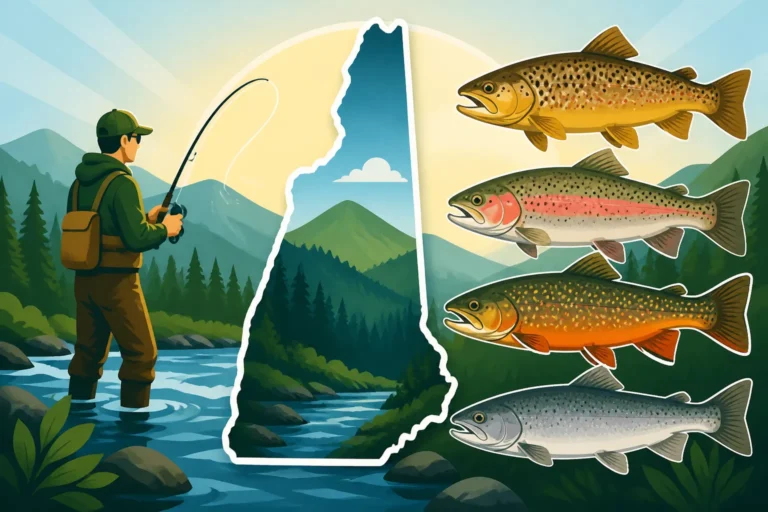
The brook trout ( Salvelinus fontinalis ) is New Hampshire's sole native trout species and its official state fish. These beauties are instantly recognizable by their vibrant, worm-like markings (vermiculations) on their backs, red spots with blue halos along their sides, and striking white leading edges on their fins, particularly the pectoral, pelvic, and anal fins. They are truly stunning fish, especially the wild ones caught from high-elevation streams. Many anglers consider catching a wild brook trout from a remote New Hampshire stream to be the pinnacle of the trout fishing experience. You can read more about them in Brook Trout: New Hampshire's Native Trout.
Brook trout thrive in cold, clear, well-oxygenated water, often preferring smaller streams, remote ponds, and the upper reaches of larger river systems. They are particularly sensitive to water temperature and pollution, which is why their presence often indicates a healthy, pristine ecosystem. While they don't typically grow as large as rainbow or brown trout, what they lack in size, they make up for in beauty and willingness to strike a fly or lure. Their aggressive nature, especially in competitive wild environments, makes them incredibly fun to catch on light tackle.
When targeting brook trout, think small and subtle. They often hide in pocket water, behind rocks, and under overhanging banks, waiting for insects to drift by. Small spinners, tiny spoons, and traditional fly patterns like dry flies, nymphs, and wet flies are all effective. These fish are a testament to the wild spirit of New Hampshire, and encountering them in their natural habitat is always a memorable experience.
Robust Rainbow Trout
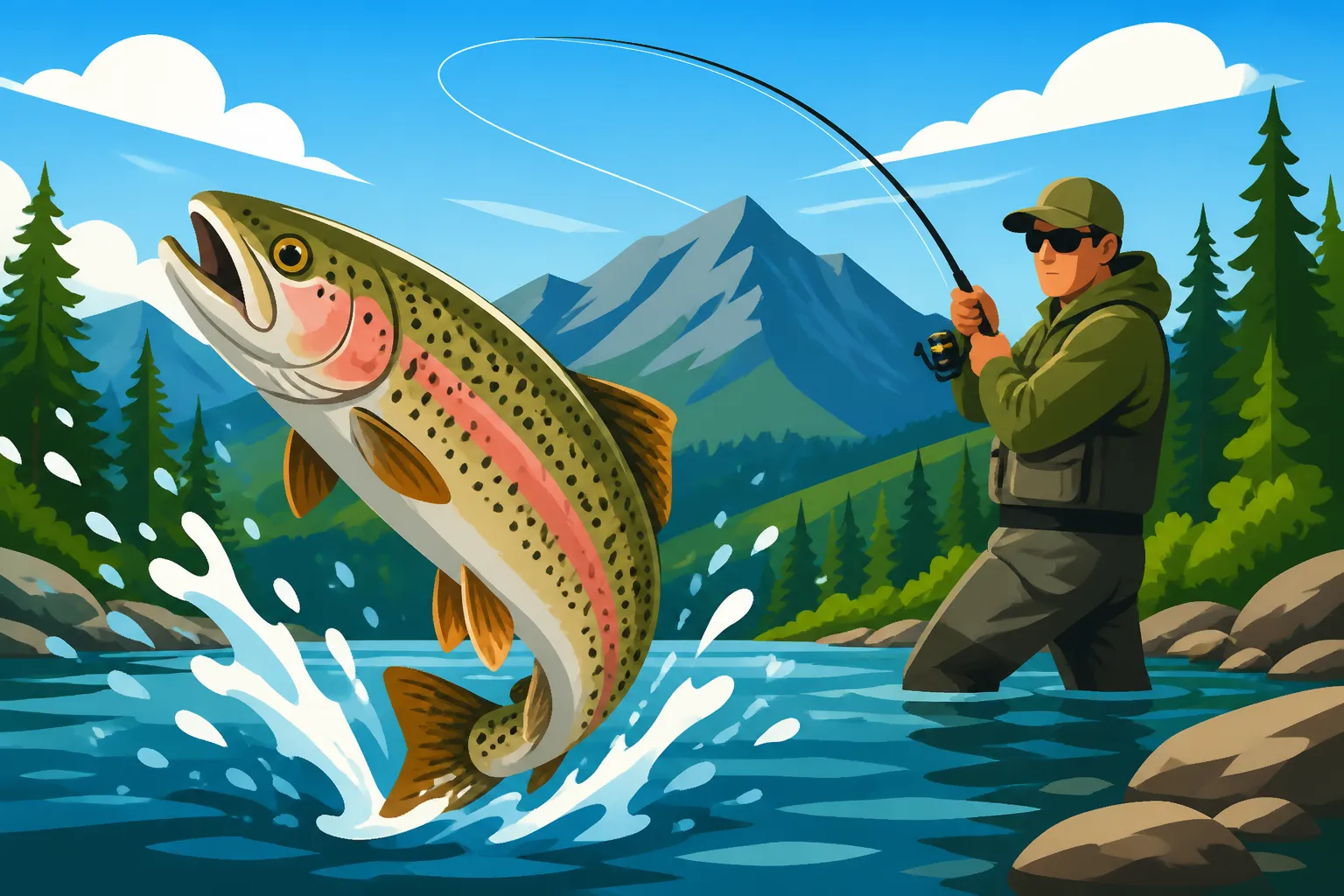
Rainbow trout ( Oncorhynchus mykiss ) are a popular sport fish in New Hampshire, though they are not native to the region. They are stocked extensively throughout the state to provide diverse angling opportunities, especially in larger rivers and many of the popular trout ponds. Rainbows are known for their distinctive pink or red stripe running along their lateral line, which often intensifies during spawning. Their bodies are typically silvery with small black spots covering their backs, sides, and caudal (tail) fin.
What makes rainbow trout so exciting for anglers is their spirited fight. They are notorious for their acrobatic jumps and powerful runs once hooked, often putting on an impressive display. This makes them a favorite target for both bait and lure fishermen, as well as fly anglers. They are also quite adaptable and can be found in a variety of water types, from the fast-flowing sections of rivers to the open waters of lakes and ponds.
Rainbow trout respond well to a wide range of techniques. For spin fishermen, small inline spinners, spoons, and soft plastics can be incredibly effective. Fly anglers will find success with nymph patterns, emergers, and various dry flies, especially during insect hatches. They are also readily caught on bait like worms, PowerBait, and corn, particularly in freshly stocked waters. Their widespread availability and energetic fight make them a staple of New Hampshire's trout fishery.
Elusive Brown Trout
Brown trout ( Salmo trutta ) are another non-native species that have found a comfortable home in New Hampshire. Originally from Europe, they were introduced for their hardiness and ability to tolerate slightly warmer waters than brook trout, as well as their potential for trophy size. Brown trout are characterized by their olive-brown backs, often fading to a yellowish or bronze belly. They typically have dark spots with light halos, and often some red or orange spots, particularly on their sides, that lack blue halos.
These fish are renowned for their cunning and elusive nature. They can be incredibly wary, making them a significant challenge for even experienced anglers. Unlike rainbows, brown trout tend to fight deep, using their strength to dive and rub hooks against structure. They are often most active during low light conditions, such as dawn, dusk, or even into the night, especially when targeting larger specimens. They prefer larger rivers and some of New Hampshire's colder lakes.
Brown trout have a varied diet, consuming insects, crustaceans, and often, other fish. This makes them responsive to a wide array of presentations. Fly anglers often target them with streamers that imitate baitfish, as well as nymphs and dry flies. Spin fishermen find success with larger crankbaits, jerkbaits, and spoons that mimic their forage. They are definitely a fish that rewards patience and persistence, and landing a large brown trout in New Hampshire is a memorable accomplishment.
The Unique Lake Trout and Landlocked Salmon
While not "trout" in the strict biological sense (they are char, like brook trout), lake trout and landlocked salmon are significant cold-water game fish often targeted by trout anglers in New Hampshire's larger, deeper lakes.
-
Lake Trout ( Salvelinus namaycush ): These are truly deep-water dwelling giants, preferring the coldest, most oxygenated parts of large lakes like Winnipesaukee and Sunapee. They are dark gray to olive-green with numerous light spots, often blending into their deep-water surroundings. Lake trout are known for their immense size and powerful, bulldog-like fight. They are primarily caught by trolling deep with heavy gear or ice fishing. You can learn more about targeting these monsters in How to Catch Lake Trout in New Hampshire.
-
Landlocked Salmon ( Salmo salar ): These are freshwater relatives of the Atlantic salmon, isolated in New Hampshire's larger lakes. They are sleek, silvery, and powerful, known for their incredible speed and aerial acrobatics once hooked. They primarily feed on smelt, so presentation that mimics these baitfish is key. Like lake trout, they are often caught by trolling or through ice fishing in the winter. For more details on these magnificent fish, check out Landlocked Salmon Fishing in New Hampshire.
These species add another layer of excitement and challenge to New Hampshire's cold-water fishing scene, requiring specialized techniques and knowledge of deep-water habitats.
| Species | Appearance | Typical Habitat | Preferred Diet | Fighting Style |
|---|---|---|---|---|
| Brook Trout | Dark, worm-like markings, red spots with blue halos, white fin edges | Cold, clear, small streams, high-elevation ponds | Aquatic insects, small crustaceans | Aggressive, quick strikes |
| Rainbow Trout | Silvery body, prominent pink/red stripe, black spots over back/tail | Stocked rivers, larger streams, lakes, ponds | Insects, small fish, worms, crustaceans | Acrobatic jumps, strong runs |
| Brown Trout | Olive-brown, dark spots with light halos, some red/orange spots, no blue | Larger rivers, colder lakes, tolerates slightly warmer water | Insects, crustaceans, baitfish (piscivorous) | Deep, powerful runs, elusive |
Finding Your Fin-Footed Friends: Trout Habitats
Knowing what trout you're after is one thing; knowing where to find them is another. New Hampshire's diverse landscape offers a range of habitats, each requiring a slightly different approach. Understanding these environments is crucial for successful trout fishing.
Freestone Rivers and Mountain Streams
The backbone of New Hampshire's trout fishing lies in its countless freestone rivers and mountain streams. These waters are typically characterized by rocky bottoms, riffles, runs, and deep pools, all fed by snowmelt and rainfall. The White Mountains, in particular, are crisscrossed with pristine streams that hold healthy populations of wild brook trout and often stocked rainbow and brown trout. Rivers like the Pemigewasset, Saco, and Ammonoosuc offer varied trout fishing, from fast-moving sections perfect for fly fishing to slower bends ideal for spin casting.
When fishing these streams, understanding the current and structure is key. Trout will position themselves in places where they can ambush food with minimal effort – behind rocks, in the slower water adjacent to fast currents, or at the tail ends of pools. High-elevation streams are often teeming with insect life, making them prime spots for dry fly fishing during hatches. Accessing some of these remote streams can involve a hike, but the reward of solitude and wild trout is often well worth the effort. Always be mindful of your footing, especially in fast currents, and consider a Wading Staff for Fast Current for added safety.
Different sections of a river will hold different fish. The colder, upper reaches are often brook trout territory, while larger, more accessible sections might have a mix of stocked rainbows and browns. Look for areas with overhead cover, deep scour holes, and current breaks. The Swift River, for instance, is renowned for its trout fishing and offers numerous access points within the White Mountain National Forest, but requires careful wading.
Productive Ponds and Lakes
Beyond the rivers, New Hampshire boasts numerous ponds and lakes that offer fantastic trout fishing, particularly for stocked rainbow and brown trout, and, in the deeper, colder lakes, for lake trout and landlocked salmon. These waters range from small, easily accessible ponds managed specifically for trout stocking to vast, deep lakes like Winnipesaukee and Newfound, which hold trophy-sized fish. Many of these ponds are stocked heavily in spring and fall, providing excellent opportunities for anglers of all skill levels. You can check out Best Trout Ponds in New Hampshire for some ideas.
When fishing ponds and lakes, techniques often shift from casting to trolling or still fishing. Shore fishing can be very productive in stocked ponds, especially right after a stocking event, where trout will cruise the shallower margins. In larger lakes, deeper water fishing becomes paramount, often requiring boats equipped with downriggers or lead core line to reach the depths where lake trout and salmon reside. Understanding the lake's contours, submerged structures, and baitfish schools (often smelt) is vital for success.
Ice fishing is also incredibly popular on many of these lakes and ponds during the winter months, offering unique opportunities to catch trout through the ice. Lakes like Winnipesaukee and Winnisquam become winter hubs for anglers chasing lake trout, salmon, and even some hardy brook trout. Whether casting from shore, trolling from a boat, or dropping a line through the ice, New Hampshire's lakes and ponds provide diverse trout angling adventures.
Special Regulation Waters
New Hampshire also features several "special regulation waters" that are managed to enhance trout populations or provide unique angling experiences. These might include "fly fishing only" sections, "catch and release" areas, or waters with specific gear restrictions, length limits, or season dates. These regulations are designed to protect fragile wild populations, encourage natural reproduction, or provide quality angling for specific species or techniques. It's absolutely crucial to consult the New Hampshire Fishing Regulations Explained or the latest Freshwater Fishing Digest before heading out, as rules can vary significantly from one body of water to another, even within the same river system.
For example, certain stretches of rivers might be designated "fly fishing only," meaning only artificial flies tied with specific materials can be used, and often, only single, barbless hooks are allowed. These areas often hold healthy populations of larger, smarter trout due to reduced harvest pressure and specialized angling pressure. Similarly, some "catch and release" waters provide excellent opportunities to hone your skills on fish that have seen a few lures before, challenging you to present your offering perfectly.
Anglers seeking a challenge and a chance at truly wild, wary trout often gravitate toward these special regulation areas. They are a testament to New Hampshire's commitment to conservation and providing high-quality angling experiences. Always double-check the signs at access points and the latest regulations to ensure you're compliant, as penalties for violations can be significant. Respecting these rules not only keeps you out of trouble but also contributes to the health of the fishery for everyone.
Gearing Up for New Hampshire Trout
Having the right equipment can make all the difference between a frustrating day and a successful one on the water. New Hampshire's varied trout fishing scenarios mean that a versatile approach to gear is often best. Don't worry, you don't need to break the bank to get started, but investing in a few quality pieces will certainly pay off. You can find many reliable options on Amazon, often with reviews that help guide your purchase.
Rods, Reels, and Lines for Success
For trout fishing in New Hampshire, you'll generally want lighter tackle that matches the size of the fish and the environment.
-
Rods: For stream and small pond fishing, a lightweight spinning rod between 5'6" and 6'6" with a light to ultra-light power is ideal. This allows for accurate casting of small lures and baits while still providing excellent sensitivity for subtle bites. Fly anglers will typically use a 3-weight to 5-weight fly rod, generally 7.5 to 9 feet long, which is perfect for delicate presentations on streams. For larger lakes and bigger trout or salmon, you might step up to a medium-light spinning rod (7 feet) or a heavier fly rod (6-8 weight) for trolling or streamer fishing. If you're looking for an all-around option, a 6-foot, light-power spinning rod is a fantastic starting point.
-
Reels: Match your reel to your rod. For light spinning rods, a 1000 to 2500 series spinning reel is perfect, offering smooth drag and sufficient line capacity. Fly reels primarily hold your line; a disc drag system is a bonus for larger fish but less critical than the rod's action. Ensure the reel balances well with the rod to prevent fatigue during long fishing sessions. A good quality reel will last for years, so it's worth a slightly higher investment.
-
Lines: For spinning gear, 4 to 6-pound test monofilament or fluorocarbon is generally suitable for most trout fishing. Monofilament is more forgiving and floats, while fluorocarbon is nearly invisible underwater and has less stretch, offering more sensitivity. For fly fishing, a weight-forward floating line is standard for most dry fly and nymph presentations on streams. You'll also want to carry spare spools with different line types if you plan to target various species or use different techniques.
Essential Tackle and Accessories
Beyond the rod and reel, a well-stocked tackle box or bag is crucial. Here's a rundown of essential items:
- Lures: A selection of small inline spinners (like Mepps or Panther Martins), tiny spoons (Kastmasters, Little Cleos), and micro crankbaits are great for spin fishing. Don't forget some soft plastic grub-style baits, which can be fished on a small jig head. For fly fishing, a variety of dry flies (Caddis, Adams, Elk Hair Caddis), nymphs (Pheasant Tail, Hare's Ear), and small streamers (Woolly Bugger) will cover most situations. Remember that trout can be picky, so having a range of sizes and colors can be a lifesaver. You can easily stock up on these items from Amazon.
- Baits: If you're starting out or prefer bait fishing, worms (nightcrawlers, mealworms), PowerBait dough or nuggets, and corn are traditional and effective choices for stocked trout. Always check regulations, as some waters prohibit bait.
- Hooks, Sinkers, Swivels: A selection of small, sharp hooks (sizes 8-14), split shot weights, and small barrel swivels are indispensable for rigging various setups.
- Tools: Pliers or forceps for hook removal (essential for safe catch and release), line clippers, and a small measuring tape.
- Landing Net: A good quality, rubberized landing net is critical for safely landing fish, especially if you plan to practice catch and release. Rubberized nets are much gentler on a fish's slime coat and reduce tangles. You can find excellent options, including ones specifically designed for trout, with a quick search on Amazon.
- Indicator/Bobber: For nymphing or bait fishing, a strike indicator or small bobber helps detect subtle bites.
Waders and Footwear for Comfort and Safety
Many of New Hampshire's best trout fishing spots require wading, whether in a river, stream, or the shallow margins of a pond. Being able to safely and comfortably enter the water greatly expands your access and opportunities.
- Waders: Chest waders are highly recommended for New Hampshire's typically cold waters, even in summer. They allow you to wade deeper and stay warm and dry. Breathable waders are excellent for warmer weather, preventing overheating, while neoprene waders offer superior insulation for colder spring and fall fishing. Ensure they fit well, allowing for full range of motion without being overly baggy or restrictive. You'll find many reputable brands offer durable waders that stand up to the rigors of rocky riverbeds.
- Wading Boots: If you choose stockingfoot waders (which most breathable waders are), you'll need separate wading boots. Look for boots with good ankle support and sturdy soles. Felt soles offer excellent grip on slippery, algae-covered rocks, but are often restricted in some areas due to concerns about transferring invasive species. Rubber soles with studs or aggressive treads are a versatile and increasingly popular alternative. Test them out before you hit the water to ensure comfort and stability.
- Layering: Don't forget appropriate clothing to wear under your waders. Moisture-wicking layers are best, even in winter, to manage sweat and maintain warmth. In summer, light, breathable layers will keep you comfortable. A good waterproof rain jacket is also an absolute must, as weather in New Hampshire can change rapidly. For more on essential gear, check out Best Gear for New Hampshire Trout Fishing.
Mastering Trout Techniques
New Hampshire trout can be caught using a variety of methods, but some techniques are consistently more effective, especially when tailored to the specific environment and species. Let's dive into the most popular and productive ways to fish for trout in the Granite State.
The Art of Fly Fishing
Fly fishing is an incredibly popular and effective method for trout in New Hampshire, particularly on its countless rivers and streams. It's often seen as an art form, requiring patience, precision, and an understanding of insect hatches and fish behavior. Whether you're a seasoned fly caster or just starting, New Hampshire offers ample opportunities to practice and refine your skills. You can delve deeper into this specialized method with Fly Fishing for Trout in New Hampshire.
- Dry Fly Fishing: This is perhaps the most iconic form of fly fishing, where you present a fly that imitates an insect floating on the water's surface. The thrill of seeing a trout rise and sip your fly is unparalleled. It's most effective during active insect hatches, which vary throughout the season. Key to success is matching the hatch, making delicate casts, and achieving a natural, drag-free drift. Look for trout actively feeding on the surface, often in calmer pools or slower runs.
- Nymphing: When trout aren't feeding on the surface, they're typically feeding below it, on aquatic insect larvae and pupae (nymphs). Nymphing involves drifting weighted fly patterns near the bottom, where most of a trout's diet resides. This technique is often highly productive, especially in faster currents where trout have less time to inspect the offering. Indicators are commonly used to detect subtle strikes, which can often feel like just a slight hesitation in your line. Euro nymphing, a specialized form of tight-line nymphing, has also gained popularity for its effectiveness in turbulent stream conditions.
- Streamer Fishing: For larger, more aggressive trout (especially brown trout) and for landlocked salmon or lake trout, streamer fishing can be deadly. Streamers imitate baitfish, leeches, or other larger prey. This involves casting a larger, weighted fly and stripping it back through the water, mimicking a fleeing baitfish. It's an active technique that often provokes aggressive takes, and it's particularly effective in deeper pools, undercut banks, or when fish are less active on insect hatches.
Spin Fishing for Versatility
Spin fishing offers incredible versatility and is a highly effective way to catch trout across all of New Hampshire's waters, from small streams to large lakes. It's often more approachable for beginners and allows for covering a lot of water efficiently.
- Casting Lures: Small inline spinners are perennial favorites for trout. Their flashing blades and vibrations attract fish from a distance. Spoons, which wobble as they're retrieved, are also very effective, especially in lakes and wider rivers. Try varying your retrieve speed and depth to find what the fish are keying into on any given day. Small crankbaits and jerkbaits can also be very productive, particularly for larger brown trout, imitating baitfish.
- Still Fishing with Bait: For ponds and slower river sections, still fishing with natural baits like worms or prepared baits like PowerBait can be incredibly simple and effective. A basic rig involves a small hook, a few split shot weights to get the bait down, and sometimes a small bobber or slip float to suspend the bait at a specific depth. This is a fantastic method for introducing kids to fishing, as it requires less active casting and more patient waiting for a bite.
- Drift Fishing: In rivers, drift fishing with bait or small lures is a popular method. This involves allowing your offering to drift naturally with the current, presenting it to fish holding in various current seams and pockets. Using just enough weight to keep your bait or lure bouncing along the bottom naturally is crucial for success.
Simple Bait Fishing Approaches
Bait fishing is often the most straightforward and traditional way to catch trout, making it perfect for families, beginners, or simply a relaxed day by the water. New Hampshire's stocked waters, in particular, are prime locations for bait fishing.
- PowerBait & Dough Baits: These artificially scented, brightly colored baits are highly effective for recently stocked rainbow and brown trout. They come in various forms, from moldable dough to nuggets. The key is to mold them around a small treble hook (or a single hook) so they float just off the bottom, presenting an irresistible treat. Fishing them on a Carolina Rig or with a simple split shot rig is common.
- Worms and Live Bait: Earthworms (like nightcrawlers or garden worms) are a universal trout bait. They can be fished on the bottom, suspended under a bobber, or drifted naturally in a river. Other live baits like mealworms, corn, or even small shiners (where legal) can also be effective, appealing to the trout's natural foraging instincts. Always verify that live bait is permitted in the waters you're fishing.
- Presentation is Key: Even with bait, presentation matters. Ensure your bait looks natural and isn't hindered by too much weight. Trout can be wary, and an unnatural-looking bait can spook them. Using light line and small hooks will increase your chances of getting a bite.
Navigating New Hampshire Trout Regulations
Understanding and adhering to New Hampshire's fishing regulations is not just about staying legal; it's about being a responsible angler and contributing to the conservation of these precious resources. Regulations are designed to protect fish populations and ensure sustainable fishing for generations to come. Skipping this step can lead to penalties like those described in Fishing Without a License in New Hampshire: Penalties.
Understanding Licenses and Permits
Before you even think about wetting a line, you need the proper authorization. In New Hampshire, nearly everyone over a certain age needs a fishing license.
- Who Needs One: Generally, anyone 16 years of age and older needs a New Hampshire fishing license. There are exceptions, such as during New Hampshire Free Fishing Days, Explained, or for certain youth or disabled individuals. Children under 16 can typically fish without a license, making it a great activity for families. For specifics on age requirements, consult New Hampshire Fishing License Age Requirements.
- Resident vs. Non-Resident: The cost and types of licenses vary significantly depending on whether you are a New Hampshire resident or not. Non-residents often have options for short-term licenses (e.g., 1-day, 3-day, 7-day) which are perfect for vacations. Residents can usually purchase annual licenses or a combination hunting and fishing license. For more details on the process, check out Where and How to Buy a New Hampshire Fishing License or How to Buy a Fishing License Online in New Hampshire.
- Where to Purchase: Licenses can be purchased online through the New Hampshire Fish and Game Department website, at authorized license agents (sporting goods stores, town clerks), or directly at Fish and Game headquarters. Always make sure to carry your license with you when fishing, whether it's a physical copy or a digital one on your phone. See Printing or Carrying a Digital Fishing License in New Hampshire for details.
Bag Limits and Size Restrictions
Once you have your license, understanding what you can keep and how much is next. Bag limits and size restrictions are put in place to manage fish populations and prevent overharvesting.
- Daily Limits: This refers to the maximum number of fish of a particular species you can keep in a single day. For trout, these limits vary depending on the water body and species. For instance, the general statewide daily limit for trout might be a certain number, but specific lakes or streams could have different, more restrictive limits. Always know the rules for the specific water you are fishing. For general trout limits, see New Hampshire daily trout limit.
- Possession Limits: This refers to the maximum number of fish you can have in your possession at any given time, regardless of when they were caught. This prevents anglers from accumulating large quantities of fish over multiple days. It's often the same as the daily limit but can differ. For example, New Hampshire trout possession limit specifies the rules.
- Minimum/Maximum Size Limits: Some waters have minimum or maximum length limits for trout. A "slot limit" means you can keep fish within a certain size range, but not below or above it, often designed to protect juvenile fish or large, spawning adults. Always carry a tape measure to ensure your catch meets the legal requirements before deciding to keep it.
- Special Regulations: As mentioned earlier, some waters have unique regulations that supersede the general statewide rules. These might include "no kill," "catch and release only," or specific gear restrictions. Ignoring these can result in citations, so pay close attention to signs at public access points and the most current fishing digest.
Catch and Release Best Practices
Many New Hampshire anglers practice catch and release, either by choice or because they are fishing in special regulation waters. Doing it correctly is vital for the survival of the fish.
- Minimize Handling: Try to keep the fish in the water as much as possible. If you must handle it, do so with wet hands to protect its protective slime coat. Avoid squeezing the fish, especially around its belly.
- Quick Release: Have your camera ready if you want a photo, but make it quick. The longer a fish is out of the water, the more stressed it becomes, reducing its chances of survival.
- De-barbing Hooks: Using barbless hooks (or crimping down the barb on a barbed hook with pliers) makes hook removal much easier and less damaging to the fish. This is especially important in catch-and-release-only waters.
- Proper Hook Removal: Use forceps or long-nosed pliers to carefully remove the hook. If the fish is deeply hooked and removal would cause significant damage, it's often better to cut the line as close to the hook as possible.
- Revival: If a fish is lethargic after the fight, hold it gently in the water, facing into a gentle current, until it regains its strength and swims away on its own. Never "throw" a fish back into the water. Patience here can make all the difference for the fish's survival.
When and Where to Go: Seasons and Timing
New Hampshire offers trout fishing opportunities throughout the year, but understanding the seasons and how they affect trout behavior can drastically improve your success. Each season presents unique challenges and rewards for the dedicated angler. You can find more detailed monthly breakdowns in New Hampshire Fishing Seasons by Month.
Spring: Opening Day Excitement
Spring is arguably the most anticipated time for trout fishing in New Hampshire. The official "opening day" typically kicks off in April, after the ice has melted and before the weather gets too warm. This period is synonymous with freshly stocked trout, eager to bite after a long winter. The cool water temperatures mean trout are active and often found closer to shore, making them accessible to many anglers.
- Early Season Stocking: The New Hampshire Fish and Game Department works tirelessly to stock thousands of trout into rivers, streams, and ponds during the spring. This provides fantastic opportunities, especially for families and new anglers, to catch plentiful fish. Often, the week or two following a stocking event offers prime fishing. You can keep an eye on stocking schedules and reports by checking the New Hampshire Trout Stocking Report and Map.
- Water Conditions: Early spring can mean higher, colder water due to snowmelt and spring rains. This often makes trout less selective about their food, responding well to a variety of baits and lures. As spring progresses and water levels stabilize, insect hatches become more common, shifting some trout's focus to emerging aquatic insects, making it a prime time for fly fishing.
- Targeting Species: While stocked rainbows and browns are the primary targets, wild brook trout in mountain streams also become active. Lake trout and landlocked salmon in larger lakes can be found closer to the surface after ice-out, providing exciting trolling opportunities before they retreat to deeper, colder water.
Summer: Chasing Wild Trout
As summer arrives and water temperatures rise, trout behavior shifts. Stocked trout in smaller ponds might become lethargic or seek out deeper, cooler water. This is when the focus often turns to wild trout in cold-water refuges.
- Cold Water Refuges: The best summer trout fishing is typically found in high-elevation mountain streams, spring-fed rivers, and the deep, cold sections of large lakes. Wild brook trout thrive in these oxygen-rich, cold environments. Anglers often hike into remote areas to find these undisturbed populations.
- Low Light Periods: Trout become more active during the cooler parts of the day – dawn, dusk, and even into the night, especially for large brown trout. During midday, they often seek refuge in shaded areas, undercuts, or deep pools.
- Technique Adaptations: Fly anglers might focus on terrestrial patterns (grasshoppers, ants, beetles) or small, delicate dry flies during hatches. Spin fishermen might use smaller lures or switch to finesse techniques. In deep lakes, trolling or jigging for lake trout and landlocked salmon in their thermal refuges remains productive. It's crucial to check water temperatures; if they are too warm (typically above 68-70°F), trout can become stressed, and catch and release can be detrimental. Many anglers choose to avoid fishing for trout in warm, shallow waters during heatwaves.
Fall: Trophy Hunting and Spawning
Fall is a spectacular time to fish for trout in New Hampshire. The cooler temperatures invigorate the fish, and the vibrant foliage provides a stunning backdrop to any fishing trip. This season offers some of the best opportunities for trophy-sized fish, particularly brown trout and brook trout as they prepare for spawning.
- Spawning Runs: As water temperatures drop, brown trout and brook trout begin their spawning migrations. These fish become incredibly aggressive, actively feeding and defending their redds (spawning beds). Targeting these fish requires sensitivity and respect; many anglers choose to avoid disturbing spawning fish on their redds. For example, New Hampshire Bass Catch-and-Release Season, Explained is an example of specific seasonal rules to protect spawning fish.
- Aggressive Feeding: All trout species tend to feed heavily in the fall to build up reserves for winter. This makes them more receptive to larger lures and flies, particularly streamers that imitate baitfish. Lake trout and landlocked salmon also become very active, often moving into shallower waters of large lakes.
- Fewer Crowds: Post-summer, many popular spots see a decrease in angler pressure, offering a more serene experience. The crisp air and beautiful scenery make fall fishing a truly special time in New Hampshire. It's a prime time for catching a personal best.
Winter: Ice Fishing Opportunities
When the lakes and ponds freeze over, a new world of trout fishing opens up: ice fishing. New Hampshire has a strong ice fishing culture, with anglers bundling up to brave the cold in pursuit of winter trout. Ice Fishing in New Hampshire offers a full guide to this popular winter pastime.
- Target Species: Lake trout and landlocked salmon are prime targets through the ice on large, deep lakes. Pickerel and perch are also popular, but brook trout, rainbow trout, and brown trout are caught in many stocked ponds.
- Techniques: Jigging with small spoons, soft plastics, or minnow-imitating lures is common. Tip-ups, which allow you to set multiple lines with live bait, are also highly effective, particularly for passive fish.
- Safety First: Ice safety is paramount. Always check ice thickness before venturing out, and go with a buddy. A minimum of 4 inches of clear, solid ice is generally recommended for safe walking. Carry ice picks, a spud bar, and wear a life jacket. It's also wise to inform someone of your plans and expected return time. Many communities have ice fishing derbies and events, adding a social element to this cold-weather pursuit.
Stocking vs. Wild Trout: What You Need to Know
New Hampshire's trout fishery is a mix of naturally reproducing wild populations and robust stocking programs. Understanding the difference and the role each plays is key to appreciating the state's diverse angling opportunities and fishing responsibly.
The Role of Trout Stocking
Trout stocking is a critical management tool employed by the New Hampshire Fish and Game Department to provide abundant fishing opportunities, especially in waters that cannot sustain natural trout populations due to habitat limitations or fishing pressure.
- Enhancing Opportunities: Stocking ensures that anglers have a consistent supply of fish to catch, particularly in popular, easily accessible ponds and rivers. This is fantastic for introducing new anglers to the sport and providing high-volume fishing experiences. Stocked fish, primarily rainbow and brown trout, are often eager to bite shortly after release. For specific details on where and what is stocked, refer to the New Hampshire Trout Stocking and Fishing Rules.
- Supporting Recreation: Stocking programs support a significant amount of recreational fishing, which in turn contributes to local economies through license sales, gear purchases, and tourism. It allows for a wider distribution of trout fishing locations, rather than limiting it solely to pristine wild trout waters.
- Post-Stocking Behavior: Newly stocked trout are often disoriented and hungry. They tend to cruise the edges of the water body, making them susceptible to a variety of baits and lures. Over time, these fish can become "holdovers," adapting to the wilder environment and becoming more challenging to catch, much like their wild counterparts. However, many stocked trout are harvested quickly, fulfilling their role in providing immediate angling enjoyment.
Identifying and Protecting Wild Trout Populations
While stocking provides broad access, the pursuit of wild, native trout holds a special allure for many anglers. New Hampshire is fortunate to have numerous wild trout populations, particularly its native brook trout.
- Characteristics of Wild Trout: Wild trout often exhibit more vibrant, distinct coloring and fin conditions compared to their hatchery-reared cousins. Their fins are typically perfect and well-formed, without the erosion or wear sometimes seen on hatchery fish. They are also generally more wary and harder to catch, having survived and thrived in a natural environment.
- Sensitive Habitats: Wild trout populations are usually found in the most pristine and coldest waters, often in remote streams and ponds with minimal human impact. These habitats are highly sensitive to environmental changes, pollution, and overfishing. Protecting these fragile ecosystems is paramount for the long-term health of wild trout.
- Conservation through Angling: Many anglers who target wild trout practice catch and release exclusively, recognizing the importance of preserving these self-sustaining populations. Using barbless hooks, minimizing handling, and quick releases are vital for ensuring the survival of wild trout. Respecting these fish and their habitats ensures that these special places continue to thrive for future generations. Some of these areas are designated as New Hampshire Catch and Release Fly Fishing Only Waters, underscoring their ecological importance.
The balance between stocking for recreational opportunity and protecting wild populations is a cornerstone of New Hampshire's fisheries management. As an angler, understanding and respecting this balance makes you a more effective and responsible participant in the state's rich trout fishing tradition.
Disclaimer
This article is for general informational purposes only and does not constitute professional advice. Laws, prices and regulations vary by location and change over time. Consult a qualified professional for guidance on your specific situation.