New Hampshire state record black crappie weight
The thrill of landing a truly exceptional fish is something every angler chases, and for those who love the subtle fight and delicious reward of black crappie, the dream of a state record can feel both incredibly exciting and frustratingly out of reach. It's a testament to patience, skill, and a little bit of luck. If you're wondering what it takes to etch your name into New Hampshire's angling history with a colossal crappie, or just curious about the benchmark, you've come to the right place. This guide will delve into the current state record for black crappie, explore what defines a true trophy, and offer insights into how you might one day find yourself holding "the big one."
The Elusive New Hampshire State Record Black Crappie
Every state has its fishing legends, and in New Hampshire, the black crappie record stands as a testament to the potential of our local waters. While crappie might not always get the same attention as a monster lake trout or a fighting salmon, their pursuit offers a unique challenge and immense satisfaction, especially when you're talking about a fish of record-breaking proportions.
The Current Record Holder
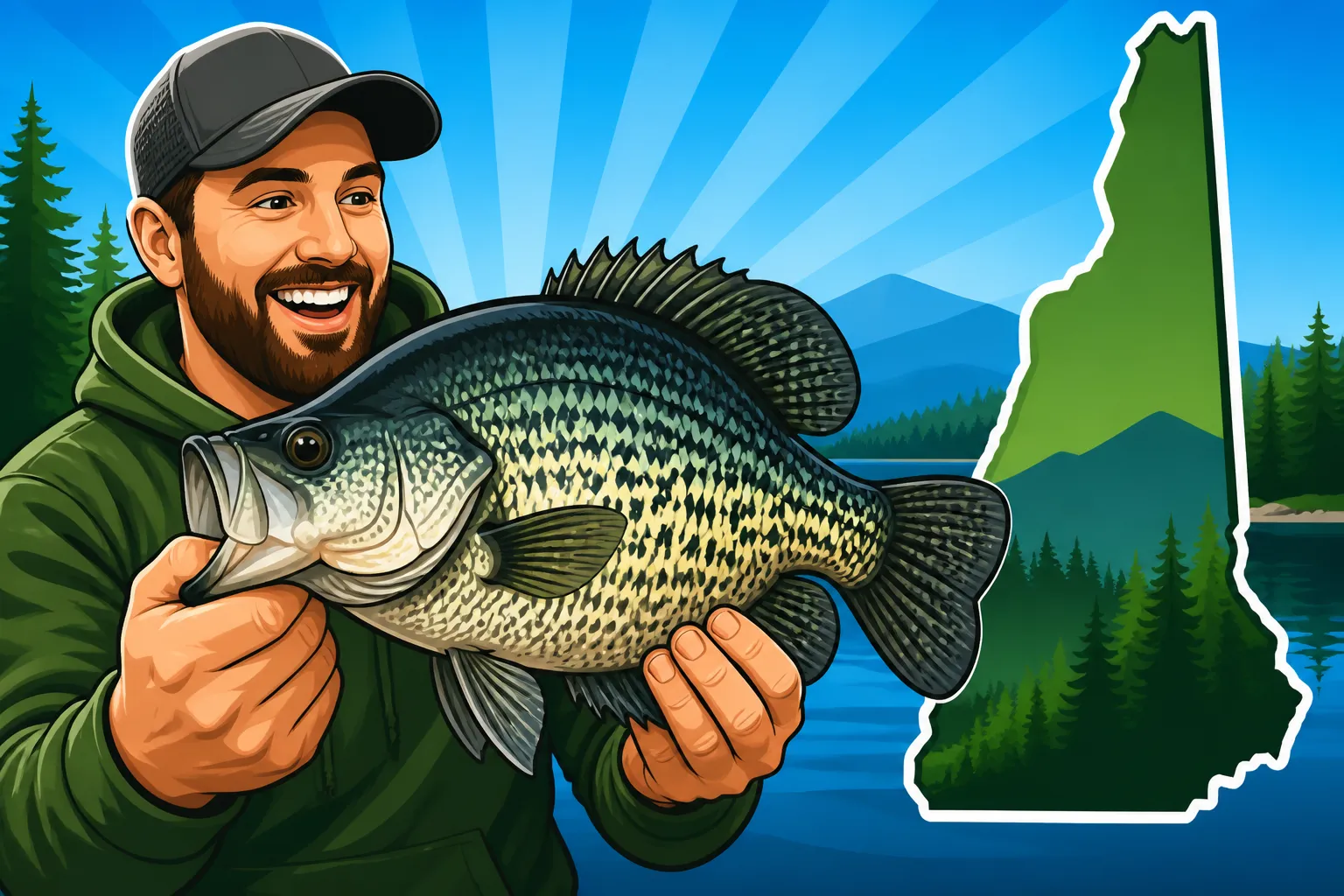
The official New Hampshire state record for black crappie stands at 3 pounds, 12 ounces. This remarkable fish was caught way back in 1993, a testament to its longevity as the benchmark for crappie anglers in the Granite State. Imagine the excitement of the angler who landed that slab nearly three decades ago! It’s a weight that represents an exceptionally healthy, mature crappie, likely one that had found a perfect environment with abundant forage and ideal conditions for growth. For almost thirty years, it has stood unchallenged, a true legend in its own right. It really makes you wonder about the story behind that catch, the lure used, and the look on the angler's face when they realized they had something truly special on the end of their line. It's not just a number; it's a piece of New Hampshire's angling heritage.
Why State Records Matter
Beyond the obvious bragging rights for the angler, state records serve several crucial purposes for the fishing community and the state's natural resources. They act as aspirational goals, pushing anglers to explore new waters, refine their techniques, and constantly learn more about the fish they pursue. A record-breaking fish, like our 3-pound, 12-ounce black crappie, confirms the health and potential of certain fisheries within New Hampshire. It tells us that conditions are right for these fish to grow to impressive sizes, which can be exciting news for both recreational and conservation efforts.
For those dreaming of their own place in history, knowing the existing record gives you a tangible target. It’s a conversation starter at the bait shop and a quiet challenge whispered among fishing buddies. State records are also part of a larger historical narrative of angling in New Hampshire, providing a fascinating timeline of exceptional catches across various species. You can usually find a comprehensive listing of all the current benchmarks in the New Hampshire State Fish Records by Species guide, which is always a fun read to see what other giants have been pulled from our waters.
Understanding What Makes a Trophy Crappie
When we talk about a "trophy" crappie, we're not just looking for a fish that fills the pan, though those are certainly welcome! We're talking about those exceptionally large, robust specimens that stand out from the crowd. The state record is, of course, the ultimate trophy, but even a crappie approaching that size is a catch of a lifetime for most anglers.
Beyond Just Length and Weight
While the record is defined by weight, a trophy crappie encompasses more than just the numbers on a scale or a measuring board. It's about the overall health and condition of the fish. A true "slab" crappie often has incredible girth, a deep body, and vibrant coloration that speaks to a life spent feeding well and thriving in its environment. Think of a fish that looks almost perfectly round from above, not just long and skinny. These characteristics are indicators of a fish that has had access to plenty of food, a favorable habitat, and perhaps even superior genetics.
Factors like age play a huge role; older crappie have simply had more time to grow. Their diet is also critical. Crappie are opportunistic feeders, starting with zooplankton and insect larvae when young, then graduating to larger insects, crustaceans, and crucially, small baitfish like minnows as they mature. The availability of these larger food sources directly contributes to their ability to pack on pounds and reach those coveted trophy sizes. Understanding the life cycle and habits of Black Crappie in New Hampshire Waters can give you a significant edge in your pursuit.
The Crappie Growth Factor
Crappie, especially black crappie, have an amazing growth potential when conditions are right. They can grow surprisingly fast in fertile waters with an abundant food supply and moderate fishing pressure. A crappie might grow to a respectable 8-10 inches in a few years, but to reach the 12-inch "slab" size or even larger, they need sustained access to high-protein forage, particularly schools of baitfish.
Lakes and ponds with stable water temperatures, good oxygen levels, and plenty of cover (like submerged trees, brush piles, or healthy weed beds) tend to produce bigger crappie. These environments offer both protection from predators and prime ambush points for feeding. When crappie populations are well-managed and not overcrowded, individual fish can grow larger because there's less competition for food. It’s a delicate balance, but when it’s struck, you get those impressive fish that make headlines and break records. If you're generally interested in targeting these and other similar species, our guide on Panfish Fishing in New Hampshire offers a lot of great context.
Where to Find Record-Sized Crappie in New Hampshire
While the record crappie could theoretically come from any water body where they reside, certain types of locations and conditions are far more likely to produce those exceptional catches. It's all about understanding crappie behavior and their preferred haunts.
Prime Crappie Habitats
Trophy crappie aren't usually found cruising open water in plain sight. They are structure-oriented fish, meaning they relate strongly to underwater features that offer cover, shade, and ambush points for feeding. Look for these key habitats in New Hampshire's lakes and larger ponds:
- Submerged Timber and Brush Piles: Sunken trees, stumps, and purposely submerged brush piles are absolute magnets for crappie. These areas provide vertical cover from predators and offer prime spots for crappie to suspend and wait for baitfish. Many anglers even create their own brush piles, where permitted, to attract crappie.
- Deep Weed Lines and Lily Pads: The edges of dense vegetation, especially lily pad fields that transition into deeper water, are excellent crappie hangouts. They'll use the cover for shade and security, darting out to snatch insects or minnows that venture too close.
- Docks and Piers: In developed areas, docks and piers provide overhead cover and often have associated submerged structures from boat lifts, ropes, and debris. These can be crappie hotspots, especially during sunny days when the fish seek shade.
- Drop-offs and Ledges: Crappie will often suspend along sharp drop-offs or underwater ledges, especially those that lead to deeper channels or basins. These areas offer access to different water depths and often funnel baitfish.
- Inflows and Outflows: Points where rivers or streams flow into or out of a lake can concentrate baitfish and nutrients, attracting crappie.
When targeting these areas, look for them in lakes and ponds known for healthy crappie populations. While I can't name specific lakes that hold the next record, focusing on well-known panfish waters can increase your odds. For a broader look at potential honey holes, check out our guide on the Best Fishing Lakes in New Hampshire.
Targeting Seasonal Patterns
Crappie movements and depths change significantly throughout the year, driven primarily by water temperature and spawning cycles. Understanding these seasonal patterns is crucial for consistent success, especially when seeking larger fish.
- Spring (Pre-Spawn & Spawn): This is often the prime time for targeting big crappie. As water temperatures rise into the 50s and low 60s, crappie move into shallower water (3-10 feet) to spawn. They'll be found around dense cover like brush, submerged wood, and emergent vegetation. They're aggressive as they feed up for spawning and then protect their nests.
- Summer: Once the spawn is over and water temperatures really heat up, crappie typically retreat to deeper, cooler water. They'll often suspend over deep structure, like humps, channels, or very deep brush piles, sometimes at the thermocline (the layer where water temperature changes rapidly). Early morning and late evening bites can still be found in shallower, shadier spots.
- Fall: As water temperatures cool down, crappie become highly active again, feeding heavily to build up fat reserves for winter. They'll often move back shallower during the day, particularly on sunny banks, but will also relate to deep structure. This is another excellent time for big crappie.
- Winter (Ice Fishing): In New Hampshire, ice fishing is a popular way to target crappie. They'll often suspend in schools over deep basins or near deep structure, sometimes only a few feet under the ice in 20-30 feet of water. Precision jigging with tiny lures is key. Our article on the Best Ice Fishing Lakes in New Hampshire can give you a head start on where to try your luck during the colder months.
By understanding these movements, you can adjust your tactics and increase your chances of intercepting that trophy crappie at its most vulnerable.
Gear and Techniques for Pursuing That Record Crappie
Landing a record-sized black crappie requires not only knowledge of their habits and habitats but also the right tools and refined techniques. You'll need gear that offers sensitivity, strength, and finesse.
The Right Tackle for Big Slabs
When targeting crappie, especially larger ones, you want tackle that allows you to feel the often subtle bite of these fish, yet still has enough backbone to handle a spirited fight.
- Rods: An ultralight or light action spinning rod, typically 5 to 7 feet in length, is ideal. Look for a fast tip that provides excellent sensitivity to detect those light taps, paired with enough backbone to set the hook and control a larger fish. Many excellent options for sensitive crappie rods can be found on Amazon, ranging from budget-friendly choices to more high-end models.
- Reels: Pair your rod with a small spinning reel (e.g., a 500 to 1000 size) that balances well with the rod. Smooth drag is crucial, especially when fishing with light line.
- Line: Light monofilament or fluorocarbon line in the 2-6 pound test range is generally preferred. Fluorocarbon offers lower stretch and better sensitivity, which can be a game-changer when bites are subtle. Braided line can also be used, especially in heavier cover, but consider adding a fluorocarbon leader for stealth. Again, searching for "fishing line for crappie" on Amazon will yield many suitable choices.
- Lures:
- Jigs: Small marabou jigs, tube jigs, and plastic grubs in sizes 1/32 to 1/8 ounce are crappie staples. Colors like white, chartreuse, black, and pink are often effective.
- Minnow Imitators: Tiny crankbaits or suspending jerkbaits that mimic small baitfish can be deadly, especially when crappie are aggressive.
- Live Bait: Nothing beats a live minnow, suspended under a small bobber or slow-trolled. Crappie absolutely love them.
- Terminal Tackle: Use small, sharp hooks (size 4 to 8 Aberdeen or Octopus hooks) for live bait. Tiny swivels and split shots can help get your bait down without inhibiting its action.
For a more general overview of appropriate gear for these species, our Best Tackle for Panfish article has some great suggestions. If you're looking to upgrade your rod specifically for lake fishing, you might also find insights in Best Fishing Rods for New Hampshire Lakes.
Effective Crappie Fishing Strategies
Catching crappie is often about precision and presentation. Here are some techniques to consider:
- Vertical Jigging: This is a highly effective method, especially when crappie are schooled up over structure or suspended in open water. Use your fish finder to locate fish, then drop a small jig or minnow straight down to their depth. Gently twitch your rod tip to give the lure action.
- Drifting/Slow Trolling: From a boat, you can slowly drift or use a trolling motor to cover water, pulling small jigs or live minnows behind you. This is particularly effective when fish are scattered or when you're trying to locate schools. Spider rigging, where multiple rods are deployed from the boat, allows you to present baits at different depths and locations simultaneously.
- Casting to Structure: When fishing from shore or a stationary boat, cast small jigs or crankbaits to visible structure like docks, submerged logs, or weed edges. Allow the lure to sink to the crappie's depth and retrieve it slowly with pauses.
- Float Fishing: A classic and still very effective method. Suspend a live minnow or a small jig under a sensitive bobber near cover. The bobber helps keep your bait at the desired depth and signals even the lightest bite.
- Using Electronics: A good fish finder is almost essential for finding crappie, especially those suspended offshore or hiding in deep structure. Devices with side-imaging or down-imaging capabilities can reveal brush piles and schools of fish that you'd never find otherwise. Many excellent portable and mounted units are available on Amazon for every budget.
Remember, crappie often hold in schools, so once you find one, there are likely more. Pay attention to the depth you're getting bites at, and try to replicate that presentation. Patience and persistence truly pay off when you're after those elusive slabs. For more detailed strategies on catching these fish, our Best Techniques for Panfish in New Hampshire article can provide even more tips.
How to Document and Submit a Potential State Record
Catching a fish that you suspect might be a state record is an incredibly exciting moment, but it's crucial to follow specific procedures immediately to ensure your catch can be officially recognized. Missing a step could mean missing out on history!
The Crucial First Steps
Imagine you've just hauled in a monster crappie that looks bigger than anything you've ever seen. What do you do next?
- Verify the Species: First, make absolutely sure it's a black crappie. Sometimes, especially with panfish, species can be confused. Black crappie typically have 7-8 dorsal spines and a more mottled, dappled pattern compared to the vertical bars of a white crappie. If you're unsure, keep the fish and get expert verification.
- Get it Weighed Quickly: This is perhaps the most critical step. The fish must be weighed on a certified scale, usually at a post office, a general store that handles weighing, a grocery store's deli counter, or sometimes at a New Hampshire Fish and Game Department office. The scale must be able to be certified as accurate. Do not use your personal digital scale unless it's just for an initial idea of the weight; it needs to be certified.
- Take Clear Photos: Document your catch thoroughly with clear, well-lit photographs. Get multiple angles: holding the fish, showing its full length, and especially a close-up of the fish on the scale showing the weight. Include a recognizable object (like a ruler or a standard-sized tackle box) for scale, if possible, but never put the fish on your own measuring tape for the official record.
- Keep the Fish Alive (If Possible): While not always feasible for a record-sized fish, if you can keep the fish alive in a livewell or cooler until it's weighed and documented, it shows good sportsmanship and can sometimes facilitate verification by an official. However, the priority is to get it weighed accurately.
Navigating the Submission Process
Once you have the fish weighed and photographed, the formal process begins.
- Contact the New Hampshire Fish and Game Department: This is your next immediate step. They are the official arbiters of state records. Contact their main office or the regional office closest to where you caught the fish. They will guide you through their specific submission requirements.
- Complete Official Forms: You will be required to fill out a detailed application form provided by the Fish and Game Department. This form will ask for information such as:
- Your name and contact information
- Date and time of catch
- Location of catch (specific water body)
- Type of bait/lure used
- Weight and length of the fish
- Name and signature of official witnesses
- Witness Requirements: Typically, at least one witness (who is not directly involved in the catch) is required to verify the catch and the weighing process. This person will also need to sign the official form.
- Adherence to Regulations: Ensure your catch was made in full compliance with all New Hampshire fishing regulations, including licensing, bag limits, and fishing methods. Fishing without a proper license or using illegal methods would disqualify a record. It's always smart to review the New Hampshire Fishing Regulations Explained and specifically the New Hampshire Bag and Possession Limits by Species before every outing, especially if you're targeting trophy fish.
- Integrity is Key: The entire process hinges on honesty and integrity. Any attempt to falsify information will result in disqualification and potential penalties.
Submitting a state record is an exciting journey, and the New Hampshire Fish and Game Department is there to help ensure the process is fair and accurate. Good luck on your quest for that legendary black crappie!
Disclaimer
This article is for general informational purposes only and does not constitute professional advice. Laws, prices and regulations vary by location and change over time. Consult a qualified professional for guidance on your specific situation.