New Hampshire state record striped bass weight
There’s a unique thrill that comes with chasing trophy fish, and in New Hampshire, few species ignite that passion quite like the striped bass. Many anglers dream of landing a true behemoth, a fish that pushes the scales to their limit and carves its name into the record books. This guide will dive deep into the remarkable achievement of New Hampshire's state record striped bass, exploring not just its impressive weight but also the fascinating world of these powerful coastal predators and how you might pursue your own memorable catch.
The Allure of New Hampshire's Striped Bass Fishery
For those who love the tug of a big fish, the striped bass offers an unmatched experience in New Hampshire's coastal waters. These are powerful, migratory fish that challenge an angler's skill, patience, and tackle. There's a certain magic in the chase, knowing that with every cast, you might hook into a fish of a lifetime.
The Thrill of a Trophy Catch
Imagine the scene: you're casting along the turbulent waters where the ocean meets an estuary, or slowly drifting a live bait, when suddenly, your rod bends over with an undeniable, heavy throb. The drag screams, line peels off, and you're in a battle with a fish that feels like a freight train. That's the essence of trophy striped bass fishing. It's not just about the size; it's about the pure, raw power these fish exhibit, their tenacious fight, and the sheer adrenaline rush of bringing a truly massive striper to hand. Many anglers spend years, even decades, honing their skills and exploring different spots, all in the hope of besting their personal best, or perhaps even, dreaming of the state record.
Where Stripers Roam in the Granite State
While New Hampshire's coastline is relatively short, it packs a punch when it comes to striped bass habitat. The true gem for striper anglers is the vast and productive Great Bay Striped Bass Fishing Rules estuary system, which includes the Piscataqua River and its tributaries. This intricate network of tidal rivers, salt marshes, and open bay areas provides prime feeding grounds for striped bass as they migrate up and down the coast. You'll find stripers not only in Great Bay but also in the coastal waters stretching from Rye to Hampton, congregating around jetties, rocky shorelines, and sandy beaches. During their seasonal migrations, these fish follow baitfish into these fertile areas, offering incredible opportunities for both shore and boat anglers. If you're looking for specific hotspots, our guide on Great Bay best striper fishing spots delves into more detail on where to concentrate your efforts.
Unveiling the New Hampshire State Record Striped Bass
Every state has its legends, and New Hampshire's fishing community certainly holds the state record striped bass in high regard. It represents the pinnacle of achievement for those targeting these magnificent fish.
The Record-Breaking Catch
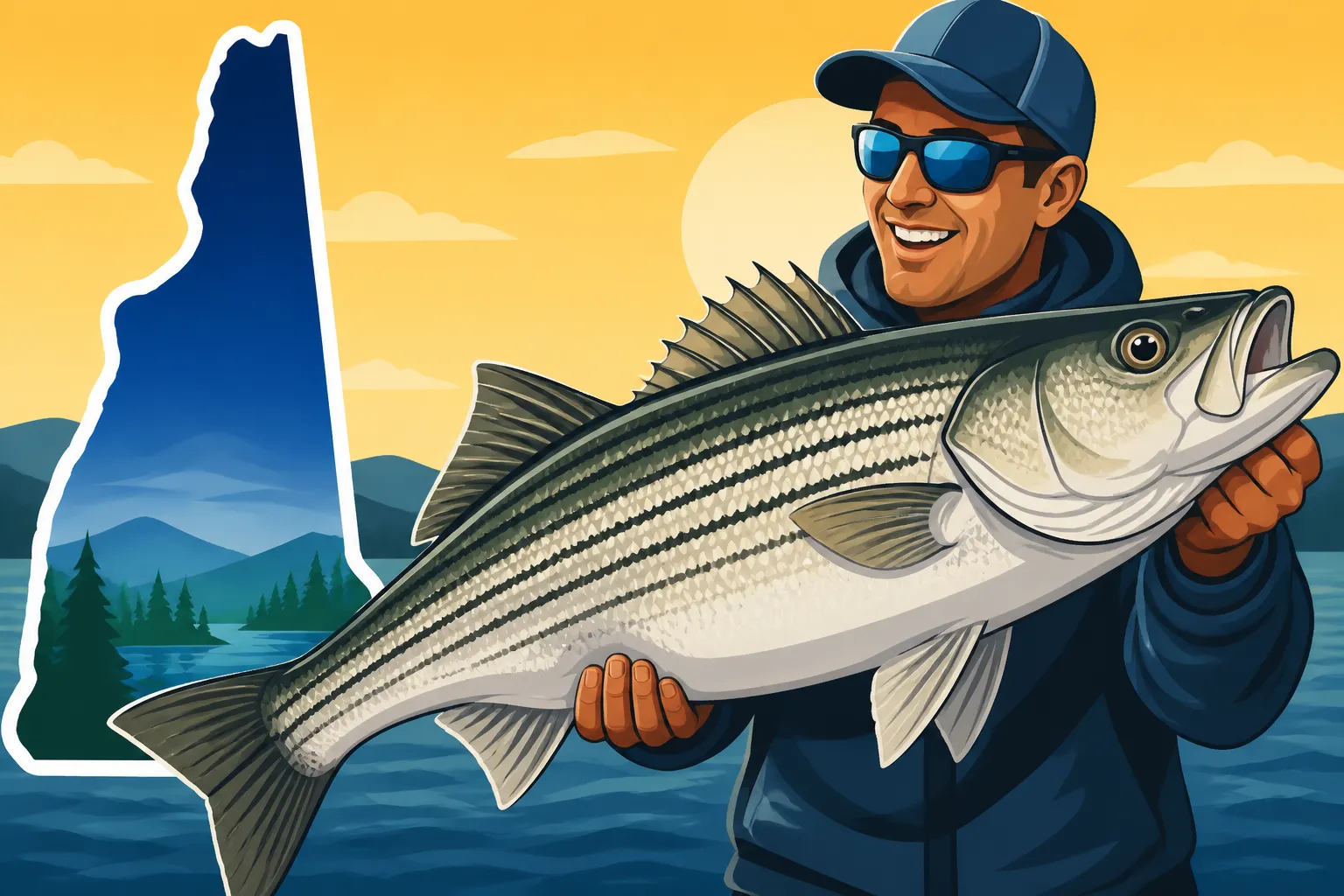
The current New Hampshire state record for striped bass stands at an incredible 72 pounds. This monumental fish was caught way back in 1969 by Charles Reed. He landed this beast in Rye, New Hampshire, a testament to the potential for truly massive stripers in our coastal waters. Imagine the excitement and sheer struggle of bringing a fish of that magnitude to shore, especially with the gear available over half a century ago! It's a record that has stood the test of time, an impressive benchmark that continues to inspire anglers today. It speaks volumes about the incredible size these fish can attain when conditions are just right and they manage to evade anglers for many years.
What Makes a Record Striper So Special
A striped bass weighing 72 pounds isn't just a big fish; it's a living legend. Several factors contribute to a striper reaching such immense size. Firstly, it's about age. These record-breaking fish are often very old, having survived countless seasons, migrations, and encounters with predators and anglers. They've learned to be incredibly wary and efficient hunters. Secondly, it's about genetics and environment. Some fish naturally grow larger and faster, and if they inhabit waters with an abundance of food – think large schools of herring, mackerel, or eels – they have the fuel to pack on pounds. New Hampshire's coastal estuaries and nearshore waters, particularly the Great Bay system, are rich in baitfish, providing the perfect conditions for stripers to thrive and grow. The combination of sustained food sources, a long lifespan, and a bit of luck in avoiding capture all contribute to creating these truly special, record-contending fish.
Understanding Striped Bass in New Hampshire Waters
To truly appreciate the state record, and to even dream of catching a fish that approaches it, understanding the fundamental biology and habits of striped bass in New Hampshire is key. These aren't just any fish; they're complex creatures with predictable patterns that anglers can learn to exploit.
Striped Bass Biology and Growth
Striped bass are anadromous, meaning they spend most of their adult lives in saltwater but return to freshwater to spawn, primarily in major river systems further south. However, New Hampshire's coastal waters serve as critical feeding grounds for these migratory fish. As they move into areas like the Great Bay, they're looking to fuel up. Their diet is varied, consisting of a wide array of baitfish such as mackerel, herring, sand eels, and even smaller crustaceans and squid. What striped bass eat when they enter Great Bay can greatly influence their growth rates. The larger the available prey, the faster and bigger they tend to grow. They are long-lived fish, with some individuals reaching well over 30 years old. This longevity is what allows them to achieve truly impressive sizes, building mass over many seasons of feasting on abundant forage. The bigger the fish, the more food it needs, creating a cycle of growth that can lead to record-breaking specimens.
Prime Season for Trophy Stripers
While you can find striped bass in New Hampshire waters for several months of the year, there are definitely "prime times" if you're targeting those truly massive fish. The migration into New Hampshire typically begins in late spring, around May, and continues through the summer and into early fall. Early in the season, after the long journey, the fish are often aggressive and eager to feed, making them excellent targets. As the summer progresses, the larger fish tend to settle into deeper, cooler waters during the day, becoming more active at dawn, dusk, or under the cover of darkness.
However, many seasoned anglers will tell you that the late summer and fall, particularly from late August through October, offer some of the best chances for a true trophy. During this period, the stripers are engaged in a major feeding spree, bulking up for their southward migration. They're often less finicky and more concentrated as they follow vast schools of baitfish, making them more accessible. Monitoring Great Bay striped bass season dates and understanding local baitfish movements are crucial for timing your trophy hunt. The cooler water temperatures of fall also tend to make the fish more active and provide a more comfortable environment for them to hunt.
Pursuing Your Own Trophy Striped Bass in New Hampshire
The dream of catching a trophy striped bass is what keeps many anglers coming back to New Hampshire's coast year after year. While a 72-pounder might be a once-in-a-lifetime (or more likely, never-in-a-lifetime) catch for most, landing a personal best striper is an entirely achievable goal with the right approach and gear.
Essential Gear for Big Stripers
Chasing a state-record contender requires serious tackle. You can't show up with ultralight gear and expect to win a battle with a 50-pound plus striped bass.
- Rods: Look for heavy-duty spinning or conventional rods in the 7 to 10-foot range. A medium-heavy to heavy power rod with a fast action is ideal, providing the backbone to cast heavy lures or baits and the sensitivity to feel subtle bites. Consider reputable brands known for their durability.
- Reels: Matching your rod with a robust reel is critical. For spinning setups, a 6000 to 10000 series reel with a strong drag system is a must. Conventional reels in a similar size class, designed for saltwater use, are also excellent choices, especially if you plan on chunking or live-lining large baits. Many anglers find great deals and a wide selection of these specialized rods and reels on platforms like Amazon, allowing them to compare features and read user reviews before investing.
- Line: Braided line is the standard for striped bass, offering superior strength-to-diameter ratio and sensitivity. Opt for 40 to 65 lb test braid, depending on the fishing conditions and potential size of the fish. Always use a strong fluorocarbon leader, typically 30 to 50 lb test, as stripers can be line-shy in clear water, and the abrasion resistance of fluorocarbon is invaluable around rocks and structure.
- Terminal Tackle: A variety of hooks, swivels, and sinkers will be needed. Circle hooks are often preferred when live baiting to ensure a jaw hook-set, which is better for the fish's survival if you plan to release it. Heavier sinkers might be necessary to hold bottom in strong currents. Finding the right hooks and swivels is crucial, and online retailers like Amazon often have bulk options, which can be convenient for stocking up your tackle box.
- Lures and Baits: This is where personal preference and local knowledge come into play. Large soft plastics, swimbaits, poppers, pencil poppers, and subsurface plugs are all effective. Live bait, such as mackerel, menhaden, or eels, are often the most effective for targeting truly large stripers. Chunk bait (cut pieces of fish) can also be incredibly productive. A well-stocked tackle box is essential, and you can explore a massive range of options, from classic patterns to innovative new designs, on sites like Amazon.
Effective Techniques for Record Contenders
Landing a trophy striper is a blend of knowing where they are, what they're eating, and how to present your offering.
- Live Baiting: This is arguably one of the most consistent methods for big stripers. Whether you're drifting a live mackerel, menhaden, or eel in a deep channel, or slow-trolling near structure, the natural movement and scent of live bait are irresistible to large, predatory striped bass. The key is to use enough weight to get your bait into the strike zone without hindering its natural action.
- Chunking: Anchoring upcurrent from a known striper hangout (like a deep hole, channel edge, or rocky point) and deploying a steady stream of cut bait (chum) can draw in big fish. Your baited hook should drift naturally with the chum slick, mimicking a free meal. This method works especially well in strong tidal flows.
- Casting Plugs and Soft Plastics: During prime feeding times, especially at dawn, dusk, or in low light, large plugs like poppers can entice explosive topwater strikes. Subsurface plugs and heavy swimbaits are excellent for imitating larger baitfish. Casting these along rocky shorelines, jetty edges, or into current rips can be incredibly effective. Consider trying different retrieval speeds and actions to see what the fish prefer on any given day. Remember, patience is a virtue, and sometimes the biggest fish require the most subtle presentation. Learning How to catch striped bass on the incoming tide is particularly important, as these fish often move with the changing water levels.
- Kayaking and Boat Fishing: Having a boat or kayak allows you to access prime areas that are unreachable from shore. Whether you're trolling large spoons or umbrella rigs in open water, or quietly paddling into tight estuaries to target fish hiding in structure, mobility is a huge advantage. Just make sure you have appropriate safety gear, like a reliable life jacket, easily found on Amazon.
| Feature | New Hampshire State Record Striped Bass | General Trophy Striper Info (NH) |
|---|---|---|
| Weight | 72 pounds | 40+ pounds |
| Caught By | Charles Reed | Dedicated, experienced anglers |
| Year Caught | 1969 | Annually, though less frequently above 50lbs |
| Location | Rye, New Hampshire | Great Bay, coastal rivers, nearshore ocean |
| Age (Estimated) | 20-30+ years | 15-30+ years |
| Primary Forage | Large baitfish (mackerel, herring, eels) | Mackerel, herring, sand eels, menhaden |
| Prime Season | Late Summer / Fall | Late Spring to Fall |
| Recommended Gear | Heavy-duty Rods & Reels, Strong Braid | Medium-Heavy to Heavy Tackle |
The pursuit of a record-breaking striped bass in New Hampshire is a thrilling challenge, steeped in the legacy of past catches and the potential for future glory. While Charles Reed's 72-pound leviathan holds the top spot, every season brings the opportunity for another angler to write their own chapter in the Granite State's rich fishing history. With the right gear, a deep understanding of these incredible fish, and a healthy dose of patience, that next colossal striper could be yours.
Disclaimer
This article is for general informational purposes only and does not constitute professional advice. Laws, prices and regulations vary by location and change over time. Consult a qualified professional for guidance on your specific situation.