Best Wading Staff for Fast Current
There's nothing quite like the rush of casting a line into one of New Hampshire's stunning rivers, the current pulling at your waders, the promise of a big fish in the depths. But let's be honest, that thrill can quickly turn to a heart-stopping moment when a slippery rock or an unseen drop-off threatens to send you tumbling. Navigating those fast currents safely is paramount, not just for your comfort but for your well-being, and a reliable wading staff is often the unsung hero that makes all the difference. This guide will walk you through everything you need to know about choosing and using the best wading staff to stay upright and confident in New Hampshire's challenging river environments.
Why a Wading Staff is Non-Negotiable in New Hampshire's Fast Currents
Many anglers, especially those new to river fishing, might see a wading staff as an extra piece of gear, an inconvenience. But anyone who has spent time in New Hampshire's moving waters, from the swift Pemigewasset to the rock-strewn Ammonoosuc, knows better. A wading staff isn't just a luxury; it's a critical safety tool, offering stability and confidence that no amount of fancy wading boots alone can provide.
The Hidden Dangers of Rushing Water
When you step into a river, the seemingly calm surface can hide a multitude of dangers. The water itself, especially during spring runoff or after heavy rains, exerts incredible force. This isn't just a gentle push; it's a constant, powerful pressure against your legs that can easily throw you off balance. Even in moderate currents, a sudden increase in flow can catch you unaware, leading to a precarious situation.
Beyond the sheer force of the water, the riverbed itself is a minefield of potential hazards. You might encounter irregularly shaped rocks, slick with algae, that offer no purchase. There could be sudden, unexpected drop-offs where the riverbed plunges several feet, taking you from ankle-deep to waist-deep in a single step. Picture yourself focusing on your cast, taking a confident step forward, only for your foot to find nothing but empty space. That feeling of momentary freefall, followed by the terrifying realization of losing your footing in a strong current, is a memory no angler wants to make. Submerged logs, shifting gravel, and muddy patches also present significant challenges, each capable of turning a pleasant fishing trip into an emergency. A wading staff helps mitigate these risks by allowing you to "feel out" the terrain ahead, giving you crucial seconds to react and adjust your step before committing your weight.
Beyond Just Balance: The Multiple Roles of a Staff
While its primary role is undeniably balance and stability, a good wading staff is a multi-functional tool that serves many purposes beyond simply keeping you upright. Think of it as your extra limb, extending your reach and senses into the water.
Firstly, it's an invaluable probe. Before taking a step, you can use the staff to test the depth and the firmness of the bottom. Is that rock stable, or will it roll underfoot? Is that dark patch a deep hole or just a shadow? A quick prod with the staff provides vital information, allowing you to choose your next foot placement with confidence. This is especially useful when crossing unfamiliar stretches of river or exploring new spots. Secondly, it acts as a crucial third point of contact, creating a stable tripod with your two feet. This distribution of weight significantly enhances your stability, particularly when the current is pushing hard or when you're trying to pivot or change direction. Without it, you're relying solely on the grip of your boots and the strength of your legs against the current, which can be exhausting and risky. In an emergency, a wading staff can be a life-saver. If you do slip, you can jam the staff downstream to act as an anchor, helping you to regain your footing or at least slow your drift. It can also be used to push away from obstacles or even deter curious wildlife if you find yourself in close quarters with a critter. It's truly an indispensable tool for any angler venturing into moving water.
Key Features to Look for in a Wading Staff
Choosing the right wading staff isn't a one-size-fits-all decision. New Hampshire's diverse waters, from smooth granite riverbeds to mucky bottom ponds, demand specific characteristics. Focusing on material, ergonomics, and tip design will help you find a staff that's up to the task and enhances your safety.
Material and Durability: Standing Up to Granite State Rivers
The material of your wading staff directly impacts its weight, strength, and how it holds up to the rigorous conditions of New Hampshire fishing. You'll primarily encounter options made from aluminum, carbon fiber, or occasionally wood.
Aluminum staffs are generally the most common and often the most budget-friendly. They offer a great balance of strength and affordability. A good quality aluminum staff will be surprisingly rigid, providing excellent support against strong currents. However, they can be a bit heavier than carbon fiber options, and in really cold weather, the metal can become quite chilly to the touch, especially if you're not wearing thick gloves. Corrosion resistance is generally good, but prolonged exposure to saltwater, especially if not rinsed, can eventually take its toll. For most freshwater applications in New Hampshire, a robust aluminum staff from a reputable brand will serve you well.
Carbon fiber staffs are the lightweight champions. If you're hiking long distances to reach remote sections of the Swift River or other backcountry streams, every ounce counts, and a carbon fiber staff will be noticeably lighter on your pack. They are incredibly stiff for their weight, offering superb support without feeling cumbersome. The main drawback is typically the price point, as they tend to be more expensive than their aluminum counterparts. While strong, they can be more susceptible to impact damage (like a sharp blow against a rock) than aluminum. That said, the feeling of a lightweight staff that deploys quickly and offers unwavering support is a huge advantage for many anglers.
Wooden staffs are less common for modern, collapsible designs, but some anglers still prefer a traditional, fixed-length wooden staff. These offer a classic feel and can be surprisingly robust, though they are generally heavier and less convenient to transport than collapsible options. Their natural feel can be appealing, but they lack the engineered features like interchangeable tips or sophisticated deployment mechanisms found in metal or carbon fiber staffs. For a rustic approach or very specific, consistent wading conditions, a carefully selected wooden staff can work, but it's not the primary recommendation for navigating varied New Hampshire currents with maximum modern safety features.
Regardless of the material, always consider the quality of the components, especially hinges and locking mechanisms, which are points of potential failure. Many great staffs are available through retailers like Bass Pro Shops, where you can often feel the weight and rigidity in person, or browse a wide selection online via Amazon.
Ergonomics and Handling: Comfort in the Cold
A wading staff is only effective if you can use it comfortably and efficiently, especially when your hands are cold or wet. The grip, strap, and deployment mechanism are all crucial ergonomic considerations.
Grip types vary widely. Cork grips, much like those on some fly rods, offer a natural feel and good insulation, which can be a blessing on chilly mornings. They absorb some shock and are comfortable to hold for extended periods. Foam grips provide similar cushioning and insulation but can be less durable over time, potentially breaking down with heavy use or sun exposure. Rubber grips are often the most durable and offer excellent traction, even when wet. However, they can feel colder in frigid temperatures. Some staffs feature contoured or oversized grips designed to fit gloved hands better, a vital feature for ice fishing or early season trout fishing in New Hampshire.
The wrist strap is not a mere accessory; it's a safety feature. A well-designed strap ensures that if you momentarily lose your grip on the staff, it remains tethered to you, preventing it from being swept away by the current. It should be adjustable, comfortable, and made from durable webbing. Some anglers prefer a simple lanyard that connects the staff to their wading belt or a D-ring on their vest, offering maximum freedom while keeping the staff secure.
Deployment mechanisms are critical for collapsible staffs. Folding staffs typically use an internal shock cord system, similar to tent poles, allowing for rapid assembly and disassembly. You simply pull the sections apart, and the cord guides them into place. Telescoping staffs use friction locks or cam locks to adjust their length. Friction locks twist to secure, while cam locks use a lever. Both systems need to be robust and easy to operate, even with cold fingers or gloves, to ensure the staff is ready when you need it and stays locked at the desired length. The faster and more reliably you can deploy and stow your staff, the more likely you are to use it consistently, which ultimately means staying safer on the water.
Tip Design and Traction: Gripping New Hampshire's Riverbeds
The very end of your wading staff—the tip—is where all the magic happens. It's the point of contact with the riverbed, and its design is paramount for reliable traction across New Hampshire's varied aquatic terrains. A poor tip can render an otherwise excellent staff useless, sliding on slippery surfaces when you need it most.
Carbide tips are often considered the gold standard for aggressive traction. These extremely hard, sharp points are designed to bite into slippery rocks, penetrate ice, and dig into gravel. They provide a secure grip on almost any hard surface, significantly reducing the risk of slippage. If you frequently wade rivers with smooth, granite boulders or bedrock, like many of the smaller freestone streams in the White Mountains, a carbide tip is practically essential. The downside is that they can be noisy on rocky bottoms and may chip softer surfaces like wood if used carelessly.
Rubber tips offer a quieter, less abrasive option. They excel on gravel, sand, and smoother, less challenging bottoms, providing good grip without scratching surfaces. However, on slime-covered rocks or slick bedrock, rubber tips can be prone to slipping, offering far less security than carbide. They are often preferred for urban rivers or areas where preserving the riverbed is a concern, or if you prefer a quieter approach while stalking wary fish.
Many high-quality wading staffs feature interchangeable tips. This is an incredibly versatile feature for anglers who fish a variety of New Hampshire waters. You can swap a carbide tip for maximum grip on a rocky river and then switch to a rubber tip for quieter wading over sand or fine gravel. Some even offer basket attachments, similar to trekking poles, which prevent the staff from sinking too deeply into mud or soft sediment. When evaluating a staff, check for robust tip attachment methods and readily available replacement or alternative tips. A secure tip that won't fall off in the current is non-negotiable, so examine how it’s fastened to the staff, ensuring it’s more than just a pressure fit. The goal is confident, unwavering grip, no matter what lies beneath the surface.
Types of Wading Staffs and Their Ideal Use Cases
Just like there are different types of rods and reels for various fishing situations, wading staffs come in a few main configurations, each designed with specific advantages and disadvantages. Understanding these differences will help you choose the best companion for your New Hampshire adventures.
Folding Staffs: The Packable Companion
Folding staffs are arguably the most popular choice among modern anglers, and for good reason. These staffs typically consist of three to five short sections connected by an internal elastic shock cord. When collapsed, they fold down into a compact size, often no longer than 15-20 inches, making them incredibly easy to stow away in a fishing vest pocket, a backpack, or clipped to a wading belt. This portability is a huge selling point for anglers who hike to their fishing spots or prefer to keep their hands free until they actually need wading assistance.
Deployment is usually very quick and intuitive. You simply pull the sections apart, and the shock cord helps them snap into place, forming a rigid staff. Some high-end models can be deployed with one hand in mere seconds. This rapid deployment means you're not fumbling with gear when you suddenly encounter a challenging section of current. When you're done wading or have reached a calmer spot, they collapse just as easily and can be secured with a small strap or clip. The key advantage here is convenience – they are there when you need them and out of the way when you don't. However, because they have multiple connection points, folding staffs can sometimes have a slight amount of flex or play compared to a solid, fixed-length staff, especially in heavy currents. While modern designs have minimized this, it's something to consider for those who require absolute maximum rigidity. Nonetheless, for most anglers exploring various Best Fishing Rivers in New Hampshire or smaller streams, a quality folding staff offers an excellent balance of portability and reliable performance. You can often find a wide array of reliable folding staffs from brands like Simms or Orvis at reputable outdoor retailers.
Telescoping Staffs: Adjustable and Versatile
Telescoping staffs offer a unique blend of adjustability and relative compactness, making them a versatile option for many anglers. Unlike folding staffs that have pre-determined segments, telescoping staffs feature sections that slide into one another, allowing you to easily adjust the overall length of the staff within a certain range. This adjustability is a significant advantage, as it enables you to customize the staff's length to suit different wading depths or personal preferences. For instance, you might want a longer staff when crossing a deeper channel and a shorter one for negotiating shallower, brushy banks.
These staffs typically use either twist-lock mechanisms or lever-lock (cam-lock) mechanisms to secure the extended sections. Twist-locks require you to twist the sections against each other to tighten them, while lever-locks employ a simple flip-lever to clamp the sections firmly in place. Both systems, when well-made, provide a secure hold, though lever-locks are often preferred for their ease of use, especially with cold or wet hands. When collapsed, telescoping staffs are generally longer than folding staffs but still significantly more compact than fixed-length options. Their adjustable nature makes them excellent for situations where wading conditions change frequently, or for anglers who want a single staff that can adapt to a wider range of scenarios. However, like folding staffs, their multiple sections can introduce minor points of potential failure if the locking mechanisms aren't maintained or if they are subjected to extreme force. Ensuring the locks are clean and free of grit is key to their longevity and reliability. For exploring dynamic waters, a telescoping staff can be an excellent choice for its adaptable nature.
Fixed-Length Staffs: The Traditional Workhorse
Before the advent of collapsible designs, fixed-length staffs were the standard, and they still hold a place for anglers who prioritize absolute rigidity and simplicity. As the name suggests, these staffs do not collapse or telescope; they are a single, solid piece, much like a traditional hiking stick. This one-piece construction is their greatest strength, eliminating any potential failure points found in folding or telescoping mechanisms.
A fixed-length staff offers unparalleled rigidity and strength. When you plant it firmly, you know it's going to hold without any flex or wobble, providing maximum confidence in the strongest currents. This makes them ideal for anglers who consistently fish in very deep, fast-moving rivers where stability is paramount, or those who simply prefer the unyielding feel of a solid piece of gear. Think of fishing the lower sections of the Connecticut River or other powerful New Hampshire waterways where the current can be relentless. The trade-off, of course, is portability. A fixed-length staff, typically around 50-60 inches long, is cumbersome to transport. It can't be easily stowed in a pack or on a vest; you'll either be carrying it in your hand or strapping it to the outside of your pack. This makes them less suitable for long hikes or when you need to keep your hands free for casting. Some anglers overcome this by using them as a dedicated hiking and wading stick, always in hand. While less common today, for those specific applications where maximum strength and reliability are non-negotiable, a high-quality fixed-length staff remains a formidable and dependable tool.
Here's a quick comparison of the different types of wading staffs:
| Staff Type | Portability (Collapsed) | Rigidity & Strength | Deployment Speed | Ideal Use Cases |
|---|---|---|---|---|
| Folding | Excellent (very compact) | Good | Very Fast | Hiking, varied terrain, occasional use, keeping hands free |
| Telescoping | Good (mod. compact) | Very Good | Moderate | Adaptable length, varied depths, moderate to fast currents |
| Fixed-Length | Poor (long & bulky) | Excellent | N/A (always ready) | Consistent deep/fast water, maximum stability, heavy use |
Proper Techniques for Wading with a Staff in New Hampshire
Having the best wading staff is only half the battle; knowing how to use it effectively is the other, equally critical half. Proper technique ensures maximum safety and efficiency, allowing you to focus on the fishing rather than worrying about your footing. Mastering these methods will make a significant difference in your confidence and ability to navigate New Hampshire's challenging waters.
The Tripod Method: Your Foundation in the Current
The "tripod method" is the cornerstone of safe wading with a staff. It’s a simple yet incredibly effective technique that ensures you always have three points of contact with the riverbed, mimicking the stability of a camera tripod. This method significantly reduces your chances of falling, especially in strong or uneven currents.
Here’s how it works:
- Face Upstream: Always begin by facing upstream. This allows you to see the current's pressure and react to it, rather than being pushed from behind. It also helps you spot approaching obstacles.
- Move Deliberately: Avoid rushing. Each step should be slow, controlled, and intentional.
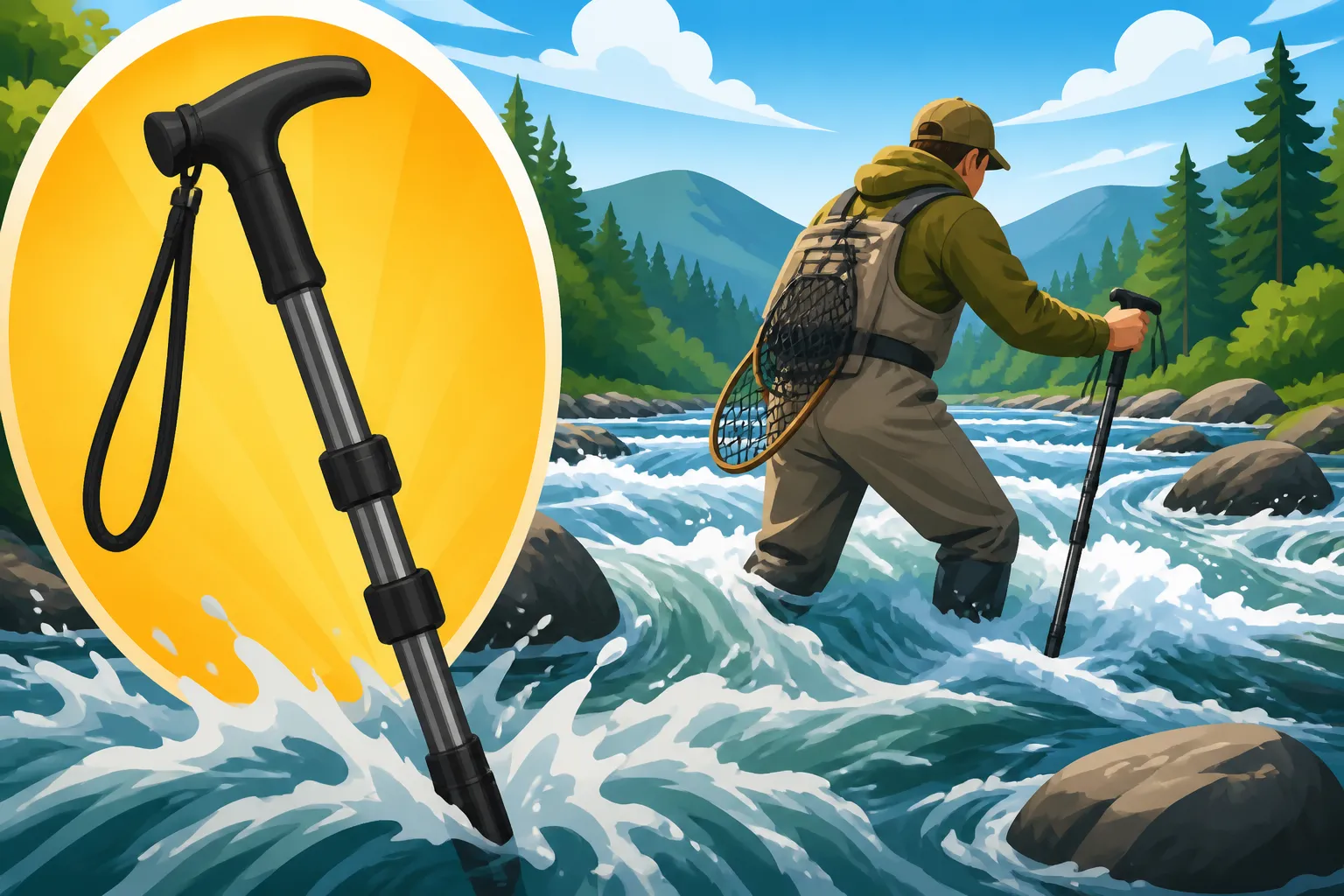
- Place the Staff First: Before moving either foot, plant your wading staff firmly on the riverbed at your side, slightly downstream and ahead of your body, where you intend to take your next step. Use the staff to probe the depth and stability of the bottom. Is it solid rock, soft gravel, or a slick, algae-covered surface? Once you're confident in its placement, commit your weight to the staff.
- Move Your Foot: With the staff providing a stable anchor, move one foot forward, placing it carefully behind the staff. Again, feel for solid footing before transferring your weight.
- Move Your Other Foot: Now, with the staff and your first foot firmly planted, move your second foot forward, placing it behind the first.
- Repeat: Continuously repeat this sequence – staff, foot, foot – maintaining three points of contact at all times. This creates a stable base from which to push against the current and allows you to constantly test the ground ahead. Remember, the staff is an extension of your body, always feeling for what’s next. This method, combined with good Wading Techniques for New Hampshire Trout Streams, forms the ultimate safety net.
Reading the Water and Probing Ahead
Effective wading isn't just about moving; it's about observation and anticipation. Your wading staff becomes an invaluable extension of your senses, allowing you to "read" the water beneath the surface and probe for potential dangers before they become real problems.
Learning to read the water involves looking for clues on the surface that indicate what’s happening below. Smooth, fast-moving water often indicates a deeper channel or a slick, obstruction-free bottom. Ripples and boils can signal submerged rocks or sudden changes in depth. Discoloration might point to softer, muddier bottoms. When you encounter these visual cues, your staff becomes your direct link to the underwater world.
Before taking a step into an unknown area, use your staff to probe ahead. Extend it out and feel for changes in depth. Is there a sudden drop-off? Are there large, unstable boulders? Is the bottom covered in slick, mossy rocks? A good example: imagine approaching a section of river where the current appears to quicken, and the surface water looks a bit darker. Instead of blindly stepping, you use your staff to probe. You might discover a subtle ledge, where the depth increases quickly by a foot or more, or find that the bottom shifts from firm gravel to treacherous, round river rock. This information is priceless. By probing, you gather critical data that allows you to adjust your path, find a safer crossing point, or simply decide if a particular section is too risky to wade. This proactive approach is key to staying safe and confidently covering more water, whether you're fly fishing for trout or targeting smallmouth bass in one of New Hampshire's rivers. It’s all about slowing down, observing, and letting your staff do the critical reconnaissance.
Safe Retrieval and Storage While Fishing
Once you've safely waded to your desired fishing spot, you don't want your wading staff to become an entanglement hazard. The ability to safely retrieve and store your staff while you're actively fishing is crucial for uninterrupted enjoyment and efficiency on the water.
Most modern wading staffs come with some form of lanyard or retractor system. A robust lanyard, often coiled or elastic, connects the staff to your wading belt, vest, or a D-ring on your waders. This ensures that when you let go of the staff to cast or handle a fish, it doesn't float away downstream. Many anglers prefer a coiled lanyard that keeps the staff close to their body when not in use, preventing it from swinging freely and getting tangled in lines or brush. Some advanced systems feature spring-loaded retractors that automatically pull the staff back to a secure position after use.
Another popular option is a simple clip or holster system. Many wading vests and backpacks have dedicated loops or sleeves where a collapsed folding staff can be securely tucked away. A simple carabiner can also be used to clip the staff to a wading belt. The key is to find a storage method that allows for easy, one-handed deployment when needed, but keeps the staff completely out of your way while you're casting, retrieving, or fighting a fish. For instance, if you're fishing a tight pocket of water and need to make a delicate cast, you can collapse your staff and tuck it into a side pocket or clip it to your back, only to redeploy it a moment later when you need to move to the next spot. Practicing these quick deployment and storage actions, even in your backyard, can save valuable time and frustration on the water. Having a streamlined system for your staff is just as important as having a well-organized Best Tackle Box Setup for New Hampshire Anglers.
Integrating Your Wading Staff with Other Safety Gear
A wading staff is an incredibly powerful safety tool, but it's part of a larger ecosystem of gear designed to keep you safe and comfortable on the water. Combining its benefits with appropriate footwear, personal flotation, and general preparedness creates a comprehensive safety strategy for any New Hampshire angler.
Waders and Boots: The Grip Beneath Your Feet
Before even considering a wading staff, the foundation of your wading safety lies in your waders and, more importantly, your wading boots. No staff, no matter how good, can fully compensate for poor footwear on a slick New Hampshire riverbed.
Wading boots provide the primary grip between you and the river. They come with various sole types, each suited to different conditions. Felt soles were once the undisputed champion for slick, algae-covered rocks, offering exceptional grip by conforming to the surface irregularities. However, they have fallen out of favor in some regions due to concerns about transporting invasive species between water bodies. Many Best Wading Boots for Rocky Streams today feature rubber soles, often with aggressive tread patterns. While modern rubber compounds have improved significantly, they still may not offer the same "stickiness" as felt on extremely slick surfaces. To compensate, many rubber-soled boots are designed to accept studs or cleats. These metal or carbide studs screw into the sole, providing additional biting points that dig into slippery rocks and ice, dramatically improving traction. For aggressive wading in fast, rocky rivers, studded rubber soles are an excellent choice, offering a great balance of grip and environmental consciousness.
Your waders themselves, while not directly providing grip, contribute to safety by keeping you dry and warm, preventing hypothermia which can severely impair judgment and mobility. Breathable waders allow you to layer appropriately for changing New Hampshire weather, from spring chill to summer heat. Ensure your waders fit well, allowing for freedom of movement without being baggy enough to catch excess current. Ultimately, a good pair of wading boots provides the initial grip, and a reliable wading staff acts as your crucial secondary point of contact and probe, ensuring that you're prepared for whatever lies beneath the surface.
Life Jackets and Personal Flotation Devices (PFDs)
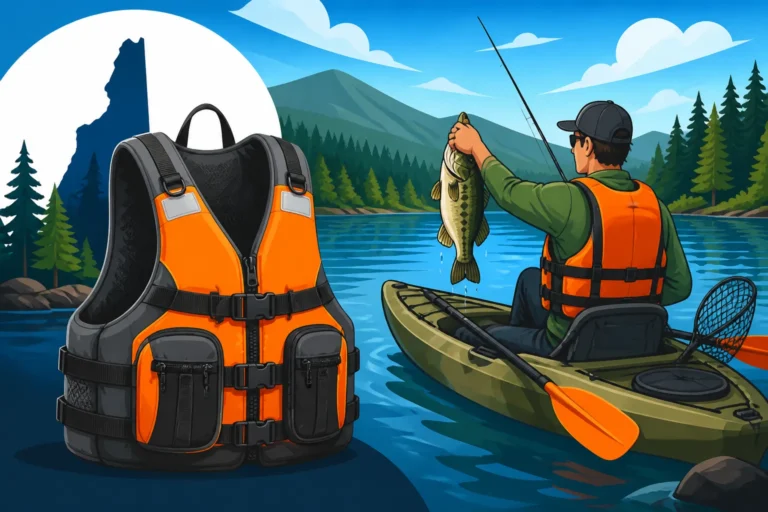
While a wading staff is designed to prevent falls, a personal flotation device (PFD) is your ultimate safeguard if an accidental fall occurs. In certain wading situations, particularly in deep or exceptionally fast water, wearing a PFD isn't just a good idea – it's a critical component of your safety gear.
New Hampshire, like most states, has specific Life Jacket Requirements for New Hampshire Boaters, and while these primarily apply to boats, the spirit of safety extends to wading in dangerous conditions. If you're wading chest-deep in a powerful current, or if there's any risk of being swept into deeper water or rapids, a PFD can literally be a lifesaver. Modern PFDs are far less bulky than older models. Inflatable PFDs, which either automatically inflate upon water immersion or can be manually activated, are particularly popular with anglers because they offer maximum freedom of movement for casting and wading, inflating only when needed.
Consider scenarios like crossing a broad, fast river where a stumble could lead to a long, cold swim, or fishing near powerful rapids or waterfalls. In these situations, the combination of a solid wading staff for stability and a PFD for buoyancy creates the highest level of personal safety. Your staff helps you stay upright, but if the unexpected happens, your PFD ensures you stay afloat and can maintain control, increasing your chances of self-rescue or being rescued. Never underestimate the power of moving water; even shallow currents can pin you against obstacles or make standing incredibly difficult once you're down. A PFD is a wise investment for any angler pushing their wading limits, especially on some of New Hampshire's larger, more unpredictable waterways.
Emergency Preparedness Beyond the Staff
While your wading staff is a primary piece of safety gear, true preparedness means thinking beyond a single tool. A holistic approach to safety on New Hampshire's rivers involves understanding your limits, carrying essential emergency items, and communicating your plans.
Firstly, know your limits. No piece of gear can overcome poor judgment. If the water looks too fast, too deep, or too treacherous, don't wade it. Find an alternative route, or fish from the bank. It's never worth risking your life for a fish. Pay attention to weather forecasts, especially heavy rains that can quickly swell rivers and turn calm stretches into dangerous torrents.
Beyond the staff and PFD, consider carrying a few additional items:
- Whistle: A simple, loud whistle attached to your PFD or vest can be invaluable for signaling for help if you get into trouble or become separated from a partner.
- Basic First Aid Kit: Slips and falls can lead to scrapes, cuts, or sprains. A compact, waterproof first aid kit is essential for addressing minor injuries quickly.
- Knife/Multi-tool: Useful for cutting tangled lines, freeing yourself from snags, or other unexpected needs.
- Communication Device: A fully charged cell phone in a waterproof case, or even a satellite messenger for remote areas, allows you to call for help if needed. But remember, cell service can be spotty in the more remote parts of New Hampshire.
- Dry Clothes/Emergency Blanket: For unexpected dunkings, having a way to warm up is crucial, especially in colder months.
Finally, tell someone your plan. Let a friend or family member know where you're going, your planned route, and when you expect to return. This simple step can be the most important part of your safety plan, ensuring that if you don't check in, someone knows to look for you. Remember, even the most experienced anglers can encounter unforeseen circumstances, and being prepared means having multiple layers of protection and knowing how to respond when things don't go as planned. It’s all part of being a responsible and safe angler in the great outdoors.
Disclaimer
This article is for general informational purposes only and does not constitute professional advice. Laws, prices and regulations vary by location and change over time. Consult a qualified professional for guidance on your specific situation.