Best leadcore line for lake trout trolling
There’s nothing quite as frustrating as watching your fish finder light up with deep-dwelling lake trout on New Hampshire's beautiful lakes, knowing your lures just aren't getting down to them. You try heavier weights, faster trolling, slower trolling, but that elusive thermocline or deep structure still feels a million miles away. This struggle is real for many anglers, myself included, who are passionate about targeting those impressive lakers. If you've been grappling with how to effectively present your baits at the precise depths where these cold-water giants lurk, you're in the right place. This guide is dedicated to demystifying leadcore line, explaining how it works, how to choose the right kind, and how to master its use for successful lake trout trolling across New Hampshire.
Understanding Leadcore Line for Lake Trout
When you're chasing lake trout in New Hampshire, especially on deeper bodies of water like Lake Winnipesaukee, Squam Lake, or Newfound Lake, getting your lure into their strike zone is paramount. These fish are often found at specific depths, sometimes way down in the water column, particularly as the water warms in summer. Traditional monofilament or even braided line with clip-on weights can be finicky and often just don't get your presentation deep enough, or they create too much drag, making your lure behave unnaturally. That's where leadcore line truly shines, offering a distinct advantage that can turn a frustrating day into a memorable one.
How Leadcore Line Works
At its heart, leadcore line is a marvel of simplicity and effectiveness. Imagine a brightly colored braided or Dacron sheath, similar to what you might find on some fly lines, but inside that sheath runs a core of pure lead wire. This lead core is what gives the line its remarkable sinking ability. Unlike traditional fishing lines that are buoyant or neutrally buoyant, leadcore is designed to sink at a consistent rate when trolled, without the need for additional weights clipped directly to your main line.
The genius of leadcore lies in its segmenting. It's typically manufactured with different colors changing every 10 yards. So, you might have 10 yards of red, then 10 yards of blue, then 10 yards of green, and so on. This color-coding isn't just for aesthetics; it's a built-in depth indicator. Each "color" represents a segment that will sink to an approximate depth at a given trolling speed. This allows anglers to precisely "count colors" to determine how much line they need to deploy to reach a specific depth. For example, if you know the lake trout are holding at 30 feet, and your leadcore setup sinks roughly 7 feet per color, you'd let out about 4-5 colors to get into that zone. It’s an intuitive system that, once understood, gives you incredible control over your presentation.
The Benefits of Using Leadcore
So, why go through the hassle of learning a new line system when you could just add more weight to your regular line? The benefits of leadcore, especially for targeting lake trout, are substantial and often outweigh the initial learning curve.
First and foremost, consistent depth control is the biggest advantage. Leadcore provides a much more stable and predictable depth than snap weights or heavy sinkers. Once you've figured out how many colors it takes to reach a specific depth at your preferred trolling speed, you can replicate that depth time and again. This is crucial when lake trout are holding tightly to structure or a thermocline.
Secondly, leadcore offers a more natural lure presentation. With a heavy lead sinker directly on your main line, your lure often has an exaggerated, unnatural movement due to the weight dragging it down. Leadcore, however, distributes that weight along the entire length of the deployed line, allowing your lure to swim more freely and naturally. This subtle difference can be a game-changer when targeting finicky lake trout that are accustomed to natural prey. Imagine a spoon or a stickbait dancing enticingly rather than being pulled down abruptly by a lead ball – it simply looks more like a baitfish struggling, which is often irresistible to a hungry laker.
Lastly, leadcore can offer increased sensitivity compared to heavy weights. While the lead core itself isn't particularly sensitive, the way the weight is distributed means you often feel subtle strikes more directly, especially with a proper rod and reel setup. Plus, it eliminates the need for bulky downrigger balls, which can sometimes spook fish in shallower or clearer water. While downriggers certainly have their place for precise depth control and presenting multiple lines, leadcore offers a simpler, often more stealthy approach, particularly for anglers with smaller boats or those who prefer a more "hands-on" trolling experience. For more on getting set up, check out Best Trolling Gear for New Hampshire Lake Trout.
Choosing the Right Leadcore Line Weight and Color
Selecting the right leadcore line isn't just about grabbing the first spool you see. It involves understanding how different line weights and the color-coding system impact your trolling strategy. Just like choosing the right fly pattern for a New Hampshire trout stream, picking the right leadcore can significantly impact your success rate when targeting those deep lake trout.
Decoding Leadcore Colors and Depths
As we touched on, leadcore line comes in a rainbow of colors, with each color typically representing 10 yards of line. This is the industry standard and a brilliant, simple way to measure how much line you've got out. However, and this is a big "however," the actual depth achieved per color isn't a fixed, universal rule. It's more of a guideline that changes based on several critical factors:
- Trolling Speed: This is perhaps the most significant variable. The faster you troll, the more drag the line creates in the water, and the shallower each color will run. Conversely, slower trolling allows the line to sink more effectively, achieving greater depth per color. If you're using a slow, methodical troll, perhaps targeting suspended lake trout in 40 feet of water on Lake Winnipesaukee, you might find each color segment takes your lure down 7-8 feet. Speed up to cover more water, and that same color might only get you 5 feet deep.
- Line Test Weight/Diameter: Heavier test leadcore lines (e.g., 27lb or 36lb) contain more lead, so they are thicker and inherently sink faster and deeper than lighter test lines (e.g., 18lb). This extra bulk, however, also creates more drag in the water, which can work against you at higher speeds.
- Lure Type and Weight: A heavy spoon or diving crankbait will naturally pull the line down further than a lightweight minnow plug or a small streamer fly. The lure itself contributes to the overall sinking rate of your setup.
- Current: While less of an issue in many New Hampshire lakes, any significant current can impact your line's depth.
Given these variables, it's essential to experiment. Start with a known approximation – many anglers use 5-7 feet of depth per color as a rough starting point for leadcore when trolling at typical lake trout speeds (around 1.5-2.5 mph). Then, use your fish finder or sonar to verify your lure's actual depth. Troll past a known piece of structure or a school of baitfish and watch how your lure mark appears on the screen. Adjust your colors out or in until you're consistently hitting the desired depth. Over time, you'll develop an intuitive feel for how your specific setup performs, whether you're using a specific Rapala deep diver or a Mooselook Thrasher spoon.
Matching Line Weight to Conditions
Leadcore line comes in various test weights, typically ranging from 12lb to 36lb, though 18lb, 27lb, and 36lb are the most common for lake trout. Each weight has its ideal application, and choosing correctly can make a big difference:
- 18lb Leadcore: This lighter option is often preferred for more finesse presentations or when targeting slightly shallower lake trout (say, 15-30 feet). Its thinner diameter means less water resistance, which can be advantageous in very clear water or when fish are particularly skittish. It's a great choice for smaller lakes or when trout are holding in the upper sections of the water column in early spring.
- 27lb Leadcore: This is arguably the most versatile and popular choice for many New Hampshire lake trout anglers. It strikes a good balance between sinking ability and manageability. It can effectively reach depths from 20 to 50 feet with enough colors out and isn't overly cumbersome to reel in. If you're just starting with leadcore, a 27lb test is a fantastic all-around option that will serve you well in most lake trout scenarios, from Lake Winnipesaukee to Sunapee Lake.
- 36lb Leadcore: When lake trout are holding really deep—we're talking 60 feet or more—or when you need to troll faster to cover a lot of ground, 36lb leadcore is your workhorse. Its heavier lead core ensures a faster sink rate and more depth per color. However, it's also thicker and heavier, which means more drag in the water and a bit more effort to retrieve. It's best reserved for those serious deep-water pursuits, especially in the dog days of summer when the lakers plunge to the coolest depths.
Consider the typical depths you fish. If you're primarily targeting lake trout in waters where they rarely go deeper than 30-40 feet, 18lb or 27lb might be perfectly adequate. If you're regularly fishing large, deep lakes in mid-summer, 27lb or 36lb will be more effective. Having a couple of reels spooled with different weights can give you the flexibility to adapt to changing conditions and target depths. For more general advice on fishing these magnificent fish, take a look at Lake Trout Fishing in New Hampshire.
Rigging and Deploying Leadcore for Success
Getting your leadcore setup right is just as important as choosing the line itself. A poorly rigged system can lead to frustrating tangles, lost lures, and ultimately, missed fish. But don't worry, it's not rocket science! With a few key considerations for backing, leaders, and knots, you'll be well on your way to effectively deploying your presentation into the lakers' lair.
Proper Setup: Backing, Leader, and Knots
Think of your leadcore setup as a three-part system, each component playing a vital role:
-
Backing Line: Since leadcore line is relatively thick and you generally don't need a full spool of it (a 100-yard spool, which is 10 colors, is common for many applications), you'll need to fill the rest of your reel spool with backing. This serves two main purposes: it fills the spool to optimize retrieve and casting performance, and it provides extra line capacity in case you hook into a truly massive lake trout that decides to make a long run.
- Material: Monofilament is a popular choice for backing due to its stretch (which can act as a shock absorber), affordability, and ease of knot tying. A 20-30lb test mono is usually sufficient. Some anglers prefer braided line for backing because it takes up less space, allowing for more leadcore, and has no stretch, providing direct feedback. However, braid can be more challenging to tie to leadcore and less forgiving if your drag isn't set perfectly.
- Amount: Aim to spool enough backing so that when you add your leadcore, the spool is nearly full, leaving just enough room for your leader. A good rule of thumb is to put on the leadcore first, then fill the rest with backing, then reverse the process when spooling the reel. This ensures you have the right amount of backing.
-
The Leadcore Itself: This is the star of the show, typically sold in 100-yard spools (10 colors). Make sure you have enough to reach your target depths, plus a few extra colors in case you need to trim some away due to wear or break-offs. If you are regularly fishing very deep (e.g., deep water summer lake trout scenarios), you might consider splicing two spools together for a 200-yard (20 color) setup on a larger reel.
-
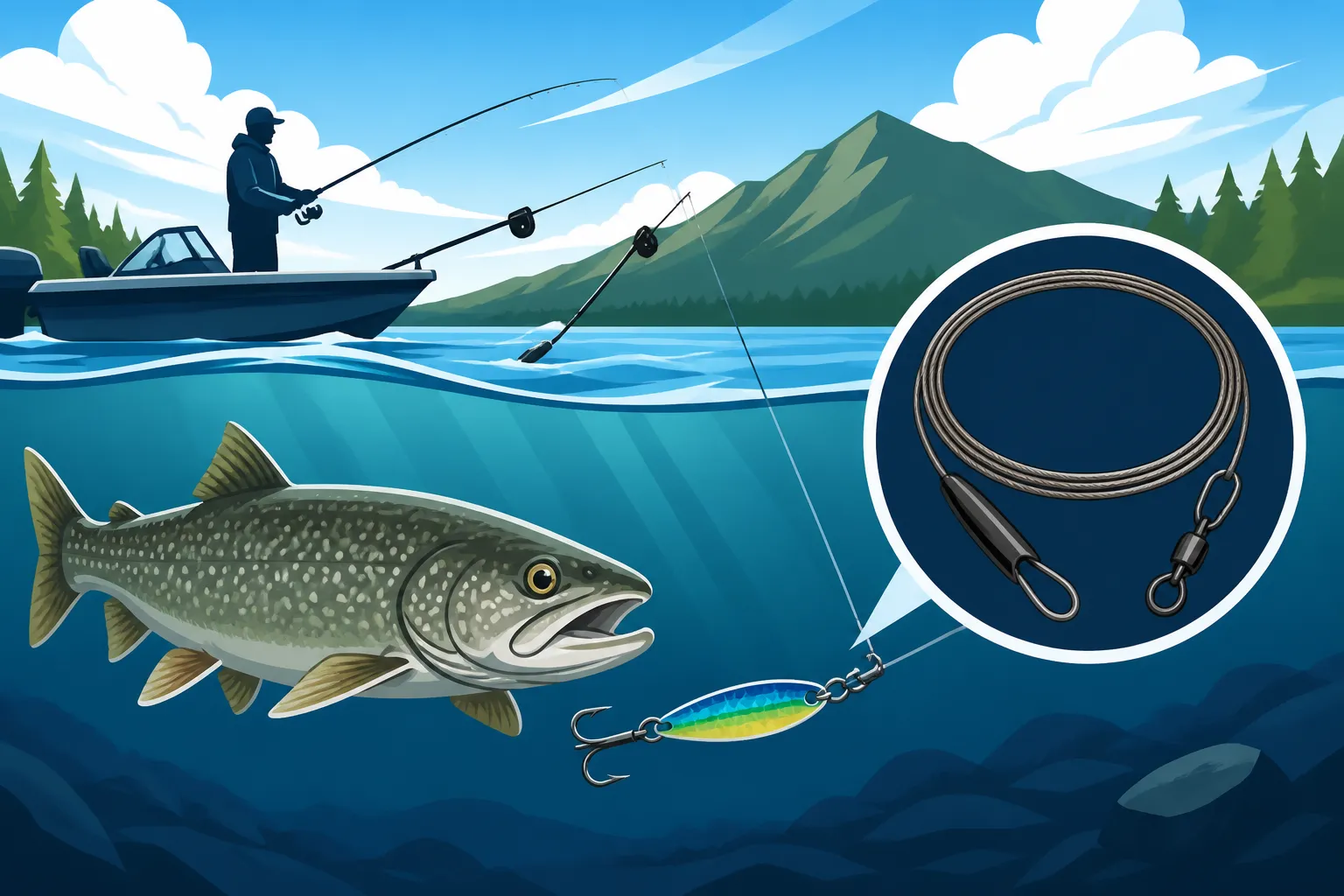
Leader Line: You absolutely must use a leader between your leadcore and your lure. Why? Because leadcore itself is thick, highly visible, and the colors can be off-putting to fish. A leader provides a stealthy connection to your lure, allowing it to swim naturally and reducing visibility. It also offers abrasion resistance, which is critical when fighting a fish around rocks or other structure.
- Material: Fluorocarbon is the top choice for lake trout leaders due to its near-invisibility underwater, excellent abrasion resistance, and moderate stretch. Monofilament can also work and is more economical.
- Test Weight: Typically, a leader of 10-20lb test is appropriate, depending on the size of fish you expect and the clarity of the water. For really clear lakes, you might go lighter; for bigger fish or snaggy bottoms, go heavier.
- Length: A leader between 20-50 feet is common. A longer leader ensures your lure is well away from the thick, colored leadcore line, presenting a natural appearance. It also provides a buffer zone when fighting a fish, as the leader is often more shock-absorbent than the leadcore.
-
Knots: Connecting these three components with strong, reliable knots is paramount.
- Backing to Leadcore: The knot here needs to be strong and as smooth as possible to pass through rod guides easily. The Albright knot is a popular and very effective choice. The Blood Knot can also work, but can be a bit bulkier. Another excellent option, if you're comfortable, is splicing the leadcore sheath and inserting the backing, then glueing.
- Leadcore to Leader: This is perhaps the most critical connection. Again, it needs to be strong and streamlined. The Willis Knot is a favorite among leadcore users because it's incredibly strong and surprisingly compact. The Double Uni Knot can also work, but ensure you create a sufficient number of wraps on both sides for security. It's crucial to remove about an inch or two of the lead core from the end of the leadcore line before tying any knot to your leader, so you're only tying the braid sheath to your leader. This creates a much stronger, more reliable knot. You can find detailed knot-tying instructions at online resources or even video tutorials from fishing experts like those found on the Bass Pro Shops website or Amazon.
Mastering the Troll with Leadcore
Once your leadcore rig is perfectly set up, it's time to hit the water and master the art of trolling. This isn't just about dropping a line and driving around; it's about precision, observation, and adaptability. Trolling Techniques for New Hampshire Lake Trout goes into even more detail, but here are some specifics for leadcore:
- Speed is Key: As mentioned, your trolling speed directly dictates the depth achieved per color. For most lake trout applications with leadcore, a speed between 1.5 to 2.5 mph is a good starting point. Use your boat's GPS or a dedicated trolling motor (many modern ones from brands like Minn Kota or MotorGuide have GPS speed control) to maintain a consistent speed. Inconsistency will lead to your lure constantly changing depth, making it harder to stay in the strike zone.
- Counting Colors: This is your primary depth management tool. If you know lake trout are holding at 30 feet, and your rig gets about 7 feet per color at your chosen speed, you'll let out approximately 4 colors (28 feet). Don't just dump all the line out; let it out steadily, allowing the leadcore to pull it down naturally. Pay attention to how the line comes off the spool.
- Reading Your Electronics: Your fish finder is your best friend when trolling leadcore. Use it to mark fish, bait balls, and most importantly, to verify the actual depth of your lure. Watch your screen closely as you troll over structure or fish concentrations. If your lure mark isn't showing up where the fish are, adjust the number of colors out or your trolling speed. Modern fish finders from brands like Humminbird or Lowrance can make this process incredibly precise.
- Lure Selection: The type of lure you use also affects how leadcore performs. Spoons, like a Michigan Stinger or a simple daredevil, are classic lake trout choices that wobble enticingly on leadcore. Stickbaits, especially those with a moderate diving lip, can also be deadly. For specific recommendations, check out Best Lures for Lake Trout Trolling and Best Spoons for Lake Trout Trolling. Experiment with different lures and colors until you find what the New Hampshire lakers are biting on that day. Don't forget to consider natural bait options too, like those discussed in Best bait for lake trout in deep water.
- Boat Control and Turns: When making turns, the lines on the inside of the turn will sink deeper and slow down, while lines on the outside will rise and speed up. Use this to your advantage! Gradual S-turns can cause your lures to "hunt" different depths, often triggering strikes. Just be mindful of tangles, especially if you're running multiple leadcore lines. This is where a good Best Rod setup for lake trout trolling can help distribute lines and minimize tangles.
Maintaining Your Leadcore Line for Longevity
Leadcore line is an investment, and like any good fishing gear, it deserves proper care. Neglecting your leadcore can lead to premature failure, tangles, and ultimately, lost fish. A little routine maintenance goes a long way in ensuring your leadcore setup is ready for your next New Hampshire lake trout adventure.
Inspection and Storage
After each fishing trip, especially if you've been battling some big lake trout or fishing around abrasive bottom structure, take a few minutes to inspect your leadcore line.
-
Visual Inspection: Carefully run the line through your fingers as you reel it in or respool it. Look for any signs of wear:
- Fraying: The braided sheath can fray, especially near the leader knot or if it rubs against sharp objects. Fraying compromises the integrity of the line.
- Nicks or Kinks: Small nicks from rocks or fish teeth can weaken the line significantly. Kinks can indicate that the lead core inside might be damaged or stretched.
- Color Fading: While mainly cosmetic, excessive fading can sometimes indicate prolonged exposure to UV light, which can degrade the line material over time.
- Exposed Lead: If you can see the lead wire poking through the sheath, that section of line is severely compromised and needs to be cut out immediately.
-
Rinsing: After fishing, particularly in brackish water (though most New Hampshire lake trout fishing is freshwater, it's a good habit) or if your line has picked up debris, rinse your reel and line with fresh water. You don't need to strip all the line off; just a good spray down while the line is on the reel is usually sufficient. This helps remove dirt, grime, and any potential contaminants that could degrade the line.
-
Proper Storage: Store your leadcore reels in a cool, dry place out of direct sunlight. Prolonged exposure to UV rays can weaken the line. If you're using spare spools of leadcore, keep them in their original packaging or in a dark, airtight container. Don't leave reels with leadcore baking in the sun in your boat or truck for extended periods.
When to Replace Your Leadcore
No fishing line lasts forever, and leadcore is no exception. Knowing when to replace it can save you from heartbreaking break-offs and lost trophy fish.
- Frequent Break-Offs: If you start experiencing unexplained break-offs, especially near your knots or in the middle of a color segment, it's a huge red flag. This indicates the line has been compromised, likely due to internal lead core damage or weakened sheath fibers.
- Decreased Sinking Rate: If your leadcore suddenly isn't sinking to the depths it used to, assuming your speed and lure type haven't changed, it could be a sign that the lead core itself is no longer uniform or has become detached within the sheath, affecting its density.
- Extensive Fraying or Damage: If you find yourself frequently trimming back sections of frayed or damaged line, it's probably time for a full replacement. You'll quickly run out of usable line, and what's left will be unreliable.
- Age and Use: Even with perfect care, leadcore line will degrade over time, especially with heavy use. As a general guideline, if you're an avid lake trout angler, consider replacing your leadcore every 1-3 seasons. If you only fish a few times a year, it might last longer. It’s a judgment call based on your individual usage and the condition of the line. Think of it this way: what's the cost of a new spool of leadcore compared to the disappointment of losing a potential state record New Hampshire state record lake trout weight due to old, weak line?
Many anglers buy their leadcore line in bulk spools of 100 yards (10 colors) from reputable fishing suppliers like Bass Pro Shops or online retailers like Amazon. It’s always a good idea to have a fresh spool or two on hand, especially before a big trip to one of New Hampshire's premier lake trout destinations. This preparation, combined with knowing Best Line for Lake Trout Deep Trolling, will put you in a great position for success.
Leadcore Depth Guide Reference
Remember, these are approximations. Always verify with your fish finder and adjust your presentation as needed for specific conditions in New Hampshire's lakes.
| Leadcore Color Out | Approximate Depth (ft) per Color at 2mph* | Notes |
|---|---|---|
| 1 color (10 yds) | 5-7 | Ideal for targeting shallower structure or active fish |
| 2 colors (20 yds) | 10-14 | Good starting point for suspended trout |
| 3 colors (30 yds) | 15-21 | Effective for mid-depth ranges, often used in spring and fall |
| 4 colors (40 yds) | 20-28 | Reaches deeper thermoclines, common for summer lakers |
| 5 colors (50 yds) | 25-35 | Significant depth, excellent for larger, deeper lakes like Winnipesaukee |
| 6 colors (60 yds) | 30-42 | Deepest practical for many setups, targets bottom-hugging fish |
| 7+ colors (70+ yds) | 35+ | For extreme deep water or faster trolling; requires heavier line |
| *Disclaimer | Varies significantly based on line test, lure weight, trolling speed, and current. | Experimentation is key! Always verify depth with your fish finder. |
Conclusion
Mastering leadcore line for lake trout trolling isn't something you'll conquer in a single afternoon, but with a solid understanding of how it works, careful setup, and consistent practice, you'll open up a whole new world of fishing possibilities in New Hampshire. The ability to precisely present your lure at the exact depth where those lake trout are holding can drastically improve your catch rates and transform your angling experience. So, get that leadcore spooled up, fine-tune your knots, and head out to one of our magnificent lakes. Those deep-water giants are waiting, and now you have the tools to reach them.
Disclaimer
This article is for general informational purposes only and does not constitute professional advice. Laws, prices and regulations vary by location and change over time. Consult a qualified professional for guidance on your specific situation.