How to fish a spinnerbait for New Hampshire lake bass
Anglers in New Hampshire often struggle with finding a versatile lure that consistently produces bass in our diverse lakes, from the clear waters of Winnipesaukee to the weed-choked coves of smaller ponds. It can be frustrating to switch baits constantly, trying to match conditions. This guide will walk you through everything you need to know about fishing a spinnerbait for New Hampshire lake bass, helping you unlock its full potential to put more fish in your boat or from the shore.
Why Spinnerbaits are a Bass Angler's Best Friend in New Hampshire
Let's be real, there are a million lures out there, and sometimes it feels like you need a whole tackle shop to keep up. But if there's one lure that consistently earns its spot in my tackle box, especially when I'm chasing bass in New Hampshire, it's the spinnerbait. It's a classic for a reason, and understanding why it works so well is the first step to making it a go-to for your fishing adventures.
The Allure of Flash and Vibration
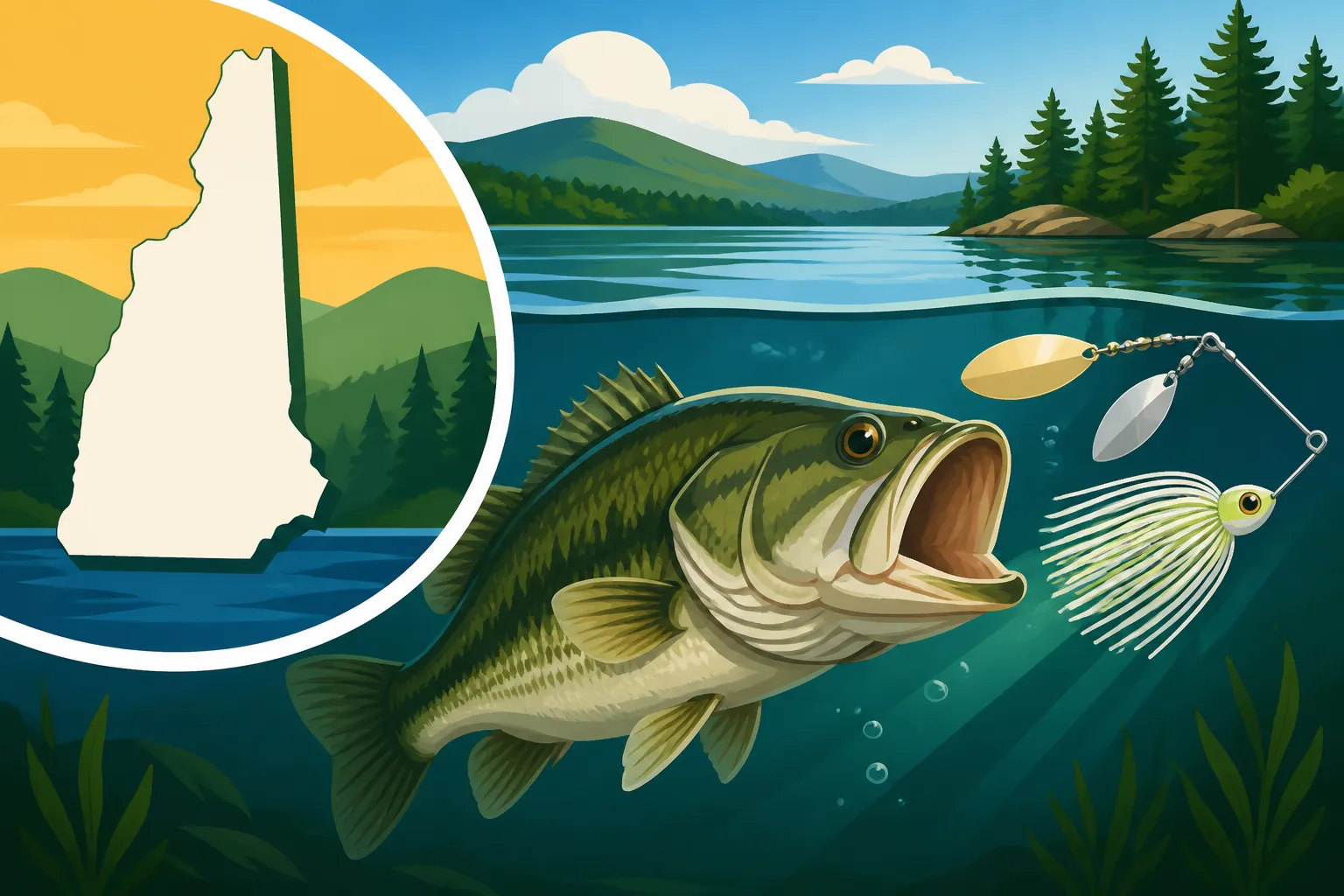
At its heart, a spinnerbait is a deceptively simple yet incredibly effective design. You've got that unique R-bend wire frame, usually with one or two blades spinning freely, a weighted head, and a skirt that pulsates and breathes in the water, all concealing a sturdy hook. When you retrieve it, those blades do their magic, creating both visual flash and irresistible vibration that bass just can't ignore. It's like a flashing, thumping dinner bell ringing right in their face.
The flash from the spinning blades mimics the glint of small baitfish darting through the water, particularly when they're scared or disoriented. It's a highly visible presentation, especially in our varied New Hampshire waters. Bass are highly visual predators, and that sudden burst of light can trigger an instinctive strike, even when they're not actively feeding.
Beyond the visual, the vibration is often the true secret weapon. As the blades cut through the water, they displace it, sending out pressure waves that bass can detect with their lateral line, even in murky conditions or low light. This "thump" can simulate a school of baitfish, or even a struggling, easy meal. It's a primal trigger that makes bass investigate, leading to some incredibly exciting strikes.
Versatility Across Conditions
One of the most appealing aspects of the spinnerbait is its incredible versatility. Unlike some lures that are highly specialized for specific conditions, a spinnerbait can truly do it all. Whether you're facing gin-clear water in one of the deeper lakes or battling stained, muddy conditions after a heavy rain on a smaller pond, there's a spinnerbait presentation that will work. This means less time rummaging through your tackle box and more time actually fishing.
Think about those days when the weather just won't cooperate – wind, clouds, even light rain. A spinnerbait thrives in these conditions. The flash helps it stand out in overcast skies, and the vibration cuts through choppy water, letting bass know it's there. You can cast it against the wind and it will still track true, allowing you to cover water effectively.
Moreover, spinnerbaits are incredibly effective around all sorts of cover. They're designed to be relatively weedless, meaning you can often pull them right through lily pads, sparse grass, or even light brush without constantly snagging. They also deflect off wood and rocks beautifully, often triggering a reaction strike from a bass hiding nearby. This makes them perfect for exploring all those juicy-looking bass hideouts you might shy away from with other lures.
Choosing the Right Spinnerbait for New Hampshire Lake Bass
Stepping into a tackle shop or browsing online (like on Amazon) can be overwhelming with the sheer number of spinnerbait options. It's not just about picking a shiny one; it's about understanding how different components influence its action and appeal to bass. Making informed choices will dramatically improve your success on the water, whether you're chasing largemouth or How to Catch Smallmouth Bass in New Hampshire Lakes.
Blade Types and Their Impact
The blades are the heart of a spinnerbait, dictating much of its action, flash, and vibration. Knowing which blade to choose for a given situation is crucial.
First, let's talk about the Willow Leaf blade. These are long, slender blades, shaped much like a willow leaf, hence the name. They create a tremendous amount of flash due to their shape and rotation, but relatively less vibration compared to other styles. They're designed for speed and cutting through the water efficiently, making them ideal for faster retrieves, deeper presentations, or when fishing in clearer water where bass are more visually oriented. If you're trying to emulate fleeing baitfish in an open water column, a willow leaf is often your best bet.
On the other end of the spectrum, we have the Colorado blade. These are round, cupped blades that create a huge amount of vibration and "thump" in the water, but with less flash than a willow leaf. They also create more lift, allowing for slower retrieves and more hang time in the water. Colorado blades are phenomenal in stained or murky water where visibility is low and bass rely more on their lateral line to find food. They're also excellent in cold water conditions when bass are lethargic and a slower, more thumping presentation is required.
Then there's the Indiana blade, which is kind of a happy medium. It's tear-drop shaped, offering a good balance of flash and vibration. It's a great all-around choice if you're unsure what the conditions will be, or if you want a versatile blade that can handle a bit of everything. Many spinnerbaits come with a combination of blades, like a smaller Colorado blade paired with a larger willow leaf, to maximize both flash and vibration simultaneously. This "tandem" setup is incredibly popular for good reason, offering the best of both worlds.
Skirt Colors and Water Clarity
The skirt on a spinnerbait adds bulk, lifelike action, and a crucial element of color. Matching your skirt color to the water conditions and prevalent baitfish can make a significant difference in your catch rate.
For clear water, such as many of New Hampshire's pristine lakes and ponds, you'll want to opt for more natural and subtle colors. Shad patterns (silvers, whites, light blues), pearl, or even clear skirts with a touch of glitter can be highly effective. The goal is to mimic the local forage without looking too artificial. Bass in clear water often have more time to inspect a lure, so a realistic presentation is key.
When you're fishing in stained or murky water, or after a heavy rain where the visibility is low, you need colors that stand out. This is where brighter and darker colors come into play. Chartreuse, white, black, blue, or combinations like black and blue are fantastic choices. These colors create a stronger silhouette against the low visibility backdrop, making it easier for bass to spot your lure. Some anglers swear by chartreuse in any stained water scenario, and it's definitely a color that produces consistently. You can find a huge array of these on sites like Amazon.
Ultimately, don't be afraid to experiment with skirt colors. Sometimes, what works one day won't work the next, and bass can be finicky. Pay attention to the baitfish in the water you're fishing – are they silvery? Greenish? Dark? Try to match that profile. Also, consider the sky conditions. On bright sunny days, a little more flash and lighter colors can be good, while on cloudy days, darker or bolder colors might be more effective. If you're wondering Best lure color for muddy water bass fishing, remember that bright chartreuse or dark black and blue are often top performers.
Weight and Profile for Different Depths
Just like with blade types and colors, the weight and overall profile of your spinnerbait play a crucial role in how it behaves in the water and how effectively you can present it to bass.
Heavier spinnerbaits, typically 1/2 ounce or more, are your go-to for deeper water presentations. They sink faster, allowing you to reach bass holding on deeper breaks, humps, or submerged timber more efficiently. They're also much easier to cast accurately in windy conditions, which is often a factor on larger bodies of water like Lake Winnipesaukee. A heavier bait also helps maintain contact with the bottom when you're slow rolling or bottom bouncing in deeper areas.
Lighter spinnerbaits, say 1/4 or 3/8 ounce, are perfect for shallow water, fishing over weed beds, or targeting bass holding close to the surface. They have a slower sink rate and can be retrieved more slowly without snagging the bottom or getting hung up in vegetation. If you're fishing shallow coves or pitching into lily pads, a lighter spinnerbait offers a more finesse-like presentation while still delivering that irresistible flash and vibration.
The overall profile, or size, of the spinnerbait should also be considered. If the bass are feeding on smaller baitfish, a more compact spinnerbait might be more effective. If they're keying in on larger forage, or if you're trying to draw a reaction strike from a big, aggressive bass, a larger, bulkier spinnerbait with a bigger skirt and blades could be the ticket. Sometimes, adding a soft plastic trailer to your spinnerbait's hook can also increase its profile and add extra action, making it even more enticing to a hungry bass.
| Blade Type | Vibration | Flash | Ideal Conditions | Retrieve Speed |
|---|---|---|---|---|
| Willow Leaf | Lower | High | Clear water, deeper, fast retrieve | Faster |
| Colorado | High | Lower | Stained water, shallow, cold water | Slower |
| Indiana | Medium | Medium | All-around, versatile, varying depths | Medium |
Mastering the Retrieve: Techniques for Spinnerbait Success
Having the right spinnerbait is only half the battle; knowing how to work it effectively is where the real magic happens. Bass can be particular, and changing up your retrieve can often be the key to triggering a strike when a steady pull isn't cutting it. Whether you're a seasoned angler or just starting out, mastering these techniques will elevate your spinnerbait game.
The Steady Retrieve and "Chunk and Wind"
The most fundamental way to fish a spinnerbait is with a steady retrieve, often called "chunk and wind" by many anglers. It's exactly what it sounds like: you cast your spinnerbait out and simply reel it back in at a consistent pace. This allows the blades to spin continuously, creating that constant flash and vibration. The key here is to experiment with different speeds. Sometimes bass want it fast, zipping through the water; other times, a slow, methodical retrieve is what gets their attention.
When performing a steady retrieve, focus on keeping your rod tip up slightly to ensure the blades are spinning properly and to maintain contact with the lure. This retrieve is excellent for covering a lot of water quickly, particularly when you're searching for active bass or fishing along weed lines and flats. It's a great "search bait" method, letting you scout an area before slowing down or switching tactics. The beauty of the spinnerbait here is its ability to remain effective even during a basic retrieve.
The "chunk and wind" technique often involves casting to specific pieces of cover – a submerged log, a patch of lily pads, or the edge of a dock – and then immediately starting your retrieve as soon as the lure hits the water. This rapid action is perfect for triggering reaction strikes from bass that might be ambushing prey in these prime spots. You might add a subtle twitch or a short pause during the retrieve, just enough to make the bait momentarily change direction or depth, which can often be the final nudge a wary bass needs to commit.
Slow Rolling and Bottom Bouncing
Not all bass are active and willing to chase down a fast-moving lure. Especially in colder water, during post-frontal conditions, or when bass are holding deep, a slower, more subtle approach is necessary. This is where slow rolling and bottom bouncing come into play with your spinnerbait.
Slow rolling involves retrieving your spinnerbait just fast enough to get the blades turning, allowing the lure to swim slowly near the bottom or along the top of submerged vegetation. This technique is fantastic for presenting your bait to lethargic bass or those hunkered down in deeper water. It mimics a sluggish baitfish, an easy meal for a less aggressive bass. The key is to maintain a constant, slow speed, feeling for the subtle thump of the blades and any change in pressure that might indicate a bite. This is a deadly technique when bass are deep, perhaps after the spawn or in early fall.
Bottom bouncing takes this a step further, allowing your spinnerbait to actually make contact with the bottom. You cast out, let the bait sink, and then slowly retrieve, letting it occasionally tick or drag along the lakebed. This can be incredibly effective for bass that are feeding on crawfish or other bottom-dwelling prey. The deflections off rocks and logs, combined with the fluttering skirt and blades, can perfectly imitate a crawfish scuttling away or a baitfish digging for food. When doing this, be hyper-aware of your line; many bites will feel like a slight "tick" or simply a sudden heaviness rather than a violent strike. This technique is also great when the What water temperature smallmouth bass prefer is on the cooler side.
Ripping and Pausing (The "Stop-and-Go")
For those times when bass are aggressive or when you need to trigger an immediate reaction, ripping and pausing, or the "stop-and-go" retrieve, can be incredibly effective. This is a more erratic, aggressive presentation that can force bass to strike out of instinct or annoyance.
Ripping involves quickly pulling your rod up or to the side, causing the spinnerbait to surge forward or upward, often tearing free from vegetation. This sudden, aggressive movement can perfectly imitate a baitfish trying to escape a predator, sending out distress signals that bass can't resist. This is particularly effective when fishing over submerged grass beds. You'll cast out, let the spinnerbait sink into the grass, and then rip it free. The moment it clears the grass, get ready for a strike.
The stop-and-go retrieve is a classic for a reason. You retrieve your spinnerbait for a few feet, then pause, allowing the lure to fall or "helicopter" downward as the blades continue to spin and flash. This flutter on the fall is often when a bass will strike, seeing a vulnerable, disoriented meal. After a short pause, you resume your retrieve. Vary the length of your pulls and pauses to see what the fish prefer. Sometimes a longer pause is needed, other times just a quick flutter. This method is excellent when bass are a bit finicky and a steady retrieve isn't drawing their attention. For specific techniques, consider looking into resources for Best Baits for Smallmouth Bass on Winnipesaukee to get more insights into local preferences.
Targeting New Hampshire Lake Bass with Spinnerbaits
New Hampshire's lakes and ponds offer a diverse range of environments for bass, from rocky shorelines to expansive weed beds. Knowing where and when to present your spinnerbait, and with what kind of gear, will significantly increase your chances of success. It's all about putting your lure in the right place at the right time.
Key Structures and Cover
Spinnerbaits truly shine when fished around various types of cover and structure. They are designed to come through obstacles cleanly, allowing you to present your lure where bass like to hide and ambush prey.
Weed beds and lily pads are prime spinnerbait territory. The single hook design and upward-facing blade often allow the lure to glide over and through vegetation with minimal snagging. You can cast your spinnerbait right into the thick stuff, bumping it off the stems and leaves. This disturbance, combined with the flash and vibration, can draw bass out of even the densest cover. Focus on the edges of weed lines, pockets within the weeds, and points where vegetation extends out into deeper water. These are classic ambush points for both largemouth and smallmouth bass.
Wood and rocks are another major draw for bass. Fallen trees, brush piles, docks, rock piles, and riprap all provide excellent cover. A spinnerbait excels at deflecting off these hard surfaces. Cast your lure so it bounces off a log or skips over a rock. That sudden, erratic movement can trigger an otherwise hesitant bass into striking. For dock fishing, cast beyond the dock and retrieve your spinnerbait parallel to the structure, letting it occasionally bump the pilings. These "hard targets" are often magnets for hungry bass.
Lastly, don't overlook drop-offs and humps. These underwater structures represent transition zones where bass often patrol, moving between deep and shallow water, or holding to ambush baitfish. Fishing a spinnerbait along the contour lines of a drop-off or over the top of a submerged hump can be incredibly effective. Use a slow-rolling or bottom-bouncing retrieve to maintain contact with the structure and present your bait to bass holding near the bottom. Exploring the Best Bass Fishing Lakes in New Hampshire will show you countless spots where these structures are abundant.
Time of Day and Season Considerations
Understanding the activity patterns of bass throughout the day and across the seasons is vital for maximizing your spinnerbait success. The best time to fish often depends on how active the bass are and where they're holding.
Early morning and late evening are often prime times for bass fishing, particularly with topwater presentations or spinnerbaits retrieved closer to the surface. During these low-light periods, bass feel more comfortable moving into shallower water to feed. A spinnerbait retrieved at a medium pace can mimic a baitfish confidently cruising the shallows, making it an easy target. This is especially true on sunny days when bass might retreat to deeper cover during the brightest hours.
During the daytime, especially on bright, sunny days, bass will often seek out deeper water or dense cover to escape the direct sunlight. This doesn't mean spinnerbaits are out of the question; it just means you need to adjust your approach. Switch to heavier spinnerbaits for deeper presentations, slow-roll them near the bottom, or focus on dense, shaded cover like thick mats of lily pads or deep brush piles. Understanding Best Time of Year to Fish in New Hampshire will help you refine these tactics.
Seasonal changes also have a profound impact on bass behavior. Spinnerbaits are incredibly effective during the pre-spawn period (when bass are staging before they move to spawn) and throughout the fall feeding frenzies, when bass are aggressively bulking up for winter. During pre-spawn, bass are often actively feeding and patrolling transition areas, making them susceptible to a spinnerbait. In the fall, as baitfish schools group up, a spinnerbait's ability to imitate a fleeing school can be deadly. Be sure to check New Hampshire Bass Limits and Slot Rules to ensure you're compliant with regulations during these peak seasons.
Matching Your Gear
Having the right rod, reel, and line setup is essential for effectively casting, retrieving, and fighting bass on a spinnerbait. Using gear that matches the lure and your target fish will make your fishing experience much more enjoyable and successful.
For spinnerbait fishing, a medium-heavy power rod with a moderate-fast to fast action is generally ideal. The medium-heavy power gives you the backbone needed to cast heavier spinnerbaits, fight larger bass, and pull fish out of cover. The moderate-fast action provides enough tip flexibility to allow for good casting distance and to absorb the shock of a bass strike without pulling the lure away from the fish too quickly, yet enough sensitivity to feel those subtle bites. Look for rods specifically designed for moving baits. For more detailed guidance, check out articles on Best Fishing Rods for New Hampshire Lakes.
Pair your rod with a baitcasting reel that has a gear ratio in the 6.3:1 to 7.1:1 range. This allows for versatility in retrieve speeds; you can reel faster when bass are aggressive or slow down by simply adjusting your cranking pace. Spool your reel with 15-20 pound fluorocarbon line for excellent sensitivity and stealth in clear water, or 30-50 pound braided line for strength when fishing heavy cover, adding a 15-20 pound fluorocarbon leader for abrasion resistance and stealth. This combination provides the best of both worlds. For more specifics on line and terminal tackle, consult guides like Best Tackle for New Hampshire Smallmouth Bass.
Before you make that first cast, always take a moment to check your knot and ensure your hook is sharp. A dull hook will lead to missed fish, especially when a bass just "swats" at the lure. A sharp hook means better penetration and a higher landing percentage. Also, consider adding a trailer hook to your spinnerbait, especially if you're experiencing short strikes where bass are nipping at the skirt but not fully committing to the main hook. This small addition can often convert those missed opportunities into landed fish.
Disclaimer
This article is for general informational purposes only and does not constitute professional advice. Laws, prices and regulations vary by location and change over time. Consult a qualified professional for guidance on your specific situation.