Best tube jig color for smallmouth bass
There’s nothing quite like the thrill of a smallmouth bass absolutely hammering your lure, especially here in the clear, rocky waters of New Hampshire. But let's be honest, standing at the tackle shop or staring into your overflowing tackle box, trying to decide on the perfect color tube jig can feel like a mind-bending puzzle. You want to get it right, to present that irresistible offering that makes those bronze beauties commit. This guide is all about cutting through that confusion, helping you understand how smallmouth see, what they eat, and ultimately, which tube jig colors will give you the edge on New Hampshire's lakes and rivers.
Understanding Smallmouth Bass Vision and Forage in New Hampshire
Before we dive into specific colors, it’s really helpful to get into the mind (or rather, the eye) of a smallmouth bass. They don't see the world quite like we do, and understanding their visual perception, alongside what they're naturally hunting for, is crucial for selecting the right tube jig.
The Science of Bass Vision and Water Clarity
Smallmouth bass are primarily sight feeders, and their vision is adapted to detecting movement and contrast, particularly in varying light conditions and water clarities. Unlike some fish that rely more on scent, a smallmouth is looking for something that looks edible.
In crystal-clear lakes like Winnipesaukee or Squam, or the pristine stretches of the Connecticut River, smallmouth bass have excellent visibility. This means they can be incredibly discerning. A tube jig that looks too unnatural or stands out too much might actually spook them. Conversely, in slightly stained or turbid waters, common after a heavy rain on rivers like the Merrimack, colors that offer a stronger contrast or brighter hue become more visible and can trigger strikes. Their eyes have both rod and cone cells, allowing them to see color, but the intensity and depth of that color perception changes drastically with available light and water clarity. When light penetrates deeper into the water, more colors are visible, but as light diminishes, the longer wavelengths (like red and orange) disappear first, leaving blues and greens more prominent. This is a fundamental concept that seasoned anglers often rely on, whether they're selecting a tube jig or any other artificial lure.
Mimicking Local Forage: Crayfish, Smelt, and Minnows
Smallmouth bass in New Hampshire are opportunistic predators, but they have a few key menu items that often dictate their behavior and, by extension, what your lure should imitate. The two big ones are crayfish and various baitfish.
Crayfish are a primary food source for smallmouth across much of New Hampshire, especially in rocky-bottomed lakes and rivers. These crustaceans, often referred to as "mudbugs," live among the rocks and gravel, providing a high-protein meal. Their colors range from olive greens and browns to rusty reds, depending on the species and their environment. When a tube jig perfectly mimics the subtle darting and scurrying of a crayfish, it's incredibly effective. You can often find crayfish in the shallows under rocks; observing their local color can give you a significant advantage.
Beyond crayfish, various baitfish make up a substantial portion of a smallmouth's diet. In larger, deeper lakes like Winnipesaukee and Newfound Lake, rainbow smelt are a critical forage species, particularly for larger smallmouth and other predators like lake trout and landlocked salmon. Smelt are silvery, slender fish, and imitating their flash and profile can be deadly. In rivers and shallower ponds, smaller minnows, shiners, and even juvenile perch or sunfish become targets. These baitfish typically have silver, white, or light green bodies, often with darker backs. Your tube jig choice should ideally reflect these common meals, making it a natural part of the underwater landscape. Knowing what species are prevalent in your chosen Best Fishing Lakes in New Hampshire or Best Fishing Rivers in New Hampshire can really help narrow down your color selection.
Top Tube Jig Colors for New Hampshire Smallmouth Bass (and When to Use Them)
Now that we understand a bit about smallmouth vision and their preferred snacks, let's talk about the specific tube jig colors that consistently produce here in the Granite State. It’s not just about having the color; it's about knowing when and where to deploy it.
Natural and Earthy Tones: Greens, Browns, and Watermelon
These are your workhorse colors, the ones you can almost always tie on with confidence, especially in New Hampshire's predominantly clear waters. They excel at imitating crayfish, which are a cornerstone of the smallmouth diet.
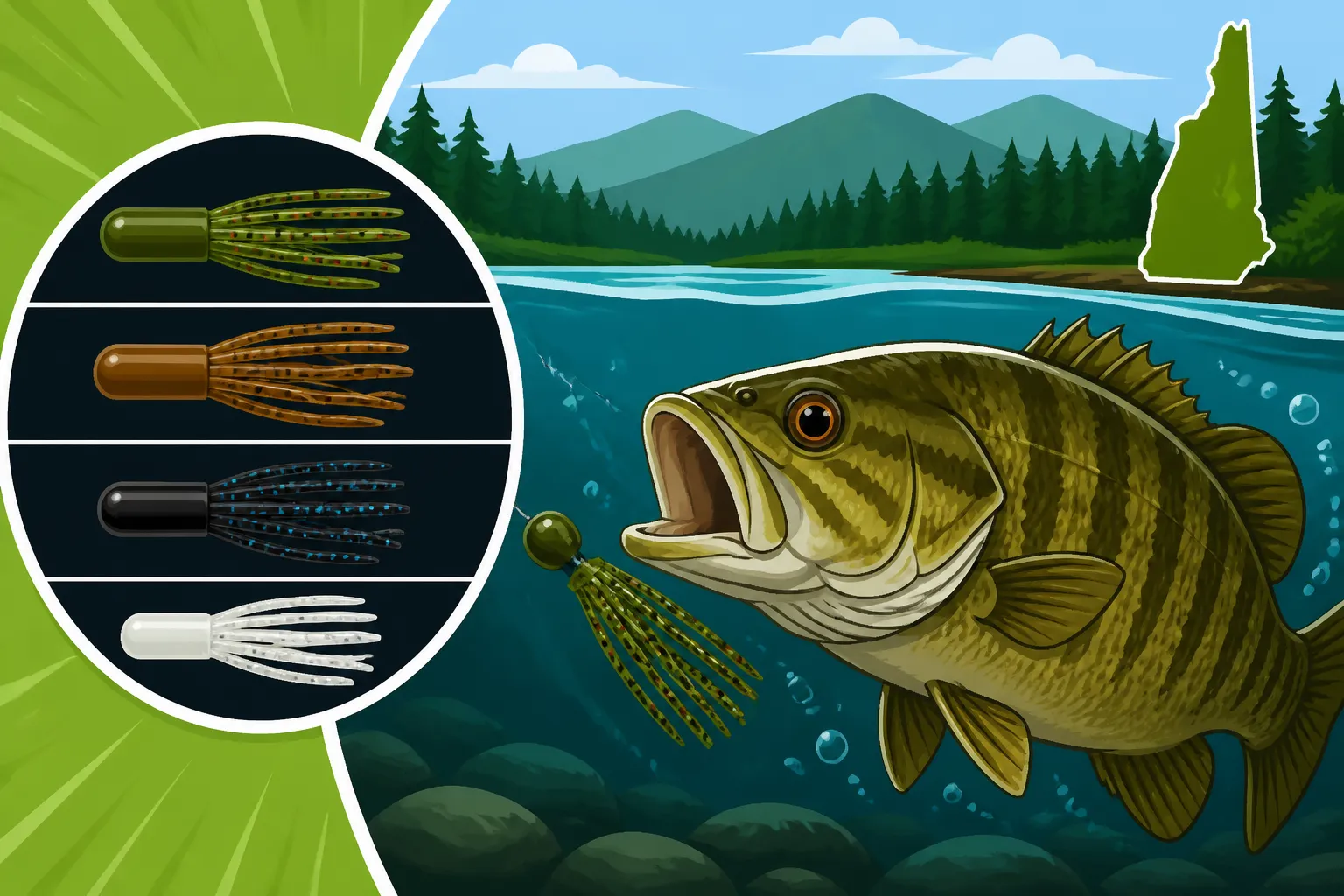
- Greens (especially Olive and Green Pumpkin): These shades are absolute staples. An olive green tube jig, perhaps with a subtle flake, does an incredible job of mimicking a crayfish scuttling along the bottom. Green pumpkin, often with black or red flake, is another fantastic option. These colors are incredibly versatile and shine brightest in clear to lightly stained water, particularly when the sun is out. Imagine a smallmouth cruising a rocky ledge on Lake Winnipesaukee; a green pumpkin tube jig dragged across those rocks looks exactly like its next meal. You can find a huge variety of these natural-colored tube jigs on platforms like Amazon, often in multi-packs, making it easy to experiment.
- Browns (especially Coffee and Cinnamon): Similar to greens, brown tube jigs are excellent crayfish imitations. Coffee, cinnamon, or even a dark brown with orange or red flecks can be incredibly effective, particularly when you're fishing areas with a lot of darker rocks, wood, or leaf litter on the bottom. These colors blend in naturally and look like a fleeing crayfish trying to escape detection. They're also great choices on sunny days when bass might be a bit more wary of overly bright lures.
- Watermelon (often with Red or Black Flake): Watermelon is a nuanced green that often has a reddish or brownish tint, perfectly mimicking the varied coloration of crayfish and certain aquatic vegetation. Watermelon with red flake is particularly deadly when smallmouth are keyed in on crayfish, as the red flecks can imitate the "hot" or stressed color of a crayfish during molting or when it's trying to escape. This color is fantastic in clear to moderately stained water conditions and can be a go-to for many anglers fishing the productive smallmouth lakes like Winnisquam Lake Fishing Guide.
Translucent and Silver Shades: Smelt and Alewife Imitations
When smallmouth are feeding on baitfish, especially in the mid-column or chasing schools, you need colors that offer flash and shimmer. These are often lighter, more transparent options.
- White and Pearl: Simple, yet incredibly effective. A plain white or pearl-colored tube jig can perfectly imitate a dying or stunned baitfish like a smelt or shiner. These colors are highly visible in clear water, especially on overcast days or in low light conditions (dawn/dusk). When smallmouth are busting bait on the surface or you're fishing deeper suspended fish, white or pearl can be a game-changer. These colors are also excellent for eliciting reaction strikes when retrieved aggressively.
- Smoke and Shad (often with Blue or Silver Flake): These are translucent gray or off-white colors, often with a subtle blue, silver, or black flake. They are fantastic imitators of various minnow species and smelt. The translucency allows light to pass through, creating a natural, ethereal glow that baitfish possess. Smoke with blue flake, for example, is a phenomenal choice when smallmouth are chasing smelt in larger bodies of water. The subtle flash from the flake mimics the scales of a fleeing baitfish, and the overall transparency makes it look incredibly lifelike. This can be especially effective for How to Catch Smallmouth Bass in New Hampshire Lakes where baitfish are abundant.
- Silver and Chrome: While less common in a pure tube jig form, tubes with heavy silver or chrome flake, or those designed to be very reflective, can be excellent when trying to mimic very active, schooling baitfish. These are best in clear to slightly stained water where their flash can be seen from a distance, drawing in curious smallmouth.
Bright and Contrasting Colors: Chartreuse, White, and Orange for Reaction Bites
Sometimes, you're not trying to perfectly imitate anything; you're just trying to get a fish angry or make it notice your lure in challenging conditions. That's where these bolder colors come in.
- Chartreuse and Bright Green: These are high-visibility colors that really stand out, particularly in stained or muddy water, or on very dark, overcast days. While they don't perfectly mimic a natural forage item, their brightness can trigger aggressive reaction strikes from smallmouth that might otherwise ignore a more subtle presentation. If you're fishing a river after a significant rain, or a pond with generally lower clarity, a chartreuse tube can be incredibly effective. It's often used when the bite is tough and you need to grab attention.
- Orange and Red: These colors can be great for specific situations. As mentioned, red flecks in a watermelon or green pumpkin tube can simulate a stressed crayfish. A pure orange or red tube, while less common as a primary smallmouth color, can be surprisingly effective in very turbid water, as red is often the first color to disappear, but also creates a strong silhouette. It can also be effective in very cold water conditions, or when smallmouth are aggressively feeding on heavily colored crayfish.
- Black and Blue: This combination is a classic for bass fishing in general, and it has its place with tube jigs for smallmouth, especially in low light or deep water. The black provides a strong silhouette against the lighter sky above, making it highly visible to fish looking up. The blue adds a subtle contrast. This can be fantastic for night fishing, or in extremely deep water where natural light doesn't penetrate well, or if you're targeting big, wary smallmouth around heavy cover. Many anglers swear by black and blue for triggering aggressive strikes.
Factors Influencing Tube Jig Color Choice Beyond Just the Water
Choosing a tube jig isn't just about what the water looks like; there are other critical environmental factors and even the mood of the fish that should influence your decision. Thinking through these elements will make you a much more consistent angler.
Light Conditions and Sky Cover
The amount of light penetrating the water directly affects how a smallmouth sees your lure and how colors appear. This is why having a range of tube jig colors in your tackle box is so important.
On bright, sunny days with clear skies, light penetrates deep, making natural, subtle colors more effective. Think greens, browns, watermelon, and translucent smoke colors. These colors look most realistic under strong illumination. Bass can see all the details, so a natural presentation is key. If the water is also very clear, bass can get spooky, so subtlety is your friend.
Conversely, on overcast or cloudy days, or during periods of low light like dawn and dusk, the light is diffused, and colors don't appear as vibrant. This is when slightly brighter or more contrasting colors can shine. Whites, pearls, or tubes with more prominent flake patterns can increase visibility. Sometimes, even a chartreuse accent can make a difference. The goal is to ensure the fish can still pick up your lure's presence without it looking overtly artificial.
When fishing deep water, where light is always at a premium, you might lean towards colors that create a good silhouette, like black and blue, or those that are highly visible in low light, such as white or certain shades of chartreuse. Remember the principle of light absorption: reds disappear first, then oranges, yellows, and so on. Blues and greens penetrate deepest, so a blue flake in a dark tube can still be noticeable even in the depths.
Bottom Composition and Structure
The environment where smallmouth bass live also plays a huge role in their coloration and the color of their prey. Mimicking this environment with your tube jig can be highly effective.
If you're fishing rocky bottoms, which are abundant in many New Hampshire lakes and rivers (think the granite ledges of Lake Winnipesaukee or the rocky stretches of the Pemigewasset River), crayfish are often present. Here, earthy tones like green pumpkin, olive, coffee, and cinnamon are excellent choices. They blend with the rocks and imitate the natural colors of local crayfish. Using a tube jig that matches the color of the rocks can make your lure seem like it's part of the environment, not an intruder. You can find specialized jigs and tubes that are designed for these specific bottom compositions on retailers like Amazon, ensuring you have the right gear.
In areas with weeds, submerged timber, or darker mud bottoms, you might still find crayfish, but baitfish might also be holding in these areas. Green pumpkin, black and blue, or darker greens can work well by blending into the cover or creating a strong silhouette. If fishing sparse weeds, a watermelon or subtle green with flake can be effective, resembling a baitfish trying to hide.
Consider the strategy: do you want your tube jig to blend in and look natural, or do you want it to stand out and create a reaction strike? Blending in is usually best in clear, calm conditions with wary fish. Standing out is often better in stained water, low light, or when trying to trigger aggressive bass.
Smallmouth Mood and Pressure
Just like us, smallmouth bass have moods, and they can be influenced by fishing pressure. This can dictate how subtle or aggressive your color choice should be.
When smallmouth are active and aggressive, perhaps during a hot bite or when schooling baitfish are present, they're often less particular about color. You can get away with brighter, more attention-grabbing colors like white, chrome, or even chartreuse. They're more focused on the movement and opportunity. This is when a quick, erratic retrieve with a high-contrast tube can draw explosive strikes. For tips on when they're most active, check out our Best Time of Year to Fish in New Hampshire article.
However, when smallmouth are inactive, lethargic, or heavily pressured, they become much more wary and discerning. This is particularly true in heavily fished areas or during cold fronts, as discussed in Cold Front Fishing Tactics for New Hampshire Bass. In these situations, subtle, natural colors are almost always the better choice. Green pumpkin, smoke, and light, translucent shades that perfectly mimic the local forage will be more effective. You want to present something that looks completely natural and requires minimal effort for them to eat. Sometimes, adding a small amount of scent to your tube jig can also help tempt these finicky fish. Experimentation is key; start natural and only go brighter if you're not getting bites.
Tube Jig Rigging and Presentation Tips for Optimal Color Performance
Choosing the right color is only half the battle. How you rig and present that tube jig will greatly impact how effective your chosen color truly is. A perfect color with a poor presentation might as well be the wrong color.
Internal vs. External Weighting for Different Actions
The way you weight your tube jig directly affects its fall rate, darting action, and how the color is presented to the fish.
- Internal Weighting: This is the most common method for smallmouth bass. A lead head jig is inserted inside the tube, creating a compact, streamlined profile. This allows the tube to "spiral" or "dart" on the fall, mimicking a dying baitfish or a fleeing crayfish. When the weight is inside, the plastic of the tube itself provides the color and profile, making your color choice paramount. You want a head heavy enough to sink relatively quickly but light enough to allow that enticing spiral. Common weights range from 1/8 oz to 1/2 oz, depending on depth and current. For clear water, the internal weight creates a very natural look, allowing the tube's inherent color and action to shine through without any external hardware distracting the fish. These are excellent for mimicking smallmouth bass habits on Winnipesaukee.
- External Weighting (Tube Jigs with Exposed Heads): While less common for smallmouth than internal weights, some anglers use tube jigs with exposed jig heads, similar to a traditional grub or swimbait. This often results in a different, more head-first darting action. The jig head itself can be colored to match or contrast the tube, adding another layer to your color strategy. For example, a black jig head with a black-and-blue tube emphasizes the dark profile. This can be useful in deeper water or strong currents where you need a faster drop, or when you want the jig head to add an extra visual element. However, for the most natural fall and crayfish imitation, internal weighting is often preferred for smallmouth.
Working the Tube: Jigging, Dragging, and Hopping
The retrieve you employ directly influences how your chosen tube jig color appears to the bass. Think about how natural prey moves.
- Dragging: This is a fantastic technique for imitating a crayfish crawling along the bottom. Cast your tube jig out and let it sink to the bottom. Then, slowly drag it along the bottom with your rod tip low, using long, slow sweeps of the rod. Pause frequently, allowing the tube to settle and the "tentacles" to flare out. This creates puffs of sediment, just like a real crayfish. This technique, paired with earthy tones like green pumpkin or coffee, is incredibly effective, especially over rocky areas.
- Hopping: To imitate a crayfish darting and then settling, or a baitfish trying to escape, a hopping retrieve works wonders. Let the tube sink, then lift your rod tip sharply a foot or two, allowing the tube to jump off the bottom. Let it fall back on a semi-slack line, allowing it to spiral. Repeat this, varying the height and speed of your hops. This can trigger reaction strikes and is great when smallmouth are a bit more active.
- Jigging/Snap-Trolling: In deeper water or when targeting suspended smallmouth, vertical jigging or snap-trolling can be effective. Drop your tube jig to the desired depth and make sharp, upward snaps with your rod, then let it fall. The erratic action, combined with the tube's spiraling fall, mimics a distressed baitfish. This is where those white, pearl, or smoke-colored tubes really shine, especially in clear water. This is a common method when ice fishing or when fishing deep points and humps on your Best Fish Finders for New Hampshire Lakes.
Experimentation and Confidence in Your Color Choice
Ultimately, fishing is an art as much as it is a science. While understanding the principles of color and forage is vital, there's no substitute for experimentation.
- Start with Confidence Colors: Always begin with a color you have confidence in, one that has worked for you in similar conditions. For many New Hampshire anglers, this will be a green pumpkin or a smoke-colored tube.
- Pay Attention to the Fish: If you're not getting bites, don't be afraid to change. Sometimes, a subtle shift from green pumpkin to watermelon with red flake is all it takes. Other times, you might need to go from a natural tone to a bright white if the fish are suddenly chasing bait on the surface. Keep an eye on water clarity, light changes, and any signs of active feeding.
- Consider the Water Body: A color that dominates on the Connecticut River might be less effective on a deep, clear lake like Sunapee Lake Fishing Guide. Local knowledge, either your own or from other anglers, is invaluable. Asking local tackle shops about hot colors is always a good idea.
- Have a Range of Options: It's smart to have a good selection of tube jigs in various shades of green, brown, white, and translucent colors. Don't go overboard, but ensure you have choices to match different conditions. You can easily stock up on a diverse array of tube jigs from online retailers like Amazon, ensuring you’re ready for whatever the New Hampshire waters throw at you.
- Don't Overthink It (Sometimes): While deep analysis is good, sometimes bass just hit what's in front of them. The most important thing is often presentation and being in the right place. Have confidence in your chosen color, present it well, and the smallmouth will often respond.
No matter the time of year, from Spring Trout Fishing Techniques for New Hampshire Ponds to chasing bass in the heat of summer, having a solid understanding of tube jig colors will put more fish in your boat (or in your hands for a quick release!).
| Water Clarity | Light Conditions | Primary Forage | Recommended Tube Jig Colors |
|---|---|---|---|
| Clear | Sunny | Crayfish | Green Pumpkin, Olive, Coffee, Watermelon (Red Flake) |
| Clear | Overcast/Low Light | Baitfish | Smoke (Blue/Silver Flake), White, Pearl, Light Shad |
| Stained | Sunny | Crayfish | Dark Green Pumpkin, Cinnamon, Black & Blue |
| Stained | Overcast/Low Light | Baitfish/Reaction | White, Chartreuse, Orange, Black & Blue |
| Turbid/Muddy | Any | Reaction | Chartreuse, White, Black (strong silhouette) |
| Deep Water | Any | Baitfish/Crayfish | White, Smoke, Black & Blue (good visibility/silhouette) |
Always remember that fishing regulations, including New Hampshire Bag and Possession Limits by Species, are subject to change, so it's always wise to consult the latest New Hampshire Freshwater Fishing Digest before heading out.
Disclaimer
This article is for general informational purposes only and does not constitute professional advice. Laws, prices and regulations vary by location and change over time. Consult a qualified professional for guidance on your specific situation.