Best lure color for muddy water bass fishing
There's nothing quite as disheartening as planning a prime New Hampshire bass fishing trip, only to arrive at your favorite lake or river and find the water churned up, brown, and utterly devoid of clarity. Whether it's a sudden summer downpour, spring snowmelt runoff, or even heavy boat traffic, muddy water can make it feel like the bass have simply vanished into thin air. But don't despair! This comprehensive guide is here to equip you with the knowledge of the best lure colors and techniques to not just survive, but actually thrive, in these challenging conditions, helping you put more bass in the boat even when visibility is near zero.
The Challenge of Muddy Waters in New Hampshire
Fishing in murky water is a whole different ballgame compared to crystal-clear lakes. What works flawlessly in one situation can be completely ignored in another. Understanding why New Hampshire waters get muddy and how bass react to it is the first step toward cracking the code.
Why New Hampshire Waters Get Muddy
New Hampshire, with its diverse landscape of mountains, forests, and sprawling lakes, experiences significant weather fluctuations that directly impact water clarity. A heavy summer thunderstorm can quickly turn a normally clear stream into a chocolate milk river, especially in areas like the Merrimack River watershed, which has a lot of agricultural runoff. Springtime snowmelt also contributes immensely, carrying silt and organic debris into major waterways and smaller ponds alike. Even sustained winds can stir up shallow areas, particularly in lakes with softer, mucky bottoms like many of the smaller ponds dotted across southern New Hampshire.
Beyond natural phenomena, human activity plays a role too. Heavy boat traffic on popular lakes such as Lake Winnipesaukee or Pawtuckaway Lake can churn up sediments, particularly in shallower coves or near boat launches. Construction activities near shorelines or rivers can also contribute to sediment runoff, although regulations aim to minimize this. When you see that distinct brownish tint, it means that light penetration is severely limited, drastically changing the underwater environment for both you and the bass. If you're out fishing after a heavy rain on New Hampshire rivers, you'll experience this firsthand.
How Bass React to Turbidity
Bass are primarily sight feeders, meaning they rely heavily on their vision to locate and ambush prey. When the water gets muddy, their primary hunting tool is severely hampered. It's like trying to find a snack in a dark room – you'll eventually bump into it, but it's much harder than with the lights on. Because of this, bass don't just swim around aimlessly hoping to stumble upon a meal. They change their behavior significantly.
In murky conditions, bass tend to move closer to cover. Think submerged logs, dense weed beds, rock piles, or even dock pilings. This gives them a sense of security and also creates ambush points where they can surprise unsuspecting prey. Their lateral line, a sensory organ running along their sides, becomes incredibly important, allowing them to detect subtle vibrations in the water from nearby forage. Scent also plays a much larger role. Their metabolism might slow down slightly because expending too much energy hunting by sight in poor visibility isn't efficient. You'll need to appeal to these alternative senses, making your lure not just visible, but also detectable through vibration and possibly smell.
Understanding Lure Color Dynamics in Murky Conditions
The world looks very different underwater, and even more so when that water is muddy. What we perceive as a vibrant color above the surface can appear completely different, or even disappear, just a few feet down. This is why a strategic approach to lure color is absolutely crucial when facing turbid water.
Light Penetration and Color Visibility
Water, especially muddy water, acts like a filter for light. Different wavelengths (colors) of light penetrate water at varying depths. In clear water, reds disappear first, followed by oranges, yellows, greens, and then blues. That's why deep-sea creatures are often red – they appear black at depth, offering camouflage. However, in muddy water, this entire process is dramatically compressed. Very little light penetrates beyond the surface, and what does is quickly absorbed or scattered by suspended particles.
This means that many colors that are vibrant in clear water will appear dull or even invisible in muddy conditions. Bright, flashy colors that rely on reflecting a broad spectrum of light might just look like a muted blob. Instead, you need colors that either stand out sharply against the limited available light or create a strong, distinct silhouette that bass can detect using the tiny amount of light filtering through, or by their lateral line. It's less about the exact hue and more about the contrast and presence the lure creates.
The "Stand Out" vs. "Natural" Debate
In clear water, anglers often debate between natural baitfish patterns and more aggressive, flashy colors. The "match the hatch" philosophy, using colors and patterns that mimic local forage, is incredibly effective. However, this logic needs a major re-evaluation in muddy water. When bass can barely see, a perfectly replicated shad pattern is essentially invisible. This is where the "stand out" approach truly shines.
In highly turbid water, your goal is to make your lure as conspicuous as possible. You want something that screams "here I am!" rather than trying to blend in. This often means embracing highly unnatural, bright colors that create maximum contrast against the murky backdrop. The bass aren't scrutinizing your lure's details; they're reacting to its presence, vibration, and sometimes its scent. However, even with bright colors, a strong silhouette can be equally, if not more, important, especially in extremely dark conditions. The choice often comes down to how much light, if any, is actually reaching your lure.
Top Lure Colors for Muddy Water Bass Fishing
When the water turns murky, it’s time to rethink your tackle box. Forget subtlety; you need colors that scream for attention, or create such a distinct profile that a bass can’t ignore it. Here are the top contenders that reliably produce strikes in stained conditions.
Bright and Bold: Chartreuse and Orange
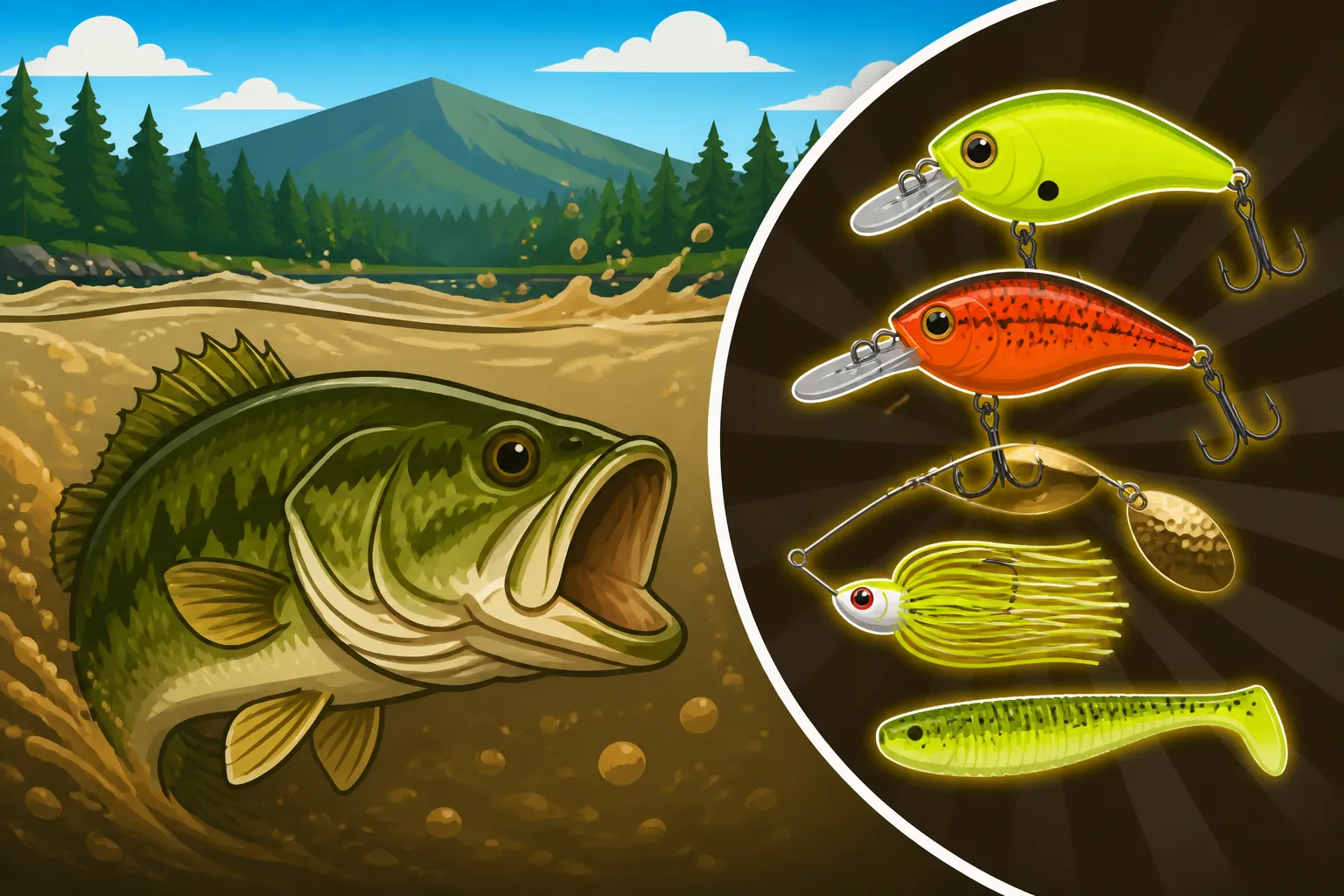
There’s a reason why chartreuse and orange are considered muddy water staples – they cut through murk like few other colors. Chartreuse, that vibrant neon yellow-green, is incredibly visible in low light and stained water. It has a particular wavelength that seems to penetrate farther and scatter less, making it highly conspicuous. Bass might not know what it is, but they certainly know it's there. This strong visual stimulus can trigger an aggressive reaction strike, especially from bass that are already a bit sluggish due to the conditions.
Similarly, bright orange, especially in shades like "firetiger" (a blend of chartreuse, orange, and black stripes), offers excellent visibility. It creates a stark contrast against the dark water, making it easy for bass to zero in on. When you're dealing with heavily stained water or trying to fish during overcast days, these bright colors are often your best bet for getting noticed. Many anglers swear by a chartreuse spinnerbait or an orange crankbait, and you can find a wide variety of these proven muddy water colors on Amazon to add to your arsenal.
Dark and Silhouetted: Black and Blue
While bright colors aim to stand out with their vibrancy, dark colors work by creating a strong silhouette. Imagine looking up from underwater in murky conditions: any light filtering down from the surface would appear as a diffused glow. A dark object passing through that glow creates a stark, identifiable shadow. This is precisely why black and blue are such formidable muddy water colors. They offer maximum contrast against the lighter surface, making the lure's profile incredibly clear to a bass looking up from below.
The combination of black and blue is particularly effective. The blue often provides a subtle, almost bioluminescent quality in certain light, while the black ensures a dominant profile. This color scheme is a killer on jigs and soft plastics, especially when paired with a bulky trailer that adds to the overall size and vibration. If the water is truly like chocolate milk and there’s almost no light penetration, a black and blue jig dragged slowly along the bottom or pitched into heavy cover can be irresistible. You can browse many effective black and blue soft plastics and jigs on Amazon that will surely make a difference on your next trip.
Flash and Vibration: Gold and Silver (Limited Use)
While typically reserved for clearer water to mimic baitfish, metallic finishes like gold and silver can have a limited but specific role in muddy water, primarily when combined with lures that generate a lot of vibration. The key here isn't necessarily the color itself, but the flash created by the metallic surface catching any available light and reflecting it. This creates a momentary glimmer that can draw a bass's attention, even if the water is murky.
However, relying solely on flash in truly muddy water is often a losing battle. The effect is diminished the deeper or murkier the water gets. Therefore, gold or silver are best utilized as components of a larger, more attention-grabbing lure, such as the blades on a spinnerbait or the sides of a lipless crankbait that also emits strong rattles. Gold tends to be more effective in warmer, shallower, and slightly stained water, while silver might perform marginally better if there's any hint of clearer water deeper down or on brighter days where more light can penetrate. The primary trigger will still be vibration and silhouette, with the flash acting as an added bonus.
Effective Lure Types and Presentation for Muddy Water Bass
Choosing the right color is only half the battle. How you present that lure, and what type of lure you choose, makes all the difference when bass are relying more on their lateral line and scent than their eyes.
Vibrating Baits: Spinnerbaits and Chatterbaits
When bass can't see, they feel. This makes lures that generate significant vibration absolutely essential. Spinnerbaits are kings in muddy water for a reason. Their spinning blades, particularly large Colorado blades, displace a tremendous amount of water, creating a powerful thumping sensation that bass can detect from a distance with their lateral line. The flash of the blade (often gold or silver) combined with a skirt in chartreuse, white, or black and blue, creates an irresistible package.
Chatterbaits (bladed jigs) are another fantastic option. The unique, erratic vibration of their metal blade hitting the jig head creates a truly distinct and aggressive thumping action. This makes them incredibly effective at calling fish from cover in turbid conditions. Both spinnerbaits and chatterbaits are best fished with a slow, steady retrieve, often "slow rolling" them just above the bottom or bumping them off submerged structure. This gives the bass ample time to home in on the vibration. You can easily find a wide selection of these essential vibrating baits on Amazon, ready to tackle any muddy water scenario.
Jigs and Soft Plastics
When bass are lethargic or holding tight to cover in muddy water, a slower, more deliberate approach is often warranted. Jigs and soft plastics excel in these situations because they allow you to maintain contact with the bottom, probe heavy cover, and present a substantial, yet slower-moving, target. The key here is to maximize scent and bulk. Heavy jigs with large, flapping craw or creature bait trailers create a big profile and move a lot of water as they fall and are retrieved.
Colors like black and blue, junebug, or even dark shades of green pumpkin can be incredibly effective. Consider using soft plastics that have built-in scent or adding a scent attractant to your lures; this extra sensory appeal can be the deciding factor when visibility is zero. Techniques like pitching jigs into dense brush piles, flipping them into thick weeds, or slowly dragging them along rocky bottoms near transition areas can coax strikes from otherwise inactive bass. Remember, the goal is to put the lure right in front of them and give them plenty of time to find it. Many anglers find that a slow retrieve is key when they learn how to catch bass during a cold front in New Hampshire, which often leads to muddier waters.
Crankbaits and Lipless Crankbaits
Crankbaits and lipless crankbaits also have a strong place in your muddy water arsenal, provided you choose the right ones. Look for crankbaits with a wide wobble and internal rattles. The wider the wobble, the more water it displaces and the more vibration it sends out. The rattles act as an auditory attractant, further drawing bass in. Lipless crankbaits, with their aggressive shimmy and loud rattles, are particularly effective for covering water quickly and drawing reaction strikes.
In terms of color, stick to the bright and bold: firetiger, chartreuse, and bright orange patterns are excellent choices. Retrieve these baits at varying speeds, experimenting until you find what triggers a bite. Often, deflecting a crankbait off submerged logs, rocks, or other cover can be incredibly effective, as the sudden change in action often provokes a strike. It mimics a fleeing or injured baitfish, which is a powerful trigger. Always keep an eye out for popular brands offering a range of these high-vibration, high-visibility lures, often available for quick shipping from retailers like Amazon. Don't forget to check out articles like How to fish a spinnerbait for New Hampshire lake bass for more detailed techniques.
Muddy Water Lure Color and Type Quick Reference
| Water Clarity | Primary Colors | Lure Types | Key Features |
|---|---|---|---|
| Heavily Stained / Muddy | Chartreuse, Orange | Spinnerbaits, Chatterbaits | High vibration, large blades, loud rattles |
| Very Dark / Chocolate Milk | Black & Blue, Junebug | Jigs, Soft Plastics (bulky) | Strong silhouette, added scent, slow presentation |
| Slightly Stained / Off-Color | Firetiger, Gold | Lipless Crankbaits, Wacky Worms | Moderate vibration, subtle flash, scent |
It's also worth noting that while we're talking about specific lure colors, don't overlook other factors. The size of your lure, its profile, and the speed of your retrieve are just as critical. Sometimes, a larger profile lure in a dark color fished slowly will outproduce a smaller, brighter lure in extremely muddy conditions. Vary your approach, pay attention to what the fish are telling you, and don't be afraid to experiment with combinations. Understanding New Hampshire Bass Limits and Slot Rules is also important before you head out, so you know what you can keep.
Remember that New Hampshire's diverse waterways, from the smaller ponds in southern New Hampshire to larger rivers, can all present different challenges. A technique that works well on a muddy pond might need slight adjustments on a fast-flowing river. Being adaptable is key.
Disclaimer
Always consult the most current New Hampshire Fish and Game Department regulations before heading out on any fishing trip. Fishing rules, limits, and seasons can change, and it's your responsibility to be aware of and adhere to them. This guide is for informational purposes only and does not constitute legal advice or an exhaustive list of all regulations.