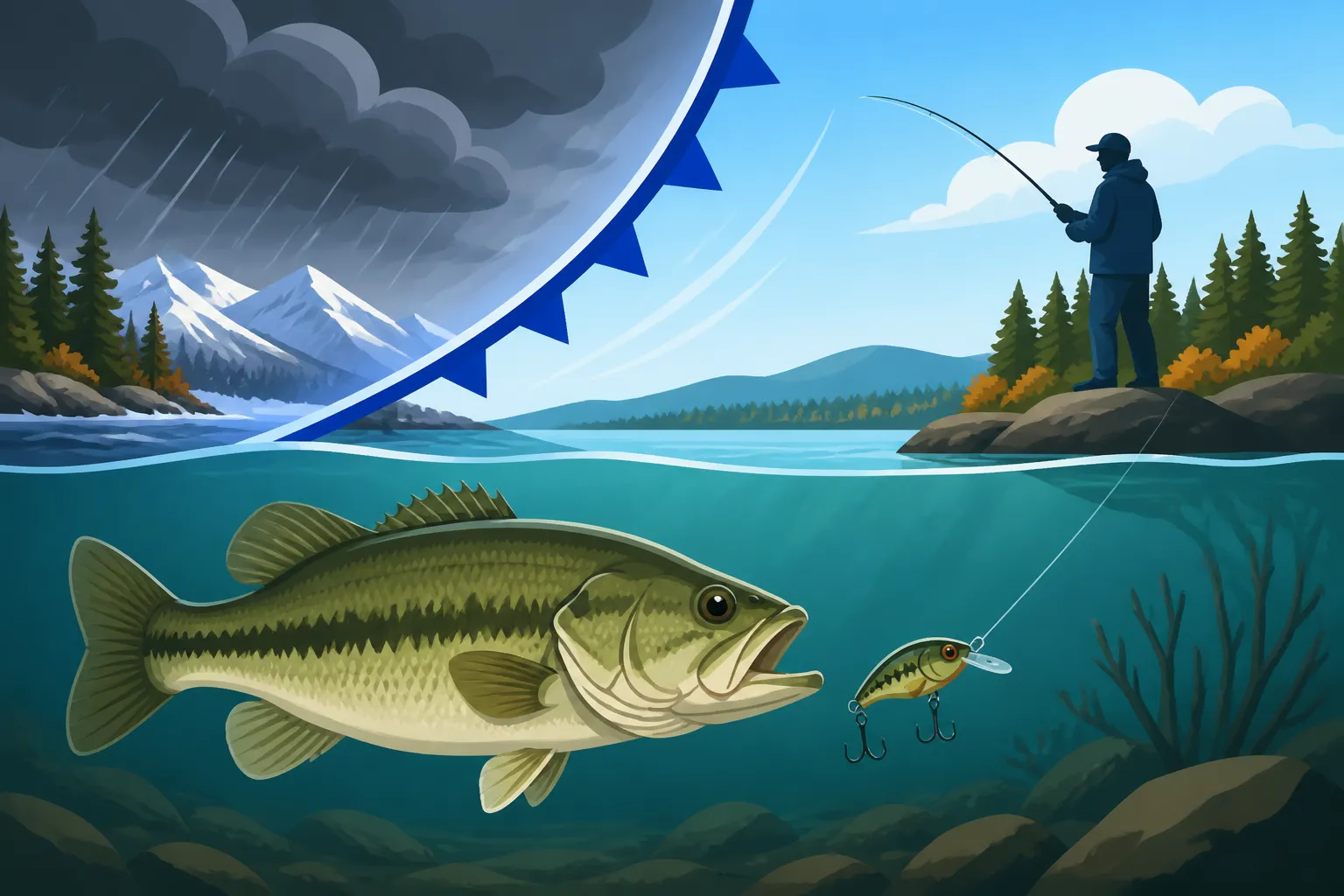
How to catch bass during a cold front in New Hampshire
There’s nothing quite as frustrating as planning a perfect fishing trip to your favorite New Hampshire lake, only for a sudden cold front to roll in and seemingly shut down the bite. The bass that were so active yesterday suddenly disappear, or they just won't touch anything you throw at them. This guide is here to help you understand precisely what happens to bass during these challenging conditions and equip you with the strategies to still find success, even when the weather turns frosty.
Understanding the Impact of a Cold Front on New Hampshire Bass
When a cold front hits, it's more than just a drop in air temperature. It's a whole atmospheric shift that sends ripples through the aquatic environment, and bass, being cold-blooded creatures, are incredibly sensitive to these changes. It's like someone suddenly turning down the thermostat on their entire world.
How Bass React to Sudden Temperature Drops
First and foremost, a sudden drop in water temperature directly impacts a bass's metabolism. Their bodies operate more slowly, their digestion slows down, and their need to feed becomes less urgent. This isn't just about feeling a bit chilly; it's a physiological slowdown that makes them lethargic and less inclined to chase after fast-moving prey. In the clear waters of many New Hampshire lakes, like Lake Winnipesaukee or Squam Lake, this can make them incredibly wary and finicky.
Beyond the metabolic shift, barometric pressure plays a huge role. Often, a cold front is preceded by a high-pressure system, which can press down on the water, literally. Fish have an internal swim bladder that reacts to these pressure changes. Imagine the discomfort you feel in your ears when you ascend or descend rapidly; fish experience something similar. This can make them seek deeper water where the pressure is more stable, or hold tight to cover to feel more secure. This rapid change in pressure is a major reason why the bite often dies right after the front passes, even if the skies clear. You can learn more about this phenomenon in our detailed article on How barometric pressure affects New Hampshire bass fishing.
Changes in Bass Location and Behavior
When a cold front moves in, bass typically do one of two things: they either move deeper to find more stable water temperatures and pressure, or they bury themselves into the thickest cover they can find.
- Seeking Deeper Water: You'll often find them retreating from shallow flats and points where they were active just hours before. They might move to the base of drop-offs, suspended over deep water, or congregate around submerged humps and rock piles. These deeper areas offer more thermal stability, meaning the water temperature doesn't fluctuate as wildly. On a lake like Newfound Lake, known for its deep, clear water, this means keying into deeper structure rather than shallow shorelines.
- Hugging Cover: If they're not going deep, they're often seeking dense cover. This could be thick weed beds, fallen trees (laydowns), rock crevices, or even underneath docks and pontoon boats. This cover provides not only a sense of security from predators (including you!) but also a slight thermal buffer. They won't be actively feeding, but rather "sulking" and waiting for conditions to improve. This is why targeting areas with diverse cover can be productive, even if you have to work for every bite.
Their feeding behavior shifts dramatically. Instead of aggressively striking, they might simply "mouth" a bait or gently pick it up. Their bites become incredibly subtle, making it easy to miss if you're not paying close attention to your line and rod tip. The window for active feeding also shrinks; they might only feed during short bursts, often around midday when the sun is highest, or just before another weather system moves in.
Essential Gear Adjustments for Cold Front Bass Fishing
To combat these challenging conditions, you can't just throw the same lures with the same techniques you used yesterday. Adjusting your gear is absolutely critical to feeling those subtle bites and presenting lures in a way that tempts lethargic bass.
Rod, Reel, and Line Selection
Sensitivity becomes your best friend when bass are timid. This means opting for lighter, more forgiving tackle.
- Rods: Ditch your heavy power, fast action flipping sticks for something more moderate. A medium-light or medium power spinning rod with a fast to extra-fast action is ideal. The softer tip allows you to cast lighter baits, and critically, it helps absorb those subtle "taps" or the feeling of your line going slack that signifies a bite. Graphite rods are excellent for this as they transmit vibrations exceptionally well. Look for rods around 6'8" to 7'2" in length for versatile casting and control. For general advice on selecting your setup, check out our guide on Best Fishing Rods for New Hampshire Lakes.
- Reels: Pair your sensitive rod with a smooth, lightweight spinning reel. A 2500 or 3000 series reel provides enough line capacity and a good retrieve ratio for finesse presentations. The key here is smooth drag and a lightweight feel that doesn't hinder your sensitivity.
- Line: This is where many anglers overlook a crucial detail. Forget the heavy braided line with a fluorocarbon leader for now, unless you're in incredibly thick cover. For cold front bass, 6-8 pound test fluorocarbon line is often the best choice. Fluorocarbon has several advantages:
- Low Stretch: It offers excellent sensitivity, allowing you to feel even the slightest tap.
- Low Visibility: It's nearly invisible underwater, which is paramount when bass are skittish in clear water.
- Density: It sinks, helping your finesse baits get down to the fish faster and stay there without needing heavier weights.
For really spooky fish in ultra-clear New Hampshire waters, some anglers will even drop down to 4-pound test, but this requires even more careful handling. If you prefer the casting distance of braid, use a very long (10-15 foot) fluorocarbon leader.
Lure Choices and Presentation
Downsizing and slowing down are the golden rules for cold front bass. Think "finesse" above all else.
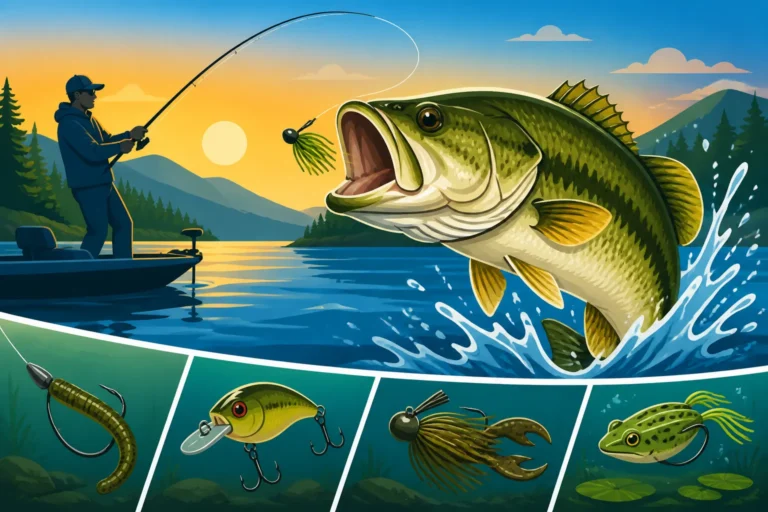
- Ned Rigs: These are absolute cold-front killers. A small mushroom-shaped jig head (1/16 to 1/8 ounce) paired with a short, buoyant soft plastic worm (like a Z-Man TRD) is incredibly effective. The buoyancy of the plastic causes it to stand up off the bottom, presenting an irresistible, easy meal. Cast it out, let it sink, and retrieve it with incredibly slow drags or short hops along the bottom. Many anglers find a great selection of these specialized cold-front baits on platforms like Amazon.
- Drop Shots: When bass are suspended or holding tight to structure, a drop shot rig excels. This involves a weight at the bottom of your line, and a hook tied above it (typically 6-18 inches up) with a small soft plastic bait. The beauty of the drop shot is that you can keep your bait suspended right in front of the fish's face for extended periods, simply by shaking your rod tip, without moving the weight or the bait significantly. Small worms, minnow imitations, or even small creature baits work well.
- Small Jigs and Shaky Heads: A 1/8 to 1/4 ounce jig with a small profile plastic trailer (like a craw or small grub) can be deadly. Similarly, a shaky head jig (where the worm can "shake" freely) with a 4-6 inch finesse worm is excellent. The key is to keep these moving very slowly, barely hopping them, or just dragging them along the bottom, mimicking a struggling or injured creature.
- Finesse Worms: Unweighted or lightly weighted wacky-rigged or Texas-rigged finesse worms (4-6 inches) are also great options. The slow, natural fall of a wacky rig can entice bites from bass that refuse everything else.
- Jerkbaits (Suspended): In certain conditions, especially if the bass are suspended and slightly more active, a suspending jerkbait can work wonders. The key here is the pause. Cast it out, twitch it once or twice, and then let it sit motionless for 10, 20, even 30 seconds. The ability of the bait to suspend perfectly still can be just enough to trigger a strike from a curious but uncommitted bass. Brands like Rapala and Lucky Craft make excellent suspending jerkbaits. For more ideas on effective lures, our guide on Best Tackle for New Hampshire Smallmouth Bass can be very helpful.
| Tactic | Normal Conditions | Cold Front Conditions |
|---|---|---|
| Water Column | Shallow, mid-depth, schooling | Deep structure, tight to bottom/cover |
| Retrieve Speed | Moderate to fast, aggressive | Very slow, deliberate, long pauses |
| Lure Size | Standard, larger profiles | Downsized, finesse-oriented |
| Lure Color | Wide range, brighter options | Natural, subtle, translucent |
| Line Type | Braid, heavy mono, fluorocarbon | Fluorocarbon (main or long leader) |
| Rod Action | Medium-heavy to heavy, fast | Medium-light to medium, fast/extra-fast tip |
| Patience Level | Moderate | Extreme, persistence is key |
Proven Techniques for Cold Front Bass
Beyond adjusting your gear, you'll need to fundamentally change how you approach fishing. Aggressive power fishing rarely pays off during a cold front.
Slow and Steady Does It
This cannot be stressed enough: slow down. A lot. Bass are not actively chasing food; they are conserving energy. Your presentation needs to reflect this.
- Long Pauses: When using jigs, shaky heads, or especially jerkbaits, incorporate extended pauses. Let your bait sit motionless on the bottom or suspended for what feels like an eternity. Sometimes, the bite comes when the bait is doing absolutely nothing. Count to five, ten, even twenty before moving it again.
- Subtle Movements: Instead of sharp jerks or rapid retrieves, think about subtle twitches, slow drags, or tiny hops. Imagine a dying baitfish or a crayfish barely moving. This minimalistic movement is less threatening and more likely to elicit a reactionary strike from a sluggish bass. For those really tough days, just dragging a Ned rig or a weighted Texas rig across the bottom with no hops at all can be the ticket.
- Fan Casting and Grid Search: Don't just cast to obvious spots. When bass are huddled up, they can be in a very specific, small area. Fan cast around a promising structure, making sure your lure covers every foot of the bottom. If you're using a boat, a grid search pattern can help you thoroughly cover an area.
Targeting Key Holding Structures
Bass seek comfort and safety. Focus your efforts on these prime cold-front locations:
- Deep Points and Humps: These are classic cold-front locations. Bass will often move to the deeper sections of points that extend into the main lake, or stack up on submerged humps. Use your electronics (more on that next) to find these structures and present your baits right on top of them or along their edges.
- Channel Swings and Ledges: Where a river channel swings close to a bank or a deep ledge drops off, bass will use these as highways and holding areas. They offer easy access to both deep water and potential feeding grounds if conditions improve.
- Dense Cover: Don't be afraid to pitch or flip jigs and finesse worms into the thickest parts of weed lines, brush piles, or beneath docks. These spots offer overhead cover and a slight thermal break. You'll need to be precise with your casts and ready to extract a fish quickly from heavy cover.
- Bottom Transitions: Look for areas where the bottom composition changes – from rock to sand, or sand to mud. These subtle changes can hold baitfish and, consequently, bass. A good fish finder can help identify these transitions.
Utilizing Electronics for Precision
Your fish finder becomes an invaluable tool during a cold front, moving from a luxury to a necessity.
- Locating Structure: Use your side imaging and down imaging to pinpoint subtle changes in bottom composition, isolated rocks, submerged timber, or deep weed lines that aren't visible on the surface. These are the sweet spots where bass will be congregating. Many anglers have found excellent, compact units on Amazon that are perfect for smaller boats or kayaks.
- Finding Bait and Fish: While you might not always mark individual bass, marking baitfish schools in deeper water is a huge clue. Where the bait is, the bass will likely be nearby, even if they're not actively chasing. If you do mark fish, note their depth and target that specific zone. This is especially true when targeting species like lake trout and salmon, where precise depth control is paramount, as discussed in our guide on Best Lures for Lake Trout Trolling.
- Water Temperature Readings: Pay close attention to your unit's water temperature display. Even a half-degree difference can dictate where bass are holding. Look for areas with slightly warmer water, even if it's just a sun-exposed rock face in deeper water.
Practical Tips for Anglers Facing a New Hampshire Cold Front
Success during a cold front often comes down to mental fortitude and a willingness to adapt on the fly.
Reading the Conditions Beyond Temperature
While temperature is primary, other factors contribute to bass behavior.
- Barometric Pressure: As mentioned earlier, high pressure systems typically follow a cold front. This puts a "squeeze" on fish, often driving them deeper and making them less active. However, sometimes a stable high-pressure system for a few days can see the bite slowly pick back up. Pay attention to how long the high pressure has been in place.
- Wind: A strong, blustery wind that often accompanies a cold front can make boat control difficult and decrease casting accuracy. It also mixes the water, potentially lowering surface temperatures further. On the flip side, a light ripple can sometimes help break up the water's surface, making bass feel more secure and less wary in clear lakes.
- Sky Cover: Bright, clear skies after a cold front can make bass incredibly skittish, especially in clear water. They’ll seek deeper water or denser cover to avoid the light. Overcast days, even if cold, can sometimes be better as the diffused light makes them feel a bit more comfortable in shallower haunts.
- Previous Weather: Think about what happened before the cold front. Was there a warm spell? Heavy rains? These factors influence how bass set up beforehand and can give clues to their current location.
Persistence and Patience are Paramount
Fishing a cold front is not for the faint of heart. It requires a different kind of dedication.
- Slow Down Your Mind: Don't expect aggressive, fast-paced action. Mentally prepare for a grind. Every subtle tap, every slight change in line tension, could be a bite.
- Work an Area Thoroughly: Instead of moving quickly from spot to spot, spend more time dissecting a single, promising area. Make multiple casts from different angles. Try different lures and retrieves. If you think bass should be there, exhaust all options before moving on.
- Don't Be Afraid to Experiment: While finesse is key, sometimes a subtle change in lure color (from natural to a small flash of chartreuse), or a slightly heavier jig head, can make all the difference. Keep a variety of small, subtle baits on hand.
- Focus on Small Windows: Bass might only feed for short periods during the day, often around noon or during a brief weather change. Be ready to capitalize when that window opens.
- Consider Catch-and-Release: During these stressful times for bass, practicing careful catch-and-release is more important than ever. If you're not planning to keep a fish for consumption, release it quickly and gently to minimize stress. Our article on New Hampshire Bass Catch-and-Release Season, Explained offers some great tips for ensuring fish survival.
While challenging, catching bass during a cold front in New Hampshire is incredibly rewarding. It tests your skills, patience, and ability to adapt. By understanding how bass react and adjusting your approach, you can still find success on the water, even when the thermometer takes a nosedive. Remember to stay warm, stay patient, and enjoy the beautiful New Hampshire scenery, even if the fish are playing hard to get!
Disclaimer
Please remember that fishing regulations and conditions can change. Always consult the latest New Hampshire Fish and Game Department regulations before heading out on the water. This guide is for informational purposes only and should not replace official sources.