How to wade a New Hampshire trout stream safely
The tranquil beauty of a New Hampshire trout stream, with its crystal-clear water and the promise of a rising fish, is incredibly inviting. Yet, that very allure often comes with a hidden challenge: navigating slippery rocks, unpredictable currents, and unseen hazards beneath the surface. Many anglers, myself included, have felt that uneasy wobble or the sudden loss of footing that makes you question stepping into those prime fishing lanes. This guide is dedicated to equipping you with the essential knowledge, the right gear, and the safest techniques to wade New Hampshire's stunning trout streams with confidence and peace of mind.
Understanding the Risks of New Hampshire Trout Streams
Before you even think about stepping into the current, it's absolutely crucial to respect the environment you're about to enter. New Hampshire's trout streams, from the cascading mountain brooks to the wider, slower-moving rivers, all present their own unique set of challenges. Ignoring these can turn a peaceful fishing trip into a dangerous situation quickly.
The Hidden Dangers Beneath the Surface
One of the biggest anxieties when wading is the unknown. You can see the water, but what lies beneath? Our local streams are rarely a uniform, smooth bottom. Instead, they are a mosaic of diverse and often treacherous surfaces.
Imagine stepping into what looks like a benign, shallow stretch of the Swift River near Conway, only to find your foot land on a boulder covered in slick, algal growth. That algae, especially prevalent in slower-moving sections or on rocks exposed to sunlight, can feel like stepping on ice. It's a sudden, jarring moment where your feet go out from under you before your brain even registers the danger. Beyond the slime, you'll encounter a mix of loose gravel that shifts underfoot, making each step unstable, or areas of soft mud that can suck at your boots, making forward movement a struggle. These varying compositions mean you need to constantly probe and assess your footing, never assuming the next step will be like the last. Furthermore, our streams are wild places, often carrying down submerged logs, branches, and other natural debris from the banks, especially after heavy rains or during spring runoff. These hidden obstacles can trip you up or create unexpected current deflections, adding another layer of complexity to an already challenging environment.
The Power of Moving Water
Even a seemingly gentle current can exert a surprising amount of force on your body, particularly when it's flowing past your legs. What looks like a slow riffle on the Pemigewasset River can still be strong enough to destabilize you, especially if you're standing in waist-deep water or if the current picks up around a bend or obstruction. This force is magnified exponentially during high-water conditions, such as after a significant rainfall or during the spring snowmelt. At these times, the water isn't just pushing; it's often carrying debris, and the sheer volume and speed can literally knock you off your feet. Beyond the physical force, there's the insidious danger of cold water shock. Many of New Hampshire's trout streams, particularly those fed by mountain springs or snowmelt, remain incredibly cold even on the warmest summer days. A sudden, unexpected dunk in 40-50 degree Fahrenheit water can trigger an involuntary gasp reflex, hyperventilation, and even cardiac arrest, especially if you're not properly prepared or wearing a personal flotation device. This combination of physical force and physiological risk underscores the importance of truly understanding and respecting the power of moving water.
Essential Gear for Safe Wading
Having the right equipment isn't just about comfort; it's about safety. Just like you wouldn't head out on Lake Winnipesaukee without a life jacket, you shouldn't step into a New Hampshire trout stream without the gear designed to keep you upright and protected.
Waders and Wading Boots: Your Foundation
Your waders and wading boots are arguably the most critical components of your wading safety system, providing both insulation and crucial traction. For New Hampshire's varied climate, breathable waders are often the go-to choice. They keep you dry by allowing perspiration to escape, preventing that clammy, uncomfortable feeling, while also providing enough space for layering during colder months. Neoprene waders, while warmer, can be stifling on mild days and offer less flexibility. The fit of your waders is paramount – too tight and they restrict movement, too loose and they can become a hazard, especially if they fill with water in a fall.
When it comes to wading boots, you'll face a common dilemma: felt soles or rubber soles. Felt soles are legendary for their grip on slick, algae-covered rocks, performing exceptionally well in many of our granite-bottomed streams like the Ellis River. However, they can accumulate invasive species and offer poor traction on muddy banks or trails leading to the water. Rubber soles, on the other hand, are fantastic for hiking to your spot and are more environmentally friendly, but their grip on wet, mossy rocks can be severely lacking. Many anglers choose a compromise, opting for rubber soles with added studs or cleats for enhanced traction. A good pair of boots, whether felt or studded rubber, should provide ankle support and a snug fit to prevent your feet from sliding around inside, which can lead to fatigue and loss of balance. You can find a wide selection of both waders and wading boots from reputable brands like Simms, Orvis, and Redington on Amazon, catering to all preferences and budgets.
Wading Staffs: Your Third Leg
If there's one piece of gear that has saved me from countless tumbles, it's my wading staff. Think of it as your third leg, an indispensable tool for maintaining balance, probing unknown depths, and testing the stability of your footing. A wading staff provides a crucial point of contact with the stream bed, distributing your weight and giving you an extra anchor against the current.
Collapsible wading staffs, often made of lightweight aluminum or carbon fiber, are incredibly popular because they pack down small and attach easily to your wader belt or vest, making them convenient to carry when hiking to a remote spot. Fixed staffs offer maximum rigidity but are less convenient to transport. When using your staff, get into the habit of probing the area ahead of you before taking a step. This allows you to identify sudden drop-offs, slippery rocks, or unstable gravel beds before committing your weight. It's also invaluable when crossing faster currents, as it gives you a stable point to lean on while you shuffle your feet. Many experienced anglers wouldn't consider wading certain stretches of the Connecticut River without one. For a comprehensive look at your options, consider browsing the range of wading staffs available on Amazon; there's something for every angler.
Personal Flotation Devices PFDs: A Non-Negotiable
While many anglers associate PFDs with boating, they are an absolute non-negotiable for wading, especially in swift or deep water, or during colder months. The risk of falling in a cold, fast-moving New Hampshire stream is real, and a PFD can literally be a lifesaver. If you take an unexpected plunge, a PFD keeps your head above water, allowing you to focus on self-rescue rather than fighting to stay afloat. This is particularly vital in our cold mountain waters where the risk of cold water shock is high.
There are two main types to consider: traditional foam PFDs and inflatable PFDs. Foam PFDs offer constant buoyancy and are often more affordable, though they can be a bit bulkier. Inflatable PFDs, which come in manual or automatic activation models, are much less intrusive, making them a favorite among wade anglers for their comfort and freedom of movement. They only inflate when needed, either by pulling a cord or upon contact with water. Regardless of the type you choose, ensure it fits properly and is rated for the conditions you'll be fishing in. Never underestimate the psychological and physical benefits of knowing you have that extra layer of safety. You can find excellent options for comfortable and effective PFDs on Amazon.
Other Critical Gear
Beyond the core items, a few other pieces of gear significantly enhance your safety and overall experience:
- Polarized Sunglasses: These are vital for seeing beneath the water's surface, allowing you to spot submerged rocks, logs, and fish. Not only do they protect your eyes from harmful UV rays, but they can also literally help you see potential hazards before you step on them. Investing in a good pair of polarized sunglasses, available from various brands on Amazon, is a game-changer for wade fishing. Check out our guide on Best Sunglasses for Sight Fishing Clear Water for more details.
- Wading Belt: Often overlooked, a wading belt is crucial. It cinches your waders tightly around your waist, preventing them from filling completely with water if you fall. If your waders fill with water, they can become incredibly heavy, making it nearly impossible to regain your footing or swim to shore. It effectively transforms your waders into a buoyant raft rather than a heavy anchor.
- Knife or Shears: A small, sharp knife or a pair of line nippers or shears, easily accessible on your vest or wader strap, can be a lifesaver. It allows you to quickly cut tangled line or even extricate yourself from vegetation if you become ensnared in the current.
- Small First Aid Kit: Accidents happen, even with the best precautions. A compact, waterproof first aid kit containing bandages, antiseptic wipes, pain relievers, and any personal medications is a wise addition to your pack. You never know when a slipped rock might result in a scrape or minor cut.
Mastering Wading Techniques and Best Practices
Having the right gear is only half the battle; knowing how to use it, and how to move through the water effectively, is where true wading safety comes into play. It's a learned skill that comes with practice and mindful application.
Before You Even Step In
Safety starts before your boots even touch the water. Take a moment to observe your surroundings and plan your approach. This isn't just about finding the fish; it's about finding a safe path to them.
First, scout the water from the bank. Look for obvious entry and exit points, areas where the current seems less aggressive, or places where the bank slopes gently into the water. Identify potential hazards like large boulders, downed trees, or areas of visibly turbulent water. Pay attention to how the current flows around obstacles, as this can indicate deeper channels or faster moving water. Second, assess the conditions. What is the water level like today? Is it clear or cloudy? How fast is the current moving? These factors significantly impact wading difficulty. If the water is high and murky after a recent downpour, it might be safer to reconsider wading that day. Our guide on Fishing after a heavy rain on New Hampshire rivers offers more insight into these conditions. Finally, if possible, always wade with a buddy. There's safety in numbers. If one of you gets into trouble, the other can provide assistance or go for help. A simple call of "heads up, tricky bottom!" can prevent a nasty fall.
The Art of the Shuffle and the Three-Point Contact
Once you're in the water, your movement becomes paramount. The goal is to move slowly, deliberately, and with constant awareness of your balance. The "shuffle" method is your best friend here: rather than lifting your feet high, slide them along the bottom, keeping them low. This minimizes the risk of tripping and helps you feel out the bottom composition before committing your full weight.
Even better is to employ the three-point contact method. This means at any given moment, you have three points of contact with the stream bed for maximum stability. This could be two feet and your wading staff, or two feet and one hand if you're holding onto a rock or branch on the bank. Always face slightly upstream as you move. This allows the current to flow past your legs rather than pushing against your chest, making you more stable. Trying to walk directly upstream or downstream can be far more challenging; a slight angle provides the best balance. When you're trying to cross the current, angle your body slightly downstream. This creates less surface area for the current to push against, similar to how a boat angles into a strong wind. Take short, deliberate steps, sliding your feet along the bottom rather than lifting them high. It feels slower, but it significantly reduces your risk of a fall.
Crossing Currents Safely
Crossing a section of moving water requires extra caution. When you identify a spot you need to cross, pick your entry and exit points carefully, aiming for the shortest crossing distance with the least amount of turbulent water.
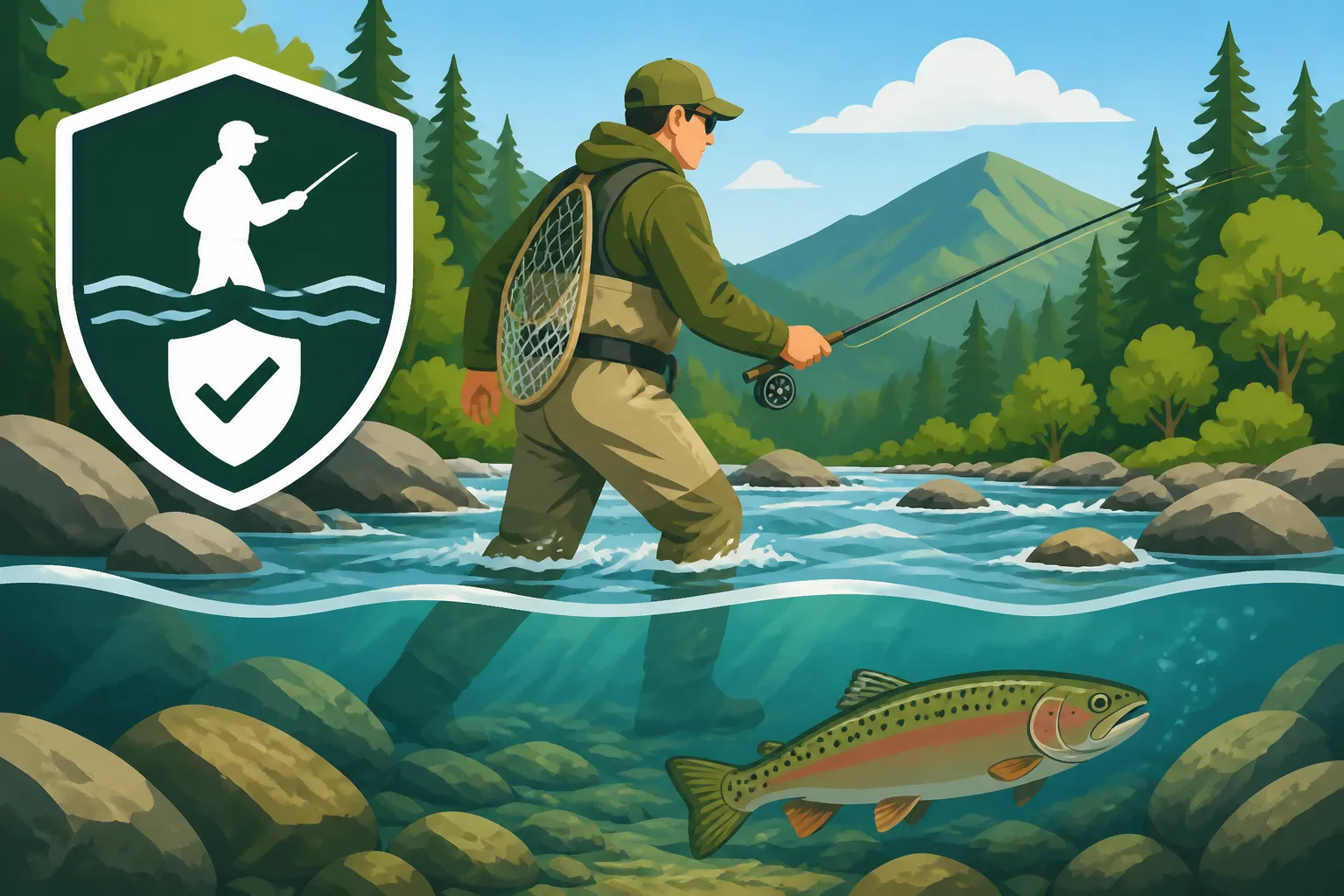
As you step into the current, angle your body about 45 degrees downstream from the direction of the flow. This allows the current to push against your side rather than directly against your front or back, maintaining your stability. Use your wading staff on the upstream side to brace yourself and probe the bottom ahead. Distribute your weight evenly, and take short, controlled steps, sliding your feet rather than lifting them. Never lift both feet off the bottom at the same time. Maintain that three-point contact. If you feel yourself start to lose balance, lean into the current rather than fighting it. If you do slip and fall, the most important thing is to stay calm. Roll onto your back, keeping your feet pointed downstream to fend off any obstacles, and let the current carry you to a safer, shallower spot or the nearest bank. Remember, your PFD is there for precisely this reason.
Navigating Different Stream Beds
New Hampshire's trout streams present a diverse range of bottom compositions, each requiring a slightly different approach:
- Rocky Bottoms: These are common in many of our pristine mountain streams and rivers. If you have felt-soled boots, this is where they shine, offering superior grip on slick, algae-covered rocks. However, even with felt, constantly probe with your wading staff to avoid unexpected wobbles or hidden gaps between boulders. Our guide on Best Wading Boots for Rocky Streams elaborates on choosing the right footwear.
- Gravel and Sand: These bottoms are generally easier to wade, offering more consistent footing. However, be wary of sudden changes in depth or areas where the current has scoured out deep pockets. Use your staff to check for sudden drop-offs, especially near deeper pools or bends.
- Muddy Bottoms: Often found in slower, wider river sections or ponds, muddy bottoms are best avoided if possible. Mud can create suction, making it difficult to lift your feet, and it can be incredibly unstable. If you must wade through mud, use your staff to probe ahead, taking small, deliberate steps, and try to stay on the firmer edges.
Seasonal Considerations and Emergency Preparedness
Wading safety isn't just about your gear and technique; it's also about understanding how seasons and environmental factors impact the streams, and being ready for the unexpected.
Wading in Cold Water
New Hampshire's trout streams, especially those in the White Mountains, maintain incredibly low temperatures year-round. Even on a hot summer day, the water temperature can be in the 40s or low 50s. This presents a significant risk of hypothermia, which is a dangerous drop in body temperature, or cold water shock if you take an unexpected dunk.
To combat this, proper layering under your waders is essential. Synthetic base layers (polyester, polypropylene) or merino wool are ideal, as they wick moisture away from your skin and continue to insulate even when wet. Avoid cotton, which loses all its insulating properties when damp. In colder seasons, wearing fleece or insulated pants under your waders is a must. If you happen to fall in, the initial cold shock can cause involuntary gasping and hyperventilation, making it hard to catch your breath. This is why a PFD is so critical. Always have a complete change of warm, dry clothes waiting in your vehicle, and consider carrying an emergency blanket in your pack for extended trips or colder weather. Read our recommendations on Best Chest Waders for Cold Water Trout Fishing for more ways to stay warm and safe.
High Water and Post-Rain Conditions
While the allure of fishing after a good rain might be strong – often fish are more active – it's crucial to exercise extreme caution or even avoid wading altogether during periods of high water or immediately after heavy rainfall.
During these times, the current speed increases dramatically, and the water becomes murky. The lack of visibility means you can't see submerged hazards, making every step a gamble. Furthermore, the increased current can dislodge logs, branches, and other debris, which can become dangerous projectiles. The bottom composition can also change, with gravel beds shifting and new scour holes forming. A good rule of thumb: if the water looks too high, too fast, or too discolored, it probably is. Wait for the water levels to drop and clear before attempting to wade. This might mean postponing your trip for a day or two, but it's a small price to pay for safety.
What to Do in a Fall
Despite all precautions, sometimes a slip happens. The most important thing if you fall while wading is to stay calm. Panicking will only exacerbate the situation.
Immediately, lean back and point your feet downstream. This protects your head from hitting rocks and allows you to use your feet to fend off obstacles like boulders or logs in the current. Your PFD (which you are wearing, right?) will help keep you afloat. Don't try to stand up immediately in a strong current; you'll likely just get swept further or injure yourself. Instead, use the current to your advantage. Try to float feet-first towards the nearest bank or a calmer, shallower section of the stream. Once you reach shallower water or the bank, you can then try to regain your footing and safely exit the water. This is where your wading belt really earns its keep, preventing your waders from fully filling with water and making self-rescue much more manageable. Practice these mental steps before you even head out, so your reaction is instinctual should the unexpected occur.
Here's a quick comparison of wading boot soles, a common point of discussion among anglers:
| Sole Type | Traction on Wet Rocks (Algae) | Traction on Mud/Dirt Banks | Durability | Environmental Impact | Best Use Case |
|---|---|---|---|---|---|
| Felt | Excellent | Poor | Moderate | Higher risk of spreading invasive species | Rocky, slippery stream beds with minimal bank hiking |
| Rubber | Moderate (can be slick) | Excellent | High | Lower risk of spreading invasive species | Mixed terrain, hiking to spots, muddy banks, general use |
| Rubber w/ Studs | Good to Excellent | Moderate (can slip on hard surfaces) | High | Moderate (studs can scratch boat decks) | Extremely slick rocks, fast currents, year-round use |
Disclaimer
The information provided in this guide is for educational and informational purposes only and is not intended as a substitute for professional advice. New Hampshire's waterways can be unpredictable, and conditions can change rapidly. Always exercise caution and use your best judgment when wading. Prioritize personal safety, be aware of your surroundings, and consider taking a certified swiftwater rescue course for advanced safety techniques.