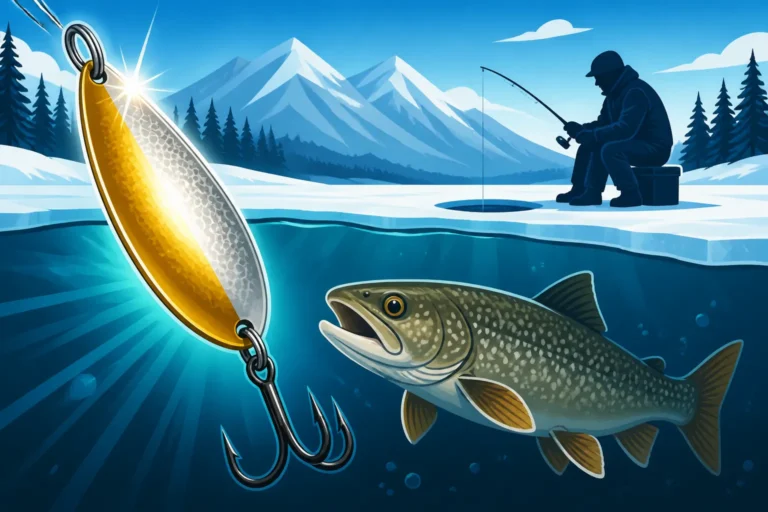
Best months to catch lake trout in New Hampshire
Trying to figure out the absolute sweet spot for hooking into a New Hampshire lake trout can feel like cracking a secret code. These magnificent, deep-water dwellers are notoriously sensitive to water temperature, making their whereabouts a real challenge if you don't understand their seasonal movements. This comprehensive guide will pull back the curtain on the best months to pursue lake trout in the Granite State, helping you plan your trips for maximum success.
Understanding Lake Trout Behavior Through the Seasons
To consistently catch lake trout, you first need to understand their core behavior. They are truly creatures of the deep and the cold, driven by fundamental needs for specific water conditions and readily available food. Ignoring these instincts will often lead to frustratingly empty livewells.
The Cold Water Preference of Lake Trout
Lake trout, often affectionately called "lakers" by those of us who chase them, are fundamentally cold-water fish. Unlike some of their trout cousins that tolerate warmer temperatures, lake trout thrive in cold, oxygen-rich environments. Their optimal temperature range typically hovers between 40 and 55 degrees Fahrenheit. This physiological need for cold water dictates their movements throughout the year, making them one of the most depth-sensitive game fish in New Hampshire's vast lakes.
When the surface waters of a lake warm up, usually starting in late spring and intensifying through summer, a distinct thermal stratification occurs. This means layers of water form, with warmer, lighter water on top and colder, denser water at the bottom. Lake trout are then forced to move down, sometimes to incredible depths, to find that sweet spot where the temperature and oxygen levels are just right for their survival and comfort. This is why you'll rarely find them cruising in the shallows on a scorching July afternoon. Understanding this critical preference is the first step in unlocking their seasonal patterns and knowing exactly where to drop your lines.
Their metabolism slows down in extremely cold water but accelerates slightly as temperatures approach the upper end of their preferred range, making them more active feeders. However, if the water gets too warm, they become stressed and lethargic, making them less likely to strike. This constant dance with temperature means that successful lake trout anglers are always thinking about how deep the cold water might be and where the fish will congregate to find it.
Forage and Feeding Habits Seasonally
Lake trout are apex predators in New Hampshire's cold, deep lakes, and their diet heavily influences where and when you'll find them. Their primary food sources are often smaller, schooling baitfish like rainbow smelt, ciscoes (also known as lake herring), and even other smaller trout. These baitfish, like the lake trout themselves, also have preferred temperature ranges and will move throughout the water column and lake to find suitable conditions and their own food sources.
When the baitfish are concentrated in certain areas or at specific depths, the lake trout won't be far behind. For example, during the spring, after the ice has melted, smelt might be relatively shallow, making lake trout accessible closer to the surface. As summer progresses and smelt retreat to deeper, cooler water alongside the lakers, anglers must adapt their techniques to target these deeper schools of forage. If you can locate the bait, you're usually halfway to locating the lake trout.
The intensity of their feeding also varies with the seasons. They tend to be highly active feeders during periods when they are preparing for spawning or bulking up for winter, often making these periods some of the most productive for anglers. Conversely, during the dog days of summer, when they are deep and possibly stressed by slightly warmer bottom temperatures, their feeding can be more sporadic. Knowing what their primary forage looks like and how to imitate it is crucial, whether it's through the action of a spoon or the presentation of a live shiner.
Prime Months for Lake Trout Fishing Success
While lake trout can be caught year-round in New Hampshire, certain months offer distinct advantages and opportunities, often dictated by the specific conditions of our lakes. Each season presents a unique challenge and reward for the dedicated angler.
Early Spring Ice-Out Action (April – Early June)
For many New Hampshire anglers, the period immediately following ice-out in late March and early April signals the start of prime lake trout season. This is arguably one of the most exciting times to target these fish. As the ice melts and the entire water column becomes uniformly cold, lake trout are no longer confined to the deepest parts of the lake. They disperse and often move surprisingly shallow, feeding actively after a long winter under the ice.
During this window, which can last from April through early June depending on the lake and how quickly spring warms up, you'll find lake trout cruising near rocky points, over humps, and along drop-offs in depths that might range from 15 to 40 feet. Trolling with spoons like the classic Mooselook Wobbler or a shiny Sutton spoon, or even casting stickbaits like a Rapala, can be incredibly effective. The fish are often aggressive, making this a fantastic time for both boat and shore anglers to connect with them. For detailed strategies, check out our guide on How to Catch Lake Trout in New Hampshire.
Imagine pulling up to a familiar rocky point on Lake Sunapee in early May. The air is crisp, the trees are just starting to bud, and the water is a chilly 45 degrees. You're casting a silver spoon, letting it sink for a few seconds before starting a slow, steady retrieve. Suddenly, your rod doubles over, and the unmistakable head shakes of a powerful lake trout send adrenaline coursing through you. This kind of shallow-water action is what makes early spring so special for laker enthusiasts.
Deep Water Summer Strategies (June – August)
As June gives way to the heat of July and August, the New Hampshire sun works its magic, warming the surface waters considerably. This signals a mass exodus of lake trout from the shallows to the deep, cold sanctuaries they require. During these summer months, successful lake trout fishing becomes a game of depth and precision. You'll need to chase them to the thermocline and beyond, often targeting depths of 60 to 120 feet or more, depending on the lake and current conditions.
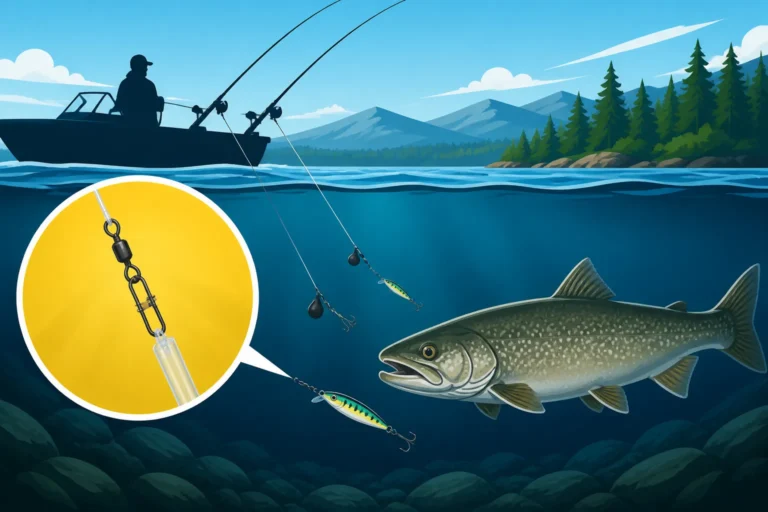
This is where specialized gear truly shines. Downriggers become invaluable, allowing you to present spoons, flies, or bait at exact depths where you're marking fish or baitfish on your fish finder. Lead core line is another popular choice, helping your lures sink without the need for additional weights on the main line. Trolling very slowly over deep structure, underwater humps, and along sharp drop-offs is the name of the game. For insights on navigating New Hampshire's regulations for motorboats and depth sounders, our article on New Hampshire Boating Laws for Anglers is a great resource.
While the summer months demand more technical skill and specialized equipment, the rewards can be substantial. Summer lake trout are often large, healthy fish, and battling one from the depths on a clear, sunny day on Lake Winnipesaukee is an experience you won't soon forget. It’s a patience game, but for those willing to learn the nuances of deep-water trolling or vertical jigging, summer offers fantastic opportunities. Many anglers purchase their specialized downriggers, lead core line, and even some of the heavier trolling rods from online retailers like Amazon, finding a wide selection and competitive prices.
Fall Feeding Frenzy (September – October)
As the crisp air of September arrives and the leaves begin their spectacular transformation, New Hampshire's lake trout experience a second surge of activity, often referred to as the fall feeding frenzy. This period, typically from September through October, is characterized by cooling surface waters that allow the lake trout to once again venture shallower, often chasing baitfish that are also moving up in the water column.
This is a fantastic time for both trolling and even casting or jigging in depths ranging from 30 to 70 feet. Lake trout are actively feeding, bulking up for the colder months and the upcoming spawning season. Their metabolism is high, and they can be incredibly aggressive, striking at a variety of lures. Spoons, stickbaits, and even large tube jigs or bucktail jigs become very effective. The picturesque backdrop of fall foliage adds an extra layer of enjoyment to these productive fishing trips. Our guide on Trolling Techniques for New Hampshire Lake Trout offers excellent strategies for this time of year.
The pre-spawn activity makes them more predictable in terms of location, as they often congregate around rocky points, reefs, and shoals where they will eventually lay their eggs. This means anglers can cover less water and often find more concentrated schools of fish. It's a prime window for catching both numbers and quality lake trout before the deep freeze sets in.
Winter Ice Fishing Opportunities (January – March)
When the lakes freeze solid, the pursuit of New Hampshire lake trout simply shifts from boats to ice shanties. Ice fishing for lake trout is a cherished tradition in the Granite State, offering a unique and often highly productive experience. The official season for lake trout ice fishing in many New Hampshire waters, including the larger lakes, typically runs from January 1st to March 31st. You can find precise dates in our article titled New Hampshire Lake Trout Ice Fishing Season Dates.
During the winter months, lake trout can be found at various depths, from moderately shallow (30-50 feet) to very deep (over 100 feet), depending on the lake and the location of baitfish. A common and effective technique involves jigging with heavy spoons, vertical tube jigs, or bucktail jigs. Many anglers also set up tip-ups, rigged with live or dead baitfish like smelt or large shiners, to cover a wider area. The key is to be mobile and use a good ice fishing sonar unit to locate fish and structure beneath the ice.
Ice fishing offers a serene yet exciting way to target these deep-water giants. Hooking into a strong lake trout on light ice fishing gear can be an exhilarating battle, often requiring careful handling to bring the fish through the hole. Popular lakes for winter lakers include Winnipesaukee, Sunapee, Newfound, and Squam. To maximize your chances, consult our guide on Best Ice Fishing Lakes in New Hampshire for specific locations and tips.
Essential Gear and Techniques for New Hampshire Lake Trout
Catching lake trout consistently requires not just knowing where and when to find them, but also having the right tools and strategies in your tackle box. These powerful fish demand robust gear and a thoughtful approach.
Rods, Reels, and Line for Lake Trout
When it comes to rods, versatility is key, but power is paramount. For trolling in New Hampshire's big lakes, a medium-heavy to heavy power trolling rod, typically 7 to 9 feet in length, is ideal. These rods have enough backbone to handle heavy weights, lead core line, or downriggers, and absorb the powerful runs of a large lake trout. If you're primarily jigging, especially through the ice or vertically from a boat, a medium-heavy spinning rod or a specialized ice rod with a sensitive tip but strong backbone, around 6 to 7 feet, will give you the feel and power you need. For those looking for top-tier options, many anglers turn to brands like St. Croix or Ugly Stik for their durability and performance.
Reels should be equally robust. For trolling, a good quality level-wind reel, often referred to as a conventional reel, with a strong drag system and high line capacity is a must. Brands like Shimano Tekota or Daiwa Accudepth are popular choices. For jigging, a sturdy spinning reel in the 3000-5000 size range, paired with a matching rod, offers excellent versatility. You can often find great deals on these kinds of reels on Amazon, making it easy to outfit your setup without breaking the bank.
Choosing the right line is critical. For trolling with downriggers or flatlining, 15-20 lb monofilament or braided line is common, often paired with a 10-15 lb fluorocarbon leader for stealth in clear New Hampshire waters. Fluorocarbon is less visible underwater and more abrasion-resistant, crucial when fishing around rocky structure. For lead core trolling, you'll be using lead core line directly, but still often attach a fluorocarbon leader. When jigging, 10-20 lb braided line with a 10-15 lb fluorocarbon leader provides excellent sensitivity and strength.
Top Baits and Lures for Lakers
Lake trout are opportunistic predators, and a variety of baits and lures can entice them. The key is to match the hatch or present something irresistible in their strike zone.
Spoons are arguably the most iconic lake trout lure. Long, slender, wobbling spoons in silver, gold, copper, or various painted patterns (like blue/silver, green/silver, or orange/brass) are incredibly effective. Favorites include the Mooselook Wobbler, Sutton Spoons, and the infamous DB Smelt. These mimic the smelt and ciscoes that form the backbone of a laker's diet. Trolling speed is critical; experiment to find the speed that gives your spoon the most enticing wobble. To explore popular options, check out our guide on Best Lures for Lake Trout Trolling.
Stickbaits (like Rapalas, Yozuris, or Bomber Long A's) are excellent, especially in spring and fall when lake trout are shallower. These can be trolled or cast and retrieved to imitate injured baitfish. Tube jigs and bucktail jigs are fantastic for vertical jigging, particularly through the ice or when boat fishing deep structure. White, chartreuse, or natural baitfish colors are often effective. Tip these with a piece of bait for added appeal.
When it comes to live or dead bait, smelt are king. Where regulations allow (always check the current New Hampshire Fishing Regulations Explained before using baitfish), a live or dead smelt suspended under a tip-up or trolled slowly can be incredibly effective, especially for larger, more finicky fish. Large shiners can also work. The natural scent and action of real bait can be irresistible when other lures fail.
Electronic Aids and Specialized Equipment
In the realm of lake trout fishing, technology is your friend. A reliable fish finder (sonar unit) is practically indispensable, especially when targeting deep-water fish. Brands like Humminbird, Lowrance, and Garmin offer excellent units that help you identify the thermocline, mark baitfish schools, locate deep structure like humps and drop-offs, and even spot individual lake trout. Knowing the depth of the cold water and where the fish are holding in relation to it is paramount. Our article on Best Fish Finders for New Hampshire Lakes provides more in-depth information.
Downriggers are essential for precise depth control, particularly during the summer when lake trout are deep. These devices allow you to send your lure down to an exact depth, keeping it in the strike zone longer. Manual or electric models are available, with many anglers investing in brands like Cannon or Scotty. Pairing a good fish finder with downriggers transforms deep-water trolling into a science.
Beyond the major electronics, other specialized equipment makes a big difference. A long-handled landing net with a rubberized mesh is crucial for safely landing large lake trout, especially if you plan on catch-and-release. Long-nosed pliers or a fish gripper are vital for safely unhooking fish. Don't forget a quality cooler to keep your catch fresh if you decide to harvest, and plenty of rod holders if you're trolling multiple lines.
Key New Hampshire Lakes for Lake Trout
New Hampshire is blessed with numerous deep, cold lakes that support thriving lake trout populations. While many smaller water bodies might hold some lakers, a few stand out as true trophy destinations.
Lake Winnipesaukee: The Crown Jewel
When you talk about lake trout fishing in New Hampshire, Lake Winnipesaukee immediately comes to mind. As the largest lake in the state, it offers an incredible expanse of deep, cold water, ideal habitat for lake trout. Winnipesaukee is renowned for producing both good numbers of lake trout and true trophy-sized fish, some pushing well over 20 pounds. For a comprehensive overview, see our Lake Winnipesaukee Fishing Guide.
The lake's vastness and complex structure, with numerous islands, deep basins (like the famous "Broads"), and underwater humps, provide endless opportunities. Lake trout can be found throughout the lake, but popular areas include the waters around Center Harbor, Meredith, Alton Bay, and Wolfeboro, particularly in the deeper sections. Early spring and fall see lakers shallower, making them accessible to a wider range of anglers, while summer demands deep-water trolling with downriggers. Even in winter, the ice fishing community thrives on Winnipesaukee, with dedicated anglers setting up permanent shanties to target these majestic fish through the ice. Our specific article on Lake Winnipesaukee Lake Trout Fishing delves even deeper into techniques and hotspots.
Other Premier Lake Trout Destinations
While Winnipesaukee often steals the spotlight, several other New Hampshire lakes offer fantastic lake trout fishing experiences. These lakes share similar characteristics of depth, cold water, and healthy baitfish populations.
Lake Sunapee is another exceptional lake trout fishery. Located in the Dartmouth-Lake Sunapee region, it's known for its clear, deep waters and strong populations of both lake trout and landlocked salmon. Similar to Winnipesaukee, Sunapee offers excellent fishing year-round, with spring and fall offering shallower opportunities and summer requiring deep-water tactics. The lake's robust smelt population provides an abundant food source for its thriving laker population.
Newfound Lake, situated in Bristol, is one of the deepest and cleanest lakes in New Hampshire. Its deep, cold basins are perfect for lake trout. Anglers often find success here using similar trolling and jigging methods as on Winnipesaukee and Sunapee. It's a slightly smaller, more intimate setting but still holds significant numbers of quality lake trout.
Squam Lake, famous for being the setting of "On Golden Pond," is another deep, pristine lake that supports a good lake trout fishery, though perhaps not with the same numbers or trophy potential as Winnipesaukee or Sunapee. Its numerous islands and varied structure make it an interesting place to explore. Always remember to check the specific regulations for each water body, as they can sometimes differ slightly. Our guide on Best Fishing Lakes in New Hampshire features more information on these and other great fishing destinations.
| Month Range | Typical Water Temperature | Typical Depth | Recommended Techniques |
|---|---|---|---|
| April – Early June | 40-55°F | 15-40 feet | Trolling spoons/stickbaits, casting jigs |
| Late June – August | 55-65°F (surface); 40-50°F (deep) | 60-120+ feet | Deep trolling (downriggers/lead core), jigging |
| September – October | 50-60°F | 30-70 feet | Trolling spoons/stickbaits, vertical jigging |
| January – March (Ice) | 33-39°F (under ice) | 30-100+ feet | Jigging spoons/tubes, tip-ups with bait |
Disclaimer
Fishing conditions and regulations in New Hampshire can change. Always consult the latest New Hampshire Fish and Game Department rules and regulations before heading out on the water. This guide is for informational purposes only.