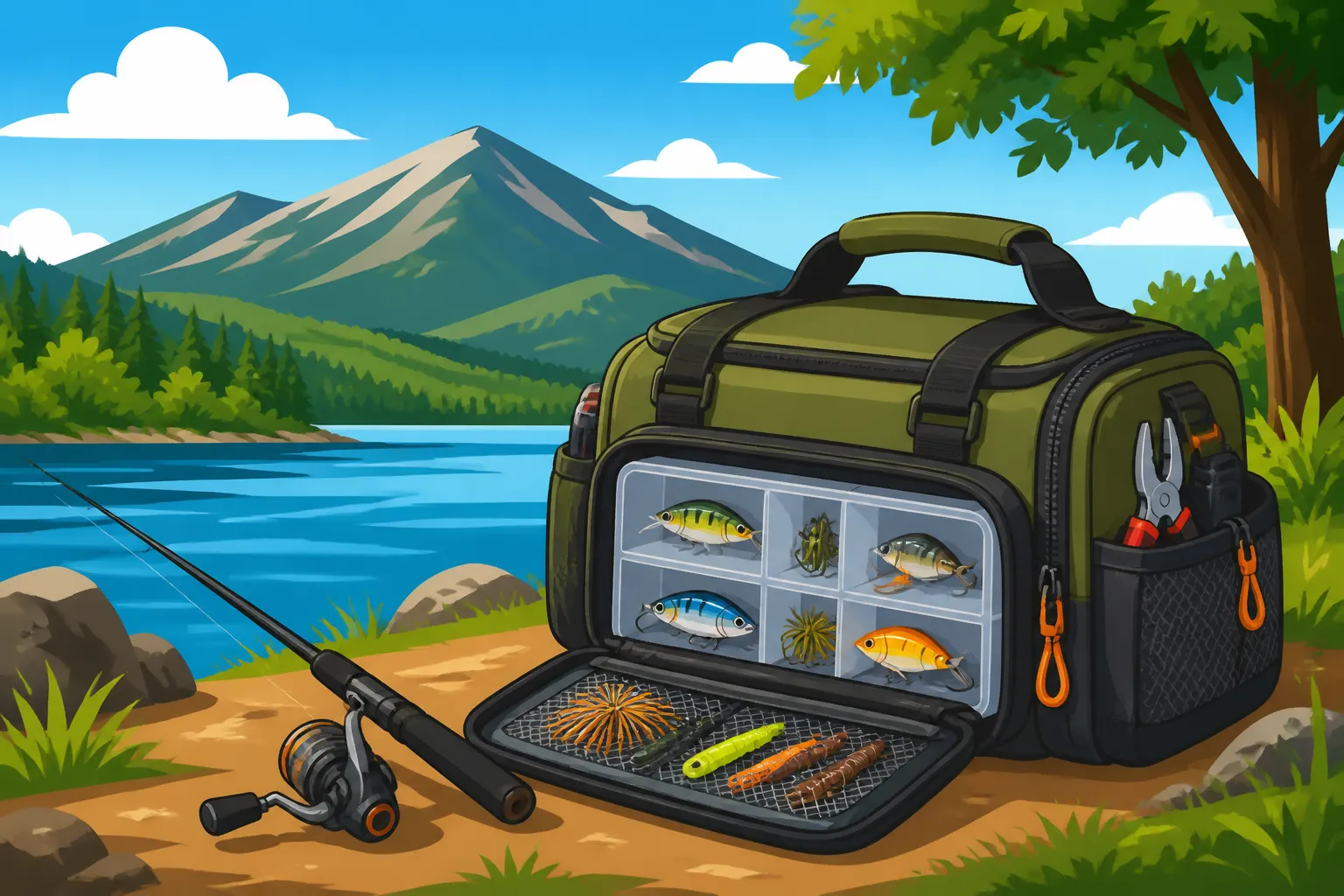
Best Tackle Bag for Bank Fishing
It's a common story, isn't it? You've got that itch to hit a quiet stretch of the Contoocook River or a hidden pond in the Lakes Region, ready for a day of peaceful bank fishing. But then you look at your gear: a bucket full of odds and ends, a loose tackle box, extra spools of line rattling around, and suddenly that peaceful outing feels like a logistical nightmare. This guide is all about cutting through that frustration and helping you find the perfect tackle bag to make your New Hampshire bank fishing adventures smooth, organized, and truly enjoyable.
The Unique Demands of Bank Fishing in New Hampshire
Bank fishing in New Hampshire isn't just about finding a spot by the water and casting out. Our diverse landscape, from the rocky shores of Lake Winnipesaukee to the muddy banks of the Merrimack River and the winding trails leading to remote trout ponds, presents a unique set of challenges. Unlike fishing from a boat where everything has its place and stability is often a given, bank anglers are constantly on the move, facing varied conditions that demand specialized gear.
Navigating Varied Terrain
Imagine you're heading to a favorite stretch of the Pemigewasset River. You might start on a relatively flat, grassy path, but soon you're navigating over slippery rocks, scrambling down a steep embankment, or pushing through thick brush to get to that perfect eddy. Your tackle bag needs to be able to handle this kind of abuse, protecting your valuable gear from impacts and moisture, and staying securely on your person so your hands are free for balance or carrying your rod. A bag that constantly shifts, snags on branches, or feels cumbersome will quickly detract from your experience. We often think about the fish, but getting to them safely and comfortably is the first step.
Dealing with Changing Weather
New Hampshire weather is, well, New Hampshire weather. One minute it's sunny and pleasant, the next you're dodging a sudden downpour, or battling the humidity that makes everything feel damp. Your tackle bag isn't just a container; it's a protector. It needs to keep your hooks from rusting, your soft plastics from melting together in the sun, and your extra layers dry when the skies open up. Trust me, there's nothing worse than reaching for your phone to snap a photo of a beautiful brook trout only to find it's soaked because your bag wasn't up to the task.
The Need for Portability and Accessibility
When you're bank fishing, your gear is essentially an extension of yourself. You don't have the luxury of a large boat deck to spread out your lures or a console to hold your tools. Every item needs to be easily accessible, yet securely stowed. Fumbling for a new lure while a school of bass is busting bait in front of you is maddening. The ideal tackle bag allows you to grab what you need with minimal effort, often without even taking it off, keeping you in the action and focused on the water. This is especially true if you're exploring Best Shore Fishing Spots in New Hampshire or trying out Best Kayak Fishing Spots in New Hampshire, where mobility is key.
Key Features to Look for in a Bank Fishing Tackle Bag
Choosing the right tackle bag feels a bit like Goldilocks trying to find the perfect porridge – not too big, not too small, but just right. For bank anglers, a bag needs to strike a delicate balance between functionality, durability, and comfort. It's about more than just holding stuff; it's about optimizing your entire fishing experience.
Storage Capacity and Organization
This is where many tackle bags either shine or utterly fail. You need enough space for your essential utility boxes, but not so much that you're hauling around a dozen lures you'll never use. The magic is in the organization. Look for bags with multiple compartments, dedicated pockets for specific items, and ideally, a system that integrates standard utility boxes (like those ubiquitous clear plastic ones). Think about those times you're trying to quickly re-tie a leader; having a specific spot for your line spool, leader material, and clippers means less fumbling and more fishing. Some bags even feature external rod holders, which can be a game-changer when you're traversing tricky terrain or just want a hands-free moment to net a fish.
Material and Durability
New Hampshire's fishing environments can be tough on gear. From abrasive rocks to thorny bushes and sudden downpours, your tackle bag will take a beating. Don't skimp on material quality. Look for heavy-duty, water-resistant fabrics like denier nylon or similar rugged synthetics. Reinforced stitching at stress points, especially where straps connect to the main body, is crucial. High-quality zippers are another often-overlooked feature that makes a huge difference. A cheap zipper can seize up with grit, rust, or simply break, rendering a perfectly good bag useless. Trust me, I've had more than one trip ruined by a zipper that decided to call it quits mid-stream. Some bags even come with a reinforced, waterproof bottom, which is a godsend when you inevitably set your bag down on wet ground or muddy banks.
Comfort and Carry Options
Since you'll be carrying this bag, often for hours at a time, comfort isn't a luxury; it's a necessity. Padded shoulder straps are non-negotiable, especially for backpack-style bags, as they help distribute weight evenly and prevent digging into your shoulders. Adjustable straps allow for a customized fit, whether you're wearing a light shirt or a bulky winter jacket while Ice Fishing in New Hampshire. A breathable back panel can prevent sweat build-up on warmer days, keeping you comfortable. Hip belts or sternum straps can provide additional stability and take some strain off your shoulders, which is particularly helpful when you're hiking a considerable distance to reach those remote spots known for Brook Trout: New Hampshire's Native Trout. Consider how you prefer to carry your gear – do you need two hands free, or do you like the quick access of a sling? This will heavily influence your choice.
Different Types of Tackle Bags for Bank Anglers
Just as there are different ways to fish, there are different types of tackle bags designed to suit various bank fishing styles. Understanding these distinctions will help you narrow down your options and find the perfect fit for your New Hampshire adventures.
Backpack-Style Tackle Bags
These are perhaps the most popular choice for bank anglers who cover a lot of ground or carry a significant amount of gear. The primary advantage of a backpack is obvious: it keeps your hands completely free, which is incredibly useful when you're scrambling over rocks, wading through shallow streams, or simply carrying your fishing rod. A well-designed fishing backpack will distribute the weight evenly across both shoulders and your back, making longer hikes to those secluded spots in the White Mountains much more manageable. Many models feature a large main compartment for multiple utility boxes, often accessible from the front, along with numerous smaller pockets for accessories, and even external water bottle holders.
However, access can be a trade-off. To get to your main tackle, you usually have to take the backpack off and set it down. Some newer designs attempt to mitigate this with side access or rotating systems, but it’s still generally less immediate than a sling bag. They also tend to be larger, meaning you might be tempted to overpack, which defeats the purpose of being agile. For those planning a full day of fishing, perhaps even exploring different spots like the Connecticut River Fishing Access in New Hampshire, a durable, comfortable backpack from a brand like Bass Pro Shops or found on Amazon, could be an excellent choice.
Shoulder/Sling Bags
Sling bags are the go-to for anglers who prioritize quick access and lighter loads. Worn across the body, these bags can often be swung around to the front with a single motion, allowing you to access tackle boxes, pliers, or extra line without taking the bag completely off. This makes them incredibly efficient for situations where you're frequently changing lures or need tools in a hurry, like when you're trying to land a feisty smallmouth bass. They are generally smaller than backpacks, encouraging a more minimalist approach to your gear, which can be a blessing when you're trying to stay mobile.
The downside is that the weight distribution isn't as even as a backpack, putting more strain on one shoulder over prolonged periods. If you tend to carry a lot of gear, a sling bag might become uncomfortable after an hour or two. However, for short trips, light tackle fishing, or situations where you're walking relatively short distances from your car to the water, a well-padded sling bag can be the ultimate companion. They are excellent for keeping just your essential lures and tools close at hand, perfect for a quick evening trip to a local pond.
Traditional Soft-Sided Tackle Bags
These bags often resemble a conventional tool bag or a small duffel, sometimes with a rigid bottom. They are incredibly versatile and typically come with several modular utility boxes that slide into a main compartment. Many feature external pockets for additional storage. The soft sides make them somewhat flexible, allowing them to conform to different shapes in your trunk or boat, but also mean they might not offer as much protection against crushing as a harder tackle box.
Traditional soft-sided bags are great if you like to organize your tackle into dedicated boxes and want the flexibility to swap them out depending on what you're fishing for that day. For instance, you might have one box for Best Baits for Smallmouth Bass on Winnipesaukee and another for panfish. While not as hands-free as a backpack, many come with comfortable shoulder straps in addition to carry handles, offering options for transport. They are excellent for keeping in a central location in your car and grabbing out for shorter bank excursions where you're not hiking far, or for use from a smaller craft like a kayak or canoe, where you can easily reach in.
Essential Compartments and Accessories for Your Bank Fishing Bag
Once you’ve picked the right type of tackle bag, it’s time to think about what goes inside and what specialized compartments will make your life easier. A truly effective bank fishing bag isn't just a container; it's a mobile command center for your angling endeavors.
Dedicated Tackle Storage
This is the bread and butter of any tackle bag. Most bank fishing bags are designed around holding those clear plastic utility boxes (often called 3600 or 3700 series, or similar sizes). Look for bags that come with these boxes, or at least clearly state which sizes they accommodate. Having dedicated slots or a main compartment specifically for these boxes keeps your lures, hooks, and weights neatly organized and prevents them from spilling into a chaotic mess. Some bags even have unique systems for soft plastics, such as built-in sleeves or external pockets that allow you to quickly flip through different colors and styles without rummaging.
Consider also how many boxes you realistically need for a typical bank fishing outing. Overpacking means more weight and more bulk. A good strategy is to have a few general-purpose boxes, and then swap out specific "target species" boxes based on where you're fishing. For example, if you're hitting a trout stream, you'll want your Best Gear for New Hampshire Trout Fishing box, but if you're targeting bass on a local pond, you'll grab your Best Tackle for New Hampshire Smallmouth Bass box.
Tool and Accessory Holders
There’s nothing more frustrating than needing your pliers to unhook a toothy pickerel or snip line, only to find them buried at the bottom of your bag. Good bank fishing bags incorporate specific features for tools and accessories. Look for external loops or sheaths for pliers, scissors, or a multi-tool. A designated leader wheel dispenser or a small pocket for extra spools of fluorocarbon or monofilament can save you precious fishing time. Some bags even have small, clear zippered pockets for items like spare hooks, weights, or bobber stoppers, making them easy to see and grab.
Think about the small but vital items: a small first aid kit for minor cuts, sunscreen, insect repellent (especially important during summer evenings in New Hampshire!), and perhaps a fish gripper or a small scale if you like to weigh your catches. Having specific, easy-to-reach spots for these items means you're prepared for anything the day throws at you, without having to dig.
Personal Item Pockets
Let's be real, your tackle bag often doubles as your daypack. While fishing is the priority, you still need a place for your personal essentials. Look for bags with dedicated, often water-resistant or waterproof, pockets for your phone, car keys, and wallet. It's a huge relief to know these important items are safe and dry, rather than tucked into a loose coat pocket where they might fall out.
Additionally, a pocket for snacks and a water bottle holder are invaluable, especially on warmer days or longer excursions. Staying hydrated and fueled is just as important as having the right lure. Some bags even have small internal mesh pockets perfect for a camera, so you can capture those unforgettable moments, perhaps with a beautiful Landlocked Salmon Fishing in New Hampshire catch, without worrying about it getting scratched or wet. The best tackle bags integrate these personal necessities seamlessly, so you're not juggling multiple bags or leaving critical items behind.
Choosing the Right Size and Capacity for Your Adventures
The "perfect" tackle bag isn't a universal truth; it's deeply personal and depends entirely on your fishing habits. Are you a minimalist, or do you like to have every option at your fingertips? Do you go for short bursts of fishing, or epic all-day expeditions? These questions guide you to the right size and capacity.
Day Trip vs. Extended Outing Needs
Consider the duration of your typical bank fishing trip. For a quick afternoon outing to a local pond or a couple of hours on the Merrimack, a smaller sling bag or a compact backpack might be ideal. You'll likely only need a few essential lures, a small selection of soft plastics, and your basic tools. This keeps you light and mobile, making it easy to hop from one spot to another.
However, if you're planning an all-day adventure, perhaps hitting several different sections of the Saco River or trekking into a remote White Mountain stream for Fly Fishing for Trout in New Hampshire, your needs expand significantly. You'll want extra layers of clothing, more water, more snacks, a wider variety of tackle to adapt to changing conditions or target different species, and maybe even a small first aid kit. For these longer trips, a larger backpack-style tackle bag with ample capacity for both gear and personal items will be your best friend. It’s about being prepared, not overladen.
Matching Bag Size to Your Fishing Style
Your chosen fishing style also plays a huge role. Are you primarily bait fishing for panfish with a simple bobber and worm? A small, simple tackle bag with just a few compartments for hooks, sinkers, and bobbers might be all you need. On the other hand, if you're an avid lure fisherman targeting bass or pickerel, you'll likely need space for multiple crankbaits, spinnerbaits, jigs, and an array of soft plastics. The more diverse your tackle, the larger and more organized your bag needs to be.
Similarly, fly anglers often have very specific needs. While some fly fishing vests can carry a surprising amount of gear, a dedicated fly fishing pack might be necessary for longer excursions, holding fly boxes, tippet spools, leaders, and even a small reel. The key is to think about what you actually use on a typical outing and select a bag that accommodates that without excessive empty space or, worse, overflowing pockets.
The Art of Packing Light but Smart
This is arguably the most crucial skill for any bank angler. It's tempting to bring everything but the kitchen sink, but every ounce adds to your fatigue and hinders your mobility. Learn to be strategic. Before each trip, think about the specific species you're targeting, the water body you're fishing, and the conditions you expect. Do you really need those heavy deep-diving crankbaits if you're fishing a shallow, weedy pond? Probably not.
One effective strategy is to use small, modular utility boxes. Have one box dedicated to bass jigs, another for trout spinners, and another for terminal tackle. Then, for each trip, select only the boxes that are relevant. This allows you to scale your tackle down or up without having to repack your entire bag. Brands like Bass Pro Shops and products available on Amazon offer a huge variety of these modular storage solutions. Remember, the goal is to be prepared, not to carry a mobile fishing store. A streamlined, efficiently packed bag will make your bank fishing trips in New Hampshire far more enjoyable and productive.
Top Considerations When Purchasing Your Next Tackle Bag
So, you're ready to make the plunge and upgrade your bank fishing setup. Before you hit "buy" or head to your local outdoor store, let's go over a few final, but critical, considerations that will ensure your new tackle bag is a worthwhile investment.
Water Resistance and Protection
This can't be stressed enough for New Hampshire fishing. A sudden rain shower, a splash from a landed fish, or simply setting your bag down on dewy grass can quickly turn into a disaster for your gear if your bag isn't up to snuff. Look for bags specifically advertised as "water-resistant" or "waterproof." While truly submersible waterproof bags are often specialty items and pricier, a good water-resistant bag with a robust coating and sealed seams will protect against most everyday moisture. Some bags even feature a hard, waterproof molded bottom, which is excellent for keeping moisture from seeping up from wet ground.
Beyond water, consider protection from impact. If you're hiking rocky trails or through dense brush, your bag will inevitably bump and scrape against things. Padded compartments can protect sensitive items like cameras or electronics, and a sturdy outer shell will prevent hooks from puncturing the fabric and potentially injuring you. Remember, your tackle bag is an investment in protecting your other investments – your rods, reels, and expensive lures.
Quality of Zippers and Hardware
This is where many manufacturers cut corners, and it's often the first thing to fail. Cheap zippers can corrode, jam with sand or grit, or simply break under stress. Look for heavy-duty, self-repairing zippers, ideally made by reputable brands like YKK. Larger zipper pulls are also a plus, especially if you're trying to open a pocket with cold or wet hands. Snaps, buckles, and D-rings should be robust and made from durable plastic or metal that won't rust.
Think about the conditions. If you fish a lot around saltwater, such as in Great Bay Fishing Guide for Striped Bass, corrosion-resistant zippers and hardware are non-negotiable. Even in freshwater environments, constant exposure to moisture and temperature changes can degrade lower-quality components quickly. A bag with excellent fabric but failing zippers is just a fancy tote.
Brand Reputation and Reviews
While it's important to trust your own judgment, reputable brands often have a track record for quality and customer service. Brands that specialize in fishing gear or outdoor equipment typically understand the specific needs of anglers better than generic bag manufacturers. That's not to say you can't find a great bag from a less-known brand, but established names often provide a baseline level of quality you can rely on.
Reading reviews from other anglers is also incredibly helpful. Look for reviews that specifically mention how the bag performs for bank fishing, its durability over time, and whether it holds up to similar weather conditions you'd expect in New Hampshire. Pay attention to common complaints – are zippers failing? Are straps tearing? Are people finding it uncomfortable on long walks? Sites like Amazon and Bass Pro Shops product pages are fantastic resources for getting real-world feedback on specific models. Sometimes, a slightly higher initial cost for a well-reviewed, durable bag will save you money and frustration in the long run by not having to replace it every year.
Here’s a quick overview to help you compare the general characteristics of different bag types:
| Feature | Backpack-Style Bag | Shoulder/Sling Bag | Traditional Soft-Sided Bag |
|---|---|---|---|
| Carry Comfort | Excellent for long treks, hands-free | Good for short trips, quick access, less even weight | Variable, usually good for short distances or vehicle use |
| Access Speed | Moderate (often requires removal) | Fast (swings to front easily) | Moderate (can be set down and opened) |
| Capacity | High (suitable for all-day or multi-species) | Low to Medium (best for essentials) | Medium to High (often comes with utility boxes) |
| Organization | Very good (multiple compartments, specific pockets) | Good (focused on immediate needs) | Excellent (designed around utility box systems) |
| Durability Focus | Rugged materials, reinforced straps for heavy loads | Good materials, focus on quick access hardware | Sturdy main body, sometimes reinforced bottom |
| Best Use Case | Long hikes, diverse gear needs, hands-free movement | Quick trips, minimalist approach, frequent lure changes | Flexible storage, car/boat-based, organized tackle |
Ultimately, your best tackle bag for bank fishing in New Hampshire will be the one that feels right for you. It's about combining practicality with personal preference, ensuring that your gear supports your passion, rather than hindering it.
Disclaimer
This article is for general informational purposes only and does not constitute professional advice. Laws, prices and regulations vary by location and change over time. Consult a qualified professional for guidance on your specific situation.