Best Spoons for Lake Trout Trolling
There's nothing quite like the thrill of a rod bending over, signaling a powerful lake trout has hit your line. But let's be honest, sometimes it feels like you're just dragging metal through the water, hoping for a miracle. Trolling for lake trout in New Hampshire's vast and deep lakes can be incredibly rewarding, but it can also be frustrating if you're not using the right tools for the job, especially when it comes to spoons. This guide is all about demystifying the world of trolling spoons, helping you understand which ones work best, why they work, and how to present them to entice those elusive lakers.
Understanding Lake Trout Trolling in New Hampshire
New Hampshire's lakes, especially the larger, deeper ones like Winnipesaukee, Newfound, and Sunapee, are prime habitats for lake trout. These ancient, powerful fish are often found in cooler, deeper waters, making trolling a highly effective method to reach them. But it's not just about getting a lure down deep; it's about presenting something that looks irresistible.
The Lure of Lake Trout Trolling
Trolling allows anglers to cover vast expanses of water, systematically searching for active fish. Unlike casting, which targets a smaller area, trolling presents your offering to fish spread out across different depths and structures. For lake trout, which can be quite nomadic, this search-and-strike approach is often the most productive. The constant motion of a trolled spoon mimics a fleeing or injured baitfish, triggering the predatory instincts of a laker. It's a game of patience and precision, where every detail, from your boat speed to your lure choice, plays a critical role in success.
It's easy to get overwhelmed by the sheer number of lures available, and many anglers, myself included, have spent countless hours experimenting. The beauty of spoons for lake trout is their versatility. They shimmer, wobble, and dart, creating a visual and vibrational signature that’s hard for a hungry laker to ignore. Understanding the specific conditions—water clarity, depth, and the natural forage present—will dramatically increase your odds when you're out on the big water.
New Hampshire's Unique Lake Trout Challenges
Fishing in New Hampshire presents its own set of challenges and opportunities when targeting lake trout. Our lakes are often incredibly clear, which means fish can be more discerning and wary of your presentation. Depths can range from gradual slopes to sudden, dramatic drop-offs, requiring precise depth control. Furthermore, the primary forage base in many of these lakes is rainbow smelt, a slender, silvery baitfish that influences the color and profile choices for successful spoons. Lake trout can be found anywhere from just after ice-out near the surface to hundreds of feet down in the dog days of summer.
This variability means you can't just pick one spoon and expect it to work everywhere, all the time. Anglers need a diverse tackle box and the knowledge to adapt. It's not uncommon to start a day trolling in fifty feet of water and end up targeting fish over a hundred feet down as the sun climbs higher. The ability to read your electronics, understand the local lake trout habits, and select the appropriate spoon to imitate their natural prey is what separates a consistent producer from someone just enjoying a boat ride. This constant learning and adjustment is part of the fun and challenge of Lake Trout Fishing in New Hampshire.
Key Characteristics of Effective Lake Trout Trolling Spoons
When you're sifting through endless options at the tackle shop or browsing online, what makes a spoon truly effective for New Hampshire lake trout? It boils down to a few critical design elements that dictate how the spoon behaves in the water and how appealing it is to a laker.
Size and Profile Matters
The size and profile of your trolling spoon are perhaps the most important factors. Lake trout in New Hampshire often feed on smelt, which are typically slender fish. Therefore, spoons that mimic this profile tend to be highly effective. We're generally talking about spoons in the 3 to 5-inch range. Too small, and a laker might ignore it for not being a substantial meal; too large, and it might look unnatural or intimidating, especially in our clear waters.
The shape—whether it's long and thin, or a bit wider and more curved—determines its action. Longer, thinner spoons often have a tighter wobble, while broader, more curved spoons tend to have a wider, more erratic action. Consider the depth you're fishing. Smaller, lighter spoons can be harder to get down to significant depths without a lot of weight or special rigging, whereas heavier, denser spoons cut through the water column more efficiently. Matching the size to the predominant baitfish size in the lake you’re fishing is always a smart move. For example, if you know the lake has smaller smelt, leaning towards the 3-4 inch spoons might be a better bet.
Action and Vibration
The "action" of a spoon refers to how it moves through the water, and it's what truly draws a lake trout's attention. A good trolling spoon for lakers will have a distinct, seductive wobble or flutter. This action simulates an injured or struggling baitfish, sending out vibrations and flashes that predators pick up on. Some spoons have a wide, sweeping action, while others have a tighter, more rapid wiggle.
The desired action can change with trolling speed and water conditions. Sometimes, a subtle flutter is all it takes; other times, a more aggressive, erratic darting motion is what triggers a strike. Pay attention to how the spoon behaves behind the boat at different speeds. You want it to swim naturally, without spinning or fouling. The best way to check this is to let out a short amount of line right next to the boat and observe its action before deploying it. Many anglers find that a flutter spoon, known for its erratic movement, is incredibly effective when targeting How to Catch Lake Trout in New Hampshire.
Material and Durability
Most trolling spoons are made from metal, often brass or steel, and then plated or painted. The material affects the spoon's weight, its sinking rate, and its flash characteristics. Brass spoons tend to be heavier for their size and provide a deeper thump, while lighter metals can offer a more delicate flutter. Durability is also a huge factor. Lake trout have sharp teeth, and spoons often take a beating from repeated strikes and encounters with bottom structure.
You want spoons with quality construction: strong split rings, sharp hooks, and durable finishes that won't chip or peel after a few uses. Cheap spoons might save you a few dollars upfront, but they can quickly become useless when the paint comes off, or a split ring fails on a trophy fish. Investing in quality spoons from reputable brands will pay off in the long run. Many experienced anglers replace the treble hooks on new spoons with stronger, sharper single hooks or even VMC or Gamakatsu trebles right out of the package for added security against a powerful laker's fight.
Top Spoon Styles for New Hampshire Lake Trout
With so many spoons on the market, it can be hard to narrow down the choices. However, for lake trout trolling in New Hampshire, a few specific styles have consistently proven their worth, earning a permanent spot in many anglers' tackle boxes.
Flutter Spoons: The Wobble Masters
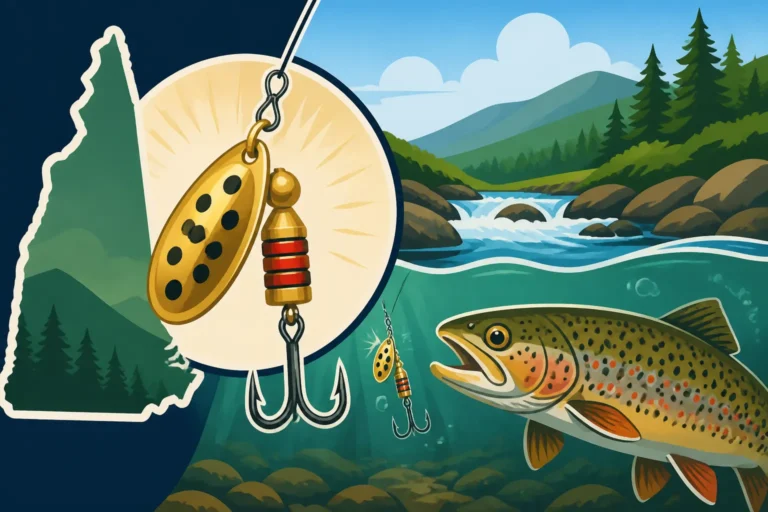
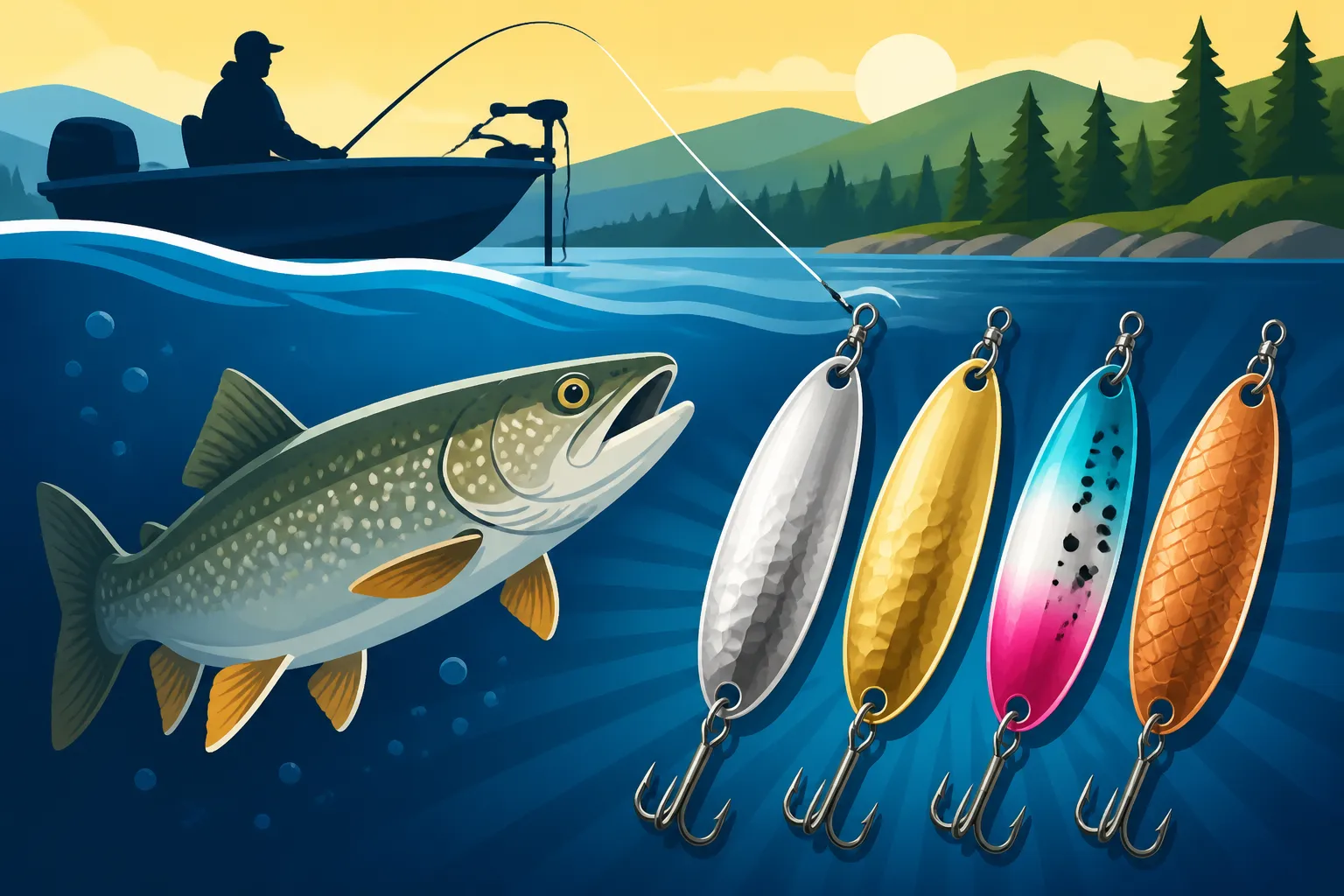
Flutter spoons are characterized by their relatively thin, lightweight design and a distinct, wide, and often erratic wobbling action. When trolled, they swim with a pronounced side-to-side motion, punctuated by random darts and flutters, truly mimicking a distressed baitfish. This action is particularly deadly when lake trout are actively feeding or when you need to cover a lot of water to locate them. Their lighter weight also gives them a slower fall rate when paused, which can be critical if fish are following and you want to trigger a reactionary strike by dropping the spoon slightly.
Brands like Bass Pro Shops and Amazon carry a wide array of flutter spoons, and you'll find variations in curve, taper, and weight, all contributing to different actions. Some popular examples include the various "Magnum Flutter Spoons" or "Crippled Herring" styles. They are fantastic when retrieved at moderate speeds and can be particularly effective when fish are suspended in the water column. The flash and vibration they emit are substantial, making them highly visible and detectable even in deeper, darker conditions.
Tapered Spoons: Deep Divers
Tapered spoons, often heavier and more streamlined than flutter spoons, are designed to cut through the water with less resistance, allowing them to reach greater depths more efficiently. They typically have a more consistent, tight wobble compared to the erratic flutter spoon. This makes them ideal for targeting lake trout that are holding tight to the bottom structure or congregating in deeper thermal refuges during warmer months. Their weight also helps them maintain depth better in varying current conditions or when making sharper turns while trolling.
These spoons often have a pronounced curve or bend towards the back, which contributes to their tight, pulsating action. Think about the classic "Daredevil" or "Doctor Spoon" shapes, though many modern variations exist specifically for deep water trolling. They are excellent choices when you know fish are holding at a specific depth, and you need a lure that will stay in that zone consistently. The advantage of a tapered spoon is its ability to get down quickly and stay down, which is essential when fishing in the depths of a lake like Winnipesaukee, where lake trout can be found at considerable depths.
Peanut Spoons: Compact and Deadly
Peanut spoons are smaller, more compact spoons that often have a broader profile for their length, giving them a unique, tight wiggle action. Their name comes from their slightly stubbier, peanut-like shape. While smaller in overall size, they can still be surprisingly effective for larger lake trout, especially when fish are keyed in on smaller baitfish or when a more subtle presentation is required. They can be particularly good in situations where fish are pressured or when you need to match a smaller forage base.
Don't let their smaller size fool you; these spoons pack a punch in terms of action and flash. They might not have the wide sweep of a flutter spoon, but their tight, rapid vibrations can be incredibly enticing. They are also versatile and can be trolled at various speeds. Often, they are used when fishing closer to the surface in spring or fall, or when fish are being finicky. Their compact nature makes them a great choice for lighter setups or when trying to replicate juvenile baitfish. You might find success with these in shallower, more rocky areas where smaller baitfish tend to congregate.
Here's a quick comparison of these popular spoon styles:
| Spoon Style | Typical Action | Ideal Depth Range | Trolling Speed | Key Benefit |
|---|---|---|---|---|
| Flutter Spoon | Wide, erratic wobble | Mid-to-Deep | Moderate | High flash, erratic movement |
| Tapered Spoon | Tight, consistent wobble | Deepest | Slow to Moderate | Consistent depth, efficient diving |
| Peanut Spoon | Compact, tight wiggle | Shallow to Mid | Slow to Moderate | Subtle presentation, matches small bait |
Color Strategies for New Hampshire Lake Trout Spoons
Choosing the right color spoon is almost as crucial as selecting the right style. Lake trout are highly visual predators, and water clarity, light conditions, and the prevalent forage all play a significant role in what color will be most effective on any given day. It’s a bit of an art and a science, and every experienced angler has their favorite "go-to" colors.
Matching the Hatch: Forage Colors
The most fundamental color strategy is "matching the hatch"—selecting spoon colors that imitate the natural prey in the lake. As mentioned, rainbow smelt are a primary food source for lake trout in many New Hampshire lakes. This means silvery, iridescent, and blue-back combinations are often top performers. Spoons with patterns that mimic the lateral line or scale patterns of a smelt can be incredibly effective.
Consider spoons with a silver base, sometimes with a touch of blue, green, or even purple on the back. Sometimes, a subtle black or charcoal stripe down the side can mimic the dorsal fin of a smelt. While smelt are generally silver, their appearance can change slightly depending on how light hits them in the water. Having a few variations of silver, from highly polished chrome to a more muted matte silver, allows you to adapt to the specific conditions. When the lake trout are feeding aggressively, a good Best Baits for Smallmouth Bass on Winnipesaukee can also draw strikes, and similar forage-matching principles apply.
Bright vs. Natural: Water Conditions
Water clarity and sunlight penetration greatly influence color choice. In the exceptionally clear waters common in many New Hampshire lakes, natural and translucent colors often work best. Silvers, blues, whites, and light greens tend to blend in more naturally and avoid spooking wary fish. Under bright sun, a highly reflective chrome or silver can create too much flash, making it look unnatural. Sometimes a pearl white or even a subtle holographic finish is more appealing.
Conversely, on overcast days, at dawn or dusk, or in deeper, darker water, a spoon with more flash or contrast might be necessary to get noticed. This is where brighter colors or even a touch of glow can come into play. Chartreuse, hot pink, or oranges, often combined with silver or gold, can provide the necessary visibility. It's about finding that balance—enough flash to attract attention, but not so much that it appears artificial. Remember, light dissipates quickly in water, so what looks bright on the surface will be muted at depth.
UV and Glow for Deep Water
When targeting lake trout in very deep water (think 80+ feet), where natural light struggles to penetrate, UV-enhanced and glow-in-the-dark spoons become indispensable. UV light penetrates deeper into the water column than visible light, making UV-reactive colors highly visible even in low-light conditions. Many modern spoons are now designed with UV pigments to capitalize on this.
Glow-in-the-dark spoons, which absorb light and then slowly emit it, provide a persistent, subtle illumination that can be incredibly effective in the darkest depths or after dark. You'll often see combinations like glow-in-the-dark green, orange, or chartreuse. Before deploying a glow spoon, "charge" it with a bright light source, like a camera flash or a UV flashlight, to maximize its luminosity. These are particularly valuable during periods like the New Hampshire Lake Trout Ice Fishing Season Dates or when Best Techniques for Deep Water Summer Lake Trout are needed. Don't underestimate the power of these specialized finishes, especially when you're probing the abyss for those monster lakers.
Rigging and Presentation Techniques for Trolling Spoons
Having the right spoons is only half the battle; knowing how to rig and present them effectively is what truly converts potential into strikes. Lake trout can be finicky, and paying attention to the details of your setup and how you deploy your spoons can make all the difference.
Leader Length and Material
When trolling spoons for lake trout, your leader setup is critical. Lake trout have excellent eyesight, particularly in New Hampshire's clear waters. Using a long fluorocarbon leader is highly recommended. Fluorocarbon is nearly invisible underwater, and its abrasion resistance is a huge plus against the sharp teeth of a laker. A leader length of 10 to 20 feet is common, providing separation between your main line (which might be monofilament, braid, or wire) and the lure, giving the spoon a more natural, unrestricted action.
The leader's breaking strength should be sufficient to handle a strong lake trout—typically 10 to 15-pound test, depending on the size of fish you expect to encounter. Using a high-quality swivel between your main line and leader is also important to prevent line twist, which can be a common issue when trolling spoons, as they tend to rotate slightly. Some anglers even use a small, low-profile snap swivel directly to the spoon for quick lure changes, ensuring the snap doesn't impede the spoon's action. For more general advice, you might want to read up on Best Fishing Rods for New Hampshire Lakes to ensure your entire setup is balanced.
Trolling Speed and Depth Management
Trolling speed directly impacts the action of your spoon. Generally, lake trout prefer a slower to moderate troll, often between 1.5 to 2.5 miles per hour. However, this can vary wildly based on water temperature, fish activity, and the specific spoon you're using. A slower speed often results in a wider wobble for many spoons, while increasing speed can make them dart more aggressively. Experimentation is key. Observe your fish finder for bait balls and individual fish, and adjust your speed until you start getting bites. Sometimes a subtle surge or reduction in speed can be the trigger.
Achieving and maintaining the correct depth is paramount. Lake trout often hold to specific temperature bands or structures. Downriggers are the most precise way to present spoons at exact depths. Lead core line, snap weights, and dive planes are other effective methods for getting your spoons into the strike zone. Your fish finder, often the Best Fish Finders for New Hampshire Lakes, becomes your best friend here, showing you not only the depth but also baitfish and the lake trout themselves. Monitoring your depth closely and making small adjustments based on your electronics will significantly increase your success rate. Understanding Best Trolling Depth for Lake Trout in Spring can give you a starting point.
Understanding the Strike
When a lake trout hits a trolled spoon, it can range from a subtle tap to a rod-wrenching strike. Sometimes, especially with lighter tackle or in deeper water, it might feel like you've snagged a piece of weed or even the bottom. That's why it's crucial to be attentive to your rod tip. Any unusual vibration, pull, or slack in the line should be investigated. Don't hesitate to reel in a short distance to feel if there's resistance.
When you do get a solid strike, resist the urge to violently set the hook, especially if using a downrigger. The force of the fish often sets the hook itself as the line comes free from the release clip. Instead, steadily reel into the fish, maintaining constant pressure. Lake trout are powerful fighters, often making deep runs. Keep your drag set appropriately and enjoy the fight! Being prepared with the right Best Trolling Gear for New Hampshire Lake Trout will make a huge difference in landing those big fish.
Maintaining Your Spoon Arsenal
Your spoons are an investment, and proper care will ensure they remain effective and last for many seasons of New Hampshire lake trout fishing. Neglecting your gear can lead to rust, dull hooks, and ineffective presentations, all of which will cost you fish.
Cleaning and Inspection
After every fishing trip, especially if you've been in saltwater or brackish water (though most lake trout fishing is freshwater, cross-contamination happens!), it's a good practice to rinse your spoons with fresh water. This removes any salt, dirt, or fish slime that can lead to corrosion. A mild soap and water solution can be used for a deeper clean if needed, just make sure to rinse thoroughly.
Once clean, take the time to inspect each spoon. Look for chipped paint, bent split rings, or dull hook points. A dull hook is a missed fish, plain and simple. Carry a small hook sharpener in your tackle box and give your hooks a quick touch-up as needed. If split rings are bent or rusted, replace them. If the spoon's finish is severely compromised, it might be time to retire it or, if you're handy, try to repaint it. This routine inspection helps keep your gear in top fighting shape.
Storage Solutions
Proper storage prevents damage and keeps your spoons organized. Storing wet spoons in a closed tackle box is an invitation for rust and corrosion. Make sure your spoons are completely dry before putting them away. Using tackle boxes with individual compartments or soft-sided tackle binders with clear plastic sleeves can prevent spoons from tangling and scratching each other.
Consider adding a desiccant pack or rust-inhibiting strips to your tackle box to absorb moisture and further protect your metal lures. Keep your tackle box out of direct sunlight and extreme temperatures, as these can warp plastics and degrade lure finishes over time. A well-organized tackle box means you can quickly find the right spoon for the conditions, minimizing wasted time on the water. Many anglers like to sort their spoons by color, size, or style, making it easy to grab exactly what they need at a glance, perhaps even finding what you need at retailers like Bass Pro Shops or online at Amazon.
When to Retire a Spoon
While we all have our lucky spoons, there comes a time when a spoon has simply seen its better days. If the finish is peeling significantly, exposing bare metal, it will lose its flash and attractiveness. If the spoon is bent or warped, its action will be compromised, and it won't swim true. Sometimes, even if a spoon looks okay, if it consistently fails to produce while other similar spoons are getting bites, it might be subtly off.
Don't be afraid to retire a worn-out spoon. A fresh, properly working spoon is always more likely to catch fish. You can keep sentimental favorites, of course, but for active fishing, rely on gear that's in prime condition. Regularly evaluating your tackle and replacing components as needed is a hallmark of a prepared and successful angler. This ensures that when you head out on the water, you're confident that your gear is not just adequate, but optimal for targeting those majestic New Hampshire lake trout.
Disclaimer
This article is for general informational purposes only and does not constitute professional advice. Laws, prices and regulations vary by location and change over time. Consult a qualified professional for guidance on your specific situation.