Best trolling speed for landlocked salmon
There’s nothing quite like the thrill of a landlocked salmon strike, that electrifying moment when your rod bends double. But if you've spent hours out on New Hampshire's pristine lakes, meticulously setting up your gear, only to be met with frustrating silence, you know how disheartening it can be. Often, the missing piece of the puzzle isn't your lure choice or fishing spot, but a subtle yet critical factor: your trolling speed. This guide dives deep into understanding and mastering the best trolling speed for landlocked salmon, transforming your frustrating outings into triumphant tales.
Why Trolling Speed is Your Secret Weapon for Landlocked Salmon
When you're chasing landlocked salmon, remember that these fish are primarily sight feeders and ambush predators, always on the lookout for an easy meal. Your trolling speed isn't just about moving your boat; it's about mimicking the natural movement of their preferred forage, like rainbow smelt. Get the speed wrong, and your perfectly chosen lure might look more like a disoriented, unnatural object than a tempting snack.
Mimicking Natural Prey Behavior
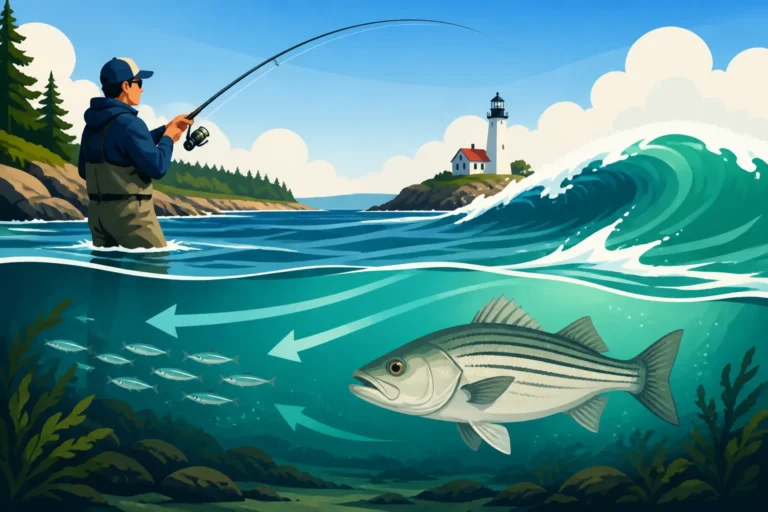
Think about a school of baitfish, like the ever-important rainbow smelt that landlocked salmon absolutely gorge themselves on in lakes like Winnipesaukee or Sunapee. These baitfish don't swim in a perfectly straight, monotonous line. They dart, they pause, they make quick turns, and they often maintain a consistent, yet subtle, cruising speed. Your trolling speed needs to replicate this balance of consistency and subtle imperfection. Too fast, and your lure might zip by too quickly for a salmon to react or look entirely unnatural. Too slow, and it might appear sluggish, injured, or simply uninteresting, signaling an easy target for smaller predators, not a healthy, active meal that a powerful salmon wants to expend energy chasing.
A well-presented lure, moving at the right speed, triggers the salmon's predatory instinct. It looks like a healthy, fleeing baitfish trying to get away, or a slightly disoriented one that's an easy meal. This is especially crucial in clear, cold New Hampshire waters where salmon have excellent visibility and can scrutinize your presentation. The key is to make your offering irresistible, not just visible. Getting your Trolling Techniques for New Hampshire Lake Trout down, which often applies to salmon too, means focusing on speed.
How Speed Affects Lure Action
Every lure you tie on has an intended action, a way it's designed to swim, wobble, or flash. This action is inherently linked to the speed at which it's retrieved or trolled through the water. Imagine a wobbling spoon, a slender minnow plug, or a soft plastic imitating a smelt. Each of these will behave differently at varying speeds.
-
Spoons and Stickbaits: Many spoons, like a Mooselook Thinfish or a Sutton spoon, are designed to impart a distinct wobbling or darting action. At the optimal speed, they'll shimmer and "kick" enticingly. Too slow, and they might just drag lifelessly, losing their erratic appeal. Too fast, and they could spin out, foul, or create an unnatural, blur-like presentation that doesn't resemble anything a salmon would chase. Similarly, slender stickbaits, often referred to as "minnow imitations," are designed to have a side-to-side sashay or a subtle roll. Achieving that specific, tantalizing action is entirely dependent on hitting the right speed.
-
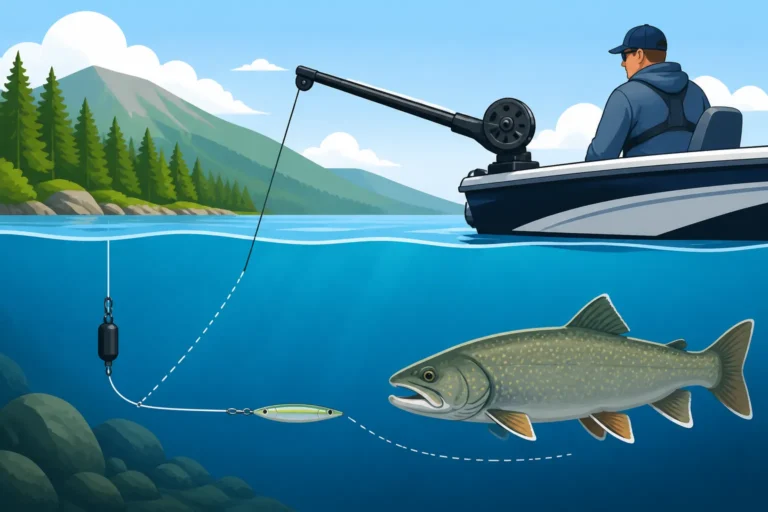
Soft Plastics and Flies: If you're using something like a soft plastic smelt imitation or a streamer fly behind a dodger or flasher, the speed dictates how that baitfish imitation dances. A dodger or flasher is designed to impart an action on a trailing lure, and its effectiveness is directly tied to speed. Too slow, and the dodger might not activate correctly, failing to create the desired flash and flutter. Too fast, and it might spin wildly, twisting your leader and looking utterly unnatural. The lure itself will then follow suit, either looking dead or erratic in a bad way. Many anglers prefer to How to rig smelt for landlocked salmon trolling to get the most natural action possible.
The goal is to find that sweet spot where your specific lure comes alive, perfectly mimicking the vitality and evasive maneuvers of a landlocked salmon's natural food source. This attention to detail in presentation is what separates a good day from a great day on the water.
Dialing In: How to Measure and Maintain Your Ideal Trolling Speed
Finding the "best" trolling speed isn't a set-it-and-forget-it affair; it's a dynamic process that requires precision, observation, and adaptability. New Hampshire's sprawling lakes and unpredictable weather demand that anglers are equipped to accurately measure and consistently maintain their speed. Without these tools and skills, you're essentially guessing, and guessing rarely leads to consistent success with finicky landlocked salmon.
Understanding True Speed vs. Ground Speed
This is where many anglers get tripped up. When you look at your boat's speedometer, or even your basic GPS, you're usually seeing your "ground speed." This is how fast your boat is moving relative to the land. However, what truly matters when trolling for salmon is your "true speed" or "water speed" – how fast your lure is moving through the water itself. Why the difference? Current and wind.
Imagine you're trolling upstream against a light current. Your ground speed might read 2 mph, but your lure, fighting the current, could actually be moving through the water at only 1 mph. Conversely, if you're trolling with the current, your ground speed might show 2 mph, but your lure could be flying through the water at 3 mph. Even a subtle wind can create a surface current that significantly alters your true speed. This is why investing in a dedicated water speed indicator, often available on Amazon, can be a game-changer. These devices measure the flow of water past a transducer or paddle wheel, giving you a much more accurate reading of what your lure is actually experiencing. For serious salmon anglers, this distinction is paramount. You can also monitor your line angle – if your line is sweeping far back, you might be going faster through the water than you think, especially with the current.
Tools for Speed Control and Precision
Maintaining a consistent and precise trolling speed requires more than just a vigilant eye on the speedometer. It often involves a combination of specialized gear and techniques.
-
GPS and Speed Indicators: While ground speed isn't perfect, a good GPS unit is still invaluable. It helps you track your path, mark productive speeds, and understand how wind and current are affecting your progress. Pair it with a water speed indicator for the most accurate picture. Many modern fish finders and chartplotters offer integrated GPS, making it easier to keep an eye on both your depth and your speed.
-
Trolling Motors: Electric trolling motors, particularly bow-mount models with GPS-enabled spot-lock features, have revolutionized trolling. Brands like Minn Kota and MotorGuide offer models that can maintain a precise heading and speed, even against wind and waves, allowing you to focus on your rods and presentation. They can be incredibly quiet, too, which is a huge advantage when targeting wary salmon. For fine-tuning speed in specific increments, often by 0.1 mph, a good electric motor is indispensable. You can find excellent options on Amazon.
-
Main Outboard Control: For those without dedicated trolling motors, controlling speed with your main outboard requires finesse. Some larger outboards have "troll mode" features that allow you to dial down RPMs to achieve very slow speeds. Otherwise, you'll need to learn how to feather your throttle, perhaps using short bursts of power followed by coasts, or even employing drift socks or "trolling bags" to create drag and slow your boat down to the necessary speeds without stalling your engine. Drift socks are also fantastic for maintaining a specific drift speed when the wind is trying to push you too quickly.
-
Line Counter Reels: While not directly a speed control tool, line counter reels are critical for replicating successful presentations. If you found a productive depth and speed, knowing exactly how much line you had out helps you put your lure back in the strike zone. This consistency builds confidence and helps you fine-tune your entire setup.
By integrating these tools and understanding their nuances, you move beyond guesswork and into a realm of precise, repeatable trolling that greatly increases your chances of connecting with New Hampshire's elusive landlocked salmon.
Adjusting for Conditions: Seasonal and Environmental Factors
The "best" trolling speed for landlocked salmon isn't static; it's a dynamic variable that shifts with the seasons, water conditions, and even the time of day. What works perfectly during a cool spring morning on Lake Winnipesaukee might be completely ineffective during a warm, sunny afternoon on Newfound Lake. Understanding these environmental influences is key to becoming a truly adaptable and successful salmon angler.
Water Temperature and Fish Metabolism
Water temperature is perhaps the most critical factor influencing fish behavior, including landlocked salmon. These cold-water species thrive in specific temperature ranges, and their metabolism, activity levels, and willingness to chase are directly tied to it.
- Ice-Out and Early Spring: Immediately after ice-out, when the entire water column is uniformly cold, salmon are often found near the surface and along shorelines, especially where streams are flowing in. Their metabolism is relatively slow, and they may not be willing to chase a fast-moving lure. This is the time to employ slower trolling speeds, often in the 1.5 to 2.0 mph range. Lures should have a subtle, enticing action. Sometimes, even slower, almost "dead-sticking" presentations are effective, especially if you're How to fish for salmon right after ice-out.
- Summer Thermocline: As summer progresses, lakes stratify, forming a distinct thermocline where warm surface water meets colder, deeper water. Landlocked salmon will typically retreat to the cooler water below or within this thermocline, usually in the 48-58°F range. While they still prefer cooler water, their metabolism can be higher than in early spring, especially if they're actively feeding. This often calls for slightly increased trolling speeds, perhaps 2.0 to 2.8 mph, to trigger a reaction strike from fish holding in deeper water. You'll need to know How deep to troll for salmon at Winnipesaukee to get your lure into the strike zone.
- Fall Turnover: When surface waters cool in the fall, the lake "turns over," and oxygen and temperature become more uniform throughout the water column again. Salmon may disperse more widely and become very active, feeding aggressively to build up fat reserves for winter. This can be a fantastic time to experiment with higher trolling speeds, pushing towards 2.5 to 3.5 mph, to cover more water and elicit aggressive strikes from actively feeding fish. The Best Time of Year to Fish in New Hampshire for salmon often includes this period.
Water Clarity, Wind, and Light Conditions
Beyond temperature, other environmental factors play a significant role in determining optimal trolling speed.
- Water Clarity: New Hampshire is known for its exceptionally clear lakes. In crystal-clear water, salmon have ample time to inspect your lure. If your speed is too fast, your lure might look unnatural or simply pass too quickly for a clean strike. If it's too slow, they might get too good a look and decide something is amiss. In highly clear conditions, sometimes slightly slower speeds (to allow inspection) or subtle changes in speed (to trigger reaction) are best. If the water has a bit more stain or chop, you might get away with slightly faster speeds as the fish have less time to scrutinize.
- Wind and Waves: Wind directly impacts your boat control and true trolling speed. A strong headwind will require more power to maintain speed, while a tailwind can make it difficult to slow down. Choppy waves, while sometimes beneficial for breaking up your boat's profile and adding erratic action to lures, can also cause your boat to surge and slow, making consistent speed challenging. Using a good trolling motor or drift socks becomes crucial here. When there's a strong chop, sometimes increasing your speed slightly can help your lure cut through the water more cleanly and maintain its intended action.
- Light Conditions: Low light conditions, such as dawn, dusk, or heavily overcast days, can often be prime feeding times for landlocked salmon. In these conditions, salmon may be more aggressive and willing to chase, sometimes tolerating slightly faster speeds. Conversely, on bright, sunny days, especially in clear water, salmon might be deeper and more lethargic, requiring a slower, more deliberate presentation. Considering the Best Time of Day to Catch Landlocked Salmon is important.
By becoming attuned to these environmental cues and making corresponding adjustments to your trolling speed, you'll significantly increase your chances of success. It's about being a student of the water, not just a boat operator.
Common Mistakes and Fine-Tuning Your Salmon Trolling
Trolling for landlocked salmon is an art refined through experience, and like any art, it comes with common pitfalls. Many anglers, even seasoned ones, can fall into habits that unknowingly reduce their chances of success. By understanding these common mistakes and learning how to fine-tune your approach, you can elevate your salmon game on New Hampshire's beautiful lakes.
The Pitfalls of Monotony
One of the biggest mistakes anglers make is setting a speed and sticking with it religiously, hour after hour, even when nothing is biting. This "set it and forget it" mentality is often a recipe for disappointment when chasing salmon.
- Fixed Speed Syndrome: Salmon are intelligent and reactive predators. They often respond to changes in cadence and presentation. If your lure is traveling at a constant 2.2 mph for two hours straight, it might look like a very healthy, but predictable, meal. A slight, almost imperceptible change in speed can be the trigger. Imagine a school of baitfish: one might suddenly dart, then pause, then accelerate. Your lure should mimic this unpredictability.
- Not Factoring in Lure Diversity: If you're running multiple lines, you likely have different lures on each. A flutter spoon, a minnow plug, and a soft plastic jig will all have optimal actions at slightly different speeds. If you're trolling at a speed perfect for your spoon, your plug might be underperforming. The solution isn't to constantly change speed wildly, but to understand the range for each lure and ensure your chosen speed falls within the effective zone for all your presentations. This might involve setting up your Best trolling spread for landlocked salmon carefully.
- Ignoring the Boat's Movement: While we discussed true speed, it's also about the boat's motion. Sharp turns, prop wash, or even the subtle rocking from waves can affect the action of your lures. Sometimes, making a slow, sweeping turn can cause your inside lures to slow down and sink, and your outside lures to speed up and rise, often triggering a strike as the fish react to the sudden change in movement. Don't be afraid to subtly vary your boat's path.
The Art of Fine-Tuning and Experimentation
Becoming a truly successful salmon troller means embracing experimentation and paying meticulous attention to detail. Every day on the water is a new puzzle to solve.
- Subtle Speed Adjustments: If the bite is slow, try incrementally adjusting your speed by just 0.1 to 0.2 mph. Go up for ten minutes, then down for ten minutes. Pay close attention to when and if you get a strike. Sometimes, that fractional change is all it takes to trigger a reaction from a hesitant fish. Using a quality electric trolling motor with precise speed control, easily found on Amazon, makes these fine adjustments effortless.
- Checking Lure Action Regularly: Every time you deploy a new lure or change your speed, pull it up alongside the boat and observe its action. Is that spoon wobbling correctly? Is the minnow plug diving with its intended roll? Is the dodger flashing without spinning too wildly? A fouled lure or one that's simply not swimming right won't catch fish, no matter the speed. A proper Best rod setup for lake trout trolling can also help ensure good lure action.
- Considering Line and Leader: The type of line you're using (monofilament, fluorocarbon, braid) and your leader length and material can also subtly affect how your lure performs at a given speed. For example, a heavy fluorocarbon leader might make a light lure swim a bit deeper or with less action at slower speeds. Understanding these nuances helps you choose the Best line for lake trout deep trolling, which is often applicable to salmon.
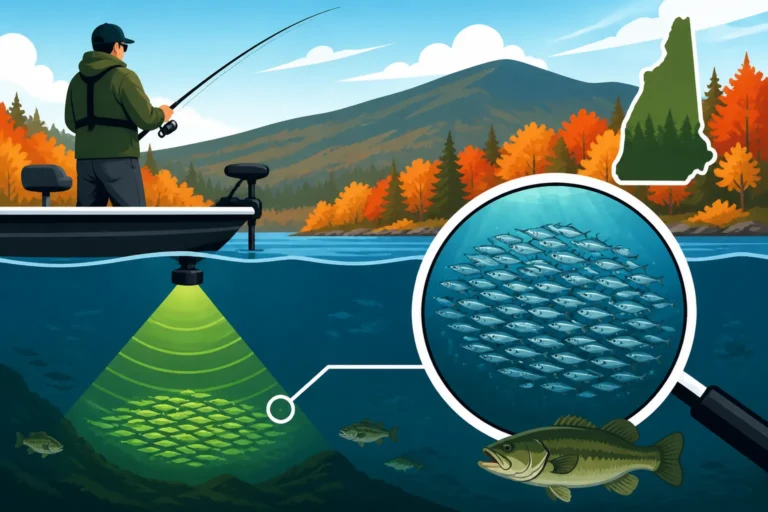
- Baitfish Presence: Always keep an eye on your fish finder for schools of baitfish, especially smelt. If you mark a dense school, pay close attention to the depth and try to position your lures just above, below, or through them. Then, experiment with speeds in that area. Landlocked salmon are often nearby, herding or feeding on these schools, and the right speed can make your lure irresistible amidst the natural forage.
By avoiding monotony and actively engaging in the process of fine-tuning, you'll not only catch more landlocked salmon but also develop a deeper understanding of their behavior and the intricate relationship between your boat, your lures, and the underwater world of New Hampshire's magnificent lakes.
Trolling Speed Guidelines for Landlocked Salmon
Here’s a general overview of trolling speeds, but remember these are starting points, not rigid rules. Always adjust based on conditions, lure type, and fish behavior.
| Condition/Lure Type | Recommended Trolling Speed (MPH) | Notes |
|---|---|---|
| Early Spring / Ice-Out | 1.5 – 2.0 | Salmon are sluggish; focus on subtle, slow presentations. |
| Summer Thermocline | 2.0 – 2.8 | Moderate speeds for active fish in cooler, deeper water. |
| Fall Turnover / Active Fish | 2.5 – 3.5 | Faster speeds to cover water and trigger aggressive strikes. |
| Minnow Plugs / Stickbaits | 2.0 – 3.0 | Look for natural darting and wobbling action. |
| Spoons (e.g., Thinfish) | 1.8 – 2.5 | Ensure good flutter and side-to-side kick, avoid spinning. |
| Soft Plastics (smelt imitations) | 1.5 – 2.2 (behind dodger/flasher) | Speed crucial for dodger action; lure should swim naturally. |
| Bright Sunny Days / Clear Water | 1.8 – 2.5 | Slower, more subtle presentations; fish are wary. |
| Overcast / Low Light / Choppy Water | 2.2 – 3.0 | Fish often more aggressive; can tolerate slightly faster speeds. |
| Post-Front / Challenging Bite | 1.0 – 1.8 (or vary speed significantly) | Extremely slow or erratic speeds can entice finicky fish. |
Remember, these ranges are approximate. The true "best" speed for your setup and current conditions might be at the high or low end, or even slightly outside these suggestions. The most important thing is to be observant, experimental, and always checking your lure's action.
Disclaimer
This article is for general informational purposes only and does not constitute professional advice. Laws, prices and regulations vary by location and change over time. Consult a qualified professional for guidance on your specific situation.