Best fly size for New Hampshire trout streams in spring
Spring in New Hampshire means trout fishing, but if you've ever stood by a bubbling stream, fly rod in hand, staring at your fly box wondering which tiny imitation to tie on, you know the frustration. The water's cold, the fish are active but often incredibly picky, and choosing the right fly size can feel like a guessing game. This guide is here to demystify fly size selection for New Hampshire trout streams in spring, helping you make confident choices that lead to more bent rods and memorable days on the water.
The Dynamic Nature of Spring Trout Streams
New Hampshire's trout streams in spring are a world of constant change. Snowmelt often swells rivers, carrying nutrients and dislodging insects, while air temperatures can swing wildly from chilly mornings to surprisingly warm afternoons. Understanding these environmental shifts is absolutely crucial for picking the right fly size, as trout behavior is intimately tied to the conditions around them. They're not just looking for food; they're looking for the easiest food available under the current circumstances.
Understanding Water Levels and Clarity
In early spring, when snowmelt is still significant, you'll often encounter high, fast-moving, and sometimes turbid water. Trout tend to hold closer to the bottom, in slower pockets behind boulders or in deeper runs, conserving energy. In these conditions, a smaller fly can easily get lost in the currents and become invisible to a trout that's already working harder to feed. This is when larger, more visible flies really shine, especially subsurface patterns. As the season progresses and water levels recede, streams become clearer and slower, which often means trout become more discerning, shifting their preference to smaller, more realistic imitations.
It’s a balancing act. If the water is roaring and off-color, a size 12 or 10 nymph might be your starting point, perhaps even a weighted streamer. Imagine a big, juicy morsel tumbling past a hungry fish in a torrent – it needs to be substantial enough to warrant the effort. However, by late May, when flows have stabilized and clarity is crystal, you might be dropping down to a size 18 or 20 dry fly for finicky risers. Always observe the water. If you can see the bottom clearly in a foot of water, smaller flies are generally going to be more effective.
Temperature's Influence on Insect Activity
Water temperature is a huge driver for insect hatches, which directly impacts the best fly size. Early spring, when water temperatures are still hovering in the 40s, typically sees sparse, sporadic hatches. You might get a few early black stoneflies or midges, but the bulk of insect activity is still subsurface. As water temperatures climb into the 50s and 60s, a more diverse range of insects begins to emerge, including various mayflies and caddis. This is when fly selection, particularly size, becomes critical for matching specific hatches.
A classic example is the Grannom Caddis hatch, often one of the first significant caddis hatches of spring in New Hampshire, usually around late April to mid-May. These are typically size 14 or 16. If you're fishing during a Grannom hatch with a size 10 fly, you'll likely be overlooked. Conversely, using a tiny size 22 midge pattern when a much larger stonefly is drifting by won't grab much attention. Keeping a small stream thermometer handy can give you a vital clue about what insects might be active, and thus, what fly size to reach for.
Key Factors Influencing Fly Size Choice in Spring
Beyond the general conditions, several specific factors should guide your fly size decisions. Trout have evolved to be incredibly efficient feeders, and their preferences for fly size often come down to what's most abundant, easiest to catch, or simply looks "right" to them in their environment. Ignoring these cues can lead to a frustrating day.
Matching the Hatch: When Insects are Obvious
The golden rule of fly fishing, "match the hatch," is never more relevant than in spring when hatches begin in earnest. If you see trout rising consistently and notice insects on the water or flying around, your primary goal is to imitate those specific insects in both profile and size. This isn't just about the species; it's about the lifecycle stage. Is it a nymph drifting beneath the surface, an emerger struggling in the film, or an adult dun floating gracefully? Each stage often requires a different size imitation.
For instance, early season Baetis (Blue-Winged Olives) are common, often appearing on cloudy, cool days. These are typically small, ranging from size 18 to 22. If trout are sipping them off the surface, an appropriately sized dry fly is key. However, if you see the shucks on rocks but no adults, they might be keying in on the emergers, still small but maybe a size or two larger or with a slightly different profile. Always carry a magnifying glass or a keen eye to inspect natural insects on the water; they'll tell you the exact size and color you need. For a deeper dive into insect patterns, check out our guide on Fly Patterns for New Hampshire Trout Streams.
Attractor Patterns and Subsurface Fishing
There will be many days in spring, especially early on or during off-hatch periods, when trout aren't keying in on specific natural insects. The water might be a bit high, the temperatures cool, and the fish are just opportunistic. This is where attractor patterns and subsurface flies, like nymphs and streamers, become invaluable. For these flies, size often relates more to visibility, perceived caloric value, and enticing a reaction strike rather than a precise imitation.
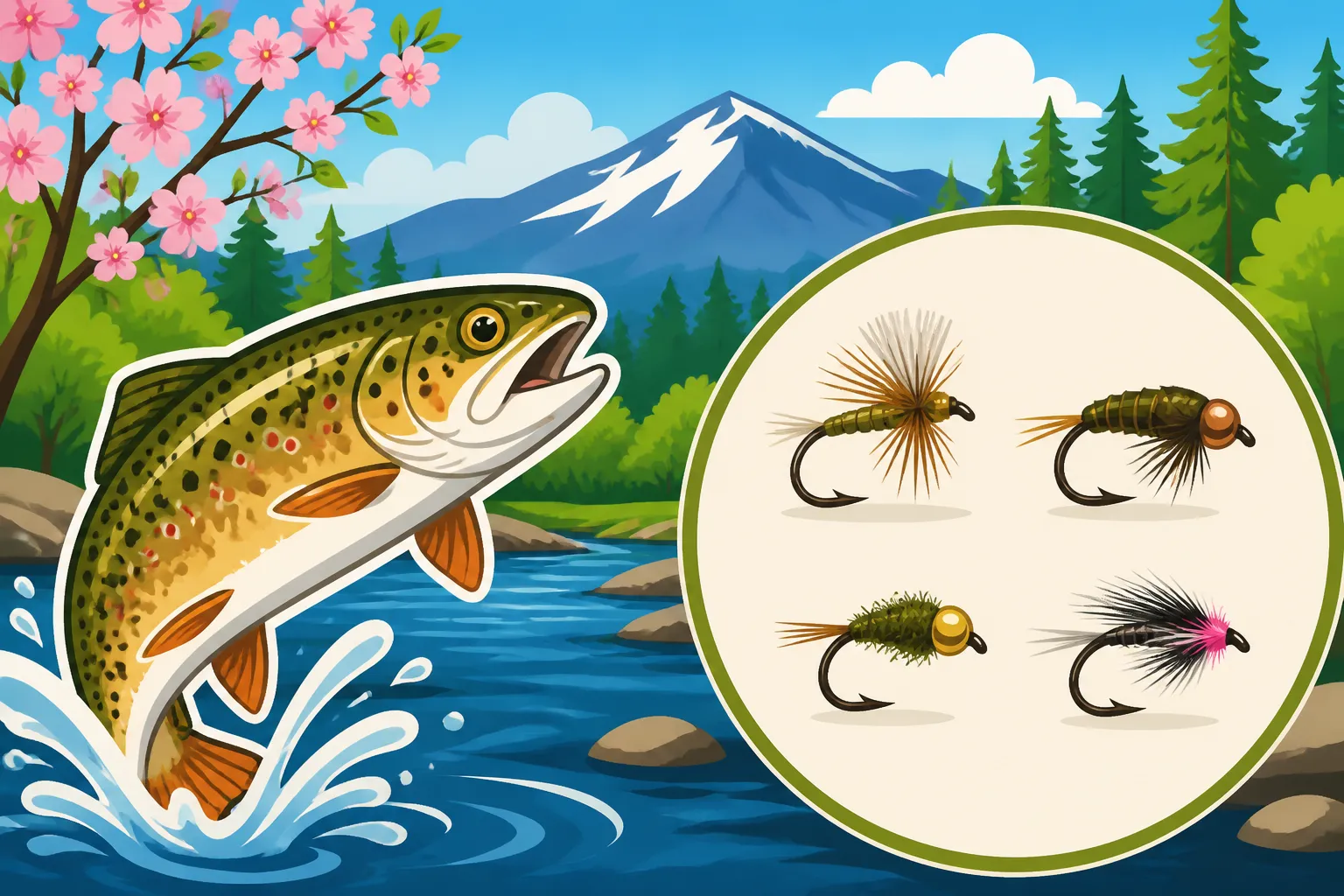
When targeting trout with nymphs in deeper runs or pocket water, using a slightly larger size than a natural insect might suggest can be beneficial. A size 12 or 14 pheasant tail, Prince Nymph, or Hare's Ear, possibly weighted, presents a more substantial meal and is easier for the trout to spot in faster or slightly turbid water. Similarly, streamers like Woolly Buggers (perhaps a size 8 or 6) are not meant to imitate a specific insect hatch but rather baitfish or larger aquatic organisms. A bigger profile means a bigger meal, and trout, especially larger ones, will often move to intercept them. This approach is often covered in detail in resources like How to Fish a Wooly Bugger for Trout.
Specific Fly Sizes for Common Spring Hatches and Patterns
Let's get down to the brass tacks: what sizes should you be stocking in your fly box for a New Hampshire spring? While every season and every stream is a little different, there are some reliable mainstays you absolutely need. Think of these as your go-to arsenal for any spring trout adventure, whether you're fishing the Pemigewasset River or a smaller mountain brook.
Mayflies: Baetis and Hendrickson
Mayflies are a cornerstone of spring trout diets, and two of the most important early-season hatches are the Baetis (Blue-Winged Olives) and the Hendrickson.
-
Baetis (BWO): These tiny beauties can hatch throughout the spring, often on dreary, overcast days. They are small, typically ranging from size 18 to 22. You'll need both nymph and dry fly patterns to cover the different stages. For subsurface, a BWO nymph (like a small Pheasant Tail or Split Case BWO) in size 18-20 is essential. When they emerge, a tiny dry fly like a Parachute Adams or a specific BWO CDC Comparadun in size 18-20 will be your ticket. If you notice trout softly sipping, chances are they're on these diminutive insects.
-
Hendrickson: A much larger and more substantial meal, Hendrickson mayflies typically hatch from late April through mid-May in New Hampshire, depending on the water. They are usually size 12 or 14. Their nymphs are often olive-brown, and the adults have distinctive pinkish-tan bodies. Having Hendrickson nymphs (like a Woven Hendrickson Nymph), emergers (like a LaFontaine's Emergent Sparkle Pupa), and dry flies (like an Adam's Parachute or a Hendrickson Comparadun) in these sizes will prepare you for one of spring's most anticipated hatches. These are large enough that trout will often show more aggressive takes.
Caddisflies: Grannom and Spotted Sedge
Caddisflies are another hugely important insect family in New Hampshire, known for their jerky flight and their larval cases.
-
Grannom Caddis: One of the earliest and often densest caddis hatches, Grannoms usually appear in late April to mid-May. They are dark-bodied and typically size 14 or 16. The pupae are active swimmers, so a good Grannom Pupa pattern (like a LaFontaine's Sparkle Pupa) in these sizes is critical. When they emerge and fly off, an Elk Hair Caddis or Goddard Caddis in size 14-16 can be incredibly effective. Trout often key in on the pupae and then the adults, sometimes with splashy, aggressive rises.
-
Spotted Sedge (Hydropsyche): These are a diverse group of caddis that can hatch throughout spring and into summer. They tend to be larger than Grannoms, often size 10 to 14. Their larvae build distinct cases, and the adults are mottled brown. An Elk Hair Caddis or X-Caddis in size 12-14 is a great all-around choice for many caddis hatches you'll encounter. For a reliable selection of these patterns, you can always find a wide array of options on platforms like Amazon.
Stoneflies: Little Black Stones and Golden Stones
While not as universally abundant as mayflies or caddis, stoneflies are still a significant food source, especially in rocky, well-oxygenated streams.
-
Little Black Stoneflies: These are some of the first insects to hatch, sometimes even in late March, particularly on warmer days. They are small, often size 16 to 20. Their nymphs (like a Little Black Stonefly Nymph) are essential for early season subsurface fishing. The adults are usually ignored by trout once they've left the water, so focus on the nymph stage.
-
Golden Stoneflies: These are much larger, more robust insects that typically show up later in spring, as water temperatures warm further (late May into June). They can be as large as size 6 to 10. Their nymphs are big, meaty meals, and patterns like a Golden Stonefly Nymph or a Pat's Rubber Legs in sizes 6-10 can entice larger trout, especially when fished near the bottom in faster water. Many anglers swear by these larger nymphs for prospecting when no obvious hatch is occurring.
Here's a quick overview of common spring hatches and their typical fly sizes:
| Insect Type | Common Name | Lifecycle Stage | Typical Spring Size | Key Characteristics |
|---|---|---|---|---|
| Mayfly | Blue-Winged Olive (BWO) | Nymph, Emerger, Dun | #18 – #22 | Small, olive/dark body; often hatches on cloudy days |
| Mayfly | Hendrickson | Nymph, Emerger, Dun | #12 – #14 | Larger, pinkish-tan body; prominent early hatch |
| Caddisfly | Grannom Caddis | Pupa, Adult | #14 – #16 | Dark-bodied, dense early hatch; pupae swim actively |
| Caddisfly | Spotted Sedge (various) | Pupa, Adult | #10 – #14 | Mottled brown, diverse group; pupae swim actively |
| Stonefly | Little Black Stonefly | Nymph | #16 – #20 | Small, dark; very early season subsurface |
| Stonefly | Golden Stonefly | Nymph | #6 – #10 | Large, yellowish; excellent large-meal imitation |
| Attractor/Baitfish | Woolly Bugger (various) | Streamer (Baitfish/Leech) | #6 – #12 | Versatile, weighted; effective when no hatch |
| Attractor/Larvae | San Juan Worm | Worm (Larvae) | #10 – #16 | High-water, post-rain; general food source |
| Attractor/Eggs | Egg Patterns | Egg | #12 – #16 | Post-spawn, especially for rainbows/brookies |
Streamers and Attractor Nymphs
Even with prominent hatches, sometimes trout just want a bigger, more aggressive meal. Streamers and larger attractor nymphs in various sizes are essential for this.
-
Woolly Bugger: This fly is a perennial favorite for a reason. It can imitate a leech, baitfish, crayfish, or even a large nymph. In spring, sizes 6 to 12 are most common. Having them in black, olive, and brown will cover most situations. A smaller size 12 or 10 can be effective in clearer, smaller streams, while a size 6 or 8 is perfect for targeting larger trout in higher, more powerful rivers. Learning how to properly fish these can really boost your success, as detailed in guides like Best Streamer Patterns for New Hampshire Brown Trout.
-
Other Attractor Nymphs: Patterns like the Prince Nymph, Copper John, and Hare's Ear Nymph are excellent all-around choices when specific hatches aren't occurring. Sizes 10 to 16 are good bets. The Hare's Ear is particularly effective as a general mayfly nymph imitation, while the Copper John can be a great early-season nymph because its flash can grab attention in off-color water. For high mountain streams, don't overlook a good Best Nymph Rig for High Mountain Streams to help you get down to where the fish are holding.
Practical Tips for On-Stream Fly Selection
Knowing what flies and sizes should work is one thing; making the right choice when you're standing knee-deep in a New Hampshire trout stream is another. It often comes down to observation, experimentation, and having your gear dialed in. You'll find that a flexible approach, rather than rigid adherence to a single idea, often yields the best results.
Observing the Water and the Fish
Before you even make your first cast, take some time to observe. What is the water doing? Are there any insects hatching, flying around, or drifting in the current? If you see rising trout, what kind of rise is it? A splashy rise might indicate caddis, while a gentle dimple might suggest small mayflies or midges. Also, look under rocks in the stream for nymphs and larvae – this can give you a direct clue about what's available for trout to eat.
If you see no surface activity, consider the water depth and flow. Are you fishing a deep, slow pool or a fast, riffled run? Deeper, faster water typically calls for larger, heavier nymphs or streamers, especially in cooler temperatures. In contrast, slower, clearer stretches might warrant smaller, more delicate presentations. Remember, trout often hold in the slower water adjacent to faster currents, so don't just cast into the middle of the torrent. For general knowledge about when fish are most active, refer to Best Time of Year to Fish in New Hampshire.
Experimentation and Presentation
Even with all the right information, trout can be unpredictable. Don't be afraid to experiment with different sizes and patterns if your initial choice isn't producing. Start with a size you believe is appropriate, fish it thoroughly, and if nothing happens, adjust. Try going one size larger or one size smaller. Sometimes, a subtle change can make all the difference. For example, if you're fishing a size 16 BWO dry fly and not getting takes, try dropping to a size 18 or even 20. The slightest difference in profile can trigger a strike.
Your presentation is also intrinsically linked to fly size. A tiny dry fly (size 20) on a heavy leader might look unnatural and get refused, even if it's the right size. For small flies, you'll need lighter tippet – often 5X, 6X, or even 7X – to allow for a natural drift and proper presentation. On the flip side, trying to throw a large, weighted streamer (size 6) on a light 5-weight rod with 6X tippet is going to be incredibly difficult and likely break off. Ensure your Best Fly Rods for New Hampshire Trout Streams and Best Tippet Size for Stocked Trout are matched to the flies you're using. You can find robust tippet material and leaders for heavier flies through retailers like Amazon.
Doubling Up and Dry-Dropper Rigs
A fantastic technique for spring fishing, especially when you're unsure of the exact fly size or if fish are feeding on multiple levels, is to use a multi-fly rig. A dry-dropper setup, for instance, allows you to fish a larger, buoyant dry fly (like a size 12 or 14 Elk Hair Caddis or Parachute Adams) on the surface, with a smaller nymph (say, a size 16 or 18 Pheasant Tail or Baetis nymph) tied off the bend of the dry fly hook, fishing subsurface. The dry fly acts as both an imitation and an indicator for strikes on the nymph.
Alternatively, you can run a two-nymph rig, sometimes called a "Euro Nymphing" style rig, with a heavier, larger nymph (e.g., a size 10 Prince Nymph) as your anchor, and a smaller, lighter nymph (e.g., a size 18 Zebra Midge) trailing behind. This allows you to cover different depths and present two different sizes or types of food simultaneously, increasing your chances of finding what the trout are interested in. Many anglers stock up on their favorite nymph patterns for these rigs from online suppliers, which are often available on platforms like Amazon. Don't forget to keep current with New Hampshire Trout Stocking and Fishing Rules as stocked fish might have different feeding behaviors.
Disclaimer
Fishing conditions, regulations, and fish behavior can change rapidly. Always consult the most current New Hampshire Fish and Game Department regulations before heading out on the water. This guide provides general information and recommendations, but local knowledge and on-the-water observation are always paramount.