Where the biggest lake trout live in New Hampshire
It's a dream for many New Hampshire anglers to land a truly massive lake trout, a fish that embodies the rugged beauty and deep, cold mystery of our granite state's waters. However, these elusive giants aren't found just anywhere, and knowing where to focus your efforts can be the difference between a memorable fish story and just a day on the water. This guide is dedicated to helping you pinpoint those special places where the biggest lake trout in New Hampshire are known to thrive, and understand what makes these waters so productive for trophy fish.
Unveiling New Hampshire's Prime Lake Trout Sanctuaries
When you're talking about genuinely large lake trout in New Hampshire, a few lakes consistently rise to the top of the list. These aren't just pretty places to cast a line; they are expansive, deep, and ecologically rich environments that provide everything a lake trout needs to grow to impressive sizes. It takes a combination of cold, oxygenated water, abundant forage, and ample habitat for these fish to become the titans we dream of catching.
Lake Winnipesaukee: The Grand Dame of Giants
Lake Winnipesaukee, our largest lake, is truly the crown jewel when it comes to trophy lake trout. Its sheer size – over 70 square miles – and incredible depth, plunging in some areas well over 180 feet, create an ideal environment for these cold-water predators. The lake is a complex ecosystem of deep basins, submerged islands, rocky reefs, and vast open water, all contributing to its status as a premier lake trout fishery. The massive volume of water ensures stable temperatures and high oxygen levels even during the warmest summer months, allowing lakers to thrive and grow old.
Anglers often target the deeper sections of Winnipesaukee, especially areas like "The Broads," which offer significant depths and expansive areas for fish to roam. These vast, open water sections hold immense schools of rainbow smelt, the primary forage for trophy lake trout. Without this abundant food source, the lakers simply wouldn't have the fuel to pack on the pounds. Imagine these big fish cruising hundreds of feet down, using the underwater topography to ambush schools of baitfish. It's a challenging environment to fish, but the rewards are truly exceptional. Seasoned anglers will often spend hours on the water, meticulously marking structure and bait balls on their fish finders, knowing that a single massive strike could be just around the corner. If you're looking for Lake Winnipesaukee Lake Trout Fishing, this is your go-to.
Newfound Lake: A Cold, Clear Haven
Newfound Lake, nestled in the central Lakes Region, is another exceptional body of water renowned for its lake trout. While smaller than Winnipesaukee, it boasts an impressive maximum depth of around 183 feet, making it one of the deepest and clearest lakes in the state. This clarity is a double-edged sword: it makes for stunning scenery, but it also means the fish can be quite wary, making the pursuit of a trophy laker even more challenging and rewarding. The exceptional water quality and cold temperatures year-round are paramount to supporting a healthy population of large lake trout.
Like Winnipesaukee, Newfound Lake has a thriving population of rainbow smelt, which provides a crucial food source for its lakers. The lake's deep, cold pockets serve as vital thermal refugia where lake trout can retreat during warmer periods, minimizing stress and allowing them to conserve energy for growth. Many anglers consider Newfound Lake a truly special place for its pristine conditions and the quality of fish it produces. Targeting the deep basins and exploring the steep drop-offs are key strategies here. Local bait shops often carry detailed maps, or you can find excellent fishing guides and lake contour maps on platforms like Amazon to help you navigate its complex underwater terrain and find those prime spots. If you're planning a trip, checking out a Newfound Lake Fishing Guide can give you a real edge.
Lake Sunapee: The Well-Managed Gem
Lake Sunapee, located in the Dartmouth-Lake Sunapee Region, might not be as widely known for its lake trout as Winnipesaukee, but it consistently produces impressive fish thanks to dedicated management and excellent habitat. This deep, oligotrophic (nutrient-poor) lake offers clear, cold waters that are perfect for lake trout. Its maximum depth hovers around 105 feet, which is still plenty deep to provide the necessary thermal refuge for lakers, especially in the deeper southern basin.
What sets Sunapee apart is its reputation for healthy, robust lake trout that grow to substantial sizes. The lake benefits from ongoing efforts to maintain water quality and manage its fishery effectively, which directly contributes to the well-being and growth potential of its lake trout population. While it's also famous for its landlocked salmon (you might want to read about Sunapee Lake Landlocked Salmon Fishing if you're there), the lake trout here are often thick-bodied and powerful fighters. They prey heavily on the abundant rainbow smelt, and careful management ensures that the delicate balance of predator and prey remains stable, fostering an environment where lake trout can grow to trophy dimensions.
Decoding the Secrets Behind Trophy Lake Trout Growth
It’s not just about a lake being deep; it’s about a confluence of biological and environmental factors that allow lake trout to reach those impressive, often double-digit, weights. Understanding these elements can help you identify other potential trophy waters or refine your approach in the prime locations.
The Forage Foundation: Smelt, Alewives, and More
The single most critical factor in growing truly colossal lake trout is an abundant and consistent supply of high-quality forage. In New Hampshire, that almost exclusively means rainbow smelt. These small, oily fish are incredibly energy-rich and form the backbone of the lake trout's diet in our deepest lakes. Lake trout are apex predators in these cold-water environments, and they simply wouldn't get as large without this essential food source. A lake with a healthy, thriving smelt population is a lake with the potential for massive lakers.
Imagine a lake trout, growing slowly but steadily over many years, consuming thousands upon thousands of these small, silvery fish. Each smelt contributes to the laker's increasing size and strength. Without a strong smelt population, lake trout would have to expend more energy to find food, leading to slower growth rates and smaller overall fish. Occasionally, other baitfish like alewives might be present, but smelt are the primary engine for lake trout growth in the Granite State. If you're interested in What lake trout eat in New Hampshire lakes, it's almost always a story about smelt.
Depth and Temperature: The Essential Environment
Lake trout are classic cold-water fish. They need consistently cold, oxygen-rich water to thrive, especially as they get larger. This is why our deepest lakes are the best candidates for trophy lakers. These lakes stratify in the warmer months, meaning they develop distinct layers of water with different temperatures. The deepest parts of Lake Winnipesaukee, Newfound Lake, and Lake Sunapee maintain an ideal thermal refuge for lake trout year-round, typically in the 40-55°F range.
When surface waters warm up significantly, smaller, shallower lakes simply don't have enough cold water with sufficient oxygen for lake trout to survive comfortably. This forces them into stressful conditions, or they simply don't grow as large. In deep lakes, however, the lakers can descend to their preferred temperatures, staying calm and conserving energy, which is critical for growth. This is particularly important for older, larger fish that are more sensitive to temperature fluctuations. A good fish finder can help you identify these deeper, cooler zones where lake trout congregate. You can find some excellent models and resources on Amazon that help decipher thermal clines and structure.
Age and Genetics: The Unseen Factors
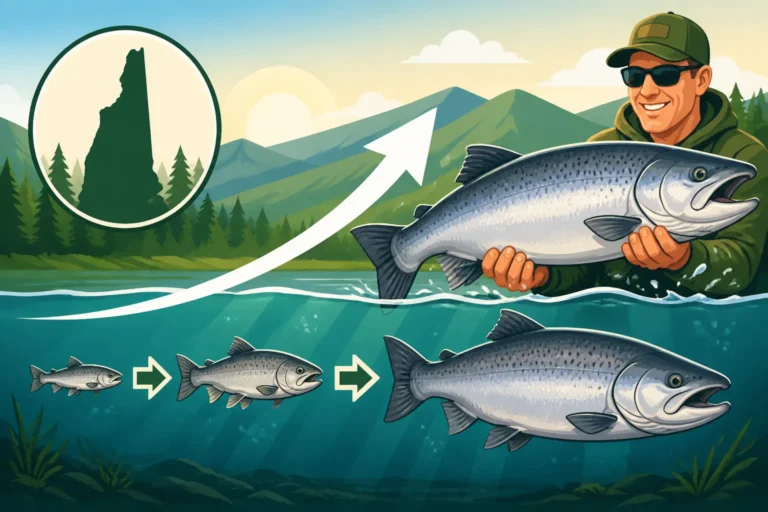
Lake trout are incredibly long-lived fish. While we might think of catching a five-year-old bass as old, a trophy lake trout could easily be 15, 20, or even 30 years old. Their slow growth rate means that a big fish has been around for a very long time, surviving countless challenges and growing steadily. This longevity is directly tied to the stable, predator-friendly environments these deep lakes provide. Without exceptional conditions, they wouldn't live long enough to reach those truly massive sizes.
Beyond age, genetics play an undeniable role. Some lake trout populations naturally have the genetic predisposition to grow larger than others, even in similar environments. While it's hard for an angler to directly influence this, it's another reason why certain lakes consistently produce bigger fish. When you combine favorable genetics with an abundant food supply and perfect habitat over many years, you get the makings of a true trophy lake trout. Understanding the Lake Trout Average Size in New Hampshire Lakes helps put the truly big fish into perspective.
Strategies for Targeting New Hampshire's Largest Lake Trout
Now that we know where these big lakers live and why those waters are so special, let's talk about how you can increase your chances of finding one of these elusive giants. It's a combination of understanding their behavior, using the right gear, and exercising a good dose of patience.
Seasonal Movements and Deepwater Tactics
Lake trout exhibit distinct seasonal movements, largely dictated by water temperature and the availability of their primary forage. In the cooler months of spring and fall, and during the winter ice fishing season, lake trout might be found at more accessible depths, sometimes even relatively shallow in certain areas. However, as summer progresses and surface temperatures rise, these fish retreat to the deep, cold waters where they are most comfortable. This means that to catch the biggest lake trout, especially in summer, you're almost certainly going to be fishing deep.
Deepwater tactics often involve trolling with downriggers or heavy weighted lines, or vertical jigging directly over marked structure or baitfish schools. Downriggers are essential tools for presenting lures at precise depths, allowing you to target fish holding just above the thermocline or hugging the bottom in 80 to 150 feet of water. For those serious about finding big fish, researching Best Trolling Gear for New Hampshire Lake Trout and Best Lures for Lake Trout Trolling is a must. Large spoons, stickbaits, and even live bait like smelts (where permitted) are popular choices. During ice fishing season, while fish can be shallower, targeting deeper humps and drop-offs is still a solid strategy for bigger fish. Make sure you're aware of New Hampshire Lake Trout Ice Fishing Season Dates if you plan to hit the hardwater.
Reading Structure and Sonar: Your Underwater Eyes
Modern electronics have revolutionized deepwater fishing. A good fish finder is not just a luxury; it's practically a necessity for consistently locating lake trout, especially the larger, more solitary ones. Lake trout relate to underwater structure – humps, points, ledges, rock piles, and submerged islands. They use these features for ambush points, resting areas, and pathways for moving between feeding grounds.
Learning to read your sonar screen effectively is an art form. You'll be looking for baitfish schools, individual fish arches, and subtle changes in the bottom contour that indicate potential holding areas. Pay close attention to how deep the thermocline is, as this often defines the upper limit of where lake trout will be found. Many anglers upload detailed lake maps to their units, allowing them to pinpoint exact GPS coordinates of productive spots. There are many excellent, user-friendly fish finders available, and you can explore various models and features that cater to deep-water fishing on Amazon, some specifically designed for mapping and advanced sonar capabilities. Check out our guide on Best Fish Finders for New Hampshire Lakes for more in-depth information.
The Patience Game: Dedication to the Pursuit
Trophy lake trout fishing is not for the impatient. These fish are often solitary, or in small groups, and they don't bite every day. It requires dedication, long hours on the water, and a willingness to learn and adapt. Conditions change, fish move, and what worked yesterday might not work today. The biggest lake trout have survived for decades precisely because they are smart and cautious.
Don't get discouraged if you don't find a giant on your first few outings. Every trip is a learning experience. Keep meticulous notes on what worked, where you found fish, and under what conditions. Talk to local bait shop owners and other experienced anglers – they are often a wealth of information, even if they won't give away their secret spots easily. The reward of finally hooking into a truly massive New Hampshire lake trout, feeling that immense power at the end of your line, is an experience that makes all the effort worthwhile. It's about enjoying the entire process, from preparing your gear to the quiet moments on the water, knowing that a once-in-a-lifetime fish could strike at any moment.
Here's a quick overview of our prime lake trout locations:
| Lake Name | Max Depth (Approx.) | Key Forage | Trophy Potential | Special Characteristics |
|---|---|---|---|---|
| Lake Winnipesaukee | 180+ feet | Rainbow Smelt | Excellent | Vast, diverse structure, large volume of cold water |
| Newfound Lake | 180+ feet | Rainbow Smelt | Excellent | Exceptional clarity, deep basins, pristine conditions |
| Lake Sunapee | 100+ feet | Rainbow Smelt | Very Good | Well-managed fishery, healthy, robust fish |
Remember, the pursuit of these giants is a journey. Enjoy the incredible natural beauty of New Hampshire's lakes, respect the resource, and with patience and persistence, you might just find yourself connected to the biggest lake trout of your dreams.
Disclaimer
This article is for general informational purposes only and does not constitute professional advice. Laws, prices and regulations vary by location and change over time. Consult a qualified professional for guidance on your specific situation.