How to locate perch in New Hampshire lakes
It's incredibly frustrating when you head out to your favorite New Hampshire lake, all geared up and ready for a productive day of perch fishing, only to find the water seems completely barren. You know they're in there, but where? They're schooling fish, which means if you find one, you'll likely find a whole bunch, but pinpointing those schools can feel like trying to find a needle in a watery haystack. This comprehensive guide is designed to take the guesswork out of locating yellow perch in New Hampshire's diverse waters, giving you the insights and strategies to confidently find those tasty panfish, whether it's summer, fall, or the dead of winter.
Understanding Perch Behavior and Habitat Preferences
To consistently locate perch in New Hampshire lakes, you first need to understand them. These aren't just random swimmers; they have routines, preferred hangouts, and specific needs that dictate where they'll be at different times of the year. Thinking like a perch – or at least understanding their basic instincts – is your first step to success.
The Seasonal Dance of Perch Movement
Perch are highly influenced by water temperature and food availability, leading to distinct seasonal movements. In early spring, right after ice-out, they're often found in relatively shallow bays and coves where the water warms up fastest. This is prime feeding time as they recover from winter and prepare for spawning. You'll find them cruising weed lines and sun-soaked flats, actively looking for invertebrates and small baitfish. As the water continues to warm into summer, perch will generally move deeper to find more comfortable temperatures, often suspending over structure or retreating to the cooler thermocline in deeper lakes. They'll follow baitfish schools, sometimes appearing seemingly out of nowhere on deep humps or points.
Come fall, as the lake water cools again, perch activity picks up significantly. They embark on a feeding frenzy to fatten up for winter, often returning to shallower areas, especially around schools of baitfish, before making their final move to deeper, stable water for the ice fishing season. In winter, under the ice, they'll typically school up in predictable areas, often near deep drop-offs, humps, or submerged islands where they can access both food and stable water temperatures. Understanding this general pattern is crucial for narrowing down your search.
Perch's Preferred Structures and Cover
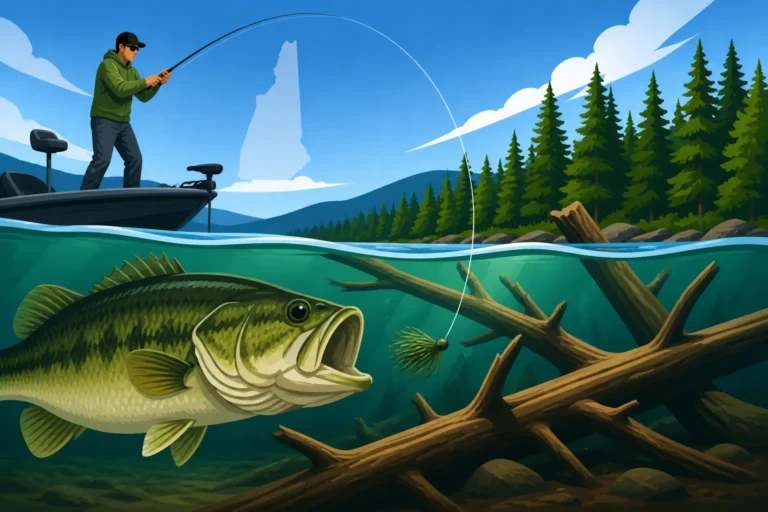
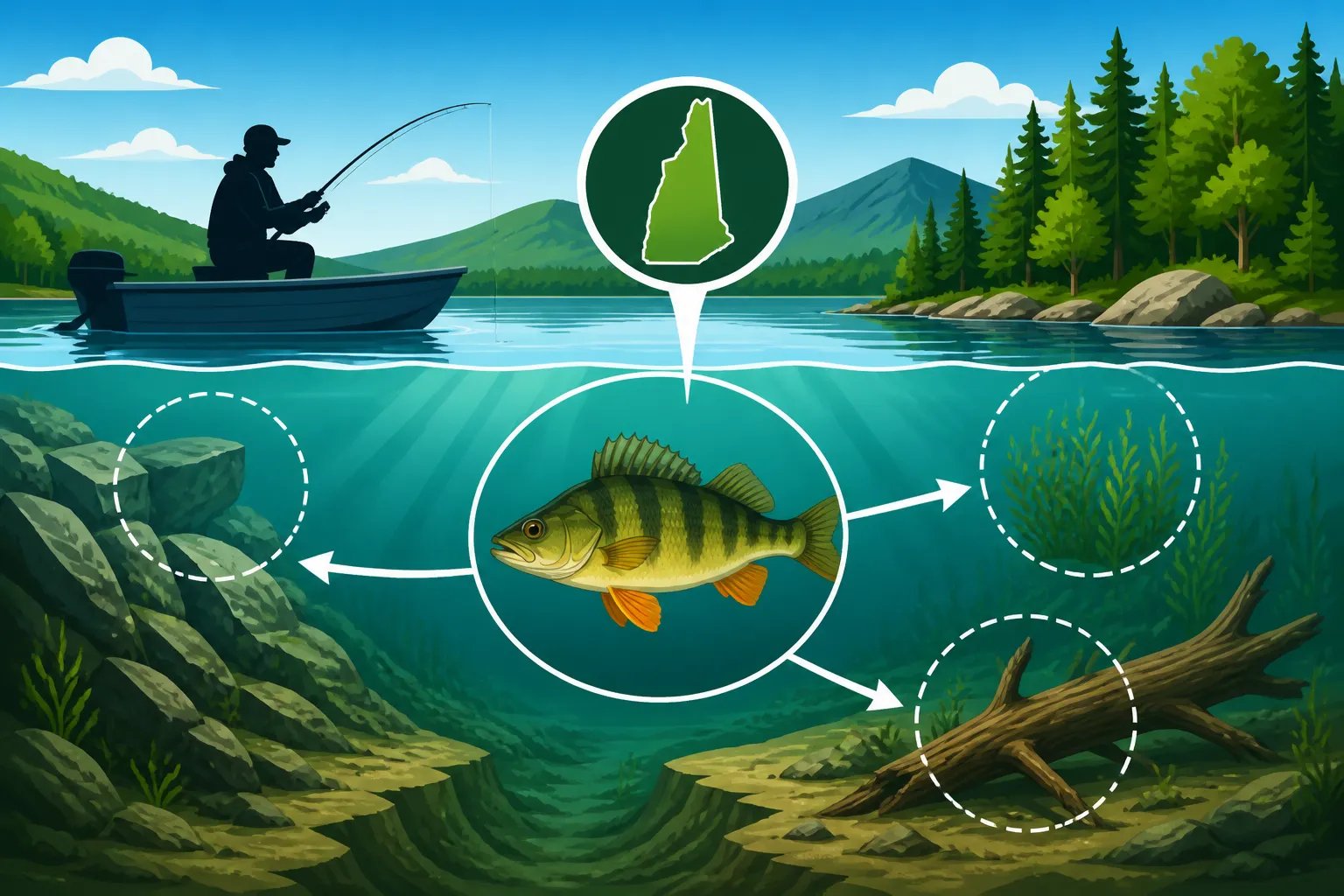
Perch are structure-oriented fish, meaning they like to associate with physical features in the water. These structures provide ambush points, protection from predators, and often hold their food sources. Think about what offers shelter and opportunity. In the warmer months, healthy weed beds are absolute magnets. Look for distinct weed lines, especially where they meet open water or a sharp drop-off. Submerged timber, fallen trees, and brush piles are also excellent spots, providing cover and attracting smaller organisms that perch feed on.
Rocky bottoms, particularly those with scattered boulders or rubble, are another prime perch habitat, especially in lakes like Lake Winnipesaukee. These areas provide small crevices for invertebrates and offer distinct depth changes that perch utilize. In deeper lakes, look for humps, submerged islands, and main lake points that extend into deeper water. These underwater features act like highways and feeding stations for migrating schools of perch. Even man-made structures like docks, bridge pilings, and old cribs can hold significant numbers of perch, especially if they offer shade and depth. Pay attention to changes in bottom composition – where sand meets rock, or mud meets gravel – as these transition zones are often productive.
The Importance of Forage and Water Quality
Just like any other predator, perch are where their food is. Their primary diet consists of aquatic insects, crustaceans, and small baitfish. If you can locate schools of shiners, smelt, or other small forage fish, you're often in the vicinity of hungry perch. Keep an eye out for any activity on the surface that might indicate baitfish schooling, or use your electronics to spot bait balls. Areas with good water clarity and sufficient oxygen are also critical. While perch can tolerate a range of conditions, they thrive in well-oxygenated water, which is often found around healthy vegetation or areas with current.
Excessive algae blooms or very murky water, while sometimes holding fish, can often indicate lower oxygen levels in certain strata, pushing perch to cleaner, more oxygen-rich zones. Look for inflows from streams or rivers, especially after a rain, as these can bring in food and oxygen. Similarly, areas with light currents, even subtle ones in a lake, can concentrate food items and attract perch. Understanding the food chain and environmental factors helps you predict not just where perch might be, but why they're there, giving you a deeper understanding of Yellow Perch in New Hampshire Lakes.
Essential Tools and Techniques for Locating Perch
Finding perch isn't always about luck; it's about employing smart strategies and using the right gear. From advanced electronics to time-honored observational skills, combining different approaches will drastically improve your success rate. After all, the goal is to make informed decisions, not just blind casts.
Leveraging Electronics: Fish Finders and Mapping
In modern New Hampshire fishing, electronics are a game-changer, especially for locating those elusive schools of perch. A good fish finder, whether it's a basic flasher for ice fishing or a high-definition side-imaging unit for open water, can give you a literal window into the underwater world. When you're out on the water, whether in a boat or even a kayak, a portable fish finder can help you pinpoint schools of fish and identify the precise structure they're holding on. You can find excellent options on platforms like Amazon that offer features like down-imaging and side-imaging, which are incredibly useful for seeing not just fish directly beneath you, but also schools off to the sides.
Learning to read your fish finder is key. Look for distinct arches or blobs that indicate schools of fish. Often, perch will show up as tightly packed groups, especially when they're actively feeding. Pay close attention to depth readings and how fish are relating to the bottom or suspended in the water column. Combine your fish finder with detailed lake maps, either built into your unit or on a separate app. These maps highlight contour lines, drop-offs, humps, and other key structures that perch frequent. By overlaying what you see on the screen with the topography of the lake, you can start to form a comprehensive picture of where the fish are hiding. This is particularly valuable for Best Fish Finders for New Hampshire Lakes.
Old-School Methods: Reading the Water and Observation
While electronics are fantastic, don't underestimate the power of keen observation and understanding the natural environment. Sometimes, the best fish finder is your own eyes and intuition. Start by observing the shoreline. Are there prominent points, coves, or inlets that might extend underwater? Look for obvious weed beds, lily pads, or submerged logs visible from the surface. These are natural attractants for perch. Pay attention to the wind, as it can push baitfish and plankton, and thus perch, towards certain areas of the lake. A consistent breeze blowing into a protected cove, for example, can create a productive feeding zone.
Watch for any surface activity: baitfish flickering, birds diving, or even the subtle rings of fish rising. These are all clues that forage is present, and where there's forage, there's usually perch. Take note of water color and clarity. Clear water might mean perch are deeper or more spread out, while slightly stained water can concentrate them and make them less skittish. Even the presence of other anglers can be a clue; if a few boats are clustered in one area, it's often for a good reason. These subtle signs are invaluable, whether you're fishing from shore or enjoying Best Kayak Fishing Spots in New Hampshire.
The Role of Test-Hole Drilling in Ice Fishing
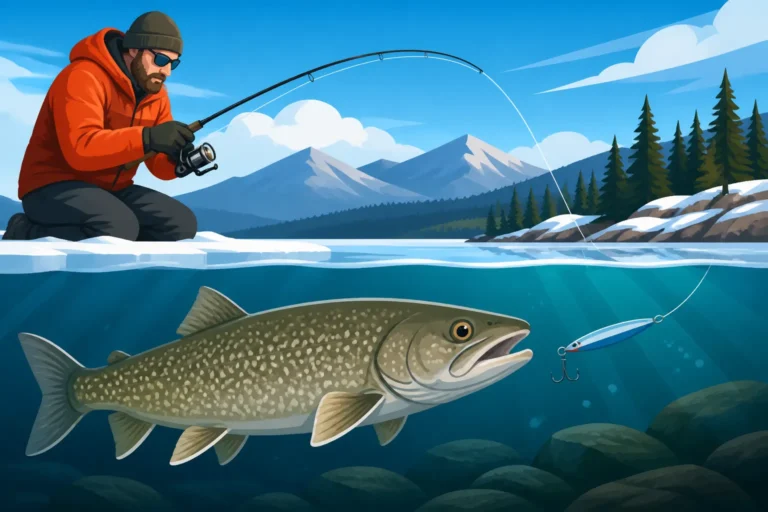
Ice fishing for perch in New Hampshire is a whole different ballgame, and mobility is paramount. You can't just cruise around in a boat with a fish finder. Instead, a strategic approach to drilling test holes becomes your primary method of "scanning" the lake. Don't be afraid to drill a dozen, two dozen, or even more holes over a potential area. Think of it like walking a grid pattern. Start by targeting known structures like deep edges, humps, or flats that held perch in open water.
Once you've drilled a hole, quickly drop a transducer (often attached to a flasher or a portable fish finder available on Amazon) down to check for fish. These flashers give you instant feedback, showing fish marks in real-time. If you don't see anything after a few minutes, move to the next hole. If you see fish, stay put and fish it! A lot of anglers make the mistake of sitting over a barren hole for too long. Perch move, and you need to move with them. This "run and gun" approach, especially when targeting Ice Fishing in New Hampshire, is incredibly effective. For efficient drilling, a good ice auger is indispensable, and you can easily find the Best Ice Auger for New Hampshire Lakes with a quick search online.
Lake-Specific Strategies for New Hampshire Perch
New Hampshire is blessed with a wide variety of lakes and ponds, from vast, deep glacial lakes to smaller, shallower impoundments. What works in one body of water might not be effective in another. Tailoring your perch-locating strategy to the specific characteristics of the lake you're fishing is crucial for consistent success.
Shallow Pond Tactics for Yellow Perch
Smaller, shallower ponds, often found tucked away throughout the state, can be absolute goldmines for yellow perch, but they require a slightly different approach than their larger counterparts. In these waters, perch are highly susceptible to changes in water temperature and oxygen levels, and they're usually much more tightly associated with vegetation. Look for expansive weed flats, especially those with distinct pockets or edges where open water meets thick growth. These areas provide both cover and a buffet of aquatic insects. Lily pad fields are also prime real estate, particularly in the warmer months, offering shade and an ambush point.
Another key feature in shallow ponds is bottom composition. Areas where a hard, sandy bottom transitions to soft muck can often hold perch, as these zones tend to concentrate invertebrates. Don't overlook submerged brush piles, fallen trees along the shoreline, or even old docks that provide vertical structure. Since these ponds are often less complex in terms of deepwater structure, focusing on the edges, subtle depth changes (even just a few feet!), and dense cover will be your best bet. Many of these ponds are fantastic for Panfish Fishing in New Hampshire with light tackle.
Deepwater Perch in Larger Lakes
When you're tackling big, deep lakes like Lake Winnipesaukee, Squam Lake, or Newfound Lake, perch often behave more like open-water predators, especially during the summer and winter months. Their movements are dictated by access to the thermocline (the layer where warm surface water meets colder deep water) and schools of pelagic baitfish like smelt. Here, your fish finder and detailed mapping become even more indispensable. Focus on main lake points that extend far out into the basin, submerged humps that rise up from deep water, and offshore rock piles. These structures act as highways and holding areas for perch moving between deep water and shallower feeding grounds.
In the summer, you might find schools of perch suspended over deep water, following baitfish. They won't necessarily be glued to the bottom. In winter, during the ice fishing season, look for those deep basins with slight contours or subtle humps. Perch will often school tightly in these stable, deep environments. Remember, in larger lakes, covering water is essential. Don't be afraid to troll lures or constantly check your electronics as you drift to find those active schools. Targeting these deeper waters for yellow perch is a specific tactic that contributes to the overall Lake Winnipesaukee Fishing Guide.
Adapting to Changing Conditions
Fishing conditions in New Hampshire can change on a dime, and successful perch anglers are those who can adapt. Factors like weather fronts, wind direction, time of day, and even fishing pressure can significantly influence where perch decide to hang out. For instance, before a cold front, perch might feed aggressively in shallower water. After the front passes and the barometer drops, they'll often retreat to deeper, more stable environments and become less active.
Wind plays a huge role. A strong, consistent wind can create a "current" in a lake, pushing baitfish and zooplankton towards a particular shoreline or structure. Perch will often follow, setting up on the wind-blown side of points or islands. Time of day also matters; early morning and late evening often see perch moving shallower to feed, especially in warmer months, while midday might find them deeper. If a particular spot is getting hammered by other anglers, the perch might move off, becoming more skittish. Don't be afraid to try a new location or a different depth if your usual spot isn't producing. Always be ready to adjust your strategy for Best Time of Year to Fish in New Hampshire.
Common Mistakes and How to Avoid Them
Even seasoned anglers can fall into traps when targeting perch. Often, it's the subtle missteps that lead to a slow day on the water. Avoiding these common mistakes can dramatically improve your ability to locate and catch more perch in New Hampshire.
Don't Stay in One Spot Too Long
This is arguably the biggest mistake many anglers make, especially when fishing for schooling species like perch. It's easy to get comfortable in a spot that has produced in the past or looks "fishy." However, if you're not seeing fish on your electronics, or if you've been casting for a significant amount of time without a bite, it's time to move. Perch schools are mobile; they follow bait, they respond to pressure, and they'll move on when conditions change.
Consider a strategy of "power fishing" to locate them. Make a few casts in one spot, then move 20-30 yards down the weed line, or drift across a hump, constantly checking your fish finder. When ice fishing, this means drilling a grid of holes and moving from hole to hole every few minutes if no fish show up on your flasher. It's far more productive to actively search for the fish than to passively wait for them to come to you. Remember, a single perch doesn't make a school, and you're looking for the entire group.
Ignoring the Smaller Details
Sometimes, the key to finding perch lies in paying attention to the subtle cues that the lake provides. Many anglers focus solely on the big picture – the deepest drop-off or the largest weed bed – and miss the nuanced details that can betray a perch's hiding spot. For example, a slight current around a point, even if barely perceptible, can concentrate baitfish and oxygen, making it a perch hotspot. The presence of specific insect hatches on the surface or small schools of baitfish flickering can tell you exactly what perch are keying in on and where they are feeding.
Even the smallest changes in bottom composition – a patch of gravel within a sandy flat, or a single submerged log in a generally featureless area – can act as a magnet for perch. Furthermore, take note of the water temperature, especially if you have a gauge on your boat or fish finder. A one or two-degree difference in a specific area can be enough to draw in or push out schools of perch. These minor details, often overlooked, can be the difference between a sparse and bountiful catch when you're working on Best Techniques for Panfish in New Hampshire.
Overlooking the Obvious
Sometimes, we overthink it. While perch can be found in deep, complex structures, they are also frequently found in very obvious, accessible locations that many anglers might dismiss as "too easy" or "too shallow." This is particularly true in early spring, late fall, and sometimes even during the summer. Don't forget to check docks, especially older ones with plenty of pilings and submerged debris, as they offer shade, cover, and a haven for baitfish. Boat ramps can also be surprisingly productive, often having deeper edges and structure nearby from their construction.
Similarly, in smaller ponds, don't dismiss the very shallow edges of weed beds, especially on sunny days. Perch will often cruise these areas looking for easy meals. Public access points, while often busy, sometimes have built-in structure or easily accessible drop-offs that consistently hold fish. The point is, while it's good to explore new water and use advanced techniques, don't forget to revisit the straightforward, classic perch spots. They're called "panfish" for a reason – they're often found where people are fishing.
Perch Location Cheat Sheet
| Season | Preferred Depths | Key Structures/Cover | Food Sources | Best Locating Tools |
|---|---|---|---|---|
| Spring | Shallow to Mid-depths | Warming coves, weed lines, shallow flats, docks | Insects, baitfish | Visual observation, fish finder (shallow) |
| Summer | Mid to Deep (Thermocline) | Offshore humps, main lake points, deep weed edges | Baitfish (smelt, shiners) | Fish finder (down/side imaging), detailed maps |
| Fall | Mid-depths to Shallower | Drop-offs, baitfish schools, healthy weed beds | Insects, baitfish | Fish finder, visual cues (surface activity) |
| Winter | Deep basins, humps, edges | Deep rock piles, submerged islands, drop-offs | Small baitfish, larvae | Flasher/Ice fish finder, test-hole drilling |
Disclaimer
This article is for general informational purposes only and does not constitute professional advice. Laws, prices and regulations vary by location and change over time. Consult a qualified professional for guidance on your specific situation.