Best water temperature for lake trout fishing
There’s nothing quite like the thrill of chasing a true cold-water giant like the lake trout in New Hampshire’s deep, pristine lakes. But if you’ve spent countless hours out on the water, trolling or jigging, only to come up empty-handed, you know the frustration. Often, the missing piece of the puzzle isn't your lure choice or technique, but simply not understanding where these magnificent fish are holding in the water column, and more importantly, why. This guide dives deep into the critical role water temperature plays in lake trout behavior, helping you pinpoint their preferred zones for a more successful day on the water.
Understanding Lake Trout Thermal Preferences
Lake trout are fascinating creatures, perfectly adapted to the frigid depths of glacial lakes. Unlike some other fish species that tolerate a wide range of temperatures, "lakers," as we often call them, are highly particular. Their entire existence, from feeding habits to reproduction, is governed by the water temperature around them. Ignoring this fundamental aspect of their biology is like trying to find a polar bear in the Sahara – you're just not looking in the right place.
The Importance of Water Temperature in Lake Trout Habitat
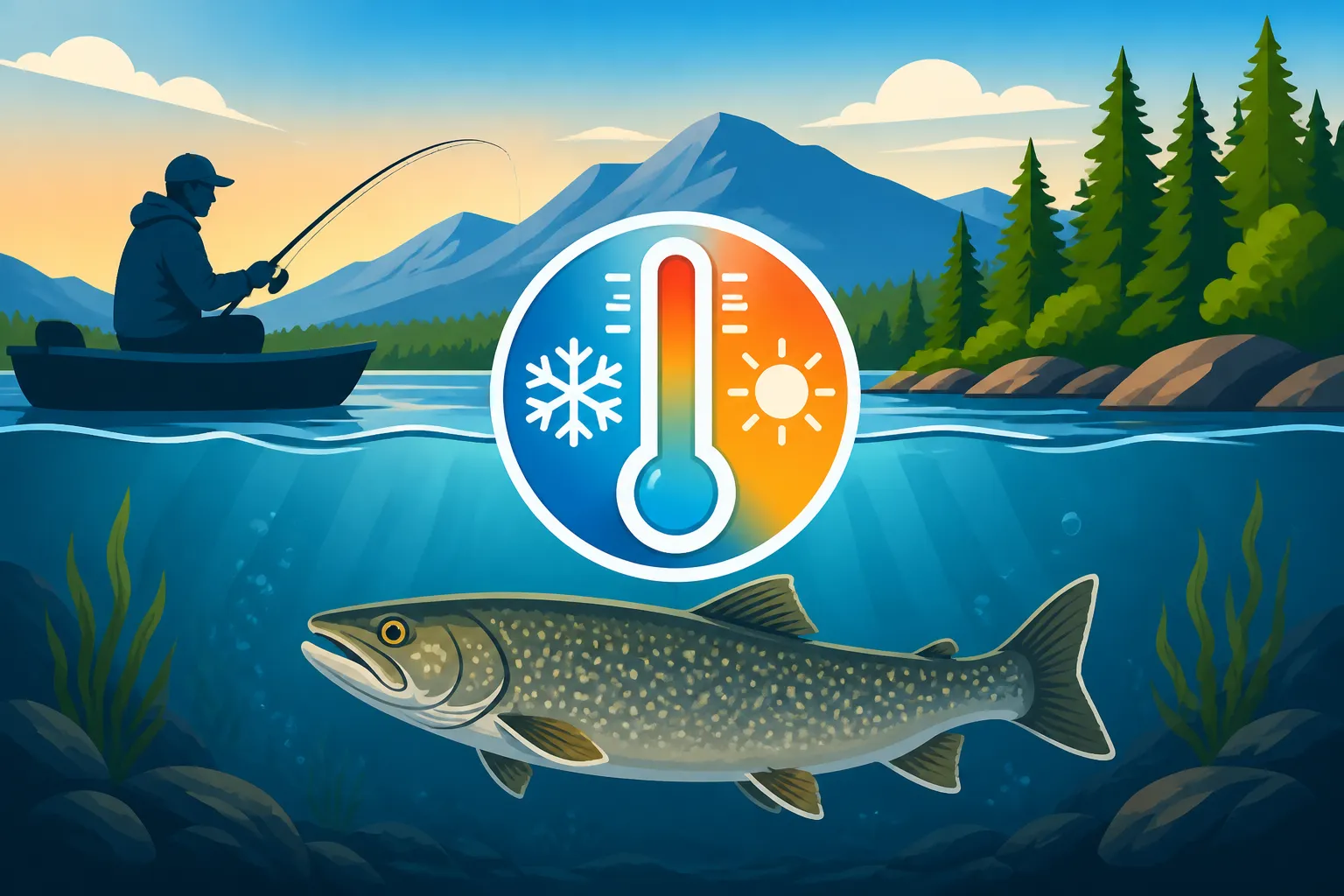
Think of water temperature as the air conditioning system for lake trout. They are what we call stenothermic, meaning they prefer a very narrow range of cold temperatures. If the water gets too warm, their metabolism speeds up uncomfortably, they struggle to get enough oxygen, and they simply can't thrive. Conversely, if it's too cold, their metabolic processes slow down, making them lethargic and less likely to actively feed.
This sensitivity means that lake trout are constantly seeking out their preferred thermal zone. They'll move vertically through the water column, often to incredible depths, to find that sweet spot. Understanding this isn't just academic; it's the key to knowing where to drop your line. Their feeding opportunities, resting spots, and even their migration for spawning are all dictated by the ever-changing temperature profile of the lake. Without a firm grasp of these thermal needs, you're essentially fishing blind in a three-dimensional environment.
Ideal Temperature Range for Active Lake Trout
So, what's the magic number? While lake trout can survive in water from just above freezing up to around 60°F (15.5°C) for short periods, they are most active and comfortable in a much colder, tighter window. The consensus among seasoned New Hampshire anglers and fisheries biologists is that the ideal temperature range for actively feeding lake trout is generally between 40°F and 55°F (4°C and 13°C).
Within this specific range, their metabolism is at an optimal level, allowing them to efficiently digest food, recover from exertion, and have the energy to chase down prey. When the water temperature creeps higher than 55°F, you'll find them hunkering down in the deepest, coolest pockets, often becoming less inclined to chase a lure. Below 40°F, while they are certainly present and can be caught, their activity levels tend to diminish. This optimal range is your target zone, the thermal highway where these magnificent fish cruise for their next meal.
Seasonal Movements and Temperature Strata in New Hampshire Lakes
New Hampshire's deep, oligotrophic (nutrient-poor) lakes, such as Lake Winnipesaukee, Sunapee Lake, or Newfound Lake, exhibit distinct seasonal temperature changes that profoundly influence where lake trout can be found. It’s not enough to know what temperature they like; you need to know when and where those temperatures will occur throughout the year.
Spring (Ice-Out to Early Summer) Temperature Patterns
Ah, spring! The air smells of thawing earth, and the ice has finally receded from the big lakes. This is a truly exciting time for lake trout anglers because, for a brief window, these deep-dwelling fish become much more accessible. As the ice melts, the surface water begins to warm, but the overall water column remains relatively cool and uniform. The entire lake is often close to the lake trout's preferred temperature range, typically hovering around 40-45°F from top to bottom.
During this period, lake trout can be found surprisingly shallow, sometimes just 10-20 feet down, especially in the early mornings or on overcast days. They'll cruise shorelines, rocky points, and shallow flats, actively feeding on smelt and other baitfish that are also moving into these areas. This uniform temperature profile means you don't need highly specialized gear to target deep fish just yet. It's a fantastic time for flat-lining lures or even casting from shore in certain spots, though most still prefer a boat to cover more water. If you're wondering How to fish for salmon right after ice-out, many of those same early season strategies apply to lake trout as well, given their similar cold-water preferences.
Summer Thermocline and Deep Water Refuges
As summer marches on, the sun's intense rays begin to heat the surface waters more significantly, leading to a phenomenon called thermal stratification. The lake essentially divides into distinct temperature layers: a warm surface layer (epilimnion), a rapidly changing middle layer (thermocline or metalimnion), and a cold, deep layer (hypolimnion). The thermocline acts like an invisible barrier, with water temperatures dropping significantly as you descend through it.
For lake trout, this means retreating from the warm surface waters. They'll descend to the hypolimnion or just above it, where the temperatures reliably remain in their optimal 45-55°F range. This could mean depths anywhere from 50 to over 100 feet, depending on the lake's size, depth, and the specific time of summer. This is when downriggers become absolutely essential, allowing you to precisely present your lures at the exact depth where the lake trout are holding. Knowing How deep lake trout go in summer is crucial, and it’s usually right on top of or just below that thermocline. Pay attention to your fish finder during this time; it will show you these distinct layers.
Fall Turnover and Pre-Spawn Behavior
As the crisp New Hampshire autumn arrives, the surface water begins to cool. Eventually, it reaches a temperature similar to the deeper water, often around 50°F. This equalization of temperature, combined with fall winds, causes the entire lake to "turn over," mixing the water from top to bottom. The distinct layers disappear, and once again, the water column becomes uniformly cold.
This turnover event is another prime time for lake trout fishing. With consistent temperatures throughout the water, lake trout can roam more freely, often moving shallower again as they prepare for their spawning rituals. This pre-spawn period, typically in October and November, sees them feeding heavily to build energy reserves. You'll find them congregating around rocky reefs, shoals, and underwater humps where they intend to spawn. Targeting these areas with the knowledge that the fish are actively feeding and more widespread can lead to some truly memorable catches. Experienced anglers often focus on How to catch trophy lake trout in the fall during this window, as the biggest fish are often more active.
Winter (Ice-Covered) Temperature Dynamics
When winter clamps down and the lakes freeze over, a different kind of thermal stratification occurs, known as inverse stratification. The coldest water (around 32°F / 0°C) is just beneath the ice, while slightly warmer, denser water (around 39°F / 4°C) settles at the bottom. Lake trout, while still preferring their 40-55°F range, adapt to these stable, though colder, conditions.
Under the ice, lake trout will still be found in deeper waters, often seeking out that stable 35-40°F zone near the bottom. They remain active feeders, albeit with a slightly reduced metabolism compared to summer or fall. Ice fishing for lake trout is a revered tradition in New Hampshire, particularly on vast lakes like Winnipesaukee, Squam, and Newfound. Anglers use specialized sonar units called flashers to pinpoint fish and their preferred depths under the ice. Knowing that these fish are still keying into stable, cold temperatures is paramount. For those braving the cold, exploring the Best Ice Fishing Lakes in New Hampshire is a great way to experience this unique season.
Practical Strategies for Locating Lake Trout by Temperature in New Hampshire
Understanding the science behind lake trout thermal preferences is one thing, but putting that knowledge into practice on the water is where the real challenge lies. Luckily, modern technology and a bit of old-fashioned detective work can greatly improve your odds.
Using Electronics to Find the Thermocline
Modern fish finders are an angler's best friend when it comes to locating lake trout. Many high-end units, like those from Humminbird, Lowrance, or Garmin, offer detailed sonar readings that can actually show you the thermocline. On a good color unit, the thermocline often appears as a distinct band where the density of the water changes, sometimes showing as a subtle fuzzy line or even a color transition. The better units also incorporate water temperature sensors, giving you real-time readings at the transducer level.
Beyond just seeing the thermocline, these devices help you identify baitfish schools and individual lake trout holding precisely at or below that temperature break. If you notice a dense school of baitfish suspended at 50 feet, and your temperature sensor confirms it’s 50°F at that depth, you can bet your bottom dollar that hungry lake trout aren't far behind. Learning to interpret these readings is an art, but it significantly reduces the guesswork. To really get an edge, consider investing in one of the Best Fish Finders for New Hampshire Lakes to boost your understanding of the underwater world.
Targeting Depths Based on Seasonal Temperature Data
Once you've identified the optimal temperature range and, ideally, confirmed its depth with your electronics, the next step is to present your lures effectively. This means adjusting your fishing depth to precisely match where the lake trout are holding.
Here's a quick reference table for general guidance, but always remember to confirm with your own electronics on the water:
| Season | General Lake Trout Depth Range | Typical Water Temperature (Fahrenheit) | Key Considerations |
|---|---|---|---|
| Early Spring | 10 – 40 feet | 40 – 48°F | Uniform temps, fish widely dispersed, often shallower. |
| Late Spring | 20 – 60 feet | 45 – 55°F (at depth) | Beginning of stratification, fish seek deeper cool zones. |
| Summer | 50 – 150+ feet | 40 – 55°F (below thermocline) | Strong stratification, fish in hypolimnion, deep trolling. |
| Fall Turnover | 20 – 80 feet | 45 – 55°F (uniform) | Temps equalize, fish roam, pre-spawn activity. |
| Winter (Ice) | 40 – 100+ feet | 35 – 40°F (at depth) | Inverse stratification, stable deep water, jigging. |
For deep-water trolling in summer, downriggers are non-negotiable. These mechanical devices allow you to clip your fishing line to a heavy cannonball and lower your lure to a precise, measured depth, keeping it right in the lake trout's preferred temperature zone. You can find a wide array of specialized trolling gear, including excellent downriggers, on Amazon, which can truly revolutionize your deep-water game. Without them, it's incredibly difficult to consistently reach and stay in the thermocline where the fish reside. For more specific setups, checking out Best Trolling Gear for New Hampshire Lake Trout can offer valuable insights.
Interpreting Lake Reports and Online Resources
The New Hampshire Fish and Game Department (NHF&G) is an invaluable resource for anglers. While they may not provide daily temperature logs for every lake, their detailed stocking reports and scientific studies can offer clues about lake health and fish distribution. Knowing which lakes are stocked with lake trout and their general characteristics can help narrow down your search. For instance, knowing which bodies of water are targeted for specific species might give you a better idea of where to concentrate your efforts, and the New Hampshire trout stocking report map can be very helpful here.
Beyond official channels, online fishing forums, social media groups dedicated to New Hampshire fishing, and even a friendly chat with local bait shop owners can provide up-to-the-minute anecdotal information. Often, locals will share general trends, like "they're hitting deep around 70 feet on the south end of Winnipesaukee," or "the lakers are still shallow after turnover on Newfound." While not always precise scientific data, this community intelligence, combined with your understanding of temperature, can fill in crucial gaps and guide your approach. Don't be shy about striking up conversations; veteran anglers in New Hampshire are often happy to share their wisdom, especially if you show genuine interest and respect for the resource.
Gear Considerations for Temperature-Driven Lake Trout Fishing
Successfully targeting lake trout based on water temperature isn't just about knowledge; it also requires the right tools to execute your plan. Having the correct gear ensures you can accurately find the fish, present your bait effectively, and ultimately, bring those elusive lakers to the net.
Thermometers and Depth Finders
At the top of your gear list should be a reliable way to measure water temperature and depth. Many modern fish finders, as mentioned earlier, come with integrated temperature sensors that read the water at the transducer. However, for a more comprehensive understanding, a dedicated, submersible thermometer is highly beneficial. Some anglers use specialized "temp and depth" gauges that you drop down, allowing you to chart the temperature profile at various depths. You can easily find highly rated portable water thermometers and more advanced fish-finding electronics on Amazon, which often feature real-time temperature readings and clear depth indicators.
A good depth finder isn't just about seeing the bottom; it's about seeing what's between the surface and the bottom. Look for units that offer clear, high-resolution displays to distinguish baitfish schools, individual fish arches, and subtle changes in water density that indicate thermal layers. Being able to mark fish at a specific depth and then confirm the temperature at that depth is the ultimate combination for success.
Trolling and Downrigging Setups
When lake trout head deep in summer, your standard casting or light trolling setup simply won't cut it. This is where dedicated trolling gear, especially downriggers, becomes indispensable. Downriggers allow you to precisely lower your lure to a specific depth, keeping it in the narrow thermal band where lake trout are feeding. They typically consist of a boom, a heavy cannonball weight (often 8-12 lbs), and a release clip that attaches to your fishing line.
Beyond the downrigger itself, consider your rods, reels, and line. You’ll want sturdy trolling rods with a moderate action to handle the weight of the cannonball and the fight of a large lake trout. Reels should have a high line capacity, capable of holding hundreds of yards of monofilament or braided line. Many anglers opt for lead core line or copper line when not using downriggers to get lures down deep, as these lines are weighted and sink on their own. The right line choice, leader material, and lure presentation are all critical when trying to fool a wary deep-water laker. If you're looking to upgrade your trolling game, researching Best Trolling Gear for New Hampshire Lake Trout can help you select the right components for your setup.
Ice Fishing Specifics for Stable Temperatures
Even under a thick sheet of ice, temperature remains a key factor. While you can't troll, the stable temperatures under the ice often mean lake trout stick to consistent depths. Here, specialized ice fishing gear comes into play. Portable fish finders or "flashers" are a must-have, allowing you to see your lure and any fish that approach it in real-time. These units are excellent at showing your jig or bait at a specific depth, as well as the depth of any fish.
Anglers often drill multiple holes and use their flashers to search for active fish or schools of bait at varying depths. Once a productive depth is found, often correlating to a specific temperature zone, multiple lines can be set up (within legal limits) with tip-ups or jigging rods. The ability to precisely position your bait, often just a few feet off the bottom or suspended mid-water, is vital for winter lake trout success. For those cold-weather excursions, having a reliable setup is key, so don't overlook resources like Best Ice Fishing Gear for New Hampshire to stay warm and effective.
Disclaimer
Fishing regulations, license requirements, and local conditions can change. Always consult the most current New Hampshire Fish and Game Department regulations before heading out on the water. This guide is for informational purposes only and should not replace official guidance.