Best Techniques for Largemouth Bass in New Hampshire Ponds
There's nothing quite like the thrill of a largemouth bass exploding on a topwater lure in a quiet New Hampshire pond, or the subtle thud on your line as a big one inhales a plastic worm tucked into thick cover. But often, anglers find themselves staring at beautiful water, knowing the bass are there, yet struggling to coax a bite. This guide is all about equipping you with the specialized techniques and insights needed to consistently catch largemouth bass in the diverse and often challenging pond environments across the Granite State.
Understanding Largemouth Bass Behavior in New Hampshire Ponds
Before we even talk about rods and reels, it's crucial to get inside the head of a largemouth bass, especially how they operate in the unique world of New Hampshire ponds. These aren't vast, open lakes; they're often intimate, feature-rich environments where the bass's every move is dictated by distinct seasonal changes, available forage, and plenty of cover.
Seasonal Movements and Habitat Preferences
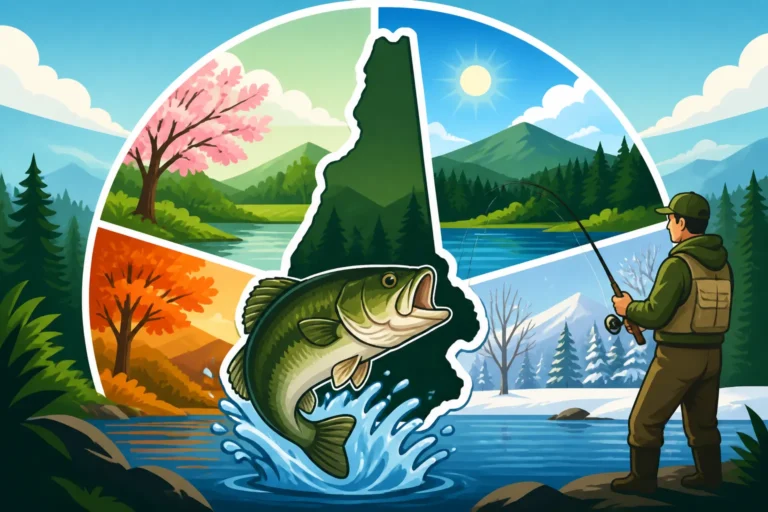
Just like us, largemouth bass change their routines throughout the year, but their motivations are simpler: find food, find warmth, and find a place to make more bass. Ponds, being generally shallower than large lakes, warm up and cool down faster, which significantly impacts bass behavior.
In spring, as the ice recedes and water temperatures start to climb into the 50s Fahrenheit, largemouth bass begin to shake off their winter lethargy. This pre-spawn period sees them moving from deeper wintering holes into shallower, sun-warmed areas, often near points, rock piles, or early-growing weed beds. They're looking for stable temperatures and readily available food to fuel their upcoming spawning activities. As temperatures creep into the mid-60s, they move onto their spawning beds, typically in protected coves or shallow flats with some sort of hard bottom (sand, gravel, small rocks) and often surrounded by emergent vegetation like lily pads or cattails. Post-spawn, the fish can be a bit scattered and lethargic as they recover, but they'll generally remain relatively shallow, guarding fry or slowly resuming feeding.
Summer in a New Hampshire pond means rising water temperatures, often pushing into the 70s and sometimes even 80s Fahrenheit. This heat drives bass to seek out cooler, more oxygenated water and shade. You'll find them retreating to deeper weed lines, under docks, beneath dense lily pad fields, or hunkered down in the shade of overhanging trees or submerged timber. The key during summer is to think about comfort and ambush points. They'll use these spots to dart out and grab passing prey without expending too much energy in the warm water. Early mornings, late evenings, and even night fishing become incredibly productive as temperatures cool and bass become more active. If you're looking for more details on specific summer tactics, exploring articles like Best Kayak Fishing Spots in New Hampshire can offer insights into accessing these shaded, hard-to-reach areas.
Come fall, as the air gets crisp and water temperatures begin to drop, largemouth bass enter a fantastic feeding frenzy. They know winter is coming, and they need to pack on the pounds. This is often the best time to catch genuinely large bass. They'll move shallower again, actively chasing schools of baitfish, crawfish, and anything else they can get their mouths around. Look for them concentrated around points, channel swings, and areas where baitfish are schooling up. The cooler temperatures also mean they can be active throughout the day.
Finally, during winter in New Hampshire, when ponds are locked under a blanket of ice, largemouth bass become incredibly sedentary. They seek out the deepest available holes in the pond, often congregating in these areas. Their metabolism slows dramatically, and while they can still be caught through the ice, it requires a much slower, more patient approach with smaller baits.
Forage and Feeding Habits
New Hampshire pond largemouth bass are opportunistic predators, meaning they'll eat just about anything they can fit in their mouths. Their diet largely consists of smaller fish like golden shiners, various sunfish (bluegill, pumpkinseed), perch, and even juvenile trout if present. Beyond fish, they're absolute fans of crawfish, frogs, salamanders, and even larger insects like dragonflies and grasshoppers that fall into the water.
They are classic ambush predators. This means they're constantly relating to some form of cover – a fallen tree, a dock pilings, a dense patch of weeds, or a rock pile. They'll position themselves strategically to surprise unsuspecting prey. The more cover and structure a pond offers, the more potential hiding and ambush spots for bass, which translates to better fishing. Water clarity and temperature play huge roles in their feeding. In murky water, they rely more on their lateral line to detect vibrations, favoring noisy, flashy baits. In clear water, sight becomes paramount, and more natural, subtle presentations are often key.
Essential Gear for Largemouth Bass Pond Fishing
You don't need a boatload of expensive gear to catch largemouth bass in New Hampshire ponds, but having the right gear can make a world of difference. It's about matching your tackle to the techniques you'll be using and the environments you'll be fishing. Whether you're a seasoned angler or just starting out, a thoughtful selection of rods, reels, lines, and lures will put you in a prime position for success.
Rods, Reels, and Line Selection
The key to successful pond fishing for largemouth is versatility and power. Ponds often mean dense cover, and you need the right setup to pull a big bass out of the thick stuff.
-
Rods:
- Medium-Heavy Casting Rod (6'6" to 7'6"): This is your workhorse. A medium-heavy power rod with a fast action tip is perfect for flipping and pitching jigs and soft plastics into heavy cover, punching through lily pads, and throwing heavier topwater frogs. The fast action allows for precise casts and excellent sensitivity, while the medium-heavy power gives you the backbone to turn a big fish away from snags. If you're looking for a good all-around option, brands like Ugly Stik or a St. Croix Bass X series offer great value and performance.
- Medium Spinning Rod (6'6" to 7'0"): A medium power, fast action spinning rod is incredibly versatile for lighter applications. Think wacky rigs, Ned rigs, smaller jerkbaits, and finesse worms. It's also excellent for open water or when bass are pressured and require a more subtle approach. This setup is often easier for beginners to cast accurately.
- Rod Power Explained:
- Medium-Heavy: Good for 1/4 to 1 ounce lures, 10-20 lb line.
- Medium: Good for 1/8 to 5/8 ounce lures, 6-12 lb line.
-
Reels:
- Baitcasting Reel: Pair this with your medium-heavy casting rod. A baitcaster offers superior casting accuracy, especially with heavier baits, and the torque needed to retrieve fish quickly from cover. Look for a gear ratio between 6.4:1 and 7.5:1 for a good balance of power and retrieve speed. Brands like Shimano, Daiwa, and Abu Garcia are popular choices.
- Spinning Reel: Match this with your medium spinning rod. Opt for a 2500 to 3000 series reel for a good balance of line capacity and smooth operation. Spinning reels excel with lighter lines and baits, reducing line twist and making delicate presentations easier.
-
Line: The type of fishing line you choose can be as important as your rod and reel, especially in varied pond environments.
- Braided Line (20-50 lb): This is ideal for heavy cover situations, especially with your casting rod. Braid has no stretch, offering incredible sensitivity and direct power to pull fish out of weeds or brush. It also floats, which is beneficial for topwater frogs. For punching through mats or fishing really thick stuff, 50 lb braid is not overkill.
- Fluorocarbon Line (10-20 lb): Often used as a main line on baitcasters or as a leader with braided line. Fluorocarbon is nearly invisible underwater, extremely sensitive, and very abrasion-resistant, making it great for fishing around rocks and wood. It also sinks, which can be an advantage for soft plastics and jigs.
- Monofilament Line (8-15 lb): While less common as a main line for bass these days, monofilament's stretch makes it excellent for topwater lures, as it helps prevent hooks from tearing out when a fish strikes aggressively. It's also more forgiving for new anglers.
You can often find great deals on these items, even reputable brands, on platforms like Amazon, which can be a convenient way to build out your tackle box without having to visit multiple specialty shops.
Lure Arsenal for New Hampshire Ponds
The beauty of largemouth bass fishing in ponds is the sheer variety of lures that can be effective. Your choice will depend on the season, water clarity, cover, and the mood of the fish.
-
Topwater Lures: Nothing beats the excitement of a topwater strike.
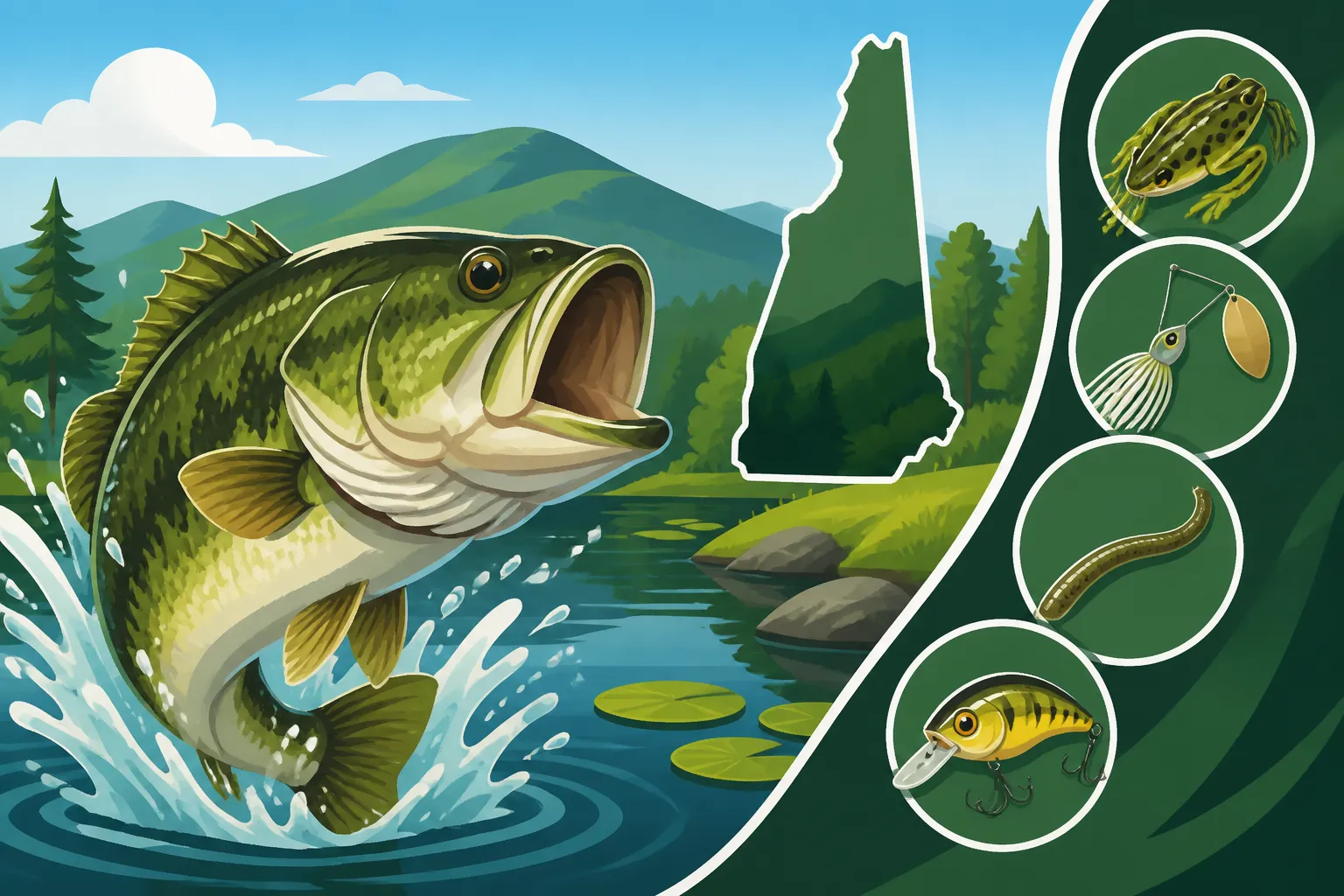
- Frogs: Soft plastic frogs, like those from Stanley Ribbit or Spro, are weedless wonders designed for dense lily pads and slop. They crawl over vegetation, daring bass to strike.
- Poppers & Walking Baits: These are effective in open pockets of water, near docks, or along weed edges, especially during low light conditions in summer. Brands like Rapala Skitter Pop or Heddon Super Spook are classics.
- When to Use: Best at dawn, dusk, or on cloudy days when bass are cruising shallow.
-
Soft Plastics: These are the most versatile lures for bass.
- Senkos/Stick Baits: The Gary Yamamoto Senko is legendary for its subtle, natural fall. Wacky rigged or Texas rigged, it's a bass magnet in nearly all conditions.
- Creature Baits & Craws: Mimic crawfish or other critters, great for flipping and pitching into heavy cover or fishing on a jig. Zoom Speed Craws or Berkley PowerBait options are reliable.
- Worms (Texas & Carolina Rigs): Classic plastic worms remain incredibly effective. Rigged Texas-style with a bullet weight, they're weedless and can be fished through thick stuff. Carolina rigs present a worm subtly behind a weight, ideal for covering deeper flats.
- When to Use: Year-round, especially when bass are sluggish, pressured, or buried in cover.
-
Jigs: Heavy, weedless, and incredibly effective.
- Flipping & Pitching Jigs: Designed with a heavy brush guard, these jigs are built to penetrate dense cover. Tip them with a soft plastic craw or creature bait. Strike King KVD series or Z-Man CrossEyeZ jigs are popular.
- Swim Jigs: Fished more like a spinnerbait, these jigs have a skirt and are often paired with a swim-bait trailer. Great for mimicking baitfish around grass lines.
- When to Use: Flipping/pitching jigs excel in heavy cover. Swim jigs are excellent for covering water along weed edges.
-
Crankbaits & Spinnerbaits: Reaction baits designed to cover water efficiently.
- Shallow Diving Crankbaits: Perfect for New Hampshire ponds that often lack extreme depth. They bounce off cover, triggering reaction strikes. Rapala Scatter Rap or Berkley Squarebill crankbaits are good choices.
- Spinnerbaits: Excellent for covering large areas, especially along weed lines or around sparse cover. The flash and vibration can draw bass from a distance. Booyah or War Eagle spinnerbaits are dependable.
- When to Use: Great for searching for active fish, especially in spring and fall.
Remember to consider color selection. In clear water, opt for more natural colors like green pumpkin, watermelon seed, or black and blue. In stained or murky water, brighter colors like chartreuse, white, or firetiger can be more visible and effective. It's always a good idea to have a variety on hand, and many anglers build their collection by browsing reputable online stores like Amazon for tackle.
Top Techniques for Productive Largemouth Fishing
Now that we've covered what largemouth bass are doing and what gear you'll need, let's dive into the actual fishing techniques. The beauty of targeting largemouth in New Hampshire ponds is the variety of approaches you can take, each suited to different types of cover, conditions, and fish moods.
Targeting Structure and Cover
Largemouth bass are inextricably linked to structure and cover. These are their homes, their hunting grounds, and their safe havens. Learning to identify and effectively fish these key areas is paramount.
-
Docks: Docks provide shade, cover from predators, and often host baitfish, making them prime real estate for bass. Fishing docks requires precision.
- Skipping under Docks: This advanced technique involves making a low, flat cast that allows your lure (often a jig or soft plastic) to skip across the water's surface, sliding far under the dock where bigger bass often lurk. It takes practice but is incredibly rewarding.
- Flipping and Pitching: For docks with less overhead clearance or when targeting individual pilings, flipping and pitching a jig or a Texas-rigged worm provides a quiet, accurate presentation. Let the bait sink slowly, feeling for that subtle thump.
- Around the Edges: Don't neglect the outside edges of docks or nearby boat lifts, as bass will often stage there before moving into deeper cover.
-
Lily Pads and Weed Beds: These dense patches of vegetation are classic largemouth habitat in New Hampshire ponds. They offer shade, ambush points, and hold insects, frogs, and baitfish.
- Frogging: This is the most exciting way to fish lily pads. Cast a weedless hollow-body frog directly onto and over the pads, working it with short twitches and pauses. When a bass blows up, resist the urge to set the hook immediately. Wait until you feel the fish, then set hard.
- Punching Rigs: For really thick, matted vegetation, a heavy "punching" rig is essential. Use a heavy tungsten weight (1/2 oz to 1.5 oz), a strong punching hook, and a compact creature bait on heavy braided line. Punch through the mat, let it sink, and twitch it. This is for aggressive, cover-oriented bass.
- Texas Rigged Soft Plastics: For slightly sparser weed beds or along the edges, a Texas-rigged worm or creature bait is highly effective. It's weedless enough to go through most vegetation without snagging.
-
Submerged Timber and Brush Piles: These underwater jungles are magnets for big bass, offering complex cover and ambush points. They are also notorious for snags, so be prepared to lose some lures.
- Jigs and Worms: These are your go-to for timber. Carefully pitch or flip a weedless jig (with a brush guard) or a Texas-rigged soft plastic into the gaps and branches. Let it fall slowly, working it over and through the wood.
- Patience is Key: Work these areas slowly and methodically. Often, the biggest bass are buried deep within the densest part of the cover.
-
Laydowns: A laydown is simply a fallen tree that extends into the water. These are fish magnets, offering varied cover from the trunk to the smaller branches.
- Flipping and Pitching: Target every branch, the trunk, and the area where the trunk meets the bank. Bass will hold in various positions depending on the angle of the sun and the current.
- Spinnerbaits: On the outer edges of less dense laydowns, a spinnerbait can be effective for drawing reaction strikes from active bass.
-
Rock Piles and Transitions: While ponds are often associated with weeds, many New Hampshire ponds also have rocky areas, especially points or areas with rip-rap. Changes in bottom composition (e.g., mud to rock) are also key.
- Crankbaits: Squarebill crankbaits are excellent for bumping off rocks, mimicking crawfish or baitfish. The deflection often triggers a strike.
- Jigs: Football jigs or stand-up jigs fished along rocky bottom can be very effective, imitating crawfish.
- Focus on the Seams: Bass often position themselves on the "seam" where rock meets mud or where cover transitions to open water.
Mastering Presentation Methods
Having the right lure is only half the battle; knowing how to present it to a largemouth bass is equally vital.
-
Flipping & Pitching: These are short-distance, accurate casting techniques designed for stealth and precision in tight cover.
- Flipping: Uses minimal rod movement, essentially swinging the bait underhand like a pendulum to deliver it silently into cover just a few feet away. You hold the line, release it, and guide the lure.
- Pitching: A slightly longer cast, involving a gentle underhand swing of the rod to toss the lure rather than launching it. It's quieter and more accurate than a traditional overhead cast for close targets.
- The Goal: Minimal splash, maximum accuracy, and silent entry to avoid spooking fish.
-
Skipping: As mentioned with docks, skipping is a crucial skill for reaching fish tucked far back into inaccessible areas. It works with jigs, soft plastics, and even some smaller crankbaits. The key is a low trajectory and a flat lure presentation upon entry.
-
Wacky Rigging: This finesse technique involves hooking a Senko or similar stick bait right in the middle, allowing both ends to wiggle seductively as it falls.
- Subtle Fall: The slow, natural descent is incredibly appealing to pressured or finicky bass.
- Action: Gentle rod twitches or just letting it fall and pause will create a enticing action.
- Effective: It's one of the most consistent ways to get bites when other techniques fail.
-
Topwater Action: The thrill of topwater is unmatched.
- Walk the Dog: With walking baits (like a Zara Spook), use a rhythmic twitch-twitch-pause motion to make the lure "walk" side-to-side across the surface.
- Popping: With poppers, use short, sharp downward twitches to make the lure "pop" and splash water, mimicking a struggling baitfish.
- Patience: Often, bass will just swirl at a topwater or follow it. Resist the urge to reel it away; let it sit, or give it another small twitch. The strike usually comes on the pause.
-
Slow Rolling Jigs/Spinnerbaits: While some lures are designed for fast retrieves, many situations call for a slower, more methodical approach, especially with jigs and spinnerbaits near the bottom or through sparse cover.
- Bottom Contact: For jigs, maintain bottom contact, dragging or hopping it along, mimicking a crawfish.
- Weed Edges: For spinnerbaits, slow roll them just above or through sparse weeds, letting the blades flash. This is excellent for locating fish along transitions.
- Feeling the Bite: This technique requires focus, as bites can be very subtle – a slight tick, added weight, or simply a cessation of movement.
Seasonal Strategies for Largemouth Bass
The secret to consistent largemouth bass fishing in New Hampshire ponds lies in understanding and adapting your approach to the seasons. A technique that worked wonders in spring might be utterly useless in the heat of summer.
Springtime Success Pre-spawn and Spawn
Spring is a time of transition and excitement for bass anglers. As the New Hampshire waters awaken, so do the largemouth.
-
Pre-spawn (Water Temps 45-55°F): This is when bass are moving up from their deeper wintering grounds to shallower, sun-warmed areas. They're hungry and looking to bulk up before the spawn.
- Target Areas: Focus on sun-exposed northern banks, channel swings, points leading into coves, and areas where the first green weeds are emerging. Bass will often stage in slightly deeper water adjacent to these spawning flats.
- Lures: Lipless crankbaits (like a Rat-L-Trap) or spinnerbaits are fantastic for covering water quickly and locating active fish. The vibration and flash can draw bass in. Jerkbaits are also excellent, worked with long pauses to tempt hesitant fish. Soft plastics, particularly Texas-rigged worms or creature baits, fished slowly on the bottom, can also be very effective for fish that haven't fully committed to chasing.
- Retrieve: Err on the side of slower retrieves. Cold water means slower metabolisms.
-
Spawn (Water Temps 58-68°F): Once water temperatures stabilize in the high 50s and 60s, bass move onto their beds. This is a sensitive time, and while fish can be caught, ethical considerations for catch and release are paramount to ensure successful reproduction.
- Target Areas: Look for shallow, protected coves, pockets in lily pads, and hard-bottomed areas. You might be able to spot beds visually.
- Lures: Sight fishing with soft plastics is common. A Texas-rigged Senko or a creature bait pitched directly onto or slightly past the bed can provoke a strike from a bed-guarding bass. Keep in mind that many anglers choose to avoid fishing for spawning bass to allow them to reproduce undisturbed. For more on responsible angling, refer to New Hampshire Bass Catch-and-Release Season, Explained.
-
Post-spawn (Water Temps 68°F+): After the rigors of spawning, bass can be a bit lethargic and scattered. They might be guarding fry or simply recovering.
- Target Areas: Bass will often move to nearby cover, like dense weed lines or brush piles, where they can recover and find easy meals.
- Lures: Reaction baits like small crankbaits or spinnerbaits can still work for active fish. However, soft plastics, particularly wacky-rigged worms or small jigs, worked slowly and subtly, are often more effective for these recovering fish.
Summer Heat and Fall Feeding Frenzies
Summer brings its own set of challenges and opportunities, while fall offers some of the most consistent and exciting fishing.
-
Summer Heat (Water Temps 70°F+): New Hampshire pond largemouth often become crepuscular, meaning most active during dawn and dusk, or even at night, to avoid the warmest parts of the day.
- Target Areas: During the heat of the day, bass retreat to the coolest, shadiest, most oxygenated water they can find. This means deep weed lines, dense lily pad fields offering full shade, under thick docks, submerged timber, or areas with springs bringing in cooler water.
- Lures:
- Early Morning/Late Evening: Topwater lures are king! Frogs over lily pads, poppers or walking baits in open pockets.
- Mid-day: Flipping and pitching jigs or Texas-rigged creature baits into the thickest cover you can find. Punching rigs for matted vegetation.
- Night Fishing: Black or dark-colored spinnerbaits, worms, or topwater baits (like Jitterbugs or buzzbaits) can be incredibly effective after dark. This is when the biggest bass often come out to play, as covered in Night Fishing for Bass in New Hampshire.
- Strategy: Be patient and precise. Work each piece of cover thoroughly.
-
Fall Feeding Frenzy (Water Temps 60-45°F): As water temperatures drop, bass sense the approaching winter and go on a serious feeding binge. This is a fantastic time for trophy fish.
- Target Areas: Bass will follow baitfish schools, often moving to secondary points, channel swings, and main lake points. Look for vertical structure, steep drops, or areas where dying weeds offer easy ambush points.
- Lures:
- Reaction Baits: Crankbaits (both shallow and medium divers), spinnerbaits, and jerkbaits are excellent for covering water and triggering aggressive strikes. Match the size and color to the prevailing baitfish.
- Jigs: Football jigs or casting jigs worked along breaks and structure can imitate crawfish or sluggish bait.
- Soft Plastics: Large worms or creature baits can also entice a big bite from a bass looking for a substantial meal.
- Strategy: Cover water until you find concentrations of baitfish or active bass. When you find them, slow down and work the area thoroughly. The feeding windows can be intense.
Pond-Specific Challenges and Solutions
New Hampshire ponds, while fantastic for largemouth bass, come with their own unique set of challenges compared to larger, deeper lakes. From dense vegetation to varying water clarity and fishing pressure, adapting your approach is crucial.
Dealing with Heavy Vegetation
Many New Hampshire ponds are choked with various types of vegetation – from dense milfoil and hydrilla to expansive lily pad fields and emergent cattails. While this cover is excellent habitat for bass, it can be a nightmare for anglers.
- The Problem: Snags, fouled lures, and difficulty extracting fish. Standard hooks and line get tangled immediately.
- The Solutions:
- Weedless Rigs are Your Friend:
- Texas Rig: This is the absolute cornerstone of fishing heavy cover. By burying the hook point into the body of a soft plastic bait (worm, creature, craw), it becomes virtually snag-proof. Use a bullet weight that's heavy enough to penetrate the vegetation but light enough for a natural fall.
- Hollow-Body Frogs: As mentioned, these are designed to glide over mats of vegetation. When a bass strikes, the soft body collapses, exposing the double hook.
- Punching Rigs: For incredibly thick, matted vegetation (often called "salad" or "slop"), a heavy tungsten weight (1 oz or more), a stout punching hook, and a compact creature bait on heavy braided line (50-65 lb) is the only way to go. This rig is designed to literally punch through the vegetation to get to the bass below.
- Heavy Braided Line: Forget fluorocarbon or monofilament in the thick stuff. Braided line (30-65 lb test) is essential. It has no stretch, meaning you get maximum power to yank a bass out of the weeds, and it's incredibly abrasion-resistant.
- Strong Hooks: Don't skimp on hooks. Heavy wire, sharp hooks are necessary to penetrate the bass's jaw, especially when you're setting the hook through heavy cover.
- Targeting "Holes" and Edges: Even in dense vegetation, look for small pockets, channels, or the outer edges. Bass will often patrol these areas, using the dense cover as a home base. A weedless swim jig with a paddle-tail trailer can be very effective along these edges.
- Specific Ponds: Ponds like Pawtuckaway Lake in Nottingham or Silver Lake in Hollis are well-known for their extensive weed beds and lily pad fields, making these techniques indispensable for success.
- Weedless Rigs are Your Friend:
Adapting to Water Clarity and Pressure
New Hampshire ponds vary dramatically in water clarity, from crystal clear to murky and stained. This, coupled with varying levels of fishing pressure, dictates how bass will react to your lures.
-
Clear Water Conditions: Many New Hampshire ponds, especially in more rural or less developed areas, can have surprisingly clear water.
- The Problem: Bass have excellent vision in clear water and can be easily spooked by unnatural presentations, heavy line, or bright lures. They can also inspect lures more thoroughly.
- The Solutions:
- Natural Colors and Smaller Baits: Opt for realistic bait colors like green pumpkin, watermelon, or natural baitfish patterns. Sometimes downsizing your lures can make a big difference.
- Longer Casts and Stealth: Make longer casts to avoid spooking fish. Use quieter approaches, such as making sure your boat or kayak doesn't create too much disturbance. This is where a good kayak can shine, allowing stealthy access to prime spots; consider checking out Best Kayaks for New Hampshire Fishing for ideas.
- Fluorocarbon Leaders: Even if you're using braided line as your main line, a 6-10 foot fluorocarbon leader (10-15 lb test) will offer invisibility and abrasion resistance.
- Finesse Techniques: Wacky rigs, Ned rigs, and drop shots are incredibly effective in clear water for pressured or wary bass. Their subtle action and natural presentation are hard for bass to resist.
-
Stained/Murky Water Conditions: Other ponds, especially those with more agricultural runoff or heavier sediment, can be stained or murky.
- The Problem: Bass's visibility is reduced, making it harder for them to locate your lure by sight.
- The Solutions:
- Brighter Colors: Switch to more vibrant colors like chartreuse, white, firetiger, or dark colors like black and blue (which creates a strong silhouette). These are easier for bass to see in low visibility.
- Noisy Baits and Vibration: Lures that create a lot of vibration and noise become highly effective. Spinnerbaits, chatterbaits, lipless crankbaits, and even topwater lures like buzzbaits (which create a lot of surface disturbance) can call fish in.
- Scent: Adding scent to your soft plastics (like Berkley PowerBait MaxScent products) can give bass an extra reason to hold onto your lure.
- Targeting Contrast: Look for areas where dark cover contrasts with the lighter bottom, or where there's a distinct edge. Bass will often orient themselves along these differences. As a general rule, if you're fishing muddy water, consulting a guide like Best Lure Color for Muddy Water Bass Fishing can provide even more tailored advice.
-
Fishing Pressure: Even in smaller New Hampshire ponds, popular spots can get a lot of fishing pressure, making the bass wary.
- The Problem: Bass become conditioned to certain lures and presentations, making them harder to catch.
- The Solutions:
- Finesse is Key: This means downsizing your lures, using lighter line, and employing subtle techniques like wacky rigging, Ned rigging, or small jig-and-trailer combinations.
- Different Angles and Depths: If everyone is casting to a dock from one side, try casting from a different angle or even parallel to it. If fish are deep, try fishing shallower, and vice-versa.
- Unusual Lures/Colors: Sometimes throwing something completely different, like an obscure lure or an unexpected color, can trigger a strike from a pressured fish.
- Seek Out Unpressured Water: Consider exploring smaller, lesser-known ponds or walking into areas of a larger pond that are harder to access, which often hold less pressured fish.
By thoughtfully considering these pond-specific challenges and having a game plan for each, you'll dramatically increase your chances of finding and catching more largemouth bass across New Hampshire.
Conservation and Responsible Angling Practices
As passionate anglers, we all have a responsibility to protect the resources that bring us so much joy. For New Hampshire's largemouth bass ponds, practicing good conservation habits ensures these fisheries remain vibrant for generations to come.
Catch and Release Best Practices
While keeping a legal-sized bass for dinner is certainly an option, many largemouth anglers practice catch and release, especially for larger, trophy-sized fish that are crucial for a healthy breeding population. However, simply releasing a fish isn't enough; doing it correctly is vital for its survival.
- Minimize Handling Time: The less time a fish is out of water, the better. Have your camera ready if you plan to take a picture, and get it back in the water quickly.
- Wet Hands: Always wet your hands before touching a fish. Dry hands can remove the fish's protective slime coat, making it vulnerable to disease.
- Support the Fish: When holding a bass, support its body horizontally with one hand under its belly and the other gently gripping its lower jaw. Avoid holding a large bass vertically by just its jaw, as this can damage its internal organs and jaw structure.
- Use Proper Dehooking Tools: Pliers, hemostats, or dedicated dehooking tools are essential. If a fish is deeply hooked, especially in the gills or gut, it's often best to cut the line as close to the hook as possible rather than trying to rip it out. The hook will often rust away or be absorbed.
- Revive If Necessary: If a fish seems lethargic after being caught, gently hold it in the water, supporting its belly, and face it into any current until it swims away under its own power. Never throw a stunned fish back into the water.
- Understand Regulations: Always be aware of the specific New Hampshire Bass Limits and Slot Rules for the waters you are fishing. These regulations are designed to protect the fishery and should always be followed. For example, during the early catch-and-release season for bass in New Hampshire, it's critical to handle fish with extreme care.
Respecting Private Property and Pond Ecosystems
Many New Hampshire ponds, especially smaller ones, are surrounded by private property or are part of fragile ecosystems. Showing respect is not just good etiquette; it's often the law.
- Leave No Trace: "Pack it in, pack it out." This means taking all your trash with you, including discarded fishing line, bait containers, and food wrappers. Monofilament and fluorocarbon lines can be especially dangerous to wildlife if left behind.
- Be Mindful of Noise: Keep noise levels down, especially when fishing near residential areas or during early morning/late evening hours.
- Respect Private Property: If you're unsure whether you're on public or private land, assume it's private. Look for public access points, boat launches, or designated fishing areas. Do not trespass. This includes not cutting across private lawns or property to access the water.
- Mind Your Wake: If you're fishing from a boat, be aware of your wake, especially in smaller ponds or near shorelines and other anglers. Excessive wake can erode banks and disturb others.
- Avoid Spreading Invasive Species: Before moving your boat, kayak, or even wading gear between different ponds, always "Clean, Drain, Dry." This simple practice helps prevent the spread of invasive aquatic plants and organisms that can devastate local ecosystems. Check your boat, trailer, and gear for any plant fragments or mud, drain livewells and bilges, and allow everything to dry thoroughly.
- Local Regulations: Beyond fishing limits, be aware of any specific local ordinances or regulations pertaining to individual ponds, such as speed limits for boats, motor restrictions, or specific access hours. A good resource for understanding the broader rules is the New Hampshire Fishing Regulations Explained guide.
By adhering to these principles, we contribute to a positive public perception of anglers, preserve the natural beauty of New Hampshire's ponds, and ensure that the largemouth bass continue to thrive for many years to come.
Disclaimer
Please note: Fishing regulations, season dates, and license requirements are subject to change. Always consult the most current New Hampshire Fish and Game Department regulations before heading out on the water. This guide is for informational purposes only and should not replace official sources.