Euro Nymphing New Hampshire Trout Streams
Navigating the varied currents of New Hampshire's trout streams can be a real challenge with traditional nymphing setups, especially when you're trying to detect those subtle takes in fast water or deep pockets. It's frustrating to feel like you're missing fish, constantly snagging, or just not getting your flies down effectively. This comprehensive guide will strip away that frustration, diving deep into the world of Euro Nymphing, a highly effective technique perfectly suited to the unique demands of the Granite State's diverse trout habitats, helping you put more fish in your net.
What is Euro Nymphing and Why It Works in New Hampshire
Euro Nymphing, often referred to as contact nymphing, has revolutionized the way many anglers approach rivers and streams. Unlike traditional indicator nymphing, where a bobber-like strike indicator floats your flies, Euro nymphing focuses on maintaining direct, constant contact with your flies through a specialized leader system. This method relies heavily on feel and visual cues from the specialized leader, allowing for immediate strike detection and precise depth control, making it incredibly effective in a variety of water conditions, particularly the often-turbulent, broken waters found throughout New Hampshire.
The Philosophy Behind Contact Nymphing
At its core, Euro nymphing is about achieving the most natural, drag-free drift possible while staying connected to your flies. Imagine a small stonefly nymph tumbling along the bottom of a cold mountain stream – it's not going to be held up by a bobber, is it? It's rolling and bouncing, occasionally pausing. Traditional indicator setups, especially in complex currents, can often create unnatural drag, causing your flies to drift faster or slower than the surrounding water, making them look suspicious to wary trout.
With Euro nymphing, your rod tip, leader, and flies become one continuous unit, allowing you to "feel" the bottom, detect subtle ticks and pauses that signal a strike, or even the soft brush against a rock. This direct connection is paramount, especially when fishing for the wild and often finicky trout that inhabit many of New Hampshire's pristine waters. It's not about watching a bobber; it's about becoming an extension of your fly, reading the water's subtle language, and reacting instantaneously to even the slightest disturbance in your drift. The sensitivity means you're catching fish that might never register on a traditional setup.
Advantages for New Hampshire's Diverse Waters
New Hampshire is blessed with an incredible variety of trout streams, from the cascading freestone rivers of the White Mountains to the meandering, boulder-strewn flows in the southern part of the state. These waters often present unique challenges: swift currents, deep pockets, shallow riffles, and incredibly clear water that can make fish extra spooky. This is precisely where Euro nymphing shines.
Firstly, the technique excels in varying depths without needing to constantly adjust an indicator. By simply raising or lowering your rod tip, you can control the depth and speed of your drift, ensuring your nymphs are presented exactly where the fish are holding, whether that's inches off the bottom in a deep pool or skimming over a shallow run. Secondly, the specialized leader system, which we'll discuss in detail, is much less susceptible to wind knotting and tangles than a traditional fly line and indicator setup, a huge plus on those blustery New Hampshire days. Lastly, the subtle presentation reduces the "plop" factor often associated with heavier indicator rigs, making it ideal for the clear, often heavily fished waters where a stealthy approach is key. This is particularly true when targeting the elusive wild brook trout in smaller, high-gradient streams.
Essential Gear for Euro Nymphing New Hampshire Streams
While the fundamental principle of Euro Nymphing is about contact, having the right tools can make all the difference between a frustrating day and a fantastic one on the water. You don't necessarily need to break the bank, but understanding the purpose behind each piece of specialized gear will help you assemble a setup that maximizes your effectiveness in New Hampshire's diverse trout streams. Think of it as tailoring your tools to the task, much like a skilled carpenter chooses the right chisel.
Rods Designed for Sensitivity and Reach
The rod is arguably the most crucial piece of gear for Euro nymphing. Traditional fly rods, while perfectly capable for dry fly or indicator nymphing, often lack the specific characteristics that make a Euro nymphing rod truly effective. You're looking for something that offers both reach and incredible sensitivity.
Euro nymphing rods are typically longer than standard rods, usually between 10 to 11 feet, with a very light line weight, often a 2- or 3-weight. This extra length provides several key advantages: it allows you to keep more line off the water, minimizing drag, and gives you greater reach to guide your flies through complex currents. This reach is a godsend on some of New Hampshire's wider rivers where you might not be able to wade directly to your target spot. The rod's action is also critical; these rods typically have a very soft, sensitive tip that transitions into a stiffer butt section. This soft tip acts as a shock absorber, protecting fine tippets and allowing you to detect the most delicate takes that you might otherwise miss. The stiffer butt section provides the backbone needed to fight larger fish and to maintain control when landing them. Brands like Redington and Orvis offer excellent Euro nymphing rods that are popular among anglers for their balance and responsiveness, and you can often find great deals on these through retailers like Amazon.
Specialized Reels and Lines
While the rod is the star, the reel and line play vital supporting roles. For Euro nymphing, the reel's primary function is to simply hold your backing and fly line. Since you're typically not casting long distances or fighting fish off the reel with this technique, a heavy, high-end reel isn't necessary. A lightweight reel that balances your long rod is far more important.
The fly line itself is also quite different from what you'd use for traditional fly fishing. Euro nymphing lines are incredibly thin and lightweight, often a level monofilament or a very thin, specialized fly line designed to minimize sag between the rod tip and the water. This reduction in line mass helps you maintain that crucial direct contact with your flies and reduces the influence of wind and water drag. Many Euro nymphing lines are designed to meet FIPS-Mouche competition rules, which dictate minimum line diameter requirements, and these often come in highly visible colors to help with strike detection. A good Euro nymphing line will seamlessly integrate with your specialized leader, creating a low-profile connection that transmits every bump and subtle take directly to your hand.
Leaders and Indicator Materials
The leader system is the brain of your Euro nymphing setup. It's a carefully constructed series of monofilament and fluorocarbon sections designed to transfer energy and detect strikes. A typical Euro nymphing leader starts with a thick butt section, tapers down to a thinner running line, then incorporates a highly visible "sighter" section, and finally tapers down to your tippet.
The sighter material is paramount – this is often a two-tone monofilament (like pink and chartreuse) that helps you visually track your drift and detect strikes. Any twitch, pause, or sudden movement of the sighter, no matter how small, signals a fish has taken your fly. Below the sighter, you'll connect your tippet, usually 4x to 6x fluorocarbon, which is less visible to fish and sinks faster than monofilament. You'll typically attach two or more nymphs to your tippet, using a tag end for the top fly and a longer section for the bottom fly, known as the point fly. The exact length and configuration of your leader can vary based on water depth and conditions, but the goal remains the same: maximum sensitivity and minimal drag. Having a good variety of fluorocarbon spools, from 3X down to 6X, is essential, and these are readily available through Amazon or local fly shops.
| Leader Component | Material | Purpose | Typical Length/Size | Notes |
|---|---|---|---|---|
| Butt Section | Heavy Monofilament | Connects to fly line, adds weight, stiffness | 10-15 feet, .015-.020 inch | Acts as a transition to the thinner sections. |
| Transition Section | Thinner Monofilament | Gradual taper, shock absorption | 5-10 feet, .010-.013 inch | Smooths the connection to the sighter. |
| Sighter | Bi-color Monofilament | Visual strike detection, sag indication | 1-3 feet, .008-.010 inch | Essential for seeing subtle takes. |
| Tippet Ring/Swivel | Micro Ring/Swivel | Connection point, easy tippet changes | Tiny (1-2mm) | Minimizes leader twist, preserves length. |
| Tippet | Fluorocarbon | Connects flies, nearly invisible, sinks fast | 2-10 feet, 3X-6X | Length adjusted for depth and current. |
Flies and Terminal Tackle
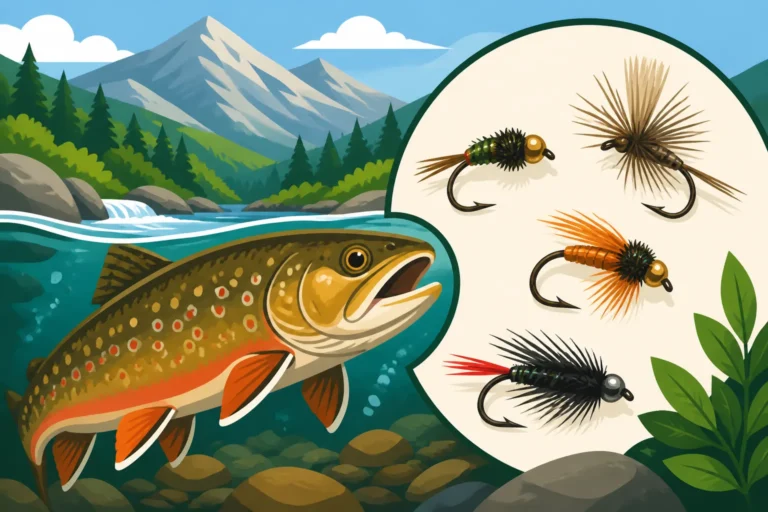
Euro nymphs themselves are often intentionally weighted to sink quickly and efficiently. These aren't your grandfather's lightly weighted pheasant tails. Think tungsten bead heads, often in black, copper, or silver, that get your flies down to the fish zone fast. Popular patterns include Frenchie Nymphs, Perdigon Nymphs, Walts Worms, and various caddis and mayfly imitations. The key is to have a range of sizes and weights to match different water depths and current speeds. On New Hampshire streams, matching the hatch isn't always about the insect's appearance, but its size and sink rate.
Beyond the flies, a few other terminal tackle items are invaluable. A good pair of forceps is essential for unhooking fish, especially if you're practicing catch and release. A small, fine-mesh landing net can help protect fish while landing them, especially those larger brown trout that call some of our rivers home. Don't forget a Best Landing Net for Trout or a Best Landing Net for Lake Trout if you're targeting bigger fish on specific rivers. Finally, a small snip or nipper for trimming line and tippet, and a few spools of various fluorocarbon tippet sizes (like 4x, 5x, and 6x) will round out your essential tackle.
Mastering Euro Nymphing Techniques for Granite State Waters
Having the right gear is only half the battle; knowing how to use it effectively is where the real magic happens. Euro nymphing isn't just a gear-driven technique; it's a dynamic, active style of fishing that requires constant attention to your drift, your rod tip, and the subtle movements of your sighter. It's a deeply engaging way to fish, almost like a dance with the current.
The High-Stick Approach
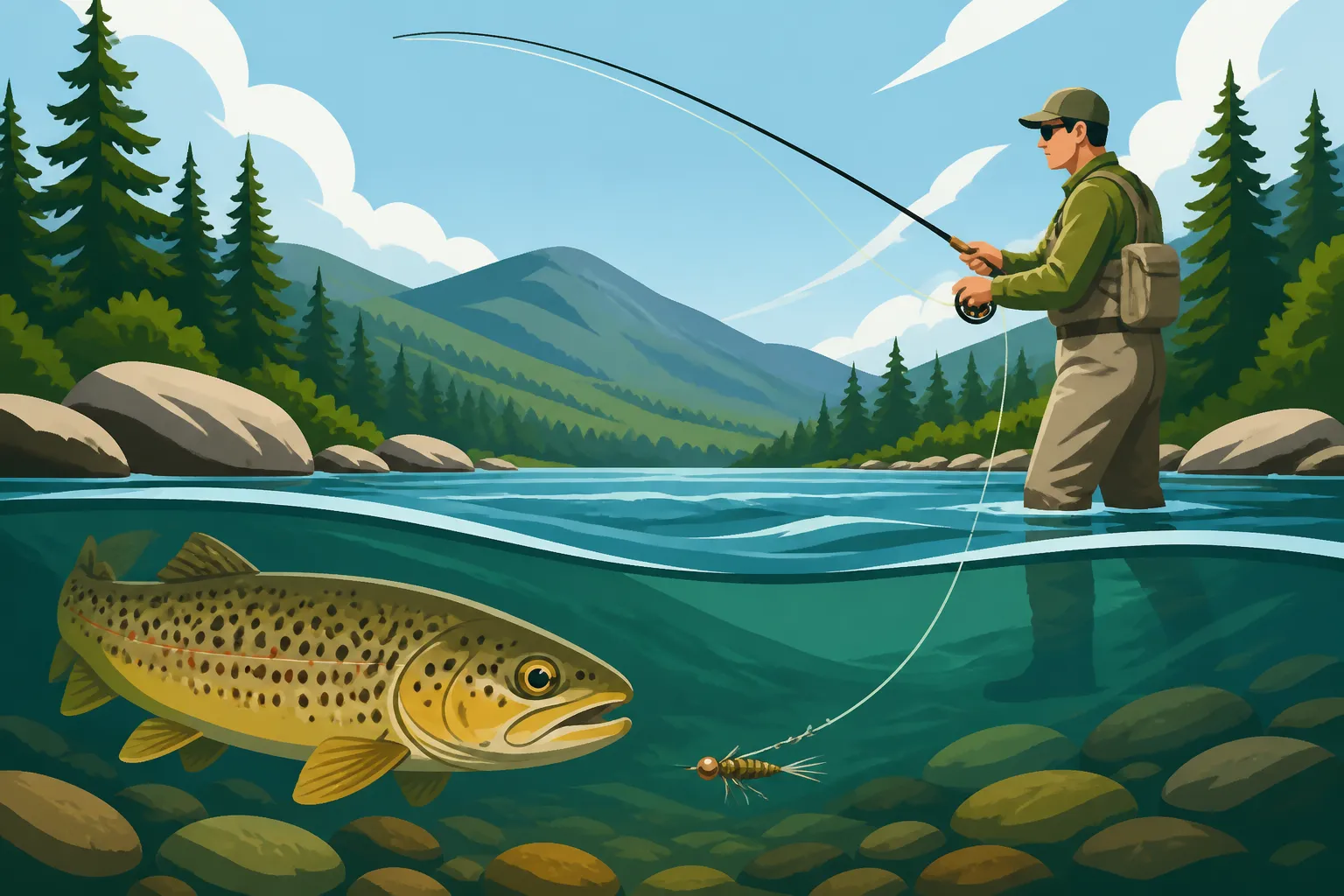
The foundation of Euro nymphing is the "high-stick" presentation. This technique involves holding your rod tip high, almost directly over your sighter, with as little fly line and leader as possible touching the water. The goal is to eliminate drag, which occurs when conflicting currents pull on your line and leader, causing your flies to drift unnaturally.
To execute a high-stick drift, you'll cast your flies upstream or upstream-across, then immediately raise your rod tip, stripping in any slack line until your sighter is visible and your flies are beginning to sink. As your flies drift downstream, you'll track them with your rod tip, moving it horizontally and vertically to keep the sighter directly in front of you and above the water. This constant adjustment ensures your flies are drifting at the same speed as the current at their depth. The beauty of this is that it allows for extremely precise depth control and immediate strike detection. If your sighter hesitates, twitches, or dives, that's your cue to set the hook! This method is particularly effective in broken water, like riffles and runs found on the Pemigewasset River Fishing Guide or the Swift River, where current speeds vary wildly.
Maintaining Constant Contact
The term "contact nymphing" isn't just a catchy phrase; it's the defining characteristic of this technique. Unlike traditional nymphing where you might have a significant amount of slack in your line, Euro nymphing demands a tight line from your rod tip all the way to your flies. This doesn't mean pulling your flies unnaturally; it means maintaining just enough tension to feel every subtle bump, tick, and take.
Achieving this constant contact involves a few key elements. Firstly, your casting needs to be precise, allowing your flies to land accurately without creating excessive slack. A simple "lob" cast or a water-load cast is often sufficient, as long distance isn't usually required. Secondly, as your flies drift, you're constantly mending your line in the air with your rod tip, rather than mending on the water, which would create drag. You're effectively leading your flies, guiding them through the current. This constant micro-management of your line and leader ensures that when a fish takes, you feel it immediately, allowing for a swift and effective hook set. It takes practice, but once you get the feel for it, it becomes second nature.
Reading the Water and Strike Detection
Euro nymphing truly forces you to become an expert at reading the water. Since you're not relying on a bulky indicator, you're looking for subtle signs that a trout is present and feeding. Trout in New Hampshire streams are often found in seams, current breaks, behind boulders, or in the deeper parts of runs and pools – anywhere they can conserve energy and ambush food.
When you cast, pay close attention to where your flies land and how they enter the water. Watch your sighter intently. A subtle twitch, a hesitation that doesn't match the current's speed, or a sudden dive could all indicate a strike. Sometimes, it's just a slight "feeling" of weight that transmits through the rod. It's often said that if you think it's a strike, it probably is. Err on the side of setting the hook – you'll often be right, and the worst that happens is you miss a fish or snag the bottom for a moment. This rapid-fire strike detection is a game-changer, especially for detecting finicky trout that might only mouth a fly for a split second. This skill is critical for Fly Fishing for Trout in New Hampshire with any method, but Euro nymphing sharpens it immensely.
Targeting New Hampshire Trout with Euro Nymphing
New Hampshire's waters host three primary species of trout: native brook trout, brown trout, and rainbow trout. Each has its own preferences and habits, but Euro nymphing is an incredibly versatile technique that can be adapted to effectively target all three, whether you're stalking wild fish in remote reaches or fishing a recently stocked pond.
Native Brook Trout in Mountain Streams
Our beloved native brook trout, with their vibrant colors and feisty spirit, often inhabit the colder, higher-gradient streams of the White Mountains and other upland regions. These streams are typically characterized by swift currents, small pockets, plunge pools, and boulder-strewn bottoms. This environment is practically tailor-made for Euro nymphing.
The precise control and quick sink rate offered by weighted nymphs are perfect for getting flies down into small pockets and behind rocks where brook trout ambush insects. The high-stick technique allows you to keep your line out of the turbulent surface currents, ensuring a drag-free drift in these complex micro-habitats. When fishing for brook trout, stealth is key; approach quietly, stay low, and make accurate casts into likely holding water. Smaller, sparsely tied nymphs in sizes 16-20 often work best, imitating the smaller insects found in these pristine waters. The ability to move quickly and cover a lot of water with efficient drifts makes Euro nymphing a top choice for exploring the numerous headwater streams. You'll want to review New Hampshire Trout Stocking and Fishing Rules to ensure you're compliant, especially in wild trout waters with special regulations.
Brown and Rainbow Trout in Larger Rivers
Brown and rainbow trout are often found in larger, more varied rivers and streams throughout the state. Brown trout, known for their wariness and often larger size, can be found hugging the bottom in deep runs, under cut banks, or behind large boulders. Rainbow trout, on the other hand, often prefer faster, oxygenated water and are frequently found in riffles and the heads of pools.
Euro nymphing is highly effective for these species because it allows you to prospect different depths and currents with ease. For brown trout, focus on deep, slow-moving water and structure. Your heavier tungsten nymphs will be crucial here to get down to their holding lies. Longer drifts, carefully controlled with your rod tip, can entice a strike from a cautious brown. For rainbows, target the faster water, using your high-stick technique to keep your flies drifting naturally through prime feeding lanes. Larger nymphs, in sizes 10-14, imitating stoneflies, caddis, or even small baitfish patterns can be very effective, particularly in waters where these fish grow to considerable sizes. Exploring Best Fly Fishing Rivers in New Hampshire will give you plenty of opportunities to put these techniques into practice.
Seasonal Considerations for Euro Nymphing Success
New Hampshire's seasons bring dramatic changes to our waterways, and a successful angler knows how to adapt their Euro nymphing approach to match these shifts. What works in a raging spring river won't necessarily be effective in a low, clear summer stream. Understanding these seasonal nuances will significantly improve your catch rates.
Spring High Water and Runoff
Spring in New Hampshire often means high, cold, and sometimes turbid water as snowmelt and rain swell the rivers. This can be challenging for any angler, but Euro nymphing is particularly well-suited for these conditions. The increased flow means trout often move to slower, more protected lies closer to the banks, behind large boulders, or in deep pockets where the current is less intense.
During spring runoff, heavy, dark-colored nymphs are your best friends. Tungsten-beaded patterns like a black or olive Stonefly Nymph, a large Perdigon, or a Walts Worm in sizes 10-14 are excellent choices. The added weight helps your flies cut through the powerful currents and reach the fish quickly. Focus your efforts on the calmer seams and eddies where trout expend less energy. The ability of a Euro nymphing setup to maintain contact and detect subtle takes in powerful currents, where an indicator would be thrashed around, is a massive advantage. Don't be afraid to add extra split shot if necessary to get down to the strike zone, though aim to use weighted flies first to keep your leader clean.
Summer Low and Clear Conditions
As summer progresses, many New Hampshire streams drop and clear, often becoming quite low and warm. This presents a different set of challenges: spooky fish, concentrated in cooler, deeper pools, and a need for a much more subtle presentation.
In these conditions, scaling down your flies and tippet is paramount. Think smaller, more natural-looking nymphs in sizes 16-20, tied on thinner tippet (5x or 6x fluorocarbon). Delicate presentations are crucial; long, accurate casts that land softly are preferred. The high-stick technique will help keep your sighter and leader out of the fish's sight, as any shadow or flash can send them darting. Focus on shaded areas, oxygenated riffles, and the deepest parts of pools during the cooler parts of the day, typically early mornings or late evenings. For a deeper dive into seasonal tactics, consider our guide on the Best Time of Year to Fish in New Hampshire.
Fall Flows and Active Fish
Autumn in New Hampshire is a magical time to be on the water. The leaves are changing, the air is crisp, and trout often become very active, feeding heavily in preparation for winter. Flows are typically moderate, often clearer than spring, but with a good pulse of water that makes fish more comfortable moving and feeding throughout the stream.
This is a fantastic time for Euro nymphing. Trout are less spooky than in summer, and the moderate flows allow for effective drifts in a wider range of water types. Focus on covering all likely holding lies: riffles, runs, pockets, and the heads and tails of pools. Both larger and smaller nymphs can be effective, as trout are opportunistic feeders. Don't overlook attractor patterns with a touch of flash, as the fish are often aggressively feeding. This is also a prime time to target larger brown trout, which are often preparing for their spawn. The ability to precisely fish distinct current seams makes Euro nymphing incredibly productive for these actively feeding fall fish.
Common Challenges and Troubleshooting on NH Streams
Even with the right gear and techniques, Euro nymphing can present its own set of challenges, especially on New Hampshire's often rugged and unpredictable trout streams. But don't despair! Most common issues have straightforward solutions, and recognizing them quickly will help you stay productive.
Dealing with Snags and Break-offs
One of the most frequent frustrations with nymphing, regardless of method, is snagging the bottom and breaking off flies. With Euro nymphing, where you're actively trying to get your flies down to the fish, this is an inevitable part of the game. However, you can significantly reduce the frequency and impact.
Firstly, use tungsten-beaded flies. While they sink fast, their compact size means they are less likely to wedge between rocks than lead split shot. Secondly, learn to "read the bottom." As you drift, you'll feel subtle ticks and bumps. Differentiate between a snag (a hard stop) and your fly bouncing along the bottom (a softer, repetitive feel). When you feel your fly touching bottom too often, or getting hung up, slightly raise your rod tip to lift your flies a few inches. If you do get snagged, rather than pulling straight back, try moving downstream while maintaining tension, then pulling sharply upstream. This often dislodges the fly. Always carry plenty of extra flies and pre-tied tippet sections to quickly re-rig.
Strong Winds and Line Control
New Hampshire weather can be unpredictable, and strong winds are a common foe for fly anglers. Wind can make casting difficult, blow your lightweight Euro nymphing line around, and create unwanted drag on your sighter. This directly impacts your ability to maintain contact and detect strikes.
When faced with windy conditions, shorten your leader slightly if possible. This makes your setup more compact and easier to manage. Focus on making low, concise casts that keep your leader out of the wind's path as much as possible. If the wind is blowing upstream, casting slightly downstream or downstream-across can help utilize the wind to lay out your leader. If it's blowing downstream, try casting more directly upstream. Your long Euro nymphing rod can also be an asset here; use its length to keep more of your leader out of the wind and close to the water, minimizing its influence. Some anglers even add a tiny bit of floatant to their sighter to keep it from sinking under the surface tension, which can help with visibility in chop. Remember, practice your casting in different wind conditions; you can even find affordable leader and tippet options on Amazon to experiment with.
Spooky Fish in Clear, Shallow Water
New Hampshire is known for its pristine, clear waters, which are beautiful but can make fish incredibly wary. In shallow conditions, trout can easily see you, your line, and any unnatural movement, often spooking before you even get a cast in.
Stealth becomes paramount. Approach the water slowly, stay low, and wear drab clothing that blends into the background. Avoid casting shadows over the water. Use longer leaders, especially the tippet section (up to 6-8 feet in very clear water), to put more distance between your fly line and the fish. Downsize your flies to smaller, more natural patterns, and use the thinnest tippet you can get away with (5x or 6x). Focus on making gentle, accurate casts that land softly without a splash. Position yourself to cast from a downstream angle if possible, presenting your flies to fish that are facing upstream. Remember, you can't catch a fish that knows you're there! For more advanced techniques, you might consider reading Wading Techniques for New Hampshire Trout Streams to improve your stealth and positioning.
Disclaimer
The information provided in this guide is for general informational purposes only. Fishing regulations and conditions in New Hampshire can change, and it is always the angler's responsibility to consult the latest official New Hampshire Fish and Game Department regulations before fishing. Always prioritize safety on and around the water.