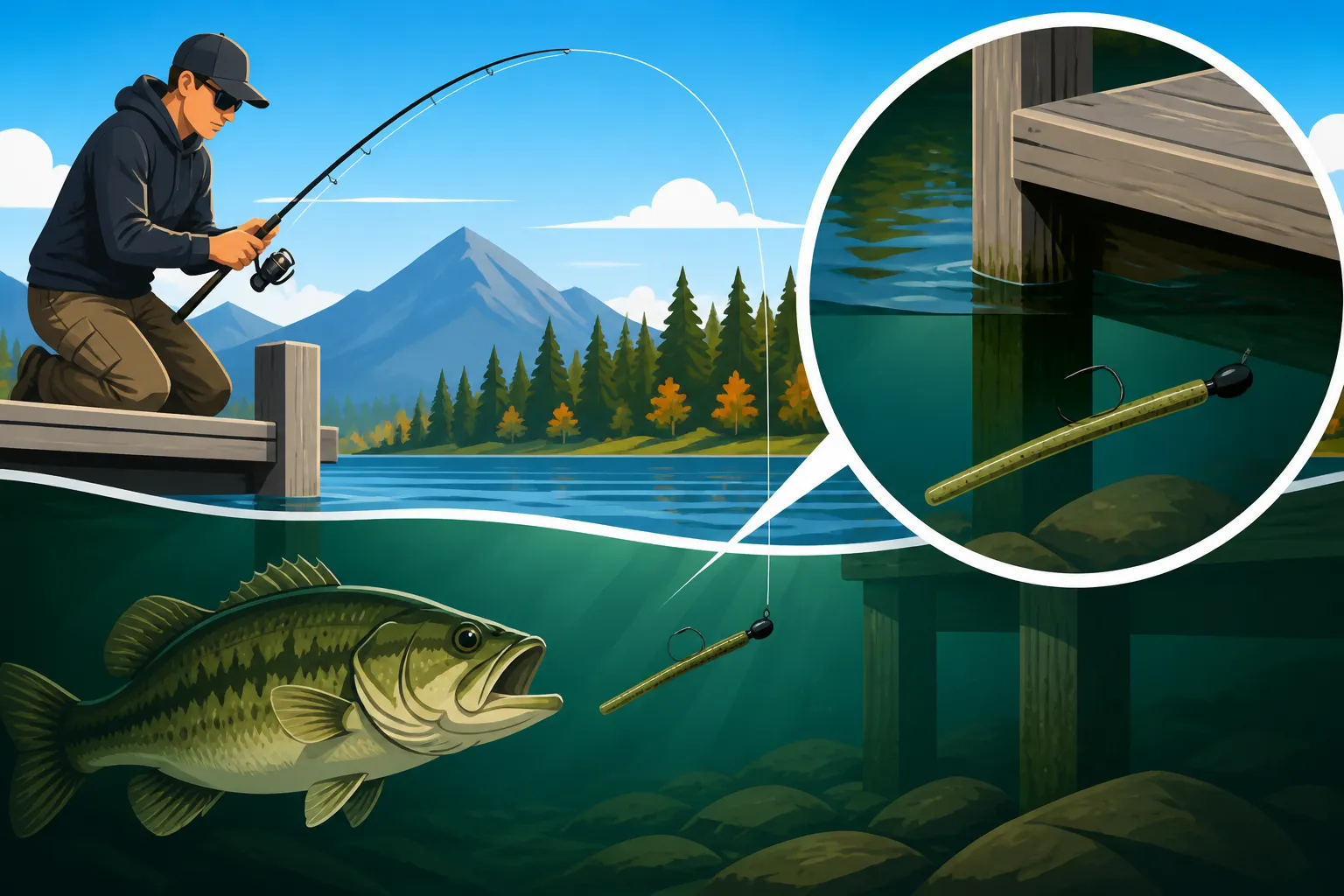
Best technique for docks and laydowns
We've all been there: staring at a perfect-looking dock or a gnarly laydown, knowing full well there are likely some fantastic fish hiding beneath, but feeling utterly clueless about how to actually get them to bite. It's frustrating to see prime real estate for bass or pickerel and not know the secret handshake. This guide is all about breaking down those barriers, offering proven techniques to effectively fish docks and laydowns in New Hampshire, turning those intimidating structures into your new favorite honey holes.
Understanding Why Fish Love Docks and Laydowns
Before we even talk about lures and casts, let's get into the mindset of a fish. Why do they gravitate towards these man-made and natural structures? It's not just about aesthetics for them; it's about survival, comfort, and opportunity. New Hampshire's lakes and rivers offer a variety of habitats, but docks and laydowns provide a unique combination of benefits that draw in a wide array of species, from chunky largemouth bass to elusive pickerel and even panfish looking for a meal or protection.
Cover and Ambush Points
Think of a dock or a fallen tree as a perfect hideout. For predators like bass and pickerel, these structures offer excellent ambush points. They can sit in the shadows, waiting for unsuspecting baitfish or crayfish to swim by, then dart out for a quick meal. The cover also provides a sense of security from larger predators (like us!) and airborne threats such as ospreys or eagles. It's a prime location for them to feel safe while still being in a position to strike. On a bright, sunny day, that shade beneath a dock or within the dense limbs of a laydown is pure gold. Fish, especially those with sensitive eyes, will seek out these darker, cooler areas to escape the harsh glare and heat of the sun. This is particularly true during the peak of summer in many New Hampshire lakes, when the surface temperatures can get quite high.
Food Source Attraction
Docks and laydowns aren't just about cover; they're also magnets for food. Algae grows on dock pilings and submerged logs, attracting small insects and crustaceans. These in turn draw in smaller baitfish, which then, you guessed it, become food for larger game fish. Imagine a food chain playing out right under that rickety old dock or within the tangled branches of a submerged tree. Spiders build webs under docks, and any unlucky insect that falls into the water becomes a quick snack. Overhanging trees that have become laydowns drop terrestrial insects into the water. This consistent availability of forage makes these spots irresistible. If you're fishing a lake like Pawtuckaway or a section of the Merrimack River where these features are common, understanding this dynamic is key to your success.
Mastering Techniques for Fishing Docks
Docks come in all shapes and sizes in New Hampshire's waters – floating docks, fixed docks, covered docks, docks with lifts, and those old, decaying ones. Each presents its own challenges and opportunities. The key to success is often about precision, stealth, and knowing which presentation works best for the specific type of dock you're facing.
Skipping Under Docks
Skipping a lure under a dock is a technique that separates the casual angler from the dock-fishing maestro. This is where you bounce a lure across the water's surface, much like skipping a stone, to get it deep under the dock structure where fish often hold. This technique is absolutely essential for reaching those untouched areas that other anglers miss. It takes practice, but the rewards are huge.
To master skipping, you'll want a medium-heavy spinning rod, preferably one with a fast action tip, around 7 feet in length. Pair it with a high-quality spinning reel loaded with fluorocarbon or braided line. Fluorocarbon is often preferred due to its abrasion resistance and low visibility. For lures, soft plastics like stick worms (think Senko-style baits), small jigs, or even light bladed jigs are excellent choices. The flat profile of a stick worm, unweighted, makes it glide beautifully across the surface. When you cast, keep your rod tip low and snap it forward, aiming to hit the water at a very shallow angle. The goal is to make the lure kiss the surface multiple times, propelling it further back under the dock. It’s an art form, really, and once you get it down, you'll be accessing fish others can only dream of. Just imagine the tight quarters on a busy summer day on Lake Winnipesaukee; skipping allows you to place your bait where boat traffic typically can't reach.
Pitching and Flipping Docks
When skipping isn't feasible or necessary, pitching and flipping are your next best friends. These are close-quarters techniques designed for accuracy and stealth, especially useful for reaching specific pilings, crossbeams, or the dark recesses under a dock where big bass like to hide.
Pitching involves a controlled pendulum motion. You drop the lure near the water, swing it forward with a gentle flick of the wrist, and guide it to your target. This is great for slightly longer distances than flipping, maybe 10-30 feet away from the boat or shore.
Flipping is even more intimate. You essentially hold the line between your reel and the first guide, swing the lure back like a pendulum, and gently lob it to a target just a few feet away. It's a very quiet presentation, perfect for wary fish.
For both techniques, a baitcasting setup with a heavy-action rod (7 to 7.5 feet) is ideal. Use heavy braided line (30-50 lb test) for strength and sensitivity, especially if you're dealing with thick dock pilings or submerged obstacles. Jigs (like football jigs or swim jigs), creature baits, and Texas-rigged worms are fantastic choices. You want something that drops quickly and can be worked through potential snags. When fishing a series of docks on a smaller lake, like Silver Lake or Northwood Lake, moving quietly and utilizing these precise techniques will significantly increase your hook-up rate. Remember, the quieter you are, the less likely you are to spook the fish.
Lure Selection for Docks
Choosing the right lure is crucial when targeting fish around docks. You want something versatile enough to cover various situations, yet specific enough to entice a bite.
- Jigs: From traditional skirted jigs with a creature bait trailer to finesse jigs, these are dock-fishing staples. Their weedless design allows them to be worked through pilings and potential snags. Darker colors like black and blue are always a good starting point, imitating crayfish or baitfish.
- Soft Plastics: Texas-rigged worms, creature baits, and stick worms (unweighted for skipping or lightly weighted for slow falls) are highly effective. The subtle action of these baits can be irresistible to fish lurking in the shadows. Try a green pumpkin or junebug color.
- Crankbaits: Smaller, shallow-diving crankbaits can be effective around the edges of docks or where the water is a bit deeper. Erratic deflections off dock pilings can trigger reaction strikes. Just be prepared for snags!
- Bladed Jigs (Chatterbaits): These offer a lot of flash and vibration, great for covering water quickly around the perimeter of docks.
When considering where to find a good selection, many anglers often browse large online retailers like Amazon for a wide range of colors and weights, especially when trying out new brands or specific models.
Attacking the Laydowns: Fallen Trees and Brush Piles
Laydowns, those fallen trees and submerged brush piles, are perhaps even more intimidating than docks due to their often impenetrable appearance. But beneath that tangle of branches lies a sanctuary for many fish. They offer unmatched cover, shade, and a complex ecosystem for various food sources.
Working the Edges and Pockets
The first rule of fishing laydowns: don't be afraid to get snagged (within reason!). Many anglers shy away from fishing really tight to these structures, but that's precisely where the fish are hiding. However, you don't always have to cast directly into the thickest part. Start by working the outer edges, where the water meets the wood. Cast parallel to the trunk, letting your lure fall alongside the limbs. As you gain confidence, look for "pockets" – small openings within the dense branches where you might be able to drop a lure.
Use a heavy-duty rod and strong line, ideally braided, as its no-stretch quality gives you maximum sensitivity and the power to pull fish out of the cover. A good technique is to let your lure sink for a moment, then gently twitch it. Often, a fish will be holding just on the edge, waiting for something to fall from above. On rivers like the Pemigewasset or the Contoocook, fallen trees are common features, and knowing how to systematically pick them apart is key.
Weedless Presentations are Key
This goes without saying, but it's worth reiterating: weedless is the way to go with laydowns. Your lure needs to navigate branches, twigs, and potentially submerged weeds without constantly getting hung up.
- Texas-Rigged Soft Plastics: This is your bread and butter. Rigging a worm, creature bait, or even a small fluke weedless allows it to slide over and through branches. Use a sturdy Extra Wide Gap (EWG) hook.
- Jigs with Brush Guards: Many flipping and pitching jigs come with a brush guard, a cluster of synthetic fibers that protect the hook point from snags. Pair these with a soft plastic trailer for added action.
- Weightless Worms/Flukes: Sometimes, a completely weightless soft plastic is the best bet. It will sink slowly, fluttering enticingly, and can be easily maneuvered over limbs.
- Spinnerbaits/Bladed Jigs: For larger, more open laydowns, or when fish are active, a single-hook spinnerbait or bladed jig can be effective. The single hook is less prone to snagging than a treble, and the flash can draw fish out. Look for compact models that present a smaller profile to minimize hang-ups. When stocking up on your arsenal, consider browsing Amazon for a wide variety of these specialized weedless options to ensure you have the right tools for the job.
Gear Considerations for Dock and Laydown Fishing
Having the right gear isn't just about comfort; it's about efficiency and success, especially when fishing around unforgiving structures.
Rod and Reel Setup
The type of rod and reel you choose will depend heavily on the technique you plan to employ.
| Technique | Rod Type | Rod Length | Action | Line Type | Line Weight (Lbs) |
|---|---|---|---|---|---|
| Skipping Docks | Spinning | 6'10" – 7'2" | Medium-Fast | Fluorocarbon/Braid | 8-15 |
| Pitching/Flipping Docks | Baitcasting | 7' – 7'6" | Heavy-Fast | Braid | 30-50 |
| Laydowns (Texas-Rigged) | Baitcasting | 7' – 7'6" | Heavy-Fast | Braid | 40-65 |
| Laydowns (Jigs) | Baitcasting | 7' – 7'6" | Heavy-Fast | Braid | 40-65 |
For spinning setups, a smooth drag system is paramount, as you might need to quickly apply pressure to prevent a fish from burrowing into structure. For baitcasting, a reel with a strong retrieve and durable gears is essential for battling fish out of heavy cover. Don't cheap out on your line, either. Using a premium braided line can make all the difference in feeling subtle bites and successfully extracting fish.
Line, Hooks, and Terminal Tackle
Your line is the most critical link between you and the fish, especially when battling them around gnarly structures.
- Braided Line: This is king for dock and laydown fishing. Its lack of stretch provides incredible sensitivity, allowing you to feel every bump and tick. More importantly, its strength and abrasion resistance are crucial for pulling fish out of cover and resisting cuts from wood or dock pilings. Look for 30-65 lb test, depending on the thickness of the cover.
- Fluorocarbon Leader: While braid is great for sensitivity and strength, some anglers prefer to tie on a short (12-24 inch) fluorocarbon leader (12-20 lb test) for its invisibility, especially in clear New Hampshire waters. This can be especially useful on lakes like Squam Lake, where the water is often crystal clear.
- Hooks: Invest in strong, sharp hooks. Wide Gap (EWG) hooks for Texas rigging are a must, ensuring a good hook set even with thick plastic baits. Heavy-duty jig hooks are also important. The last thing you want is a hook to bend or break when you've got a trophy fish on the line.
- Weights: Tungsten weights are highly preferred over lead. They are denser, offering a smaller profile for the same weight, which means fewer snags. Their increased sensitivity allows you to feel the bottom structure much better, which is crucial for distinguishing between a limb and a bite. You can find a fantastic selection of tungsten weights on Amazon, often with varying finishes and shapes to suit your needs.
Tips for Success and Safety Around Structures
Fishing around docks and laydowns can be incredibly rewarding, but it also comes with its own set of challenges and safety considerations.
Approach with Stealth
Fish living around docks and laydowns are often very wary. They're used to boats, people, and general activity. Your approach can make or break your day.
- Quiet is Key: Use your trolling motor sparingly and softly. Avoid banging tackle boxes or stomping your feet. Even the smallest vibrations can spook fish.
- Maintain Distance: Don't pull right up to the dock. Stay a respectful casting distance away to avoid disturbing the fish. For laydowns, approach from an angle that allows you to cast into the cover without driving your boat over the fish's hiding spot.
- Consider the Sun and Wind: Position yourself so the sun isn't casting your shadow directly over the spot you're fishing. Wind can make precise casting difficult, so try to use it to your advantage or find more sheltered spots when possible. On a calm day on Lake Sunapee, for instance, a stealthy approach can mean the difference between an empty livewell and a successful outing.
Practice Precision Casting
Both docks and laydowns require accurate casting. A missed cast that spooks a fish or lands in an unretrievable spot is a waste of time and potentially a lure.
- Target Practice: Spend time practicing your skipping, pitching, and flipping in your backyard. Set up targets to hone your accuracy. The more precise you are, the more fishable water you'll cover effectively.
- Angle Matters: Experiment with different casting angles. Sometimes, a sidearm cast or an underhand pitch can get your lure into a tight spot that an overhead cast wouldn't.
- Anticipate the Bite: When your lure enters a prime strike zone, be ready. Fish often bite on the initial fall or just as the lure settles. Keep your rod tip up and maintain light tension on the line so you can feel the bite immediately.
Safety First
Fishing around heavy cover and man-made structures has inherent risks.
- Snagged Lures: You will get snagged. It's part of the game. Carry a lure retriever tool; it can save you money and frustration. Never put yourself in a dangerous situation trying to retrieve a lure.
- Respect Private Property: Docks are often on private property. Be mindful of casting into people's yards or directly onto their docks. A general rule of thumb is to avoid casting onto dry land or any obvious private areas.
- Boating Safety: If you're in a boat, be aware of submerged obstacles, especially around laydowns. These can damage your prop or hull. Always wear your life jacket, as mandated by Life Jacket Requirements for New Hampshire Boaters. Know the local New Hampshire Boating Laws for Anglers.
- Sharp Objects: Docks can have rusty nails, splintered wood, or sharp edges. Laydowns can have jagged branches. Always be careful when retrieving fish or lures.
Seasonal Considerations for Dock and Laydown Fishing
The behavior of fish around docks and laydowns isn't static; it changes with the seasons. Understanding these shifts will help you adapt your techniques and improve your chances of success throughout the year in New Hampshire.
Spring: Post-Spawn and Ambush
In spring, particularly after the spawn, fish are often hungry and guarding their territories. They'll use docks and laydowns as prime ambush points.
- Early Spring (Pre-Spawn): Fish might still be a bit deeper, but as water temperatures rise, they'll start moving shallower, exploring the cover. Focus on the sunny sides of docks and laydowns where water warms fastest. Slow-moving jigs and soft plastics can be very effective.
- Late Spring (Post-Spawn): After they've done their spawning duties, fish are often recovering and aggressively feeding. They'll hug tight to the cover. This is a great time for pitching and flipping jigs or creature baits directly into the densest parts of laydowns and under docks. The fish are often still sluggish from the spawn, so a slower presentation can be key. For specific New Hampshire Bass Catch-and-Release Season, Explained or When New Hampshire bass season reopens for harvest, check the regulations.
Summer: Shade and Deep Cover
Summer is when docks and laydowns truly shine as fish sanctuaries, especially on bright, hot days.
- Morning/Evening: During low light conditions, fish might roam a bit more, so covering the edges of docks with spinnerbaits or shallow crankbaits can be productive.
- Mid-Day Heat: As the sun climbs and temperatures soar, fish retreat deep into the coolest, darkest parts of the cover. This is when skipping under docks and pitching into the heart of laydowns become paramount. Focus on the shadiest sides. Look for covered docks or laydowns in deeper water. Topwater action can also be incredible during low light on the surface of the cover, drawing fish out from below. Many anglers refer to the Best Time of Year to Fish in New Hampshire for various species, but for docks and laydowns, summer heat often concentrates fish in these specific spots.
Fall: Feeding Frenzy and Preparation
As fall approaches and water temperatures begin to drop, fish enter a feeding frenzy, trying to fatten up for winter. They will use docks and laydowns strategically.
- Transition: Fish might be found both shallow and deep. Work your way through the entire structure, from the shallowest edges to the deeper ends.
- Aggressive Bites: The fish are often more aggressive in the fall, so faster presentations like bladed jigs or even crankbaits that deflect off structure can trigger powerful strikes. Don't neglect jigs and soft plastics pitched into the thickest parts, as fish will still seek shelter while ambushing prey. Think about how active fish might be as you approach the Best Time of Year to Fish in New Hampshire for larger species.
Specific New Hampshire Water Bodies for Dock and Laydown Fishing
While docks and laydowns are found in many New Hampshire waters, some stand out as particularly good for practicing these techniques.
- Pawtuckaway Lake: Known for its excellent largemouth bass fishing, Pawtuckaway has numerous docks and plenty of shoreline laydowns, especially around its many coves and islands. It’s a fantastic place to practice skipping and flipping.
- Lake Winnipesaukee: While famous for its smallmouth and lake trout, Winnipesaukee also has countless docks, particularly in its shallower bays and around its islands. These docks can hold some surprising largemouth and pickerel. Understanding How to Catch Smallmouth Bass in New Hampshire Lakes might involve targeting similar structure on this massive lake.
- Lake Sunapee: This beautiful lake offers some fantastic opportunities for smallmouth bass around its docks and rocky laydowns. The clear water here demands a stealthier approach and more natural-colored lures.
- Merrimack River: Sections of the Merrimack, especially around slower pools and bends, feature abundant laydowns where fallen trees create incredible cover for smallmouth bass, largemouth, and chain pickerel. Fishing here often requires a robust setup to extract fish from the strong current and heavy cover. For more details on access, check out Merrimack River Fishing Spots.
Conclusion
Fishing docks and laydowns in New Hampshire isn't just about throwing a lure; it's about understanding fish behavior, mastering precision presentations, and having the right gear. It can be intimidating at first, with the fear of snags always looming. But with practice, patience, and the techniques outlined here, you'll soon find yourself confidently targeting these high-percentage areas. Remember to approach quietly, present your lure accurately, and be ready for a powerful strike. These structures hold some of the biggest and most exciting fish in our New Hampshire waters, and with a little effort, you can unlock their secrets.
Disclaimer
This article is for general informational purposes only and does not constitute professional advice. Laws, prices and regulations vary by location and change over time. Consult a qualified professional for guidance on your specific situation.