Jigging for Perch Through the Ice
The biting cold of a New Hampshire winter often means packing away your open-water gear, but for many of us, it just signals the start of another incredible fishing season: ice fishing! If you've ever felt the sheer frustration of setting up your shanty, drilling holes, and then wondering where on earth the fish are, especially those elusive yellow perch, you're not alone. This comprehensive guide is designed to help you conquer the ice and consistently put perch on your plate, offering practical tips, essential gear advice, and proven jigging techniques for navigating New Hampshire's frozen waters.
Understanding Perch Behavior Under the Ice
Ice fishing for yellow perch can be incredibly rewarding, but it’s not always as simple as dropping a line. To truly unlock their secrets, you need to think like a perch, understanding what drives them during the frigid winter months. Their world under the ice is a lot different from their summer haunts, and knowing these nuances will dramatically improve your success rate.
Where Perch Hold in Winter
When the ice locks up New Hampshire's lakes and ponds, perch don't just disappear; they simply adjust their locations. Unlike some species that might go super deep, perch often remain accessible, though they might concentrate in specific areas. You'll typically find them congregating in areas with some kind of structure, but their definition of "structure" can be broad. This might include subtle breaks in the bottom contour, like a transition from a soft, mucky bottom to a harder, rockier patch. Underwater points that extend from shore are absolute magnets, as are humps and reefs that rise from deeper water, creating edges and ambush points. Weeds, especially residual green weeds that managed to survive the initial freeze, are also prime real estate. These weeds provide cover from predators and are often home to small insects and invertebrates that make up a significant portion of a perch's winter diet. Don't be afraid to drill holes along a shoreline where you know there were healthy weed beds in the summer. Sometimes, a subtle drop-off near shore can hold a massive school.
Perch Feeding Habits in Cold Water
Perch are opportunistic feeders, but their metabolism slows considerably in the cold water under the ice. This means they aren't chasing down baitfish with the same gusto they do in summer. Instead, they become more focused on easily accessible, slower-moving prey. Small minnows, insect larvae like bloodworms and mayflies, and even tiny crustaceans become their primary food sources. This shift in diet is crucial to understand when selecting your bait and lures. While a large shiner might work for bigger game fish, perch prefer smaller, more subtle presentations. They're still schooling fish, so when one is feeding, others are likely nearby. The key is to present something enticing enough to trigger a bite without requiring too much effort on their part. Think finesse. Sometimes, a very subtle twitch of the rod tip is all it takes to convince a lethargic perch to strike.
The Social Nature of Yellow Perch
One of the most exciting aspects of perch fishing through the ice is their social nature. Yellow perch are notorious schoolers, and where you find one, you'll almost certainly find more—sometimes hundreds! This schooling behavior is both a challenge and an opportunity. The challenge lies in finding the school; the opportunity lies in the potential for non-stop action once you do. These schools can roam, following baitfish or moving between different structural elements throughout the day. This is why mobility is so important in ice fishing for perch. Don't be afraid to drill a series of holes, perhaps in a grid pattern, to locate where the school is holding. Once you hit a hot spot, it’s not uncommon to pull up fish after fish until the school moves on or you’ve caught your limit. This social aspect is also why electronics, like a flasher or fish finder, are invaluable; they help you identify the depth and density of a school, telling you if you’re over a few stragglers or a true motherlode.
Essential Gear for Ice Jigging Perch in New Hampshire
Having the right gear makes all the difference when you're out on the ice, especially when the temperatures drop. From keeping you warm and safe to giving you an edge over finicky perch, your equipment choices are critical. Don't think of it as just "stuff"; think of it as an extension of your angling prowess.
Rods, Reels, and Line Selection
For perch jigging, you want light, sensitive gear that allows you to detect subtle bites and imparts the right action to your small lures. A 24- to 30-inch ultra-light to light action ice fishing rod is ideal. These rods have a sensitive tip to telegraph even the lightest tap, but enough backbone to handle a decent-sized perch. Paired with a small spinning reel (500 or 1000 size), you’ll have a balanced setup that's easy to handle.
When it comes to line, lighter is almost always better for perch. Two to four-pound test monofilament or fluorocarbon is generally sufficient. Monofilament offers good knot strength and some stretch, which can be forgiving. However, many anglers prefer fluorocarbon because of its low visibility in clear water and its excellent sensitivity, allowing you to feel those delicate strikes. If you're concerned about line twist or want a bit more breaking strength, you could consider a 4-pound braided line with a 2-3 foot fluorocarbon leader. A good leader material can make a big difference, especially on clear, sunny days when perch can be particularly wary. You can find a wide range of these specialized ice fishing lines and small reels on Amazon, often with great deals.
Augers, Skimmers, and Shelters
Before you can even think about catching perch, you need to get through the ice! A reliable ice auger is non-negotiable. For perch, a 6-inch auger is usually sufficient and makes drilling many holes much less strenuous than a larger 8-inch model. Options range from hand augers, which are great for portability and cost-effectiveness on thinner ice, to powerful propane or battery-powered augers that make quick work of thick ice. Many anglers, myself included, have found that a good quality battery-powered auger from brands like Strikemaster or Eskimo can significantly enhance mobility and reduce fatigue throughout the day.
Once you’ve drilled your holes, an ice skimmer is essential for clearing out slush and preventing ice from reforming. These simple tools are often overlooked but are vital for maintaining clear fishing holes. For comfort and protection from the elements, an ice fishing shelter, or shanty, is a game-changer. Portable flip-over shelters or pop-up tents offer warmth, privacy, and a windbreak, allowing you to fish longer and more comfortably, especially on blustery days common to New Hampshire winters. Brands like Clam and Eskimo offer excellent options that are easy to set up and take down. Keeping warm is paramount; being comfortable allows you to focus on the fish, not on shivering.
Electronics and Safety Gear
In the world of ice fishing, electronics are no longer a luxury; they're a powerful tool, particularly for schooling fish like perch. A flasher or a portable fish finder is invaluable. These devices show you exactly what’s happening beneath the ice – the depth, the bottom contour, your lure, and most importantly, the fish! Seeing your jig descend and then a fish approach it on the screen is incredibly exciting and helps you understand how fish are reacting to your presentation. Garmin and Humminbird offer fantastic portable units perfect for ice fishing. If you're looking for a good starting point, many entry-level flashers are available on Amazon.
Safety should always be your top priority on the ice. Never venture onto the ice without a spud bar (to test ice thickness ahead of you), ice picks (to help you get out if you fall in), and a life jacket or flotation suit. Knowing How thick ice needs to be to fish safely in New Hampshire is crucial, and always err on the side of caution. Dress in layers, wear waterproof and insulated boots, and bring extra gloves and hats. A headlamp is also essential for early morning starts or late evening finishes. Being prepared ensures a safe and enjoyable day on the ice.
Mastering Jigging Techniques for New Hampshire Perch
Once you've got your gear sorted and you're out on the ice, the real fun begins: enticing those perch to bite! Jigging for perch isn't just about dropping a lure down a hole; it's an art form that involves understanding presentation, bait choices, and how to interpret what the fish are telling you.
Active Jigging vs. Deadsticking
There are two primary approaches to jigging for perch, and often, the most successful days involve a combination of both.
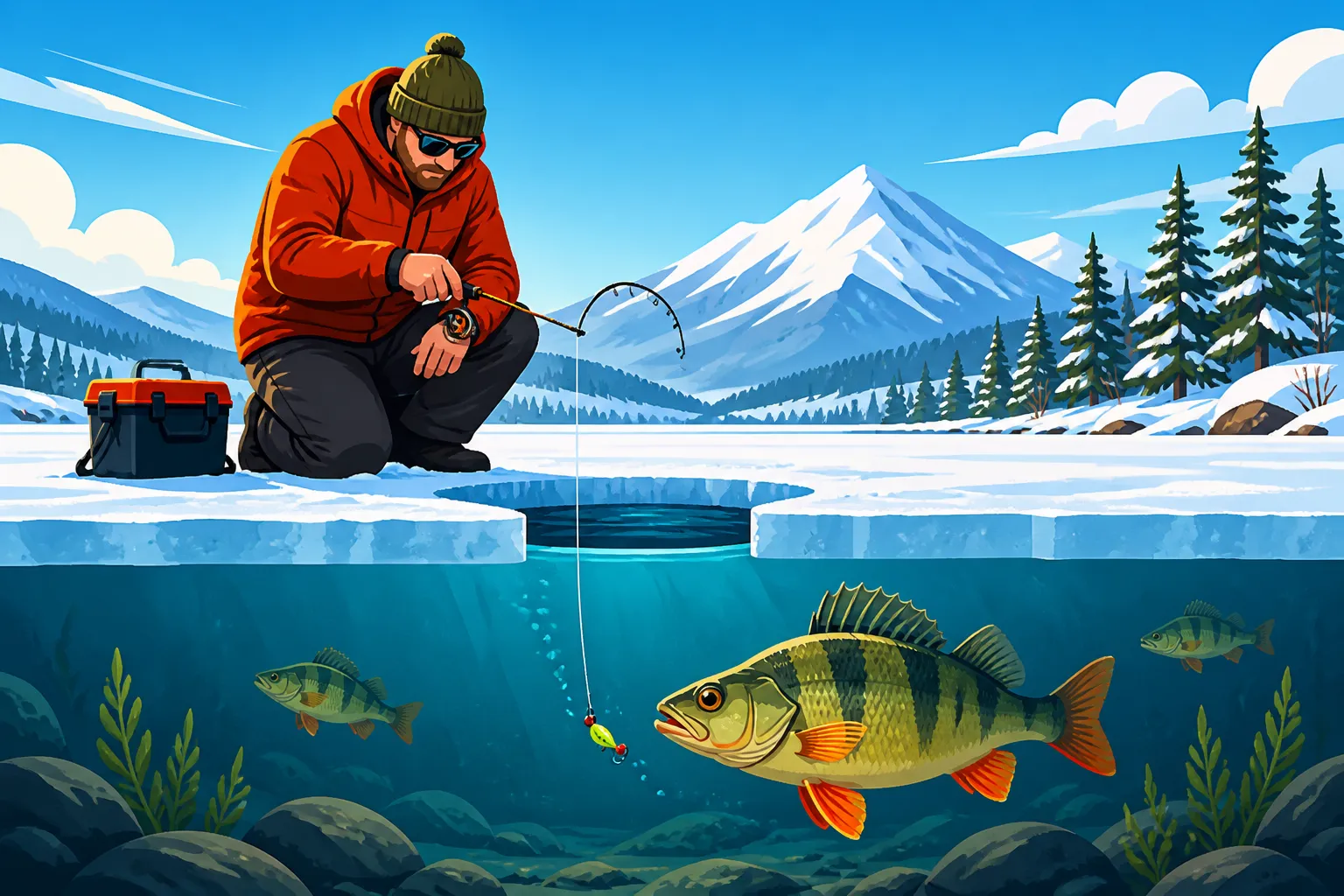
Active Jigging: This is where you actively work your lure to attract fish. The idea is to mimic struggling baitfish or insects. Start by dropping your jig or spoon to the desired depth, often near the bottom or at the depth where you're marking fish on your flasher. Then, impart a series of short, sharp lifts or gentle jiggles of your rod tip. Experiment with the cadence: sometimes a rapid series of small twitches works best, while other times, a longer lift followed by a pause is more effective. The key is to watch your electronics and observe how the perch react. If they come up to your lure but don't commit, try a more subtle approach. If they're aggressive, you can be more assertive. Remember, you're trying to trigger a reaction strike, even from a lethargic fish. Don't be afraid to experiment with different jigging motions throughout the day.
Deadsticking: This technique involves setting a second rod (if regulations allow and you have a New Hampshire Fishing License Guide for 2026) with a more static presentation, often with live bait. While you're actively jigging with one rod, the deadstick remains relatively still, usually suspended just above the bottom or at a target depth. A small hook baited with a lively minnow, a piece of grub, or even a wax worm under a small bobber is perfect. The subtle movements of the live bait can be irresistible to perch that are shy of an actively jigged lure. This setup often catches some of the biggest perch, as they sometimes prefer a truly motionless meal. Many experienced anglers will run a deadstick a few feet away from their active jigging hole, or even in an adjacent hole, offering two distinct presentations simultaneously. It's an excellent way to cover your bases and figure out what the perch prefer on any given day.
Best Baits and Lures for Perch
When it comes to lures for perch, finesse is the name of the game. Small jigs and spoons are incredibly effective.
- Spoons: Tiny jigging spoons, often no more than 1/8 to 1/4 ounce, are excellent. Colors like silver, gold, chartreuse, and perch patterns are popular. Brands like Acme Kastmaster, Swedish Pimple, or even Northland Tackle's Buck-Shot Rattle Spoon are perennial favorites. Tip these with a piece of bait for added attraction.
- Jigs: Small tungsten jigs are absolute killers for perch. Their high density means they get down to depth quickly and offer a small profile. Tipped with a single maggot, wax worm, or a small piece of minnow, these jigs are often irresistible. The size of the jig can be as small as 1/32 or even 1/64 ounce. You can find a fantastic selection of Best Jigs for Ice Fishing Perch at any local tackle shop or through online retailers like Amazon.
- Plastic Baits: Micro soft plastics, like tiny grubs, worms, or even small creature baits, fished on a small jig head can also be very effective, especially when paired with a scent attractant.
- Live Bait: Hands down, live bait often out-fishes artificials for perch, especially on tough days. Small emerald shiners, fatheads, or even tiny rosy reds are excellent choices. If minnows aren't available or legal, wax worms, spikes (maggots), or even small pieces of nightcrawler are fantastic. The natural scent and movement of live bait provide an undeniable advantage.
The table below outlines some popular perch lures and their best pairings:
| Lure Type | Recommended Size | Primary Action | Best Bait Tip | Notes |
|---|---|---|---|---|
| Tungsten Jig | 1/32 – 1/16 oz | Subtle twitch & glide | Wax worm, Spike, Grub | Excellent for finesse, quick to drop |
| Jigging Spoon | 1/8 – 1/4 oz | Flash, flutter, rattle | Minnow head, whole minnow | Attracts from a distance, versatile |
| Soft Plastic Grub | 1-2 inches | Wiggle, vibration | Scent attractant | Great for active fish, variety of colors |
| Minnow on Hook | 1-2 inch minnow | Natural movement | N/A (live bait) | Best for deadsticking, irresistible |
Reading Your Electronics and Adapting
Your flasher or fish finder isn't just a fancy toy; it's your eyes under the ice. Learning to interpret its display is paramount to consistent perch success. When you drop your lure, you'll see it as a mark on the screen, typically in a different color. As it descends, you can literally watch it hit the depth you want. Then, when a fish enters your cone of vision, it will appear as another mark.
- Approaching Fish: If a fish mark appears and moves towards your lure, be ready! Try to slow your jigging motion, or even hold it perfectly still, to entice a bite. Sometimes a gentle rise or fall of your lure can be the trigger.
- Fish Ignoring Lure: If fish are present but not reacting, don't be afraid to change tactics. Try a different lure color, size, or bait. Vary your jigging cadence significantly. If they still ignore you, consider drilling a new hole a short distance away; the school might be moving, or the fish under your hole are just not interested.
- Fish at Different Depths: Perch schools often stack at various depths. Your electronics will show you if fish are hugging the bottom, suspended midway, or even near the ice. Adjust your lure depth accordingly. Don't be afraid to raise your lure well above the bottom if that's where the fish are concentrating.
Adaptability is key. The perch might prefer a specific presentation at dawn, but switch to something entirely different by midday. Pay attention to what works and be willing to change things up.
Finding the Hot Spots: New Hampshire Perch Waters
New Hampshire is blessed with an abundance of lakes and ponds, many of which hold robust populations of yellow perch. But knowing where to go is only half the battle; knowing how to find them within those waters is where true angling skill comes in.
Top Lakes and Ponds Known for Perch
While nearly every body of water in New Hampshire probably holds some perch, some lakes are renowned for their consistent action and larger fish. These often appear on lists of Best Ice Fishing Lakes in New Hampshire.
- Lake Winnipesaukee: The "Big Lake" is famous for many species, and its perch fishery is no exception. With vast areas of varying depths and structure, perch can be found throughout. Focus on shallower bays with residual weeds or rocky points that drop off into deeper water.
- Winnisquam Lake: Located just north of Laconia, Winnisquam is another fantastic multi-species lake that consistently produces good numbers of yellow perch. Its varied bottom structure, including humps and drop-offs, provides ideal perch habitat.
- Newfound Lake: Known for its crystal-clear water, Newfound holds excellent perch populations. Fishing the edges of deep water near points and shoals can be very productive.
- Pawtuckaway Lake: This popular lake in Nottingham offers excellent opportunities for perch, especially in its shallower, weedy coves and around its numerous islands.
- Sunapee Lake: While often targeted for salmon and lake trout, Sunapee also boasts a healthy population of sizable yellow perch, particularly in shallower bays and near distinct structure.
Beyond these well-known spots, many smaller ponds and even some rivers with slower currents can be absolute goldmines for Yellow Perch in New Hampshire Lakes. A little research into local water bodies and talking to other anglers can reveal hidden gems. Always check the current New Hampshire Ice Fishing Regulations by Water Body before heading out, as rules can vary.
Locating Perch Structure on the Ice
Once you're on a promising lake, how do you narrow down your search from a vast frozen expanse? It comes down to identifying key structural elements that perch gravitate towards.
- Contour Maps: Before you even step on the ice, study a contour map of the lake. Look for underwater points, humps, sharp drop-offs, and flats adjacent to deeper water. These are your starting points. Many popular lakes have detailed bathymetric maps available online or at local bait shops.
- Weed Beds: As mentioned earlier, green weed beds are critical. In early winter, look for areas where weeds were prominent in summer. As the winter progresses, weeds die off, but residual stalks still offer cover and hold food. The edges of weed lines are often the most productive.
- Transitions: Perch love transitions – where one type of bottom changes to another (e.g., mud to rock, sand to gravel) or where depth changes significantly. The interface between these elements concentrates baitfish and invertebrates, making it an ideal feeding ground for perch.
- Sunken Objects: Old cribs, rock piles, or even submerged timber can attract and hold schools of perch. These features provide shelter and ambush points. While harder to locate without electronics or prior knowledge, they can be highly productive.
- Community Holes: Sometimes, following the crowds isn't a bad idea. If you see a cluster of shanties, chances are someone found fish. However, be courteous, don't drill right on top of someone, and be aware that heavily fished "community holes" can sometimes get picked over. Use them as a starting point, but be willing to explore nearby.
Seasonal Movements and Best Times
Perch movements and feeding patterns can change throughout the ice fishing season.
- Early Ice (December – January): This can be a fantastic time for perch. They are often still fairly active and can be found in shallower bays and along weed lines, not too far from their fall haunts. The ice is usually thinner, making it easier to drill holes.
- Mid-Winter (January – February): As ice thickens and water temperatures stabilize, perch might move to deeper structure, like offshore humps or deep points. They can become a bit more lethargic, requiring a more finessed approach. This is when a good Ice Fishing in New Hampshire strategy really pays off.
- Late Ice (March): As spring approaches and snow melts, oxygen levels can improve, and perch often move back into shallower areas, especially near inflows or areas where snowmelt creates current. They can become very active again as they anticipate the spawn. This is a great time for fast action before the ice breaks up.
In terms of daily timing, perch can bite throughout the day, but dawn and dusk are often peak feeding times. Overcast days can sometimes extend the bite, while bright, sunny days might push them deeper or make them more finicky.
Troubleshooting Common Perch Ice Fishing Challenges
Even with the best gear and knowledge, ice fishing can throw curveballs. Perch can be finicky, conditions can be tough, and sometimes, you just can't seem to buy a bite. Knowing how to troubleshoot these common issues can turn a frustrating day into a successful one.
Dealing with Finicky Biters
We've all been there: you're marking fish on your flasher, they're cruising right under your hole, but they just won't commit. This is the ultimate test of an ice angler's patience and adaptability.
- Downsize Everything: If perch are being finicky, the first thing to do is go smaller. Smaller jig, smaller bait, lighter line. Drop from 4-pound test to 2-pound, or even 1-pound test. Use tiny 1/64 oz tungsten jigs with a single maggot instead of a larger spoon. The idea is to present something so small and natural it’s hard to resist.
- Slow Down Your Presentation: Aggressive jigging can scare off wary fish. Try an extremely slow, subtle jigging motion. Barely twitch your rod tip, or even just hold the lure perfectly still, letting the natural scent and movement of your bait do the work. A "dead stick" approach, as discussed earlier, can be incredibly effective here.
- Change Lure Color/Type: Perch can be particular about color. If silver isn't working, try gold, chartreuse, or natural perch patterns. If spoons aren't getting attention, switch to a tungsten jig. Experiment with different shapes and profiles.
- Add Scent: Sometimes, a little extra scent is all it takes. Commercial fishing scents applied to your lure or bait can often entice finicky fish into biting. Garlic, anise, or even a simple minnow scent can make a difference.
- Move: If you've tried everything and they still won't bite, it might be time to move. Sometimes, the fish in a specific hole have been pressured or are simply not in a feeding mood. A new hole 20-50 feet away might tap into a more aggressive school. This is where a good Best Ice Auger for New Hampshire Lakes really shines, allowing for quick mobility.
Handling High Pressure and Crowds
New Hampshire's popular ice fishing lakes can get busy, especially on weekends or during peak season. Fishing in crowded areas presents its own set of challenges.
- Seek Out Unpressured Water: While community holes can be productive, sometimes the best fishing is found by venturing a little further away from the main groups. Use your map and electronics to identify similar structure a bit off the beaten path. These areas might hold less pressured, more aggressive fish.
- Early Bird Gets the Perch: Get to your spot early, before the crowds arrive. Fish are often most active during dawn, and you'll have the pick of the prime locations.
- Drill Smart, Not Hard: If you are in a crowded area, be respectful. Don't drill holes right next to other anglers. Give everyone ample space. If you're using a noisy gas auger, try to drill your holes quickly and efficiently, minimizing disturbance.
- Adapt to Pressure: Fish in heavily pressured areas can become very wary. This is when downsizing your tackle and slowing down your presentation becomes even more crucial. Focus on finesse tactics, natural baits, and subtle movements.
- Consider a Shelter: If fishing in a crowd, a good Best Ice Shanty for New Hampshire Lakes offers privacy and a visual barrier between you and other anglers, allowing you to focus on your fishing without feeling self-conscious.
Ice Safety and Winter Conditions
Safety is paramount when ice fishing, and New Hampshire winters can be unpredictable. Don't let the excitement of perch fishing overshadow good judgment.
- Check Ice Conditions Daily: Never assume the ice is safe. Check local reports, ask bait shop owners, and visually inspect the ice. Look for inconsistencies, cracks, or areas of slush. No fish is worth risking your life.
- Understand Ice Thickness: As a rule of thumb, 4 inches of clear, solid ice is considered minimum for walking, but 5-7 inches is safer. For ATVs/snowmobiles, you need 8-12 inches, and for light vehicles, 12-15 inches. These are general guidelines; always verify. Refer to resources like How thick ice needs to be to fish safely in New Hampshire for detailed guidelines.
- Dress Appropriately: Hypothermia is a serious risk. Dress in layers, wear a waterproof outer shell, and ensure your extremities are well-protected. Bring extra warm, dry clothes in a sealed bag.
- Carry Safety Gear: Always carry ice picks, a rope, and a spud bar. Let someone know where you are going and when you expect to return. Consider fishing with a buddy.
- Beware of Pressure Cracks and Inflows: Areas with current, like river inflows/outflows, or major pressure cracks, can have dangerously thin ice even when the rest of the lake is solid. Avoid these areas.
By respecting the ice and preparing for winter conditions, you ensure that your focus can remain on the rewarding pursuit of perch.
Enhancing Your Perch Jigging Success
Beyond the basic techniques and gear, there are several nuances that can significantly elevate your perch jigging game. These are the small details that seasoned anglers often employ to consistently fill their buckets.
Importance of Stealth and Presentation
You might think that because perch are under several feet of ice, they won't notice your presence, but that's far from the truth. The world under the ice is surprisingly sound-sensitive, and your approach can impact your success.
- Minimize Noise: Avoid stomping around on the ice, especially near your fishing holes. Loud noises, like dropping an auger or yelling, can spook fish, sending them scattering or shutting down their bite. Try to keep movements smooth and deliberate.
- Proper Hole Spacing: If you're drilling multiple holes, space them out sufficiently. Too many holes too close together can create a lot of noise and disturbance. A general rule of thumb is to have holes at least 10-15 feet apart, especially if you're working an area methodically.
- Subtle Lure Presentation: We've touched on this, but it bears repeating: perch often respond best to subtle, natural presentations. When a school is directly under you, sometimes the gentlest "quiver" of your rod tip is all it takes. Think about mimicking a tiny insect struggling, not a fleeing baitfish. Lightly tapping your rod butt or even a quick "snap" of the wrist followed by a long pause can sometimes trigger a strike. It's about finding that sweet spot between attracting attention and appearing completely natural.
- Line Management: Keep your line as straight as possible directly down your hole. Any slack can reduce sensitivity and make it harder to detect faint bites. Using a line clipper and keeping your hands free allows for quick adjustments and re-baiting.
Knowing When to Move On
One of the hardest lessons in ice fishing is learning when to abandon a spot, even if it looks promising. It's a balance between patience and persistence, and understanding the social nature of perch can help guide your decision.
- No Marks, No Fish: If your electronics aren't showing any fish for an extended period (say, 15-20 minutes after trying different depths and presentations), chances are there aren't any there. Perch are schoolers; if you don't see any, you're probably not over a school.
- Fish Are Spooked/Shut Down: Sometimes you mark fish, but they simply refuse to bite despite your best efforts. They might be spooked, or their metabolism is so slow they're completely inactive. In these scenarios, staying put is often wasted time.
- Drill, Scan, Fish, Repeat: A common strategy for active perch anglers is "run and gun." Drill a series of holes over promising structure. Use your flasher to quickly check each hole for fish. If you mark fish, drop a line. If you don't get a bite within a few minutes, or the school moves on, move to the next hole. This aggressive searching strategy often out-produces sitting in one spot all day. A quality Best Ice Auger for New Hampshire Lakes is indispensable for this method, as it allows for rapid hole drilling.
- Track the Sun and Time: As the day progresses, fish may shift locations due to light penetration, pressure, or changing feeding patterns. If your morning spot dries up, consider moving to a different depth or structure, perhaps a deeper edge or an offshore hump, for the afternoon bite.
Processing Your Catch
Part of the joy of catching perch is bringing them home for a delicious meal. Perch are excellent table fare, with firm, white, flaky meat. Knowing how to properly process your catch ensures the best quality fillets.
- Keep Them Cold: Immediately after catching, keep your perch in a bucket of snow or on the ice to keep them cold and fresh. This slows down spoilage and makes cleaning easier.
- Cleaning Tools: A sharp fillet knife, a sturdy cutting board, and a scaler (optional, as many prefer to skin perch) are essential. Many anglers use an electric fillet knife for speed, especially when dealing with a pile of perch.
- Filleting Technique: Perch are relatively easy to fillet. Make a cut behind the gill plate down to the backbone, then turn the knife flat and run it along the backbone towards the tail. Flip the fillet over and skin it by holding the tail end and working the knife between the skin and meat. Repeat on the other side. You'll typically get two small, boneless fillets per fish.
- Storage: Rinse your fillets in cold water, pat them dry, and then store them in Ziploc bags, removing as much air as possible. They can be refrigerated for a few days or frozen for several months. For longer-term storage, a vacuum sealer works wonders, preventing freezer burn.
- Recipes: Pan-fried perch is a classic for a reason! A simple dredge in seasoned flour or cornmeal and a quick fry in butter or oil brings out their delicate flavor. They're also great in fish tacos, fish sandwiches, or baked dishes. Enjoying your catch is the perfect end to a successful day on the ice, making all the effort worthwhile.
Disclaimer
Please note that fishing regulations, ice conditions, and fish populations can change. Always consult the latest New Hampshire Fish and Game Department regulations before heading out, check local ice conditions, and prioritize safety above all else. This guide is for informational purposes only.