Best deep water structure spots on Winnipesaukee
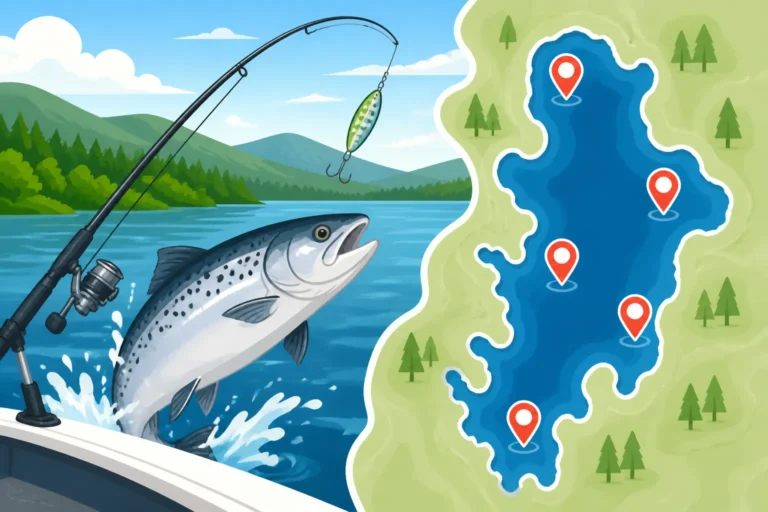
Ever feel like Lake Winnipesaukee is a vast, beautiful enigma when you're trying to find fish? It's easy to get overwhelmed by its sheer size and depth, especially when you're searching for those elusive deep-water species. This comprehensive guide will peel back the layers of New Hampshire's largest lake, revealing the best deep water structure spots on Winnipesaukee and the proven strategies to successfully target them, making your next fishing adventure less about guessing and more about catching.
Understanding Lake Winnipesaukee's Deep Structure
Lake Winnipesaukee isn't just a big bowl of water; it's a complex underwater landscape carved by glaciers, full of hidden valleys, towering ledges, and submerged mountains. For an angler, understanding this hidden terrain is the absolute key to consistently finding fish, especially species like lake trout and landlocked salmon, which thrive in deeper, colder environments. You might spend hours cruising open water without a bite, only to find a honey hole teeming with life once you locate the right structure.
Why Deep Water Structure Matters
Think of deep water structure as the underwater equivalent of prime real estate for fish. It offers everything they need: protection from predators, ambush points for unsuspecting prey, and critical thermal refuge, especially as surface waters warm in summer. Without these features, fish are often scattered and difficult to pinpoint. When you locate a promising piece of structure, you're not just finding a spot; you're finding a fish magnet that concentrates baitfish and, in turn, the larger predatory species we love to target. It’s where the action really happens beneath the waves, providing essential cover from light and currents.
Moreover, deep structure can act as a highway or a stopping point for migratory fish. During different seasons, fish will move up and down these structures, using them to transition between different depths. Knowing these patterns means you can intercept them during their travels. It's not just about a single rock pile; it's about the entire ecosystem it supports and the movements it facilitates, making it a dynamic and ever-changing puzzle to solve. Without understanding this fundamental relationship, you're essentially fishing blind in a massive body of water.
Types of Deep Structure to Look For
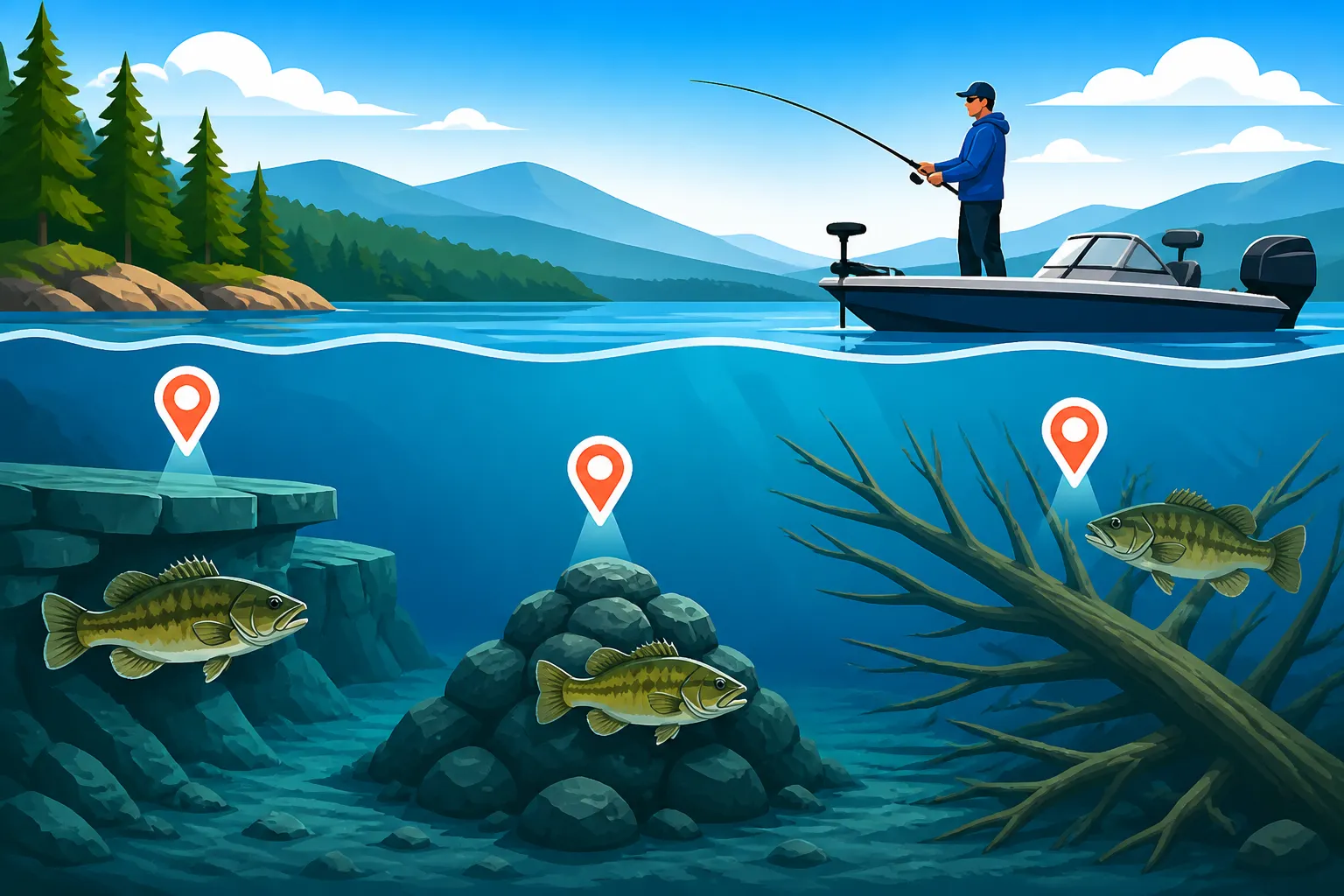
When you're scanning Winnipesaukee's depths, you're looking for several key types of structure that consistently hold fish. First, submerged humps are incredibly productive. These are underwater hills or peaks that rise significantly from the main lakebed but don't break the surface. They can be large or small, rounded or pointed, and often have rocky tops that attract baitfish. Second, deep drop-offs and ledges are critical. These are abrupt changes in depth, often forming a "wall" or a series of steps where the bottom quickly plunges from shallower flats into deeper troughs. These vertical structures provide excellent ambush points.
You'll also want to pay attention to rock piles and boulder fields in deeper water. While some are obvious, others are subtle aggregations of rock that provide cover and attract crustaceans and insects, which in turn draw baitfish. Old river channels or roadbeds that existed before the lake was fully dammed or filled can also be phenomenal. These offer distinct contours and harder bottom composition that fish relate to. Finally, don't overlook deep points and saddles between islands. These areas often funnel current and baitfish, making them high-traffic zones for predators. Identifying these specific features on your electronics will drastically improve your chances.
Reading Your Electronics for Deep Structure
Successfully finding deep water structure on Winnipesaukee is almost impossible without good electronics. Modern fish finders, whether you're running a Humminbird, Lowrance, or Garmin unit, are your eyes below the surface. Learning to interpret what your screen is showing you is a game-changer. You're not just looking for "fish arches" (though those are great!); you're looking for changes in bottom hardness, depth contours, and baitfish schools. A hard bottom, like rock, will often show up as a thicker, more intense return on your sonar compared to softer mud or silt.
Side imaging and down imaging technologies are particularly useful for deep structure. Side imaging allows you to scan wide swaths of the lakebed to either side of your boat, revealing submerged humps, rock piles, and ledges that you might have otherwise passed directly over. Down imaging provides a photo-like view directly below your boat, making it easier to distinguish between different types of structure and even identify individual fish holding tight to it. Pay close attention to subtle changes in depth, distinct "shadows" cast by underwater objects, and dense schools of baitfish, which often appear as clouds of dots. Mastering your electronics is an ongoing process, but it's the single most important skill for deep water fishing here.
Prime Deep Water Structure Spots on Winnipesaukee
With over 250 islands and countless submerged features, Lake Winnipesaukee offers an endless array of deep water fishing opportunities. While some spots are well-known, others require diligent searching and a keen eye on your electronics. The trick is understanding why certain areas hold fish, not just where they are on a map. These aren't just random points; they are complex underwater ecosystems that concentrate forage and provide ideal habitat for trophy fish.
The Broads and Beyond
The Broads, the vast, deep expanse in the central part of Lake Winnipesaukee, is perhaps the most famous deep-water area. This open water basin holds immense depths, reaching over 200 feet in some places, and is a primary home for lake trout and landlocked salmon. While it might seem like a featureless abyss, "The Broads" is actually rich in subtle deep structure. Here, you'll find gradual depth changes, deep depressions, and scattered rock piles that don't always show up prominently on standard contour maps. The key is to look for those slight elevations or variations on your sonar, as even a rise of a few feet from a flat bottom can be enough to hold baitfish and, consequently, predators.
Beyond the named section of The Broads, the equally deep waters extending toward Wolfeboro, Alton Bay, and Meredith Bay also offer similar deep structure potential. These areas feature extensive main lake basins where fish often suspend in the thermocline during warmer months, but they also have underlying deep humps and ridges that break up the monotony of the lakebed. Trolling these vast, deep expanses requires patience and meticulous attention to your electronics, often covering miles of water. For those without all the specialized gear, chartering a trip with an experienced captain, easily arranged on FishingBooker, means you can tap into their knowledge and equipment for these vast deep water regions. They know the subtle nuances of these deep zones that only years of experience can teach.
Islands and Submerged Humps
Winnipesaukee's numerous islands are not just scenic landmasses; they are often the visible tips of extensive underwater structures that plunge into significant depths. Islands like Rattlesnake Island, Bear Island, and Cow Island, for instance, have intricate deep water contours around their perimeters. Look for sharp drop-offs on their leeward sides, as well as submerged humps and rocky reefs extending outwards that don't quite reach the surface. These hidden extensions often create current breaks and concentrate baitfish, making them prime feeding grounds for lake trout and smallmouth bass. Don't just fish the visible shoreline; instead, focus on the underwater topography extending hundreds of yards out.
Beyond the islands, there are countless truly submerged humps and reefs scattered throughout the lake. These "mountains" beneath the surface are often overlooked by casual anglers, but they are absolutely goldmines for deep-water fish. Many of these humps rise from 80-100 feet of water to peaks of 30-50 feet, providing critical vertical relief. Learning to locate these on your detailed lake maps, such as Navionics or Humminbird LakeMaster, and then verifying them with your sonar, is a skill that will consistently put you on fish. These isolated pieces of structure are often teeming with life, drawing in schools of rainbow smelt, which in turn attract large lake trout and salmon.
Deep Drop-offs and Ledges
The sudden, dramatic changes in depth that characterize drop-offs and ledges are some of the most consistent deep-water fish attractors on Winnipesaukee. These areas provide excellent cover and ambush points, allowing fish to hold at specific depths while having quick access to both shallower feeding grounds and deeper, safer waters. Consider the areas around West Alton, the entrance to Paugus Bay, or parts of Meredith Bay where the bottom plunges rapidly from 20-30 feet down to 60-80 feet or more. These transitions are crucial.
Ledges, in particular, offer distinct horizontal shelves and vertical faces that fish will orient to. A series of ledges can create a staircase effect, where fish might hold at different "steps" depending on the time of day, baitfish presence, or current. When you identify a significant drop-off or a series of ledges on your electronics, it's worth slowing down and thoroughly working the area. These features are often formed by ancient geological activity or by the flow of water over millennia, creating permanent fish magnets. The key is to understand the contours and how fish might use them for both feeding and refuge. Many guides listed on FishingBooker offer specific trips targeting lake trout and salmon in the deep, allowing you to learn their strategies firsthand and pinpoint these subtle yet productive locations.
Targeting Fish on Winnipesaukee's Deep Structure
Once you've located that promising deep water structure, the next step is knowing how to effectively target the fish holding there. Different species, like the mighty lake trout, acrobatic landlocked salmon, and hard-fighting smallmouth bass, all have their preferred techniques and presentations. It's not just about getting your lure down deep; it's about making it irresistible to the fish.
Lake Trout Tactics
Lake trout are the undisputed kings of Winnipesaukee's deep structure. These cold-water predators spend the majority of their lives in the deeper, cooler parts of the lake, often relating directly to humps, ledges, and rock piles. Trolling is arguably the most effective method for covering ground and presenting lures to lake trout on deep structure. Using techniques like downriggers, lead core line, or heavy sinkers allows you to precisely control the depth of your lures. Spoons, such as Suttons, Mooselook Wobblers, or larger flutter spoons, in silver, blue, or green patterns, are perennial favorites. The retrieve should be slow and methodical, mimicking a struggling baitfish.
Another highly effective technique, especially when you've pinpointed fish directly on structure, is vertical jigging. Heavy jigs, blade baits, or tube jigs in white, silver, or glow patterns can be dropped directly onto fish showing on your sonar. The key is to present the lure with a sharp snap and then let it flutter enticingly back down, often prompting a strike on the fall. Live bait, particularly dead or alive rainbow smelt, suspended off the bottom using a three-way rig or a slip bobber in slightly shallower deep areas, can also be deadly. Understanding How to Catch Lake Trout in New Hampshire is crucial, and targeting them on deep structure is often the most productive strategy.
Salmon and Smallmouth Bass Opportunities
While lake trout are deep-water stalwarts, landlocked salmon also frequently relate to deep structure, particularly when baitfish, like rainbow smelt, are congregating there. Salmon are often found suspended just above or around deep humps and ledges, rather than tight to the bottom. For salmon, trolling with spoons, small stickbaits, or flies behind a planer board or downrigger is effective. They are known for their strong runs and aerial acrobatics, so a fast retrieve or an erratic trolling pattern can trigger strikes. You might find them in the same vicinity as lake trout, but often a bit higher in the water column. For detailed tactics, consult our guide on How to Catch Landlocked Salmon in New Hampshire.
Don't underestimate smallmouth bass in deep water, especially during the summer months when they move off shallow flats to find cooler temperatures and consistent forage. Trophy smallmouth will often hold on the edges of deep humps, along deep ledges, or on isolated rock piles in 30-60 feet of water. Techniques like drop-shotting, Carolina rigging, or Ned rigging soft plastics (imitating crawfish or gobies) are highly effective. For those seeking to master these techniques, our article on How to Catch Smallmouth Bass in New Hampshire Lakes provides excellent insights. Look for them on your electronics as individual fish or small schools hugging the bottom near structure. A well-placed jig or soft plastic can often entice a bite from these deep-dwelling bronzebacks.
Seasonal Considerations for Deep Fishing
The dynamics of deep water fishing on Winnipesaukee shift significantly throughout the year, driven primarily by water temperature and fish spawning cycles. Understanding these seasonal changes is vital for consistent success. In spring (ice-out to early June), as the ice recedes, lake trout and salmon often remain relatively shallow, sometimes in 20-40 feet, as the entire water column is cold and oxygenated. They will actively feed on smelt moving into shallower spawning areas. This is a prime time for trolling shallower parts of deep drop-offs and humps.
During summer (late June to early September), the lake stratifies, forming a distinct thermocline. Lake trout and salmon will retreat below this warmer surface layer, often suspending just above or within the thermocline, or holding tight to the deepest parts of structure where cold water is still accessible. Smallmouth bass will also move to deep humps and ledges to escape the heat. This period requires precise depth control with downriggers or lead core. Fall (September to November) sees the lake begin to cool and eventually "turn over," mixing the water column. Fish become more active, and lake trout and salmon will move to shallower depths again as they prepare for their spawning rituals. This is an excellent time for aggressive trolling or jigging. Finally, winter (December to March) brings ice fishing, where anglers target deep structure through the ice using tip-ups and jigging rods. Our guides on New Hampshire Fishing Seasons by Month and Best Time of Year to Fish in New Hampshire offer more comprehensive seasonal advice.
Essential Gear for Deep Water Fishing
To effectively tackle the deep water structure of Winnipesaukee, you need more than just basic fishing tackle. Specialized equipment helps you locate fish, present your baits accurately at depth, and manage the challenge of fighting powerful fish in deep water. Investing in the right tools will make your deep-water expeditions far more productive and enjoyable.
Sonar and Mapping Systems
As mentioned earlier, your electronics are your most crucial ally. A reliable sonar unit with GPS and detailed mapping is non-negotiable. Look for units that offer high-resolution 2D sonar, down imaging, and side imaging capabilities. Brands like Humminbird, Lowrance, and Garmin offer excellent options tailored for lake fishing. The GPS function is essential for marking precise deep water structure spots once you find them, allowing you to return to them repeatedly. Without detailed mapping, you're navigating blindly.
Integrated mapping systems like Navionics, C-MAP, or Humminbird's LakeMaster provide incredibly detailed contour lines, showing you the subtle humps, drop-offs, and ledges that hold fish. Learning to navigate using these maps, pre-planning your drifts or trolling passes over promising structure, is a skill that will save you immense time and fuel. Our detailed guide on Best Fish Finders for New Hampshire Lakes offers in-depth reviews and recommendations to help you choose the perfect unit for deep water exploration on Winnipesaukee. A good fish finder is an investment that pays dividends in fish caught.
Rods, Reels, and Line for Deep Presentation
Fishing in deep water requires a specific setup to handle the challenges of depth, heavy weights, and powerful fish. For lake trout and salmon trolling, you'll want medium-heavy to heavy action rods that are 7 to 9 feet long. These rods need enough backbone to handle heavy downrigger weights or lead core line, yet retain a sensitive tip to detect subtle bites. Pair these with levelwind or conventional reels that have a high line capacity, capable of holding 300+ yards of line. For vertical jigging, a sensitive 6'6" to 7' medium-heavy spinning or casting rod will give you the feel you need.
When it comes to line, braided line is often preferred for deep water due to its minimal stretch, which provides excellent sensitivity and solid hooksets at depth. Spool up with 20-30 lb test braid, and then tie on a 10-20 lb test fluorocarbon leader of 10-20 feet. Fluorocarbon is nearly invisible underwater and abrasion-resistant, making it ideal for presenting lures in clear lake waters and around rocky structure. For trolling with lead core, you'll need a dedicated setup that allows you to spool the different colors (each representing a specific depth range) and attach it to a monofilament or fluorocarbon leader. To truly outfit yourself, refer to our guide on Best Fishing Rods for New Hampshire Lakes.
Deep Water Lures and Baits
Selecting the right lures and baits is critical for enticing bites from deep water fish. For lake trout and salmon, trolling spoons are a staple. Classic patterns like silver, blue/silver, green/silver, or even bright orange and chartreuse can be effective depending on water clarity and light conditions. Size-wise, spoons ranging from 2.5 to 5 inches are common. Stickbaits and crankbaits that dive to significant depths can also be effective, especially for suspended salmon. Look for models designed for trolling at various depths. Our guide on Best Lures for Lake Trout Trolling delves into many proven options.
For vertical jigging, heavy tube jigs (3/8 oz to 1 oz or more) in white, black, or natural baitfish colors, often tipped with a piece of cut bait or a scent, are highly effective. Blade baits (like Cicadas or Sonars) and heavy spoons designed for jigging (e.g., Hopkins shorty, Kastmaster) can also trigger aggressive strikes when dropped onto schooling fish. For deep smallmouth, drop shot rigs with finesse worms or creature baits, Ned rigs, and Carolina rigs are go-to choices, allowing you to present a soft plastic bait effectively near the bottom. Live bait, particularly rainbow smelt, is often the most irresistible offering for both lake trout and salmon, whether fished on a tip-up for ice fishing or suspended under a three-way rig from a boat.
| Deep Water Structure Type | Target Fish Species | Recommended Lures/Baits | Key Techniques |
|---|---|---|---|
| Submerged Humps | Lake Trout, Salmon, Smallmouth Bass | Trolling Spoons, Tube Jigs, Drop Shot Rigs | Trolling over & around, Vertical Jigging, Finesse |
| Deep Ledges/Drop-offs | Lake Trout, Smallmouth Bass, Salmon | Heavy Spoons, Blade Baits, Live Smelt, Crankbaits | Drifting, Downrigging along edges, Vertical Jigging |
| Rock Piles | Smallmouth Bass, Lake Trout | Tube Jigs, Drop Shot Rigs, Carolina Rigs, Blade Baits | Jigging, Slow Trolling, Finesse Presentation |
| Deep Main Lake Basin | Lake Trout, Salmon (suspended) | Trolling Spoons, Stickbaits, Lead Core Spoons | Downrigging, Lead Core Trolling, Planer Boards |
Final Thoughts on Mastering Winnipesaukee's Deep
Fishing Lake Winnipesaukee's deep water structure is a challenge, no doubt, but it's also incredibly rewarding. It demands patience, keen observation, and the right tools, but the payoff can be some of the most memorable catches of your angling career. There's nothing quite like the thrill of seeing a deep-water giant emerge from the depths. Each trip is a learning experience, an opportunity to understand the lake's hidden contours and the intricate behavior of its magnificent fish species a little better.
Remember, the lake is constantly changing with the seasons and even the weather patterns. What works one day might not the next, so staying flexible and paying attention to every detail — from water temperature to baitfish activity — will serve you well. Don't be afraid to experiment with different lures, depths, and presentations. If you're new to the lake or just want to maximize your chances, consider hiring a local guide, which you can often find through platforms like FishingBooker, who can literally put you on these exact spots and shorten your learning curve dramatically. Their expertise can be invaluable in unlocking the secrets of these deep water haunts.
Ultimately, whether you're chasing the next state record lake trout or just enjoying the tranquility of the Big Lake, understanding and effectively fishing deep water structure will elevate your Winnipesaukee experience. It’s a journey of discovery that keeps us coming back, season after season. Before heading out, checking local fishing reports, sometimes accessible through community forums or even booking sites like FishingBooker where guides often share insights, can give you a real edge.
Disclaimer
Please be aware that fishing regulations, including seasons, bag limits, and licensing requirements, are subject to change. Always consult the most current New Hampshire Fish and Game Department regulations before heading out on the water. This guide is for informational purposes only and should not replace official sources.