Where locals fish for smallmouth on Winnipesaukee
Trying to find those elusive smallmouth bass on a massive lake like Winnipesaukee can feel like searching for a needle in a haystack, especially when every other angler seems to be crowding the same few public spots. It's frustrating to drive all that way, launch your boat, and then feel like you're constantly competing for space or just not finding the consistent action you hoped for. This comprehensive guide is dedicated to pulling back the curtain and revealing where the seasoned locals of New Hampshire go to find smallmouth on Winnipesaukee, sharing their secret spots and time-tested techniques to help you get on more fish.
Understanding Lake Winnipesaukee's Smallmouth Habitat
Lake Winnipesaukee is a sprawling body of water, over 70 square miles, boasting countless islands, coves, and varying depths. It's truly a smallmouth paradise, but their distribution isn't random. Locals have learned that these feisty bronzebacks have a strong preference for certain types of underwater real estate, and understanding these patterns is the first step to consistently finding them away from the crowds.
Rocky Points and Shoals: The Smallmouth's Pantry
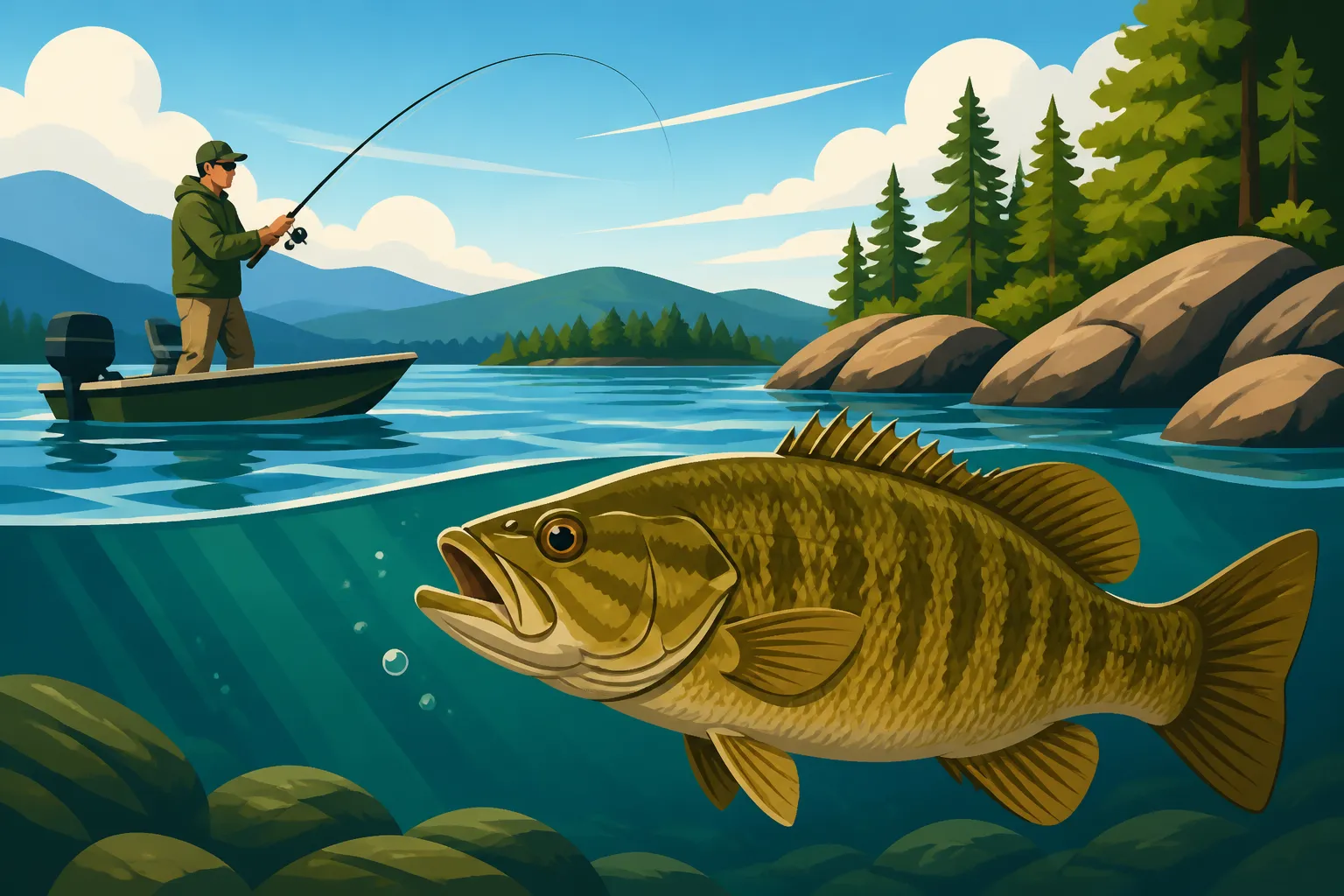
Smallmouth bass are absolutely obsessed with rocky structure. They aren't called "bronzebacks" for nothing; their coloration helps them camouflage perfectly against the granite and rubble bottoms common throughout Winnipesaukee. These rocky points and submerged shoals act as natural ambush points, creating current breaks and attracting baitfish like rainbow smelt and yellow perch, which are staples in the smallmouth diet. When you're looking for these spots, think about where the bottom transitions from soft sediment to hard rock, or where a point extends far out into the lake, creating a distinct change in depth.
For example, many smaller islands scattered across the lake, or the exposed ledges you see near the shore, often have underwater extensions that form prime smallmouth habitat. These can be gradual slopes covered in softball-sized rocks, or sharp drops that transition from 5 feet down to 20 feet in a hurry. Locals often refer to these as "breaks" or "edges" and they're particularly productive when there's a good chop on the water, as the waves disorient baitfish and make them easier prey.
The key to fishing these areas effectively is to understand that the smallmouth won't always be on the very top of the shoal. Sometimes they'll be sitting on the deeper edges, waiting for bait to come over the top, especially during brighter parts of the day. Using your electronics to identify these subtle changes in bottom composition and depth is crucial, as many of the best spots aren't visible from the surface. A good fish finder can make all the difference, revealing not just the depth but the hardness of the bottom and any suspended baitfish or larger arcs that could be lurking bass.
Deep Water Access and Transition Zones
While smallmouth are often associated with shallow, rocky areas, their movements are highly influenced by water temperature and the presence of bait. This means they're constantly utilizing transition zones – areas where shallow rocky flats quickly give way to much deeper water. These ledges, shelves, and channel edges offer smallmouth the best of both worlds: nearby feeding grounds and an immediate escape route to cooler, more stable temperatures when conditions change.
Consider the deeper pockets within larger bays or the main lake basins. Smallmouth will patrol these deeper edges, particularly during the warmer summer months when they'll retreat from the scorching sun into the cooler thermocline. They don't just sit in the abyss, though; they'll hold right where that depth transition occurs, often at depths of 20 to 40 feet, depending on the specific water body and time of year. These spots are less about casting at visible cover and more about precision boat positioning and vertical presentations.
Local anglers understand that these transitions are dynamic. A spot that holds smallmouth in 20 feet of water in June might have them in 35 feet by August. Learning to "read" your electronics for these depth changes, and understanding the general contours of the lake, is paramount. Often, these areas are located near the "The Broads Lake Winnipesaukee lake trout fishing" spots, as both species prefer deep, cold, oxygenated water, but smallmouth will relate more to the structure within those deep zones. Targeting these deeper zones often requires different techniques than shallow water fishing, relying heavily on sensitive gear to detect subtle bites.
Local Hotspots and Lesser-Known Gems
Lake Winnipesaukee is a behemoth, and while there are plenty of well-known spots, the locals often frequent specific areas that might not be on every tourist's radar. These are the places that consistently produce, not necessarily because they're "secret," but because they require a bit more navigation, specific timing, or a deeper understanding of smallmouth behavior.
The Broads and Beyond: Main Lake Structure
"The Broads" is the expansive, deepest part of Lake Winnipesaukee, stretching between Wolfeboro, Moultonborough, and Laconia. While intimidatingly large, it's also a goldmine for trophy smallmouth bass, particularly around its many islands and submerged humps. The sheer size means less fishing pressure on individual structures, and the deeper, cooler water supports robust baitfish populations, leading to larger, healthier bass.
Think about areas surrounding larger islands like Bear Island, Cow Island, or even closer to shore, the rocky structure near Little Bear Island smallmouth bass fishing. These islands aren't just landmasses; they are massive underwater structures themselves, with points, reefs, and shelves extending for hundreds of yards. The key here is not to just randomly cast, but to systematically work these structures, paying close attention to contours. Often, the side of an island facing prevailing winds can be particularly productive, as the wind pushes baitfish against the structure.
Beyond the named islands, countless unnamed submerged humps and rock piles exist in The Broads. These are typically marked on good nautical charts but are often ignored by less experienced anglers. Using advanced electronics with side-imaging or 360-degree sonar can really help uncover these hidden gems, revealing boulders, rock piles, and even individual fish lurking in deeper water. This is where patience and an understanding of how to read structure for smallmouth on Winnipesaukee truly pay off. A local guide, often found through services like FishingBooker, can be an invaluable resource for navigating these vast main lake areas and putting you on fish quickly.
Secluded Coves and Bays with Rocky Inlets
While the main lake is fantastic, locals also know the value of the quieter, more secluded coves and bays that dot Winnipesaukee's shoreline. These aren't necessarily the popular swimming beaches; rather, they are often tucked-away pockets with rocky shorelines, boulder fields, and distinct transitions from shallow to deep water near their mouths or within their deeper sections. The protection from heavy boat traffic allows smallmouth to feel more secure, especially during peak summer days.
Consider the rocky inlets and deeper sections of Glendale Cove, or the lesser-frequented rocky shores around Long Island or even within parts of Meredith Bay and Wolfeboro Bay, focusing on the less developed, more natural sections away from marinas and public docks. These areas often have an abundance of crawfish, another favorite food source for smallmouth, alongside the usual baitfish. The smallmouth here tend to be a bit less pressured and might be more willing to strike at a wider variety of baits.
The trick with these coves is often timing. Early mornings, late evenings, or even during overcast or drizzly days, when pleasure boat traffic is minimal, are prime times. The smallmouth will often move shallower to feed under these low-light conditions. When fishing these areas, look for isolated boulders, rock spines, or even submerged logs that provide cover. A stealthy approach, perhaps using a kayak or a boat with a quiet trolling motor, can make a huge difference in not spooking these wary fish. For those considering a trip, you might find valuable insights in a broader guide like the Lake Winnipesaukee Fishing Guide.
Tactics Locals Employ for Winnipesaukee Smallmouth
The clear waters of Lake Winnipesaukee, combined with its abundant smallmouth population, call for a blend of finesse and power techniques. Locals have perfected both, understanding when to subtly present a bait and when to aggressively trigger a reaction strike.
Finesse Presentations for Clear Water
New Hampshire's clear lake waters, especially on Winnipesaukee, often demand a finesse approach, particularly when fish are pressured or the sun is high. Smallmouth in clear water are visual predators and can be incredibly wary of unnatural presentations. This is where light line, subtle baits, and careful boat positioning become paramount.
Drop-shotting is arguably one of the most effective finesse techniques here. It allows you to present a small plastic worm or creature bait right at the fish's eye level, suspended above a lead weight on the bottom. The key is to use very light fluorocarbon line (6-8 lb test is common), a small #1 or #2 hook, and natural-colored baits like green pumpkin, smoke, or watermelon. This technique is fantastic for targeting fish holding tight to deep structure, like those found on submerged humps or steep drop-offs. A subtle jiggle of the rod tip is often all it takes to entice a strike.
Another deadly finesse rig is the Ned Rig. This consists of a small, mushroom-shaped jig head paired with a short, buoyant worm (often 2.75 to 3 inches). It's designed to stand up off the bottom, creating a tantalizing, subtle presentation that even finicky smallmouth find hard to resist. Shaky heads with small straight-tail worms are also incredibly effective, especially when hopped slowly along rocky bottoms. Remember, when the water is clear, less is often more. The idea is to make the bait look as natural and non-threatening as possible. Many of these methods are covered in detail in guides like How to Catch Smallmouth Bass in New Hampshire Lakes.
Power Fishing for Active Bites
While finesse reigns in tough conditions, there are plenty of times when Winnipesaukee smallmouth are aggressive and respond well to power fishing tactics. These techniques are designed to cover water quickly and elicit a reaction strike from active, feeding fish. This is often the case during low-light conditions, on windy days, or during the pre-spawn and fall feeding frenzies.
Crankbaits are a local favorite for covering expansive rocky flats and points. Medium-diving crankbaits that reach depths of 8-15 feet are excellent for bumping off submerged rocks, mimicking fleeing baitfish. Colors that imitate rainbow smelt (silver, blueback, chrome) or crawfish (brown, red) are always a good bet. The retrieve should vary, often with pauses and erratic twitches, to trigger strikes. You might want to explore the Best crankbait retrieve for Winnipesaukee smallmouth for more detailed tips.
Jerkbaits are another essential tool, especially in colder water periods like spring and fall. These lures suspend in the water column when paused, allowing smallmouth to zero in on them. A series of sharp jerks followed by a long pause (sometimes 5-10 seconds) can be incredibly effective. Topwater lures like poppers, walking baits, and prop baits are thrilling options for early mornings and late evenings, particularly during the summer. The explosive strikes on topwater are unforgettable and are often found in areas like the best shore fishing spots on Squam Lake or similar rocky shorelines. The Best Baits for Smallmouth Bass on Winnipesaukee delves deeper into these specific lure choices.
Seasonal Movements and Best Times to Fish
Smallmouth bass on Lake Winnipesaukee are constantly on the move, driven by water temperature, forage availability, and spawning instincts. Understanding these seasonal patterns is key to being in the right place at the right time.
Springtime Opportunities and Pre-Spawn Patterns
As the ice recedes from Lake Winnipesaukee, usually in late April to early May, smallmouth bass begin to shake off their winter lethargy and move towards shallower waters. This post-ice out period, leading into the pre-spawn, is one of the most exciting times to target them. The water is still cold, but warming rapidly in certain areas, signaling a major feeding period before they commit to spawning.
During this time, look for smallmouth congregating in northern coves and on large, sun-warmed rocky flats. These areas absorb sunlight more effectively, raising the water temperature a few degrees faster than the main lake, which attracts baitfish and, subsequently, the bass. Depths of 5 to 15 feet are often prime. Tactics for this cold water include slow-rolling spinnerbaits, dragging tubes, and suspending jerkbaits with long pauses. Remember, the fish are still sluggish, so presentations need to be slow and deliberate.
The official New Hampshire Bass Catch-and-Release Season, Explained often starts right around this time, followed by the harvest season. While the bass season reopens for harvest a bit later, the early spring catch-and-release period can be phenomenal. Focus on finding areas that offer both rocky structure and easy access to deeper water, allowing fish to move up and down the water column as temperatures fluctuate. These transitional areas are hotbeds of activity.
Summer Deepwater and Topwater Action
When the scorching summer sun hits Winnipesaukee, typically from July through August, smallmouth bass undergo a significant shift. While you can still find them shallow early and late in the day, the bulk of the population often retreats to deeper, cooler waters during peak daylight hours. This is when understanding depth transitions becomes absolutely critical.
During the summer, smallmouth will often hold on deep rocky points, ledges, and submerged humps at depths ranging from 20 to 45 feet. Vertical presentations like dropshotting, football jigs, and heavy tubes become the most effective tools. You're trying to target fish that are relating tightly to structure on the bottom or suspended just above it. Using your boat's electronics to precisely position yourself over these deepwater structures is paramount. The Best Time of Year to Fish in New Hampshire often highlights these seasonal shifts.
However, don't completely discount the shallows. During low-light periods – dawn, dusk, and overcast days – smallmouth will often push up onto shallower rocky points and flats to feed on baitfish. This is prime time for thrilling topwater action with walking baits and poppers. Also, areas with significant shade, like under docks or overhanging trees in the mornings, can hold bass that haven't yet retreated to the depths.
Fall Feeding Frenzy
As the water temperatures begin to cool in September and October, smallmouth bass enter an aggressive feeding frenzy, packing on reserves for the long winter ahead. This fall period offers some of the best smallmouth fishing of the year on Winnipesaukee, as the fish become less wary and more willing to chase down baits.
Smallmouth will often move back to shallower rocky points, humps, and even shorelines that were productive in the spring. They are actively chasing baitfish, which are also schooling up in preparation for winter. This is a fantastic time for power fishing techniques: crankbaits, spinnerbaits, lipless crankbaits, and even large swimbaits can be incredibly effective. Focus on covering water quickly, especially around prime ambush points where smallmouth can corral bait.
The Best lure retrieve speed for smallmouth in fall is often faster than in spring, reflecting the bass's increased metabolism and aggressive nature. Look for schools of baitfish on your electronics, as the smallmouth won't be far behind. Often, once you find one feeding smallmouth, you'll find a whole school. The fall bite can extend well into November, right up until ice forms, offering fantastic opportunities for anglers willing to brave the colder weather. Just be sure to check the New Hampshire Bass Limits and Slot Rules as regulations can change.
| Smallmouth Hotspot Type | Typical Depth Range | Preferred Baits | Boat Traffic Level | Best Season |
|---|---|---|---|---|
| Rocky Points | 5-25 feet | Jerkbaits, Cranks, Tubes, Drop-shots | Moderate to High | Spring, Fall, Early Summer |
| Submerged Shoals/Humps | 15-40 feet | Drop-shots, Jigs, Spoons | Low to Moderate | Summer, Fall |
| Deep Ledges/Drop-offs | 20-50 feet | Drop-shots, Football Jigs, Vertical Jigs | Moderate | Summer, Fall |
| Secluded Rocky Coves | 5-20 feet | Topwater, Spinnerbaits, Jigs, Tubes | Low | Spring, Fall, Low-light Summer |
| Main Lake Islands (Rocky Edges) | 10-30 feet | Cranks, Jerkbaits, Drop-shots, Swimbaits | Moderate to High | All Seasons (timing dependent) |
Disclaimer
Fishing conditions and regulations in New Hampshire can change. Always consult the latest New Hampshire Fish and Game Department regulations before heading out. This guide provides general information and local insights but is not a substitute for official resources.