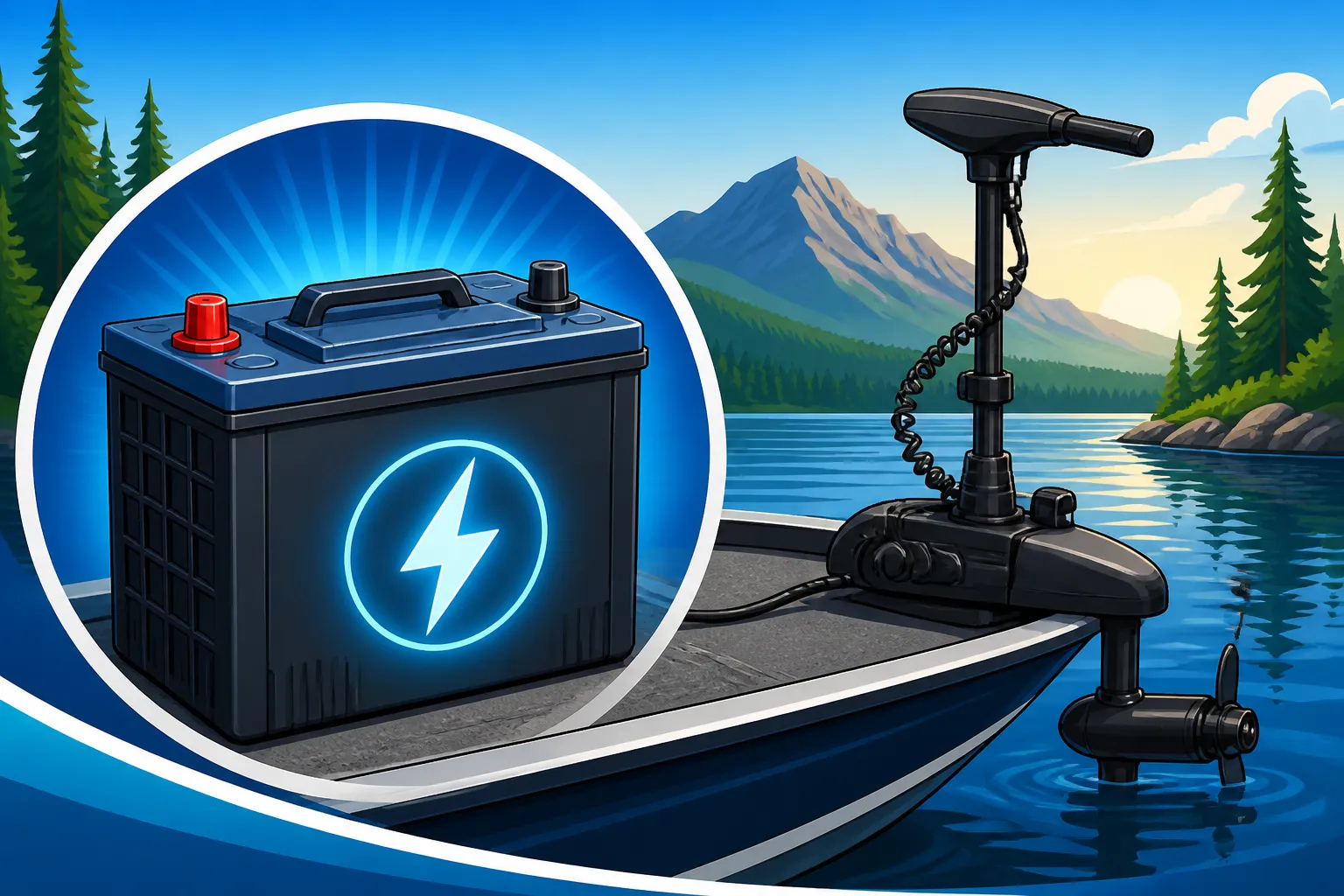
Best marine battery for a trolling motor
There’s nothing quite like the crushing disappointment of pushing the foot pedal on your trolling motor, eager to ease quietly into that prime bass spot or stealthily follow a shoreline for crappie, only to hear a weak sputter or, worse, absolute silence. A dead marine battery can absolutely ruin a perfectly planned day on the water, leaving you stranded or, at the very least, frustrated. This guide is all about helping you navigate the sometimes confusing world of marine batteries so you can confidently choose the best one for your trolling motor, ensuring reliable power for all your New Hampshire fishing adventures.
Understanding Marine Batteries for Trolling Motors
Let's face it, picking out a battery for your boat can feel a lot like trying to decipher a foreign language, especially with all the acronyms and numbers thrown around. But truly, understanding the basics is your first step to making a smart choice that will keep you on the water, not wishing you were.
Types of Marine Batteries: What's the Difference?
When you walk into a store like Bass Pro Shops or browse online on Amazon, you’ll typically see three main types of marine batteries: flooded (or wet cell) lead-acid, Absorbed Glass Mat (AGM), and lithium-ion (LiFePO4). Each has its own set of pros and cons, and understanding them is crucial for matching the right battery to your fishing style and budget.
- Flooded Lead-Acid Batteries: These are the traditional, most common, and usually the most affordable option. They contain liquid electrolyte (a mix of sulfuric acid and water) that needs to be checked and topped off with distilled water periodically. They're a solid workhorse for many anglers, but they're heavier, can vent gasses, and are more sensitive to discharge cycles. If you're on a tighter budget and don't mind a bit of maintenance, these can be a good choice for smaller boats or occasional use.
- Absorbed Glass Mat (AGM) Batteries: Think of AGMs as the "middle ground" option. They still use lead and acid, but the electrolyte is absorbed into fiberglass mats between the plates, making them sealed and maintenance-free. This means no topping off water, no corrosive gasses, and they're much more resistant to vibration and leaks, which is fantastic for rough rides on larger lakes like Winnipesaukee. They charge faster than flooded batteries and handle deep discharges better, offering a longer lifespan if properly cared for. They're typically more expensive than flooded batteries but significantly less than lithium.
- Lithium-Ion (LiFePO4) Batteries: These are the new kids on the block, and they're revolutionizing marine power. While they come with a higher upfront cost, their benefits are substantial. They are incredibly lightweight (often half the weight of lead-acid), provide consistent power throughout their discharge cycle (meaning your trolling motor doesn't lose thrust as the battery drains), and have a much longer lifespan (often 5-10 times more charge cycles). They also charge incredibly fast. For serious anglers who spend long hours on the water, especially those concerned with boat weight or needing maximum run time, lithium is a game-changer. They're particularly popular with kayak anglers who want to minimize weight for portability.
Key Battery Specifications: Decoding the Numbers
Beyond the battery type, you'll encounter a few key terms and numbers that dictate how a battery will perform for your trolling motor. Don't let them intimidate you!
- Amp-Hours (Ah): This is probably the most important number for trolling motors, as it tells you how much energy the battery can store and deliver over time. A higher Ah rating means a longer run time for your trolling motor before needing a recharge. For instance, a 100 Ah battery can theoretically provide 10 amps for 10 hours. Your trolling motor's power consumption, measured in amps, will determine how long a given Ah rating will last.
- Cold Cranking Amps (CCA): You'll see this mainly on starting batteries, not deep cycle batteries for trolling motors. CCA measures the battery's ability to start an engine in cold weather. While important for your main engine, it's largely irrelevant for a dedicated trolling motor battery, which needs sustained, lower-amp draw.
- Marine Cranking Amps (MCA): Similar to CCA, but tested at a slightly warmer temperature (32°F instead of 0°F). Again, more for starting batteries.
- Reserve Capacity (RC): This rating indicates how long a fully charged battery can deliver 25 amps of power at 80°F before its voltage drops below a usable level. It's another good indicator of how long your battery will last under a moderate load, which can be very helpful for trolling motors, especially if you're frequently moving or fishing against a current on a river like the Merrimack.
Why the Right Battery Matters for New Hampshire Waters
New Hampshire offers such diverse fishing, from the expansive depths of Lake Winnipesaukee to the tight, current-rich sections of the Connecticut River, or even small, quiet trout ponds. The right battery means you can explore more, fish longer, and not worry about losing power when you're far from the launch.
Imagine you're trying to fish for smallmouth bass on Winnipesaukee. You need enough juice to cover a lot of water, battle windy conditions, and get you back to your prime spots efficiently. A battery with insufficient Ah or poor cold-weather performance (which is a real concern during our long fishing seasons here, extending into fall) will leave you scrambling. Conversely, a robust battery choice means you can focus on the fishing, not your power gauge. Best Smallmouth Bass Fishing in New Hampshire and How to Catch Smallmouth Bass in New Hampshire Lakes are great resources to pair with reliable power.
Matching Battery to Your Trolling Motor & Fishing Style
Choosing a marine battery isn't a one-size-fits-all deal. Your trolling motor's power, the size of your boat, and how you actually fish all play a huge role in determining the ideal battery setup.
Calculating Your Power Needs: Thrust, Voltage, Run Time
This is where the rubber meets the road. You need to understand your trolling motor's requirements to avoid being under-powered or overspending unnecessarily.
-
Trolling Motor Thrust and Voltage: Your trolling motor will specify its thrust (e.g., 55 lbs, 80 lbs, 112 lbs) and its voltage (12V, 24V, or 36V).
- 12V motors typically require one 12V deep cycle battery.
- 24V motors require two 12V deep cycle batteries wired in series.
- 36V motors require three 12V deep cycle batteries wired in series.
It's critical to match the battery voltage to your motor's requirements exactly.
-
Amperage Draw: Look up your trolling motor's maximum amp draw. This can usually be found in the owner's manual or on the manufacturer's website. For example, a 55 lb thrust 12V motor might draw around 50 amps at its highest setting but only 10-20 amps at a moderate speed.
-
Desired Run Time: How many hours do you typically spend on the water using your trolling motor?
- Example Scenario: Let's say you have a 12V trolling motor that draws 20 amps at your typical fishing speed, and you want to fish for 5 hours. You'd need a battery with at least 20 amps * 5 hours = 100 Ah. However, you never want to fully discharge a deep cycle battery, so aim for a battery with 20-30% more Ah than your calculated minimum. So, a 125-130 Ah battery would be a safer bet in this example. If you're looking for Best Boats for New Hampshire Lakes and Rivers, remember battery capacity will be a key factor.
Battery Configurations for Different Trolling Motor Setups
The way you configure your batteries impacts performance and longevity.
- Single 12V Setup: Simple and common for smaller boats and lower-thrust motors. Just one deep cycle battery does the job. Make sure it's a true deep cycle, designed for sustained power delivery, not a starting battery.
- Multiple Battery (24V, 36V) Setups: For more powerful trolling motors, you'll need multiple 12V deep cycle batteries wired in series. This increases the voltage while keeping the amp-hour capacity of a single battery. For instance, two 100 Ah 12V batteries in series create a 24V system with 100 Ah. Three 100 Ah 12V batteries create a 36V system with 100 Ah. It's crucial that all batteries in a series bank are of the same type, age, and Ah rating to ensure balanced charging and discharging.
Consideration for Kayaks and Smaller Boats vs. Larger Vessels
The size and type of your fishing craft heavily influence your battery choice.
- Kayaks and Smaller Jon Boats: Weight is a huge factor here. Hauling a heavy lead-acid battery to and from your kayak can be a real pain. This is where lightweight lithium-ion batteries truly shine. They allow for easier transport, don't bog down your small craft, and offer superior run time for a given weight. For instance, a small 30Ah or 50Ah lithium battery can give you hours of power without adding significant bulk. Best Kayaks for New Hampshire Fishing will tell you more about setting up your kayak for fishing.
- Mid-Sized Boats (16-20 ft): You might have the space and weight capacity for AGM batteries, which offer a great balance of performance and maintenance-free operation. They're robust enough to handle the vibrations and motion of a larger boat on choppy water, and their efficiency means you can run your trolling motor, fish finder Best Fish Finders for New Hampshire Lakes, and other electronics without constant worry.
- Larger Boats (20+ ft): Here, you have more flexibility. While lithium is still the premium choice, AGM batteries are very popular. You might also consider having separate battery banks for your engine start and your trolling motor, ensuring you always have power to get back to shore. Using dedicated deep cycle batteries for your trolling motor and a cranking battery for your engine is always the safest bet.
Top Marine Battery Technologies for Trolling Motors
Let's dive a little deeper into the specific battery types and why you might choose one over the others for your New Hampshire fishing adventures.
Deep Cycle Flooded Lead-Acid Batteries: The Traditional Choice
Flooded lead-acid batteries have been the backbone of marine power for decades, and for good reason. They are the most economical option, making them highly accessible for anglers just getting started or those on a tighter budget. You can usually find these at any auto parts store, marine supply shop, or even general retailers like Walmart.
- Pros: Low upfront cost, widely available, proven technology. They perform reliably if properly maintained.
- Cons: Require regular maintenance (checking water levels, topping off with distilled water), heavier and bulkier than other options, can vent corrosive gasses, and are more sensitive to being deeply discharged (which shortens their lifespan). Cold weather can also slightly reduce their performance, an important consideration for spring and fall fishing in New Hampshire.
A flooded lead-acid deep cycle battery might be perfect if you have a smaller boat, fish occasionally, or primarily rely on your main engine for propulsion, using the trolling motor only for short bursts or fine-tuning positioning. Just remember to keep an eye on those water levels!
AGM Batteries: A Step Up in Performance and Maintenance
AGM batteries offer a significant upgrade over flooded lead-acid, bridging the gap between traditional batteries and the cutting-edge lithium options. They use a special glass mat separator that wicks the electrolyte solution between the battery plates, sealing it in.
- Pros: Maintenance-free (no water to add), spill-proof and leak-proof (great for rough water or if the battery gets knocked over), more vibration resistant, faster charging than flooded batteries, and better deep-discharge resilience. They also perform better in colder temperatures than flooded cells, which is a big plus for those chilly mornings fishing for New Hampshire Lake Trout Ice Fishing Season Dates.
- Cons: More expensive than flooded batteries, though still considerably less than lithium. They are also heavy, similar to flooded lead-acid, so they don't solve the weight issue for smaller craft.
Many anglers find AGMs to be the sweet spot. They offer enhanced reliability and convenience without the premium price tag of lithium. If you're a regular angler, fish in varied conditions, and want a "set it and forget it" battery for a few seasons, an AGM is an excellent choice. Many reputable brands like NorthStar or Optima offer fantastic AGM options that you can often find at Bass Pro Shops or specialized marine stores.
Lithium-Ion Batteries: The Premium, Lightweight Option
Lithium-ion phosphate (LiFePO4) batteries are quickly becoming the gold standard for serious anglers, despite their higher initial investment. These batteries use a completely different chemistry than lead-acid, providing a host of advantages that can truly enhance your fishing experience.
- Pros:
- Extremely Lightweight: This is huge! Often 50-70% lighter than a comparable lead-acid battery, which makes a world of difference for kayak anglers, small boat owners, or anyone looking to reduce overall boat weight for better performance and fuel efficiency.
- Consistent Power Delivery: Unlike lead-acid batteries, which see a voltage drop as they discharge, lithium batteries maintain a steady voltage throughout their discharge cycle. This means your trolling motor will deliver consistent thrust from the moment you start to the moment it's nearly depleted.
- Longer Lifespan: LiFePO4 batteries offer significantly more charge cycles (thousands versus hundreds) than lead-acid batteries, often lasting 5-10 times longer. This extended lifespan can eventually offset the higher upfront cost.
- Faster Charging: They can accept a charge much faster, getting you back on the water quicker.
- Deep Discharge Tolerant: You can safely discharge them much deeper without damaging the battery, allowing you to use more of the stored energy.
- Cons: The primary drawback is the initial purchase price, which is considerably higher than AGM or flooded batteries. However, when you factor in their longevity, performance, and weight savings, many anglers find them to be a worthwhile investment over the long term.
For competitive anglers, those with limited weight capacity, or anyone who simply wants the best performance and peace of mind, lithium-ion batteries are unparalleled. You'll find a growing selection of high-quality LiFePO4 batteries specifically designed for marine trolling motors on platforms like Amazon and through specialized marine battery dealers. If you're out chasing How to Catch Landlocked Salmon in New Hampshire or spending long days on big water, the reliable, lightweight power of lithium can be a true asset.
Practical Tips for Battery Care and Longevity
Regardless of the type of marine battery you choose, proper care and maintenance are crucial for maximizing its lifespan and ensuring reliable performance when you're out on the water.
Proper Charging and Maintenance
A battery is only as good as its charge. Using the right charger and following good charging practices can significantly extend the life of your battery.
- Use a Smart Charger: Invest in a marine-specific multi-stage smart charger that matches your battery type (flooded, AGM, or lithium). These chargers optimize the charging process, prevent overcharging, and can even desulfate lead-acid batteries, prolonging their life. Avoid using automotive chargers, as they can damage marine deep cycle batteries.
- Charge After Every Use: Even if you only used your trolling motor for a short time, it's best to fully recharge your deep cycle battery as soon as possible. Letting a battery sit in a discharged state, especially a lead-acid battery, can lead to sulfation and permanent capacity loss.
- Check Water Levels (Flooded Only): For flooded lead-acid batteries, regularly check the electrolyte levels. If they are low, add only distilled water (never tap water!) to cover the plates. Do this after charging, as charging can cause the water level to rise.
- Clean Terminals: Keep your battery terminals clean and free of corrosion. A wire brush and a mixture of baking soda and water can help neutralize acid corrosion. Apply a thin layer of dielectric grease or a terminal protector to prevent future buildup.
- Winterization: If you store your boat or battery for the winter in New Hampshire, ensure your battery is fully charged before storage. For lead-acid and AGM batteries, a trickle charger or a smart charger with a maintenance mode can keep them topped off throughout the off-season. Lithium batteries often have a self-discharge rate so low they can be stored fully charged and disconnected, but always check the manufacturer's recommendations. Ice Fishing in New Hampshire might be your alternative, but your boat battery still needs proper care.
Installation Best Practices
How you install your battery can affect its safety and performance.
- Secure Mounting: Batteries, especially heavy lead-acid ones, need to be securely fastened in a battery box or tray to prevent movement. On a bumpy ride across a lake or bouncing down a road, an unsecured battery can shift, short out, or cause damage.
- Proper Ventilation: If using flooded lead-acid batteries, ensure they are installed in a well-ventilated area to allow any gasses to dissipate safely. AGM and lithium batteries are sealed and don't require external venting.
- Correct Wiring and Fusing: Use appropriately gauged marine-grade wiring for your trolling motor to minimize voltage drop and prevent overheating. Always install a circuit breaker or fuse on the positive lead as close to the battery as possible to protect your motor and boat's electrical system in case of a short circuit. This is not something to skip!
When to Consider Replacement
Even with the best care, all batteries eventually wear out. Here are some signs it might be time for a new marine battery for your trolling motor:
- Reduced Run Time: If your trolling motor runs for significantly less time than it used to, even after a full charge, your battery is likely losing capacity.
- Slow Charging or Not Holding a Charge: If the battery takes an unusually long time to charge, or quickly drops voltage after being charged, it's a clear indicator of decline.
- Physical Damage: Bulging sides, cracks, or excessive corrosion around the terminals (especially on sealed batteries) are all signs of internal problems and mean the battery should be replaced immediately.
- Age: Lead-acid batteries typically last 2-5 years, while AGMs can go 3-7 years. Lithium batteries boast a much longer lifespan, often exceeding 10 years. If your battery is approaching or past its typical lifespan, it's wise to start thinking about a replacement before it fails unexpectedly on the water.
Making an informed choice about your marine battery for a trolling motor is an investment in your fishing enjoyment and safety. Whether you opt for the budget-friendly flooded lead-acid, the robust and reliable AGM, or the high-performance lithium-ion, understanding your needs and maintaining your battery will ensure many successful days chasing fish in New Hampshire's beautiful waters.
Marine Battery Comparison Chart
To help you visualize the differences, here's a quick comparison of the main battery types for trolling motors.
| Feature | Flooded Lead-Acid | AGM Lead-Acid | Lithium-Ion (LiFePO4) |
|---|---|---|---|
| Upfront Cost | Low | Medium | High |
| Weight | Heavy | Heavy | Very Lightweight |
| Maintenance | High (water levels) | Low (maintenance-free) | Very Low (maintenance-free) |
| Lifespan (Cycles) | 200-400 | 400-800 | 2,000-5,000+ |
| Consistent Power | Drops with discharge | Drops with discharge | Consistent voltage |
| Charge Time | Slow | Medium | Fast |
| Vibration Resist. | Low | High | High |
| Spill-Proof | No | Yes | Yes |
| Cold Weather | Moderate performance | Good performance | Excellent performance |
| Typical Use | Budget-conscious, casual angler, smaller boats | Regular angler, diverse conditions, mid-sized boats | Serious angler, weight-critical applications (kayaks), long run times, high performance |
Remember, your choice depends on your specific needs, boat size, fishing frequency, and budget. Taking the time to consider these factors will ensure you pick the best marine battery for a trolling motor that will reliably power your New Hampshire fishing adventures.
Disclaimer
This article is for general informational purposes only and does not constitute professional advice. Laws, prices and regulations vary by location and change over time. Consult a qualified professional for guidance on your specific situation.