Best bilge pump for a small fishing boat
There’s nothing quite like the feeling of being out on the water in your small fishing boat, whether you're chasing smallmouth bass on Lake Winnipesaukee or drifting for trout on the Pemigewasset River. But that serene feeling can quickly turn to panic when you suddenly notice water sloshing around your feet, be it from an unexpected downpour, a rogue wake, or worse, a stealthy leak. A reliable bilge pump isn't just a convenience; it's an absolute necessity for peace of mind and safety on New Hampshire's diverse waterways. This guide will walk you through everything you need to know to choose the best bilge pump for your small fishing boat, ensuring you can focus on the catch, not on bailing water.
Why Your Small Fishing Boat Absolutely Needs a Bilge Pump in New Hampshire's Waters
The thought of sinking is something no boater wants to dwell on, but it's a very real danger, even for small craft. Our New Hampshire weather can be unpredictable, and even the calmest lake can kick up a chop. A functional bilge pump is your first line of defense against taking on too much water, keeping your fishing day from becoming a rescue mission.
The Unexpected Threat: Leaks, Rain, and Rogue Waves
Picture this: you've been out all morning, maybe on Squam Lake, enjoying a beautiful sunny day. Suddenly, a fast-moving thunderstorm rolls in, common in our New England summers, dumping buckets of rain. Your boat, designed for fishing, doesn't have a huge amount of freeboard, and quickly, water starts accumulating faster than it can evaporate. Without a pump, you're grabbing a bucket and bailing furiously, hoping to keep up. This is a common scenario that highlights the immediate need for a proper bilge system.
Beyond rain, small boats can develop leaks. Hitting an unseen submerged log in a shallow river like the Contoocook, or even just general wear and tear over time, can create small seepage points that continuously let water in. These might not seem like a big deal at first, but over hours of fishing, that slow drip can become a significant amount of water. A good bilge pump handles these insidious leaks quietly and efficiently, often before you even notice they're there. And let's not forget those large wakes from bigger boats on busy lakes like Winnipesaukee, which can send a surprising amount of water over your transom or gunwales, especially if you're anchored or drifting.
Safety and Compliance: More Than Just a Convenience
Having a working bilge pump isn't just about protecting your gear or saving your fishing trip; it's a critical safety measure for anyone on board. If your boat becomes waterlogged, it loses stability, becomes difficult to maneuver, and in extreme cases, can capsize or sink. This puts everyone in immediate danger, especially if you're far from shore or fishing alone. New Hampshire's waters can be cold, even in summer, and an unexpected dunk can quickly lead to hypothermia.
While specific bilge pump requirements can vary by boat size and type, most powered vessels in New Hampshire are expected to have some means of dewatering. It’s part of responsible boating. Many small fishing boats might not be legally required to have a permanently installed electric bilge pump, but it's universally recommended for safety. However, if your boat has an enclosed fuel tank, engine, or living spaces, an automatic pump often becomes a requirement. Always make sure you're up-to-date on New Hampshire Boating Laws for Anglers and New Hampshire required boat safety equipment checklist to ensure you're compliant and safe. A well-maintained bilge pump is a cornerstone of marine safety, giving you confidence no matter what the day throws at you.
Understanding Bilge Pump Types for Small Fishing Boats
When it comes to keeping water out of your small fishing boat, you essentially have a few options, each with its own benefits and ideal use cases. Understanding these types will help you make the right choice for your particular vessel and fishing style.
Manual Bilge Pumps: The Essential Backup Plan
A manual bilge pump is exactly what it sounds like: a hand-operated or foot-operated pump that requires human effort to remove water. These are often forgotten in favor of electric options, but they are absolutely vital as a backup. Imagine your boat battery dies, or your electric pump fuses blows, or worse, gets clogged with debris. That's when a manual pump becomes your best friend.
Manual pumps come in various forms, from small, portable hand pumps that resemble a bicycle pump to larger, permanently mounted diaphragm pumps operated by a lever. For small fishing boats, a compact hand pump is usually sufficient. They don't require any power, which makes them incredibly reliable in an emergency. They're also simple to use and maintain. While they won't automatically keep your boat dry, they provide a crucial ability to dewater your vessel when all else fails. Many seasoned anglers keep one stowed away even if they have multiple electric pumps, just for that extra layer of security. Think of it as your portable, always-ready life raft for unexpected water intrusion.
Electric Bilge Pumps: The Workhorse of Modern Boating
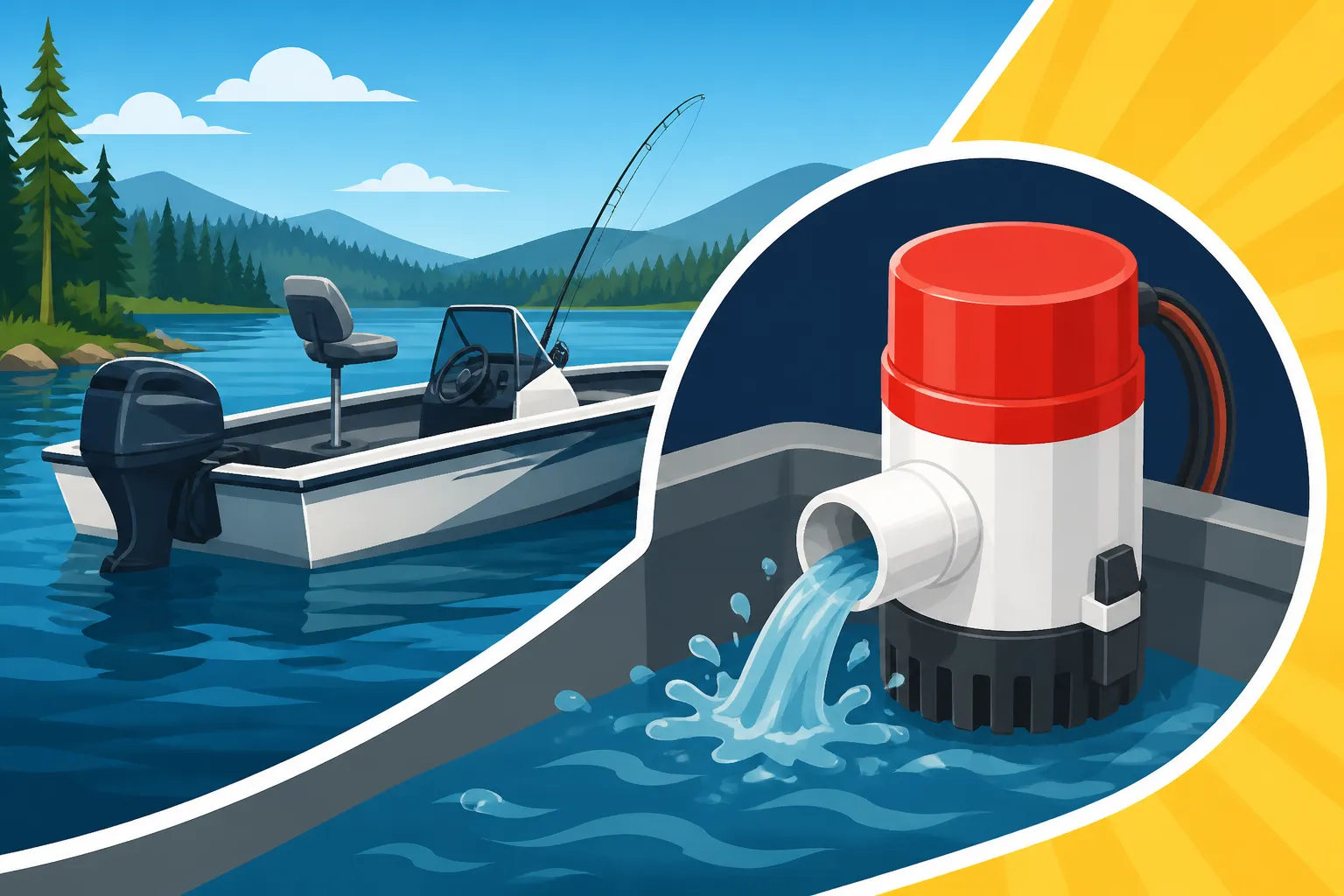
For consistent dewatering, electric bilge pumps are the standard. These pumps are powered by your boat's 12-volt battery system and come in various capacities and styles. They are designed to sit in the lowest part of your boat's bilge, where water naturally collects, and actively pump it overboard.
Most electric bilge pumps for small boats are "submersible" pumps. This means the motor and pump mechanism are completely sealed and designed to operate underwater. They work by drawing water into an intake, usually through a strainer that prevents large debris from entering, and then pushing it out through a hose connected to a thru-hull fitting above the waterline. When shopping for these, you'll see them rated by "Gallons Per Hour" (GPH), which indicates their pumping capacity. A higher GPH means it can move more water faster. For instance, a small Jon boat on a quiet pond might be fine with a 500 GPH pump, but a small center console fishing on Great Bay might warrant a 800 GPH or 1100 GPH pump due to potential for rougher conditions. You can find a vast array of these pumps at outdoor retailers like Bass Pro Shops or compare various models and read user reviews on Amazon to help narrow down your choices.
Automatic vs. Manual Electric Pumps: Convenience Meets Control
Electric bilge pumps can be operated in two main ways: manually switched or automatically switched. A manual electric pump requires you to flip a switch to turn it on and off. This gives you direct control, but it also means you have to be present and vigilant to operate it. If you step away from your boat during a sudden downpour, or if a leak starts while you're not paying attention, water can accumulate quickly.
This is where automatic electric pumps truly shine. These pumps are typically paired with a float switch. When water in the bilge rises to a certain level, the float switch activates the pump, which then runs until the water level drops below the switch's threshold. This hands-free operation is incredibly convenient and significantly enhances safety, especially if your boat is left unattended at a dock or mooring. Some pumps even have internal float switches built right into the pump housing, making for a simpler, more compact installation. While an automatic setup offers invaluable peace of mind, it’s always wise to also have a manual override switch on your dash, just in case you need to run the pump continuously or if the automatic switch ever malfunctions. This combination provides both convenience and reliable control.
| Pump Type | Power Source | Operation Mode | Pros | Cons | Best Use Case |
|---|---|---|---|---|---|
| Manual Hand Pump | Human Power | Manual | No battery needed, highly reliable backup | Requires effort, not for continuous use | Emergency dewatering, backup for electric pumps |
| Electric Manual | 12V Battery | Manual switch | High capacity, quick dewatering on demand | Requires constant monitoring | Boats where owner is always present and vigilant |
| Electric Automatic | 12V Battery | Float switch (auto) | Hands-free, constant protection, convenience | Draws minimal standby power, float switch can clog | Most small fishing boats, especially when left unattended |
Key Features to Consider When Choosing a Bilge Pump
Selecting the right bilge pump isn't just about picking the first one you see; it involves matching the pump's capabilities to your boat's needs and your typical fishing environment in New Hampshire. A little thought now can save you a lot of headache (and bailing) later.
Pumping Capacity (GPH): How Much is Enough?
The pumping capacity, measured in Gallons Per Hour (GPH), is arguably the most crucial specification for an electric bilge pump. It tells you how much water the pump can move in an hour under ideal conditions. For a small fishing boat, you might think "more is better," but there's a balance to strike. A pump that's too small won't keep up with significant water intrusion, while one that's excessively large might draw more power than your battery system can comfortably handle over time, especially if it runs frequently.
As a general guideline, many small fishing boats (under 20 feet) typically opt for pumps in the 500 GPH to 1100 GPH range. If you primarily fish quiet ponds or small, protected sections of rivers like the Swift River, a 500 GPH or 750 GPH might be perfectly adequate. However, if you venture out onto larger, choppier lakes like Winnipesaukee, Lake Sunapee, or even into the tidal waters of Great Bay where unexpected waves or heavy rain are more common, stepping up to an 800 GPH or 1100 GPH pump provides a much greater margin of safety. Remember that the listed GPH is often a maximum rating; actual performance will be slightly lower once you factor in hose length, bends, and the height the water needs to be pumped. Consider your boat's size, how much freeboard it has, and the conditions you typically encounter.
Power Source and Wiring: Keeping Your Battery Happy
All electric bilge pumps for small boats run on 12-volt DC power, which means they connect directly to your boat's battery. Proper wiring is not just about functionality; it's about safety. An improperly wired pump can lead to blown fuses, pump failure, or even an electrical fire. Always use marine-grade wiring that is appropriately sized for the pump's current draw, and make sure all connections are waterproof and secured to prevent corrosion, especially in a damp bilge environment.
You'll also need to consider your boat's battery capacity. An automatic bilge pump, while incredibly convenient, draws a small amount of standby power constantly, waiting for the float switch to activate. If your boat sits for long periods without the engine running or being charged, this could eventually drain your battery. For longer periods of inactivity, a battery switch can be a good idea to completely disconnect the battery when not in use, though this would disable the automatic function. If you find your battery regularly struggles, it might be time to investigate a New Hampshire boat registration renewal period to ensure your charging system is up to par or consider a dedicated deep-cycle battery for accessories.
Size and Installation: Making it Fit in Tight Spaces
Small fishing boats often mean limited space, and the bilge area is no exception. Modern bilge pumps are generally quite compact, but you still need to ensure there's enough room for the pump itself, the output hose, and the wiring connections. Before purchasing, take some measurements of the lowest point in your bilge where water collects to ensure a good fit.
Installation typically involves mounting the pump securely to the hull or a dedicated bracket. Most pumps have mounting feet that allow them to be screwed down. The goal is to place the pump at the very lowest point possible, ensuring it can remove as much water as effectively as possible. You'll also need to run a discharge hose from the pump to a thru-hull fitting above the waterline. The fewer bends and the shorter the hose run, the more efficiently the pump will operate. Don't forget a check valve if you want to prevent water from flowing back into the bilge once the pump shuts off, though some argue against them as they can sometimes get clogged or fail. Always follow the manufacturer's installation instructions meticulously.
Durability and Materials: Built to Withstand the Elements
The bilge is not a friendly environment. It's often wet, sometimes oily, and can be subject to temperature extremes. Therefore, the materials and construction of your bilge pump are important. Look for pumps made with robust, corrosion-resistant plastics and stainless steel components. A good quality pump will have a well-sealed motor and durable wiring connections.
If you occasionally fish in brackish water, like the tidal areas of the Piscataqua River or Great Bay, or even venture into saltwater, choosing a pump specifically designed for marine use with excellent corrosion resistance is even more critical. While most reputable brands of bilge pumps are built for tough conditions, a little research into material quality can prevent premature failure. Products found on sites like Amazon often have detailed descriptions of materials used, and Bass Pro Shops often carry marine-specific pumps known for their durability.
Installation, Maintenance, and Best Practices for Your Bilge Pump
Having the right bilge pump is only half the battle; proper installation and routine maintenance are what ensure it performs flawlessly when you need it most. Overlooking these steps can render even the best pump useless.
Proper Placement and Wiring for Optimal Performance
Getting your bilge pump installed correctly is crucial. First, identify the absolute lowest point in your boat's bilge. This is where water will naturally collect, and it's where your pump needs to be situated to be most effective. Many small boats have a single bilge area, but some might have separate compartments. If so, you might need multiple pumps or consider how water flows between areas. The pump should be securely mounted to prevent it from shifting around while the boat is underway, which could damage the pump or its wiring.
When it comes to wiring, always use marine-grade, multi-strand wire that is adequately sized for the pump's amperage draw. Consult the pump's manual for specific wire gauge recommendations. Inline fuse protection is non-negotiable; this protects your pump and your boat's electrical system from surges or shorts. The fuse should be located as close to the battery as possible. Ensure all electrical connections are crimped, not just twisted, and sealed with heat-shrink tubing or marine-grade sealant to prevent corrosion, which is the nemesis of any boat's electrical system. Run the discharge hose with as few bends as possible, leading to a thru-hull fitting that is above the waterline to prevent back-siphoning.
Regular Testing and Cleaning: Don't Wait for an Emergency
A bilge pump is one of those pieces of equipment you hope you never need, but when you do, it has to work. That's why regular testing is non-negotiable. Make it a habit to test your pump every time you take your boat out, or at least once a month if your boat is in the water regularly.
To test your pump:
- Manual Switch: Simply flip the manual override switch to ensure the pump activates and water flows out.
- Automatic Switch (if applicable): Pour a few gallons of water into your bilge (make sure it's clean water!) until the float switch activates. Watch the water level drop and ensure the pump shuts off once the water is gone.
Beyond testing, keeping your bilge area clean is paramount. Bilges can accumulate all sorts of debris: fishing line, leaves, stray bait, bits of plastic, and even oily residues. This debris can clog the pump's intake strainer or interfere with the float switch, rendering the pump useless. Regularly remove the intake strainer (most are designed for easy removal) and clean out any accumulated grime. Wipe down the bilge area to prevent excessive build-up. For more tips on keeping your boat in top shape, check out New Hampshire Fishing Season Dates and Closures to align your maintenance with seasonal prep.
When to Upgrade or Replace Your Bilge Pump
Bilge pumps aren't designed to last forever, and like any mechanical device, they will eventually wear out. Knowing when to upgrade or replace yours can prevent a nasty surprise on the water.
Signs it might be time for a new pump:
- Reduced Flow: If the pump sounds like it's working but expels less water than before, it might be losing efficiency. This could be due to a worn impeller or a failing motor.
- Intermittent Operation: If your automatic pump sometimes works and sometimes doesn't, especially when the float switch is clearly activated, the motor or switch might be failing.
- Excessive Noise: A pump that's suddenly much louder than usual or making grinding noises is a red flag.
- Frequent Fuse Blowing: This indicates a serious electrical issue, possibly a short in the pump motor, and warrants immediate investigation and likely replacement.
- Visible Corrosion or Damage: If the pump housing is cracked, the wires are frayed, or there's significant corrosion, it's time for a new one.
It's also a good idea to consider an upgrade if you find yourself consistently fishing in rougher conditions or if you've added more gear that makes your boat sit lower in the water. For instance, if you've upgraded your small boat for serious How to Catch Smallmouth Bass in New Hampshire Lakes and are now carrying more livewell water and tackle, a higher GPH pump might be a wise investment. Don't wait for your pump to fail in an emergency; proactive replacement is always the safest bet.
Disclaimer
This article is for general informational purposes only and does not constitute professional advice. Laws, prices and regulations vary by location and change over time. Consult a qualified professional for guidance on your specific situation.