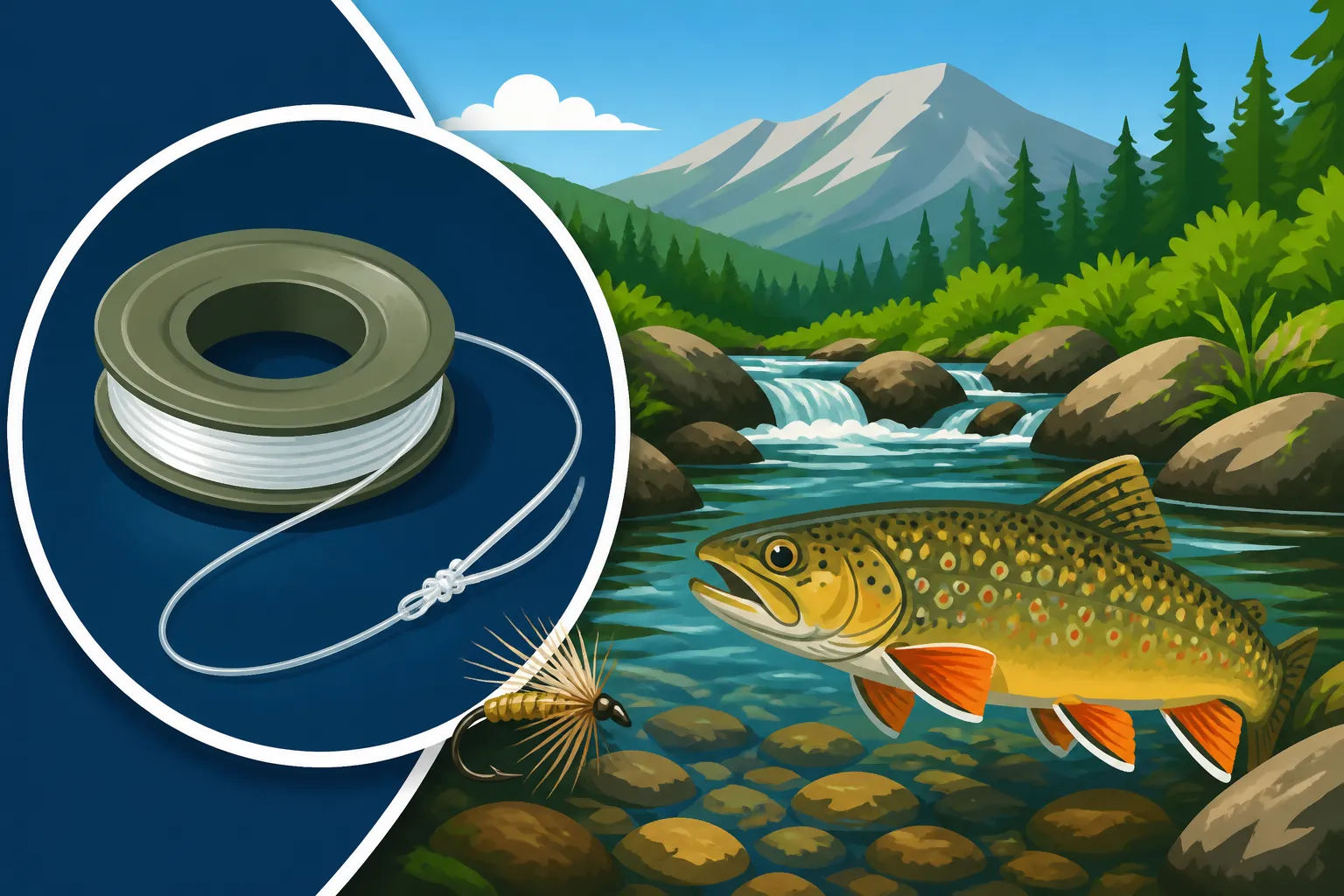
Best tippet material for tiny mountain stream trout
Anyone who's ever tried to trick a wily trout in one of New Hampshire's crystal-clear mountain streams knows the challenge: these fish are incredibly spooky. You can have the perfect fly and the most delicate cast, but if your leader and tippet aren't dialed in, you might as well be casting a rope. This guide is all about helping you understand and choose the best tippet material to fool those finicky trout, ensuring your flies drift naturally and your presentations are virtually invisible.
Why Tippet Material is Your Secret Weapon on Tiny Mountain Streams
Fishing the small, intimate mountain streams of New Hampshire isn't like casting huge streamers on a big river. Here, every detail matters, and your tippet often spells the difference between a memorable catch and a frustrating day of spooked fish. The tiny size, clear water, and often wary nature of resident trout, especially the native brook trout, make stealth paramount.
The Spooky Nature of Mountain Trout
Think about it: these trout live in shallow, clear water where predators are a constant threat. A heron, an osprey, even a curious hiker – they're always on alert. That means anything out of place in their environment can send them darting for cover. A thick, visible line cutting through the water, or a fly that's pulling unnaturally, is a giant red flag. Using the right tippet material, incredibly fine and nearly invisible, reduces that "red flag" effect significantly. It's about blending in, becoming part of the natural flow, and earning the fish's trust, even if for just a split second. This is especially true when targeting wild, native populations like those Brook Trout: New Hampshire's Native Trout you might find in some of our more remote streams.
Achieving a Natural Drift with Small Flies
One of the cornerstones of successful fly fishing, especially for trout, is achieving a "dead drift" – making your fly behave as if it's naturally floating or tumbling downstream, completely unattached. When you're using tiny dry flies or small nymphs in these delicate environments, a thick or stiff tippet can easily create drag. This drag makes your fly skate unnaturally across the surface or pull incorrectly underwater, immediately tipping off the trout that something isn't right. Fine tippet allows for maximum suppleness and a far more natural presentation, crucial for fooling fish that have seen it all. Without this natural drift, even the best fly patterns for New Hampshire trout streams will be ignored.
Protecting Your Leaders and Presenting Effectively
Your leader, the tapered section of line between your fly line and your tippet, is designed to transfer energy from your cast smoothly, helping your fly turn over delicately. Leaders can be quite expensive, and repeatedly tying flies directly to them would shorten their life considerably. The tippet acts as a sacrificial, replaceable extension of your leader. It's the thinnest, most delicate part of your entire setup, meant to break first if you get snagged, saving your leader from damage. This also allows you to adjust the length and diameter of the terminal end of your line to match specific fishing conditions without constantly trimming your valuable leader. It's a pragmatic and essential component of any Fly Fishing for Trout in New Hampshire setup.
Deciphering Tippet Types: Monofilament vs. Fluorocarbon for Finicky Fish
When you walk into a fly shop or browse online at Bass Pro Shops or Amazon, you'll primarily see two types of tippet material: monofilament and fluorocarbon. Both have their place, but understanding their unique properties is key to making the right choice for tiny mountain streams.
Monofilament Tippet: The Classic Choice
Monofilament, often just called "mono," has been the standard tippet material for decades, and for good reason. It's typically made from nylon, which gives it a certain amount of stretch and suppleness. This flexibility is a huge advantage, especially when you're tying small, delicate knots that need to hold tight without crushing the line. Mono is also more buoyant than fluorocarbon, meaning it tends to float or at least sink slower. This characteristic makes it an excellent choice for dry fly fishing, where you want your fly to stay on the surface and your tippet to have minimal impact on its floatation. When you're Dry Fly Fishing New Hampshire Mountain Streams, mono is often the go-to. However, its visibility in clear water, especially under direct sunlight, can be a drawback for extremely spooky fish.
Fluorocarbon Tippet: The Nearly Invisible Advantage
Fluorocarbon is a newer material in the fly fishing world, but it has quickly gained a reputation for its incredible stealth. The key difference is its refractive index, which is very similar to water. In plain terms, this means it's much harder for light to bounce off fluorocarbon in water, making it appear almost invisible to fish. This invisibility is a massive advantage in the super clear, shallow streams where mountain trout reside. Fluorocarbon is also denser than monofilament, causing it to sink faster. This can be a benefit when you're fishing nymphs or small streamers and need your fly to get down quickly into the feeding zone. It's also more abrasion-resistant than mono, which can be helpful if your line is rubbing against rocks or submerged branches. However, fluorocarbon is generally stiffer and less supple, which can make knot tying a bit trickier, especially with smaller diameters, and it tends to be more expensive.
When to Choose Which
Deciding between mono and fluoro often comes down to the specific conditions and your fishing style.
-
Go with Monofilament when:
- You're primarily dry fly fishing. Its buoyancy helps your fly float high, and its suppleness allows for a better dead drift.
- You're fishing in slightly choppier water or areas with broken surface light, where visibility isn't as critical.
- You need maximum knot strength and ease of tying with tiny flies.
- You're on a budget, as it's generally more affordable.
-
Opt for Fluorocarbon when:
- You're nymphing or fishing small streamers. Its sinking properties help get your flies down.
- You're fishing in extremely clear, calm, or shallow water where visibility is paramount.
- You're targeting exceptionally wary or pressured fish.
- You need extra abrasion resistance around submerged structure.
Many anglers who frequently fish these tiny streams will carry spools of both, allowing them to adapt to changing conditions on the water.
Getting Down to Size: Choosing the Right Diameter for Delicate Presentations
The "X-system" for tippet size can seem a bit cryptic at first, but understanding it is fundamental to choosing the right material for those tiny mountain stream trout. The smaller the X number, the thicker the tippet; the larger the X number, the finer and more delicate it is.
Understanding Tippet Sizes (X-System)
Tippet is labeled with an "X" followed by a number, such as 5X, 6X, 7X, or even 8X. This system provides a quick reference for both diameter and approximate breaking strength. Generally, the higher the X number, the smaller the diameter and the lower the breaking strength. For example:
| Tippet Size | Approximate Diameter (Inches) | Approximate Breaking Strength (Lbs) | Common Fly Sizes |
|---|---|---|---|
| 5X | 0.006 | 4.75 | #14 to #18 |
| 6X | 0.005 | 3.25 | #16 to #20 |
| 7X | 0.004 | 2.25 | #18 to #24 |
| 8X | 0.003 | 1.75 | #22 to #28 |
Note: These are approximate values and can vary slightly between manufacturers like Orvis, Rio, or Scientific Anglers. Always check the specific packaging for precise specifications.
Matching Tippet to Fly Size
Matching your tippet size to your fly is crucial for several reasons. Firstly, it ensures your fly behaves naturally. A fly that's too small for your tippet won't turn over properly and will look awkward. Secondly, it's about knot strength. Tiny hooks can cut into thicker tippet, while excessively fine tippet might not hold larger flies securely. A general rule of thumb is to take the size of your fly's hook (e.g., #18) and divide it by 3, then subtract one. So for an #18 fly, 18/3 = 6, 6-1 = 5. You'd start around 5X. However, this rule is a starting point, and for tiny stream trout, you often need to go even lighter. This attention to detail is just as important as the Best Fly Line for Small Mountain Streams you choose.
The "Tiny Stream" Sweet Spot
For those tiny mountain stream trout in New Hampshire, particularly when targeting smaller brook trout or exceptionally wary browns in clear, shallow water, the sweet spot for tippet material often falls into the 6X to 7X range. Sometimes, if you're fishing microscopic midges or tiny emergers (size #22 or smaller), you might even drop down to 8X.
Why so light?
- Reduced Visibility: The thinner diameter is far less visible to the fish, making your presentation stealthier.
- Enhanced Natural Drift: These finer diameters are incredibly supple, allowing even the smallest flies to drift completely unhindered by line stiffness or drag.
- Delicate Presentations: When you're making short, precise casts in tight quarters, lighter tippet helps your fly land with minimal disturbance on the water's surface.
Of course, there's a trade-off: breaking strength. With 7X or 8X tippet, you're looking at only 1-2 pounds of breaking strength. This means you need to play fish very carefully, have a rod with a soft tip (often a 2 or 3-weight for these streams, as discussed in Best Fly Rods for New Hampshire Trout Streams), and set your drag properly. It also means more careful knot tying, as even a small flaw can lead to a break-off. For landing your delicate catch, a gentle Best Landing Net for Trout is also a good idea.
Knot Savvy and Maintenance: Maximizing Your Tippet's Potential
Having the best tippet material and the perfect size is only half the battle. How you tie your knots and how you care for your tippet can dramatically affect its performance and your success on the water. In the world of tiny tippets and tiny flies, a bad knot can negate all your careful planning.
Essential Knots for Tippet
Strong, reliable knots are non-negotiable, especially with fine tippet. You'll primarily need to master a few key knots:
- Improved Clinch Knot: This is the most common and reliable knot for tying your fly to the tippet. It's relatively easy to tie, even with cold fingers, and provides excellent strength. Make sure to do enough wraps (5-7 for finer tippet) and to pull it tight slowly and evenly after moistening the line to prevent friction burns.
- Surgeon's Knot: This is a fantastic knot for joining two pieces of tippet together, especially if they are of different diameters, or for adding a new section of tippet to your leader. It's strong and easy to tie, making it a go-to for extending or repairing your leader/tippet system on the fly.
- Blood Knot: While a bit more challenging to master than the surgeon's knot, the blood knot is incredibly strong and creates a very clean, low-profile connection when joining two lines of similar diameter. For critical connections, some anglers prefer its sleekness to avoid catching debris.
Regardless of the knot you choose, always, always moisten the line with saliva before tightening. This lubrication prevents the line from burning or weakening as the knot cinches down, preserving its full strength.
Inspecting and Replacing Tippet
Tippet, especially the fine stuff, isn't meant to last forever. It takes a beating from casting, catching fish, and rubbing against underwater structure.
- After Every Fish: Get into the habit of running your fingers along the last few feet of your tippet after every fish, or after any snag. Feel for nicks, abrasions, or rough spots. Even a tiny imperfection can compromise the line's integrity.
- UV Degradation: Monofilament, in particular, can degrade over time with exposure to sunlight. If your tippet feels brittle or breaks easily, it's probably time to replace it.
- Knot Fatigue: Repeatedly setting the hook or fighting a strong fish can stress the tippet right at the knot. If you notice your knots breaking consistently, it's a good sign to snip off a few inches and re-tie.
Don't be afraid to change your tippet frequently. It's inexpensive compared to the frustration of losing a trophy fish to a weak line. Many anglers carry multiple spools of tippet on their vest or in their Best Tackle Box Setup for New Hampshire Anglers.
Carrying and Storing Your Tippet
Proper storage ensures your tippet remains in peak condition. Most tippet comes on small spools, often with a retainer band to keep the tag end from unraveling.
- Tippet Holders: Many fly anglers use a tippet holder or dispenser that clips onto a fishing vest or pack. This keeps multiple spools organized, easily accessible, and protected.
- Away from Sunlight: Store your spare tippet spools in a cool, dark place when not in use. Prolonged exposure to sunlight, especially UV rays, can weaken both monofilament and fluorocarbon over time.
- Avoid Contaminants: Keep your tippet away from bug sprays, sunscreens, and other chemicals that can degrade line materials.
By paying attention to these details, you'll ensure that when you finally get that perfect cast into a tiny pool, your tippet is ready to do its job, letting your fly drift irresistibly, and giving you the best chance at landing that beautiful New Hampshire mountain trout. You can find a vast array of tippet materials and organizational tools from reputable outdoor suppliers like Bass Pro Shops, or with the convenience of online retailers such as Amazon.
Disclaimer
This article is for general informational purposes only and does not constitute professional advice. Laws, prices and regulations vary by location and change over time. Consult a qualified professional for guidance on your specific situation.