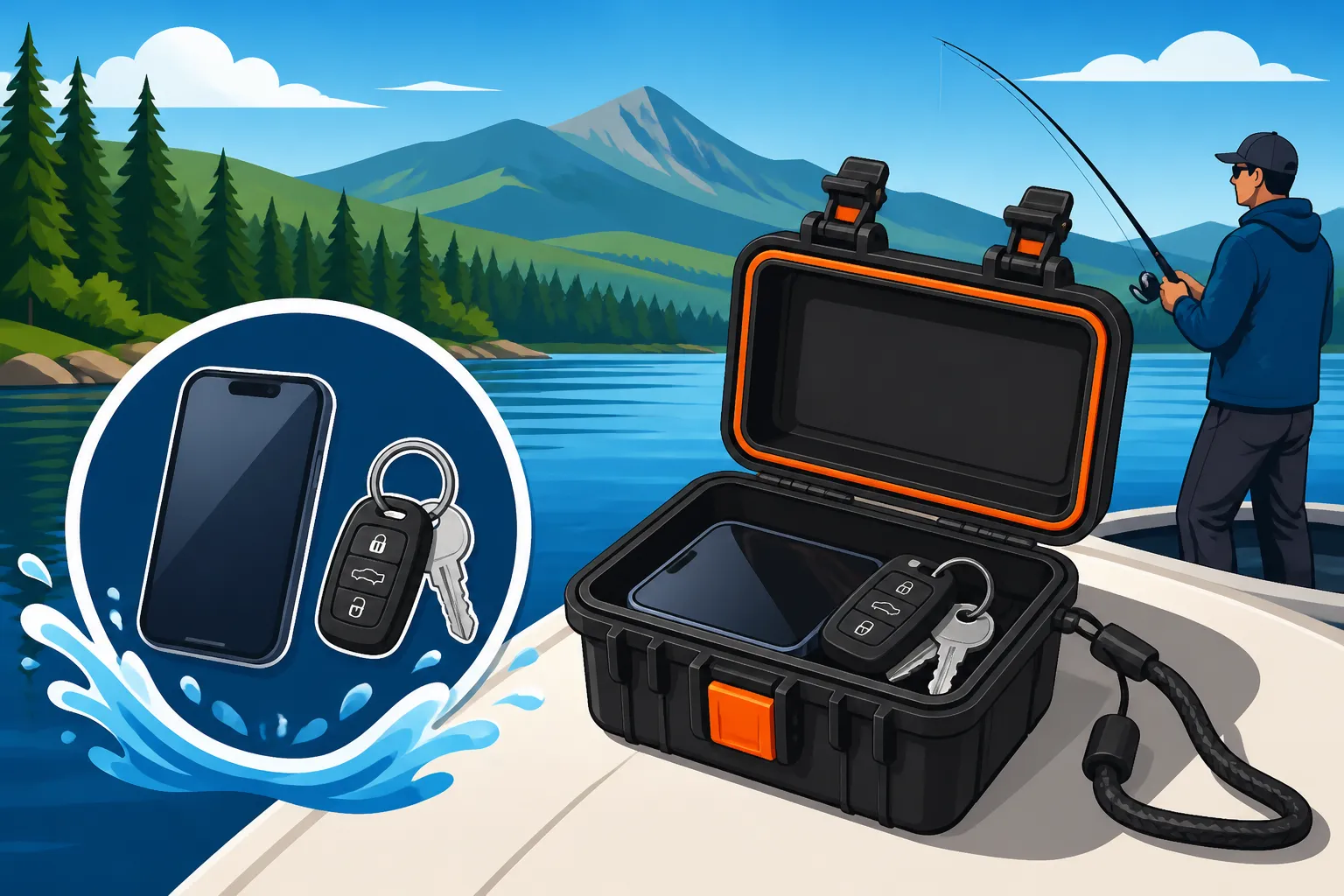
Best dry box for phone and keys on the water
There's nothing quite like a day out fishing on New Hampshire's beautiful lakes, rivers, or coastline. But whether you're battling a feisty smallmouth on Lake Winnipesaukee, fly fishing for brook trout in a mountain stream, or jigging for perch through the ice, the elements are always a factor. Water, humidity, and even just the spray from your boat can spell disaster for delicate electronics like your phone or crucial items like your car keys. This guide is all about helping you find the absolute best dry box to keep your essential valuables safe and sound, ensuring your focus remains on the tug at the end of your line, not the worry in your pocket.
Why a Dry Box is Non-Negotiable for New Hampshire Anglers
Let's face it, fishing in New Hampshire means embracing all kinds of weather and water conditions. From unexpected downpours to sudden splashes, or even the dreaded accidental drop overboard, your precious items are constantly at risk. A quality dry box isn't just a nice-to-have; it's an essential piece of gear that brings immense peace of mind.
Protecting Your Electronics from the Elements
Modern life means our smartphones are practically an extension of ourselves. They're our cameras for snapping that trophy fish picture, our GPS for navigating unfamiliar waters, and our link to the outside world in case of an emergency. But water and electronics are notoriously bad partners. Even "water-resistant" phones have their limits, and a full submersion can quickly turn your expensive device into a paperweight.
Consider a typical New Hampshire fishing scenario: you're out on the Contoocook River in a canoe, and a quick rain shower pops up. Your phone is in your pocket, and before you can react, it's soaked. Or perhaps you're trolling for lake trout on Newfound Lake, and a rogue wave crests over the bow, drenching everything in the bottom of your boat. A dedicated dry box acts as an impenetrable fortress against these threats, keeping your phone, camera, or portable fish finder completely dry. It’s a small investment to protect much larger ones.
Safeguarding Valuables Beyond the Digital
It’s not just phones that need protecting. Think about your car keys – especially those modern key fobs that cost an arm and a leg to replace if they get waterlogged. Your wallet, credit cards, and perhaps most importantly, your fishing license are all susceptible to water damage. Imagine getting pulled over by a New Hampshire Fish and Game conservation officer on the Merrimack River, only to find your New Hampshire Fishing License Guide for 2026 crumpled and illegible because it got wet. That's a headache no one wants.
A dry box provides a secure spot for all these critical items. Many anglers also carry a compact first-aid kit, a small power bank for charging devices, or even a spare pair of glasses. All these can be organized and kept dry within the confines of a good dry box, making sure they are ready when you need them.
Peace of Mind on the Water
Ultimately, a dry box lets you focus on what you came to do: fish. Instead of constantly worrying about where your phone is, whether your keys are safe, or if your wallet is getting damp, you can immerse yourself in the experience. That feeling of confidence, knowing that your essentials are secure, allows you to be more present, more aware of your surroundings, and ultimately, a more relaxed and effective angler. It means you can cast that line, net that fish, and enjoy the pristine beauty of New Hampshire without a nagging worry in the back of your mind.
Key Features to Look for in a Quality Dry Box
When you're shopping for a dry box, it's easy to get overwhelmed by all the options. Not all dry boxes are created equal, and understanding the key features will help you pick one that truly stands up to the demands of New Hampshire fishing.
Waterproof Rating and Sealing Mechanisms
This is the absolute most critical feature. You want a dry box that explicitly states its waterproof capabilities. Look for an IP (Ingress Protection) rating. For electronics and critical items, you really want something rated at least IP67 or IP68.
- IP67: This means the box is dust-tight and can withstand immersion in water up to 1 meter (about 3.3 feet) for 30 minutes. This is generally excellent for splashes, rain, and accidental short-term submersions.
- IP68: This rating indicates it's dust-tight and can handle continuous immersion in water under conditions specified by the manufacturer (usually deeper or longer than 1 meter). This is the gold standard for maximum protection.
Beyond the numbers, pay attention to the physical sealing mechanisms. High-quality dry boxes often feature a robust O-ring gasket, typically made of rubber or silicone, that creates a watertight seal when the box is closed. The latches are also important; they should be strong, secure, and easy to operate even with cold or wet hands, providing adequate compression to ensure that O-ring does its job. Some dry boxes, particularly those designed for diving or extreme conditions, might have pressure equalization valves, which are helpful for preventing vacuum seals at different altitudes or temperatures, ensuring your box is always easy to open.
Durability and Impact Resistance
New Hampshire fishing often involves rugged terrain, rocky shorelines, and the general bumps and jostles of boat life. Your dry box isn't just fighting water; it needs to withstand being dropped, knocked around, or having other gear piled on top of it.
Look for boxes made from tough, impact-resistant materials like high-grade ABS plastic, polycarbonate, or specialized polymers. The construction should feel solid, with no flimsy parts. Reinforcements around hinges and latches are a good sign of quality. Some premium brands will even offer crushproof ratings, meaning they can withstand significant weight or impact without deforming or failing. This kind of resilience is crucial, especially if you're fishing from a smaller boat or kayak where space is at a premium and items are more likely to shift and collide. Imagine your dry box sliding off the console of your fishing boat and hitting the deck – a durable box will shrug it off, while a lesser one might crack, compromising its seal.
Size, Capacity, and Portability
The "best" size really depends on what you need to carry. Are you just trying to protect your phone and keys, or do you also want to stash your wallet, a small camera, a power bank, a multi-tool, and your Printing or Carrying a Digital Fishing License in New Hampshire?
- Compact boxes are great for minimalists or those with limited space, like kayak anglers or wade fishermen. They easily fit into a vest pocket, a small backpack, or a kayak hatch.
- Medium-sized boxes offer a good balance for most anglers, accommodating a phone, keys, wallet, small first-aid kit, and perhaps a GPS device.
- Larger cases might be more suitable for boat anglers who need to protect multiple devices, larger cameras, or even delicate fishing electronics when not in use.
Consider how you'll carry it. Does it have a lanyard attachment point? Is it too bulky to comfortably carry in a backpack? Some dry boxes even come with handles or shoulder straps, making them easier to transport from the car to your fishing spot. You want a box that's big enough for your essentials, but not so cumbersome that you're tempted to leave it behind.
Organization and Internal Features
While the primary job of a dry box is to keep things dry, good internal organization can significantly enhance its usability.
- Foam inserts: Many quality dry boxes come with customizable foam inserts, often diced into small cubes (pick-and-pluck foam) or layered. This allows you to create custom-fit compartments for your phone, camera, or other delicate items, preventing them from rattling around and getting scratched or damaged internally.
- Mesh pockets or dividers: These can be great for separating smaller items like keys, credit cards, or memory cards, making them easier to find quickly.
- Lanyards or wrist straps: A simple lanyard can be a lifesaver, especially for smaller dry boxes. It allows you to secure the box to your person, kayak, or boat, preventing it from being lost if accidentally dropped. Imagine reaching for your phone on a windy day, and a gust catches your dry box; a lanyard keeps it from going overboard. You can find many options from retailers like Bass Pro Shops or Amazon that offer these useful features.
Types of Dry Boxes and Their Ideal Uses in New Hampshire Fishing
The term "dry box" can cover a few different styles, each with its own advantages depending on your specific needs and fishing style. Understanding these variations will help you pinpoint the perfect solution.
Hard-Shell Dry Cases
When most people think of a "dry box," they often picture a hard-shell case. These are the tanks of the waterproof world, offering the highest level of protection against both water and physical impact.
Characteristics:
- Rigid Construction: Made from durable, often thick plastics like polypropylene or ABS, providing excellent crush and impact resistance.
- Secure Latches: Typically feature heavy-duty latches (sometimes two-stage) that create a tight, even seal around a rubber O-ring gasket.
- Pressure Equalization Valve: Many higher-end models include a valve to manage internal pressure changes, which is useful for air travel or significant altitude changes, preventing vacuum lock.
- Customizable Interior: Often come with pick-and-pluck foam, allowing you to tailor the internal compartments precisely to your gear.
Ideal Uses in New Hampshire Fishing:
Hard-shell cases are perfect for protecting highly sensitive and expensive electronics. If you're carrying a DSLR camera, a tablet for navigation, a sophisticated Best Fish Finders for New Hampshire Lakes unit that detaches, or a multitude of phones and car keys for a group outing on a larger lake like Lake Winnipesaukee, a hard-shell case is your best bet. They are fantastic for boat fishing where gear might get tossed around, or for ice fishing where you need to protect items from snow, slush, and extreme cold. Their ruggedness means they can take a beating and still keep your valuables dry and safe. They are also excellent for storing emergency items or a compact first-aid kit.
Soft-Sided Dry Bags and Pouches
While not technically "boxes," soft-sided dry bags and pouches serve a very similar purpose and are incredibly popular, especially among kayak and canoe anglers, or those who need more flexibility.
Characteristics:
- Flexible Material: Made from waterproof fabrics like PVC, TPU, or nylon with a waterproof coating, making them lightweight and compressible.
- Roll-Top Closure: The most common sealing mechanism involves rolling the top down several times and then securing it with a buckle, creating a watertight seal.
- Variable Capacity: Available in a huge range of sizes, from small pouches just big enough for a phone to large bags for clothing and gear.
- Buoyancy: Many soft dry bags, especially when partially filled with air, will float if they go overboard, offering a chance for recovery.
Ideal Uses in New Hampshire Fishing:
Soft-sided dry bags are fantastic for situations where space is at a premium or flexibility is needed. For anglers in Best Kayaks for New Hampshire Fishing or canoes, a small roll-top pouch is perfect for a phone, keys, and wallet, easily fitting into a small hatch or securing to a deck bungee. Larger dry bags are great for keeping extra layers of clothing, a lunch, or a full change of clothes dry on longer trips down the Connecticut River or when tackling the unpredictable weather of the White Mountains. They are also lighter and less bulky to carry if you're hiking to a remote trout pond. Brands like Bass Pro Shops and Amazon offer a vast selection of these versatile dry bags. While they protect against water, they typically offer less impact protection than hard cases, so handle fragile items with care.
Specialty Dry Boxes with Integrated Features
The market has also seen the rise of dry boxes with added functionalities, designed to solve specific problems or enhance the user experience.
Characteristics:
- Integrated Power Banks: Some dry boxes come with built-in battery packs, allowing you to charge your phone or other USB devices while keeping them safely sealed and dry. This is a game-changer for long days on the water.
- Mounting Options: Certain models are designed with integrated mounting points (e.g., RAM mount compatibility) for attaching to boats, kayaks, or even ATV racks.
- Transparent Windows: Some smaller pouches or cases have clear, touch-sensitive windows, allowing you to use your phone's screen without removing it from the dry protection.
- Solar Charging: A few innovative designs include small solar panels to trickle charge devices or the internal power bank.
Ideal Uses in New Hampshire Fishing:
These specialized boxes are fantastic for tech-savvy anglers or those with specific needs. An integrated power bank dry box is invaluable for multi-day trips or if you rely heavily on your phone for navigation and photography. Kayak anglers often appreciate boxes with mounting options, keeping their essential electronics secure and accessible on the deck. A transparent-window pouch is excellent for quickly checking texts, maps, or even taking underwater photos (if the rating allows) without exposing your phone. Always check the waterproof rating of these specialty boxes, as integrating features can sometimes add points of potential failure if not designed properly.
Choosing the Right Dry Box for Your New Hampshire Fishing Style
Your fishing method in New Hampshire heavily influences the type of dry box that will serve you best. What works perfectly for a bass boat on Winnipesaukee might be overkill or impractical for a fly angler wading a small stream.
Kayak and Canoe Fishing
When you're paddling a kayak or canoe, space is a premium, and the risk of capsizing or heavy splashing is ever-present. You need compact, highly waterproof, and often floatable solutions.
- Small Hard Cases (IP67/IP68 rated): These are excellent for phones, keys, and wallets. They can be secured to the deck or stashed in a dry hatch. Look for models with lanyard loops. Their rigidity protects against bumps within the kayak as well.
- Roll-Top Dry Bags/Pouches: Extremely popular for kayaks. A 5-10 liter dry bag can hold your essentials, a light jacket, and lunch. Smaller pouches designed specifically for phones often have clear windows, allowing you to use the screen while the phone is protected. Many Best Dry Bag for Kayak Fishing articles will highlight these options.
- Buoyancy: Prioritize dry boxes or bags that are positively buoyant (they float) when sealed, just in case they go overboard.
Hypothetical Scenario: Imagine navigating the narrow channels of Lake Umbagog in your kayak. You encounter some choppy water, and a wave washes over the bow. With a small, hard-shell dry box containing your phone and keys clipped to a bungee on your deck, you can confidently paddle through, knowing your essentials are safe.
Boat Fishing (Powerboats & Pontoon Boats)
On larger vessels like powerboats or pontoon boats on lakes such as Squam Lake or Sunapee Lake, you generally have more space, but gear still gets wet from spray, rain, or even just wet hands. Durability and capacity can be higher priorities here.
- Medium to Large Hard Cases: These are ideal. You might want a larger case to protect multiple phones, a tablet, cameras, your wallet, and extra gear. The robust construction handles the vibrations and impacts common on a boat.
- Secure Placement: Even on a boat, a dry box should be secured. Look for non-slip feet or consider a case that can be strapped down to prevent it from sliding off a console or seat during rough water or quick maneuvers.
- Organizational Features: Foam inserts or dividers are very useful here to keep electronics from banging into each other as the boat moves. You could even dedicate one section of a larger dry box to a small tackle kit or tools.
Hypothetical Scenario: You're heading out for a full day of fishing on Lake Winnipesaukee. You pack a larger dry box with your phone, VHF radio, camera, and the car keys for your Best Boats for New Hampshire Lakes and Rivers. You place it under a seat, knowing it will stay dry even if a sudden thunderstorm rolls through, or if fishing gets hectic and water sloshes onto the deck.
Shore and Wade Fishing
If you're fishing from the bank of a river like the Pemigewasset River or wading a trout stream, portability and ease of access are key. You're typically carrying your gear, so weight and bulk matter.
- Small, Lightweight Hard Cases or Pouches: Something that fits easily into a fishing vest pocket, a backpack, or clips to your belt. It needs to be unobtrusive.
- Quick Access: While still secure, you want something that allows you to retrieve your phone for a quick photo or check without a major struggle.
- Weather Protection: Focus on protection from rain and accidental drops into shallow water. IP67 is usually sufficient.
- Integrated Lanyards: Crucial for preventing loss. A simple lanyard around your neck or attached to a belt loop means your dry box is always with you and won't be swept away if you stumble.
Hypothetical Scenario: You're carefully wading a section of the Swift River, focused on tempting a wild brook trout. You stumble slightly on a slippery rock. Your phone, keys, and New Hampshire Bass Catch-and-Release Season, Explained license are in a small, lightweight dry case clipped to your vest. The case dips briefly in the water but remains perfectly sealed, saving your day from a potential disaster.
Ice Fishing Considerations
Ice fishing presents its own unique challenges in New Hampshire. Extreme cold, snow, slush, and dripping condensation inside an ice shanty all pose threats.
- Hard-Shell Cases: These are generally preferred for ice fishing due to their superior insulation properties against cold and protection from heavy slush.
- Impact Resistance: Dropping gear on hard ice is a real possibility, so durability is key.
- Internal Organization: Foam inserts are great for insulating electronics from the cold, which can drain batteries faster and potentially damage screens.
- Visibility: A brightly colored dry box might be easier to spot against the snow and ice, especially if it's left on the ice outside a shanty.
Hypothetical Scenario: You're enjoying a day of Ice Fishing in New Hampshire on Lake Winnisquam. Inside your ice shanty, condensation is dripping, and the floor is covered in slush. Your phone, sitting in a hard-shell dry box with foam padding, remains perfectly dry and functional, ready to snap a photo of your biggest yellow perch.
Maintenance and Best Practices for Your Dry Box
Even the best dry box needs a little TLC to perform at its peak. A few simple habits can extend its life and ensure it's always ready to protect your valuables when you hit the water.
Proper Sealing and Closure Techniques
The most common reason for a dry box failure isn't a faulty product, but user error. Always take a moment to ensure your dry box is properly sealed before you venture out.
- Inspect the O-ring/Gasket: Before closing, quickly check the O-ring or gasket for any debris – a single grain of sand or a stray hair can compromise the seal. Make sure it's clean, supple, and properly seated in its groove. You can apply a thin layer of silicone grease (often sold for underwater camera housings or dive gear, and available at retailers like Amazon) to the O-ring periodically to keep it from drying out and cracking.
- Close Latches Securely: Ensure all latches are fully engaged and clicked into place. Don't force them, but make sure they feel firm and secure. For roll-top dry bags, roll the top down at least three times, pressing out as much air as possible before buckling the closure. This creates a much more robust seal.
- Don't Overpack: Overstuffing a dry box can put undue stress on the latches and gasket, preventing a complete seal. If your box isn't closing easily, you likely need a larger one or fewer items.
Cleaning and Storage
Regular cleaning and proper storage will dramatically increase the lifespan and reliability of your dry box.
- Rinse After Use: Especially after saltwater fishing (e.g., in Great Bay for striped bass), rinse your dry box thoroughly with fresh water to remove any salt residue, which can corrode latches or degrade gaskets over time. Even after freshwater use, a quick rinse can remove dirt or grime.
- Air Dry Completely: Always air dry your dry box with the lid open before storing it. Trapping moisture inside can lead to mildew, unpleasant odors, and can slowly degrade internal foam or the O-ring.
- Store Open: When not in use for extended periods, it's best to store hard-shell dry cases with the latches unclipped and the lid slightly ajar. This prevents compression set on the O-ring gasket, where it permanently deforms from being constantly compressed, losing its ability to seal effectively. Soft dry bags should be stored loosely rolled or unfolded to prevent creasing and allow air circulation.
Testing Your Dry Box Regularly
Don't wait until you're out on the water with your brand-new phone to discover your dry box has a leak.
- The Sink Test: A simple but effective test. Before putting any valuables inside, place a paper towel or a dry piece of tissue in the empty dry box, seal it tightly, and submerge it in a sink or bucket of water for 30 minutes. You can even place a heavy object on top to keep it submerged. After 30 minutes, remove the box, dry the exterior, and open it. If the paper towel is bone dry, your seal is good to go!
- Visual Inspection: Regularly check the dry box for any cracks, especially around hinges and latches, and examine the O-ring for any signs of wear, tears, or brittleness. Addressing these issues early can save your gear from a watery fate.
By following these simple maintenance steps, your dry box will be a dependable guardian for your phone, keys, and other valuables, allowing you to fully enjoy your New Hampshire Fishing Seasons by Month without a moment's worry about wet electronics or lost essentials.
| Feature / Type | Hard-Shell Dry Case (e.g., Pelican, Otterbox) | Soft-Sided Dry Bag/Pouch (e.g., Sea to Summit, Earth Pak) | Specialty Dry Box (e.g., Watertight Power Bank Case) |
|---|---|---|---|
| Waterproof Rating | Excellent (often IP67/IP68) | Good to Excellent (roll-top seal) | Varies by integrated feature, check carefully |
| Impact Protection | Very High (crushproof, rigid) | Low to Medium (protects from scratches, not crushing) | Medium to High (depends on base case material) |
| Capacity Range | Small to Very Large | Small to Very Large | Typically Small to Medium |
| Portability | Moderate (can be bulky) | High (compressible, lightweight) | Moderate (can be slightly bulkier with tech) |
| Buoyancy | Can be positively buoyant (check specific model) | Often floats when air is trapped | Varies, generally good |
| Best For | Expensive electronics, extreme conditions | Kayaks, canoes, backpacking, flexible storage | Extended trips, charging devices on the go, specific mounting needs |
| Typical Items | Phone, GPS, camera, keys, wallet, first-aid | Phone, keys, wallet, light clothing, snacks | Phone, power bank, small camera |
Disclaimer
This article is for general informational purposes only and does not constitute professional advice. Laws, prices and regulations vary by location and change over time. Consult a qualified professional for guidance on your specific situation.