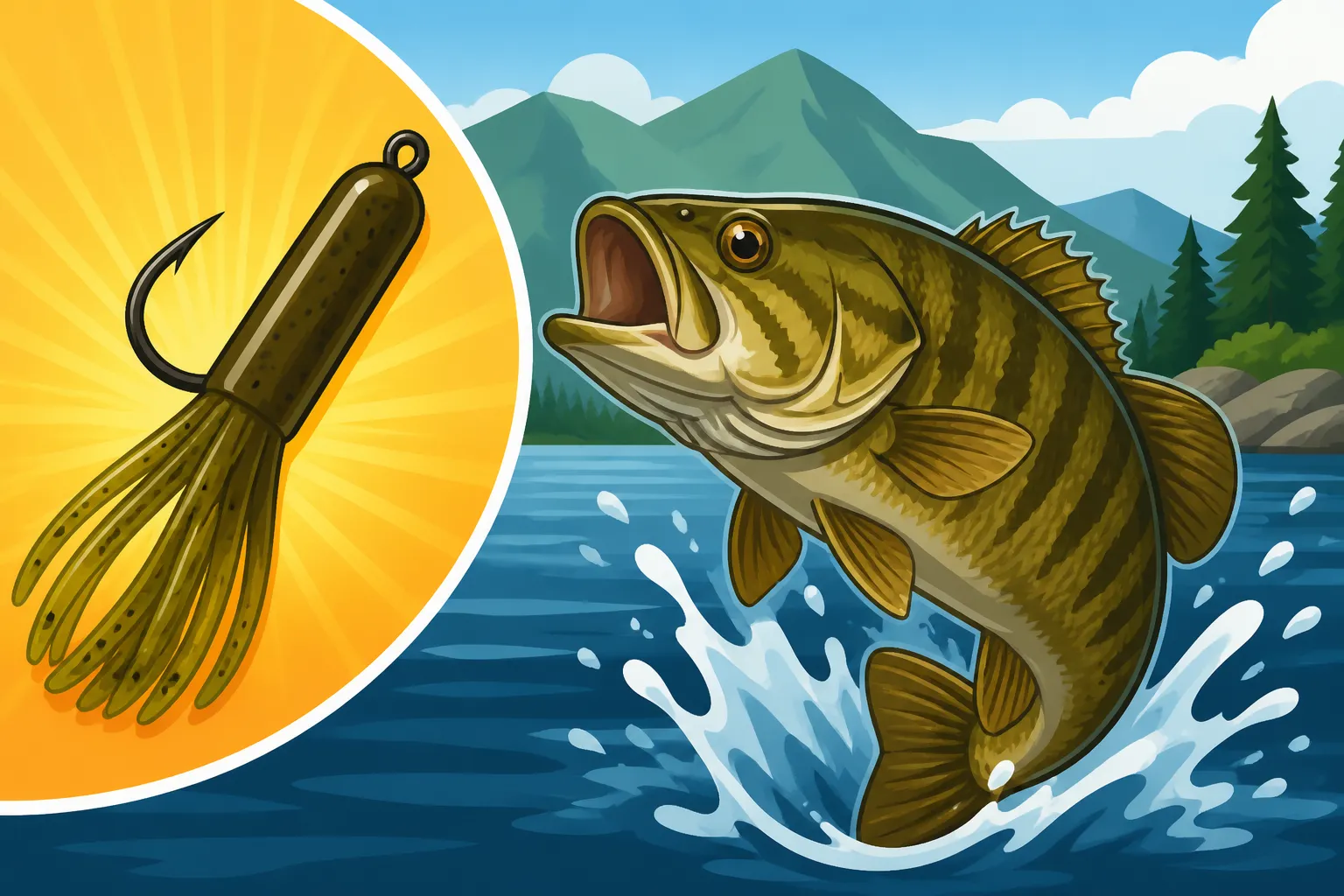
Best tube jig for smallmouth bass
One of the most satisfying challenges in New Hampshire fishing is targeting smallmouth bass. These bronze beauties are feisty, intelligent, and often hold in complex underwater structures, making them a true angler's prize. If you've ever found yourself staring at a wall of lures, wondering which one will coax that elusive smallmouth strike, especially when they're playing hard to get, you're not alone. This guide is all about simplifying that choice, delving deep into the world of tube jigs and why they are an absolute powerhouse for New Hampshire smallmouth, helping you pick the perfect one for our diverse lakes and rivers.
Understanding Tube Jigs for Smallmouth Bass
Tube jigs might look deceptively simple, but they are a remarkably effective tool in any smallmouth angler's arsenal. When you're trying to fool a wary smallmouth in our clear New Hampshire waters, a natural presentation is key, and tube jigs deliver exactly that.
Why Tube Jigs Excel for Smallmouth
Smallmouth bass are opportunistic feeders, but they have a particular fondness for crayfish and smaller baitfish. This is where the tube jig truly shines. Its hollow, cylindrical body with a skirt of tentacles at one end is designed to mimic a crayfish scuttling along the bottom, or a wounded baitfish spiraling through the water column. When rigged internally with a jig head, the tube collapses on the strike, allowing for a better hook set, which is crucial when dealing with a smallmouth's bony mouth.
The beauty of a tube jig lies in its versatility. It's not just a bottom-bouncing lure; it can be dragged, hopped, twitched, or even suspended, each retrieve imparting a unique, lifelike action that can trigger a strike. Imagine a tube jig slowly tumbling down a rock pile on Lake Winnipesaukee, its tentacles gently waving – it's an irresistible target for a hungry smallmouth lurking nearby. It’s particularly effective when fishing around rocky areas or ledges, which are abundant in many of our best smallmouth lakes.
Key Components of a Tube Jig
While simple in concept, a tube jig is more than just a piece of plastic. Understanding its components helps in making the right selection for specific fishing situations.
The tube body itself is typically made of soft plastic, offering flexibility and a natural feel to the fish. The density and softness can vary, impacting how the tube falls and moves in the water. One end is usually sealed, while the other features numerous thin strips or "tentacles" that flare out, creating a tantalizing action. These tentacles are vital for imitating the defensive posture of a crayfish or the flick of a small fish's tail. Some tubes are solid colors, while others have flecks of glitter or two-tone designs to add visual appeal.
The jig head is arguably the most critical component. It dictates the weight, fall rate, and the way the tube is presented. There are two main types:
- Internal Jig Heads: These are designed to be inserted inside the tube body. They typically have a mushroom or round head shape and a line tie that emerges through the nose of the tube. This rigging creates a snag-resistant, weedless presentation, which is fantastic when you're fishing New Hampshire bass limits and slot rules in rocky, brushy, or weedy areas. It also allows the tube to "glide" on the fall, mimicking a dying baitfish or fleeing crawfish.
- External Jig Heads: While not as common for traditional tube jigging, a tube can also be threaded onto a standard jig head, leaving the head exposed. This can be useful for quicker rigging or when you want a specific head style, like a stand-up head that keeps the bait upright on the bottom. However, it sacrifices some of the natural, weedless qualities of internal rigging.
The hook type on the jig head is another important consideration. Smallmouth bass can be finicky, and a sharp, strong hook is non-negotiable. Wide-gap hooks are common, ensuring enough bite even when the tube collapses. The wire diameter should be strong enough to handle powerful smallmouth runs without bending, especially if you're targeting bigger fish.
Choosing the Right Tube Jig for New Hampshire Conditions
New Hampshire offers a diverse range of fishing environments, from the vast, clear waters of Lake Winnipesaukee to the tannin-stained rivers and smaller ponds. Matching your tube jig to these specific conditions is what separates a good day from a great day on the water.
Color Selection for Clear and Stained Waters
Color choice might seem subtle, but it can make a huge difference, especially with the clarity of many New Hampshire lakes and rivers.
For the crystal-clear lakes that New Hampshire is famous for, like Winnipesaukee, Squam Lake, or Newfound Lake, natural and subtle colors are usually your best bet. Think greens, browns, watermelon, pumpkinseed, or smoke with flecks of black or green. These colors imitate the natural forage – crayfish, gobies, and various minnows – that smallmouth key in on in these transparent environments. On bright, sunny days with calm water, a translucent smoke or a subtle green pumpkin can be incredibly effective. The goal is to blend in, not to shout. Sometimes, a tiny bit of red or orange in the tentacles can imitate the claws of a crayfish, adding that extra touch of realism.
Conversely, when you're fishing in stained water, like some of our smaller rivers after a rain, or on an overcast day with poor light penetration, you might need to go for something with a bit more pop. Whites, blacks, chartreuse accents, or even combinations like black and blue can be more visible in these conditions. White can mimic dying baitfish, while black and blue offer a strong silhouette against the dim light, making it easier for smallmouth to detect. It's often a good idea to have a range of colors in your tackle box, maybe something you picked up from a Bass Pro Shops, to adapt to whatever conditions you encounter on the water.
Size and Weight Considerations
The size and weight of your tube jig are critical factors dictated by the depth, current, and the size of the smallmouth you're targeting.
New Hampshire smallmouth can range from feisty 12-inchers to true trophy specimens. Generally, tube jigs range from about 2.75 inches to 4 inches.
- 2.75 to 3-inch tubes are excellent all-around choices, especially when the fish are less aggressive or targeting smaller forage. They’re great for subtle presentations in shallower water or when you need a slower fall.
- 3.5 to 4-inch tubes are fantastic for larger smallmouth and when you want to imitate bigger crayfish or baitfish. These are often preferred for targeting bigger fish on deeper structure in places like Lake Winnipesaukee Lake Trout Fishing areas, where larger forage is present.
The weight of your jig head is just as important:
- 1/8 to 1/4 ounce: These lighter weights are perfect for shallower water (under 15 feet), calm conditions, or when you want a very slow, enticing fall rate. They’re excellent for finesse presentations around visible cover or along subtle breaks.
- 3/8 to 1/2 ounce: These heavier weights are your go-to for deeper water (15-30+ feet), stronger currents (like in sections of the Connecticut River), or windy conditions that make it hard to maintain bottom contact with lighter jigs. A heavier jig head allows you to quickly reach the bottom and stay there, crucial for detecting those subtle smallmouth bites in deeper water. Trying to fish a light tube jig in a deep, windy chop will just frustrate you, as you won't feel the bottom or the bites.
Always aim for the lightest jig head that still allows you to maintain contact with the bottom and detect strikes. This often provides the most natural presentation.
Jig Head Styles and Hook Choices
Beyond internal versus external, there are subtle differences in jig head styles and hooks that can influence your success.
Internal jig heads are mostly round or mushroom-shaped to slide easily into the tube. Their primary advantage is the weedless nature, allowing you to drag them through thick cover or over rocky ledges without constantly snagging. The hook is typically a wide-gap design, which is essential for ensuring good hook penetration as the tube collapses. Some internal heads come with rattle chambers to add an auditory attraction, especially useful in stained water or on windy days when fish rely more on lateral line senses.
External jig heads, though less common for tubes, can include stand-up heads or darter heads. A stand-up head, as the name suggests, causes the tube to sit upright on the bottom, presenting the tentacles in a defensive posture, much like a crayfish. Darter heads give the tube a more erratic, darting action when retrieved, mimicking an injured baitfish. However, the exposed hook makes them more prone to snags in heavy cover.
When it comes to hook choices, beyond the wide gap, consider the wire strength. Smallmouth are strong fighters, and a flimsy hook can straighten out under pressure, especially if you’re fishing with braided line and a powerful rod. Many quality tube jig heads from brands you might find on Amazon or in a local bait shop will feature premium, sharp, and strong hooks right out of the package. It's always worth checking the hook point before tying on a new jig – a quick sharpen can make all the difference.
Rigging and Presentation Techniques for New Hampshire Smallmouth
Mastering the tube jig isn't just about picking the right color and weight; it's about how you rig and present it. These techniques can unlock the full potential of this versatile lure in New Hampshire's varied fishing environments.
Traditional Texas Rigging Inside the Tube
This is the most common and arguably the most effective way to rig a tube jig, offering a weedless and natural presentation that smallmouth can't resist.
Here's a step-by-step for the traditional internal Texas rigging:
- Prepare the tube: Hold the tube jig so the tentacle end is facing down.
- Insert the jig head: Take your internal tube jig head and push the lead head into the open end of the tube body.
- Thread the hook: Guide the jig head up inside the tube until the eyelet of the hook is just below the sealed "nose" of the tube.
- Punch through: Carefully push the eyelet of the hook through the soft plastic, ensuring it emerges cleanly and is free for tying your line.
- Align the hook point: Rotate the jig head inside the tube until the hook point lies flat against the side of the tube. Push the hook point through the plastic, so it's exposed and ready for a strike. You want the hook to be as straight as possible relative to the tube body.
The key advantage of this method is its weedless nature. The hook point is hidden against the plastic, allowing you to drag or bounce the tube through rocky bottom, submerged timber, or weed edges without constant hang-ups. This is incredibly valuable in many New Hampshire lakes where smallmouth relate to complex, snaggy structures. It also gives the tube a fantastic spiraling or gliding action on the fall, mimicking a distressed baitfish, especially when fishing near the drop-offs on places like Newfound Lake Fishing Guide.
Other Rigging Options and When to Use Them
While the internal rig is king, sometimes other approaches can be beneficial for specific situations.
- Exposed Jig Head: For open water, sparse cover, or when you need a very precise presentation, you can use a standard exposed jig head and simply thread the tube onto it, like you would a grub. This allows for a wider range of jig head styles (like stand-up heads) and can sometimes offer a more immediate hook set. However, be mindful of snags. This might be useful on relatively clean flats or subtle rock piles where snags aren't a major concern.
- Ned Rig Style: For extremely tough bites or cold water conditions, you can trim a tube jig down to about 2 inches and rig it on a small, mushroom-style Ned rig head. This presents a very small, subtle profile that can entice inactive smallmouth. The buoyancy of many tube plastics, combined with the mushroom head, makes it stand up enticingly on the bottom, mimicking a feeding crayfish. This finesse approach can be killer on pressured waters or during a cold front.
- Drop Shot Rigging: While not a traditional tube jig technique, a small, unweighted tube body can be nose-hooked on a drop shot rig. This allows you to suspend the tube at a specific depth above a weight, making it dance enticingly in place. It's fantastic for targeting suspended smallmouth or when they are holding tight to vertical structures like docks or bridge pilings in places like the Merrimack River.
No matter the rigging, the goal is to impart action. Small twitches, short hops, and long drags are all part of the tube jig playbook.
Retrieving and Working the Tube Jig
The way you retrieve and work your tube jig is paramount to enticing strikes from smallmouth. They react to natural movements, so understanding the nuances can really boost your success.
One of the most effective retrieves is the drag-and-hop. Cast your tube jig out and let it sink to the bottom. Once it's down, slowly drag it a few feet with your rod tip, then let it sit. After a few seconds, give your rod tip a sharp, upward twitch (a "hop") to lift the jig off the bottom a foot or two, then immediately let it fall back on a slack line. The key during the fall is to watch your line. Smallmouth often hit the tube as it's spiraling or gliding down, and you'll see a slight twitch or jump in your line, not necessarily feel a distinct thump. This retrieve is deadly over rocky bottom, ledges, or shell beds, mimicking a crayfish darting away then settling.
Another popular method is straight dragging. This is exactly what it sounds like: a slow, continuous drag of the tube jig along the bottom. This works well when smallmouth are lethargic or when they are primarily feeding on crayfish that are slowly scuttling. The tentacles of the tube will undulate as it scrapes along, creating a subtle, attractive presentation. This is especially effective in colder water or on deeper flats.
For a more aggressive presentation, try the snap-jigging technique. Once the tube is on the bottom, rip your rod tip upward sharply, causing the tube to jump several feet off the bottom, then let it fall back down on a semi-slack line. This mimics a fleeing baitfish or a startled crayfish. This retrieve can be incredibly effective when smallmouth are actively feeding or chasing bait. You'll often get strikes right after the snap, as the tube is falling.
Always pay attention to what the fish are telling you. If they're hitting on the fall, focus on that aspect. If they're biting when it's dragged slowly, adjust your retrieve. New Hampshire's varied bottom compositions – from the smooth sand of some lake sections to the sharp rock of others – will influence how your tube interacts. A lighter jig might hang up less on a heavily rock-strewn bottom when dragged, while a heavier one is better for maintaining contact on sandy flats.
Essential Tips for Tube Jig Fishing in New Hampshire
To truly maximize your tube jig success in New Hampshire, it’s not just about the lure itself, but how you integrate it into your overall fishing strategy.
Matching the Hatch (or Craw)
Smallmouth bass are incredibly attuned to their local forage. In New Hampshire, this often means crayfish and various baitfish like smelt, shiners, or juvenile perch.
- Crayfish Imitation: Crayfish are a staple in the smallmouth diet, especially in rocky lakes and rivers. Pay attention to the color of the crayfish in the waters you're fishing. They can vary from olive green to brown, red, or even bluish-gray. Matching your tube jig color to these local crayfish patterns is highly effective. A simple way to check is to flip over a few rocks near the shore. Tubes in green pumpkin, watermelon, or brown variations with flecks of orange or red are often killer crayfish imitators.
- Baitfish Imitation: While tubes excel at mimicking crayfish, they can also resemble distressed baitfish. Colors like white, pearl, or light smoke can imitate a dying minnow or a juvenile perch. This is particularly effective when smallmouth are keying on schooling baitfish, especially in late summer or fall when they are aggressively feeding up for winter.
Having a selection of tube jig colors and sizes will allow you to adapt to the predominant forage and water conditions. You might find a great variety at local bait shops or through online retailers like Amazon.
Gear Pairing for Optimal Performance
The right rod, reel, and line setup will greatly enhance your ability to detect subtle bites and effectively fight smallmouth with a tube jig.
- Rod: A medium-light to medium power spinning rod, typically 6'6" to 7'2" in length, with a fast action tip, is ideal. The fast action allows for precise casting and excellent sensitivity to detect those light bites, while the medium power provides enough backbone to drive the hook home and control a powerful smallmouth. A rod with a sensitive tip is crucial for feeling the bottom composition and the faintest "tick" of a bite, especially when you're fishing deep for fish that might be on Lake Winnipesaukee Lake Trout Fishing territory.
- Reel: A 2500 or 3000 series spinning reel balances well with these rods and provides smooth drag and sufficient line capacity.
- Line: Many anglers prefer braided line (10-15 lb test) as their main line because of its incredible sensitivity and zero stretch, which is fantastic for feeling those deep water bites. However, braid is visible in clear water, so it's best to tie on a fluorocarbon leader (8-12 lb test, 6-10 feet long). Fluorocarbon is nearly invisible underwater and offers good abrasion resistance against rocks, which is common when tube jigging. For those who prefer a simpler setup, straight fluorocarbon line (8-10 lb test) can also be a good choice, offering a balance of sensitivity and invisibility.
Matching your gear to the conditions and the fish you're targeting makes a huge difference. You wouldn't use the same heavy setup you might use for New Hampshire Bass Catch-and-Release Season, Explained on a river for finesse tube jigging a clear lake, for example.
Seasonal Considerations
Smallmouth behavior, and therefore your tube jig approach, changes significantly throughout the year in New Hampshire.
- Spring (Pre-spawn and Spawn): As water temperatures rise into the 40s and 50s, smallmouth begin moving from deep wintering grounds to shallower staging areas. In early spring, a slower, more deliberate retrieve with a lighter tube jig is often best. They might be found near transitional areas, such as points or submerged humps adjacent to deep water. As the spawn approaches (usually late May to early June in many lakes), smallmouth will be on beds in shallower, rocky areas. A tube jig worked slowly around these beds can provoke a defensive strike. Remember to be mindful of local regulations regarding bass fishing during this sensitive time, especially during the New Hampshire Bass Catch-and-Release Season, Explained.
- Summer: In the warmth of summer, smallmouth typically retreat to deeper, cooler water, often relating to offshore structure like rock piles, humps, ledges, and deep points. This is when heavier tube jigs (3/8 to 1/2 oz) become essential for reaching these depths. Faster retrieves, snap-jigging, or vertical jigging directly over structure can be highly effective. Look for them on your fish finder around classic smallmouth haunts.
- Fall: As water temperatures cool and baitfish schools migrate to shallower bays and points, smallmouth enter a feeding frenzy. This can be a fantastic time for tube jigging. They might be found shallower than in summer, chasing bait. Both slow dragging and more aggressive snap-jigging can work, depending on the activity level of the fish. This is a great time to target fish on main lake points and steeper breaks where they can ambush passing baitfish. Look for internal links such as Best techniques for fall crankbait fishing for more ideas to pair with your tube jigging.
| Tube Jig Application | Color Recommendations | Size (inches) | Weight (oz) | New Hampshire Scenario |
|---|---|---|---|---|
| Clear Water/Finesse | Green Pumpkin, Watermelon, Smoke | 2.75-3 | 1/8 – 1/4 | Winnipesaukee, Squam Lake, Newfound Lake (clear conditions) |
| Stained Water/Low Light | Black/Blue, White, Chartreuse Accents | 3-3.5 | 1/4 – 3/8 | Merrimack River (after rain), overcast days, tannin-stained ponds |
| Deep Water/Current | Brown, Dark Green Pumpkin, Black | 3.5-4 | 3/8 – 1/2+ | Deep rock piles on Winnipesaukee, Connecticut River current |
| Crayfish Imitation | Green Pumpkin, Brown, Red/Orange Fleck | 3-4 | 1/4 – 3/8 | Rocky bottoms, ledges, anywhere crayfish are present |
| Baitfish Imitation | White, Pearl, Smoke, Light Blue | 2.75-3.5 | 1/8 – 1/4 | Open water, areas with schooling baitfish, sight fishing |
Choosing the best tube jig for smallmouth bass in New Hampshire really boils down to understanding the local environment and the fish's behavior. It’s about being observant, having a variety of options, and knowing how to present them effectively. Whether you're bouncing it off the rocky bottom of Lake Winnipesaukee or dragging it through a river bend, the humble tube jig is a proven winner for these feisty fish. With the right selection and technique, you'll be well on your way to a memorable day on the water, hooking into some of New Hampshire's finest smallmouth.
Disclaimer
This article is for general informational purposes only and does not constitute professional advice. Laws, prices and regulations vary by location and change over time. Consult a qualified professional for guidance on your specific situation.