Best Line Weight for Lake Trout Trolling
It can be incredibly frustrating to head out onto one of New Hampshire's beautiful, deep lakes like Winnipesaukee or Sunapee, set up your trolling gear, and then wonder if the line you're using is truly giving you the best chance at landing a hefty lake trout. The wrong line can mean missed bites, frustrating break-offs, or simply not getting your lure into the strike zone efficiently. This guide will walk you through everything you need to know about choosing the best line weight for lake trout trolling, helping you fish with confidence and increase your success on the water.
Understanding Line Properties for Lake Trout Trolling
Choosing the right fishing line isn't just about picking a number off a spool; it's about understanding how different line properties interact with the demanding environment of deep lake trout trolling. Lake trout are powerful fish that often inhabit clear, deep water, requiring a specific approach to tackle and presentation.
Breaking Strength and Diameter
When we talk about "line weight," we're often referring to its breaking strength, or "test" (e.g., 20 lb test). This strength is a critical factor, but it's intricately linked to the line's diameter. Thicker lines are generally stronger but also create more drag in the water, which affects how deep your lure runs and how much resistance the fish feels. Conversely, thinner lines cut through the water with less resistance, allowing lures to run deeper and present more naturally, but they offer less breaking strength.
For lake trout trolling in New Hampshire, anglers often find themselves in a balancing act. You need sufficient breaking strength to handle large, strong fish that might weigh upwards of 10 or 15 pounds, especially if you're targeting some of the trophy-sized fish found in deeper lakes. However, if your line is too thick, it can significantly hinder your lure's diving ability, requiring more weight or faster trolling speeds to reach the desired depth. Consider a scenario where you're targeting lake trout at 60 feet in Lake Winnipesaukee. A thicker line might cause your lure to run 10-15 feet shallower than intended, putting it above the fish. This subtle difference can be the difference between a successful day and coming home empty-handed.
Stretch and Sensitivity
The amount of stretch in your fishing line plays a huge role in how you detect bites and how well you fight a fish. Monofilament lines, for instance, are known for their significant stretch. This stretch can act as a shock absorber, cushioning sudden runs and head shakes from a powerful lake trout, potentially preventing hooks from pulling or lines from snapping under extreme pressure. Imagine a big laker making a sudden dash away from the boat; the stretch in mono can give you that crucial split-second buffer.
However, too much stretch can be a disadvantage, especially when trolling at long distances or in very deep water. With a lot of line out, the stretch can make it difficult to feel subtle bites from a finicky fish. It can also make setting the hook effectively a challenge, as much of your hook-setting energy is absorbed by the stretching line. Braided lines, on the other hand, have virtually no stretch, offering incredible sensitivity. You'll feel every bump, every weed, and every subtle tap from a curious fish. This sensitivity is fantastic for bite detection and setting the hook, but it means you, the angler, need to provide all the shock absorption with your rod and drag settings. Best Trolling Gear for New Hampshire Lake Trout often details how these properties affect your overall setup.
Abrasion Resistance and Visibility
Lake trout often lurk around structure like rocky bottoms, submerged ledges, and deep humps. This means your line needs to be tough and abrasion-resistant to withstand rubbing against sharp edges without fraying or breaking. Fishing these areas can be incredibly productive, but it's also where you're most likely to encounter snags or cut your line on sharp rocks. Fluorocarbon leaders, renowned for their toughness and invisibility, are a popular choice for this very reason.
Visibility is another crucial factor, particularly in New Hampshire's clear, pristine waters. Lake trout, especially larger, older fish, can be incredibly wary. A highly visible line might spook them, causing them to shy away from your lure. Clear monofilament and fluorocarbon are excellent choices for their low visibility underwater. Braided lines, while strong and sensitive, are typically more visible. This is why many anglers opt for a braid main line paired with a long fluorocarbon leader – combining the benefits of sensitivity and strength with the low visibility needed to fool wary trout.
Common Line Types for Lake Trout Trolling
Anglers in New Hampshire have several excellent fishing line types at their disposal, each with unique characteristics that make them suitable for different trolling scenarios for lake trout. Understanding the pros and cons of each will help you tailor your setup for maximum success.
Monofilament (Mono) Line
Monofilament line is often the first type of line many of us ever used, and it remains a staple for many anglers due to its versatility and forgiveness. Made from a single strand of nylon, mono is known for its stretch, which, as we discussed, can be a double-edged sword. For lake trout trolling, this stretch can be beneficial for those sudden, hard strikes, absorbing the shock and helping to prevent hooks from pulling free. It also has good knot strength and is relatively easy to handle, making it a favorite for many.
However, mono's diameter is typically thicker than braid for the same breaking strength, meaning it creates more drag in the water. This increased drag can reduce your lure's diving depth and make it more susceptible to current. If you're trolling deep for lake trout, you might need to use heavier weights or longer setbacks to compensate. Mono also tends to absorb water and can degrade over time with UV exposure, so it's wise to respool regularly. Typical breaking strengths for lake trout trolling with monofilament might range from 15 to 25 pounds, depending on the average size of fish and the depth you're targeting. You can find a good selection of quality monofilament at your local Bass Pro Shops or on Amazon.
Fluorocarbon Line
Fluorocarbon is a fantastic choice for lake trout, either as a main line or, more commonly, as a leader. What makes fluorocarbon stand out is its refractive index, which is very similar to water. This property makes it virtually invisible underwater, a huge advantage in New Hampshire's clear lakes where lake trout can be incredibly line-shy. It's also much more abrasion-resistant than monofilament, making it ideal for fishing around rocky bottom structures.
Unlike mono, fluorocarbon has very little stretch, offering a good balance of sensitivity and shock absorption when compared to braid. This means you'll feel more of what's happening at the end of your line, while still having a bit of give for powerful runs. It's also denser than mono, causing it to sink faster, which can aid in getting your lures deeper without as much additional weight. When used as a main line for trolling, fluorocarbon can be excellent for sensitivity and depth control. However, it can be stiffer and more expensive than monofilament, and some anglers find it has more memory, meaning it retains the shape of the spool. For main lines, anglers might use 12 to 20 lb fluorocarbon, while leaders can range from 10 to 30 lb test depending on the lure and target size.
Braided (Superline) Line
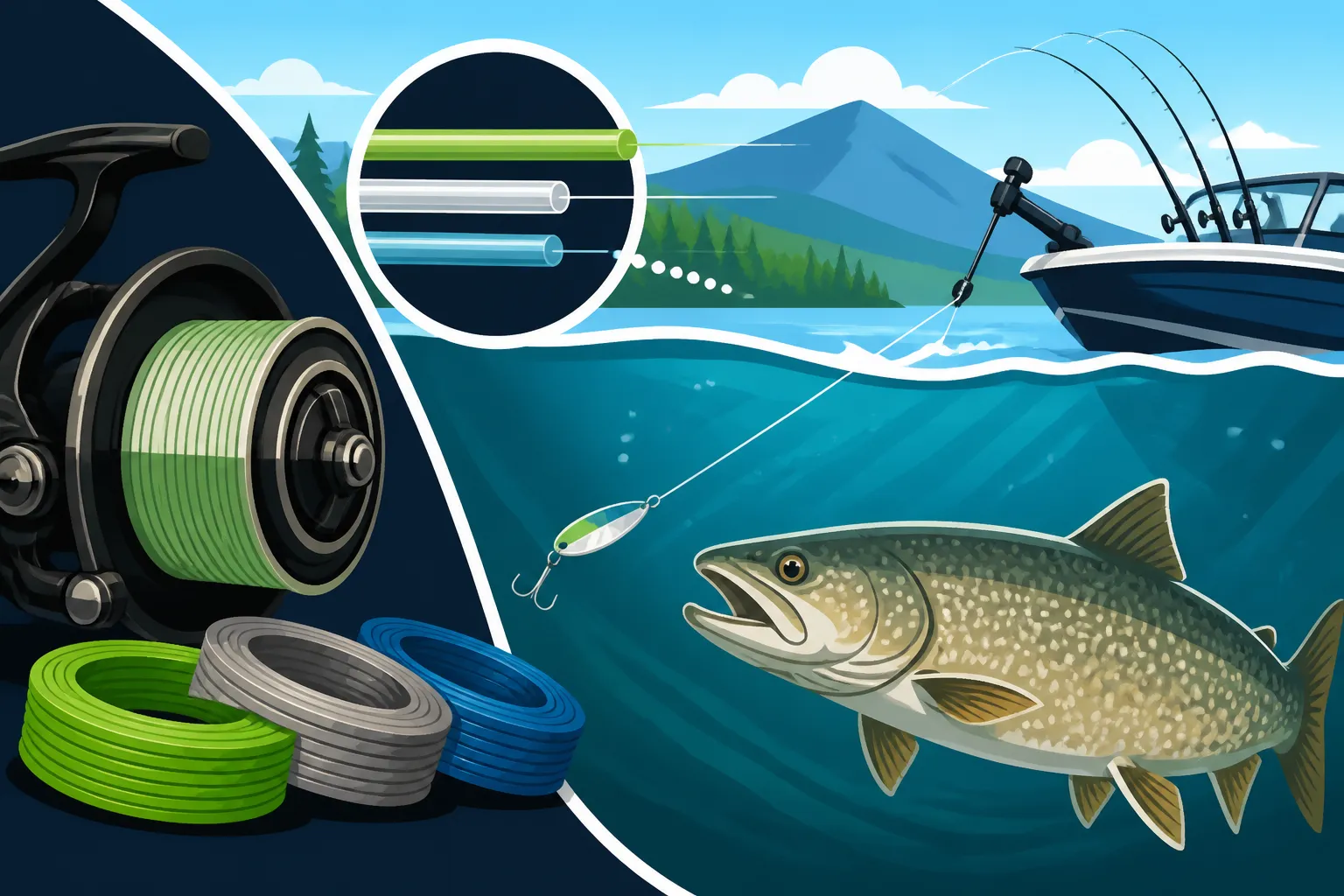
Braided line, often called "superline," is made by weaving together multiple strands of synthetic fibers, resulting in an incredibly strong line with a very thin diameter for its breaking strength. The most significant advantage of braid for lake trout trolling is its almost zero stretch. This provides unparalleled sensitivity, allowing you to detect the most subtle bites, even with hundreds of feet of line out. It also means you get a much more direct connection to your lure and fish, resulting in powerful, instant hook sets.
The thin diameter of braided line is also a huge plus for deep trolling. It creates minimal drag in the water, allowing your lures to dive deeper with less weight and greater efficiency. This can be especially important when trying to reach lake trout holding in the thermocline at significant depths. However, braid is highly visible underwater, which is why it's almost always paired with a fluorocarbon leader of 10-30 feet. Without stretch, it also puts more pressure directly on the hook set and can be less forgiving if your drag isn't set perfectly, potentially leading to pulled hooks if you're not careful. For lake trout, common braided line tests range from 20 to 40 pounds, providing ample strength for the task. Many anglers setting up their downriggers or planer boards will use braid due to its superior strength-to-diameter ratio.
Factors Influencing Line Choice for Lake Trout Trolling
Choosing the absolute "best" line weight isn't a one-size-fits-all answer; it's a dynamic decision based on several key factors you'll encounter on New Hampshire's diverse fishing waters. Every trolling trip is a bit different, and adapting your line choice can make a real impact.
Target Depth and Lure Presentation
The depth at which you're targeting lake trout is perhaps the most significant factor in line selection. If you're fishing relatively shallow, say 20-40 feet, a heavier monofilament might suffice. Its stretch can be a bonus, and the increased drag won't be as detrimental to your lure's depth as it would be in deeper water. However, when those lake trout move deeper, especially during the warmer months, you'll need to get your lures down to 50, 70, or even 100+ feet. This is where line diameter becomes paramount.
A thinner diameter braided line, often in the 20-30 lb test range, will allow your lures to reach these depths more easily with less lead core, fewer snap weights, or less aggressive downrigger angles. For instance, if you're pulling a spoon behind a downrigger on Lake Winnipesaukee, a thin braid will let that spoon track truer and stay precisely at the depth you've set, without being lifted significantly by water resistance. A thicker line would cause more "blowback," meaning your lure might be several feet shallower than your downrigger ball. This precision in lure presentation is crucial for enticing those deep-dwelling lakers. How to Catch Lake Trout in New Hampshire provides more insights into their preferred depths.
Water Clarity and Conditions
New Hampshire is known for its exceptionally clear lakes, and this clarity directly impacts line visibility. In very clear water, lake trout have ample opportunity to inspect your line, and a highly visible line can easily put them off. This is why fluorocarbon is so popular, either as a main line for specific setups or, more commonly, as a long leader connected to a braided main line.
Imagine fishing Crystal Lake on a bright, sunny day. The visibility can be incredible, and a thick, dark green braided line might stand out like a rope. In such conditions, a 20-30 foot fluorocarbon leader in the 15-25 lb test range becomes almost essential to present your lure naturally. Even if you're using a monofilament main line, opting for a clear or very light green color will be less noticeable. On days with more overcast skies or in slightly stained waters, line visibility might be less of a concern, allowing you a bit more leeway, but erring on the side of caution with clear lines or leaders is almost always a good idea for lake trout.
Trolling Speed and Lure Type
Your trolling speed and the type of lure you're using also influence your ideal line choice. Faster trolling speeds, often used to cover more water or entice active fish, will increase the drag on your line. A thinner diameter line (like braid) will manage this increased drag more efficiently, keeping your lure at its intended depth. Slower speeds, on the other hand, might allow for slightly thicker lines without as much depth penalty.
Different lures behave differently in the water. For example, large, deep-diving crankbaits create significant water resistance on their own. Pairing these with a line that has excessive drag will only exacerbate the problem. Conversely, small spoons or subtle stickbaits require minimal resistance to achieve their natural action. For such lures, a sensitive line like fluorocarbon or braid will allow the lure's action to be felt more directly and unimpeded. When fishing with lead core line, which is designed to sink at specific rates per color, the diameter of your main line connecting to your backing matters less, but your leader choice remains vital for lure presentation and invisibility.
Line System Setups for Lake Trout Trolling
Serious lake trout anglers often employ a combination of different line types to maximize their chances. This isn't about complexity for complexity's sake; it's about leveraging the strengths of each line type for specific parts of the fishing system.
Braided Main Line with Fluorocarbon Leader
This is arguably the most popular and effective line setup for serious lake trout trolling in New Hampshire. The braided main line, typically 20-40 lb test, offers several distinct advantages: its incredible strength-to-diameter ratio means you can spool up a lot of powerful line without taking up too much reel capacity, and its near-zero stretch provides unmatched sensitivity for detecting subtle bites and a direct connection for powerful hook sets. This setup is particularly effective when you're using a fish finder to locate schools or individual fish, as you can feel every bump against the bottom or sudden change in lure action.
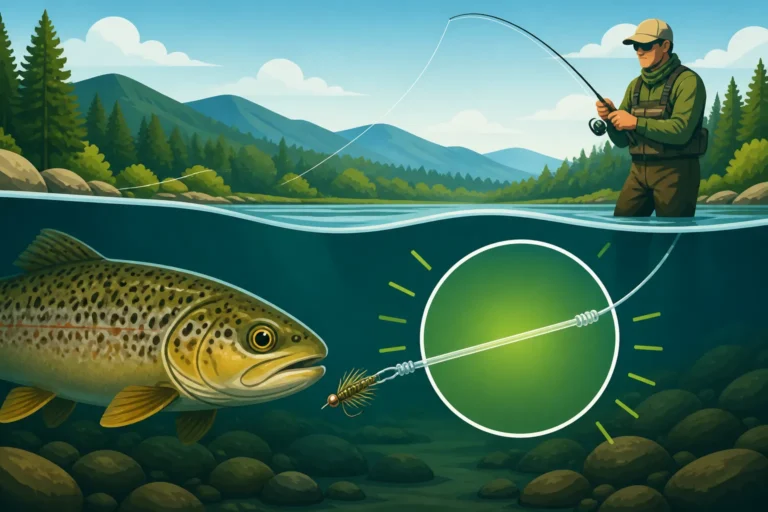
However, as mentioned, braid is highly visible. This is where the fluorocarbon leader comes in. A leader ranging from 10 to 30 feet of 15-30 lb test fluorocarbon is tied to the end of the braid using a strong knot like a double uni knot or an FG knot. The fluorocarbon's invisibility underwater makes your lure appear more natural to wary lake trout, while its abrasion resistance protects your line from sharp rocks and fish teeth. This combination gives you the best of both worlds: the sensitivity and strength of braid, plus the stealth and toughness of fluorocarbon right where it matters most, near your lure. You'll feel the bite through the braid, and the fish won't see the line leading to your spoon or stickbait.
Lead Core Line Systems
Lead core line is a specialized trolling line with a lead wire running through its center, designed to sink your lure without the need for additional weights. The line is "coded" by colors, with each color typically representing 10 yards of line and a certain amount of depth gained at a given speed. This system is fantastic for covering a wide range of depths, particularly when lake trout are scattered throughout the water column or when you're trying to achieve a specific depth with precision.
For lake trout in New Hampshire, anglers often use 18-27 lb test lead core. The lead core itself is typically tied to a backing of 20-30 lb monofilament or braid (to fill the spool and provide extra line if a big fish runs far), and then a fluorocarbon leader of 10-20 feet is attached to the business end of the lead core. This leader, usually 12-20 lb test, provides the necessary invisibility and abrasion resistance directly to the lure. When using lead core, you're not choosing a main line for its diameter or stretch in the same way; you're choosing it for its inherent sinking ability. The backing is primarily for reel capacity and fighting power, and the leader is for stealth and protection.
Downrigger Setups
Downriggers are a game-changer for consistently targeting lake trout at precise depths, especially in New Hampshire's deeper waters. A downrigger system uses a heavy lead ball (the downrigger ball) to pull your fishing line, attached via a release clip, to a specific depth. When a fish strikes, the line pops free from the clip, and you fight the fish directly on your rod.
For downrigger fishing, a 20-40 lb test braided main line is almost universally preferred. Its thin diameter means less resistance in the water, allowing your line to track more cleanly from the rod tip to the release clip. The braid's zero stretch also provides immediate detection of any changes in lure action or a subtle "tick" at the clip, even before the line releases. A fluorocarbon leader of 10-20 feet (15-25 lb test) is then attached to the end of the braided main line for stealth. The downrigger effectively takes care of the depth control, so your main line's job is simply to connect you to the lure and the fish with maximum sensitivity and strength once the release clip fires. This system is incredibly efficient for placing your lure exactly where the fish are holding, and it’s a setup frequently discussed in guides like Trolling Techniques for New Hampshire Lake Trout.
Choosing the Right Rod and Reel to Complement Your Line
The best fishing line in the world won't perform optimally if it's not paired with the right rod and reel. For lake trout trolling in New Hampshire, your gear needs to be robust, capable of handling deep dives, heavy lines, and powerful fish.
Rod Power and Action
For lake trout trolling, you'll generally want a rod with a medium to heavy power rating and a moderate to slow action. "Power" refers to the amount of force needed to bend the rod, while "action" describes where the rod bends. A medium-heavy to heavy power rod provides the backbone needed to handle the strain of trolling heavy lures, lead core, or downrigger balls, and, most importantly, to effectively fight large lake trout. These fish are notorious for their deep, powerful runs, and a flimsy rod will quickly wear you out or fail.
A moderate or slow action rod is often preferred for trolling. This means the rod will bend further down into its blank, not just at the tip. This allows for a more parabolic bend, which acts as a fantastic shock absorber. When a lake trout hits your lure, especially with a low-stretch line like braid, that moderate action helps cushion the initial impact and prevent hooks from tearing out of the fish's mouth. It also helps maintain tension on the line during head shakes and sudden surges, reducing the chances of a slack line and a lost fish. Look for rods specifically designed for trolling or downrigger fishing, as they are often built with these characteristics in mind. Best Fishing Rods for New Hampshire Lakes might offer further guidance on this.
Reel Type and Capacity
For lake trout trolling, conventional reels (often called baitcasting reels, but specifically designed for trolling applications) are almost always the preferred choice over spinning reels. Conventional reels offer superior cranking power, a more robust drag system, and the ability to handle heavier lines and larger line capacities, all of which are critical when fishing for lake trout.
When selecting a reel, pay close attention to its line capacity. You'll need enough line to handle long trolling passes, deep fish, and the possibility of a big lake trout making a prolonged run. For braid, a reel capable of holding 200-300 yards of 30 lb test is a good starting point. If you're using lead core, you'll need a much larger capacity reel, as lead core is considerably thicker. A reel that can hold a full core (10 colors) of 27 lb test lead core, plus 50-100 yards of monofilament or braided backing, is ideal. The drag system is also paramount; it needs to be smooth and consistent, capable of applying steady pressure without sticking or jerking, which can easily lead to lost fish. Reels with lever drags or high-quality star drags are often favored for their reliability and ease of adjustment during a fight. Many high-quality reels suitable for this application can be found at Bass Pro Shops or online through retailers like Amazon.
Line Counters and Spooling Techniques
For effective lake trout trolling, especially when trying to replicate successful presentations, a line counter reel is an invaluable tool. A line counter allows you to precisely measure how much line you have deployed, ensuring your lure is consistently hitting the desired depth or distance from the boat. This is critical for repeating patterns when you find productive water or when multiple rods are in the water and you want to avoid tangles. Without a line counter, achieving consistent depth or spacing with multiple lines becomes largely guesswork.
Properly spooling your line is also essential. For monofilament and fluorocarbon, ensure the line comes off the filler spool in the same direction it goes onto your reel spool to prevent line twist. For braided line, it's often recommended to put a short monofilament backing on the reel spool first (about 10-20 yards of 15-20 lb mono) before tying on your braid. This prevents the slick braid from slipping on the bare metal spool. Always fill your reel to about 1/8 inch from the rim – overfilling can lead to tangles and wind knots, while underfilling reduces casting distance (if applicable) and limits line capacity. Taking your time during spooling, or having a reputable tackle shop do it for you, can save you a lot of headaches on the water.
Essential Tips for Success with Your Chosen Line
Beyond just picking the right line, how you manage and maintain it plays a huge role in your overall success and enjoyment when targeting New Hampshire lake trout.
Knots and Connections
The strongest line in the world is only as strong as its weakest link, which is almost always the knot. For lake trout trolling, you need strong, reliable knots that won't slip under pressure. When connecting your main line to your leader, popular choices include the Double Uni Knot, the Albright Knot, or the FG Knot. The FG knot is particularly favored for connecting braid to fluorocarbon as it creates a very slim, strong connection that passes through rod guides smoothly.
For tying your leader to your lure, the Palomar Knot or the Improved Clinch Knot are excellent, dependable choices. Always moisten your knots with saliva before cinching them down; this lubricates the line, prevents friction heat buildup, and allows the knot to seat properly and tightly, maximizing its strength. Take the time to practice these knots at home until you can tie them quickly and correctly, even in less-than-ideal boat conditions. A poorly tied knot is a sure way to lose a trophy fish.
Line Maintenance and Replacement
Fishing line, regardless of its type, is a perishable commodity. It degrades over time due to UV exposure, abrasion, and simply being stretched and stressed by fish. Regularly inspect your line for nicks, frays, or abrasions, especially the last few feet closest to your lure. If you notice any damage, cut off the compromised section immediately and re-tie.
It's a good practice to replace your monofilament line annually, or even more frequently if you fish heavily. Monofilament loses strength and gains memory over time. Fluorocarbon is more durable but can still suffer from abrasion and should be checked frequently. Braided line is the most durable, often lasting several seasons, but the first 20-50 yards (the part that sees the most action) should be periodically reversed or trimmed back, and the leader should be replaced regularly. Think of it as preventative maintenance; a fresh, well-maintained line system drastically reduces the chances of a heartbreaking break-off when you finally hook into that monster lake trout.
Adjusting to Conditions
New Hampshire's weather and water conditions can change quickly, and being able to adapt your line strategy on the fly is a mark of a seasoned angler. On bright, calm days with high water clarity, extending your fluorocarbon leader length (say, from 15 to 30 feet) can make a significant difference in enticing wary fish. During choppy conditions or low light, the extra visibility of a slightly thicker line might not be as much of a deterrent, allowing you to prioritize strength or abrasion resistance.
If you find your lures aren't getting to the desired depth, first check your trolling speed and then consider if your line diameter is creating too much drag. Sometimes, simply swapping out a heavier test mono for a thinner braid can solve depth issues without adding more weight. Conversely, if you're experiencing frequent break-offs, consider bumping up your line's breaking strength or using a more abrasion-resistant leader. Constant observation, experimentation, and a willingness to adjust your setup based on what the lake is telling you will lead to more consistent success. Best Time of Year to Fish in New Hampshire could also influence these choices.
| Line Type | Pros | Cons | Common Test Weights for Lake Trout (NH) | Primary Application for Lake Trout Trolling |
|---|---|---|---|---|
| Monofilament | Inexpensive, good knot strength, high stretch (shock absorption), easy to handle | Higher diameter for strength, more stretch (less sensitivity), absorbs water, UV degradation | 15-25 lb | Backing, budget-friendly main line, where stretch is desired for shock absorption |
| Fluorocarbon | Nearly invisible underwater, very abrasion resistant, low stretch (good sensitivity), sinks faster | Stiffer, can be more expensive, some memory issues | 12-20 lb (main), 15-30 lb (leader) | Leaders (most common), main line for ultimate stealth and sensitivity |
| Braided | Extremely strong for diameter, near-zero stretch (high sensitivity), casts far | Highly visible, can "dig in" on spools, requires a leader for stealth, cuts easily | 20-40 lb | Main line for downriggers, lead core backing, jigging, maximum sensitivity |
| Lead Core | Sinks lures without added weight, precise depth control | Very thick, less sensitive, requires specialized knots, specific color coding | 18-27 lb (per color) | Achieving specific depths without downriggers or heavy snap weights |
Disclaimer
This article is for general informational purposes only and does not constitute professional advice. Laws, prices and regulations vary by location and change over time. Consult a qualified professional for guidance on your specific situation.