Landlocked Salmon Life Cycle in New Hampshire Lakes
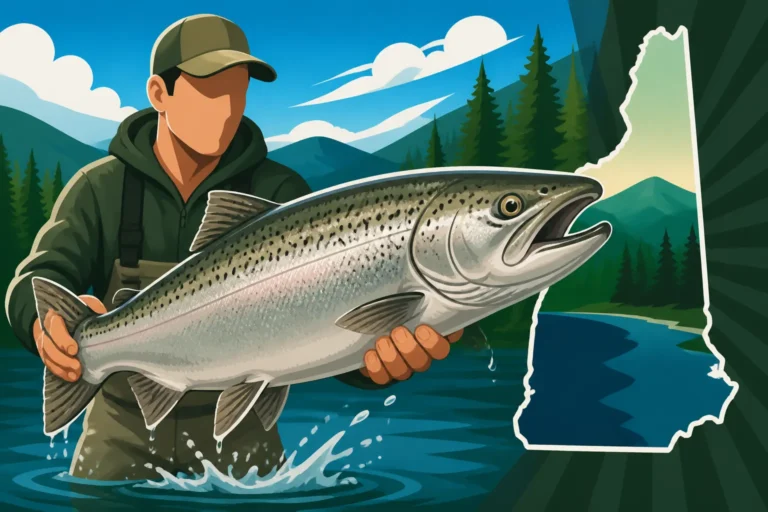
One of the most thrilling and, frankly, most challenging fish to pursue in New Hampshire's pristine lakes is the landlocked salmon. If you've ever spent hours trolling the deep waters of Winnipesaukee or Sunapee, wondering why these magnificent fish seem to vanish, or why they're so particular about what they strike, it often comes down to understanding their intricate life cycle. This guide is here to pull back the curtain, exploring the fascinating journey of a landlocked salmon from a tiny egg to a majestic adult, revealing how their incredible biology dictates where and when you might encounter them, and what it means for preserving these prized fish in our beloved Granite State.
The Journey Begins: Spawning and Early Life
The very existence of a landlocked salmon begins with a miracle of nature, often in the late fall as the water temperatures drop to just the right crisp level. This isn't just a simple act of laying eggs; it's a meticulously timed and energy-intensive event that sets the stage for the entire life cycle of these incredible fish. Without successful spawning and the subsequent development of the youngest salmon, our lakes simply wouldn't hold the populations we cherish.
From Eggs to Alevins: The Hidden Start
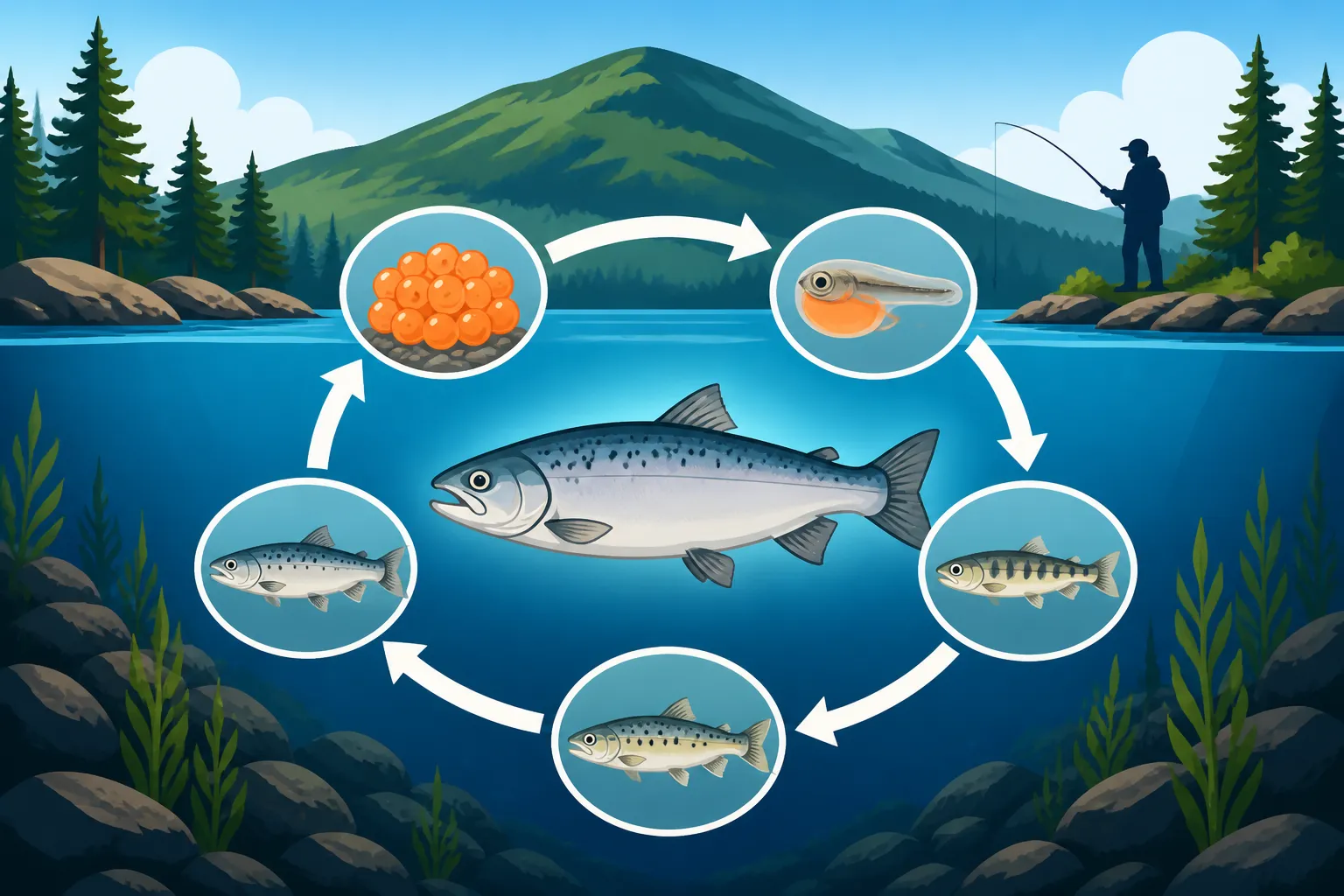
Picture a cold, clear New Hampshire stream, perhaps one flowing into Lake Winnipesaukee, like the Merrymeeting River, in late October or November. This is where the magic largely happens. Adult salmon, driven by an ancient urge, will migrate from the deeper lake waters upstream into these natal rivers and streams to find suitable spawning grounds. They seek out areas with clean, oxygenated gravel bottoms, where the current is just strong enough to keep the eggs aerated but not so strong as to wash them away. The female, or hen, uses her tail to excavate a depression, known as a "redd," in the gravel. Once she's ready, she deposits her eggs, often several thousand, which are then fertilized by the male, or cock, salmon.
These precious, pearl-like eggs settle into the gravel, often in multiple pockets within the same redd. Here, they'll spend the entire winter, completely hidden from predators and the harsh elements. The incubation period is long and slow, taking anywhere from 60 to 120 days depending on the water temperature. Imagine these tiny spheres, tucked away beneath layers of pebbles and sand, slowly developing in the frigid New Hampshire waters. This hidden vulnerability is why maintaining clean, undisturbed spawning streams is so critically important for the long-term health of our landlocked salmon populations.
Come early spring, usually around March or April, the eggs hatch into what are known as "alevins." These tiny, delicate creatures still carry a large yolk sac attached to their undersides, which serves as their primary food source during these initial weeks. The alevins remain hidden within the gravel of the redd, absorbing the yolk and continuing their development. This period, too, is fraught with danger, as even slight disturbances to the stream bed can be devastating. They are completely dependent on the quality of their immediate environment, making stream protection a top priority for conservationists and anglers alike.
Fry Emergence: First Taste of Freedom
As the yolk sac is gradually absorbed and depleted, usually after a few weeks, the alevins transform into "fry." This is a significant milestone in their life cycle because, unlike the sessile alevins, the fry are free-swimming and must now actively seek food. They emerge from the protective gravel, cautiously venturing into the flowing water of their natal stream. Their initial diet consists of microscopic organisms and tiny aquatic insects, which are abundant in healthy stream ecosystems. This is their first taste of true independence, but also their first exposure to the wider world of predators.
At this stage, the fry are still incredibly small and vulnerable. They must quickly learn to forage while avoiding the hungry eyes of larger fish, birds, and even some insects. They often stay in shallow, protected areas of the stream, near the banks or amongst aquatic vegetation, where they can find cover. Their survival rates are relatively low during this period, as natural selection quickly weeds out the weakest. It's a critical learning curve that prepares them for the challenging years ahead, emphasizing the need for diverse and healthy stream habitats that offer both food and refuge for these tiny, fledgling salmon.
As the spring progresses into early summer, these fry will continue to grow, gradually taking on more distinct salmonid characteristics. Their coloring, while still somewhat drab, begins to develop the distinctive "parr marks" – dark, vertical bars along their sides – which serve as excellent camouflage against the mottled stream bottom. These parr marks are a tell-tale sign that you're looking at a juvenile salmon, a future trophy fish in the making. New Hampshire Landlocked Salmon Regulations exist to protect these delicate fish, ensuring that human activity doesn't inadvertently harm their chances of survival.
Growing Up: Parr and Smolt Stages
After the initial fragile period as fry, landlocked salmon enter a crucial developmental phase known as the parr stage, followed by the remarkable transformation into smolts. This transitional period is where they adapt from tiny, stream-dwelling youngsters to powerful, lake-faring fish, undergoing significant physiological changes to prepare for their adult lives. It's a testament to nature's incredible adaptability and foresight.
The Parr Stage: Stream Life and Camouflage
Once landlocked salmon fry have successfully emerged from the gravel and started feeding, they quickly transition into the parr stage. These juvenile salmon can spend anywhere from one to three years, sometimes even longer, living exclusively in the cold, flowing waters of their birth stream. During this time, they develop those characteristic dark, vertical bars, or "parr marks," along their flanks, which are incredibly effective at breaking up their outline against the dappled light and shadows of a rocky streambed. This camouflage is vital for their survival, helping them hide from sharp-eyed predators like mergansers, kingfishers, and even larger fish.
Parr are territorial and will often defend small sections of the stream, particularly areas with good cover and access to food. Their diet expands to include a wider variety of aquatic invertebrates, such as caddisfly larvae, mayfly nymphs, and small crustaceans. They are active hunters, darting out from behind rocks or submerged logs to ambush passing prey. The constant current provides both food delivery and a challenging environment that helps them build strength and endurance, essential qualities for their future lives in the open lake. Observing parr in a clear mountain stream is a fascinating glimpse into the early life of these magnificent fish, a reminder of the wildness that still thrives in New Hampshire's waterways.
For anglers, understanding the parr stage is important because these are the fish that you might inadvertently encounter in tributaries. While their size might not be impressive, they are the future of the fishery. Protecting these young fish and their stream habitat is paramount. Many of these streams are part of larger, protected areas, offering vital nurseries for species like salmon and trout. If you're exploring fly fishing on the Ellis River, for instance, you might see these little guys flitting about. Fly Fishing for Trout in New Hampshire often introduces anglers to these crucial nursery waters.
Smoltification: The Remarkable Transformation
As the parr grow and approach the age of two or three, typically in the spring, they undergo a truly remarkable physiological change called "smoltification." This is a complex biological process that prepares them for life in a completely different environment – from fresh, flowing river water to the vast, open, and chemically different waters of a large lake. During smoltification, their bodies adapt to handle the osmotic differences of lake water, preventing them from dehydrating or becoming waterlogged. Their kidneys, gills, and other internal systems all adjust to this impending change.
Externally, the most noticeable change during smoltification is the loss of their parr marks. The fish's skin begins to take on a silvery sheen, a characteristic that gives them the name "smolt." This silvering provides camouflage in the open, often darker waters of the lake, making them harder for predators to spot from below. Simultaneously, their body shape becomes more streamlined, optimized for efficient swimming in larger bodies of water, rather than the turbulent, shallow currents of a stream. This transformation is a clear signal that the time has come for them to migrate.
The culmination of smoltification is the downstream migration. With the rising waters of spring runoff, thousands of smolts will begin their journey from their natal streams, moving towards the lake. This migration is often undertaken in schools, offering some safety in numbers. They face new dangers during this journey, including predatory birds, larger fish waiting at river mouths, and potential hazards like dams or culverts. Once they reach the lake, they've officially transitioned from stream-dwelling juveniles to lake-dwelling adults-in-training, ready to begin the next, explosive phase of their lives. Knowing about this migration can help you predict when and Where to Find Landlocked Salmon in New Hampshire might be staging.
Life in the Lake: The Adult Salmon's Domain
Once smolts successfully complete their perilous downstream journey and adapt to the expansive waters of their new lake home, they embark on the next, often most celebrated, chapter of their lives. This is where they truly transform into the powerful, elusive, and highly sought-after game fish that New Hampshire anglers know and love. Their life in the lake is largely driven by temperature, food availability, and the instinct to grow large and strong.
Pelagic Existence and Forage Fish
Upon entering the lake, landlocked salmon adopt a largely "pelagic" lifestyle, meaning they spend most of their time in the open water column, away from the immediate shorelines or bottom structure. They are highly migratory within the lake, constantly searching for optimal water temperatures and, crucially, their primary food source. For most New Hampshire lakes, this key forage fish is the rainbow smelt. Smelt are small, oily baitfish that provide the rich energy salmon need for rapid growth and to sustain their active lifestyle. The abundance and health of the smelt population directly impact the health and size of the salmon fishery.
Salmon are keen predators, often hunting in loose schools. They rely on their excellent eyesight and speed to ambush schools of smelt. Their seasonal movements within the lake are largely dictated by the thermocline – the layer of water where temperature changes rapidly. During the warm summer months, smelt, and thus the salmon, will seek out the cooler, oxygen-rich waters below the surface, often holding in a very specific temperature band. This makes them incredibly challenging for anglers to locate, requiring precise trolling techniques and specialized equipment. Many anglers use fish finders, which you can find on sites like Amazon, to pinpoint these thermal layers and baitfish schools.
This deep-water existence in summer is why techniques like downrigger trolling become so important for anglers pursuing How to Catch Landlocked Salmon in New Hampshire. Without getting your lures down to the exact depth where the salmon are feeding, your chances of success are significantly diminished. As the seasons change and water temperatures cool in the spring and fall, salmon and their prey will move shallower, offering different angling opportunities.
Growth Rates and Reaching Trophy Size
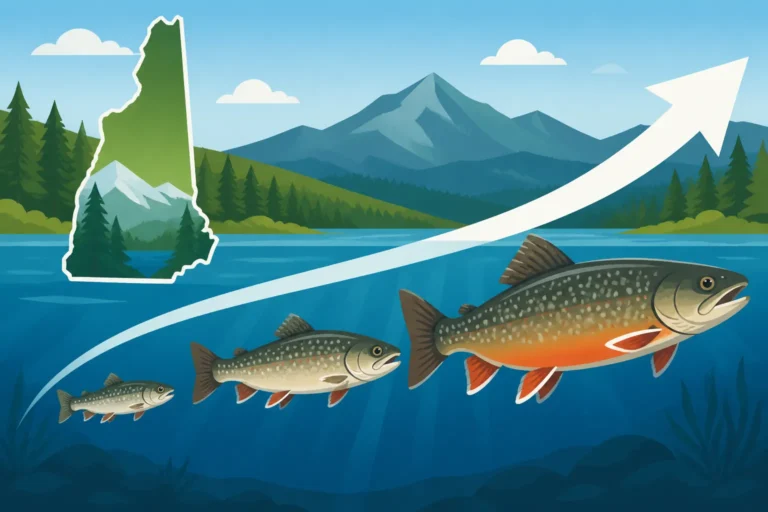
Life in the rich feeding grounds of a large New Hampshire lake provides landlocked salmon with the opportunity for impressive growth. After a year or two in the lake, they can reach lengths of 15 to 20 inches, and by their third or fourth year, it's not uncommon to see them pushing well over 20 inches and several pounds. The growth rate is highly dependent on the particular lake's productivity and the availability of smelt. Lakes with robust smelt populations tend to produce larger, healthier salmon.
Reaching "trophy size" for a landlocked salmon in New Hampshire generally means a fish weighing upwards of 5 pounds, and certainly anything over 8-10 pounds is considered a true behemoth. These larger fish are typically older, often five to seven years old, having survived multiple seasons of predation, angling pressure, and environmental challenges. Their power and fight are legendary, making them a top target for many dedicated anglers. Imagine the strength required to land a hard-fighting 25-inch salmon that’s spent its life honing its speed and agility in the deep, cold waters of Lake Sunapee.
Understanding Landlocked Salmon Growth Rate to Trophy Size helps anglers appreciate the time and resources it takes for these fish to reach their impressive dimensions. It also underscores the importance of proper handling for catch-and-release fish, especially the larger, older breeders. Every decision we make as anglers, from choosing appropriate tackle to how we release a fish, impacts the long-term health and trophy potential of the landlocked salmon fishery.
The Return: Spawning Migration and Reproduction
The culmination of the adult landlocked salmon's life cycle is a powerful, instinctual drive to return to the very streams where they were born, to complete the cycle and ensure the next generation. This spawning migration is one of nature's most dramatic events, demanding immense energy and presenting significant challenges for the fish.
The Urge to Return: Autumn's Call
As summer fades and the crisp air of autumn descends upon New Hampshire, an ancient, undeniable urge begins to stir within the adult landlocked salmon. This internal clock, synchronized with the dropping water temperatures and shortening daylight hours, signals that it's time to reproduce. Just as they did years earlier as tiny smolts, these powerful fish begin to congregate near the mouths of their natal rivers and streams, staging themselves for the arduous journey upstream. This period, typically from late September through November, sees them preparing for a migration that will demand every ounce of their stored energy.
During this staging phase, male salmon undergo noticeable physical changes. Their bodies often darken in color, and their jaws develop a prominent hook, known as a "kype," which is used in competition with other males for spawning rights. The females, laden with thousands of eggs, become plump and their silvery lake coloration can also take on a darker, more camouflaged hue. Feeding typically decreases dramatically during this time as their focus shifts entirely to reproduction. This pre-spawn period can offer a unique opportunity for anglers who understand the fish's movements, though fishing around actively spawning salmon is often restricted or discouraged to protect the breeding stock.
The journey itself is an incredible feat of endurance. Salmon will fight against strong currents, jump over small rapids, and navigate obstacles to reach the specific gravel beds where they will spawn. This is a one-way trip for many, as the energy expenditure is so extreme that many will not survive to return to the lake. Witnessing this raw determination, even from a distance, is a humbling experience, highlighting the resilience of these wild creatures.
Redd Construction and Post-Spawn Fate
Upon reaching their chosen spawning grounds, the female salmon, or hen, diligently begins the process of constructing her redd. Using powerful sweeps of her tail, she digs a series of depressions in the clean, oxygenated gravel. Each depression serves as a nest where she deposits a batch of her eggs, which are then quickly fertilized by one or more attending male salmon. This process is repeated several times over a period of days, as she lays thousands of eggs, burying each batch under a layer of fresh gravel to protect them from predators and the current. New Hampshire Fishing Season Dates and Closures are carefully set to allow this critical spawning activity to occur undisturbed.
The male salmon, meanwhile, are intensely competitive, vying for the opportunity to fertilize the eggs. They will often display aggressive behaviors, fin-slapping, and bumping each other to establish dominance around the female. This ensures that the strongest, most genetically fit males contribute to the next generation. Once the eggs are laid and fertilized, the female covers the redd with gravel, creating a protective mound. This entire process, from migration to egg deposition, takes a tremendous toll on the salmon's physical reserves.
After spawning, many landlocked salmon, particularly the males, will succumb to exhaustion and predation. Their bodies, once sleek and powerful, are now depleted, scarred, and often battered from the spawning ritual. Some females, however, may survive to return to the lake, though they are usually in poor condition. These "kelts" will spend the winter recuperating in the lake and may even spawn again in subsequent years, though this is less common than for their ocean-going cousins. The cycle then begins anew, with the next generation of eggs waiting patiently in the cold gravel, preparing for their own incredible journey. Life span of a landlocked salmon in the wild is often determined by the number of times they can survive this arduous spawning ritual.
Challenges and Conservation: Protecting New Hampshire's Landlocked Salmon
While New Hampshire's landlocked salmon populations are generally healthy, thanks to diligent management, they face a myriad of challenges that threaten their long-term survival. As anglers and enthusiasts, understanding these threats and the conservation efforts underway is crucial for helping to protect these magnificent fish for future generations. It's a collective responsibility that extends beyond just fishing.
Habitat Degradation and Environmental Threats
One of the most significant challenges facing landlocked salmon is habitat degradation, particularly in their crucial spawning and nursery streams. Development, logging, agriculture, and road construction can lead to increased siltation and erosion, which smothers the gravel beds where salmon eggs incubate. Silt reduces oxygen flow to the eggs and can trap newly hatched alevins, preventing them from emerging. Warming water temperatures, driven by climate change and removal of riparian vegetation (trees and shrubs along stream banks), also pose a serious threat. Salmon need cold, clear water to thrive, and warmer streams can stress young fish and even become lethal.
Pollution, whether from agricultural runoff, industrial discharge, or stormwater from developed areas, introduces harmful chemicals and nutrients into aquatic systems. These pollutants can directly poison fish, reduce their food sources, or lead to excessive algal growth that depletes oxygen. The presence of dams, even small ones, can block upstream migration to spawning grounds, isolating populations and reducing genetic diversity. While some dams have fish ladders, they are not always 100% effective. Addressing these widespread environmental threats requires broad cooperation from landowners, communities, and government agencies.
Consider the complexity of managing a large watershed that feeds a major salmon lake. Every stream, every wooded buffer zone, every development project upstream has a potential impact on the salmon. Conservation groups work tirelessly to educate the public and advocate for policies that protect these vital habitats. Even small actions, like being mindful of what goes down storm drains or supporting local land conservation initiatives, can make a real difference for the health of salmon streams. New Hampshire Trout Stocking and Fishing Rules often consider the health of these broader stream ecosystems.
Stocking Programs and Genetic Diversity
Given the challenges of natural reproduction and the high demand from anglers, stocking programs play a vital role in sustaining robust landlocked salmon fisheries in many New Hampshire lakes. The New Hampshire Fish and Game Department raises landlocked salmon in hatcheries, releasing thousands of juvenile fish into suitable lakes each year. These stocked fish augment wild populations and ensure that anglers have ample opportunities to pursue these prized fish. Without these efforts, fishing pressure on wild populations would likely be unsustainable in many areas.
However, stocking is not a simple solution and comes with its own set of considerations. One major concern is maintaining genetic diversity within salmon populations. Relying too heavily on hatchery-bred fish can, over time, dilute the genetic strength of wild strains, potentially reducing their adaptability to changing environmental conditions or their natural instinctual behaviors. Hatchery fish, raised in a controlled environment, may not possess the same survival skills as their wild counterparts once released. Therefore, modern stocking programs strive to incorporate wild broodstock when possible and focus on specific lakes where wild reproduction is limited.
Furthermore, competition between stocked and wild fish for food and habitat can be a factor. Biologists carefully monitor fish populations, growth rates, and angler harvest to strike a balance between providing fishing opportunities and protecting the genetic integrity of native fish. You can often find reports from the NH Fish and Game detailing their stocking efforts, and sometimes even purchase gear from retailers like Amazon that helps support conservation initiatives, often through a portion of the sale or by purchasing specific licenses.
Seasonal Habits and Angler Insights
Understanding the landlocked salmon's life cycle isn't just for biologists; it's absolutely paramount for anglers hoping to consistently catch these magnificent fish. Their seasonal movements and feeding patterns are directly tied to their biological needs at different times of the year, offering distinct opportunities and challenges for those willing to learn.
Adapting Techniques to the Salmon's Calendar
The "calendar" of a landlocked salmon in a New Hampshire lake dictates everything about how, when, and where you'll find them. Immediately after ice-out in spring, as the lake waters are still cold and uniformly mixed, salmon will often be found near the surface and even close to shore. They are actively feeding on smelt that have moved shallower, making this an excellent time for fast-trolling streamers or small stickbaits near the surface or just a few feet down. This is when How to fish for salmon right after ice-out becomes key, as they are often more accessible before the lake stratifies.
As summer progresses and the surface waters warm, salmon retreat to the cooler, oxygenated depths below the thermocline. This means anglers need to employ specialized tactics like downrigger trolling or lead core line to get their lures down to the 40-80 foot range, sometimes even deeper. The key here is presenting baits, often imitation smelt or live smelt, at the exact depth where the salmon and their prey are holding. Finding quality fishing equipment for deep trolling, including robust reels and specialized lures, can easily be done through a quick search on Amazon. This deep-water pursuit is a different ballgame altogether, demanding patience and precision.
Come autumn, as the lake waters begin to cool and mix again, salmon start their pre-spawn movements. They may move shallower again, particularly early in the season, before congregating near river mouths for their spawning migration. This can provide another opportunity for aggressive surface or near-surface trolling before they become completely focused on reproduction. Knowing Best Time of Day to Catch Landlocked Salmon can also vary significantly from season to season, with dawn and dusk often being prime times, especially during the warmer months when they might briefly move shallower to feed.
Matching Forage and Locating Prime Zones
The diet of landlocked salmon, primarily rainbow smelt, is the biggest factor influencing their location and what lures they'll strike. Successful anglers "match the hatch," so to speak, by using lures that closely mimic the size, shape, and action of smelt. This means slender, silver, or blue-and-silver stickbaits, spoons, or soft plastics. Sometimes, slow-trolling live smelt, where permitted, can be the most effective method, especially for wary trophy fish. It pays to carry a variety of lure sizes and colors, as salmon can be incredibly selective on any given day.
Beyond matching the bait, locating prime salmon zones involves understanding lake structure. While they are pelagic, salmon aren't just swimming randomly. They often relate to underwater features like drop-offs, submerged points, humps, and thermocline edges. These areas concentrate baitfish and provide ambush points for the salmon. Using a quality fish finder is almost essential for identifying these hidden structures and, more importantly, marking schools of baitfish. Without bait, salmon are unlikely to be present.
Finally, keeping an eye on water temperature and clarity is always a good idea. Landlocked salmon prefer specific temperature ranges, usually in the 50s Fahrenheit, which can shift throughout the day and season. Clear water, typical of many New Hampshire salmon lakes, often means lighter lines and more natural lure presentations are necessary, as the fish have excellent vision. These subtle details, when combined with a thorough understanding of the salmon's life cycle, will significantly increase your chances of success and help you truly appreciate the challenge and reward of pursuing Landlocked Salmon Fishing in New Hampshire.
Disclaimer
This article is for general informational purposes only and does not constitute professional advice. Laws, prices and regulations vary by location and change over time. Consult a qualified professional for guidance on your specific situation.