Where to Find Landlocked Salmon in New Hampshire
Finding landlocked salmon in New Hampshire can feel like trying to locate a shy, silver ghost in the vastness of our deepest lakes. Many anglers spend hours, days, even seasons without connecting with one of these magnificent fish, leaving them frustrated and wondering where to even begin. This guide will take you through the prime locations, critical environmental factors, and seasonal strategies to dramatically increase your chances of finding and landing these elusive landlocked salmon across the Granite State.
Understanding Landlocked Salmon Habits in New Hampshire
Before we even think about dropping a line, it's crucial to get inside the head of a landlocked salmon. These aren't your typical pond fish that hang out in the shallows looking for a worm. They have very specific needs and behaviors that dictate where you'll find them, and understanding these is your first step to success. It's like knowing your teenager's favorite hangout spot – you'll never find them at the library if they're always at the skate park!
Deep, Cold Water Preference
Landlocked salmon are, at their core, cold-water fish. They are direct descendants of Atlantic salmon, and they carry that genetic preference for chilly, oxygen-rich environments. In New Hampshire, this means they gravitate towards the deepest, cleanest lakes, especially those with ample cold water refuges throughout the summer months. You won't find these guys lounging in a shallow, sun-baked cove where the water temperature climbs into the 70s. That's bass country, not salmon territory. They need that consistent, deep chill to thrive, especially when the surface waters warm up. If a lake doesn't have significant depth and cold pockets, it simply won't sustain a healthy salmon population. This is why you'll hear about the same handful of iconic lakes time and again when talking about salmon fishing – they are the only ones that consistently provide these vital conditions.
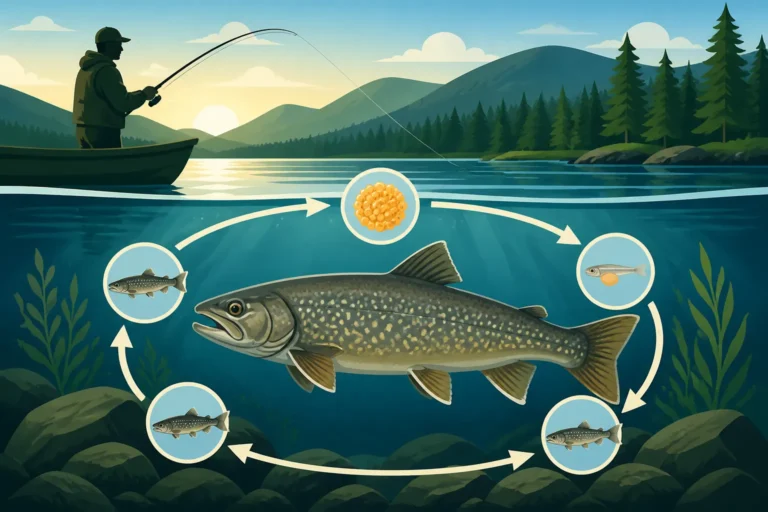
When you're out on the water, think about where the cold water would naturally collect or be fed by colder springs. These are often the deepest sections of the lake, away from the shoreline. These fish aren't just looking for cold water; they're looking for stable, oxygenated cold water, which is why a healthy deep water environment is so crucial. They'll actively avoid areas where oxygen levels drop, even if the temperature is right. This preference for specific conditions is why Landlocked Salmon Life Cycle in New Hampshire Lakes is so tied to the deep, oligotrophic (nutrient-poor, oxygen-rich) nature of our major glacial lakes.
Forage Fish Dependency (Smelt)
The second, equally critical piece of the puzzle is their diet. Landlocked salmon are predatory fish, and in New Hampshire, their primary food source, almost to the exclusion of all else, is the rainbow smelt. These small, silvery baitfish are absolutely vital to the salmon's survival and growth. Without a healthy population of smelt, you simply won't have a healthy population of landlocked salmon. It's a classic predator-prey relationship, and the salmon literally follow the food.
This means that wherever the smelt go, the salmon are not far behind. Smelt also prefer cold water, and they undertake seasonal migrations within a lake, often moving from deep water during the day to shallower areas at night, or moving into tributary rivers to spawn. Understanding these smelt movements is paramount to finding salmon. If you can locate schools of baitfish on your sonar, you've found a potential salmon feeding ground. Anglers often spend just as much time looking for bait as they do for the salmon themselves, because if the bait isn't there, the salmon likely won't be either. This dependency is a major reason why certain lakes consistently produce trophy-sized salmon; they have robust, self-sustaining smelt populations. It's a fascinating ecological dance, and we as anglers are just trying to cut in!
Seasonal Movements and Spawning
Like many fish, landlocked salmon exhibit predictable seasonal movements, often driven by water temperature and their reproductive cycle. Knowing these patterns can save you countless hours of aimless searching. They don't just stay in one spot all year; they're constantly on the move, adapting to conditions.
In the spring, after ice-out, salmon will often be found closer to the surface and along shorelines, especially near tributary inlets, as they recover from winter and chase smelt that are also moving into warmer, shallower areas. As summer progresses and surface water heats up, they'll retreat to the cooler, deeper sections of the lake. In the fall, their thoughts turn to spawning, and they'll move towards river mouths or specific rocky shoals where they gather to reproduce. These movements are often well-documented for specific lakes, and paying attention to reports and local knowledge can give you a significant advantage. Understanding New Hampshire Fishing Season Dates and Closures for salmon is also vital, as certain periods might have restrictions around spawning areas.
Top New Hampshire Lakes for Landlocked Salmon
When people talk about landlocked salmon fishing in New Hampshire, a few names always come up. These aren't just random lakes; they're specific bodies of water that consistently provide the deep, cold, oxygenated water and abundant forage salmon need to thrive. If you're serious about targeting these fish, these are your primary hunting grounds.
Lake Winnipesaukee: The Crown Jewel
Lake Winnipesaukee, affectionately known as "The Big Lake," is undoubtedly New Hampshire's most famous and productive landlocked salmon fishery. It's massive, over 70 square miles of water, with depths reaching well over 180 feet. This sheer size and depth provide an enormous amount of cold-water habitat, making it ideal for salmon. Winnipesaukee boasts a phenomenal smelt population, which sustains a healthy and often trophy-sized salmon fishery. Anglers consistently pull out large, vibrant salmon from its depths.
Fishing Winnipesaukee, however, can be intimidating due to its size. It's not a place for the faint of heart or those without proper boat handling skills. You'll often see anglers trolling vast expanses of open water, following contours, or working specific humps and drop-offs. Areas like the Broads, the deepest part of the lake, are classic salmon territory. While it offers incredible opportunities, it also demands patience and a good understanding of the lake's vast structure. Many an angler has invested in a quality fish finder, which you can find a huge selection of on Amazon, specifically for tackling the depths of Winnipesaukee. Our comprehensive Lake Winnipesaukee Fishing Guide offers even more insights for tackling this majestic body of water.
Lake Sunapee: A Salmon Haven
Lake Sunapee, located in the Dartmouth/Lake Sunapee region, is another premier landlocked salmon destination. While smaller than Winnipesaukee, it's still a significant body of water, over 10 miles long, with depths exceeding 100 feet. Sunapee is renowned for its exceptional water quality and deep, cold habitat, making it perfect for both salmon and lake trout. The lake also has a robust smelt population, crucial for sustaining its salmon fishery.
Sunapee tends to be a bit more intimate than Winnipesaukee, but no less challenging. Anglers often focus on the deeper basins and rocky structures that pepper the lake. The salmon here are known for their strong fights and beautiful silver scales. For those looking for a slightly less overwhelming experience than Winnipesaukee but still seeking excellent salmon action, Sunapee is a fantastic choice. Sunapee Lake Landlocked Salmon Fishing provides specific tips and hotspots for this productive lake.
Other Notable Salmon Lakes
While Winnipesaukee and Sunapee are the undisputed kings, New Hampshire has other lakes that offer rewarding landlocked salmon fishing, often presenting different challenges and rewards. These lakes might be smaller, but they can still hold impressive fish, especially for those willing to learn their unique characteristics.
- Newfound Lake: Known for its incredible clarity and depth, Newfound Lake is another excellent cold-water fishery. It's one of the deepest lakes in New Hampshire, providing ample habitat for salmon. While perhaps not producing the sheer numbers of Winnipesaukee, the fish here are often robust and healthy. The clear water can make them a bit more wary, demanding finesse and stealth. Consult our Newfound Lake Fishing Guide for detailed information.
- Squam Lake: Famous for its natural beauty and as the setting for "On Golden Pond," Squam Lake is also a legitimate salmon fishery. It's a complex lake with many islands, coves, and varying depths. While not as deep overall as Winnipesaukee or Newfound, it has sufficient cold-water refuges and a healthy smelt population. Fishing Squam often requires navigating its intricate structure. Find out more with our Squam Lake Fishing Guide.
- Merrymeeting Lake: This smaller, yet deep and clear lake in New Durham is a hidden gem for some anglers. It’s a bit more off the beaten path than the larger lakes but offers quality fishing for those who know its secrets. Its depths can hold some surprising salmon. Take a look at our Merrymeeting Lake Fishing Guide for specific insights.
Each of these lakes presents its own unique personality and requires a slightly different approach, but they all share the fundamental characteristics of deep, cold water and abundant forage.
Identifying Key Structure and Depths
Knowing which lake to fish is only half the battle. Once you're on the water, you need to understand where in that vast expanse of water the salmon are likely to be holding. Landlocked salmon are highly dependent on underwater structure and specific depth zones, especially the thermocline, which we'll discuss in detail. Ignoring these factors is like trying to find a needle in a haystack – it's just not going to happen efficiently.
Drop-offs, Reefs, and Ledges
Just like bass, salmon use structure, but their structure preferences are often tied to deeper water. Drop-offs, underwater reefs, and ledges are critical features. These areas provide current breaks, ambush points, and most importantly, access to both deep, cold water and shallower feeding grounds where smelt might congregate. Imagine a steep underwater cliff – salmon might patrol the edge of that cliff, moving up to feed on smelt pushed against it, or retreating to the depths when conditions are less favorable.
A good topographical map of the lake is your best friend here, combined with a reliable fish finder. Focus on areas where the depth changes abruptly. Submerged islands or humps that rise up from the lake bottom, creating ledges and drop-offs, are often salmon magnets. These areas concentrate baitfish and provide classic ambush points for hungry salmon. Think of it like this: a wide-open flat might hold fish occasionally, but a steep drop-off funneling baitfish into a prime ambush zone is where the action will really be. Many of these lakes have incredibly intricate underwater landscapes that you'd never guess from the surface.
Thermocline Fishing Strategies
The thermocline is a term you'll hear a lot when discussing cold-water fishing, and for good reason. It's the layer in a lake where the water temperature changes rapidly with depth. Above the thermocline, the water is warmer; below it, the water is significantly colder. During the summer, the thermocline forms a distinct boundary, and it's absolutely crucial for finding salmon. These fish will often hold right at or just above the thermocline, as this zone typically offers the ideal combination of cold water and higher oxygen levels, along with access to food.
Fishing the thermocline effectively usually involves trolling. You need to present your lures at precisely the right depth. Downriggers are incredibly valuable tools for this, allowing you to get your bait down to specific depths and keep it there consistently. Without a fish finder that can clearly show you the thermocline, you'll be guessing, and guessing rarely works with salmon. Pay attention to how the thermocline changes throughout the season and even throughout the day. Its depth can shift, and successful anglers are constantly adjusting to stay in the strike zone. Learning to interpret your sonar to pinpoint the thermocline and baitfish schools is perhaps the most important skill for summer salmon fishing.
Open Water Trolling
While structure is important, landlocked salmon, especially in large lakes like Winnipesaukee, are also often found cruising open water, sometimes far from any visible structure. This is particularly true when they are actively chasing schools of smelt. When smelt are scattered or suspended in the water column, salmon will follow them, sometimes even out in the middle of the lake, in vast areas that look featureless on sonar.
Trolling in open water requires a different mindset. Instead of looking for specific bottom features, you're looking for bait balls and active fish arches on your fish finder. This is where patience truly comes into play, as you might troll for miles without a bite, only to hit a school of fish and have multiple hookups. Wide trolling patterns, covering lots of water, are essential. Using multiple lines with different lure presentations and depths can help you dial in what the fish are keying on. For finding these open water schools, a good fish finder is indispensable, and you can find a wide range of options on Amazon, from basic models to high-tech units with side imaging.
Best Times to Target Landlocked Salmon
Landlocked salmon fishing isn't a static pursuit; it changes dramatically with the seasons. The strategies, locations, and even the gear you'll use will vary depending on whether you're fishing in the chilly days of spring, the dog days of summer, or the vibrant colors of fall. Understanding these seasonal shifts is fundamental to consistent success when you're targeting Landlocked Salmon Fishing in New Hampshire.
Ice-Out and Spring Opportunities
The period immediately following ice-out, typically late March through May, is one of the most exciting times to target landlocked salmon. As the ice recedes, the entire lake becomes cold and oxygenated, allowing salmon to range freely throughout the water column, often coming surprisingly close to the surface and shorelines. They are often hungry and aggressive after a long winter under the ice.
During this time, salmon will frequently be found near tributary inflows, where warmer water, nutrients, and smelt might be congregating. Shoreline trolling or even casting from shore in some accessible areas can be productive. The key is that the cold water allows them to be much more active in shallower zones. They're often chasing smelt that are also moving shallower to feed or to prepare for their own spawning runs. This period offers fantastic opportunities for casting spoons or small stickbaits, as well as trolling with light gear. It's a prime time for getting a fish without needing elaborate deep-water setups.
Summer Deepwater Tactics
As New Hampshire's summer sun warms the surface waters, usually from June through August, landlocked salmon retreat to the deep, cold sanctuaries of the thermocline and beyond. This is when finding them becomes a true test of skill and technology. Forget about casting from shore unless you're targeting very early morning or late evening fish in specific deep access points.
Summer salmon fishing is almost exclusively a trolling game. You'll need to employ tactics that get your lures down to those deeper depths, typically 40-80 feet, sometimes even deeper. Downriggers, lead core line, and specialized sinking fly lines are your best friends. The challenge is not just getting to the right depth, but staying there consistently while covering water. This is where a good fish finder really shines, helping you mark the thermocline, baitfish, and often, the salmon themselves. The fish can be picky, so experimenting with lure colors, sizes, and trolling speeds is crucial. Don't be afraid to try different presentations, as even subtle changes can make a huge difference on a tough day. Our guide on Best Lures for Lake Trout Trolling will also be highly relevant here, as many of those techniques and lures apply directly to salmon.
Fall Spawning Runs
As the crisp air of autumn descends upon New Hampshire, usually in September and October, landlocked salmon begin their annual spawning migration. While they can't truly "run" to the ocean like their anadromous ancestors, they still instinctively move towards tributary rivers or specific rocky shoals within the lakes to reproduce. This makes fall a very exciting, albeit sometimes challenging, time to fish.
During the pre-spawn period, salmon can become very aggressive as they prepare for the rigors of spawning. They'll often stage near river mouths or along the edges of the shoals they intend to spawn on. Trolling remains an effective method, but jigging or casting spoons and stickbaits can also be productive, especially in shallower water near these staging areas. It's important to be mindful of regulations during this time, as some areas may have specific closures or catch-and-release only rules to protect spawning fish. Respecting the resource during this critical period ensures healthy salmon populations for years to come. For more on this, check out New Hampshire Landlocked Salmon Regulations.
Essential Gear for New Hampshire Salmon
You wouldn't try to build a house with just a hammer, right? Similarly, you won't have much luck consistently catching landlocked salmon without the right tools for the job. These fish are powerful, often found deep, and can be particular. Having the proper gear isn't just about comfort; it's about efficiency and effectiveness.
Rods, Reels, and Line
When it comes to rods and reels for landlocked salmon, durability and sensitivity are key. You need a setup that can handle powerful runs and the strain of trolling heavy gear, but also transmit the subtle strike of a cautious fish.
- Rods: For trolling, a medium-heavy action rod, around 7 to 8.5 feet in length, is ideal. This length provides good leverage and shock absorption, crucial when a salmon hits at speed. Look for rods with a parabolic bend that can handle the surge of a powerful fish without snapping. For casting, a medium-light to medium action spinning rod, 6.5 to 7 feet, works well for spoons and stickbaits.
- Reels: A good quality spinning reel in the 3000-4000 series size is excellent for casting and light trolling. For serious deep-water trolling with downriggers or lead core, a sturdy baitcasting reel or a small lever-drag reel with a high line capacity is preferred. Make sure your drag system is smooth and reliable; a sticky drag can cost you a trophy fish.
- Line: Many anglers opt for a braided main line (20-30 lb test) due to its zero-stretch properties, which enhances sensitivity and power. This is then typically connected to a fluorocarbon leader (8-12 lb test) of 10-20 feet. Fluorocarbon is nearly invisible underwater and has good abrasion resistance, which is perfect for wary salmon in clear lakes. When using lead core line for deep trolling, it's typically spliced to a fluorocarbon leader.
Lures, Baits, and Electronics
Your tackle box for landlocked salmon should be well-stocked and diverse, and your electronics are often just as important as your lures.
- Lures: Spoons are perhaps the most iconic salmon lure. Brands like Mooselook Wobblers, DB Smelt, and Sutton Spoons are perennial favorites. Colors can vary, but silver, blue, green, and orange are often highly effective, especially when mimicking smelt. Stickbaits (like Rapalas or Rebel Minnows) in silver, black, or perch patterns are also deadly, particularly during the spring or fall. Small tube jigs or bucktail jigs can also be effective when fish are suspended.
- Baits: While artificial lures are popular, sometimes nothing beats a natural presentation. Live or dead smelt, if legal to use and obtainable, can be incredibly effective when trolled slowly. Some anglers also have success with shiners. Always check local regulations regarding baitfish use, as rules vary and are strictly enforced.
- Electronics: A reliable fish finder with good sonar capabilities is practically mandatory for modern landlocked salmon fishing. Look for models that offer clear depth readings, temperature gauges, and the ability to distinguish between baitfish schools and larger fish arches. Features like GPS and mapping are also incredibly helpful for marking productive spots and navigating large lakes like Winnipesaukee. You can find a huge variety of top-rated fish finders on Amazon, many with specific features for deep-water trolling.
Safety and Comfort on the Water
Fishing for landlocked salmon often means being out on large, cold bodies of water, sometimes for extended periods, and sometimes in less-than-ideal weather. Safety and comfort are not optional; they are essential.
- Life Jackets: Always, always, always wear a life jacket, or at least have readily accessible Coast Guard-approved PFDs for everyone on board. The water in New Hampshire's salmon lakes is notoriously cold, even in summer, and an unexpected fall overboard can quickly turn deadly.
- Weather Gear: Dress in layers, and always pack waterproof and windproof outerwear. The weather on large lakes can change rapidly, and being wet and cold will quickly ruin a trip and can lead to dangerous hypothermia.
- Navigation: A good GPS, whether standalone or integrated into your fish finder, is crucial for navigating large lakes, especially in fog or low light.
- Communications: A fully charged cell phone (in a waterproof case) and/or a marine VHF radio for emergencies.
- First Aid Kit: Always have a well-stocked first aid kit on board.
- Other Essentials: Sunscreen, bug spray, plenty of water and snacks, and a good cooler for your catch are also must-haves. Many of these items are readily available on Amazon, making it easy to stock up before your next adventure.
Regulations and Conservation
Fishing in New Hampshire is a privilege, and with that comes the responsibility to understand and abide by all regulations. This is especially true for highly valued species like landlocked salmon, where responsible angling contributes directly to the health and longevity of the fishery. Ignorance of the law is never an excuse, and violating fishing regulations can result in significant penalties.
License Requirements and Seasons
First and foremost, anyone aged 16 and older needs a valid New Hampshire fishing license to fish for landlocked salmon. This license supports the conservation and management efforts that maintain our state's excellent fisheries. There are different licenses for residents and non-residents, and various durations from annual to short-term options. It's your responsibility to ensure you have the correct and current license before heading out. Our guide, New Hampshire Fishing License Guide for 2026, can provide all the details you need.
Beyond the license, landlocked salmon have specific season dates, bag limits, and often length limits that vary by water body. These regulations are designed to protect the breeding stock and ensure sustainable harvests. For instance, some lakes might have a minimum length limit for salmon, meaning any fish shorter than that must be immediately released. There might also be specific regulations around spawning areas or during certain times of the year, particularly in the fall. Always consult the most current New Hampshire Freshwater Fishing Digest, available from the New Hampshire Fish and Game Department, before each fishing trip. This digest is your bible for all things regulation-related. Remember, regulations can change, so a quick check online or with a physical copy is always a good idea.
Catch and Release Best Practices
Even if you're keeping a few fish for the table, practicing catch and release for some of your salmon is a vital part of conservation, especially for larger, older fish that are important for reproduction. Landlocked salmon are magnificent fighters, but they can be fragile once landed, especially if handled improperly.
Here are some best practices for catch and release to maximize survival rates:
- Minimize Fight Time: Use appropriate gear to land the fish as quickly as possible without over-stressing it.
- Keep Fish in Water: Whenever possible, unhook the fish while it's still in the water. This minimizes physical stress and removes the need for it to support its own weight, which can damage internal organs.
- Wet Hands: If you must handle the fish, wet your hands thoroughly beforehand. Dry hands can remove the protective slime coat, making the fish vulnerable to disease.
- Gentle Grip: Hold the fish gently but firmly, supporting its belly. Avoid squeezing it, especially around the gills or internal organs.
- Remove Hook Quickly: Use needle-nose pliers or a de-hooking tool to quickly remove the hook. If the fish is deeply hooked, it's often better to cut the line as close to the hook as possible rather than tearing the fish's throat or gut.
- Revive If Necessary: If the fish seems lethargic, hold it gently in the water, facing into a gentle current or moving it back and forth to force water over its gills, until it regains strength and can swim away on its own.
By adhering to these practices, you're not only being a responsible angler but also ensuring that future generations can enjoy the thrill of finding and catching these incredible New Hampshire landlocked salmon.
| Lake Name | Primary Salmon Location Characteristics | Key Fishing Season(s) | Forage Base | Depth Profile (Max) |
|---|---|---|---|---|
| Lake Winnipesaukee | Deep basins, main lake channel, The Broads, near tributary mouths | Spring (ice-out), Summer (deep troll), Fall (spawning) | Rainbow Smelt | 180+ feet |
| Lake Sunapee | Deep basins, central lake, around islands and rocky structures | Spring (ice-out), Summer (deep troll), Fall (spawning) | Rainbow Smelt | 100+ feet |
| Newfound Lake | Deep, clear basins, steep drop-offs | Spring (ice-out), Summer (deep troll) | Rainbow Smelt | 180+ feet |
| Squam Lake | Complex structure, deep channels, near main lake islands | Spring (ice-out), Summer (deep troll) | Rainbow Smelt | 90+ feet |
| Merrymeeting Lake | Deepest sections, open water trolling | Spring (ice-out), Summer (deep troll) | Rainbow Smelt | 80+ feet |
Disclaimer
This article is for general informational purposes only and does not constitute professional advice. Laws, prices and regulations vary by location and change over time. Consult a qualified professional for guidance on your specific situation.