Do Atlantic Salmon Still Run in New Hampshire Rivers?
Oh, the legendary Atlantic Salmon! It's a question I hear so often from folks who grew up hearing tales of these magnificent fish leaping up the New Hampshire rivers. There’s a deep nostalgia for those bygone days, and a real concern about whether those powerful, silvery fish still call our waters home. This guide is here to unravel the complex story of Atlantic Salmon in New Hampshire, exploring their historical presence, the challenges they've faced, and the dedicated efforts to bring them back.
The Historical Majesty of Atlantic Salmon in New Hampshire
Imagine a time when the rivers of New Hampshire weren't just for trout or smallmouth bass, but teemed with massive, ocean-going fish. This wasn't a fairy tale; it was the reality for centuries before modern industrialization. The Atlantic Salmon, truly a "king of fish," once completed epic migrations from the cold North Atlantic to the headwaters of rivers like the Merrimack and the Connecticut, right here in the Granite State.
A River Full of Silver
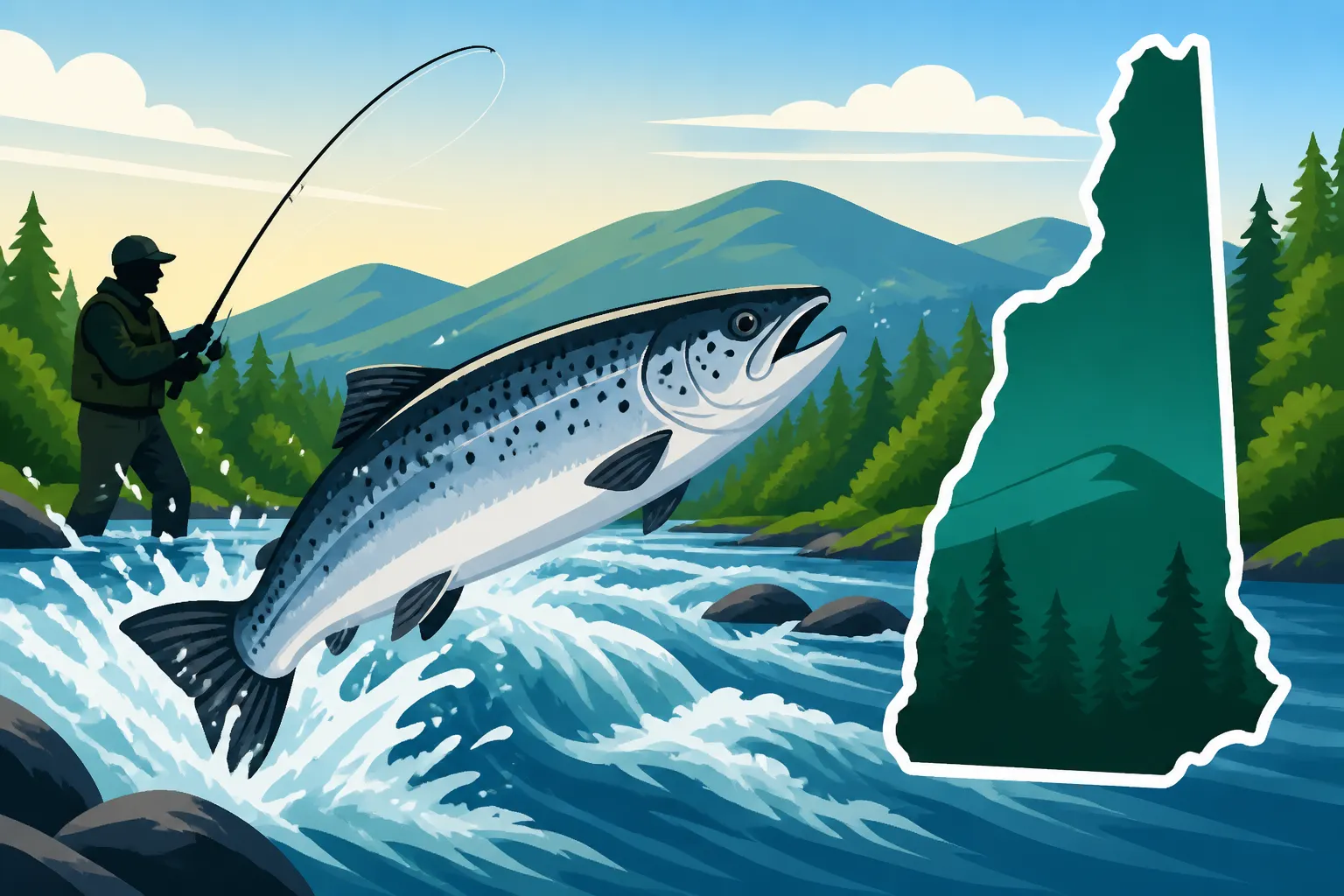
Back in the day, the spring and fall runs of Atlantic Salmon were an awe-inspiring natural spectacle. Indigenous peoples revered these fish, relying on them as a vital food source and incorporating them into their culture. Early European settlers, too, were astounded by their sheer numbers. Imagine standing on the banks of a bustling river, watching powerful, chrome-bright salmon, sometimes weighing upwards of 30 pounds, fight their way upstream over rapids and falls. It was a sight that inspired legends and filled bellies, a testament to the wild abundance of New Hampshire's waterways. These fish were a crucial part of the ecosystem, connecting the ocean's nutrient cycles directly to our inland rivers and streams. Their presence indicated a truly healthy river system, free-flowing and unpolluted.
The Life Cycle: A Grand Journey
The life cycle of an Atlantic Salmon is nothing short of incredible, a true marvel of nature that defines their historical presence. Born in the cold, oxygen-rich gravel beds of freshwater rivers, young salmon (parr) spend a few years growing, feeding on insects and small aquatic life. Then, a remarkable transformation occurs: they become "smolts," changing physiologically to adapt to saltwater. At this stage, they migrate downstream, out to the vastness of the Atlantic Ocean, where they'll feed and grow for one to several years. This ocean phase is where they bulk up, gaining the size and power that makes them so iconic. Finally, driven by an instinct few creatures possess, they navigate thousands of miles back to the exact river, and often the exact tributary, where they were born, to spawn. This incredible journey highlights their unique ecological role and why their disappearance from our rivers was such a devastating loss.
The Decline and Efforts Towards Restoration
Sadly, the awe-inspiring runs of Atlantic Salmon in New Hampshire began to dwindle, eventually disappearing almost entirely from our rivers. This wasn't a sudden event but a slow, heartbreaking decline brought about by a confluence of human activities that drastically altered their environment. However, the story doesn't end there; dedicated individuals and organizations have been working tirelessly for decades to try and reverse this trend.
Unraveling the Causes of Their Disappearance
The primary culprits behind the decline of Atlantic Salmon are well-documented. First and foremost were the dams. As industries flourished, particularly textile mills and sawmills, countless dams were erected on major rivers like the Merrimack and Connecticut, often with no provision for fish passage. These structures acted as impenetrable barriers, blocking adult salmon from reaching their spawning grounds and preventing smolts from migrating to the ocean. It was an ecological chokehold. Then came pollution: untreated industrial waste and municipal sewage poured directly into rivers, fouling the water, depleting oxygen, and rendering crucial habitats uninhabitable. Agricultural runoff, laden with sediment and chemicals, further degraded water quality. Overfishing, both in rivers and at sea, also took a toll on the remaining populations. Combine these factors with habitat loss from deforestation and development along riverbanks, which increased water temperatures and sedimentation in spawning areas, and you have a perfect storm that decimated the once-mighty salmon runs.
Decades of Dedicated Restoration Programs
Recognizing the dire situation, extensive efforts have been launched to bring Atlantic Salmon back. These programs involve a complex web of state, federal, and non-profit organizations working together. A cornerstone of restoration has been hatchery rearing. Eggs from returning adults (often collected from fish trapped at the base of dams) are carefully reared in hatcheries, and the resulting smolts are released into rivers with improved conditions, hopefully to return as adults. Dam removal and the construction of fish ladders or bypass channels have also been critical. These "fishways" allow migrating salmon to circumvent barriers, opening up miles of historical spawning and rearing habitat. You can find out more about the broader rules and why licenses matter in posts like New Hampshire Fishing Regulations Explained or New Hampshire Fishing License Guide for 2026. The commitment to these efforts underscores the value placed on restoring this iconic species.
Navigating the Hurdles of Restoration
Despite decades of effort and significant investment, Atlantic Salmon restoration is fraught with challenges. The very nature of the species – its long, complex life cycle that spans both freshwater and saltwater – makes it incredibly vulnerable. Ocean survival rates, influenced by climate change, prey availability, and shifting ocean currents, are a huge mystery and often a major bottleneck. There are also concerns about the genetic integrity of hatchery-reared fish compared to truly wild populations, though efforts are made to use local broodstock. The sheer scale of the historical damage means that restoring a self-sustaining wild population requires immense dedication and patience, sometimes spanning generations. It's a marathon, not a sprint, and the hurdles are numerous and persistent. Finding educational materials or conservation-minded gear on Amazon can be a small way to support these broader efforts by staying informed and preparing for responsible outdoor recreation.
Current Status: Where Do We Stand Today?
So, after all that history and all those efforts, the big question remains: can you still see Atlantic Salmon running wild in New Hampshire's rivers? The honest answer is complex, and for most anglers hoping to catch one, it's generally a disappointing reality. The dream of robust, self-sustaining wild runs like those of old is still largely that: a dream, albeit one that scientists and conservationists continue to pursue with unwavering dedication.
A Glimmer, Not a Rush: The Reality of Current Runs
Today, if Atlantic Salmon are "running" in New Hampshire rivers, it's typically a highly managed and very limited situation. Most adult salmon you might hear about returning to our rivers are a direct result of hatchery stocking programs, primarily on the Connecticut River and its tributaries, and historically on the Merrimack River (though those efforts have largely shifted focus). These fish are often returning to traps at the base of dams, where they are collected to be part of the broodstock for the next generation of hatchery-raised smolts. The goal is to collect genetic material and keep the restoration program moving forward. While these returns are a cause for cautious optimism, indicating that fish can still navigate the migratory path, they do not represent self-sustaining wild populations reproducing naturally in significant numbers. It's an important distinction to make: managed returns versus truly wild, abundant runs.
Designated Restoration Zones and Monitoring
The few areas where Atlantic Salmon are being actively monitored and supported for restoration are specific, designated zones within river systems. For instance, the Connecticut River basin has been a major focus of multi-state and federal restoration efforts for decades. These efforts involve not just stocking, but also continuous monitoring of water quality, habitat improvements, and ongoing assessment of fish passage facilities like ladders and fish lifts. The New Hampshire Fish and Game Department, in collaboration with federal agencies and other state partners, plays a crucial role in these monitoring programs. They track the health and survival of hatchery-released fish and any rare instances of natural reproduction. This work is highly technical and requires a deep understanding of the salmon's needs at every life stage. If you're looking to learn more about the specifics of these programs, understanding Atlantic Salmon Restoration in New Hampshire Rivers can provide a deeper dive into the ongoing projects and challenges.
The Long Road Ahead: Patience and Perseverance
The simple truth is that restoring Atlantic Salmon to their historical abundance is one of the most ambitious and challenging conservation undertakings in New England. It requires not just the removal of barriers and cleaner water, but also addressing threats that extend far beyond New Hampshire's borders, into the vast, complex ocean environment. Because of this, recreational fishing for Atlantic Salmon is strictly prohibited in New Hampshire; these precious fish are simply too rare and too vital to the restoration effort. Any accidental catch must be immediately released unharmed. The journey is long, demanding immense patience and perseverance from all involved, from the biologists to the local communities who share the rivers. It's a testament to the enduring hope that one day, the silver king will truly reclaim its throne in our rivers. When considering how to support these efforts, even something as simple as purchasing a New Hampshire Fishing License Guide for 2026 contributes to the funding that supports the Fish and Game Department's broader conservation initiatives.
| Aspect | Historical Abundance (Pre-1800s) | Current Status (Early 21st Century) |
|---|---|---|
| Population Size | Vast, self-sustaining wild runs, millions of fish | Extremely limited, primarily hatchery-supported returns |
| Primary Rivers | Merrimack, Connecticut, Piscataqua, Saco, Androscoggin, etc. | Focused on Connecticut River basin, limited Merrimack efforts |
| Reproduction | Entirely natural, wild spawning | Mostly hatchery-produced, very rare natural reproduction |
| Fishery Status | Abundant, integral food source and recreational fishery | No recreational fishery; protected species, catch & release strictly illegal |
| Main Barriers | Natural falls, occasional indigenous fish weirs | Numerous hydroelectric and industrial dams, limited fish passage |
| Environmental Health | Pristine, unpolluted, healthy aquatic ecosystems | Improved, but still impacted by historical pollution and habitat loss |
| Outlook | Thriving, essential part of the ecosystem | Decades of dedicated restoration, future uncertain but hopeful |
What Anglers Can Do to Help
While the days of casting for wild Atlantic Salmon in New Hampshire rivers are not currently a reality, that doesn't mean anglers are powerless. In fact, our community has a crucial role to play in supporting the broader health of our waterways, which indirectly, and sometimes directly, benefits the Atlantic Salmon restoration efforts. Every little bit of conservation-minded action helps to build a healthier ecosystem for all aquatic life, including the species we love to pursue.
Be an Informed and Responsible Angler
One of the most powerful things you can do is to simply be informed. Understanding the history, the challenges, and the ongoing efforts surrounding Atlantic Salmon gives you a deeper appreciation for our rivers and the delicate balance of their ecosystems. Read up on local regulations in the Reading the New Hampshire Freshwater Fishing Digest, which the New Hampshire Fish and Game Department publishes. These regulations are designed to protect all fish species and their habitats. Beyond that, practice ethical angling: proper catch and release techniques for other species, minimizing your impact on riverbanks, and always packing out what you pack in. Consider buying a good field guide on Amazon to help identify different fish species and learn about their habitats. Even if you're targeting smallmouth bass or trout, your careful actions contribute to a healthier environment for all fish.
Support Conservation Efforts and Organizations
Financial support, no matter how small, directly contributes to the boots-on-the-ground work needed for restoration. A significant portion of funding for the New Hampshire Fish and Game Department's conservation work, which includes habitat improvement and fish stocking for various species, comes from the sale of fishing licenses. So, simply buying your New Hampshire Fishing License Guide for 2026 and subsequent annual licenses is a direct contribution. Beyond that, consider supporting non-profit organizations dedicated to river conservation and Atlantic Salmon restoration in the Northeast. These groups often engage in direct habitat work, advocacy, and public education. You can easily find information on such organizations and their work with a quick search, or even find books on their efforts on Amazon to learn more.
Report Sightings and Practice Vigilance
While the likelihood is slim, if you ever suspect you've encountered an Atlantic Salmon in a New Hampshire river, especially one not in a designated collection facility, it's vital to report it to the New Hampshire Fish and Game Department. Do not attempt to harvest it. Clear photos (if possible, without harming the fish) and detailed location information can be incredibly valuable to biologists. This vigilance also extends to general river health. If you notice pollution, unusual fish kills, or illegal activity, reporting it promptly helps protect our shared natural resources. Additionally, understanding and avoiding the spread of invasive species by cleaning your gear thoroughly after each outing is a silent, but crucial, act of conservation.
Respect the Habitat and Fellow Enthusiasts
Finally, a key aspect of helping Atlantic Salmon, and all native species, is respecting their habitat and the spirit of shared enjoyment of our natural resources. This means being mindful of your impact when Wading Techniques for New Hampshire Trout Streams or navigating rivers with your boat. Adhering to New Hampshire Boating Laws for Anglers and ensuring your vessel doesn't disturb sensitive areas helps protect fragile ecosystems. Recognize that many people cherish these rivers for diverse reasons – fishing, kayaking, wildlife viewing – and fostering a community of respect and shared responsibility benefits everyone, and ultimately, the fish themselves. The more we collectively care for and protect New Hampshire's rivers, the better the chances for Atlantic Salmon and all the other incredible creatures that call them home.
Disclaimer
This article is for general informational purposes only and does not constitute professional advice. Laws, prices and regulations vary by location and change over time. Consult a qualified professional for guidance on your specific situation.