Best bait for lake trout in deep water
There’s nothing quite like the thrill of targeting New Hampshire’s magnificent lake trout. But let's be honest, trying to figure out the "best" bait for these deep-water dwelling giants can feel like you're trying to solve a riddle wrapped in an enigma, especially when they're hunkered down in the thermocline of a vast lake like Winnipesaukee or Newfound. It’s a common frustration, but don't worry, this guide is here to break down exactly what bait you should be using to entice those elusive deep-water lake trout.
Understanding Deep-Water Lake Trout Behavior and Forage
To truly pick the best bait for deep-water lake trout, you first need to understand why they go deep and what they’re looking for down there. Lake trout are cold-water fish, plain and simple. As surface waters warm up, especially during late spring and summer, they seek out colder, more oxygenated water. This usually means dropping down into the deeper sections of lakes, often hugging structure or congregating around thermal breaks, known as the thermocline.
Their diet largely consists of other fish. In many of New Hampshire’s premier lake trout fisheries, like Lake Winnipesaukee or Sunapee Lake, smelt are a primary forage base. These small, schooling baitfish are packed with nutrients and are exactly what a hungry laker is looking for. Other important forage includes various minnow species, cisco (sometimes called lake herring), and even smaller yellow perch or suckers. The key takeaway here is that lake trout are opportunistic predators that prefer to eat what’s readily available and easy to catch in their deep, cold environment. Knowing what they eat naturally will inform your bait choices, whether you’re using live bait or artificial lures. They are often found in areas that offer both suitable temperatures and an abundance of these baitfish. Understanding How deep lake trout go in summer can really help pinpoint their locations.
Top Live Bait Choices for Deep-Water Lake Trout
When it comes to tempting deep-water lake trout, nothing quite beats the natural appeal of live bait. The scent, movement, and lifelike presentation can often be irresistible, especially on days when the bite is tough. However, using live bait effectively in deep water requires specific rigging and an understanding of the local regulations, which you can always double-check in the New Hampshire Fishing Regulations Explained digest.
Shiners and Smelt
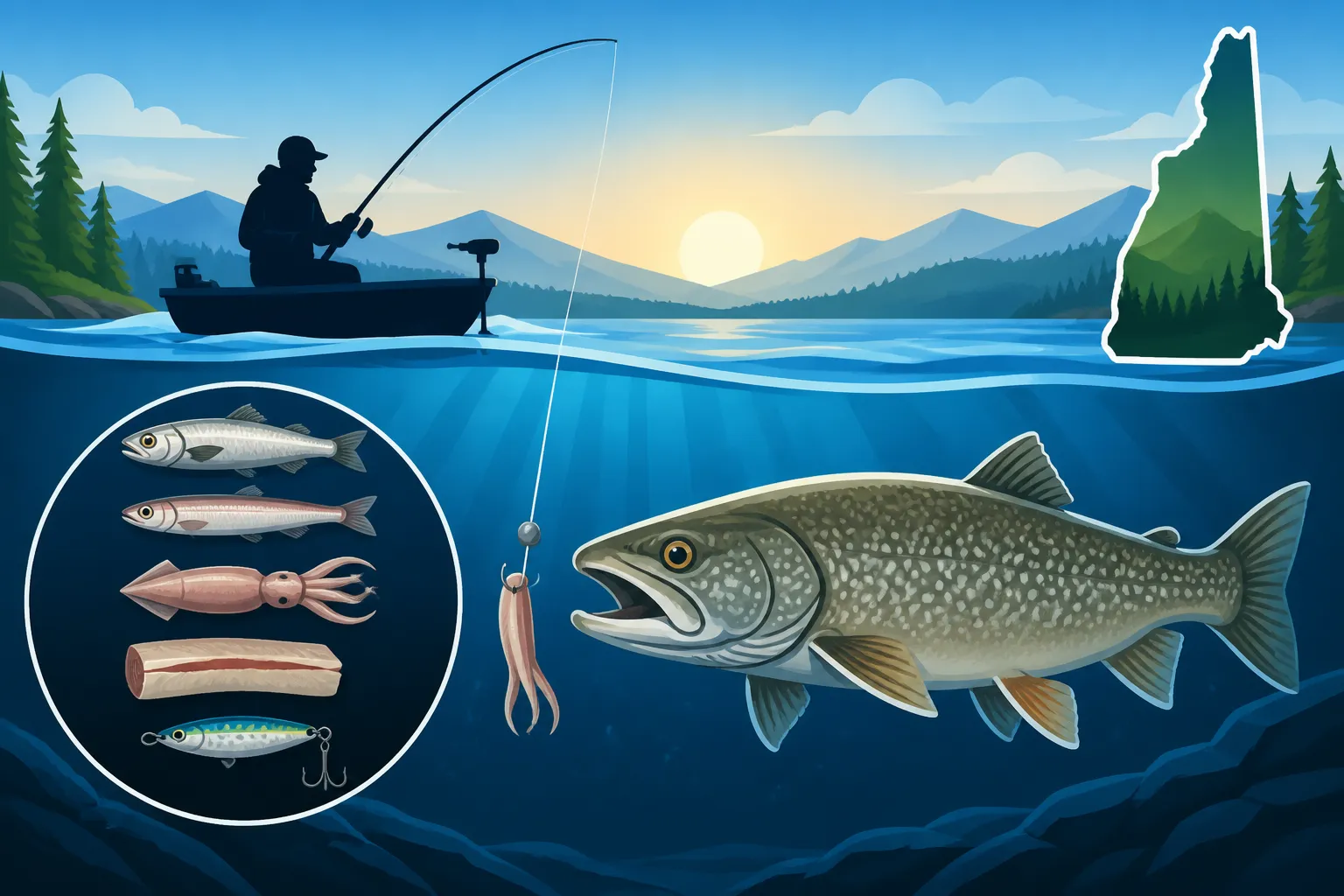
These are arguably the most popular and effective live baits for deep-water lake trout in New Hampshire. Shiners, often golden shiners or fathead minnows, are readily available at most bait shops. Smelt, when legal and available, are often considered the holy grail because they are a primary food source for lakers in many lakes.
When using shiners or smelt for deep-water lake trout, you’ll want to present them as naturally as possible. A common method is to use a simple plain shank hook (sized appropriately for the bait, usually a #4 to #1) through the lips or just under the dorsal fin of the baitfish. You'll need weight to get them down to the desired depth. This can be achieved with a three-way swivel rig, where one eye goes to your main line, another to a short leader with your bait, and the third to a heavier dropper weight that drags the bottom or suspends just above it. Another effective method, particularly when slow trolling, is using a downrigger or a lead core line setup. The goal is to keep that bait swimming naturally, albeit slowly, right in the strike zone. Many anglers find high-quality hooks and leaders for this kind of setup on sites like Amazon, ensuring they have robust gear for those big fish.
The beauty of live bait is its erratic movement and natural scent trail. Even a barely-moving bait can trigger a strike from a cautious laker. Just remember to check bait transport and usage regulations carefully, as some lakes have restrictions on specific baitfish to prevent the spread of invasive species.
Suckers and Alewives
While perhaps less common than shiners or smelt, larger suckers (like fallfish or white suckers, when legal and small enough) can be excellent for targeting truly trophy-sized lake trout. These baits are robust and can withstand deep-water pressure and longer fishing sessions. They mimic larger forage fish that big lakers often key in on.
Similar to shiners, suckers are usually fished on a three-way rig or suspended via a downrigger. Because they are larger, you’ll need a sturdier hook and leader material. Some anglers prefer to fish these baits dead, particularly when trolling, allowing the boat's motion to impart action to the bait. Rigging a dead sucker or alewife to spin or wobble can be incredibly effective. Just make sure your presentation looks injured or disoriented, making it an easy meal for a cruising laker. Experiment with different depths and speeds, always keeping an eye on your fish finder to mark those deep-water arches.
| Bait Type | Best Use Case | Pros | Cons |
|---|---|---|---|
| Live Shiners/Smelt | Still fishing, slow trolling | Natural movement, scent, high appeal | Fragile, can die, bait storage |
| Dead Smelt/Suckers | Trolling (rigged to spin) | Durable, good for large lakers | Less natural movement unless rigged perfectly |
Effective Artificial Lures for Deep-Water Lake Trout
Sometimes, live bait isn't practical or permitted, or you simply prefer the challenge and action of artificials. Luckily, there's a fantastic array of artificial lures that are absolute killers for deep-water lake trout. The key to artificials is often matching the hatch – imitating the size, shape, and action of the lake trout's natural forage. For more detailed insights, check out Best Lures for Lake Trout Trolling.
Spoons: The Classic Choice
Spoons are a timeless classic for lake trout, and for good reason. Their wobbling, fluttering action perfectly mimics an injured baitfish, making them irresistible to hungry lakers. For deep water, you'll want heavier spoons designed to sink quickly and maintain their action at depth. Popular options include Sutton Spoons, Mooselook Wobblers, and various trolling spoons from brands like Thomas Lures or Dardevle.
Colors are crucial. In the clear waters of New Hampshire, natural baitfish patterns like silver, blue/silver, or perch patterns often excel. However, don't be afraid to experiment with brighter colors like chartreuse or orange, especially in deeper, darker water or on overcast days. Spoons are primarily used for trolling, often behind a downrigger or lead core line, which you can find a great selection of on Amazon. The speed of your troll will dictate the action of the spoon, so play around until you find what the fish prefer. A good starting point for Trolling Techniques for New Hampshire Lake Trout is to vary speeds between 1.5 to 3 miles per hour.
Jigs: Vertical Appeal
Jigging is another highly effective method for deep-water lake trout, particularly when you've marked fish on your sonar or are fishing over specific deep structure. Heavy bucktail jigs, tube jigs, and specialized ice fishing jigs (even in open water) can all be very productive.
For bucktail jigs, think white, black, or natural baitfish colors. Sizes typically range from 1/2 oz to 2 oz or even heavier, depending on depth and current. Tip them with a piece of cut bait (like a smelt head or strip of sucker belly) for added scent. Drop the jig to the bottom, then lift it sharply 1-3 feet, letting it flutter back down on a semi-slack line. Most strikes occur on the fall. Tube jigs, especially in white, pearl, or smoke colors, mimic dying smelt or crawfish very well. Use a heavy jig head inside the tube to get it down. For vertical jigging, the "pound and pause" technique often works wonders: let the jig hit the bottom, lift it a foot or two, shake it, then let it fall again.
Stickbaits and Plugs: Trolling Powerhouses
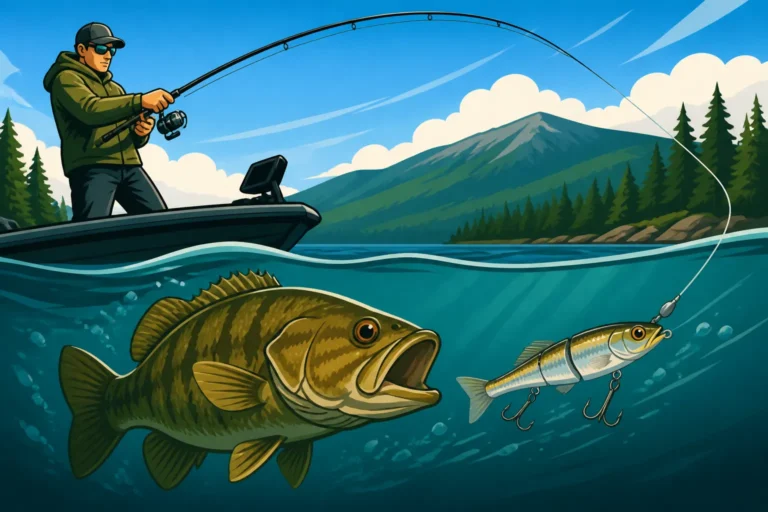
While often associated with shallower fishing, certain deep-diving stickbaits and crankbaits can be incredibly effective for deep-water lake trout when trolled. These lures are designed to dive to specific depths on their own, or they can be combined with a downrigger or lead core to reach even greater depths.
Long, slender stickbaits in natural colors (silver, perch, firetiger) that imitate smelt or cisco are excellent choices. Look for models that have a tight wobbling action at slower trolling speeds. These lures are fantastic when you want to cover a lot of water and present a consistent, appealing profile. Pay attention to the lure’s dive curve – some can hit 20-30 feet on their own, while others need assistance to get deeper. Combining them with other tools, like those you’d use for Best Trolling Gear for New Hampshire Lake Trout, can help them reach the deeper zones where lakers lurk.
Presentation is Key: Rigging and Techniques
Getting your bait into the deep-water strike zone and presenting it effectively is just as important as the bait itself. Lake trout can be finicky, and the right presentation can make all the difference. Mastering these techniques will significantly increase your success rate.
Downriggers for Precision Depth Control
If you're serious about deep-water lake trout, a downrigger is almost essential. These devices allow you to precisely control the depth of your lure or bait, placing it exactly where the fish are holding, often visible on your fish finder. Your mainline (with your lure attached) is clipped to a release clip on a heavy cannonball weight, which is then lowered to the desired depth. When a fish strikes, the line pops free from the clip, allowing you to fight the fish directly without the weight.
Downriggers are particularly effective for presenting live bait or spoons at a consistent depth while trolling. They allow for lighter mainline use, as the heavy weight is separate from your fighting line. For optimal results, use a quality braided or monofilament line as your main line, and a fluorocarbon leader for stealth in clear New Hampshire waters. You can find robust downrigger setups and accessories on Amazon.
Lead Core and Copper Line for Deeper Reach
For anglers without downriggers, or those who prefer a simpler setup, lead core or copper line can be a great alternative for getting baits deep. These specialized lines are designed to sink on their own due to their heavy composition. Lead core line is typically color-coded, with each color segment (usually 10 yards) sinking a certain amount at a given trolling speed. Copper line is even heavier and sinks faster.
The beauty of lead core or copper is its simplicity: attach your leader and lure, let out the desired amount of line (often measured in "colors" for lead core), and start trolling. It’s particularly good for spoons and stickbaits. The downside is that you fight the fish with the heavy sinking line, which can reduce sensitivity. Nonetheless, it’s a proven method for targeting Lake Trout Fishing in New Hampshire in deeper sections. Understanding Best Line Weight for Lake Trout Trolling for these systems is critical for success.
Three-Way Swivels and Snap Weights
For stationary or slower troll presentations, especially with live bait, three-way swivels are excellent. One eye of the swivel attaches to your main line, another to a short leader (2-4 feet) with your hook and bait, and the third to a dropper line (1-3 feet) with a heavy sinker. The sinker keeps the bait at the desired depth, while the bait can swim somewhat freely on its leader. This rig helps keep your bait out of snags when fishing near the bottom and presents a natural-looking offering.
Snap weights are another handy tool. These are weights that clip onto your main line, allowing you to add weight to any setup without re-tying. You can add them a certain distance in front of your lure to drive it deeper while trolling. This offers flexibility to adjust depth on the fly without changing your entire rig.
Sonar and Electronics: Your Eyes Underwater
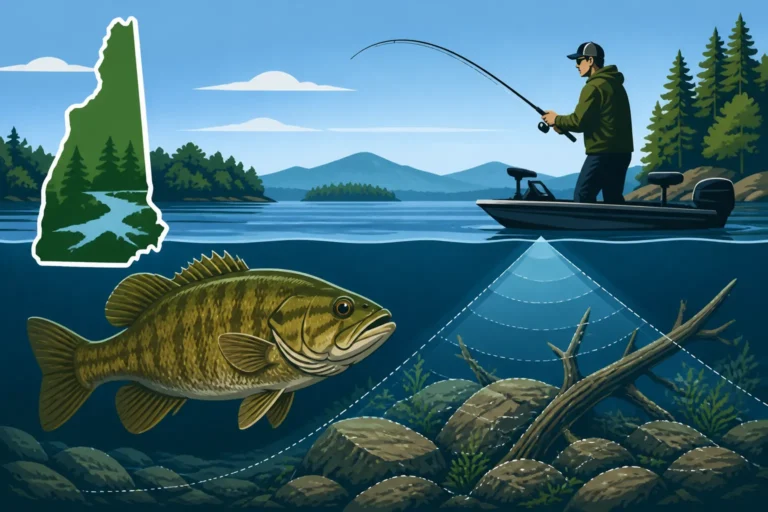
In deep-water lake trout fishing, your fish finder is your best friend. It allows you to locate schools of baitfish, identify deep-water structure, and, most importantly, mark individual lake trout arches. Don't just blindly troll; use your electronics to pinpoint fish and then adjust your depth and presentation accordingly. Many of the newer units can even help you find the thermocline, which is often a prime zone for lakers. Investing in a quality fish finder, many of which are available through Amazon, can drastically improve your deep-water success. Knowing Best Fish Finders for New Hampshire Lakes is a huge advantage.
By combining the right bait, whether live or artificial, with the appropriate deep-water presentation techniques, you'll be well on your way to hooking into some magnificent New Hampshire lake trout. Remember that patience and experimentation are key – what works one day might not work the next, so be prepared to adapt!
Disclaimer
This article is for general informational purposes only and does not constitute professional advice. Laws, prices and regulations vary by location and change over time. Consult a qualified professional for guidance on your specific situation.